Keys of His Success

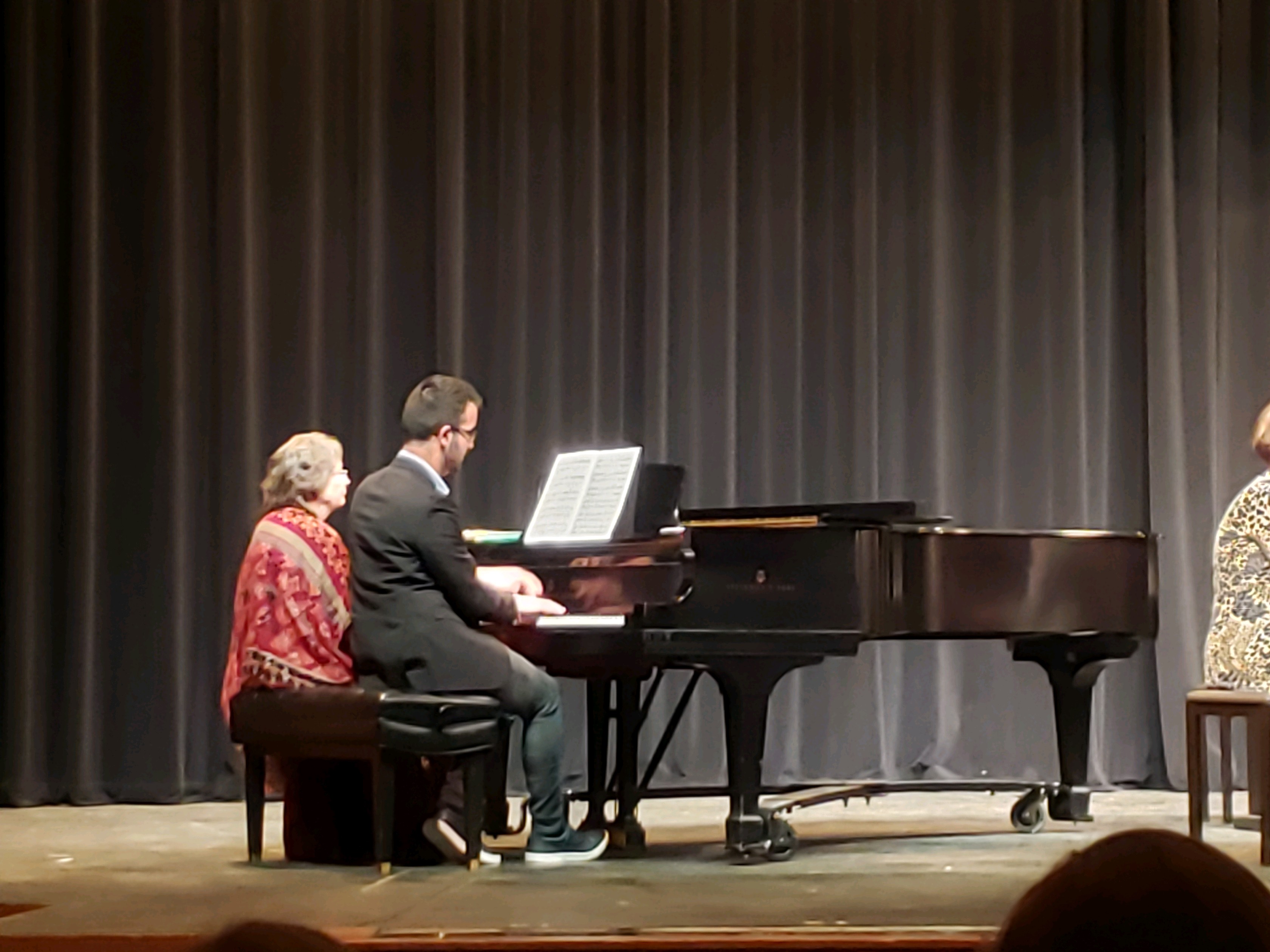
Emerson Talkington opens the lid on the grand piano and settles on the bench. His hands spread across the keys and exquisite music rises from the strings. From Chopin to Brahms to Rachmaninoff, he plays as if the piano is part of him. Days away from his college graduation, he’s on target to achieve a goal he’s dreamed about for years. From an unlikely and late start, Emerson has cleared more hurdles in the last decade than many people face in their entire lives.

Since the first commencement in June 1889, Southwestern College (SC) has held graduation exercises each spring. This year’s event is planned for May 4 at 2:30 in the Richard L. Jantz Stadium. As he receives his diploma for a Bachelor of Arts in Music that day, Emerson will join hundreds of alumni since that 1889 ceremony with degrees in Music. This year, he has the distinction to be the only music major. “And,” he says, “I’m the last one.”

Born in Winfield in 2002, he attended the local schools, graduating from Winfield High School with the class of 2020, in the Year of Covid. His love for piano began when he was a student at Winfield Middle School. The vocal music classroom housed a Mason & Hamlin grand piano donated from the estate of legendary pianist and teacher E. Marie Burdette. Emerson became fascinated with that piano and lingered after school most days in hopes of a chance to play it. His innate ability coupled with YouTube tutorial videos allowed him to pick out melodies by ear and the school’s music faculty encouraged him as his love for piano flourished.

Paige Camp, the vocal teacher at the time, says, “It seems like yesterday that he was a student in middle-level choir.  He spent many days after school in the music hall, tinkering with the piano.  I nicknamed him ‘Cling-on’ as he was usually there until we had to lock up for the day.”

Allen Dilley, band teacher, accompanist for the middle school choirs, and accomplished pianist himself, often used the Burdette piano after school for practicing. “Dr. Dilley introduced me to piano technique and music theory,” Emerson says.

“I first met Emerson in the vocal music room at WMS,” Dilley says. “Classes had concluded for the day and I recall practicing Chopin’s Scherzo in Bb minor—a challenging composition. A few days later Emerson was in the room playing excerpts from the same piece, albeit without having ever seen the music. I suggested that as he began his keyboard journey, he might want to start with something a little less intimidating.”

From the middle school choir, he went on to the WHS choir where he found another friend and mentor in accompanist Billy Bearden. Lacking the Burdette grand piano he’d enjoyed at the middle school, Emerson found a small console piano in a storeroom to tinker with. He often sought out Bearden for tips on piano performance.

It was during his senior year in high school that he encountered a huge obstacle in his path—he had cancer. Bearden shares, “[After] the diagnosis . . . there’s a moment for Emerson (or maybe a thousand of them) where it feels that the universe is playing a cruel joke.” However, Bearden notes that there’s a “miracle in the mundane: he keeps playing.  Even when his physical pain makes it hard to sit up.  Even when he’s told music is a waste of time, and when all he can hear in his head is how he started too late and he’s not good enough—Emerson keeps playing.”

Emerson tapped local jazz pianist and renowned performing artist Scott Williams as his first official private piano teacher. Williams says, “I began teaching Emerson between his sophomore and junior years of high school. This is later than most people start learning the piano, but I sensed right away how serious he was. He progressed quickly, and soon sounded like he had been playing much longer. It wasn’t that long before he started getting hired as a pianist.”

With the private lessons, his early mentors noticed his growing skill with jazz. Dilley notes, “His knowledge of chords and harmony and the ability to apply them to existing melodies is excellent. He showed me how to turn a well-known hymn into a “blues” piece!” The student turned into a teacher.

Paige Camp worked with him through high school. “He joined the high school jazz band, and later the symphonic band.  There were hours of rehearsal and many performances. . . But despite the cancer diagnosis, he kept a very dry sense of humor about it all.  And he kept playing the piano.”
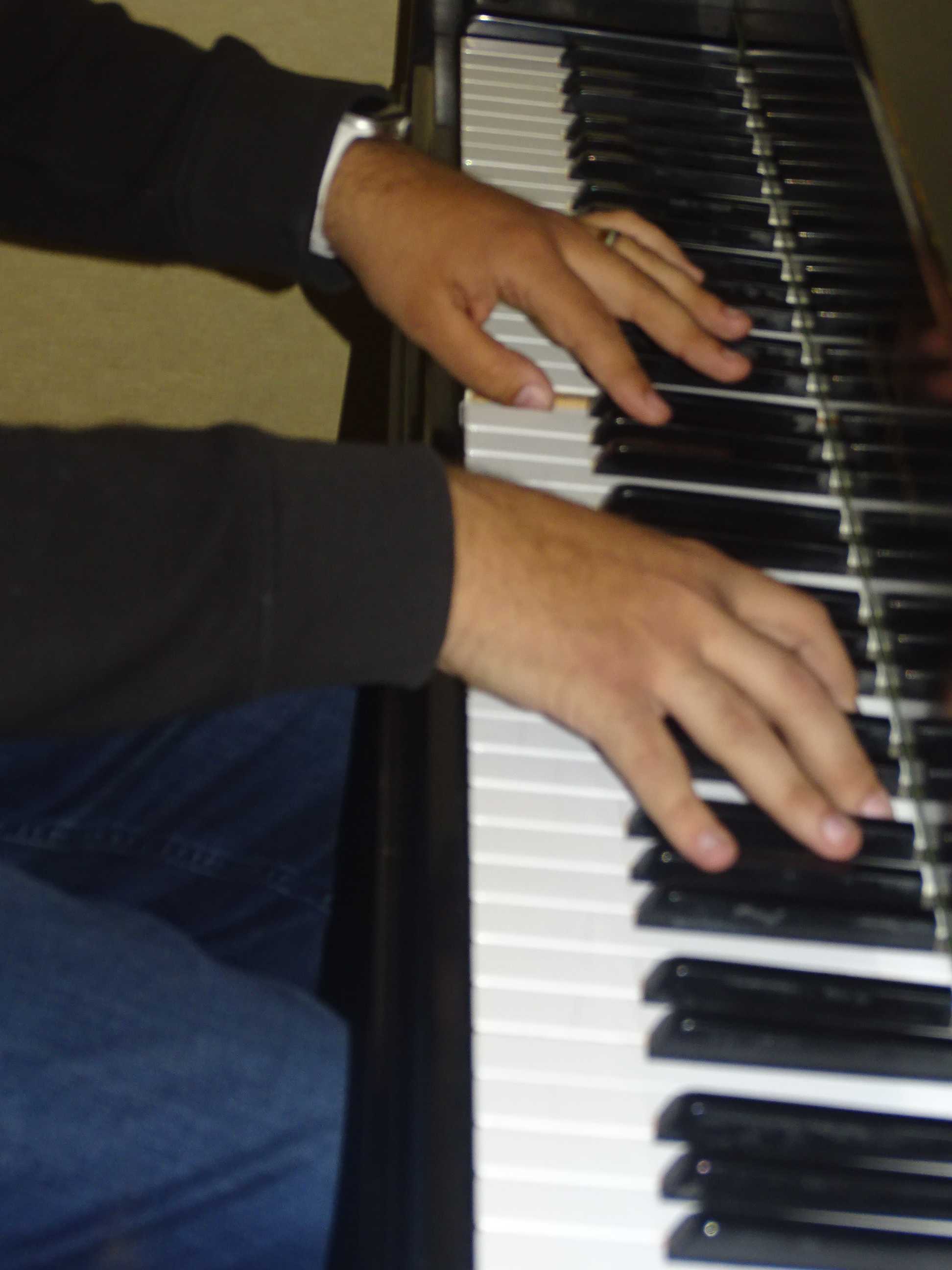
Through the cancer and Covid chaos, he never quit playing. It was clear to him that music, through pianos, was his life’s calling and he embraced it with his whole heart. After he graduated from WHS, he enrolled with a scholarship in Cowley College as a music major. His first experience working with Cowley piano instructor Steve Butler was when he was a high school senior. He was asked to fill in as accompanist when Butler took over conducting the Cowley Singers at a concert. “I had a couple weeks to prepare, but I was still nervous,” Emerson recalls. Since that debut audition, he has performed many times for Butler, including as a duet partner. “Playing duets with Steve brought out my best,” Emerson says.

Pastor at Hackney Baptist church as well as music instructor at Cowley College, Butler considers Emerson a good friend and has been pleased to recommend him when people ask for a keyboard artist.

During the semesters at Cowley, Emerson also became the proud owner of that E. Marie Burdette Mason & Hamlin grand piano. Covid prompted staff changes at USD 465, and the new music staff members were willing to transfer the custody and maintenance of that gem of a piano to the school alumnus who had fallen in love with music through it. Emerson kept playing on the original mesmerizing instrument.

He transferred to Southwestern College as a music major with a piano performance emphasis but soon after he enrolled, Southwestern announced it was terminating its music degree program. To its credit, the college committed to completing the degrees of the majors that were currently enrolled and Emerson persevered.

Cancer struck again with a vengeance later that same fall, and delayed his coursework while he battled the relapse at MD Anderson Cancer Center in Houston, Texas. Fellow cancer survivor and associate professor of music at Southwestern College Jeremy Kirk said, “Living through chemo as he did—twice—influences your tenacity. You have to be tenacious. There’s a feeling that: If I can do this, there’s nothing I can’t do.”

Returning months later with his cancer in remission, Emerson picked up where he’d left off, married Rosalyn, the love of his life, and with support from the music faculty and the college administration, he continued his pursuit of a Bachelor of Arts in Music. His grit and determination impressed the staff at Southwestern to the point where the instructors were as determined as Emerson to fulfill his goal.

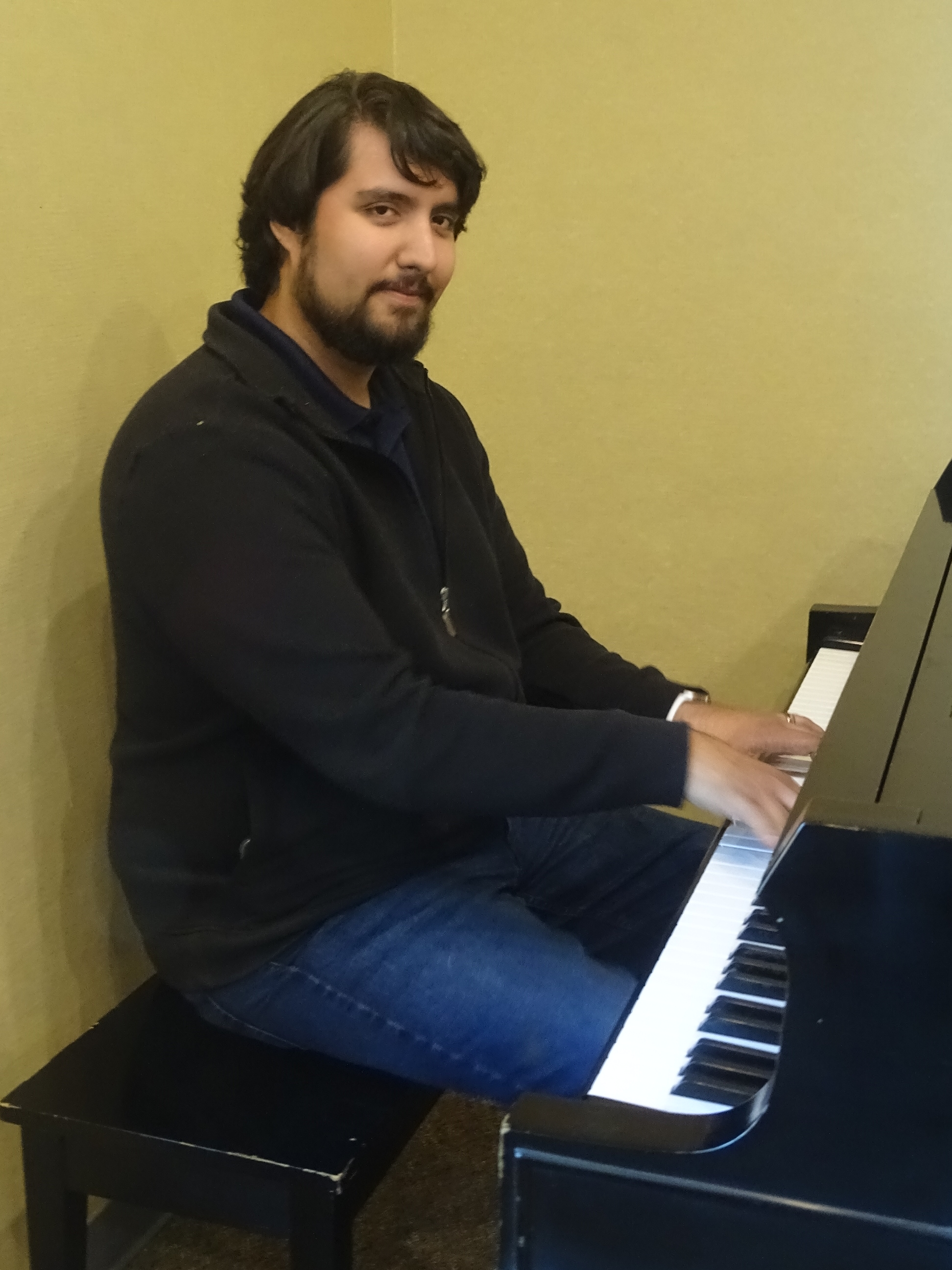
Professor Kirk shares his insights. “Emerson possesses first rate music talent and he seeks opportunities for growth as a musician outside his comfort zone.” As a student in Kirk’s World Music class, he joined the performing ensemble and traveled to Hawaii with the group in December 2022. He participated in the jazz and pep bands at SC, served as librarian for the South Kansas Symphony, took private organ lessons from James Leland, and even helped Leland with the day-to-day maintenance of the pipe organ in Richardson Performing Arts Center. He completed his coursework mostly through online classes and independent studies, but he never gave up and never quit playing.

In addition to a bustling student schedule, Emerson supported himself through the years with a variety of outside jobs. His interest in automobile mechanics secured him a job as a manager at O’Reilly’s for a while. He also worked in fast food places, installed signs for Cardinal Signs, did custodial work, served as the accompanist at area churches including a couple years as organist at Winfield’s First Presbyterian Church, and as the accompanist at Ark City Middle School for the last four years. He also has a few piano students of his own.

Leland says, “I have unparalleled appreciation for the noble and realistic way he worked through college. He is conscientious about finishing any work he starts.”

Emerson has triumphed through all the challenges the universe threw at him. Bearden, his accompanist pal during high school, says, “It wasn’t triumph in any grandiose sense—no concerts or sudden label deals—but it was something better: a private rebellion, a refusal to quit.  Each day he chose the small and seemingly insignificant choice to create beauty in a world that kept offering pain.”

And he became more than just a student. “He became an artist,” Bearden says.

With graduation approaching, he prepares to launch into his next chapter of life. Emerson will join fellow SC music alumni Butler (1997) and Bearden (2005) as well as hundreds of musicians with roots at Southwestern College who became dedicated schoolteachers in small towns and cities across the nation, performed with respected symphonies, taught in colleges and universities, or worked as church musicians and composers.

For the immediate future, he plans to travel this summer, to embrace as much of life’s opportunities as possible. “I want to travel while I can. I might not make it through a third cancer occurrence.”

When he is home, Emerson plans a public performance where he will share his spark for life. Details will be announced later. He plans to expand his studio to offer more private lessons, and hopes to teach music at an area school. He is interested in piano technology and wants to eventually rebuild the Mason & Hamlin piano that opened the world of music to him.

Kirk feels certain that Emerson will have success with whatever he chooses to pursue because of the qualities of his personality. What are those qualities? According to those who know him well he is flexible, humble, inquisitive, compassionate, and kind. With a gentle nature, he is always there to help a friend—a good recipe for success in any situation.

For now, each of his instructors feels what Steve Butler expresses, “To have played a small part in his musical and spiritual growth gives me great joy!” His hometown and expanded community join the instructors to wish him the best as he graduates with his coveted BA degree in music, with an emphasis in piano performance.
 

Just for Today: I Will Make Music

My teen years were challenging and I often vented my frustrations at home, pounding out my favorite classical compositions on our home piano.

I find playing the keys a valuable release again, now that I’m enrolled in piano lessons as a retiree. It does help. There is music for every mood, and every situation.

Though listening to your favorite play lists helps, I recommend getting involved and making some music of your own.

If you don’t play an instrument, sing along with your preferred artists at the top of your voice. Belt it out. Join friends and sing. Ring some bells. Shake a tambourine.

If we don’t feel it yet, we are likely to soon enough.

Maya Angelou: I Know Why the Caged Bird Sings. 

Look her up. We will make music now and forever.


The Power of Music

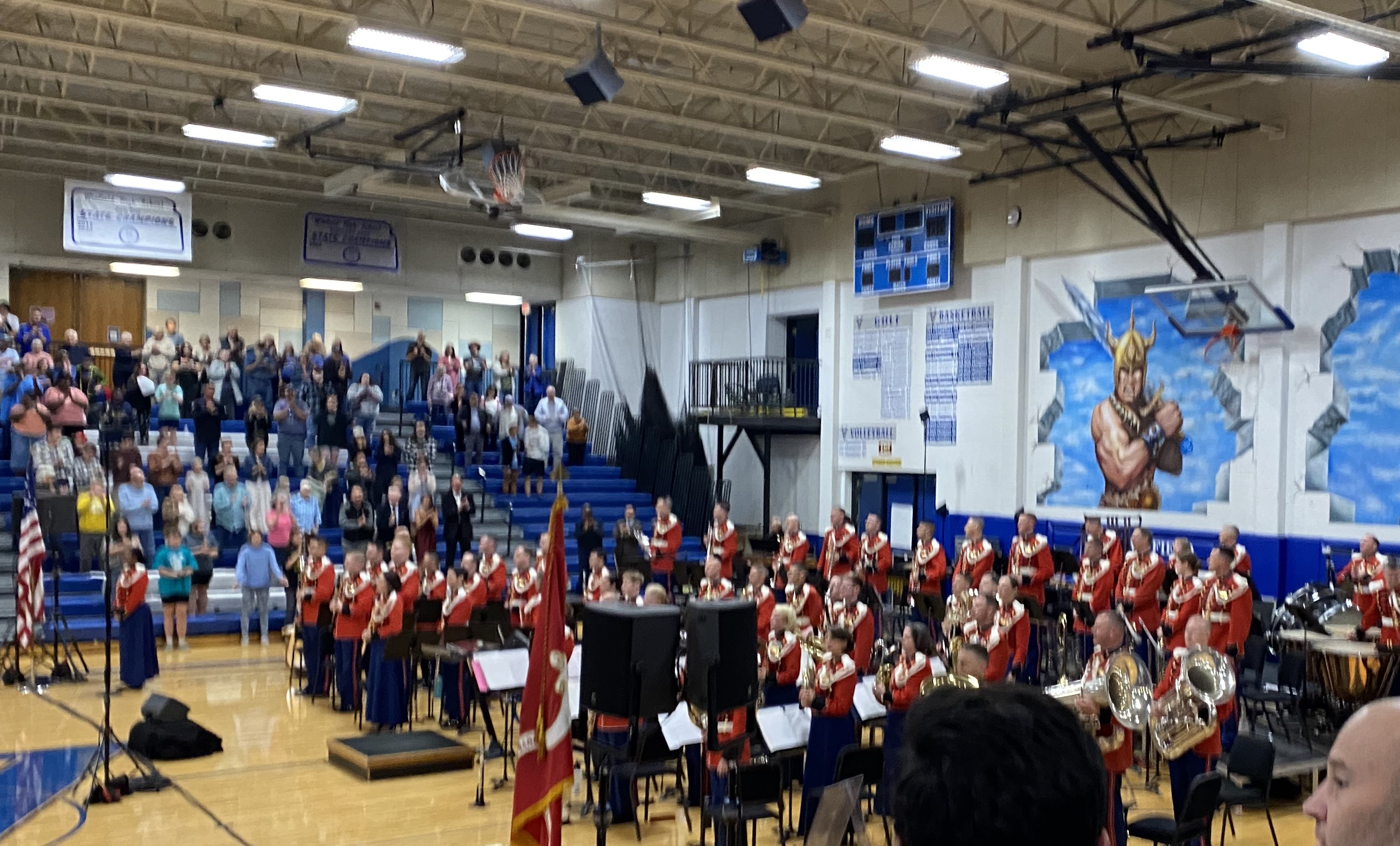
Months ago, the local Island Park Productions contracted an evening of music by “The President’s Own” United States Marine Band. As explained in the program, the US Marine Band was established in the year 1798 by an act of Congress. As such, it is the oldest continuously active professional musical group in the country. There are Marine Corps bands at several bases, but there’s only one called “The President’s Own.” Its mission is to provide music for the President of the United States and the Commandant of the US Marine Corps. Since neither of those leaders were present in Winfield last Monday night, the performance by “The President’s Own” US Marine Corps Band was indeed a privileged and special event for us commoners.

The planners were ecstatic to book the Band, and tickets for this free concert became available a month in advance. Most of the music events billed as “Duck Jams” are held at the Amphitheater in Island Park. However, the Marine Corps Band required an indoor venue. The location was to be the local High School auditorium, with limited seating. Though there was no admission charge, tickets were required in order to attend.

We got our tickets early. Noting that they would be honored only until fifteen minutes prior to the concert when any remaining seats would be opened to non-ticket holders, we arrived thirty minutes early. The high school parking lot was already packed with cars, more than I recall ever seeing at any other event. A line of attendees stretched around the auxiliary gymnasium and north, halfway to the office doors. There was no way all these people would fit in the auditorium.

Evidently, the event planners agreed. We made our way to the end of the line, and followed its progression inside, to discover that the venue had shifted to the main gymnasium. Bleachers on three sides were open, and row upon row of chairs were set on the gym floor facing risers at the east end reserved for the Band. Some people brought in camp chairs and set them up at the railings above the bleachers. There was a seat for everyone who came. Nobody was turned away.

We found a place in the bleachers amidst friends and strangers, and awaited the first downbeat. It was an impeccable performance. The musicians filed in, all wearing uniforms of red coats and blue trousers (or for some women, skirts). With the precision one would expect from the US military, the program started exactly on time. For two hours, people from all walks of life, and from every political party tapped and clapped to America’s music. From traditional marches to classical compositions, from jazz to opera, the music lifted our hearts. For the space of two hours, we forgot our differences. We were all Americans, united by this honored military band.
Did the musicians know this is an election year? Undoubtedly. Did they know we were weeks away from what is likely to be the most important election of our lives? Most certainly they did. But it didn’t matter. They brought us an event that was perfect for these times. At the end they played a medley of songs that identified each branch of the US military and asked us to stand for the correct theme if we, or a family member, had served in that branch. For my own family, going back to my parents’ generation in WWII, the branches represented in my family included the army, the navy, the air force and the marines.

The audience provided three standing ovations during the performance—and for each, right then and there, the band performed an additional song that wasn’t in the printed program. For me, the highlight of the evening was the encore solo which the concert moderator sang following her soprano solo from Gounod’s Romeo and Juliet. SSgt Hannah Davis sang “You’ll Never Walk Alone,” a song that bolstered my difficult adolescence and gave me hope as well as strength to keep going years ago. The song itself is from an 1945 Rodgers and Hammerstein musical, Carousel, but I learned it two decades later. I hadn’t thought about the song for a long time, but Monday night as SSgt Davis shared its message for everyone in the gym, I thought, “How appropriate.”

When you walk through a storm

Hold your head up high

And don’t be afraid of the dark.


At the end of the storm

There’s a golden sky

And the sweet silver song of a lark.


Walk on through the wind

Walk on through the rain

Though your dreams be tossed and blown.


Walk on, walk on

With hope in your heart

And you’ll never walk alone.

You’ll never walk alone.

We can all take its message to heart. Those of us in attendance at the US Marine Corps Band concert were Americans, every last one of us. For one magical evening, we were united by music.

Firestorm Sonata: The Story Behind the Story

The third novel in my Sonata series of adventure tales featuring pianos and their families is now available on Amazon. I have mixed feelings about it. The completion of this journey has been months in the making and I’m relieved to finally get there. It’s been a lot of hard work, with repeated readings and editing through the summer, each time thinking this would be it, and each time finding more things that needed to change. I finally drew a line. This is it. Ready or not. And Firestorm is launched. May she find a path through the maze of words out there in the cyberverse and not disappoint.

Firestorm Sonata:

In peak condition, scout Sharenda Kamine is certain her field skills will insure her safety as she seeks supplies needed by the fortress she calls home. She must, however, prove her worth to the authoritarian commander of this isolated pocket of survivors. With reluctance, he grants her request to work alone and she heads across dust dunes of what once was southern Kansas, confident she will master any challenge she meets. But she is unprepared to find a window into the past, which simultaneously offers a future ripe with possibilities. She must decide whether she will honor her commitment to the Fort, or escape to freedom with Gran, the only family she knows.

This tale is a first for me, to set the events in the future. During my work on the second Sonata, Sonata of Elsie Lenore, a friend I respect, a retired college professor and elder in my community, shared an article with me. “Confronting the Climate Crisis Through Fiction: Visualizing a climate-ravaged world may actually be the key to mobilizing action.” Those who know me well know my passion for the natural world, for the planet Earth. As a college freshman 50 years ago—get that FIFTY—I took a life-changing class called “Can Man Survive?” in the biology department at Fort Hays State University in Kansas. It was based on the then-current knowledge about all the impacts our human activities had on water, air, land—and climate. We’ve known about greenhouse gasses for my entire life. Even longer. Some folks predicted serious impacts early in the industrial revolution, over a hundred years ago.

The evidence is mounting in 2023. This summer is already setting records. Extreme weather events around the world fill the news from catastrophic flooding to record-setting temperatures and untamable fires. Chile, Canada, Greece, Italy, China, India, Japan, Taiwan, Philippines, Sudan, Madagascar, Zimbabwe–the list goes on. In North America, water temperatures in the Gulf of Mexico hit 100+ in places, with 100% mortality in some coral reefs.

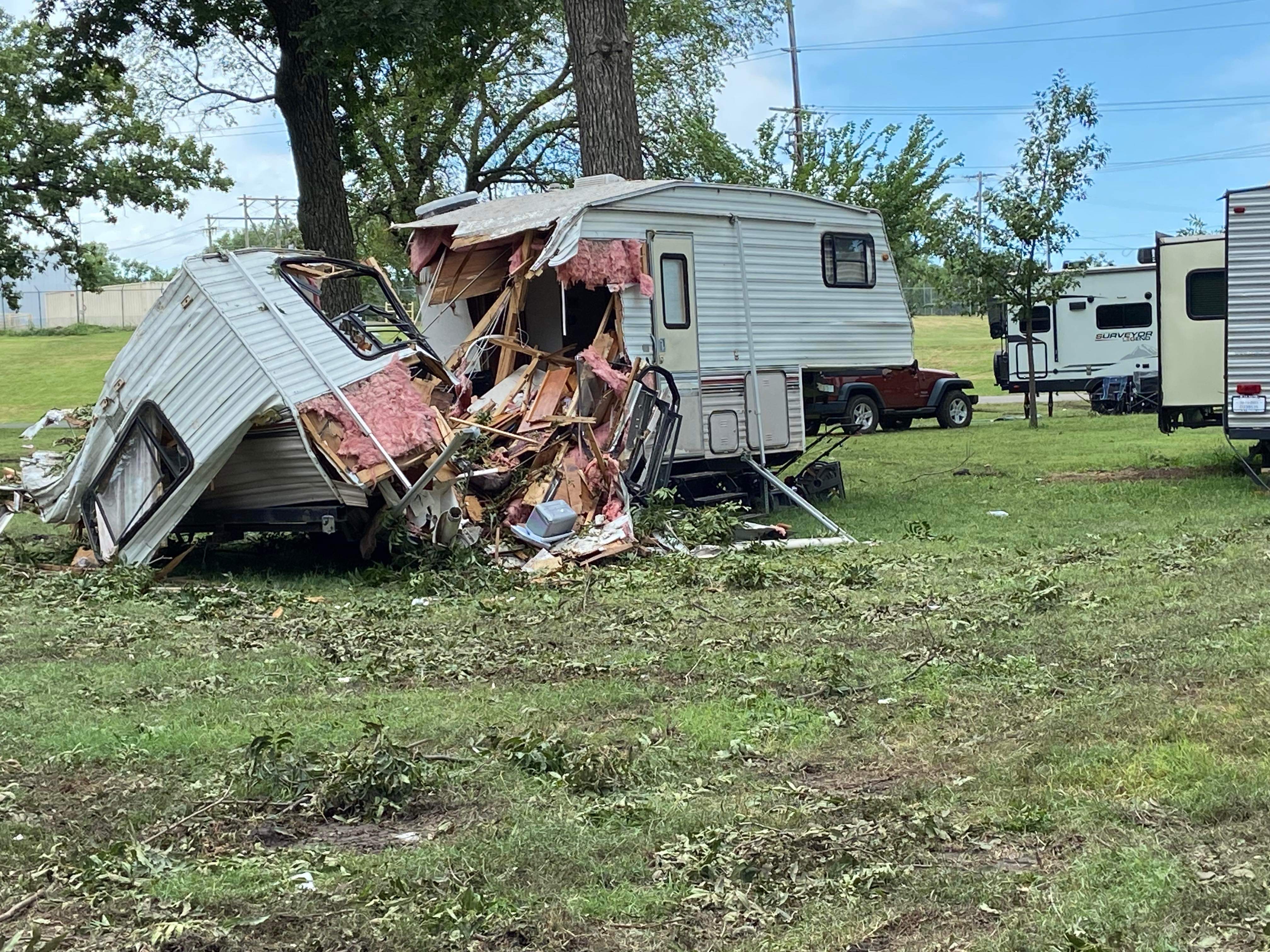
My own community cleans up after a straight-line windstorm that downed whole trees in our favorite parks and city streets, demolished our neighbor’s hay storage barn, and wreaked havoc on the county fair. Cleanup will continue for weeks. The cost has soared toward $2,000,000 already in our one small town.  And yet, we humans continue a path deemed to be disastrous for all life on the planet, just so oil companies can reap growing mega-profits at the expense of everything else we hold dear. If fictional tales set in a grim future environment will shake us into action, I decided I must try.

It’s been my privilege to offer continued piano service across south-central Kansas for nearly thirty years. I’ve kept climate records at each job, recording temperature and humidity. It’s increasingly hard to advise piano owners what their best plan of service should be. With seasonal swings in temperature and humidity becoming more unpredictable, the effects on pianos are easy to see. Tuning stability is now a figment of the imagination.

Pianos are my world. So is the prairie ecosystem. I began to ask some hard questions as I twisted those pins on my annual calls. “What’s with all the earthquakes in Kansas and Oklahoma?” In my college geology classes I learned this area is the “stable” part of the continent. Earthquakes are supposed to be extremely rare. And yet here we are.

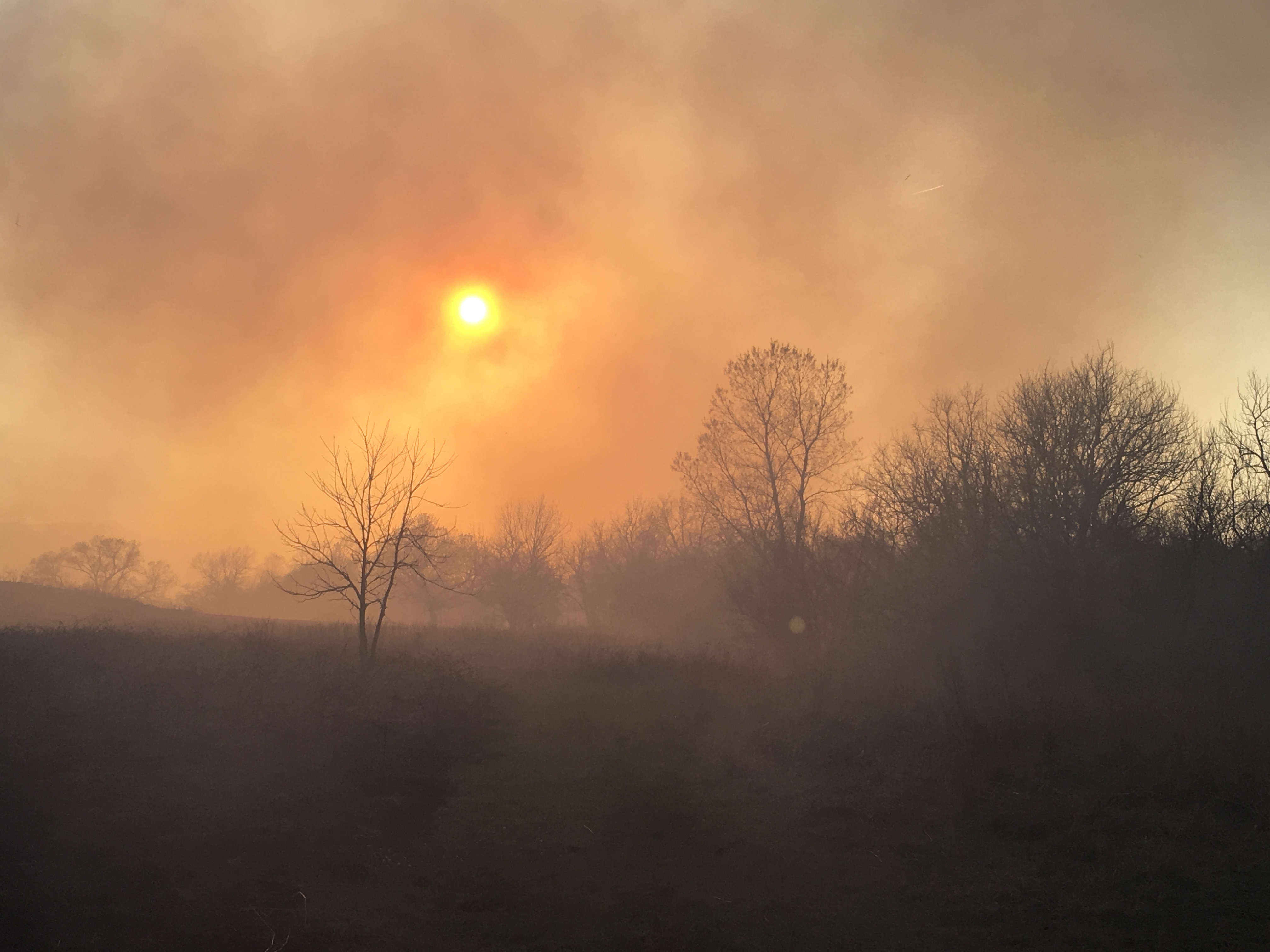
“What about the wildfires?” Every year we hear about more extreme fires. California, Oregon, Texas, Idaho. There have been successive record-breaking fires that started in Oklahoma and raged across the state line into Kansas, burning hundreds of thousands of grass acres, killing animals (including livestock) that were trapped in its path.April 2016, a fire burned over 400,000 acres, the largest blaze ever in Kansas (at the time);  March 2017, 600,000 acres burned in southwest Kansas, people were evacuated from small towns in the area; December 2021—fires in northwest Kansas, fanned by winds stronger than hurricane force, burned 400,000 acres.

Then there were the Canadian fires this summer that burned for weeks, sending ash and smoke into the air across northern US. And Maui—MAUI?? An island in the middle of the Pacific Ocean with a drought and a spark? The death toll from the Maui fire continues to grow.

I tried to imagine what my home county would look like after an extended drought, followed by a massive firestorm. Perhaps lightning would ignite an oil spill created by one of those fracking earthquakes. Add to the mix technology that can’t receive satellite signals, towers that topple in storms, and no way to receive news from the rest of the world.

The field of stepping stones.

What would my piano family do? What would become of them and their pianos? Would it even matter anymore if basic survival was the most pressing need? Unfortunately basic survival is already the most pressing need for far too many of Earth’s creatures, including pockets of human beings.

Thus, Firestorm Sonata was born. My deepest thanks to everyone who begged for another tale, who listened when I felt discouraged, and who offered words that bolstered me to keep on writing. You all comprise the village which raised Firestorm Sonata from a small seed to fruition. May she have wings to take her beyond my imagination and in her own way make our planet and our future a little brighter for all living things.


Day 6: The Leadership of Indigenous People

Today is Monday, Tanna, and this particular Monday is an observed national holiday. Like many things taken for granted when I was a child, there is considerable contention surrounding this second Monday in October.

Long recognized as “Columbus Day,” it celebrates the historic voyage by Christopher Columbus across the Atlantic Ocean in 1492. His destination was the far east and he gambled they would not sail off the edge of the world. And he was right. Earth is spherical. However, it’s much larger than he conjectured. He assumed he’d landed in India, when in reality, he anchored his ship in a cove off a Caribbean Island, the one we recognize today as Cuba.

But, in my school days, we all learned, “Columbus discovered America.”

The irony of this misleading historical fake fact is that he, himself, never set foot anywhere on the North American continent. He gets credit for discovery, however, even though the islands and the continents of the western hemisphere were occupied already by well-established cultures of native people.

Those he met at the end of his voyage must surely be residents of India, he reasoned. And so, though they were already known to each other by many other names, the First Peoples of North America came to be known as Indians.

This misappropriation became ludicrous in my mind the year I actually visited India and met genuine Indians. Since then, I resist the notion to call our indigenous nations by that term. Ojibway, Seminole, Cherokee, Choctaw, Kaw, Ponca, Apache, Lakota, Arapahoe, Tlingit, Haida, Hopi, Navajo (to name but a few)—each group formed its own nation with its own economy, culture, and government. The influx of Europeans ignored the autonomy of natives. European arrogance and entitlement have led to centuries of conflict and bloodshed.

Today there is a movement to recognize the dignity of the remaining indigenous populations, not only here, but indigenous people around the world. And that traditional holiday celebrating Columbus is now recognized in many hearts, and a few states and municipalities, as Indigenous People Day.

Our recognition and respect go far beyond one day, though. As the plight of our planet grows ever more dire, indigenous people raise their cry of dissention—and many others join them. Books on the native ways are available. Panels of indigenous leaders offer international online seminars in which the panelists share thoughts, concerns, ideas, and suggestions for moving forward.

I am listening. Perhaps in your day, Tanna, the Columbus celebrations will have retreated to a distant corner, like a demoralized dog, head down and tail between its legs.

Native peoples on every continent lead the way in our infant efforts to bind ourselves intimately with the natural world. Thomas Berry recognized this in his writings. “We have even forgotten our primordial capacity for language at the elementary level of song and dance.” He went on to point out how native Americans revere our wild neighbors through their musical and chanting ceremonies.

“One of the significant historical roles of the primal people of the world,” Berry wrote in The Dream of the Earth, “is to call the entire civilized world back to a more authentic mode of being. [Native peoples] are emerging as one of our surest guides into a viable future.”

Tanna, I struggle for words to describe what’s in my heart when Berry refers to native music from the wild places. One panel I experienced during the heat of this COVID summer included indigenous women of all ages, and from varied locations in the western hemisphere. The Ecuadorian woman, Patricia Gualinga, mentioned how the meetings her people hold always start with music, to create harmony, and that all participants—male or female, young or old—are treated with the same respect and consideration. All are equal in their councils.

Strangely, this draws my mind to our District 79 state representative race. Ken White, the man challenging the conservative incumbent, is a musician. He shows up at campaign events with a guitar strapped to his shoulders. And I think to myself, It wouldn’t hurt to bring a little music to ease the tension in our statehouse.

Happy Indigenous People Day, Tanna! I hope that in your time, it is without question or contention the focus of an October holiday. To the leaders of the people so long abused by our national and state policies, I say, “Lead on. It’s your turn now.”

And I truly hope they help us find the way back to a thriving relationship with the natural world.

Pardon me now, as I head off on my own private walk in celebration of Indigenous People Day, an effort publicized online as the Rising Hearts Run/Walk, located anywhere on Turtle Island.

With enduring love,

Your Seventh Generation Grandmother

Launching a New Book

The year I completed my examinations process to become a registered piano technician, a New Yorker named Ben Treuhaft attended the national piano convention. Treuhaft campaigned through the nineties for donations of pianos, repair parts, and technician service to upgrade the condition of Cuba’s musical instruments. He made a plea at the convention for help with the project called “Send a Piana to Havana.” After the Soviet Union pulled out of Cuba, people and their instruments suffered due to the lack of supplies for all kinds of pursuits.

I contacted Mr. Treuhaft to offer help. Several months later, he brought a beautiful and talented Cuban pianist on tour across the country and she played an amazing concert here, at the local college. The sample CD of her recordings that arrived with promotional material for the tour has remained a favorite disc in my collection. Her appearance in my hometown planted the seed which 20 years later has blossomed into the fictional suspense novel Sonata of Elsie Lenore.

I’ve been asked to officially launch Elsie Lenore at a county-wide monster piano concert February 9. The quadrennial event serves as a fund-raiser for music scholarships at Cowley College. The invitation to make Sonata of Elsie Lenore part of the 2020 Keyboard Duet Festival surpasses anything I could have dreamed. Even better, we’ll have another professional Cuban pianist joining the county’s piano students at this event.

Last year at this time, I was scrambling to prepare for a big adventure to Cuba. I made lists of things to bring, sorted clothing and supplies, checked everything multiple times, and packed my bags. The first week of March, I joined a group of strangers from across the US in Miami and we toured Cuba together. The day before I left, I posted a short note to my Facebook page.

“Getting ready for a big adventure! Nail-biting nervous to be heading out with a group of soon-to-be friends on an educational and good-will mission trip to Cuba. Yes, Cuba. Down there south of Miami. I hear it’s a unique and fantastic experience.”

A number of people responded on the post itself with excitement and encouragement, but I also received a private message from a piano technician colleague in Wichita. “I hope you have time for two friends to meet you in Cuba,” he wrote. “One is a technician involved with our donations of pianos to Cuba project. The other is coming to WSU next fall for graduate study in organ and piano.”

This opportunity iced the cake. Cuba’s musical contributions to the world stage are legendary and I was, after all, heading to Cuba to learn more about its music, its musicians, and its pianists in particular. Within two hours David Pérez Martinez emailed me. Together we worked through language barriers (I speak very little Spanish), as well as phone and internet systems with vastly different procedures. The evening of March 11, 2019, we met in person on the grounds of Hotel Nacional in Havana for a delightful visit at a table overlooking the Malécon Boulevard and the Atlantic beyond. Employed professionally as a pianist and harpsichordist in Havana, David was in process of pursuing further training in organ performance. He had applied to a few universities in the US, including Wichita State University.

Five months later, David arrived at Eisenhower National Airport, WSU having offered him the best situation.

It has been thrilling to return hospitality to this son of a nation that offered exemplary hospitality to me last March, and to keep up with his graduate studies and performances at WSU. His unparalleled joy at the keys warms the heart and provides inspiration to students of all ages here in Cowley County.

Mark your calendars: February 9, 2020, 6:00 p.m., Brown Theatre at Cowley College, 125 South 2nd, Arkansas City, Kansas. It will be a spectacular event!

(Note: This post published in the 20th minute of the 20th hour of the 20th day of the year 2020!)

Love to Read? Love Pianos? This one is for you.

14

I love pianos. I spend uncounted hours working with pianos, playing them, tuning, fixing, and re-building them, and teaching others how to play. As an invention of humanity, a fine piano ranks somewhere in the top ten. In my mind, it is #1. The brand new Sundrop Sonata, my novel of suspense featuring pianos and a piano tuner in rural Kansas, is now available on Amazon, as digital or a print book.

I invite you to be one of the first to read Sundrop Sonata. Early readers rave about its plot and pace.

“I am hooked to your story! Read till 1AM last night, then came in really late to work today, not putting the story down. I rather gobbled it up.”

“I downloaded your book Sundrop Sonata this afternoon and just finished it. Excellent!”

“Loved your book! Lots of great plot twists.”

“Last night I finished reading Sundrop Sonata.  It’s wonderful and I was so sorry to have it end.”

“Hold onto your seat!”

You may order a digital or a print copy of Sundrop Sonata through Amazon.   If you think others would enjoy it, write a short review on Amazon.


Thanks and happy reading!

IMG_0015

First book event for Sundrop Sonata will be Friday, April 15 5:00 – 7:00 pm at Gallery 1001, 10th and Main, Winfield, Kansas.


Ten Reasons to Choose a Piano Over an Electronic Keyboard


IMG_0015A few years ago, after several inquiries about my recommendations, I came up with this  list about the advantages of a genuine piano over one of the newer electronic versions.

It’s a bit inaccurate to call electronic keyboards pianos. By definition, pianos have felt-covered hammers and steel strings. (Pi-a-no: a stringed percussion instrument having steel wires that sound when struck by felt-covered hammers operated from a keyboard.–Webster’s Collegiate Dictionary) Electronic keyboards (aka digital pianos) lack these definitive items. They are keyboard instruments similar in some ways to pianos, like organs, harpsichords, clavichords, and virginals, but they are different in nature from pianos.

IMG_0029

Why Choose a Genuine Piano?

  1. Musically: digital keyboards are limited musically to what the “programmer” put into its computer programs. Pianos can deliver a full range of musical expression depending on the pianist’s abilities. Keyboards have difficulty producing expression, color, and tone.
  2. Aesthetically: A properly maintained piano in a home adds sophistication. It is a work of art. Electronic keyboards have a less-sophisticated plastic look.
  3. Financially: With proper maintenance, pianos can last a few generations. Few products in today’s world can make such a claim. Digital keyboards are designed to need replacement every few years. Which is the better investment?
  4. Practically: Pianos will work even in a power outage. Their mechanisms are physical rather than electronic. They also need no amplification. Their sound waves are magnified by the built-in soundboard.
  5. Authentically: A piano’s action mechanism allows the pianist to control dynamics and tone color. Though some higher-priced keyboards may have touch sensitivity that attempts to imitate a piano, most do not. Lack of touch control on a keyboard is a big issue for skilled fingers and feet. Pedal usage on a digital keyboard, if available, differs greatly from genuine pianos.
  6. Skill Mastery: Pianos have capabilities and range necessary to play music of all kinds. Some skills can only be learned on a genuine piano. For example: Students who have practiced on a piano, who transfer fortissimo power to a keyboard can watch the digital version scoot across the floor under their practiced blows.
  7. Physically: The development of skills such as eye-hand coordination, fine motor skills, and full body involvement in musical expression is limited in a digital version to what was programmed into the computer by programmers who may or may not have been musicians.
  8. Personally: It is rare for a student who starts on a digital keyboard “to see if they like it” to progress very far in piano study. Serious students need the best piano they can afford in order to minimize frustration. Some piano teachers will not teach students beyond beginner levels who don’t use genuine pianos for home practice.
  9. Emotionally: Piano owners fall in love with their instruments in a way that is unseen with digital keyboard owners. Love your piano; it will love you back.
  10. Spiritually: Under the practiced hands of a skilled pianist, a piano can “come alive.”

I can now add another reason. Electronic keyboards lack the intrigue of an acoustic piano. I cannot imagine making a plastic, computerized keyboard instrument an integral part of a suspense novel, like I did the genuine pianos in Sundrop Sonata. If you are like  me and love the real thing, you  might enjoy reading the story of Isabel Woods as she discovers disturbing things in some of her neighbors’ pianos.

Sundrop Sonata Cover

Sundrop Sonata–A Novel of Suspense by Ann Christine Fell. Available now as an electronic book at Amazon.com.

IMG_0033

Sundrop Sonata

I’m excited that my long-awaited and much anticipated suspense novel Sundrop Sonata is now available on Amazon.com as a Kindle e-book. The print version will soon follow.

Sundrop Sonata Cover


What’s it about?

            With her passion for helping people, piano tuner Isabel Woods loves her job – but passion can be a dangerous thing. Reluctantly agreeing to harbor a client’s autistic daughter, Izzy’s good intentions unexpectedly expose her own family to a murderous fiend with a chilling agenda. Human trafficking and bio-terrorism are no longer just buzz words from the nightly news. For Izzy, they have become terrifying and real. As the deadly Sundrop Sonata begins to play, Izzy has one chance to save the people and the country she loves armed with nothing more than courage, intelligence, and her esoteric knowledge of pianos.

Early readers, men and women alike, rave about the plot and pace of Sundrop Sonata. From one reader: “I am hooked to your story! Read till 1 AM last night, then came in really late to work today, not putting the story down. I rather gobbled it up.”

Another: “I was caught up in this page-turner. The cliff-hanging chapter endings may well keep you reading long after the bedside lamp should have been extinguished.”

I can offer you good Entertainment, a refreshing Escape from gritty reality, and Encouragement to stick to your principles in everyday dealings, for it could matter very much. If you need a diversion, check it out. Then let me know what you think in a comment here, or a review on Amazon. Happy reading!

14


What is a Piano Lesson?

 
Recital 2012
Recital 2012

I like to think that anyone who works in a leadership or teaching role with young people is in the business of making memories. In addition to helping our students develop skills, we provide experiences that we hope will make good memories for the rest of their lives. Exactly how does this happen in a piano lesson? Last week’s spring recital reminded me once again the real reasons to teach. Have you ever wondered exactly what parents receive for the lesson tuition paid to a piano teacher?

Certainly, we teach the elements of music.  From melody and harmony, to rhythm, tempo, dynamics and music theory, we share an international form of communication with our students.  Music notation is one of few things that is consistent worldwide. The notes our students learn will be the very same as those learned all around the world.

IMAG1831

We teach techniques specific to mastery of our favorite instrument, the piano.   With keyboard choreography (otherwise known as fingering) and articulation styles, we teach young fingers to dance on the keys. We help them coordinate foot pedaling techniques to achieve desired musical effects.   But we teach so much more than this.  A piano lesson is really a small lesson in life.  We cover personality traits like dedication, commitment, perseverance and concentration.  We help students learn the value of repetition in the mastery of a difficult task.  (Play it again.  And again.  And yet again.)  We help students learn the value of being flexible, and the satisfaction of a job well done.  Nothing else can top that feeling.

We share other tidbits about life too.   In just a minute or two at the beginning or end of a lesson, I have explained my collection of instruments from around the world, or my collection of rocks and how they were formed.  I have discussed the direction of earth’s rotation with students and tiptoed with them to a nest of baby bunnies in my garden. I have even, on occasion, shared my favorite remedy for hiccups.

In return, the students share things with me as well.  Through our weekly meetings, we come to know each other well. We develop a relationship that has the potential to become a lifelong friendship.  After all, how many other teachers stick by their students season after season, year after year?

I hear about family celebrations.  I know where families head for summer vacations, or for the holidays.  I know who’s coming to visit and how long they will stay.  I know what is planned for birthdays.  I hear about good days at school, and bad days as well.  I hear about contests won.  And contests lost.  I receive invitations to participate in the lives of my students.  I am invited to school performances, church functions, and community performances.  I am invited to participate in school fundraisers, youth club fundraisers, and symphony fundraisers.

I have helped prepare students to perform at weddings; I hold their hands as they deal with the loss of a grandparent—sometimes even the tragic loss of a close friend.

So, sure, we piano teachers serve as teachers.  We teach music and the skills needed to play a piano.  But relationships with our students, over the years, hold so much more—teacher, coach, cheerleader, confidante, and friend.  For me there is no greater reward.

Recital 2013: The calm before the storm.


Recital 2013. Photo by Carl Shultz.
Recital 2013.  Creating memories. Photo by Carl Shultz.