Make Every Day Earth Day

As protests go, the record-setting attendance at No Kings 3 events held across the nation and around the world in March made history. Here in Cowley County, the two events people could join attracted 350 protestors, double the attendance at the last No Kings event in October. Events nationwide drew an estimated 8 million people. But these notable efforts were dwarfed by another historic protest: Earth Day 1970, when 20 million people gathered in local events to demand action on environmental issues.

Their efforts worked, and led to the passage of the Clean Air act, Clean Water act, and Endangered Species act. Climate change was a concern back then also, as Global Warming, but before meaningful action could take place the progress brought about by those first Earth Day protestors halted when billionaires took note. “What? You mean we can’t just use all this to make more billions?”

Today, fifty-six years after that first protest, “Climate change is the biggest story there is, affecting every single person, no matter where you live,” writes journalist Vernon Loeb, of Inside Climate News. And yet this huge issue looming over our future gets buried by daily humanitarian, economic, and political crises.

As Robert Hubbell puts it: “One of the challenges we face is simultaneously competing in dozens of ‘sprints’ to react quickly to Trump’s illegal actions while also running a marathon. We can rack up dozens of ‘short-term’ wins, but if we aren’t planning for the long term, we risk losing everything.”

Adam Kinzinger reminds us, “Trump’s hostility toward science and academic institutions has been well-documented. Science had borne the brunt of Trump’s anti-intellectualism as federal research programs have been gutted and thousands of scientists fired from CDC, NASA, EPA, and NIH. Grants to study the problem of climate change have been canceled and data has been cherry-picked to justify reducing pollution controls.”

One of the most recent attacks on our scientific and research communities was the reorganization in early April of the US Forest Service, just in time for the wildfire season with its annual disastrous impact. The action comes at a time when the snow-pack equivalent after last winter is 50% or less for all of western US except isolated pockets. Some areas have 0% of their typical snowpack equivalent. We’re going into fire season already dry.

After attacking all the bipartisan acts that passed 50 years ago and hollowing out our research capabilities, we are the only country that clings to a false promise of petrochemical prosperity. It’s as if our country is voluntarily handing the future leadership of civilization to China, who is now leading the world in alternative energy technology.

With every crisis we’ve faced since January 2025—ICE attacking US citizens and peaceful immigrants, building concentration camps on US soil, the Epstein files, DOGE leaking our personal data to unqualified techs, voter suppression, axing DEI, war crimes, our president threatening an entire civilization in our name—it’s easy to push the looming climate crisis into the background.

It’s a little bit like the old adage about the forest and the trees, only now, we can’t see the flames roiling across the distant landscape when we’re throwing buckets of water on each new tree that ignites in our backyard.

But Jess Craven reminds us, “Folks, we can’t let that happen. We need to be able to do both – to defend our democracy AND preserve a livable planet for future generations.”

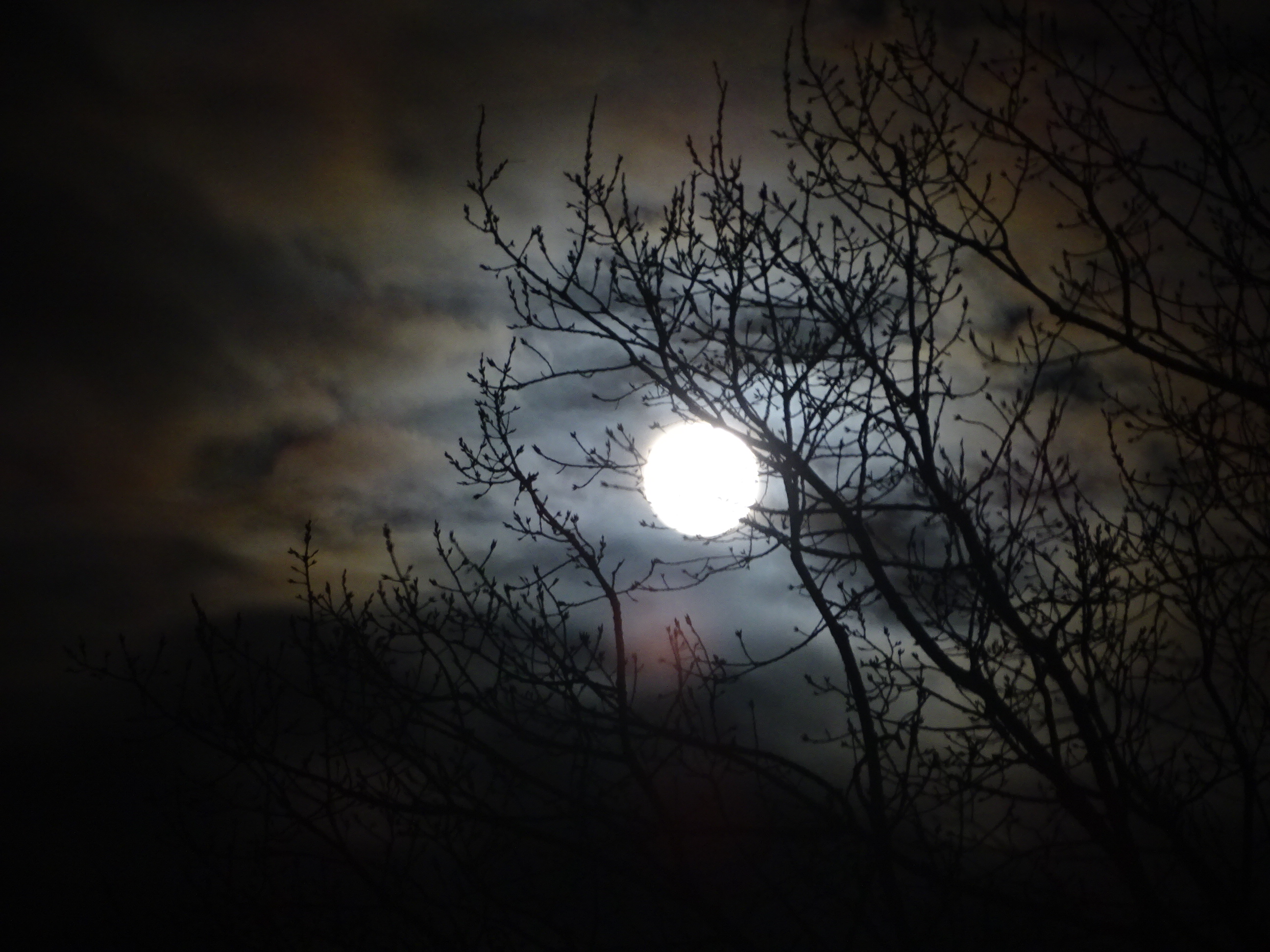
This Earth Day, we should spend time savoring our relationship with our awesome home planet. Astronaut Christina Koch who made history in the recent successful Artemis II moon mission shared her thoughts as she viewed our fragile planet from the moon. “I found myself noticing not only the beauty of Earth, but how much blackness there is around it and how that made it even more special. It truly emphasized how alike we are, how the same thing keeps every single person on planet Earth alive. We evolved on the same planet, and we have some shared things about how we love and live that are just universal. And the specialness and preciousness of that really is emphasized when you notice how much else there is around it.”

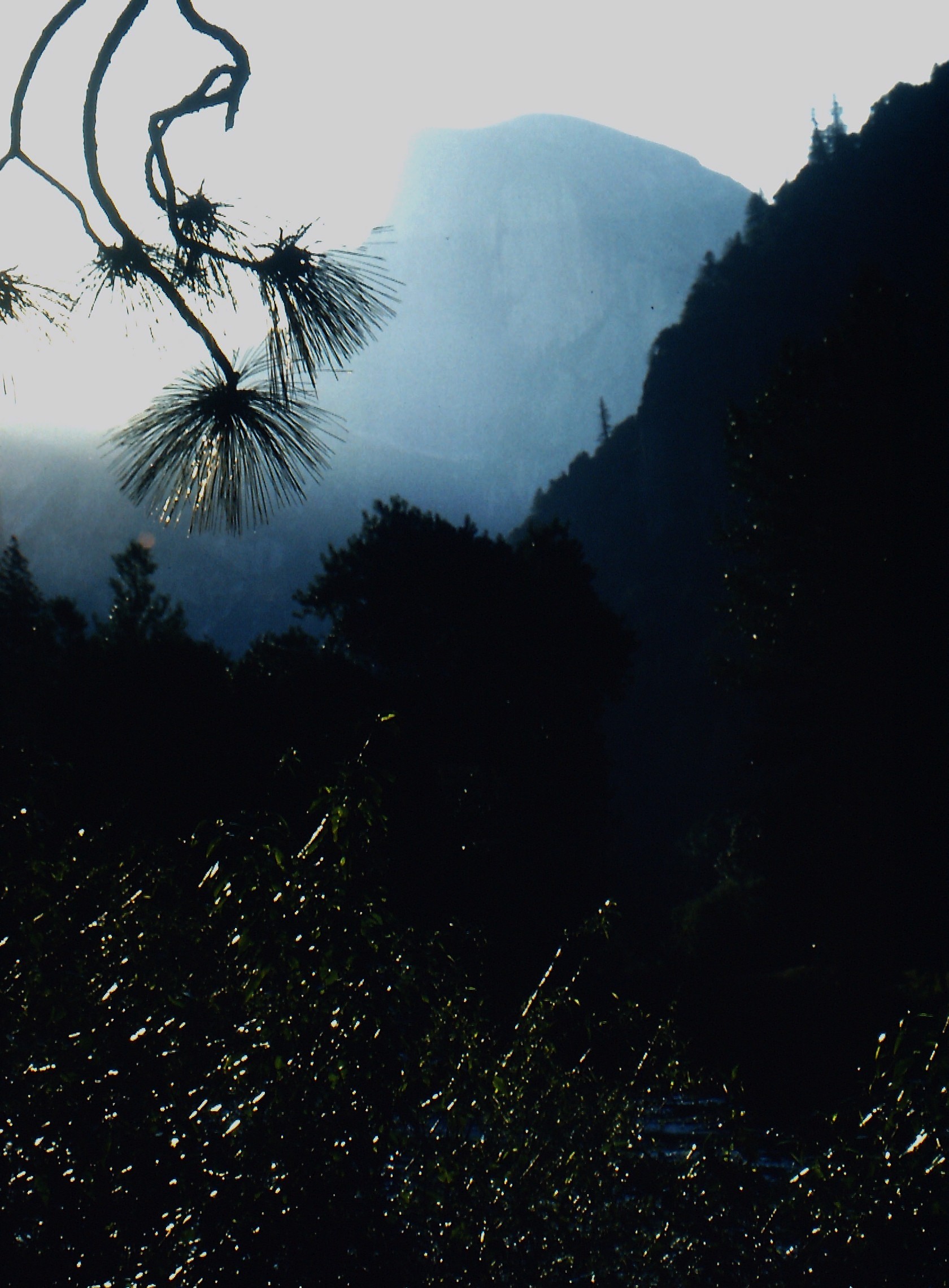
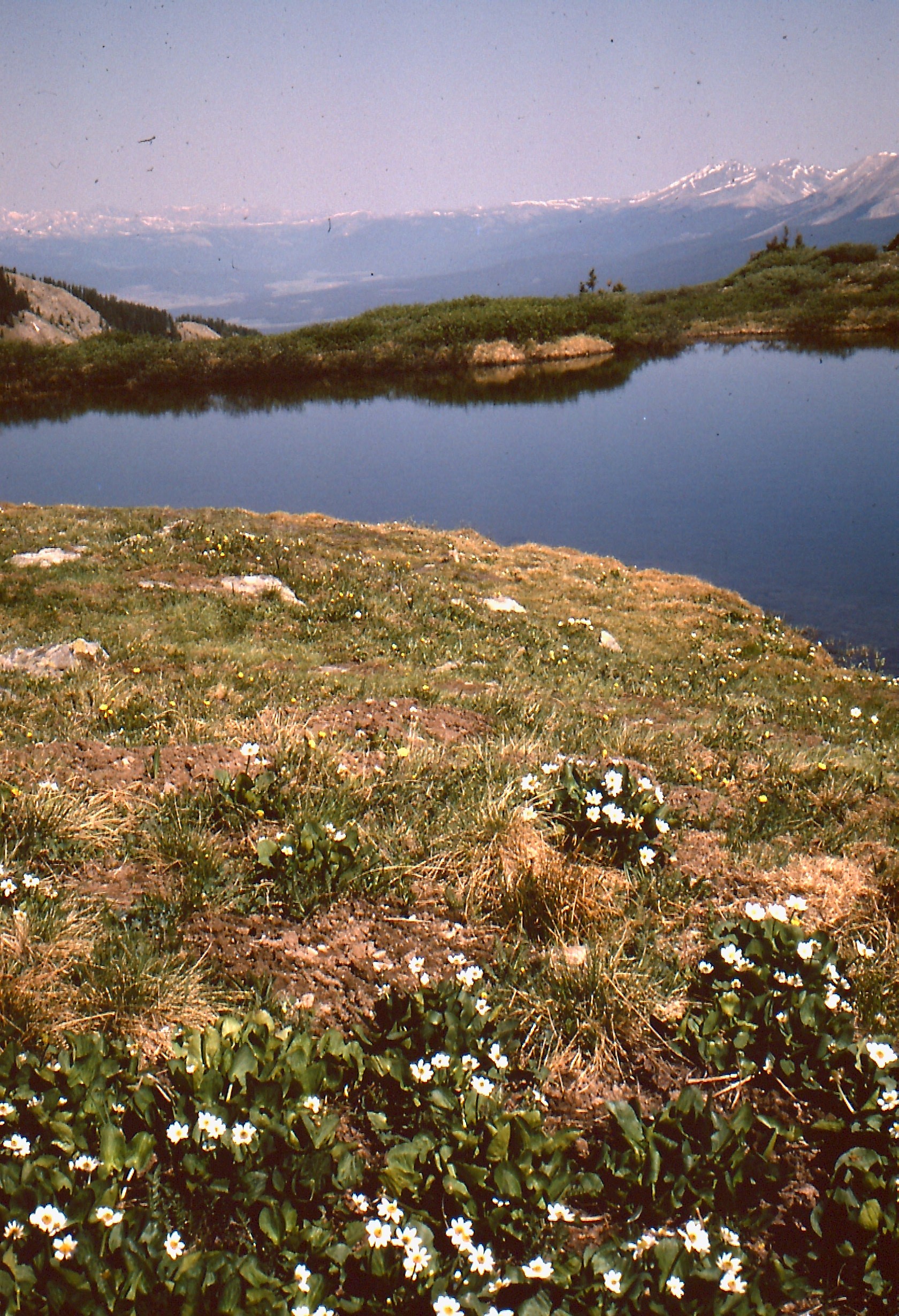
Take a moment wherever you are to marvel at the miraculous—birds, flowers, renewing life. As Robert Hubbell wrote, “We are truly fortunate to be living on a small planet near a hospitable, middle-aged star in the Orion Arm of the Milky Way. We should pause more often to reflect on that fact.”

And when you’re done reflecting on our living planet, consider taking more steps to defend its life-supporting systems. As indigenous peoples remind us, Earth has taken care of us for generations. We should respond with reciprocity and take care of our Earth. A few simple things to consider: download the Climate Action Now app and take a few actions they share every day. Subscribe to the Substack “Daily Dose of Climate Hope,” and Vernon Loeb’s “Inside Climate News.”

Make every day Earth Day this year.

The Heart of a Writer

Sleep has evaded me in recent nights. I wake with a heavy heart, thinking about events of the last week . . . month . . . year. I’m lost. And I think many others are also. This is not the reality we grew up with and anticipated for our adult years, for our children, or for our grandchildren.

One of the earliest pieces of advice offered I heard at a writing convention came from best-selling author David Morrell. He challenged every one of us to figure out why we write. The wrong answer was to make us rich. The best answer to that question is that we have to write. We can’t stop, even if we want to. There is something in our being that drives us to put thoughts to paper. Beyond that, it’s on the arrogant side to think others might want to read those thoughts.

Anne Lamott mentioned much the same sentiment in a TED talk she made. Publishing a bit of writing will never fill the empty spaces in your soul, she said. But writing will. The act of putting yourself onto paper (or a screen), whether people read it or not, whether people care or not is good for your soul, and it is the only thing you’ve been called to do in this life. Tell your story. That is the purpose of journaling, I suppose. It’s therapy.

And yet, the social, political, international, economic, and environmental climate these days make it nearly impossible to pinpoint something to write about. Where do I begin in my quest to find some sort of meaning in the cyclone of disasters we face? The therapy of writing eludes me. In the wake of the violence and killings perpetrated by our country recently, I cannot begin to think how I can offer any wisdom or encouragement. There is an avalanche of written articles available about every kind of thing. The focus of my life and my purpose have been stolen by those who would force their will on the rest of us. Add theft to their list of crimes. In an epidemic of lawlessness, the world is under siege by pirates who would have everything, down to our peace of mind.

My heart weeps.

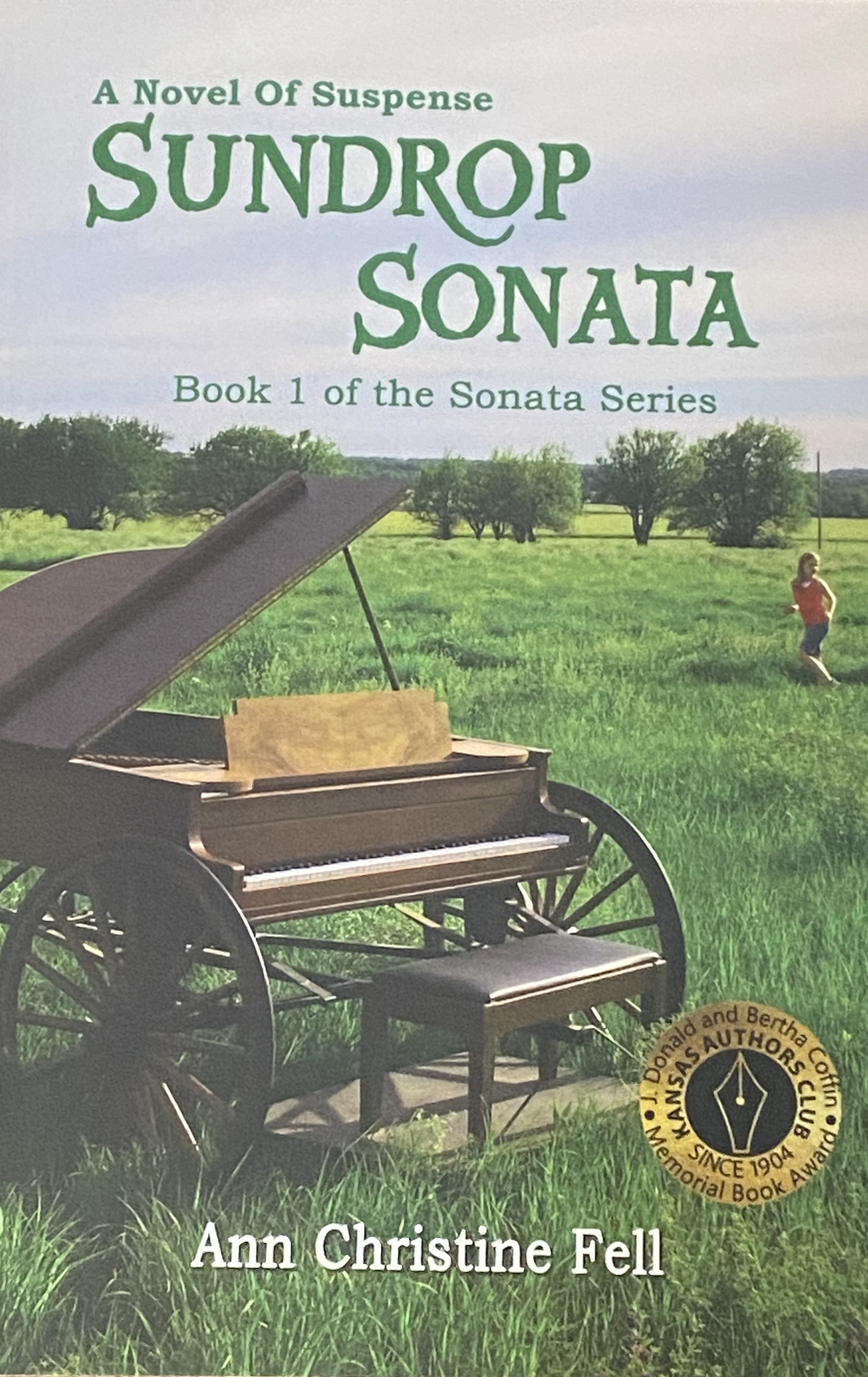
Last year, in the wake of corporate capitulation to administrative demands, I decided to look for a friendlier publisher for my stories and I found Lulu Press, a certified B Corporation. They care about the Earth and its people, and they work to make a better world. This month, through Lulu, I released a Second Edition of the first book in my suspense novel series, while continuing to work on the 4th one. Books 2 and 3 will soon join Book 1 at Lulu. The 2nd edition of Sundrop Sonata is now available, either from me or the Lulu bookstore. This is a positive step forward for me, and yet in the insanity consuming our daily news, I can’t find the heart to celebrate. I rebelled in my own way against corporate interests that have little regard for human rights or civility, but it’s a speck in the vast dust cloud that envelopes us all.

As I was flipping through the proof copy, one segment caught my attention. In Chapter 36, protagonist Izzy talks to her teenage daughter as they sit on an airplane. It reminded me why I wrote this book in the first place. Izzy is a caring mother and professional piano technician who stumbles into a situation in which she needs to find deep within herself the strength and determination to face desperate and dangerous men.

We each might find ourselves in a parallel situation today.  I need to reaffirm my values and stand for what I believe in, what is right in the world, and support others who face unspeakable situations such as Alex Pretti and Renee Good, and many others Whose Names are all but Unknown. We must remain true to ourselves

That, then, is one value of writing—and reading—fiction. To learn something about ourselves and to believe in ourselves.

Here’s a segment from Chapter Thirty-six in Sundrop Sonata.

“I feel sorry for Laura,” Melody said. “She’s always going to have to look over her shoulder, wondering if he’s watching. She’ll never be free of her dad, will she?”

“That’s an astute observation, Mel.” I slipped the in-flight magazine back in the seat pocket. “If you think about it, we’re all prisoners in some manner.”

“How? We don’t all have a maniac chasing us.”

“Maybe not, but we are limited by chance circumstances and the choices we make.”

“I don’t get what you mean.”

“You’re young and your personality is still developing. I, on the other hand, am who I am. Things I witnessed and choices I made years ago turned me into the person I am today. I’m a pretty predictable person.”

“You sound boring. Or bored.”

“Far from it. I could no more have turned Nola down when she asked for my help than jump over the moon, or harm somebody on purpose. I’m a prisoner of my own soft heart and look where it’s led me. Sometimes I wish it wasn’t so because life gets complicated.”

Melody laughed. “I can’t see you cold and hard.”

“Exactly. I’m incapable of being different than I am. I see a need and I want to help.”

“Am I a prisoner of circumstances too?”

“You’re still young enough to have lots of future options. This experience with Laura will impact your life, I’m sure. Her life has been shaped by choices people made long before she was born, so she’s got a jump-start on you building her personal prison.”

“Her dad’s life was like that too.”

“Who, Jay?”

“Yeah. His actions are almost understandable considering what happened to him and his mom.”

“You’re right. We all travel through life, on a course set by our parents. Something happens and we turn a corner, head a new direction. Pretty soon, another corner. At some point, the corners define a shape—the proverbial box. We all have unique boxes, depending on how many corners we encounter before we’re boxed in. That becomes the prison from which we view the world and make our choices.”

“Think outside the box, Mom.”

I cuffed her playfully. “Thinking or dreaming outside my box is one thing. To act outside it is another.”

“Not impossible.”

“Nothing is impossible. But to act outside my box—outside my character—would require a crisis, some event that would turn me in desperation another way and catapult me outside my defined box.”

“Something bad enough to make you cruel?”

“I can’t imagine what that would be.”

“If Laura’s dad is operating from his personal prison of rejection and misery, what kind of event would launch him out of it?”

“I don’t know—a crisis of love and kindness?”

“Nothing is impossible, right?”

~~

At the end of the story, which of these characters actually faced a crisis great enough to take uncharacteristic steps? Though I like to believe it’s not impossible for a cold-blooded killer to feel remorse and become a different person, it’s far more likely that a peace-loving and kind-hearted person will be forced to defend herself or others in uncharacteristic ways. In Sundrop Sonata, Isabel Woods must find the strength and courage within herself to take steps she never would have dreamed she could take. But, if she can do it, so can we in real life, in America, in 2026.

Steady. Stand firm for what you believe is right.

Where do I go from here?

Here we are in a new year, 2026. As I consider options for my future, I realize that nothing about life is simple. If events in 2025 didn’t prove that, I don’t know what would. I entered a new decade in my life last year, and you’d think I would have it figured out by now. But such is not the case. Nothing is simple, not even in retirement. All I can do is pay attention, consider options, and choose my path.

Society frayed over the last year. Assumptions and beliefs I’d held all my life drizzled down the drain with a mess of sewage generated by the greed of people who already have too much. For most of my life I believed we were the good guys. We weren’t perfect, but we had good intentions, good dreams, and good Declarations. Our country has evolved over 250 years in our journey to be better.  The America I remember helped people, here and around the world. America provided desperate people with opportunities. We supported human rights for all. We were on the cusp of a great awakening that would stall the degradation of our beautiful home planet, Earth.

And then the money mongers took control. In only a few months, we morphed into the villain.

I had to re-evaluate my priorities. What values were still important and intact? What do I stand for? With every step I take and every breath that is still mine to breathe, I feel I must strive to protect, preserve and prolong those who are at risk, including the unique biosphere we have enjoyed on Earth.

That is why I write. There are stories inside me that beg to be shared. Perhaps they will help heal Earth, if not for me, then for my grandchildren and theirs. Ten years ago—one whole decade—I launched my first novel, Sundrop Sonata, through Amazon. Two others followed, Sonata of Elsie Lenore, and Firestorm Sonata. I’m in process of writing a fourth story in the series. The plots evolved each time until in Sonata #3, Firestorm, we catapult through environmental disaster into a bleak, technology-deprived future.

My plan for 2026, already in motion, is to pull my books from Amazon, since that huge company seems beholden to the grifters in charge. After much soul-searching, hand-wringing, and self-doubting, I encountered a viable option in Lulu.

The Lulu company was founded in 2002 by Bob Young. Its name refers to “a remarkable person, object, or idea” and can reference the company itself, as well as each creative project of the writers who use Lulu. Its mission statement: “Lulu is dedicated to making the world a better place, one book at a time, through sustainable practices, innovative print-on-demand products, and a commitment to excellent service.”

The “sustainable” part of Lulu’s mission did it for me. For the last decade, Lulu has earned Certified B Corporation status, meaning it meets high standards of social and environmental impact. To choose Lulu for my future writing projects means that I am an advocate for environmental and social change, along with the company.

My plan for 2026 is to launch 2nd editions of each Sonata novel. Hopefully before the year is gone, Book 4 will join the others along with renewed hope in our country and the world. Watch for more book news in the coming days.

The Sun Day 2025 Experience in Cowley County, Kansas

Here Comes the Sun-Day!

For over 50 years,  Winfield, Kansas has been home to the Walnut Valley Festival on the third weekend in September. That made planning a Sun Day 2025 event here challenging.  If we were to correlate with the national effort to raise awareness and celebrate the explosion of solar energy around the world, we had to get creative. Fortunately, Cowley County is full of creative people.

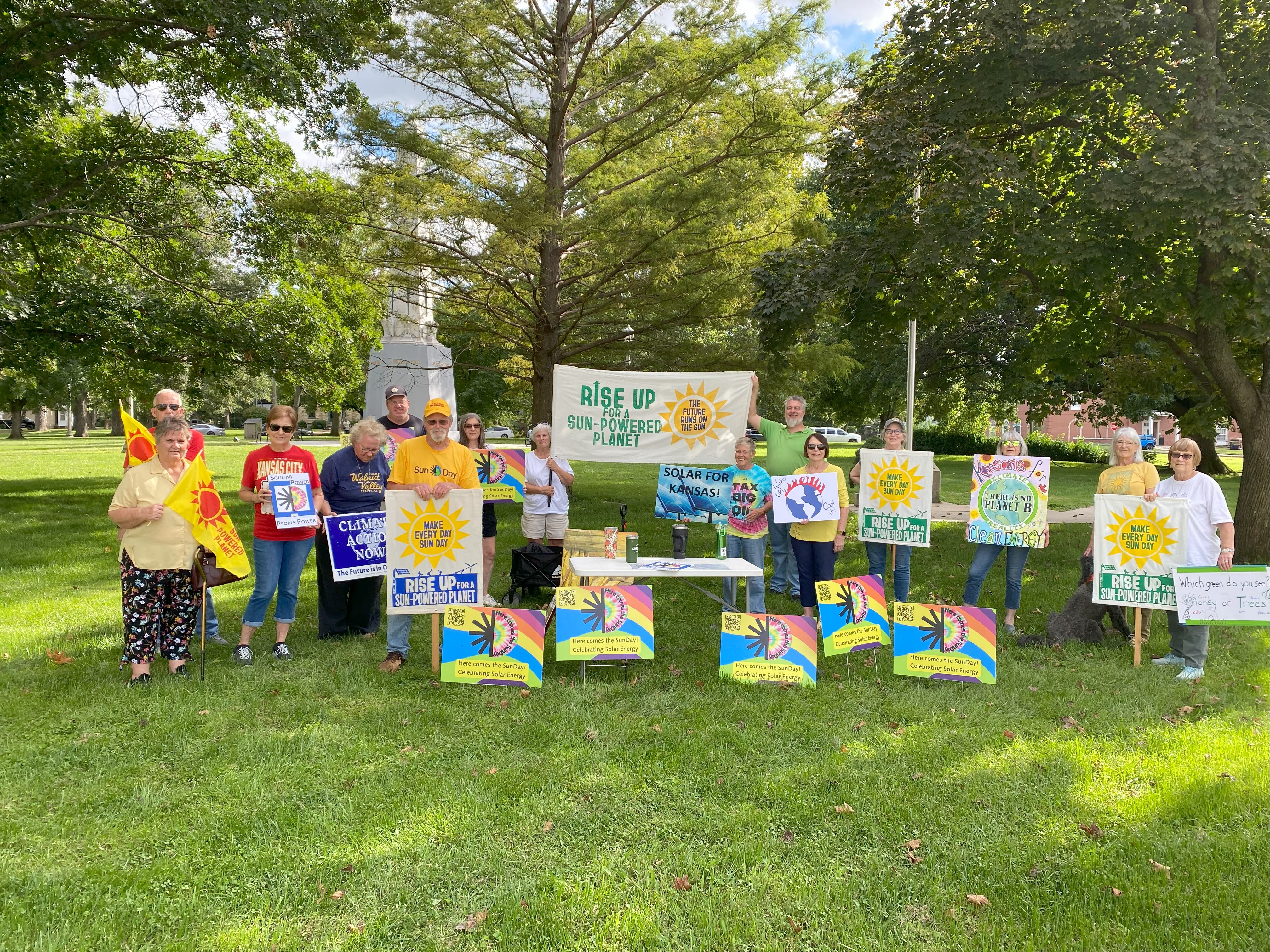
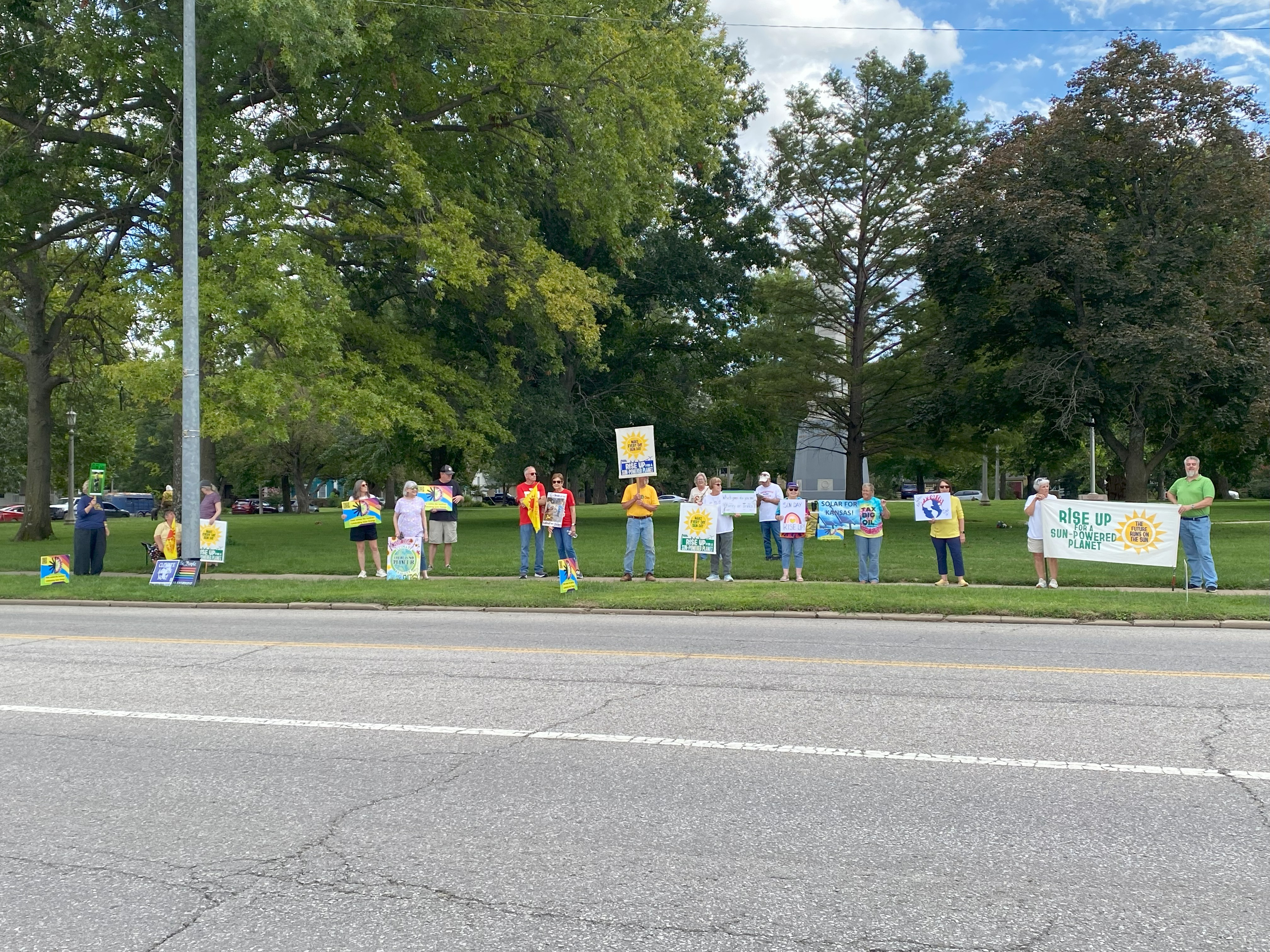
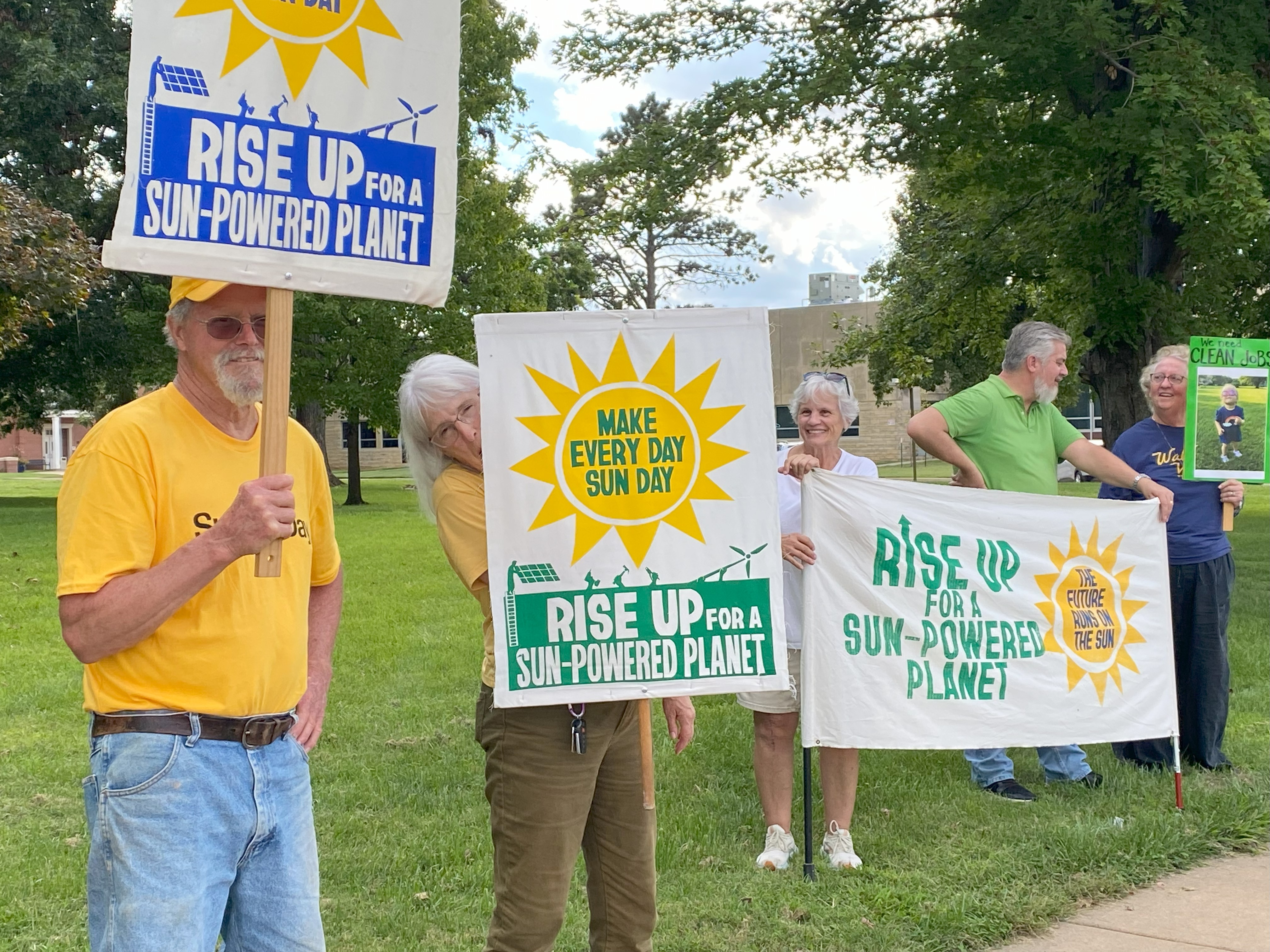
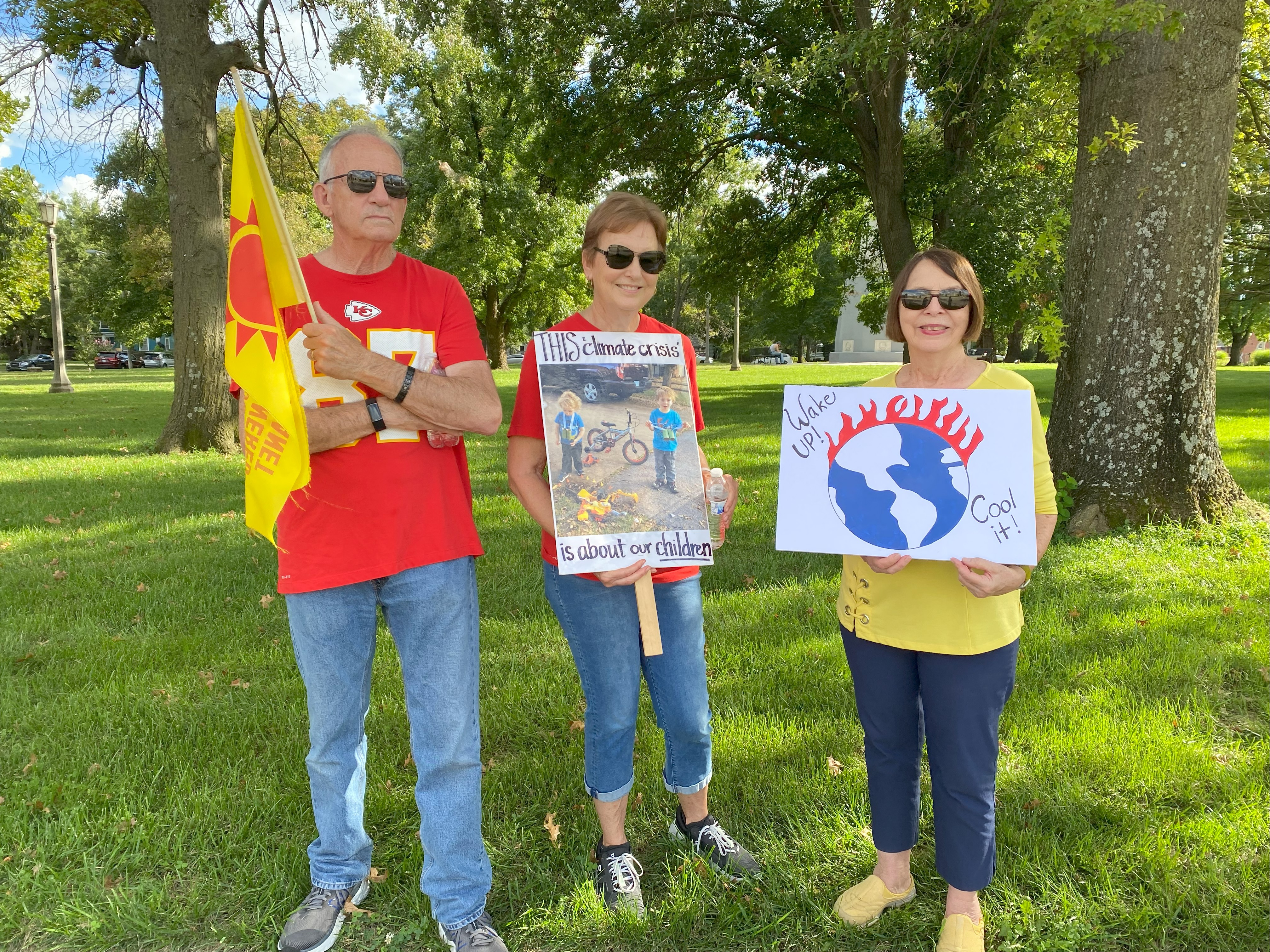
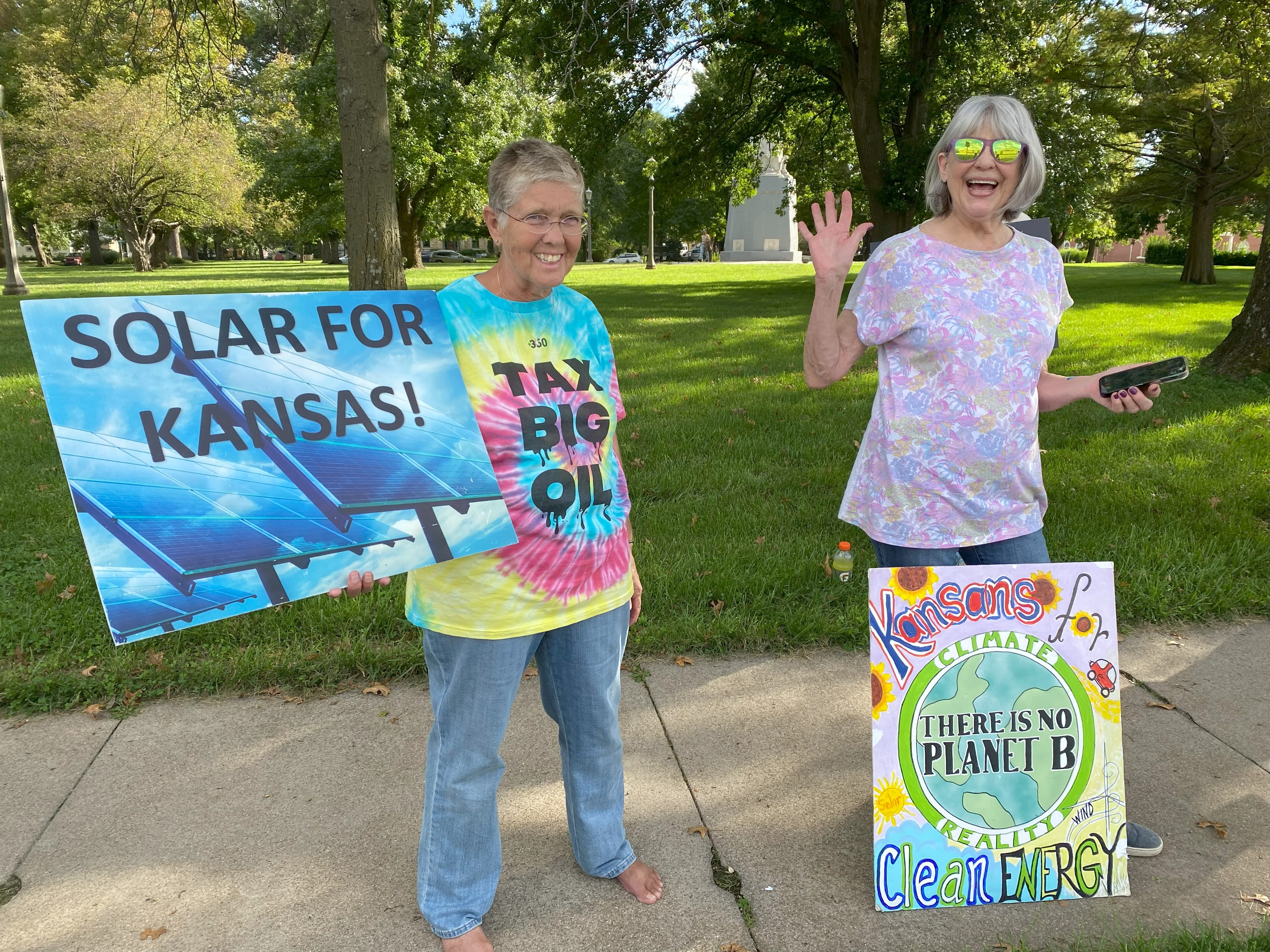
We decided to feature a variety of events preceding that big day.  And thus our “Here Comes the Sun-Day” project was born. Now that it’s over, enjoy a photo tour of the local events for Sun Day 2025.

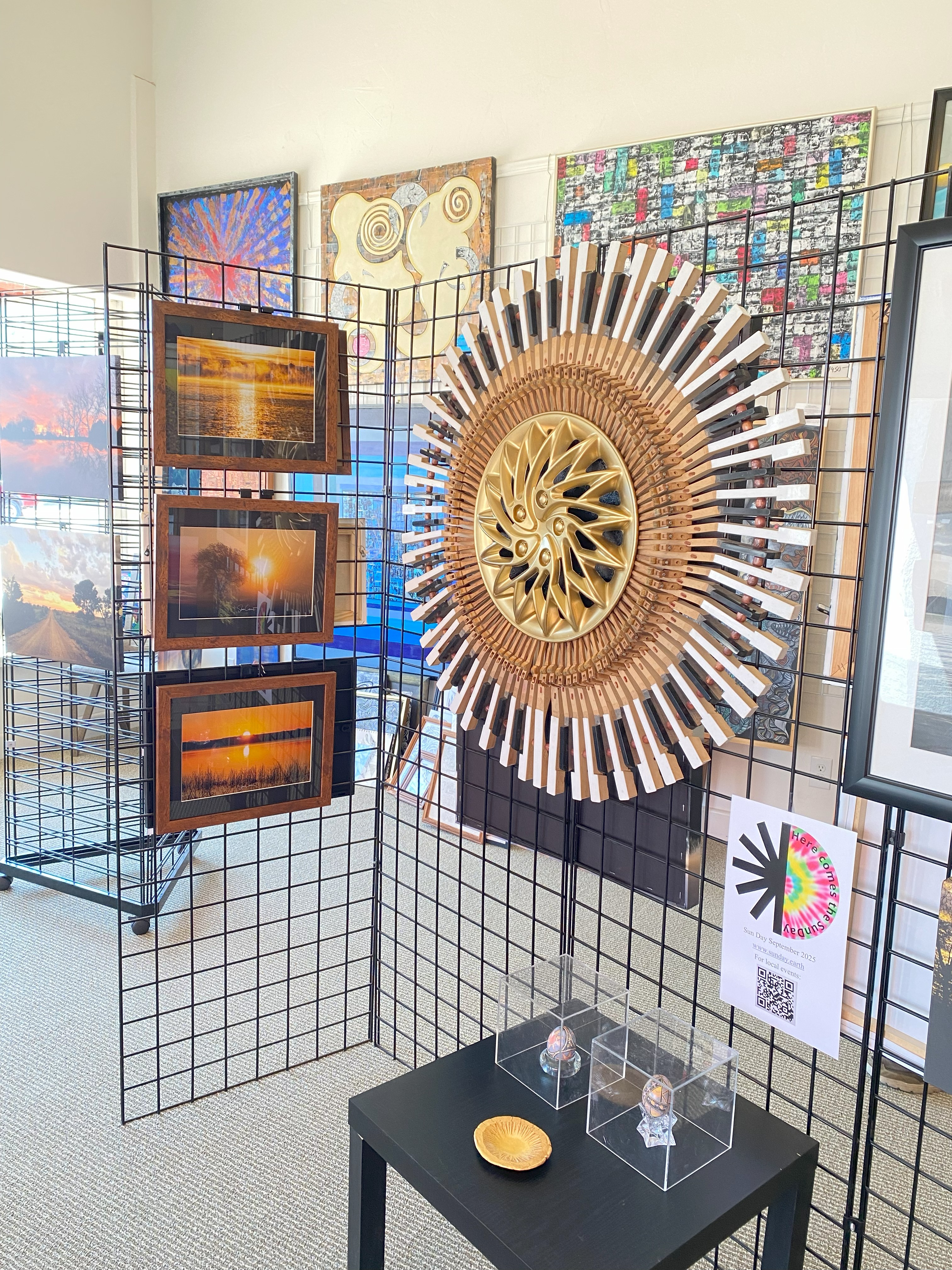
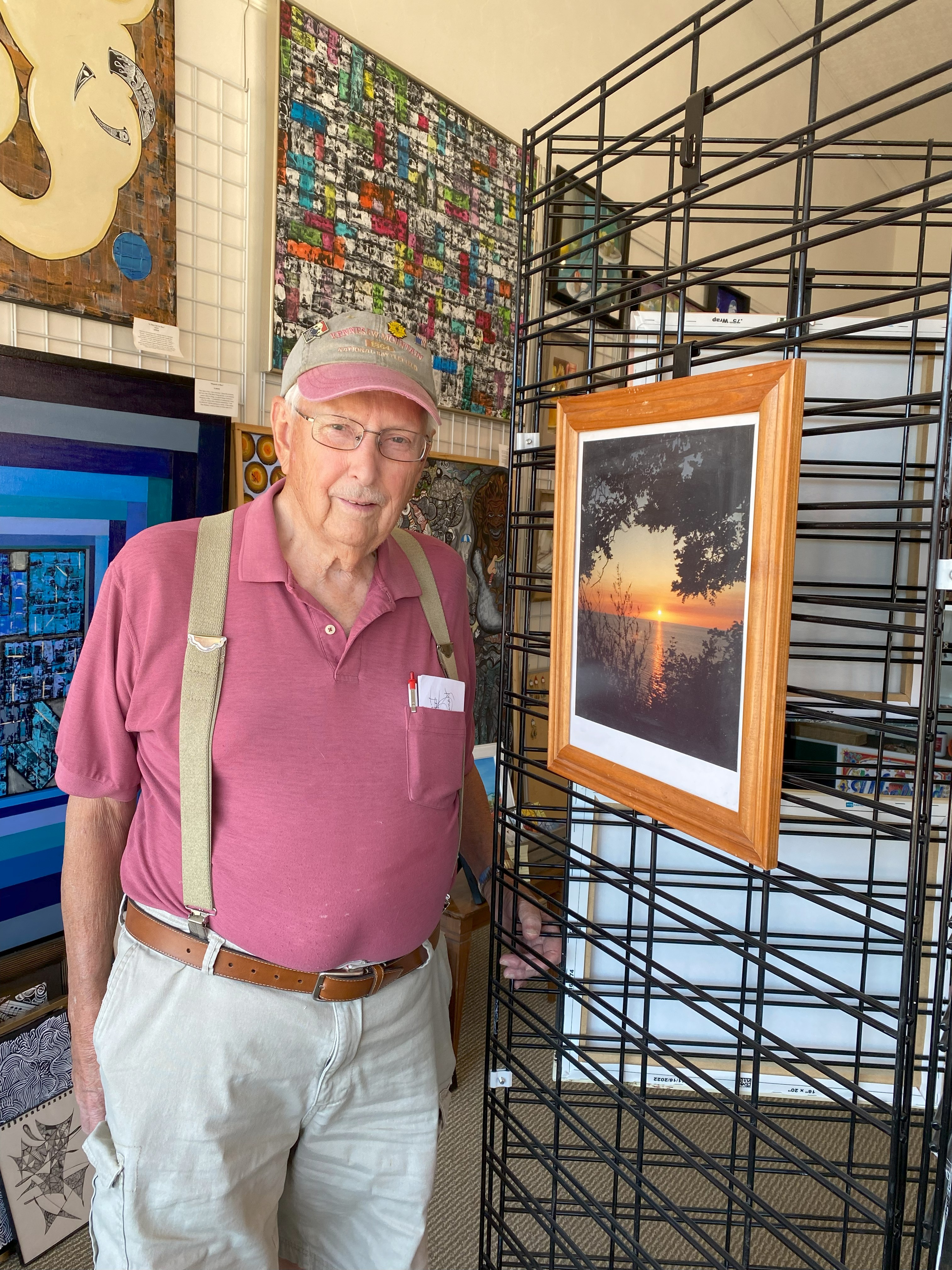
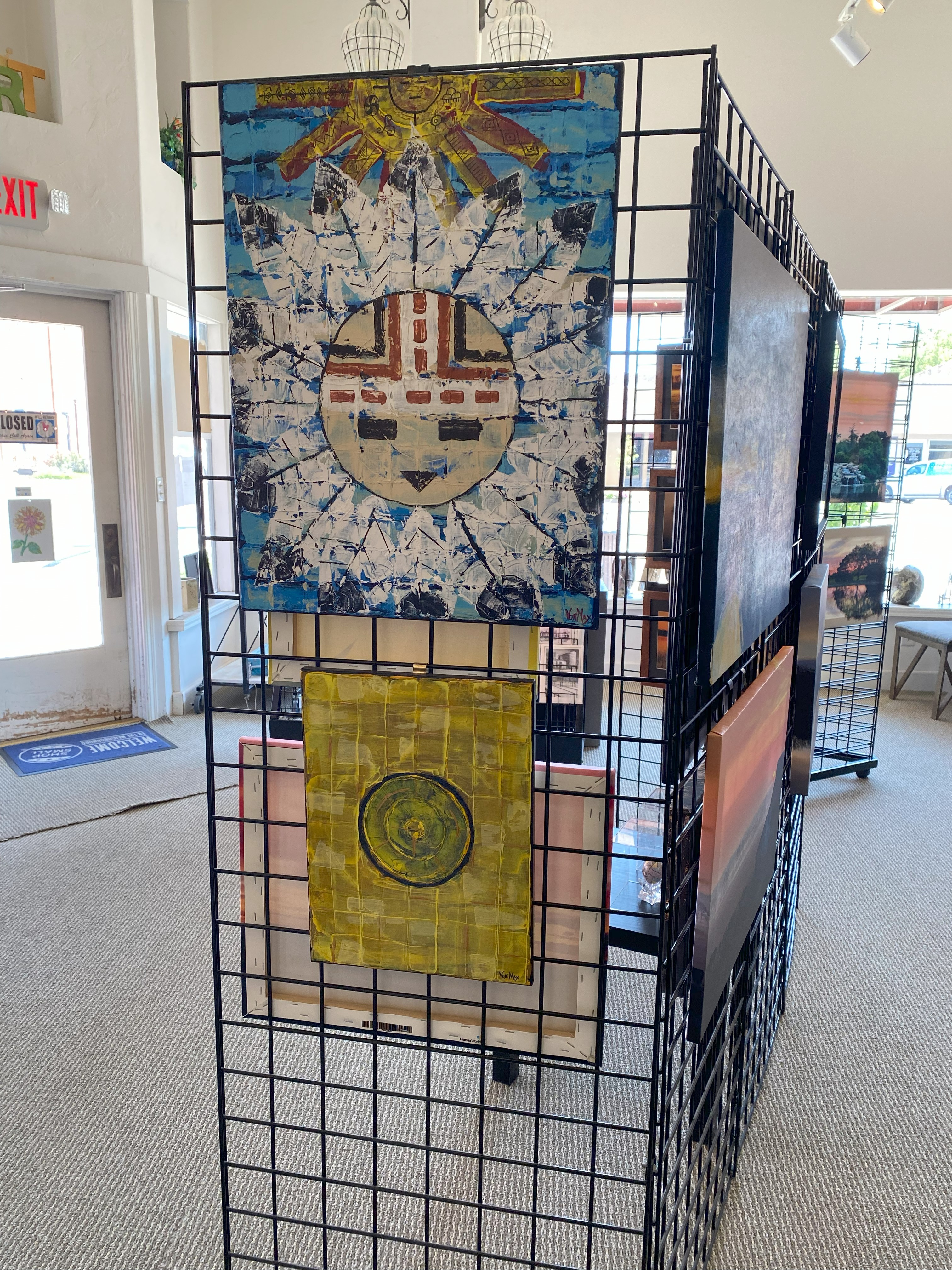
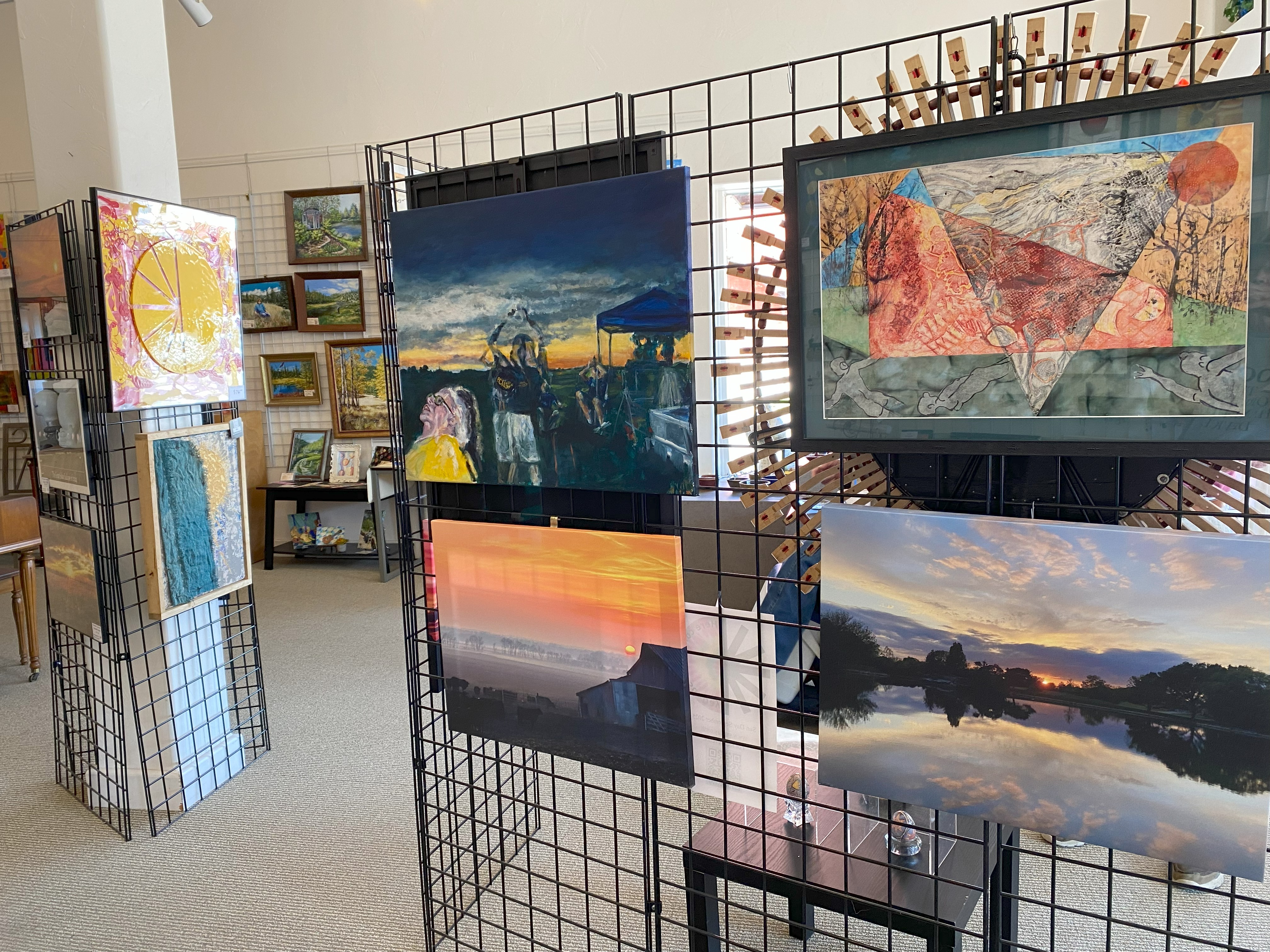
Solar Art Exhibit Featured at Gallery 1001 through September

The Winfield Public Library and the Arkansas City Public Library featured solar books and STEM projects through the month.

Local Coffeeshops and Restaurants offered sun-related specialties.

College Hill Coffee featured a “golden sun turmeric latte” and Sunshine sandwich special. They also provided media for customers to create their own “Sun Day Art”.

Downtown, the Oasis designed a special “Sunset Refresher” drink.

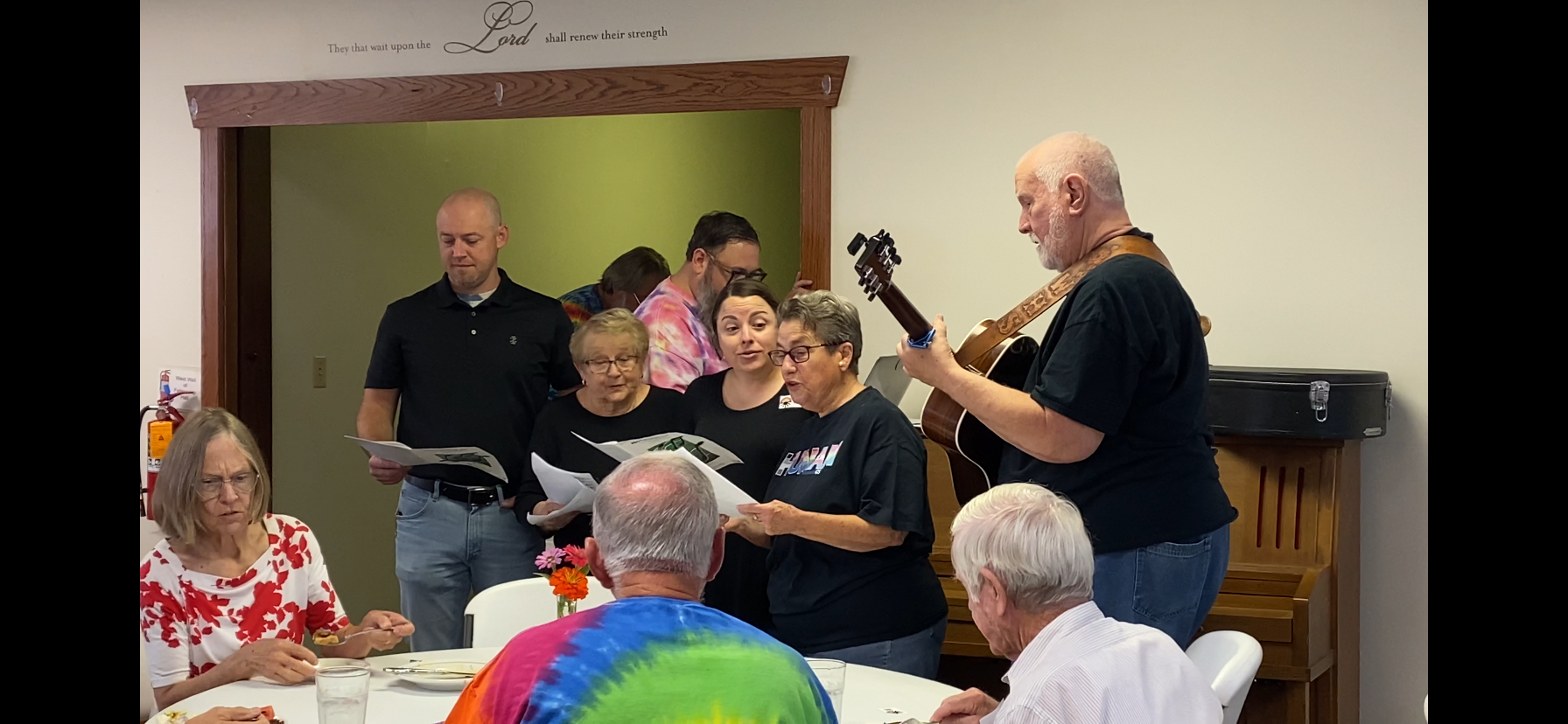
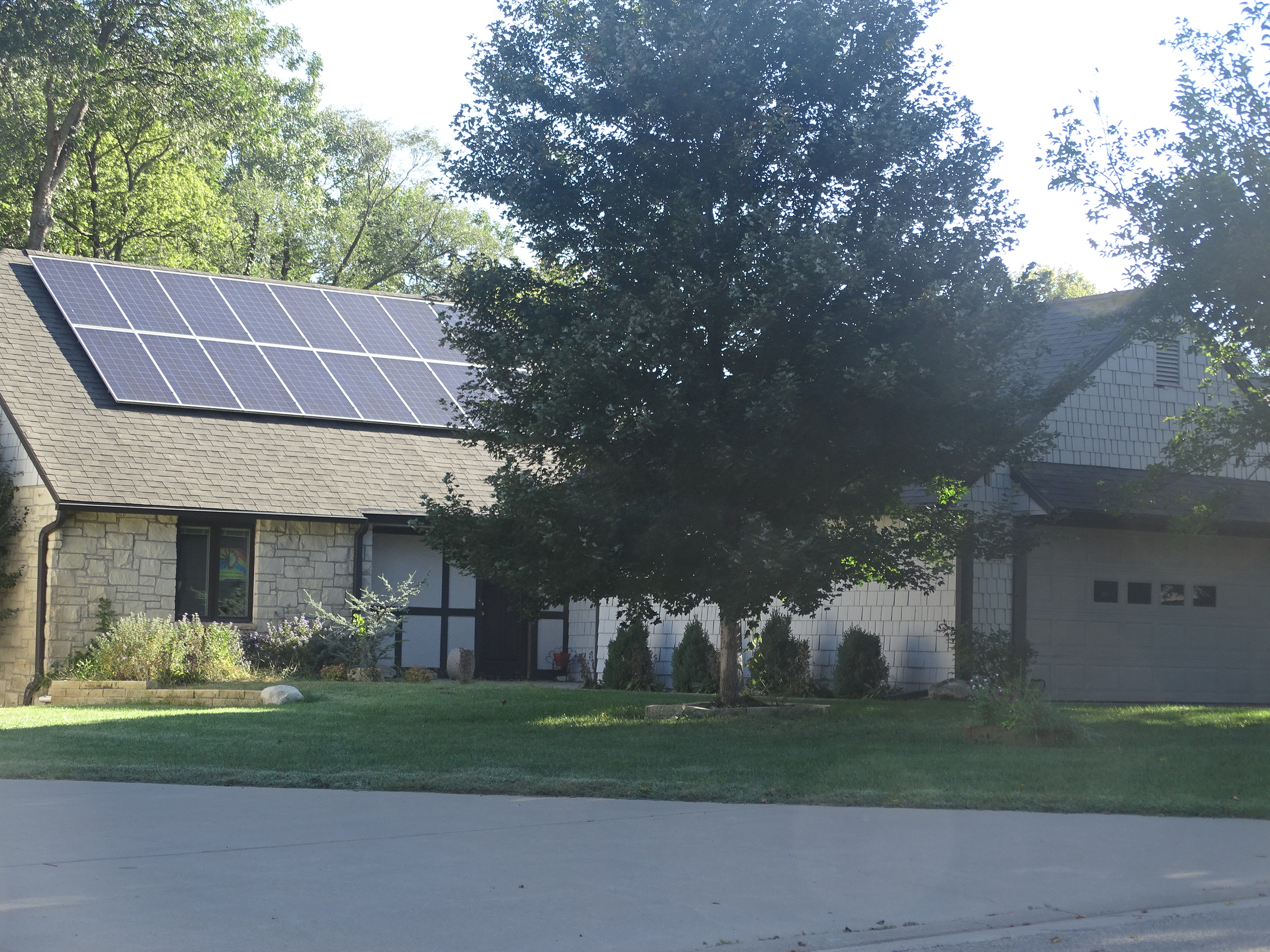
Grace United Methodist Church got into the Sun-Spirit after installing a large solar array on their education building a couple years ago. They kicked off the big Sun Week with special music from campers at the Walnut Valley Festival, followed by a covered dish dinner–with a few sunny delights!

A sweet “sunflower” and sunflower seed pie.

And a local quartet shared an arrangement of  “Here Comes the Sun!”

Meanwhile, out at the Festival, campers and music lovers could show their solar support with specially designed stickers, and enter a drawing for solar camping equipment.

The Winfield Arts and Humanities Council teamed up with the Walnut Valley Festival to offer children a chance to create t-shirts, printed by the sun!

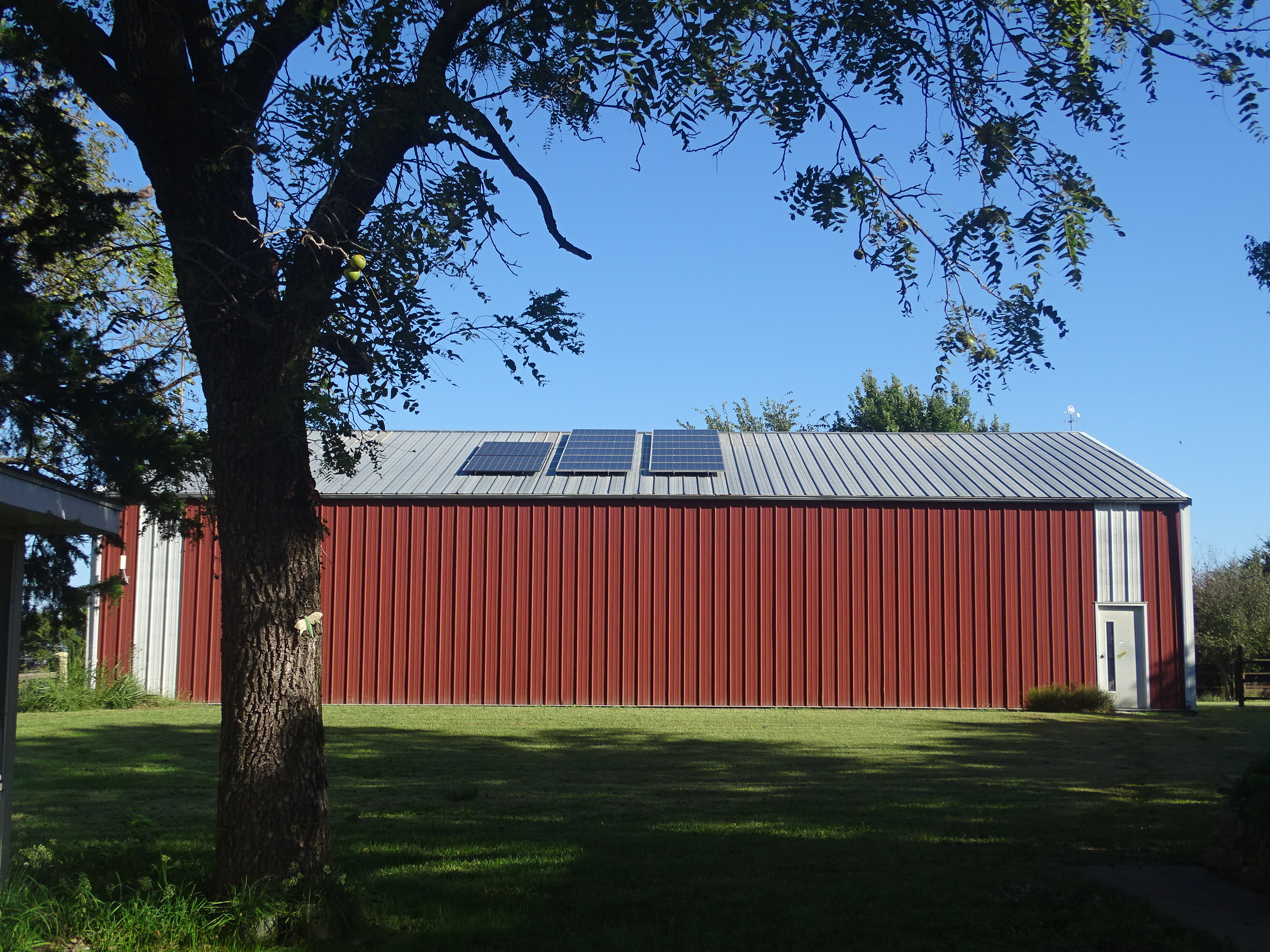
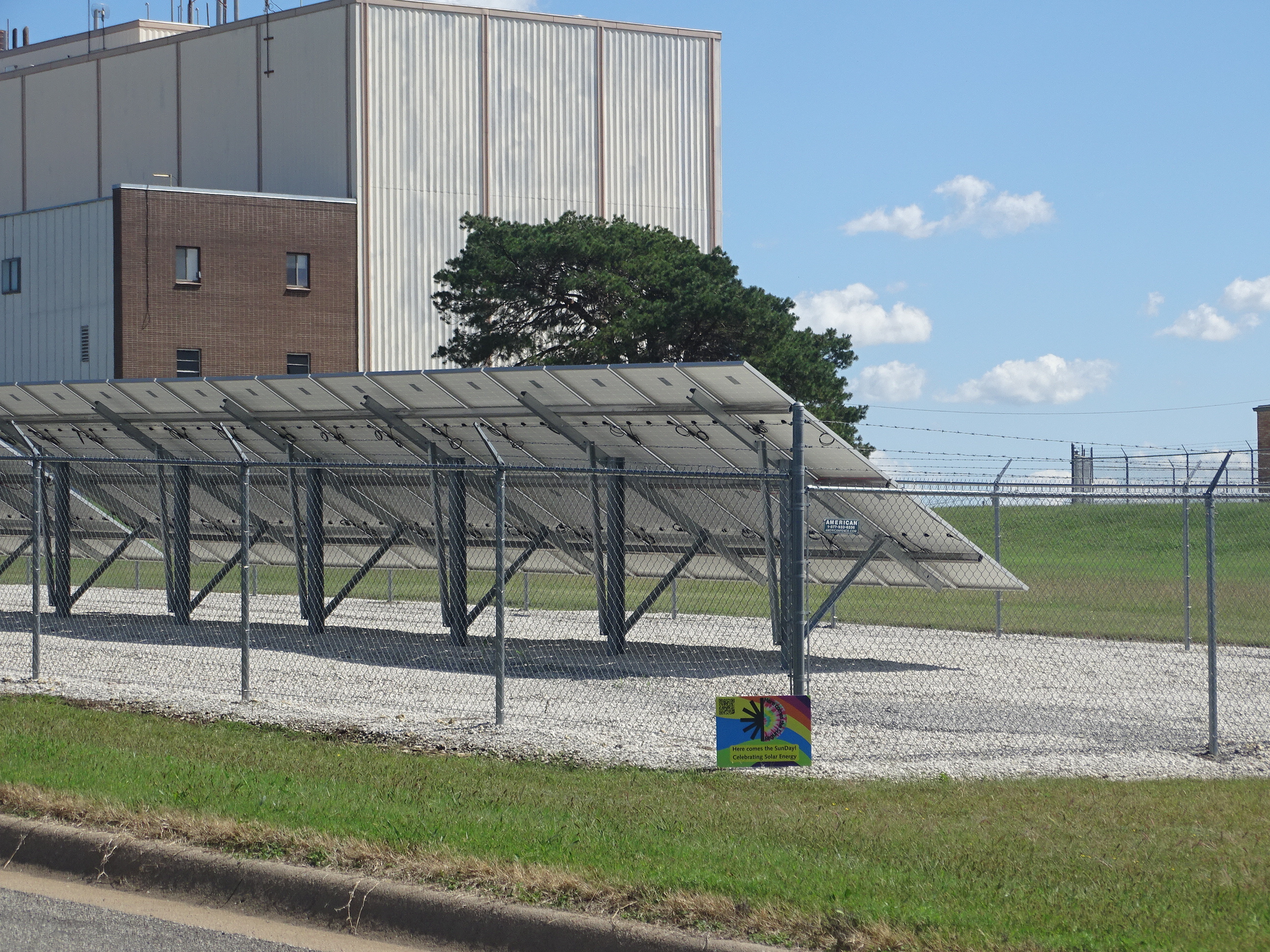
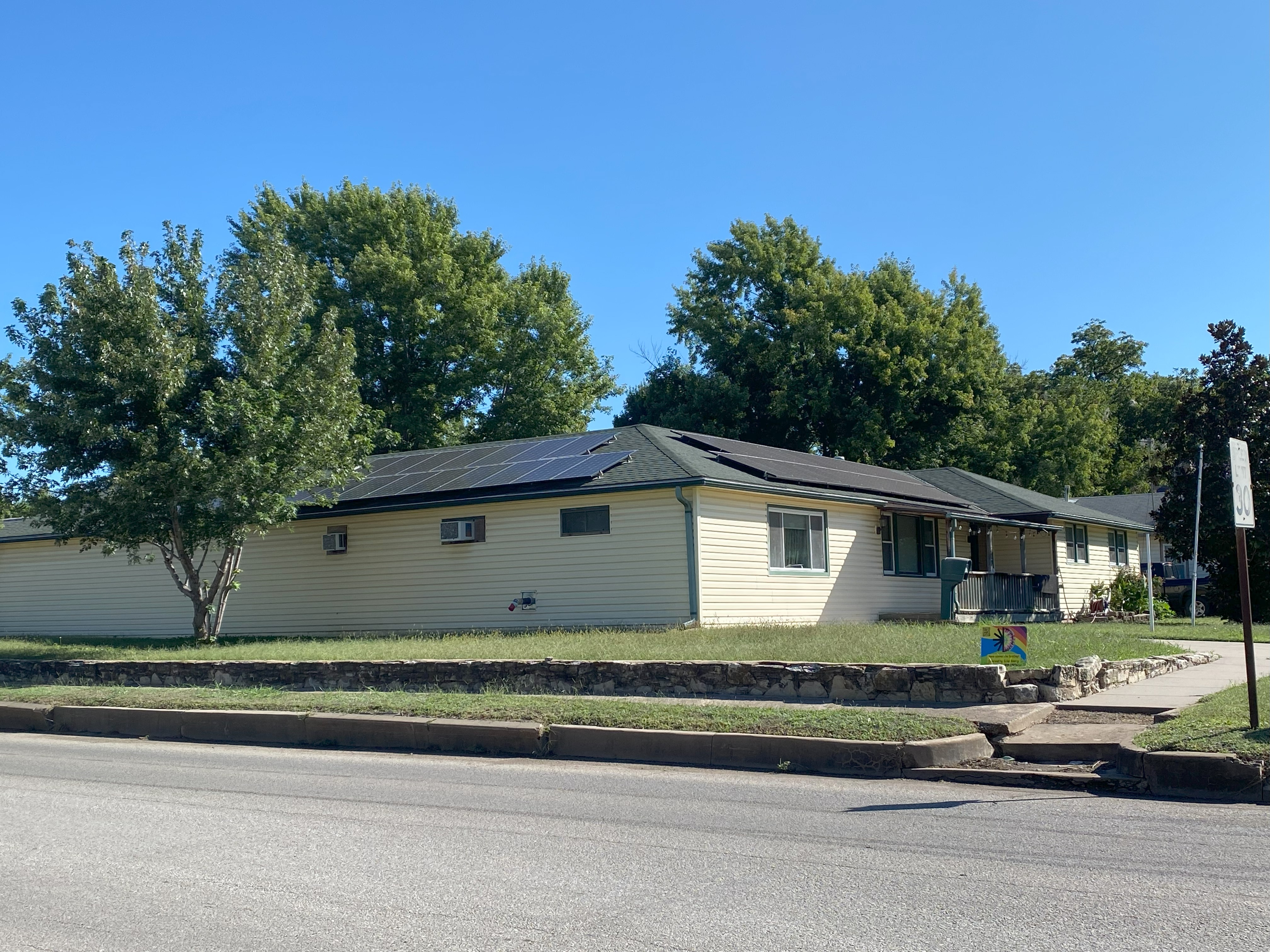
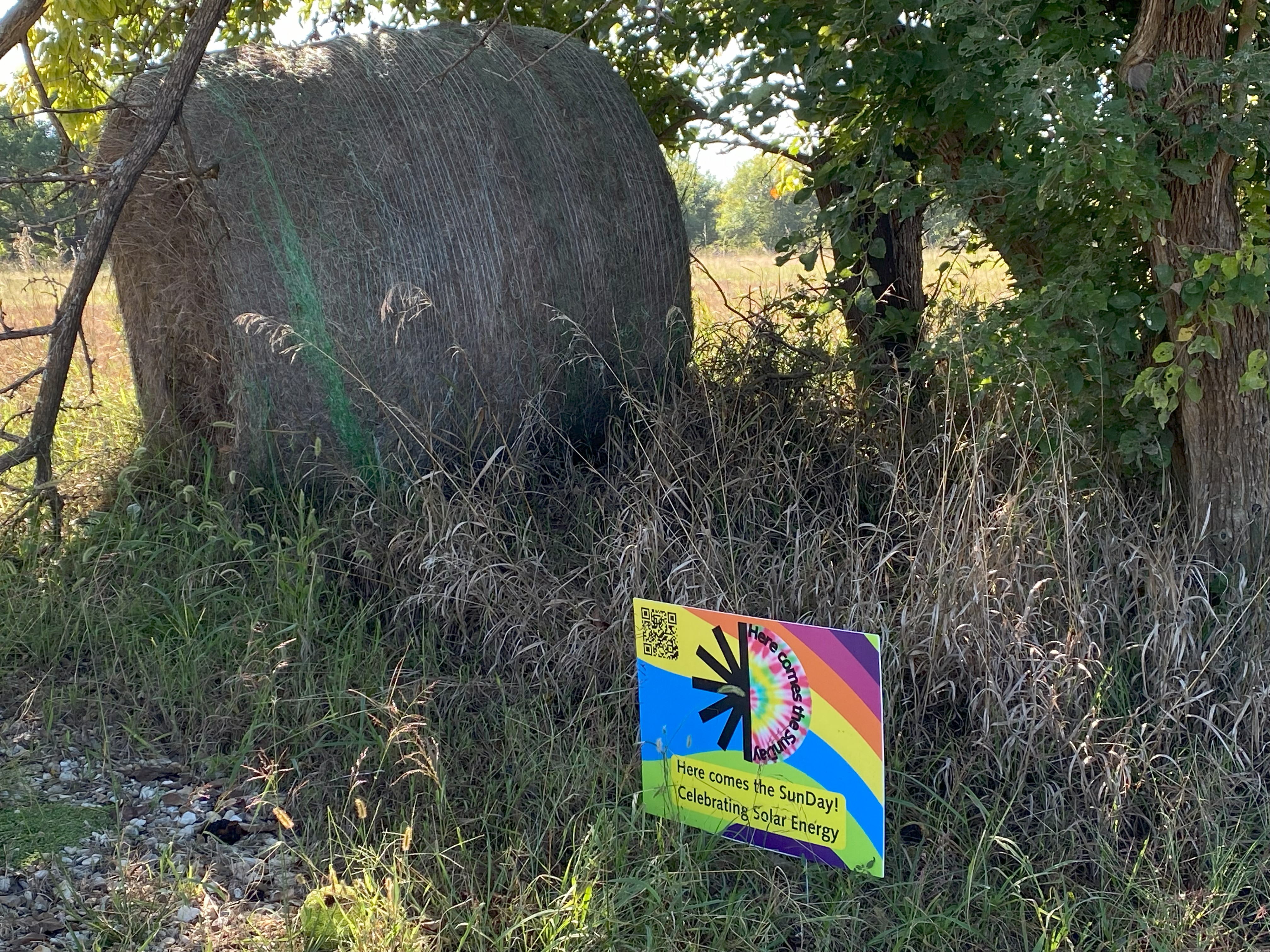
The county Sun Day planning committee provided information for interested folks to tour several local solar installations through the week prior to Sun Day.

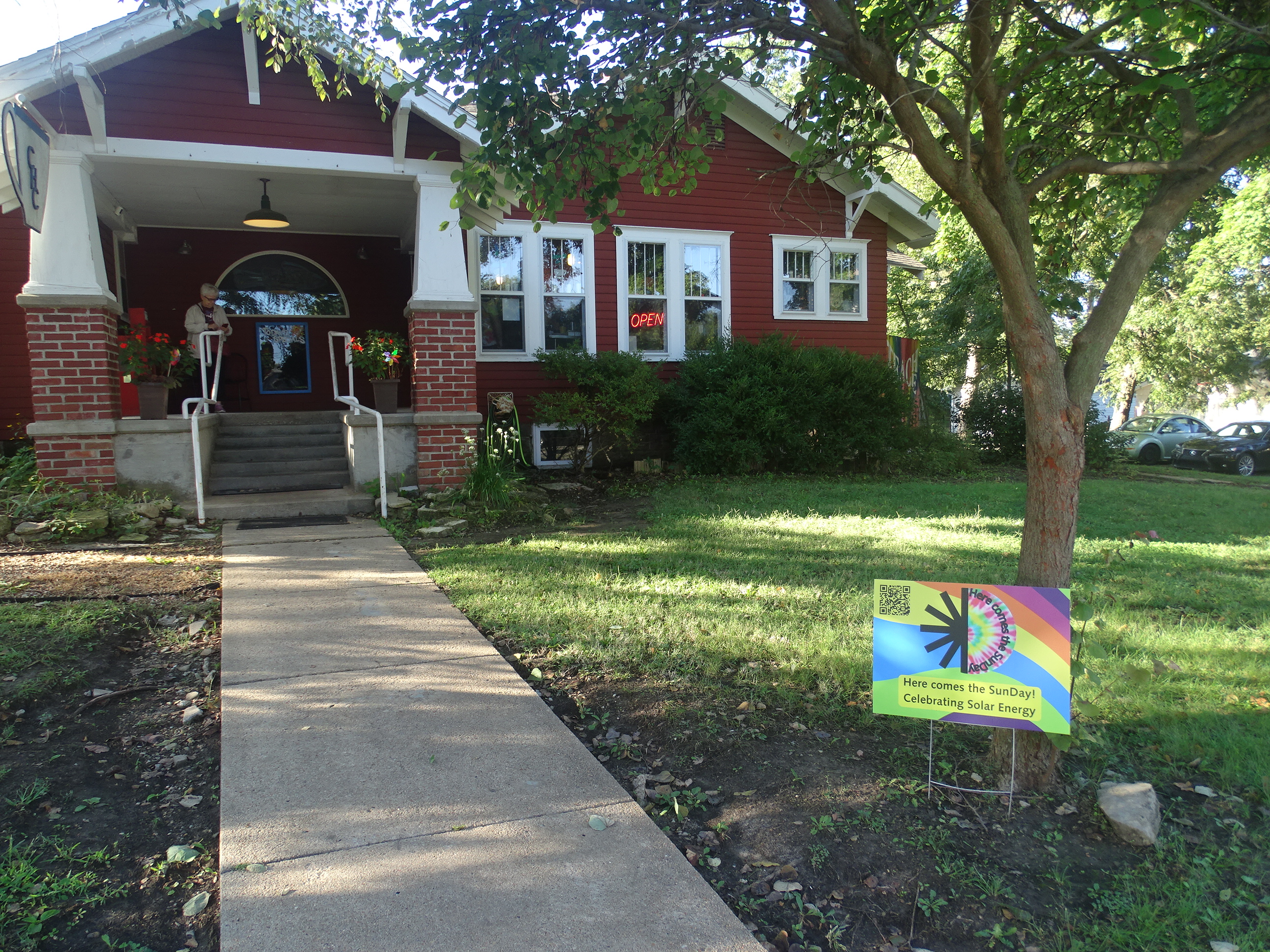
Locations were marked by the special yard sign, within two communities, as well as in the countryside.

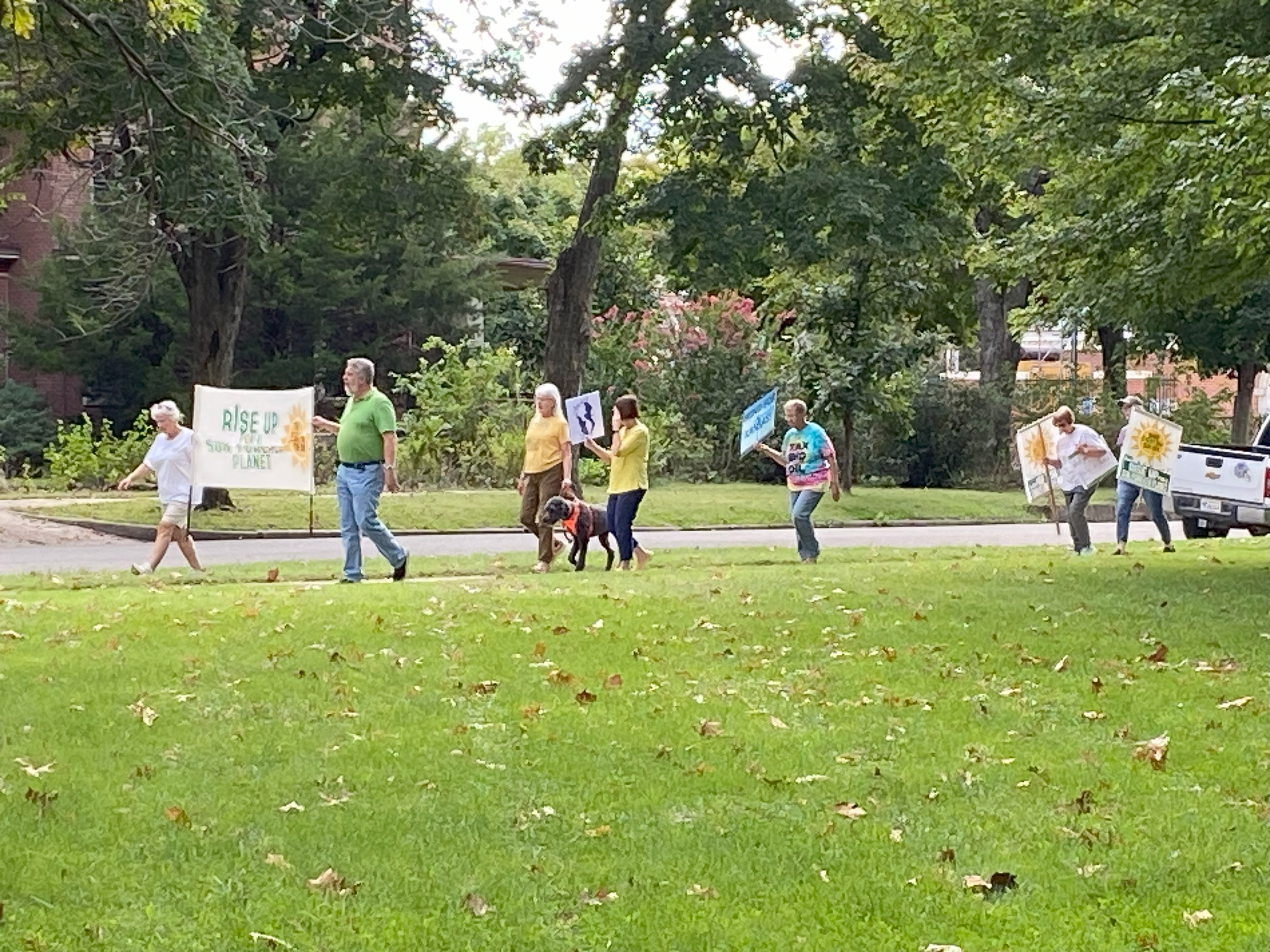
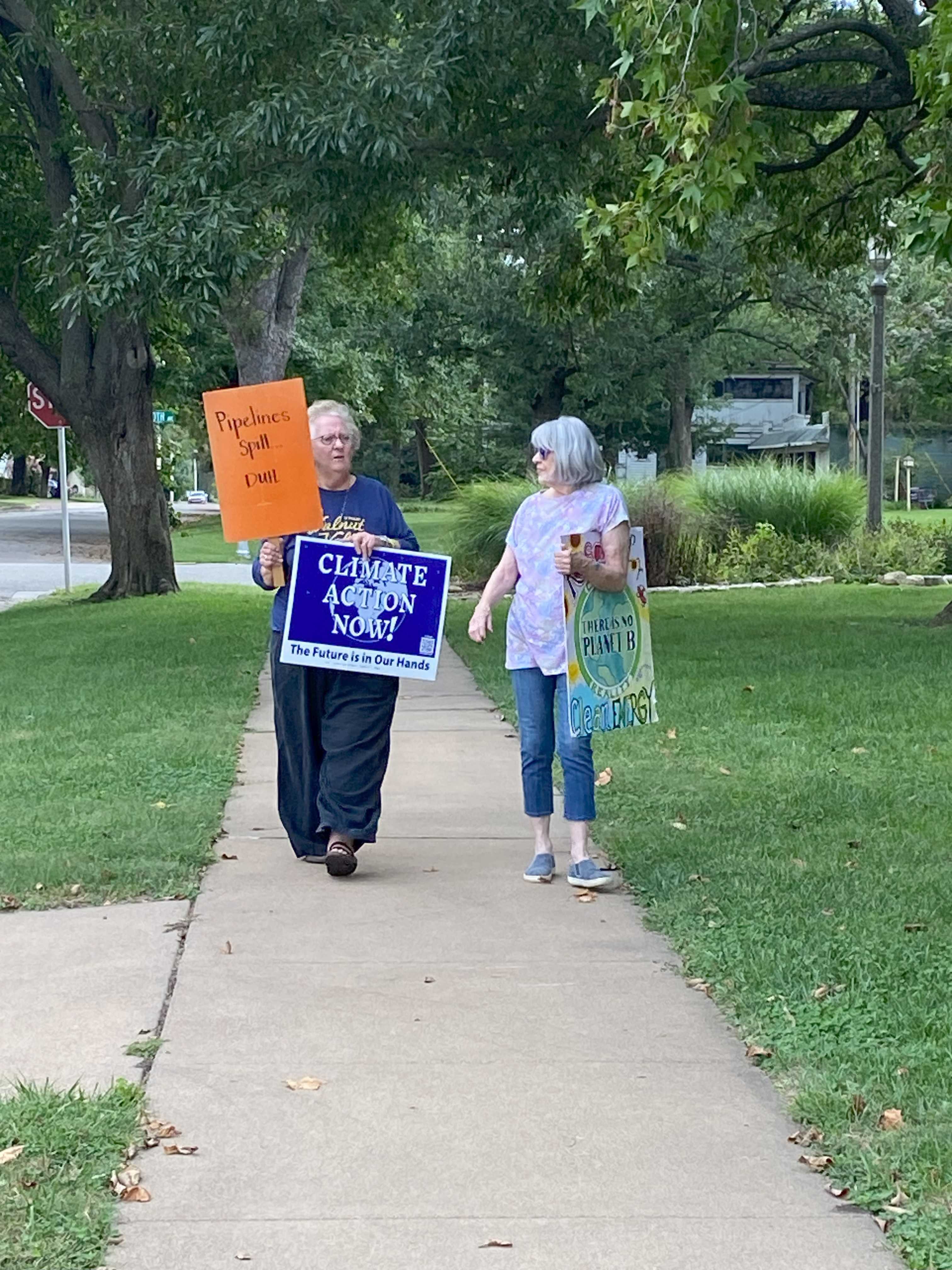
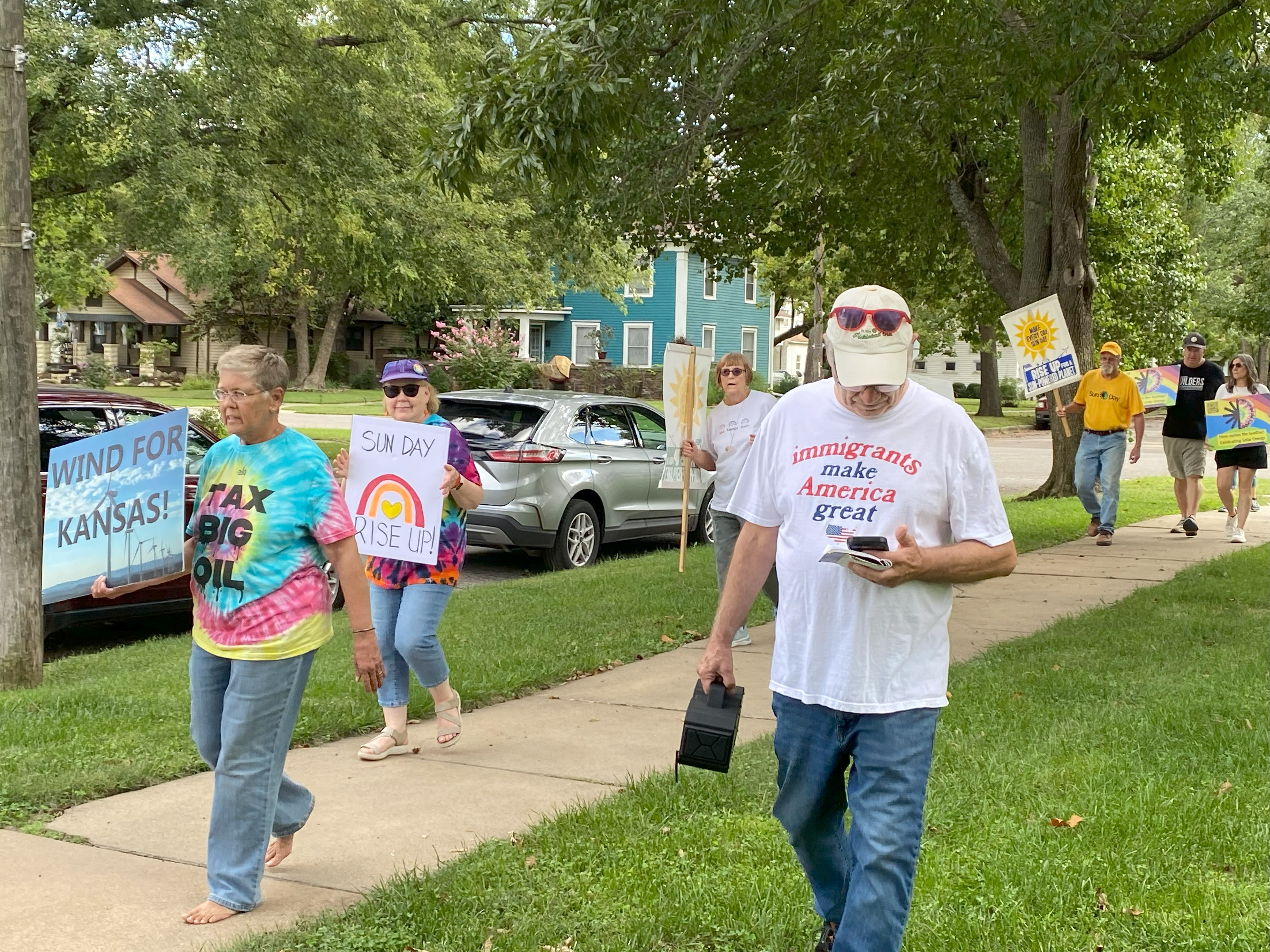
The Final Event was a “Walk for the Sun” to wave at supporters as they traveled home from a remarkable weekend.

Happy Sun Day! May we pursue knowledge and skills, as well as installations of panels that will convert the plentiful energy from our local star into power for all!


Do We Need a New Bible?

The solar energy system on our house came online in July 2011. For the next fourteen years, few days passed when our inverter reported no energy produced by the sun. Then, in June this summer, it all changed. The status window on the inverter, a necessary device that converts the direct current produced by the sun to alternating current for use in our home, toggled error messages constantly during daylight hours. “Peak overvolt,” “AC Voltage Low,” “AC Voltage High.” Production ceased. Given my determination to support the national Sun Day (https://www.sunday.earth)  on September 21 with a local event, we had to do something! An error-ridden system just would not suffice.

The people who installed our system are no longer in that business, so I called local electricians to help diagnose the problem. But we were put on a back-logged wait list, with no real intent to take us off since we were not a priority for the local electricity experts.

I turned to a recommended solar company headquartered ninety miles away. Weeks passed with no appreciable action, but after the devastating baseball sized hailstorm damaged several Solar installations in Ark City, a repair and maintenance specialist from this company stopped to take a look. He found nothing wrong, and assumed there was an issue with a computer chip in the inverter. His advice was to do a hard reset, that is, turn off the whole system for ten days to two weeks to allow the capacitors inside to fully discharge, then turn it on and hope for the best.

It didn’t resolve the error messaging.

I reported back to the solar company and declared that we were ready to replace the inverter and upgrade our home system. That’s when things became interesting.

On Friday afternoon, J, a system designer/project manager, arrived to do a site visit. We agreed on a 3:00 time via email messages. And at precisely 3:00, his white company pickup rolled to a stop in front of our house.

He’s punctual. Impressive.

J chatted about options as he took pictures of several important components in our system, utility meters, and structures on the property. A friendly, 40-something bearded man, he easily answered our questions. I noticed ear piercings as well as tattoos on his forearms. One tattoo was a caterpillar. Another broadcast in a fairly large font, “Practice Resurrection.”

Who was this guy? What did that mean, practice resurrection? Was he part of a strict religious cult? A rigid fundamentalist?

His knowledge of everything solar was obvious and the time flew by. It crossed my mind to ask about the tattoo, yet in the end I let it be. But later, that phrase wouldn’t let me be and I did a search. It turns out that “Practice resurrection” is part of a poem by Wendell Berry.

This system designer for a solar company has poetry tattooed on his arm for all the world to see. Wendell Berry, no less. Impressive!

My encounter with Wendell Berry and his writing has been a meandering path. Earlier this summer, a good friend presented me with an envelope that held a poem by Wendell Berry. M turned to this poem when he needed solace and he wanted to share it with me. That well-worn envelope is in the bag I carry daily. I shared the “practice resurrection” poem with M that evening, whereupon he loaned me Poetry of Presence II, a small volume of poems he didn’t want to part with permanently. It included a few by Wendell Berry, and M urged me to take a look at the poet’s life.

“Look him up,” he said.

Wendell Berry is not to be confused with Thomas Berry, whose book The Dream of the Earth is one of my cherished tomes. Still, there are similar themes in their writing. A thumbnail bio in the back of the loaned poetry book tells me that Wendell Berry writes poetry, essays, and novels. He is an environmentalist “with one primary message: Either we humans will learn to respect and live in harmony with the natural rhythms of this planet, or we will perish.”

Yes. That is prophecy. And Wendell Berry’s important message becomes clearer by the day as humans who have no business leading us continue to lead us toward devastation. It smacks me that this poet’s words have been swimming through my consciousness for years. I have one of his novels in my treasured books collection—as yet unread, but it’s on my list. It just moved a little higher.

There are eleven of Wendell Berry’s poems in my revered 1991 copy of Earth Prayers from Around the World: 365 Prayers, Poems, and Invocations for Honoring the Earth. Included in this volume is an excerpt from the poem that concludes with the words, “Practice Resurrection.”

What, exactly, does that mean? A description that popped up in another search. To practice resurrection means to embody the spirit of new life, hope, and transformation in the face of death, despair or brokenness. Often this is accomplished in acts of faith and love, through perseverance. It involves a daily commitment to find new life in death, to cultivate resilience, to see possibilities for redemption in difficult situations.

That, my inner voice says, is what we need right now, a sense of partnership with the creative Spirit responsible for all life on our amazing planet.  That, my inner voice adds, is the theme of the novel I’m currently writing. That inner voice, I swear, also adds, that may be the theme of many great works of fiction through the ages.

Excerpts from Berry’s poetic verse prompt more from my nagging inner voice.

Berry: “So, friends, . . . love someone who does not deserve it.”

Fell: Love is the greatest power. Believe it.

Berry: “Denounce the government and embrace the flag. Hope to live in that free republic for which it stands.”

Fell: Berry, who is 91 in 2025, wrote this before 1991. How did he know?!

Berry: “Give your approval to all you cannot understand. Praise ignorance, for what man has not encountered he has not destroyed.”

Fell: And everything he has encountered, he is in the process of destroying.

Berry: “ . . . please women more than men . . .”

Fell: Hear, hear!

Berry: “Put your faith in the two inches of humus that will build under the trees every thousand years. Listen to carrion . . .”

Fell: The cycle of life; from death comes new life.

Berry: “Laugh. Laughter is immeasurable. Be joyful though you have considered all the facts.”

Fell: Not the fake facts. Consider the factual facts. This is a difficult thing, and yet, laughter is healing. When one can laugh, one can love.

Berry: “As soon as the generals and the politicos can predict the motions of your mind, lose it. . . make tracks in the wrong direction.”

Fell: I am losing my mind.

Berry: “Practice resurrection.”

Which brings me back to the topic of this essay. We need a new Bible. There. I’ve said the thing that’s been on my mind a long time—like decades. Writers know that communication is a give-and-take experience. Half a conversation belongs to the listener. Half the communication through reading belongs to the reader. Given the infinite life experiences of any single life (no two are alike) each reader may interpret a sentence, a verse, a chapter or a book in ways that astonish the writer. This has happened to me, when readers express things they got from my writing that I didn’t know were there. And so, in 2025, with our lives so very different from the ages when scriptures were written, is it any wonder that we misconstrue, misunderstand, and misrepresent the ancient verse?

When our scriptures offer some people excuses to act in cruelty with arrogance rather than teach us how to get along, there is something wrong. When our holy verse teaches that some humans have more rights than others, this is not good. We need lessons and prayers that include reverence and consideration for all peoples around the world, for all life forms created by the Spirit from elements on Earth; we need to cherish and care for the planet as She has cared for us. We need inclusive Scriptures, not exclusive retaliatory verse. We need the insights of various faiths that developed in different locations, including those of indigenous peoples. Inclusive, not exclusive. We need to learn to respect each other, to love with abandon, and to honor those forces and cycles that brought us into being, be they of heaven or of Earth.

We need to practice resurrection.


The Legacy of Congressman John Lewis

July 17, 2025 is a day to honor the John Lewis legacy of nonviolent protest in the face of seemingly insurmountable odds. “Good Trouble Lives On” protests and rallies are planned across the nation. That day is the fifth anniversary of the death of Congressman John Lewis from Georgia. Lewis became known for his leadership during the Civil Rights era, following Martin Luther King, Jr as they marched for equality and civil rights.

His memoir, Walking with the Wind, starts with this story from his childhood. He was with his siblings and cousins, about 15 children total, playing at his aunt’s simple house in Alabama. A storm blew up, and they ran into the house. The small frame building began to sway in the wind. “Wood plank flooring beneath us began to bend. And then, a corner of the room started lifting up. . . The storm was actually pulling the house toward the sky. With us inside it.”

But his aunt took charge. “Line up and hold hands, she said, and we did as we were told. Then she had us walk as a group toward the corner of the room that was rising. From the kitchen to the front of the house we walked, the wind screaming outside, sheets of rain beating on the tin roof. Then we walked back in the other direction, as another end of the house began to lift.

“And so it went, back and forth, fifteen children walking with the wind, holding that trembling house down with the weight of our small bodies. . . Our society is not unlike the children in that house, rocked again and again by the winds of one storm or another, the walls around us seeming at times as if they might fly apart, but the people in the house did the best they could, clasping hands and moving toward the corner that was the weakest.

“We knew another storm would come, and we would have to do it all over again.

“And we did.

“And we still do, all of us. You and I.”

John Lewis was an extraordinary leader of the Civil Rights movement in the 1960s. He later was elected to Congress, to represent Georgia’s 5th congressional district from 1987 until his death on July 17, 2020. He became well-known after he chaired the Student Nonviolent Coordinating Committee (SNCC) and his role in the Selma to Montgomery marches.

Lewis was a staunch advocate of nonviolence and reconciliation, even in the face of violence and adversity. One of his most famous quotes is, “Do not get lost in a sea of despair. Be hopeful, be optimistic. Our struggle is not the struggle of a day, a week, a month, or a year, it is the struggle of a lifetime. Never, ever be afraid to make some noise and get in good trouble, necessary trouble.”

Join your friends and neighbors walking with the winds of adversity to honor the legacy of the civil rights icon, John Lewis, Thursday, July 17. Find an action near you here: https://goodtroubleliveson.org/


Support Public Schools

A month ago, May 4, 2025, the Cowley County Democratic Party sponsored a town hall meeting. The legislators representing us in Topeka and Washington either ignored their invitations, or politely declined to attend. However, Senator Cindy Holscher from the State Senate, drove all the way from Kansas City to talk to attendees and answer questions. One major topic was the attempt to funnel taxpayer funds away from Kansas public schools into a voucher system.

Senator Holscher strongly supports our public schools. She pointed out that 90% of Kansas children attend public schools. Diverting funds toward private schools which have no oversight would harm the vast majority of our children, especially those in rural areas. There would be no follow up on the received voucher money. One of her constituents admitted they planned to use their voucher money to buy new furniture for their lake house.

A study indicated that vouchers would lead to a learning loss in Kansas with the economic equivalent of Hurricane Katrina’s devastation.

Though Kansas has thus far managed to deny school vouchers, the question will return in the next session. It’s a continuing battle. Our state agenda mirrors that of the federal Project 2025, Holscher said.
Yesterday in DC, June 3, 2025, Secretary of Education Linda McMahon presented her proposed budget to the Senate Appropriations subcommittee. Kansas Senator Jerry Moran is on that committee. Part of the package was the Educational Choice for Children Act (ECCA) which is an attempt to expand school vouchers nationwide. It is unconscionable for Congress to cut funding for public schools while providing a lucrative tax loophole for the ultra-rich. Reverse Robin Hood, again.

Years ago, when I was an elementary student, the US was involved in the Space Race and the Cold War. Support for public schools was boosted nationwide because we couldn’t afford to let America fall behind. We had to have the best education there was to offer.
Now, “falling behind” seems to be the goal, to withhold resources that would provide excellent education to all our children. The attacks on our schools parallel those on museums, public libraries, public broadcasting, and public radio. Any institution that exists to support learning and literacy has come under intense scrutiny and criticism.

The recently released film “Free For All: The Public Library” sheds light on the history of literacy, books, and learning. The 90-minute documentary is available on PBS. Highly recommended.

Public libraries, even today, are staunchly supportive of literacy. Whereas once libraries were exclusive, after the Revolutionary War, Ben Franklin supported opening libraries to commoners. “If people are to govern themselves, they need to be educated.” To me, that is democracy’s mission.

It took generations for literacy to be offered to everyone, however. Women were limited in what they could read, and they certainly weren’t welcome to write. In the slave-holding south, it was illegal to teach a slave to read. Before the Civil War, “Literacy literally was the line between citizen and slave.”

For a hundred years we made a lot of progress and then, groups such as the Heritage Foundation started whittling away at our public schools. Now many districts limp along. For the last fifty years, there has been an assault on our collective literacy until currently 21% of American adults are illiterate and 54% of us read below a 6th grade level.

Why? It’s a calculated effort to return us to that time when literacy was the line between those with power and those without. Jess Piper’s column “View From Rural Missouri” explains it this way: “Their goal is to create workers who can be exploited, workers who won’t ask questions or join unions or demand better conditions.”

Project 2025 aims to make us stupid again.

But we see what is happening. We want our schools to excel. We want every child to learn the critical thinking skills that naturally follow reading and writing. “Everyone deserves an education to have a fighting chance against those who would take advantage of them.” (J. Piper 5/29/2025)

Vouchers would weaken our public schools and deprive our children of their future. Please let Jerry Moran know you support public schools and you want him to as well. While you’re at it, let our state legislators know too.

Earth Day 55

Sharing my respect and appreciation for our home planet, a truly unique gem in the cosmos that sustains all living things. Today is Earth Day #55, and we stand on a more precarious precipice than before with a hostile leadership that chooses to ignore the warning signs of impending disaster. What kind of creature will take energy and sustenance that Earth provides free to all, and turn it all into a profit-making venture, future be damned? I think we stand alone in that category. Mine may be the first generation who fully recognizes the peril we face and the last generation with the window available to do something to prevent the worst climate disasters.
What are you doing to honor Earth? I’m leading a group (We the People of Cowley County) to fold as many origami fish as we can to share with Wisconsin Sierra Club in a unique protest against Enbridge Line 5 pipeline that endangers the Great Lakes and its human and wild inhabitants.
I’m reading a book (Becoming Earth–How Our Planet Came to Life by Ferris Jabr) with growing amazement at his research results and the growth of knowledge in my field of geology since I earned my diploma. (Stay tuned for a book report.) I highly recommend this book to all.
I’m taking steps to reduce my own and my family group’s consumption of fossil fuel energy in favor of the energy provided by our sun and Earth’s systems.
Please share the things you are doing in the comments. Thank you!

To Dine with Purpose: For the Earth

The devastating storm system that tore through a dozen states in mid-March wreaked havoc in all of them. Over a hundred tornadoes ripped through communities from Louisiana to Illinois, east to the Atlantic coast. The funnels destroyed hundreds of homes and left over 24 people dead. In northwest Kansas, the system’s unprecedented straight-line winds of 50 to 60 mph with gusts over 70 mph blew in a dust cloud that engulfed Interstate 70. Over fifty drivers lost sight of the highway and plowed into other cars and semi-trucks in front of them. Eight fatalities resulted from the largest pile-up of automobiles in decades. The highway remained closed for days.

None of this should come as a surprise. Shock, maybe, but no surprise. We’ve known for decades that our actions stress the living veneer on our miraculous home planet, Earth. Yet we meet steeper resistance to action with each passing day. If the unprecedented storms across our country aren’t enough to shake sense into our leaders, what will be?

I fell in love with nature years ago and my devotion to wilderness, landforms and wildlife led me to share our growing predicament many times since Earth Day #1 in 1970. As a public high school student enrolled in Earth Science class at the time, I proudly sported my green armband through all the activities of that day. Since then, after earning a bachelor of science degree in geology, I’ve helped with Earth Day exhibits at our local park, highway cleanups, recycling efforts, care packages for extended family featuring Earth-friendly products for daily life, helped my own students with environmental projects, wrapped trees with green ribbons (and later removed them for the trees’ sake), planned and orchestrated a series of environmental film screenings at our local theater, and connected the dots with 350.org in the crazy weather of 2012. It became obvious that our amazing planet deserves attention not just one day each year, but every day. As indigenous leaders on every continent teach us, the Earth does not belong to humans. Rather we belong to the Earth. We ignore the warning signs at our own peril.

I continue efforts to educate others. Several weeks ago, I came across a link to an article titled “These 15 Foods Could Disappear Due to Climate Change.” (https://worth.com/15-foods-disappear-due-to-climate-change/) The probable impact of climate disruption on familiar foods was shocking. If only people knew, I thought. The list gave me an idea: I could promote local gatherings that served many of the foods on the list. To kick it off, I invited a diverse group of friends for a “Dinner with Purpose: For the Earth.” I set up a buffet with information cards about each food item and how the Earth’s delectable gifts may become rare for our grandkids. The menu included chocolate candy appetizers, taco salad with all the trimmings, scalloped potatoes, with mixed fruit salad and blueberry muffins for dessert. Drinks included fresh squeezed limeades, coffee, and wine. In all we enjoyed 14 of the 15 listed items from the list of disappearing foods.

The dinner was a hit and I consider the evening a two-fold success. The information cards spurred good conversations about climate disruption and its consequences, and we all enjoyed ourselves at the same time—an act of total resistance under an administration that wants us to cower in fear and apprehension.

Several in attendance expressed their intention to hold an Earth dinner themselves, a delicious way to spread the word. Perhaps you’d like to join the fun and host a dinner for your family and friends. April 22 is the 55th anniversary of Earth Day #1, but any day will serve to honor and celebrate the generosity of our home planet and remind ourselves what is at stake.

Guests discuss information about the food items at risk.

Another Broken Treaty

Painting by Ardith Fell

Last fall I met Haskell Indian Nations University professor Daniel Wildcat at the Kansas Book Fair in Topeka. He spoke about his recent book On Indigenuity: Learning the Lessons of Mother Earth (2023 Fulcrum Publishing). Robin Wall Kimmerer calls the book “a compelling framework to rethink the role of the western worldview . . .” His presentation proved compelling as well. I left with a deep sense of gratitude for indigenous leadership in these trying times, and an autographed copy of his book.

That was before the 2024 election reduced our hope for a viable future on this planet to warm ashes. One of the latest hits to our collective understanding of America was the firing of 30% of Haskell’s staff on Valentine’s Day this year. Students were left mid-semester without mentors and instructors. Banned faculty evidently faced arrest should they set foot on campus to teach, even at no compensation. Volunteers require federal approval.

Friends in Lawrence tell me that Haskell is one of two schools the government supports through treaties to provide higher education to Native Americans. The other is Southwestern Indian Polytechnic Institution. Both schools had significant cuts enacted on Valentine’s Day.

Another treaty with the Indians, broken like many before.

Do we care?

As Daniel writes in his book, “. . . not caring is too lonely a space to occupy.” He exhorts us in an opening poem to “Stand up. For those whose voices are silenced . . . Stand up. With those who fight for justice unmoved by fear and moved by love.”

As he autographed the book I had purchased, I asked how to express gratitude in his native language. Smiling, he coached me.

Thus: For the long-suffering spirit of resilience that never gives up; for the leadership in treating our home planet with the reverence it deserves; for the quick willingness to forgive us European settlers eons of arrogant thoughtlessness—

Sonjae Keriocitae.

(my attempt at phonetic spelling of the Yuchee/Creek expression for “Thank you.” Any inaccuracies belong to me, the student, not to Prof. Wildcat.)

Let us stand up for the Native Americans and others now, as the rogue government rips uncaring through our communities.

Painting by Ardith Fell