On the Power of Love

Love abides, though sometimes it goes into hibernation. Then the sound of a voice, a memory, an object, a passage from a book wakens it, and you know it has been there all the time. Sometimes a crisis awakens it. Sometimes standing on a peak of suffering before a cliff, it not only awakens but overwhelms you. It is the kind of love that transcends the love of a person for a person and embraces all.

-Marvin Swanson

Choices Make a Difference

“Do I HAVE to?” Who hasn’t grumbled those words? I’m guessing it’s a universal childhood lament when asked by a parent to handle one task or another.

This was fairly common when I was a girl. My sisters and I had responsibilities every day, along with weekly chores. Of course, we’d rather play with the neighbors, read a book, or watch TV. So, “Do I have to?”

To which the quick answer was, of course, “Yes. You have to.”

Until it wasn’t the answer. I can’t recall the task my dad asked me to tend to. Maybe it was helping set the table for dinner. Maybe it was drying the dishes which my sister washed. Maybe it was making my bed, or tidying my room, or raking leaves on our lawn. But whatever the request, my practiced response, shoulders drooping, was, “Do I have to?”

This time was different. My dad was likely tired. Perhaps he was exasperated after a long day at his job. Maybe he’d heard this phrase one too many times lately. Instead of responding with the expected, “Yes,” he sighed deeply and said, “No. There is really nothing on Earth that you ever have to do.”

His words. The message I got, however, was far deeper and is one I’ve never forgotten. If there’s nothing I ever really have to do, it’s what I choose to do that counts. That has stuck with me for over fifty years. The unspoken message influenced my life from that day forward. I may have hesitated after that day before I spouted the trite lament when I was asked to do my share. But I quit objecting to the chores. Rather, I chose to follow through and I learned it wasn’t so bad.

It’s kind of like Robert Frost’s two roads diverging in a wood. When faced with conflicting options, what I choose to do makes a difference.

Savoring the Middle Ground

Do you remember the Atlanta summer Olympics of 1996?

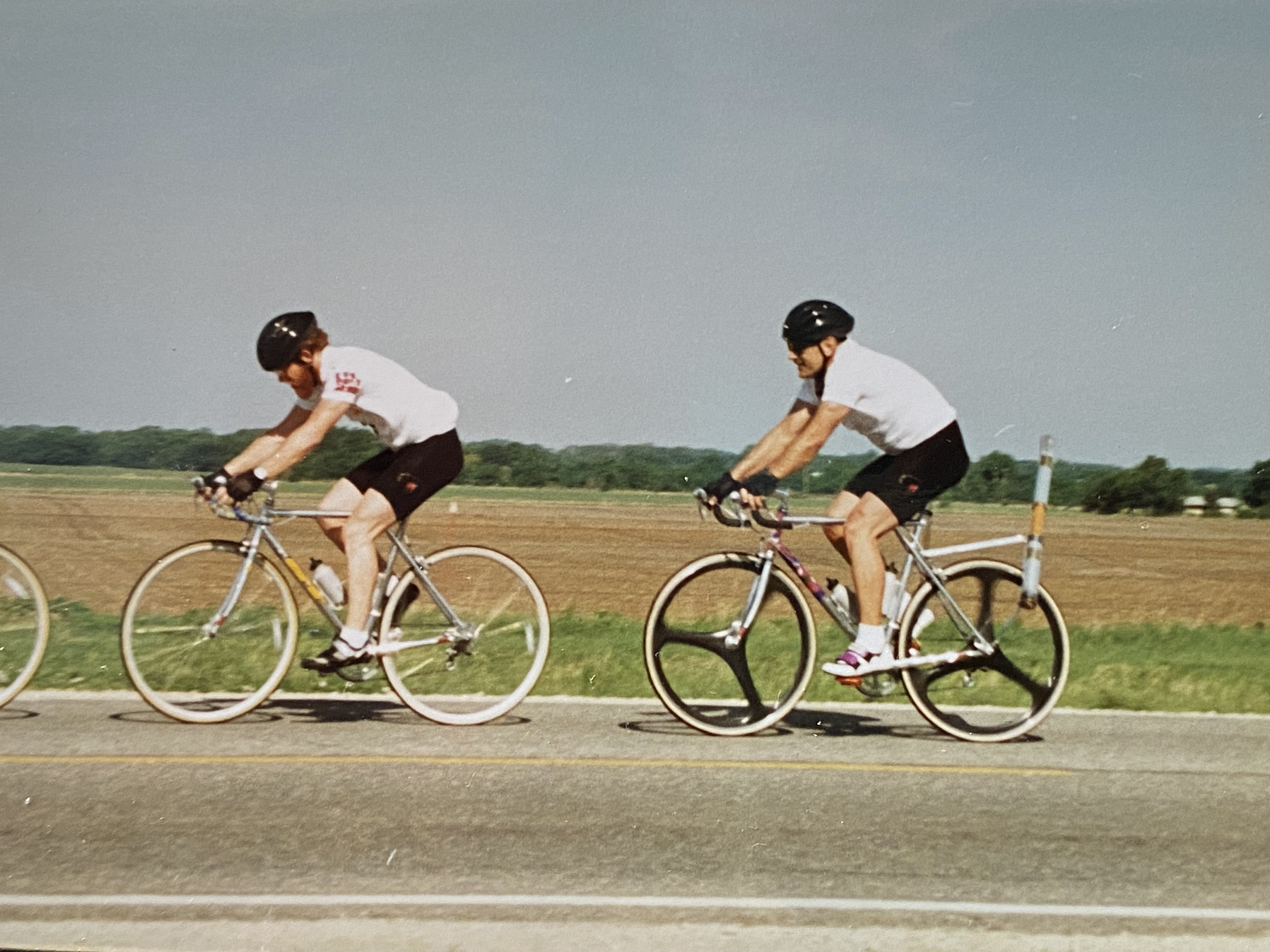
Who would unless you participated as an athlete, or lived in Atlanta, right? That seems an odd memory to bring up in January 2024, but I’ve been thinking about it often of late. Not that we attended the event in any way whatsoever, so maybe saying memories of the Atlanta Olympics skirts the edge of my topic. What I do recall is that there was a team of Georgia State Police officers that rode bicycles across the entire country in advance of the opening ceremony. They took turns carrying the Olympic Torch, so in effect, it was a relay across the country. And they rode right past our home.

The schedule and route were publicized accurately enough that we knew approximately when to expect them. We packed a quilt, snacks, and drinks, and set up a picnic at the end of our driveway to watch for the riders.

And we saw them!

This was back in the day of 35mm photography, when the internet and cell phones were in their infancy, so there was no easy video footage or sequence of still shots. But when the escort with flashing lights came over the rise leading the cyclists, I got my camera ready and took one good shot as the team rode past.

I’ve been thinking of this relay which brought the flame to the ’96 games as a metaphor for life. When the death of my father more than a decade ago put me in the family’s senior generation, I entered the Elder phase of life rather reluctantly. We age and we prepare to pass the flame on to the next generation, intentionally or not. But it happens.

As my own elders and mentors passed away, it fell to those of my generation to assist younger adults as they encountered the ever-increasing and dire challenges Earth residents face. We easily recognize what an elder is: someone on the downslope of life whose accrued wisdom can be beneficial to those on the way up the slope.

We might be less familiar with the term as a verb, an active and intentional process. To “elder” implies a conscious and willing sharing of lessons learned, offering our stories in a benevolent manner. Acceptance of what we share is completely voluntary by younger folks. But not to offer, not to continue our attempts to make things better for the coming generations—in other words, to give up—is not an option.

I ran across a note I’d written to myself years ago on the back side of a printed copy of the Prayer of St. Francis of Assisi.

“Giving up. It’s the original sin.” (Attributed to Anne Sullivan)

With this post, I introduce a category of “Eldering”. Through sketches of my younger years, I will offer some ideas, events, and lessons that were turning points for me. Eldering fits aptly in The Bridge blog since it effectively builds bridges from ancestors who have already left this life to the newest shining faces. We have lived through much in our decades, and been influenced even more by our own long-gone parents and grandparents, but there is much left to do. The future is built on the past and today’s needs are urgent. Letting go and giving up are not options. It’s time to savor the middle ground, to be a bridge from the ancestors to the children, to accept the torch and prepare to pass it on.


The Legacy of Marvin Swanson

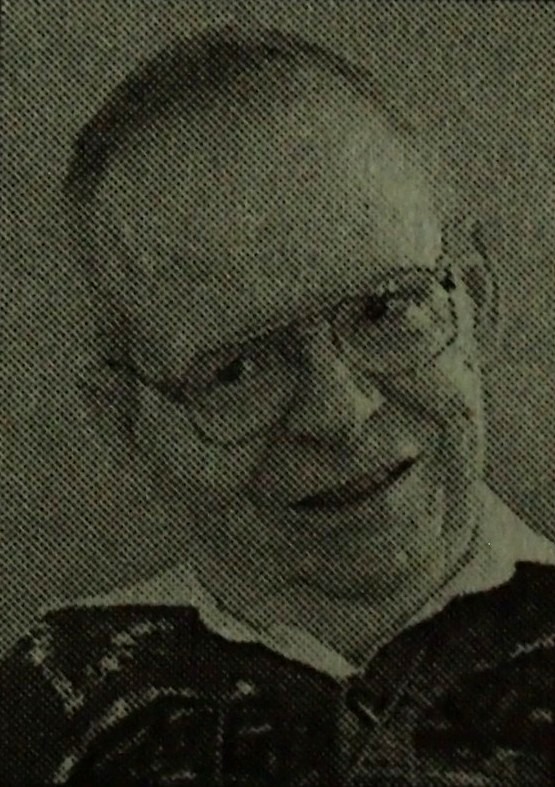
When Covid rudely interrupted life for most of us, my series of Swanson quotations took a long break. This year I plan to return to sharing some special words left to me by my good friend, writing coach, and life mentor, Marvin Swanson. Though Marvin has been gone nearly 25 years, for me his memory lives on, as well as important lessons shared through the collection of letters he sent me.

Born in western Kansas in 1923, Marvin became afflicted with debilitating arthritis when yet a teenager. For over thirty years, he was an instructor of writing at Fort Hays State University and the University of Kansas, through correspondence courses. Living close to the campus of FHSU, he rented rooms to students and served as a mentor and a kind of foster-parent to those who shared his walls.

Marvin was a founding member of the Western Kansas Association on Concerns of the Disabled. The founding principle, possibly penned by Marvin himself, reads:

We, the members of the Western Kansas Association on Concerns of the Disabled, believe that all disabled persons, regardless of their disability, have the right to choose their own lifestyle. Along with this right comes responsibility. Therefore, we also believe that all disabled persons, no matter the degree of disability, can and should contribute something to society. We have dedicated ourselves and WKACD to the continuation of these principles.”

If contributions could be measured, those of Marvin Edgerton Swanson would rank among the highest humanity has to offer. Though imprisoned in a body wracked with pain, he transcended that condition. His mind, ever observant and quick to compile subtle nuances into gems of wisdom, connected with people of all ages to contribute to the betterment of life for all.

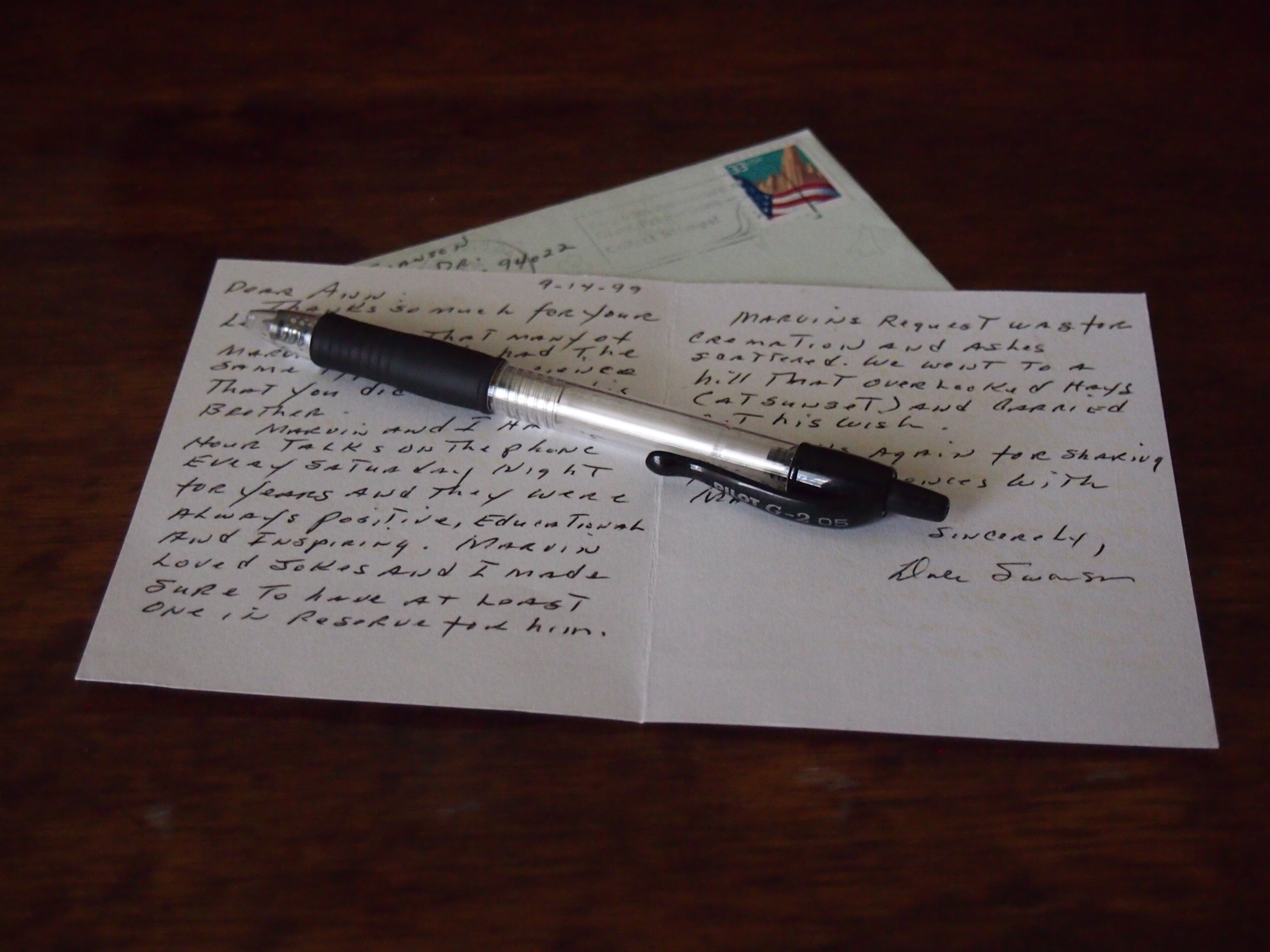
I met Marvin when I attended college at FHSU. We corresponded regularly until shortly before his death. His arthritis compromised his ability to wield a pen so he learned to polish the thoughts he inked onto his monogrammed stationery before writing them down. His letters were deeply well-planned in order to wring the deepest meaning from each word. When I read them again, he comes to life in my mind. The years drop away and it is almost as if I am young again, curled on his sofa, relating my thoughts to him in exchange for his ageless wisdom. Over the coming months, I plan to feature gems of Marvin’s wisdom gleaned from his letters.

Today’s gem reviews one I shared a few years ago, appropriately a few thoughts about letters.

I’ve been working on an article about the dwindling act of writing personal letters. Up to 80% of our reduced 1st class mail consists of business letters. Will the personal letter exchange gradually disappear in the electronic communication revolution? The personal letter has many unique advantages.

            Ellen Terry, an actress, began writing to George Bernard Shaw when they were both single. They never met. Both married. They wrote for 25 years. Shaw wrote about their correspondence, which has been published: “Let those who complain that it (the Shaw-Ellen Terry “romantic correspondence”)was all on paper remember that only on paper has humanity yet achieved glory, beauty, truth, knowledge, virtue, and abiding love.”

            Imagine, I can read a letter Christopher Columbus wrote describing America or Edgar Allen Poe’s letter revealing the secret of the real tragedy of his life. They’re in a book with many more entitled The World’s Great Letters.  I have it.

            “Letters . . . are, of all the words of men, in my judgment, the best.” (Francis Bacon)


Tuned Up!

My adventure at the mini-Chautauqua event sponsored by the Winfield Public Library through Humanities Kansas
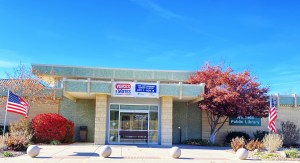
For the last few months, a traveling Smithsonian exhibit has circulated around the state, setting up in six different cities, with one more to go. The Voices and Votes: Democracy in America exhibit has spent the last month at our local library and will soon travel on to Belleville in the northern tier of counties.

Each hosting community has featured something specific about how that location supported the sharing of information, citizen involvement, and the voting process.

Winfield’s focus was on the Chautauqua meetings of a hundred or more years ago.

Founded in 1874 in Lake Chautauqua, New York as an educational tool for adults, its original intent by founder Rev. Joh Heyl Vincent, a Methodist minister, and businessman Lewis Miller was to expand the idea of a Sunday School for adults. The idea soon grew until Chautauqua meetings became an important source of education, culture, recreation, and socialization for millions of Americans. Everyone was welcome.

Winfield’s Chautauqua events were held annually at the town’s iconic Island Park from 1887 to 1924. Some years, as many as 10,000 people flocked to the island, camping in an area reserved for family tents for a week to ten days. For a number of years, it ranked as the third most popular Chautauqua event in the nation.

The Winfield Public Library staff selected the historic Chautauqua events, with their focus toward education and giving people a platform to share ideas and opinions, as the local highlight for the Smithsonian exhibit. As part of that, a mini-Chautauqua was held last Sunday evening in the community building. Ten local citizens were invited to present short talks about “It’s Intense: Voices on Good Tension.” It was my honor to be included as one of those ten.

Other speakers included business managers, the newspaper publisher, a farmer, a county judge, city manager, physical therapist, and a retired activist teacher. The emcee shared a short bio for each of us. My presentation used images to focus on  metaphorical tension from the perspective of a professional piano tuner.

Bio: A young widow with a preschool daughter, Ann Fell came to Winfield 35 years ago to teach at Winfield High School. She met and married fellow teacher Mike Fell and with their combined resources they raised a blended family. After a few years she quit teaching and opened a regional piano service business. With the loss of her parents a few years ago, she returned to her early calling—writing—and now has six published books. A dedicated environmentalist, musician, grandmother, and writer, she is no stranger to life’s tensions. Here’s Ann to talk about keeping life Tuned Up!

A dictionary tells me that tension is the act of being stretched to stiffness, maintaining a balance between opposing forces.

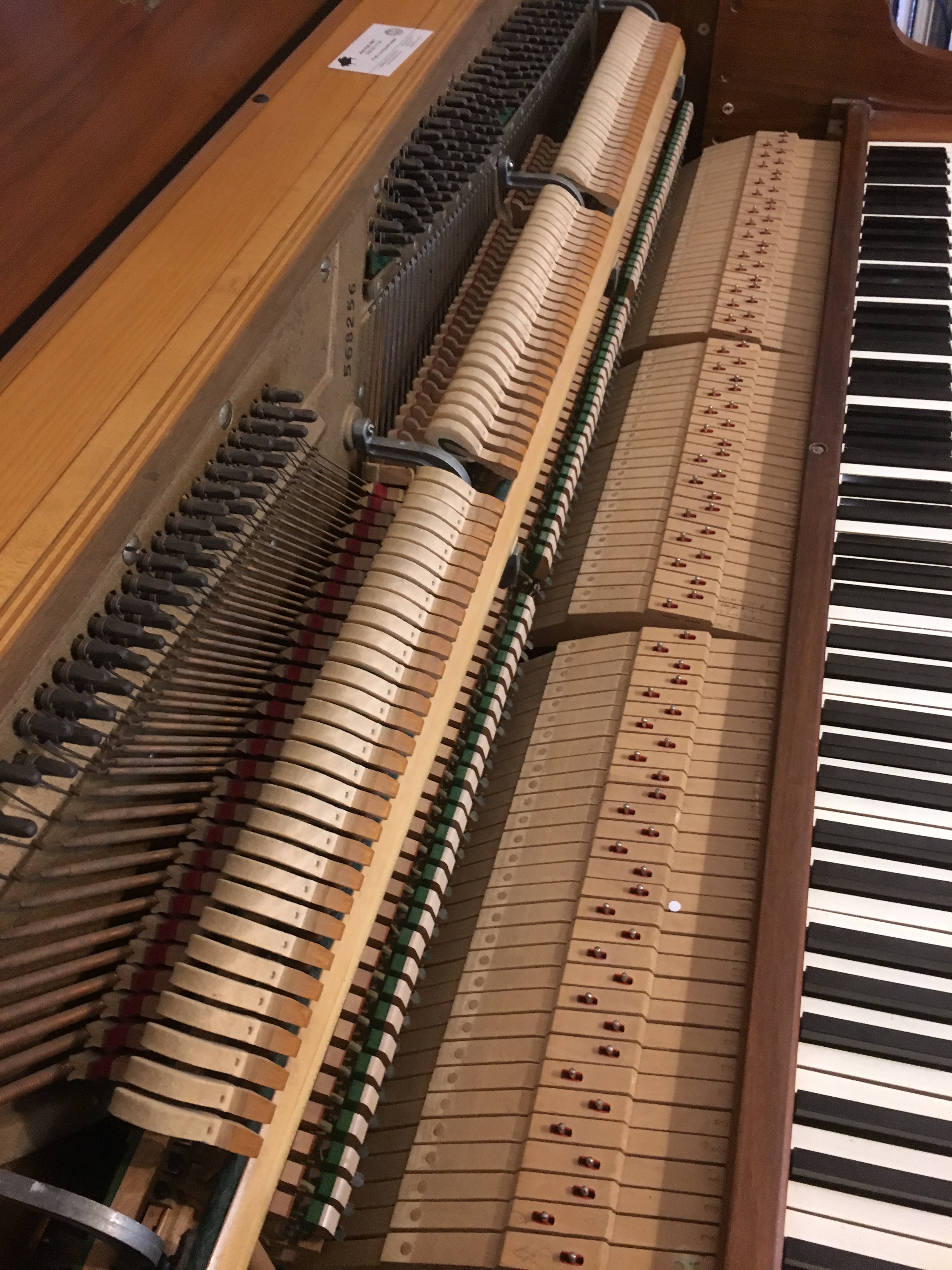
As a piano tuner, it’s my job to adjust tension—over and over again.

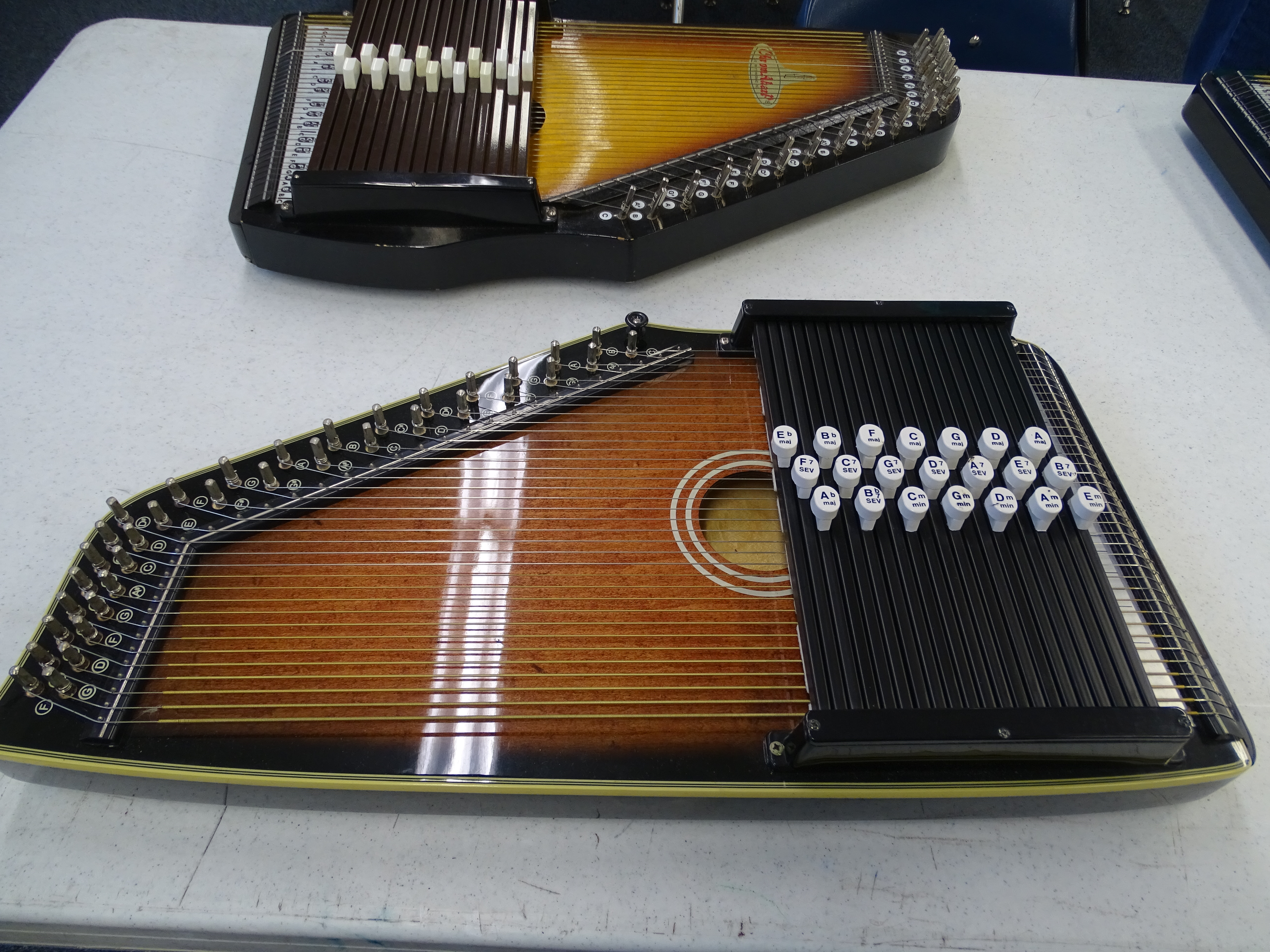
All stringed instruments need tuning as well,

but with 88 keys in a piano and multiple strings for most keys there are around 225 strings to tune.
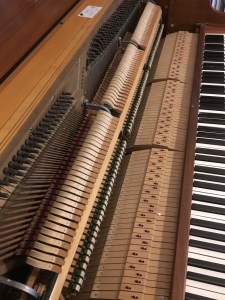
With an average 160 pounds of tension per string, that gives an ordinary piano about 18 tons of tension across its plate–30 tons for a concert grand. That’s a lot of tension! Believe it or not, I spend half the year lowering tension, and half the year raising it, since wooden soundboards react to our seasonal humidity changes.
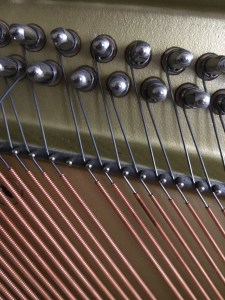
If a string is stretched too tight, it can break. On the other hand, if it doesn’t have enough tension and is limp it will not vibrate with the desired pitch. It will not sing.
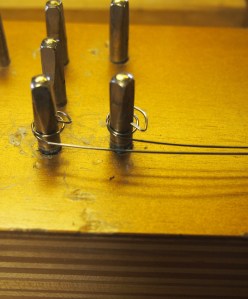
It’s all about balance.

In our lives, tension just happens, and we stretch between opposing forces. Some of those forces relate to daily family interactions,

disagreements between parents about children,  disagreements between children and their parents. I might find myself facing a troubling medical diagnosis, or watching financial reserves dribble away.

I might have opposing opinions about current issues with extended family. I might be asked by our amazing local librarians to prepare a 5 minute presentation about Good Tension. I might face major life changes like starting a new job or moving to another community.

I might find myself dealing with tragic loss and grief, balancing the emptiness of the future with joyous memories.

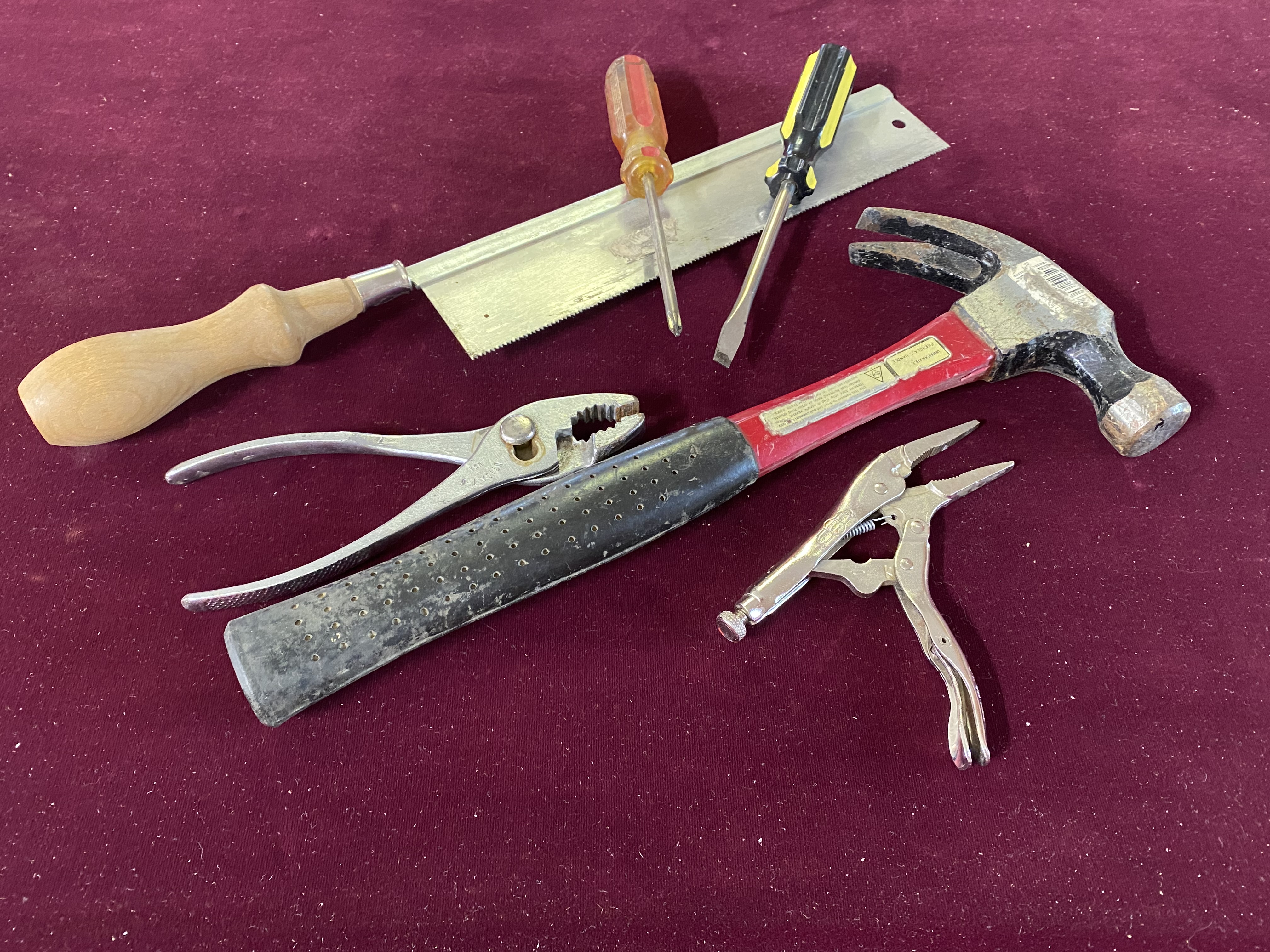
How do I find the optimum balance for tension in life? In the piano tuning world, we have special tools.

But what about tools to balance life tension?

Nothing as concrete as tools I’d find in the kitchen or garden.
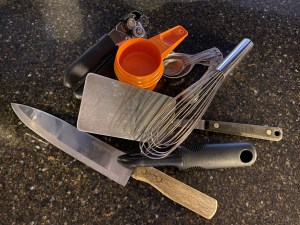
What tools are good for tense life situations?

I suggest intrinsic ones, habits, and careful choices.

Perhaps many of us have identified passions in our lives,

answering questions like “Who am I?”

and “Why am I here?” Hopefully most of our passions will leave a better place for those who come after us.

The details can be different for everyone, but we find a cause that we can support.

Maybe two or three.

When it’s time to raise the pitch—to increase tension and produce harmony—I find ways to follow my passions and take a stand on issues of the day,
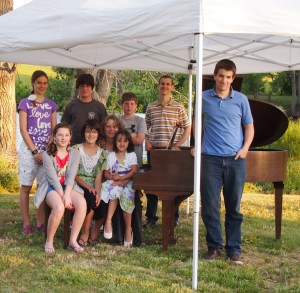
to engage in life, to volunteer, befriend someone who needs a friend.
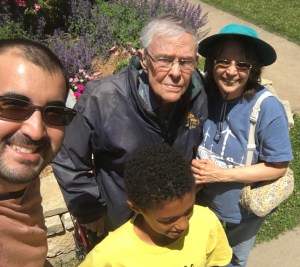
I try to recognize those things that I can let go and those I will support in every way I can think of.

But what can I do when the weather changes and I sense a storm coming? How do I keep from breaking under tension? Tools to relieve tension arrive as life gifts, different for everyone.
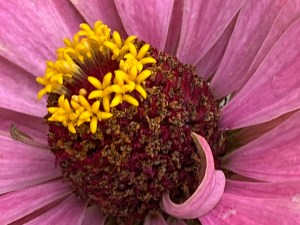
Some may go for a run or a bike ride.

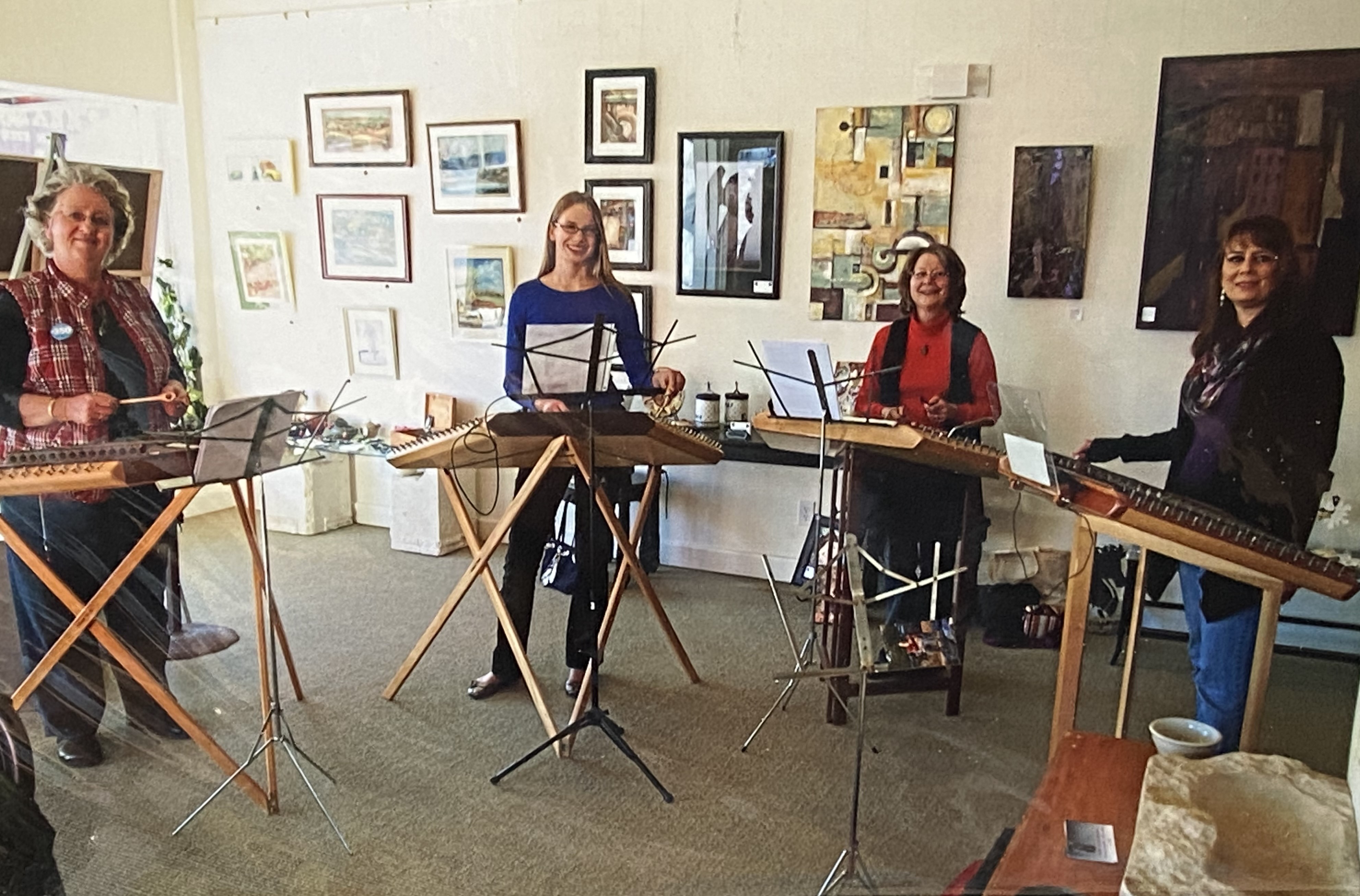
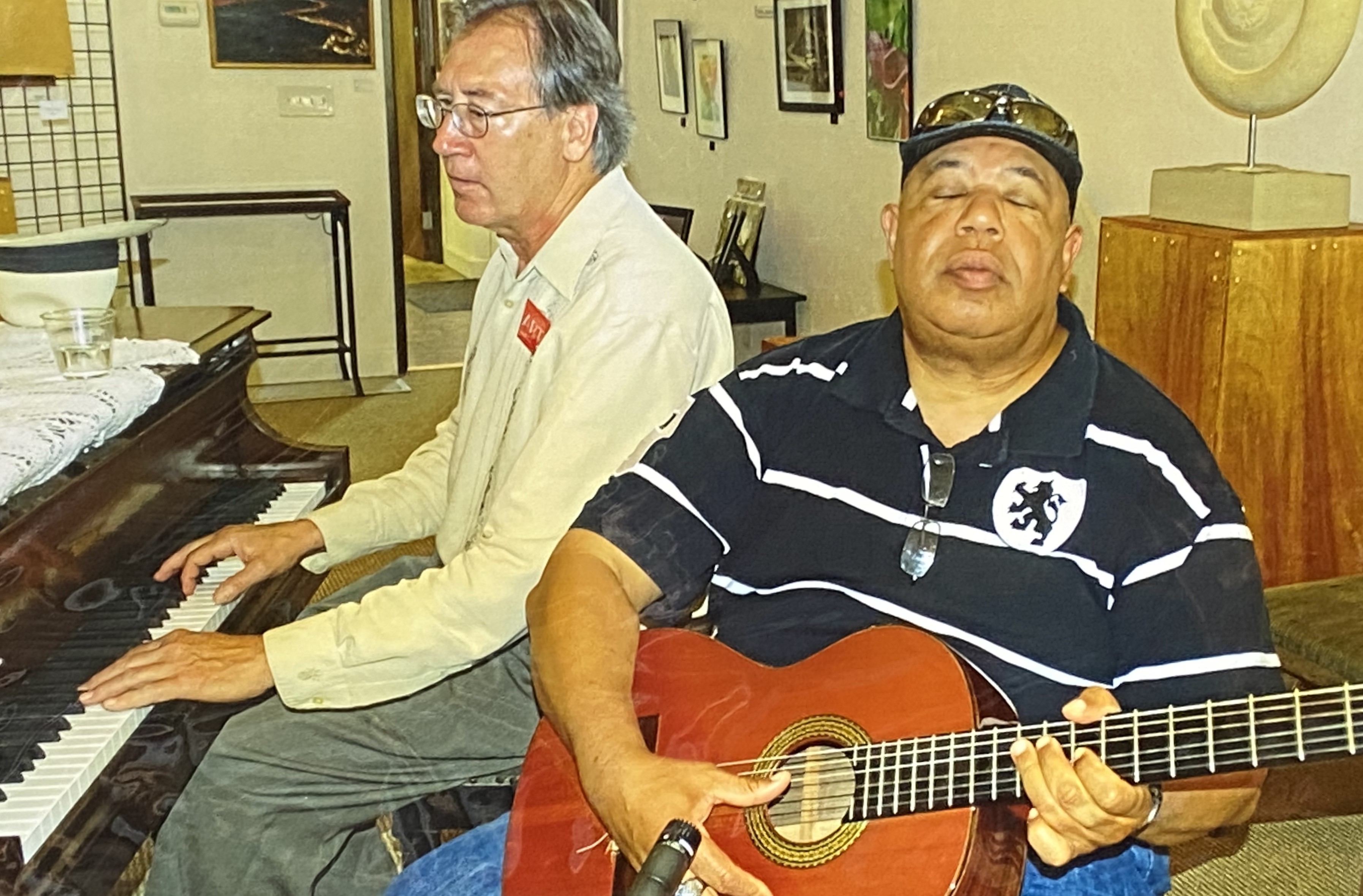
Others grab a book to escape to an imaginary world, or write in a journal. Some people make music.

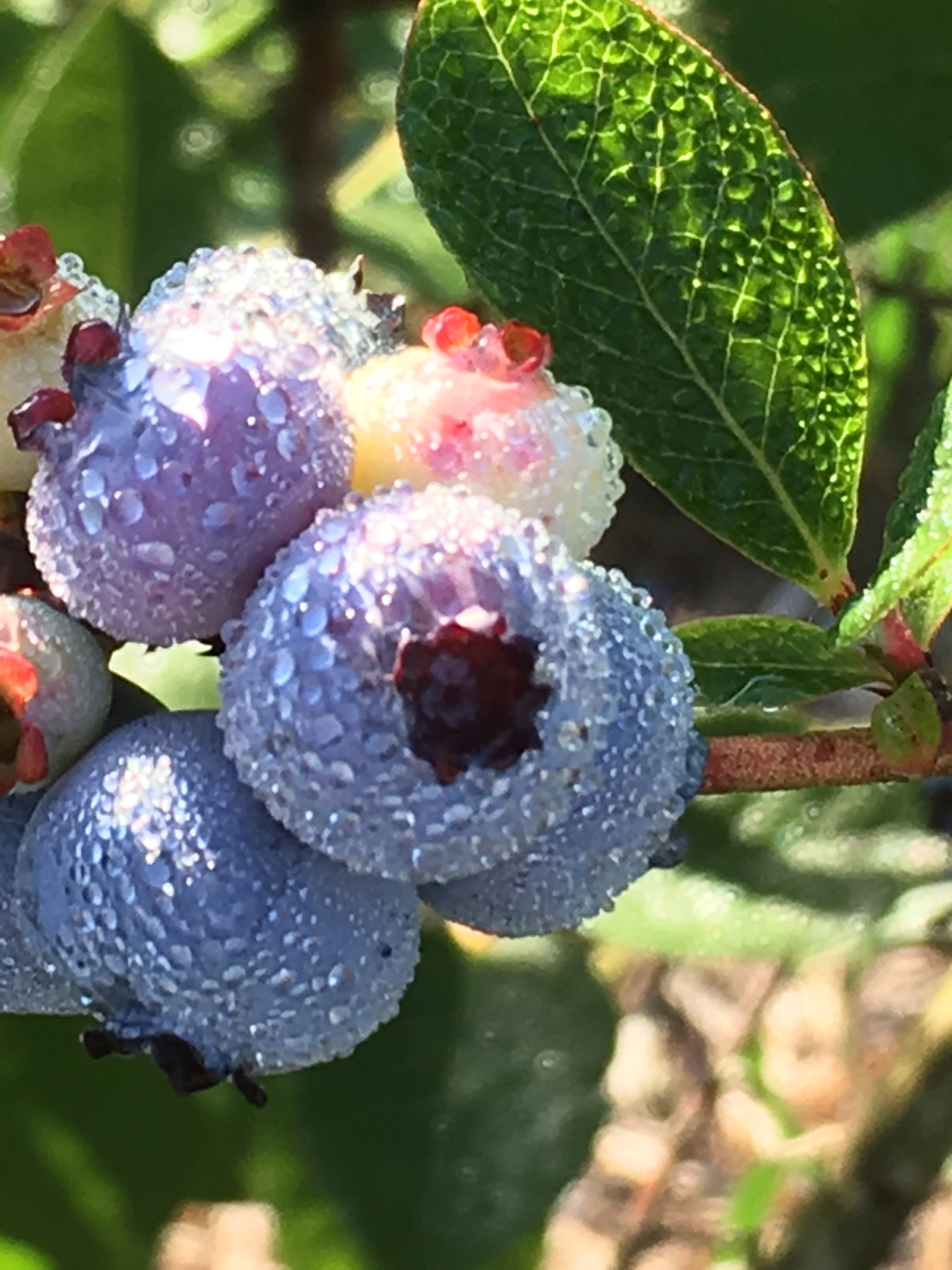
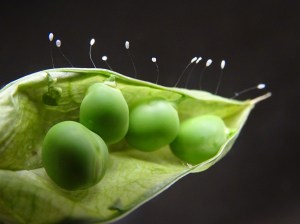
I like to take a camera and look for beauty in the world around me. And the world responds.
Some things I have learned:

Life is complicated—there is nothing simple about it.

Acknowledgement of mistakes helps build bridges.
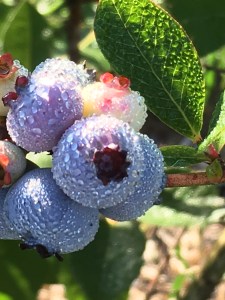
Love is the greatest power.

Laughter heals.

At least half of communication involves listening.

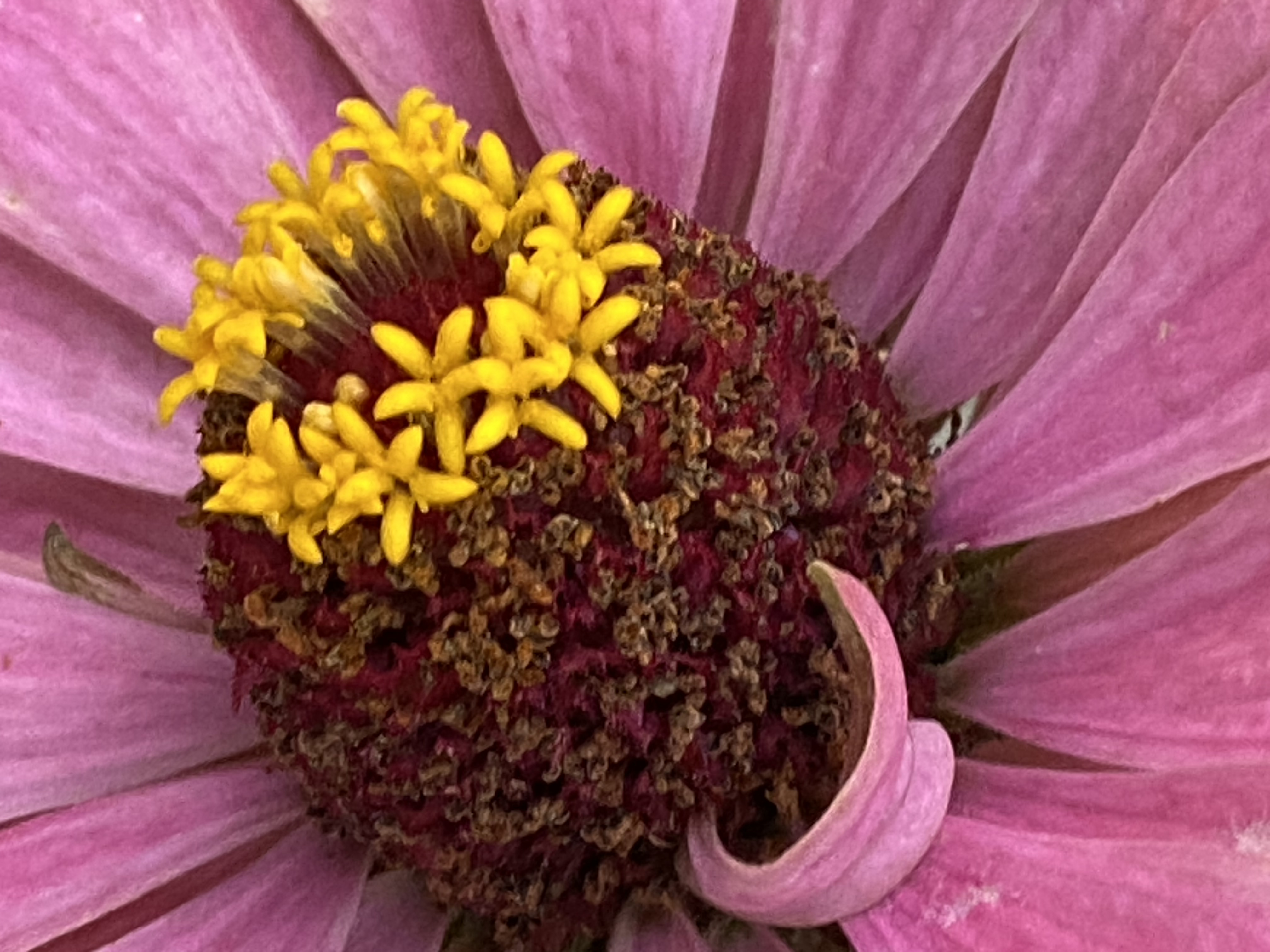
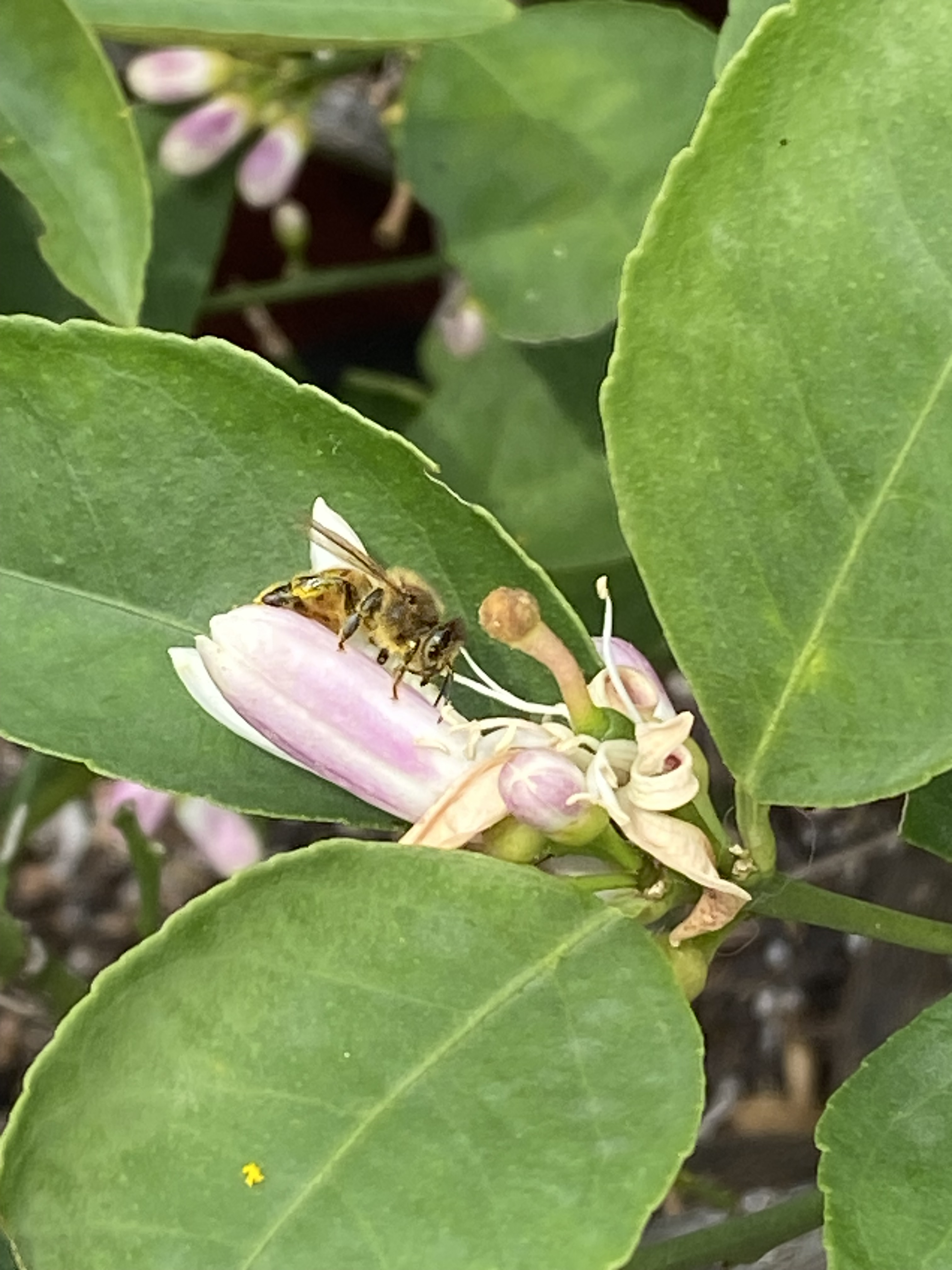
There is beauty and wisdom in tiny things and overlooked places. It’s healing to find wonder in miniature worlds.

I always find what I’m looking for, so I try to look for the positives.

When the future looms dim, I hold fast to my values, and take one small thing at a time.

Bird by bird, scene by scene, note by note, day by day or even minute by minute, I can make choices that support my values.

Like a seed, sprouting under dire conditions, but sprouting anyway. That is the essence of optimism.

Danielle Orner, a young woman who has battled cancer since she was a teenager said, “Life is a balance between what we can control and what we cannot.”

Between effort and surrender—two forces in life that keep us in tune. That is the essence of good tension, insuring that those yet to come can sing.

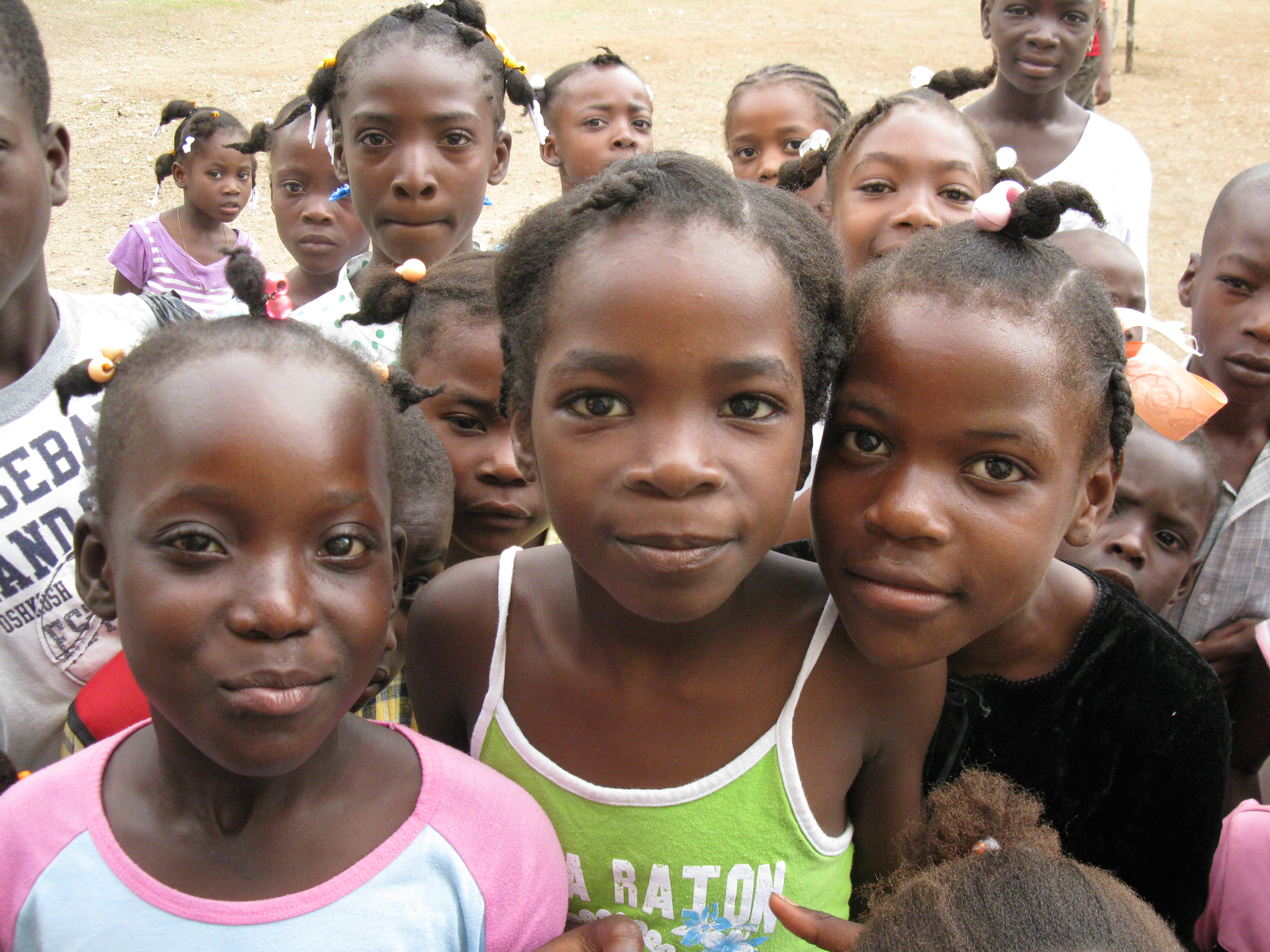
(P.S. To answer your question: I should add photographer to my list of dedicated endeavors in the above bio. Yes, I took all the photos, except for those in which I appear, and the group of Haitian children.)

A Place Where Friendships Bloom

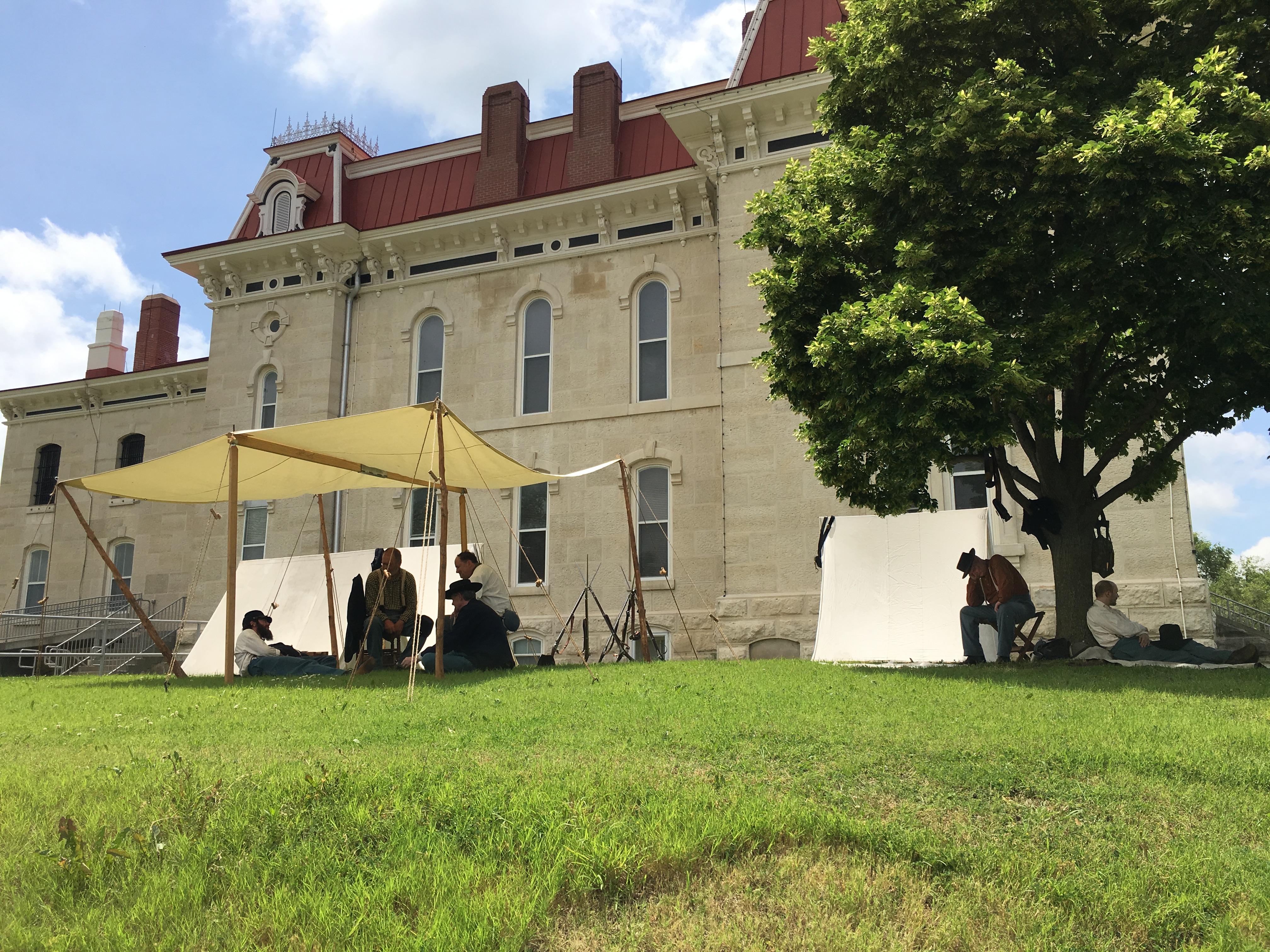
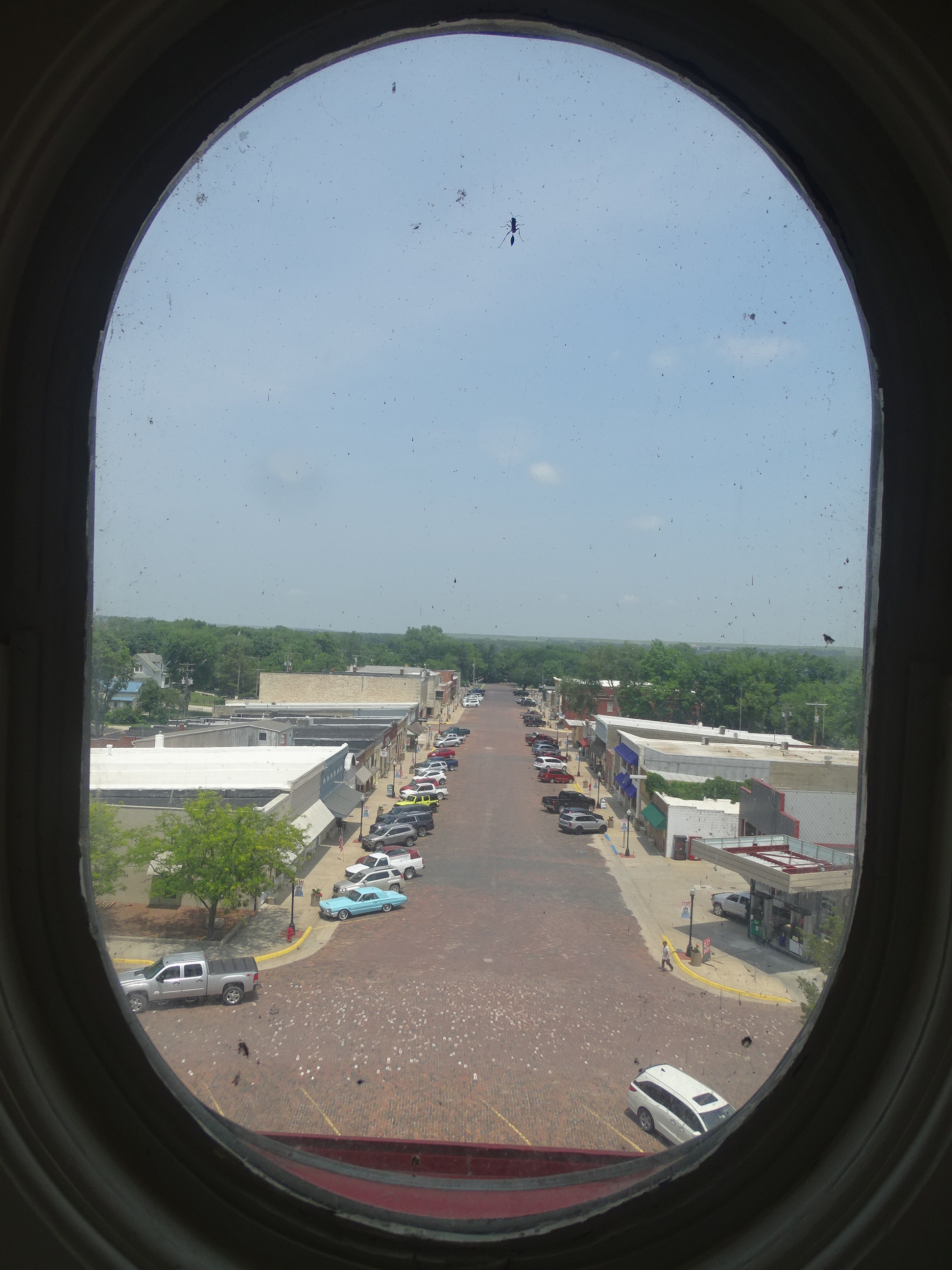
The walnut trees along the Cottonwood River blazed yellow. Crimson sumac foliage lined the hillsides near the new settlement of Cottonwood Falls, Kansas. It was autumn 1871 and businesses along Broadway Street bustled with ranchers from around the county who had converged for an election.

Settler Isaac Alexander leaned against a tree at the south end of the street. Often poll workers nodded his direction, gesticulating in a referral that sent distant neighbors his way. They all wanted the same information. “You are donating land for the building?”

With a nod, Isaac affirmed his offer. “Two and a half acres. If the project is approved, this square will belong to the county.”

By evening, with the votes tallied, the result was clear. Voters had approved the building project and Chase County would have a new courthouse. Those still in town cheered at the announcement and Isaac stepped forward. When he had the crowd’s attention, he affirmed his gift. “I am pleased to provide this square for our new courthouse. It’s something we need in order for our county to thrive. I have but one condition. The building will sit on the hilltop in the center of the square. But the land surrounding it is to be used as a park area and gathering place or my offer will be retracted. That is my condition.”

The crowd burst into resounding hurrahs, and the project moved forward.

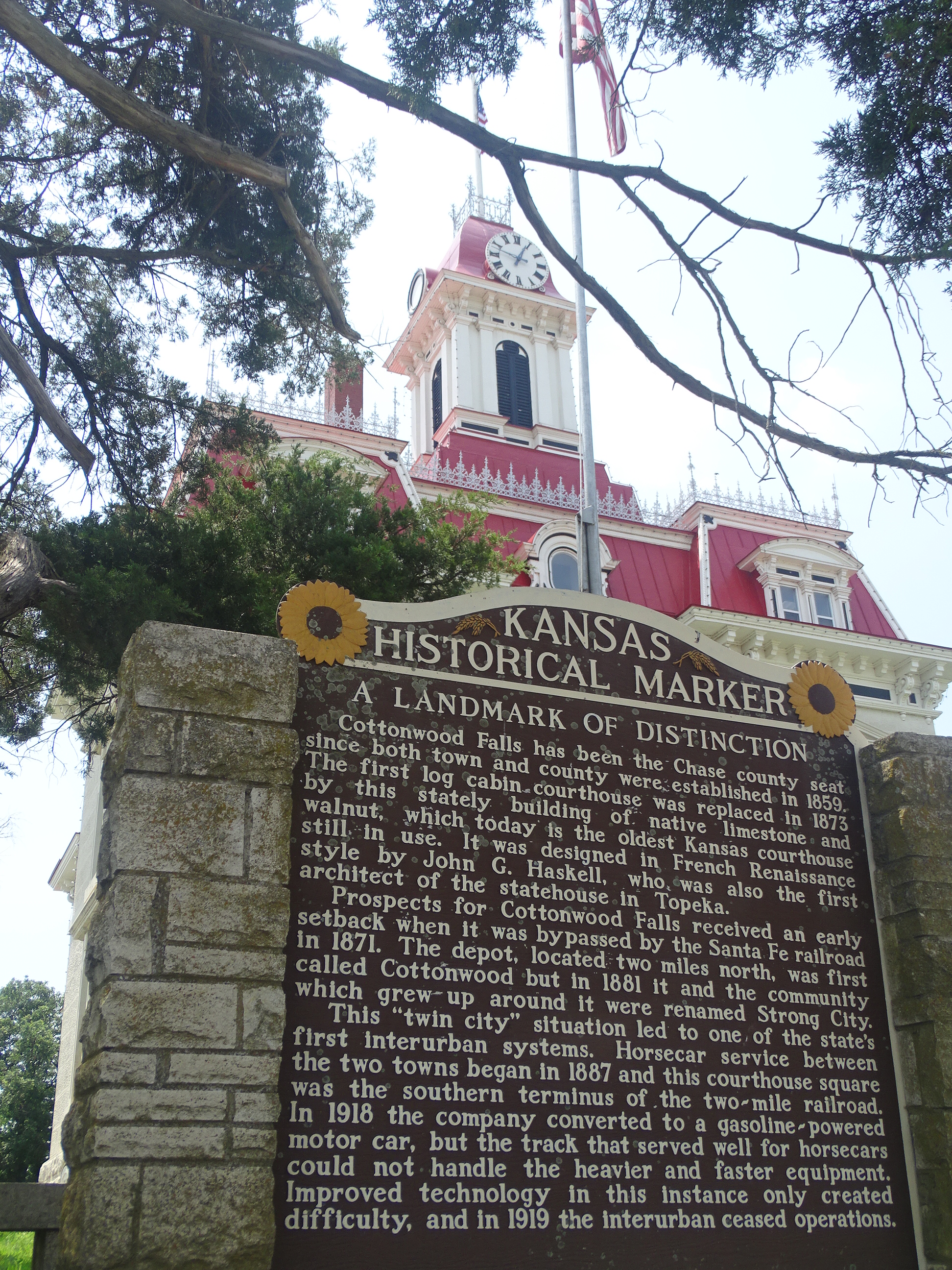
A Leavenworth contractor employed an architect to design the three-story limestone structure. It utilized a French Renaissance Chateau design from the Louis XIII period, durable enough to remain in constant use for 150 years and beyond. Workers quarried and hand-cut limestone blocks from Isaac Alexander’s land on Spring Creek, a half mile west of the site. The stones were transported to the building in horse-drawn wagons, some blocks weighing over six tons.

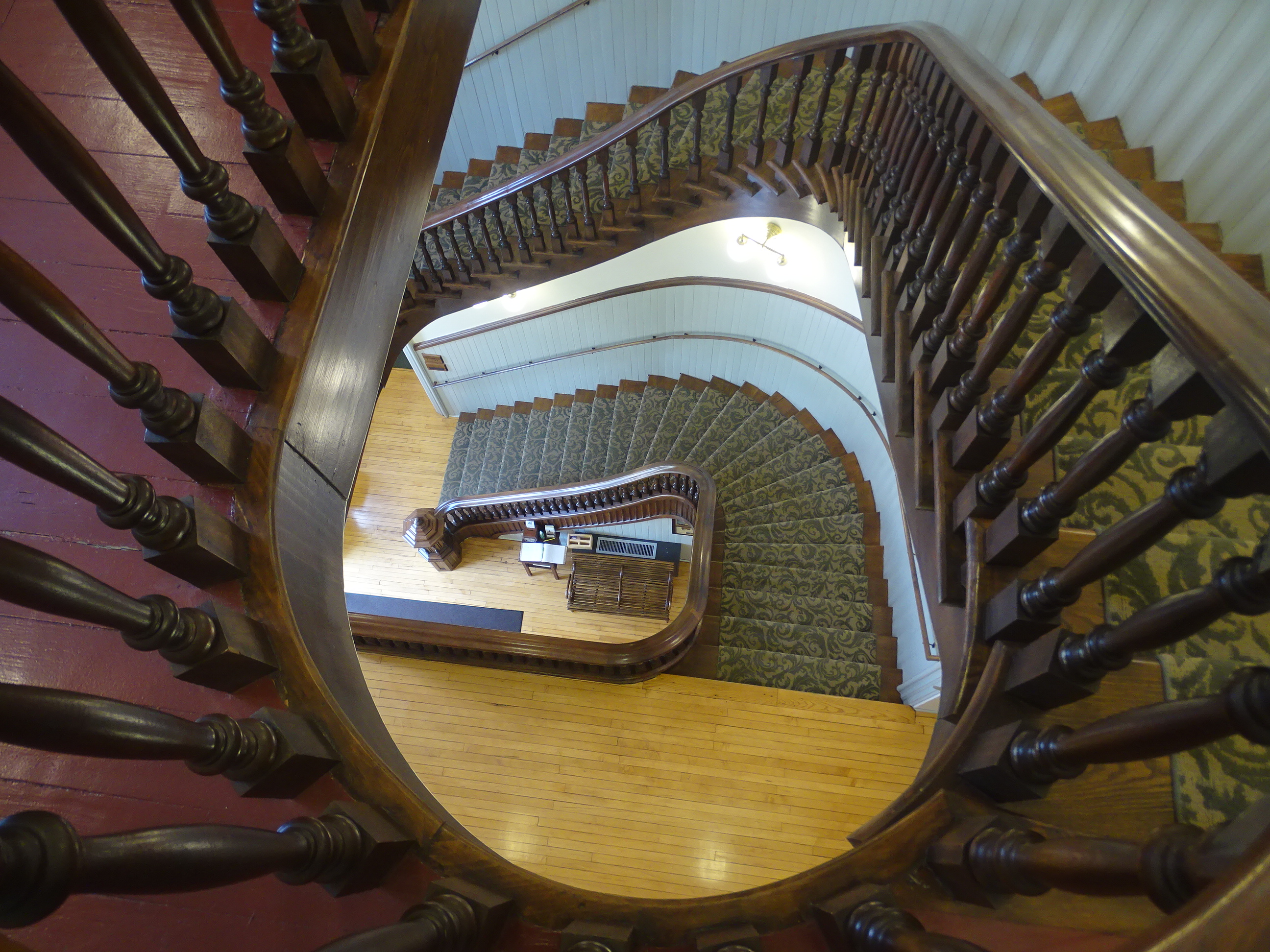
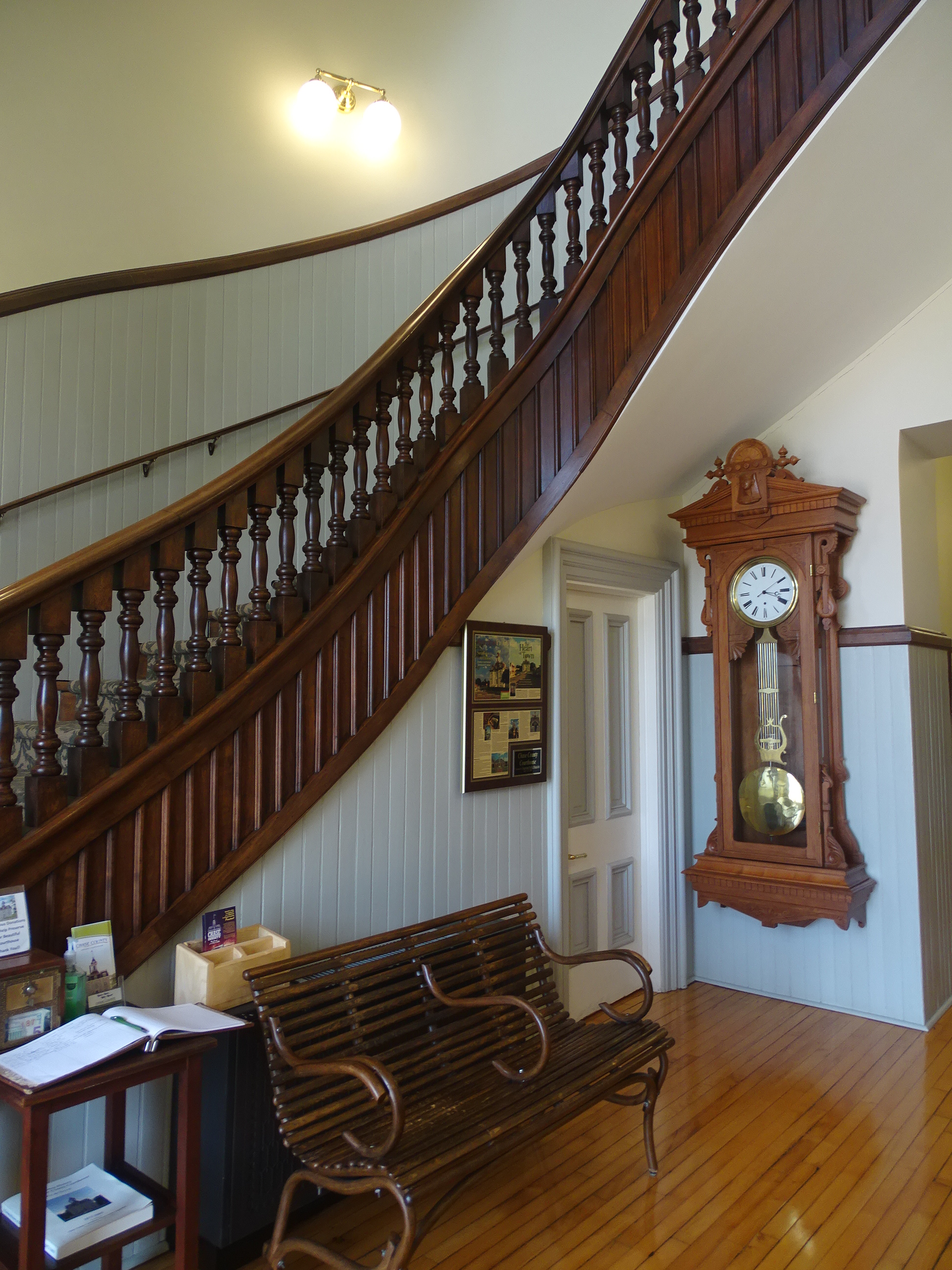
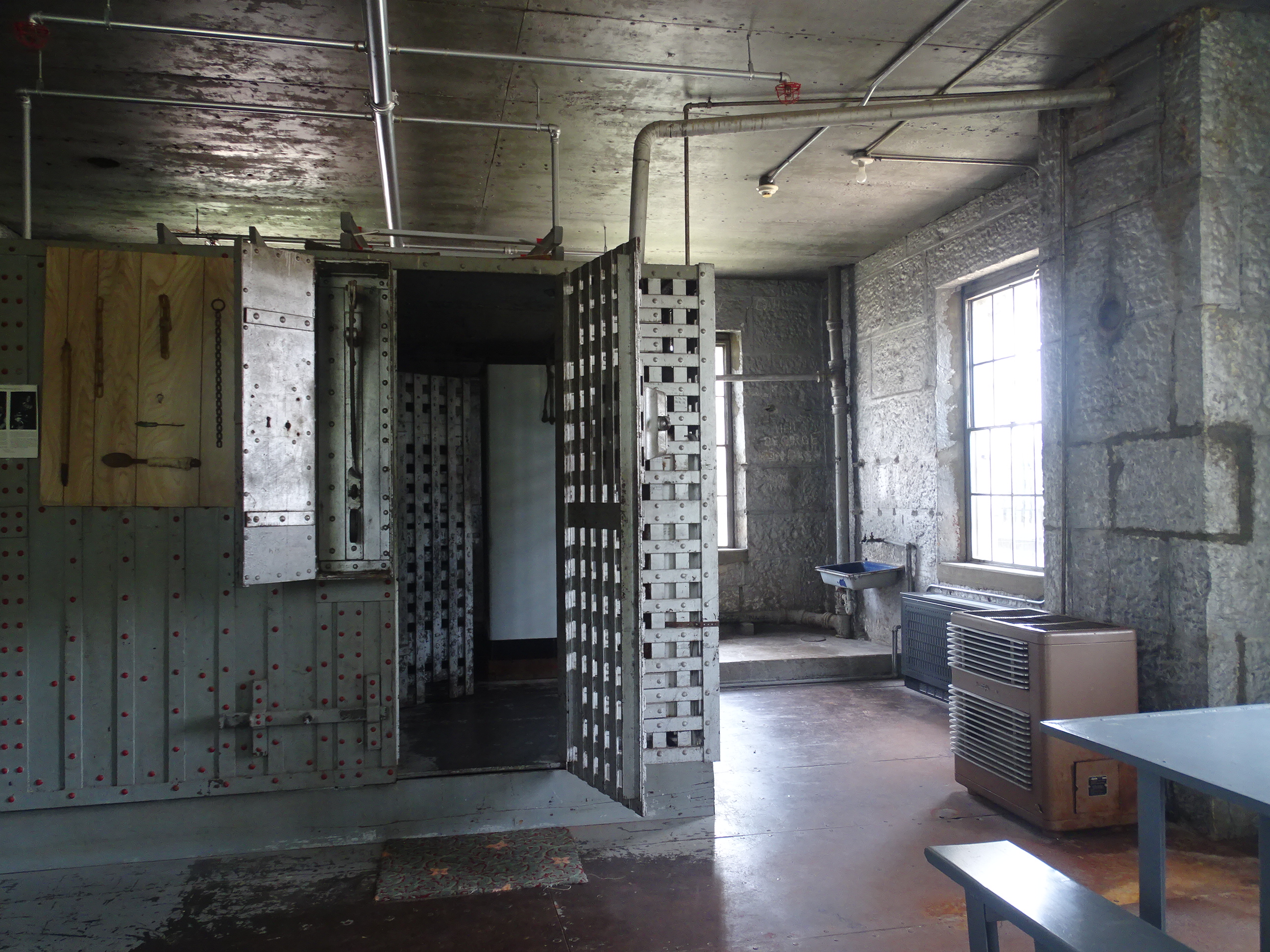
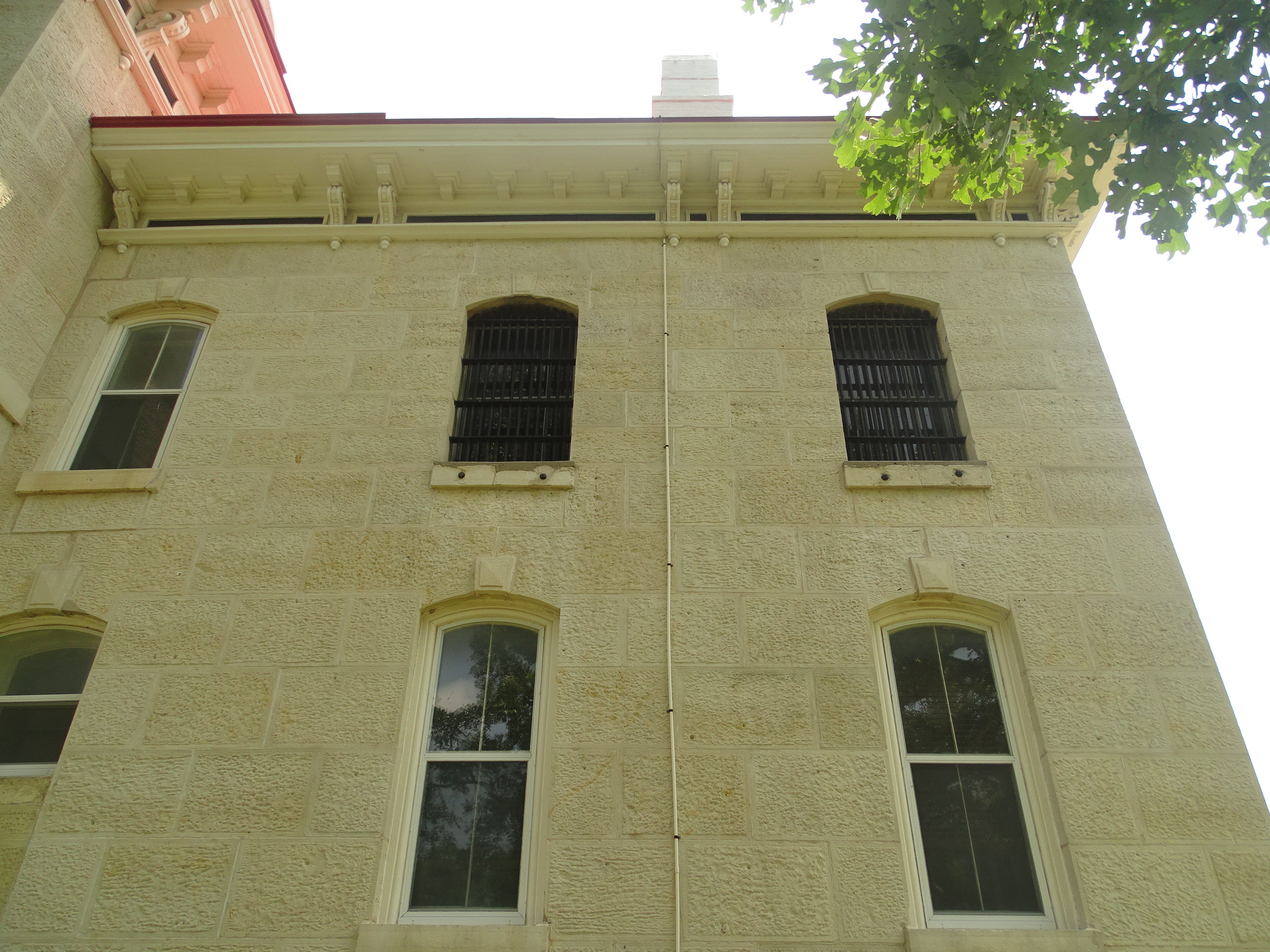
Inside, spiral staircases wound complete circles between the floors, each spiral directly in line with the one above or below. Locally harvested black walnut trees were crafted into the stairway balustrades. A jail on the second story was accessed through the courtroom and jury room. In use for a hundred years, new safety regulations in the 1970s forced the jail’s closure.

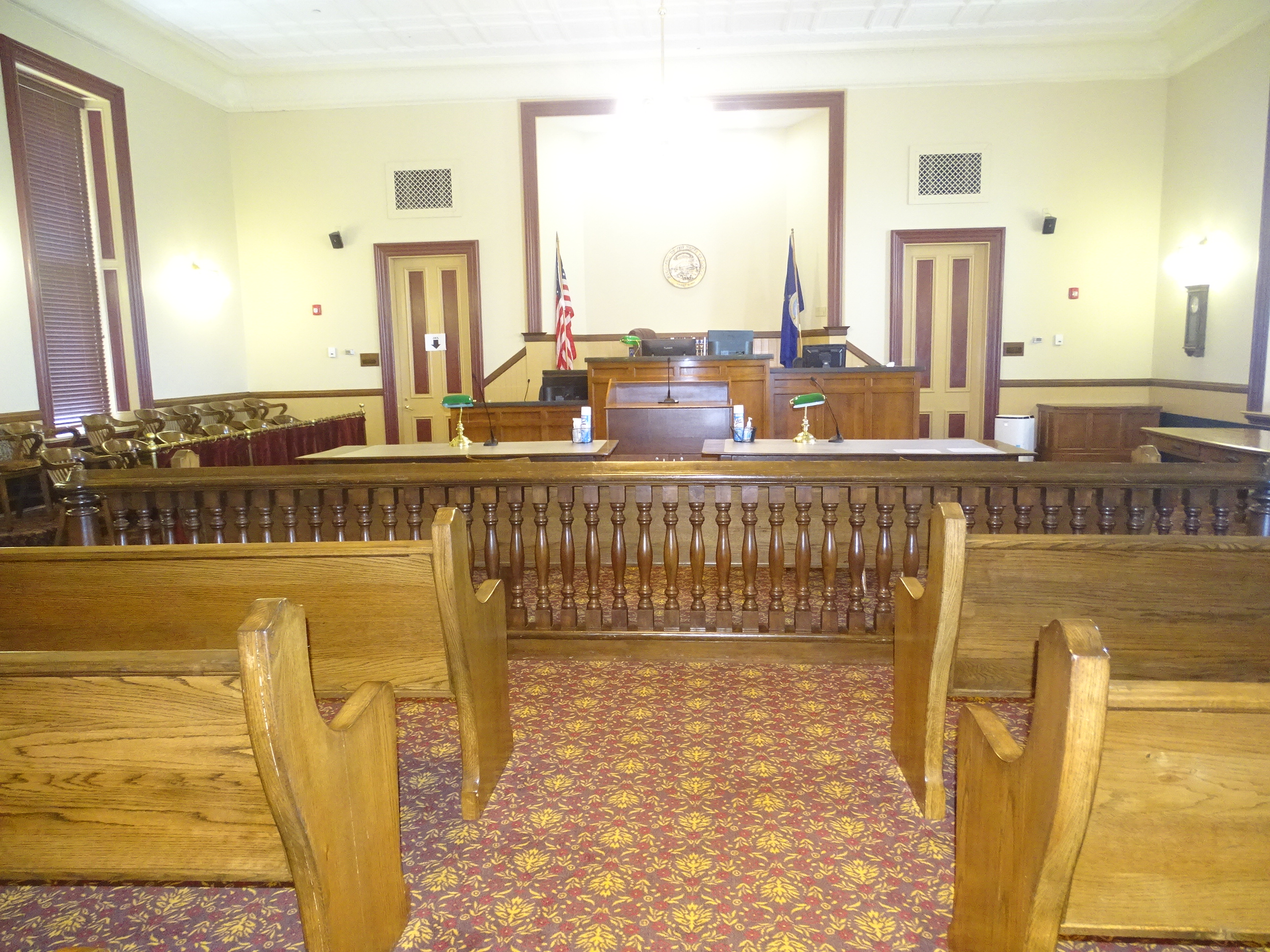
Construction on the courthouse took two years, but on October 8, 1873, it was complete. The people celebrated with a grand ball in the courtroom itself.

A hundred and fifty years later, the celebrations continue. Shady areas surrounding the building still host concerts, galas, dances, and festivals. At one corner of the square, the Roniger Memorial Museum showcases life in the Flint Hills past and present. Exhibits include stellar collections of indigenous artifacts crafted from flint nodules infused in the limestone layers.

The Flint Hills Folklife Festival in June has attracted travelers to historical booths and demonstrations for the last twenty-five years. Festival organizer Sue Smith is quick to point out that the Chase County Courthouse, the oldest courthouse in the state still in daily use, is the most frequently photographed building in Kansas, even more than the capitol building in Topeka.

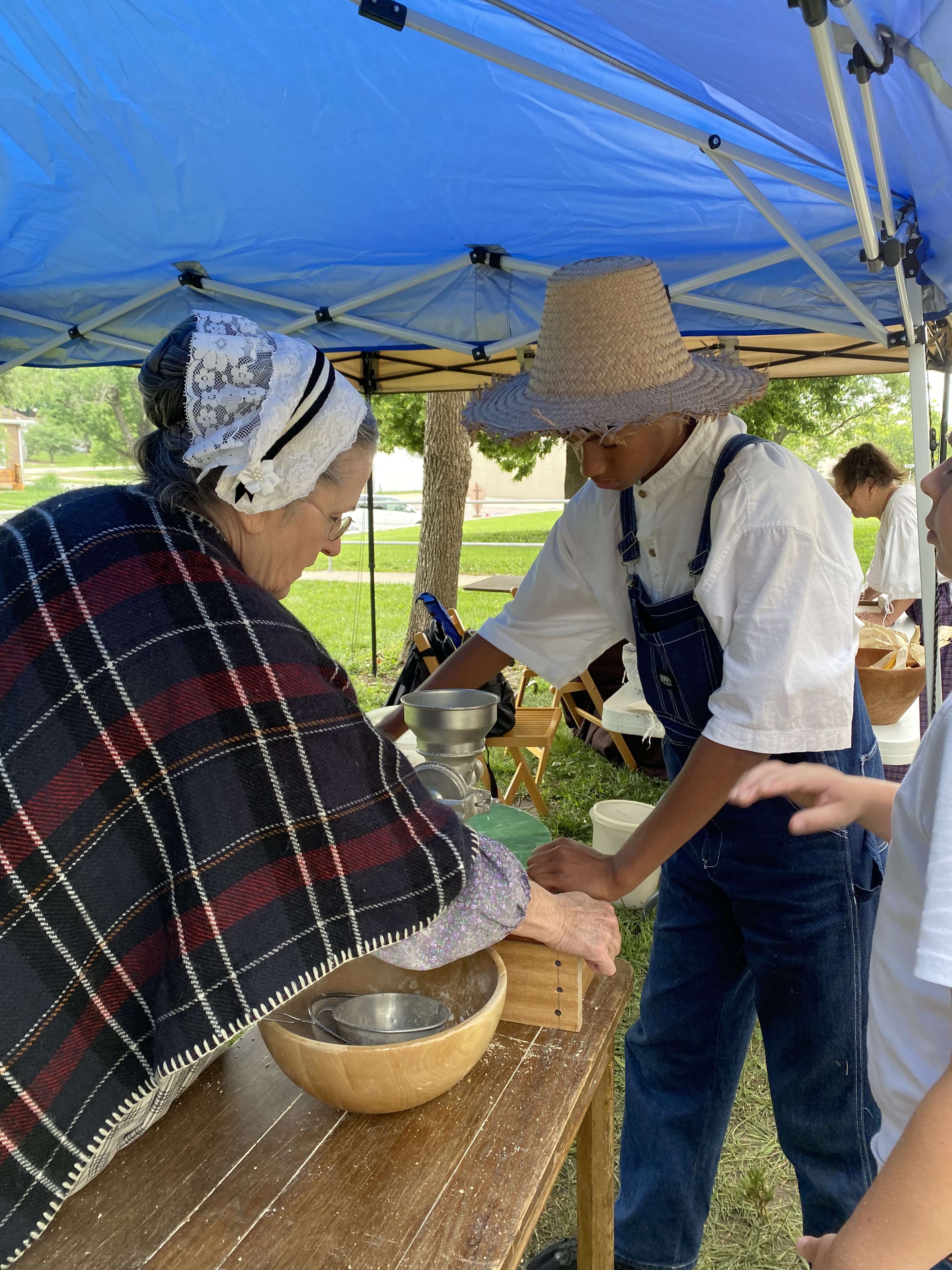
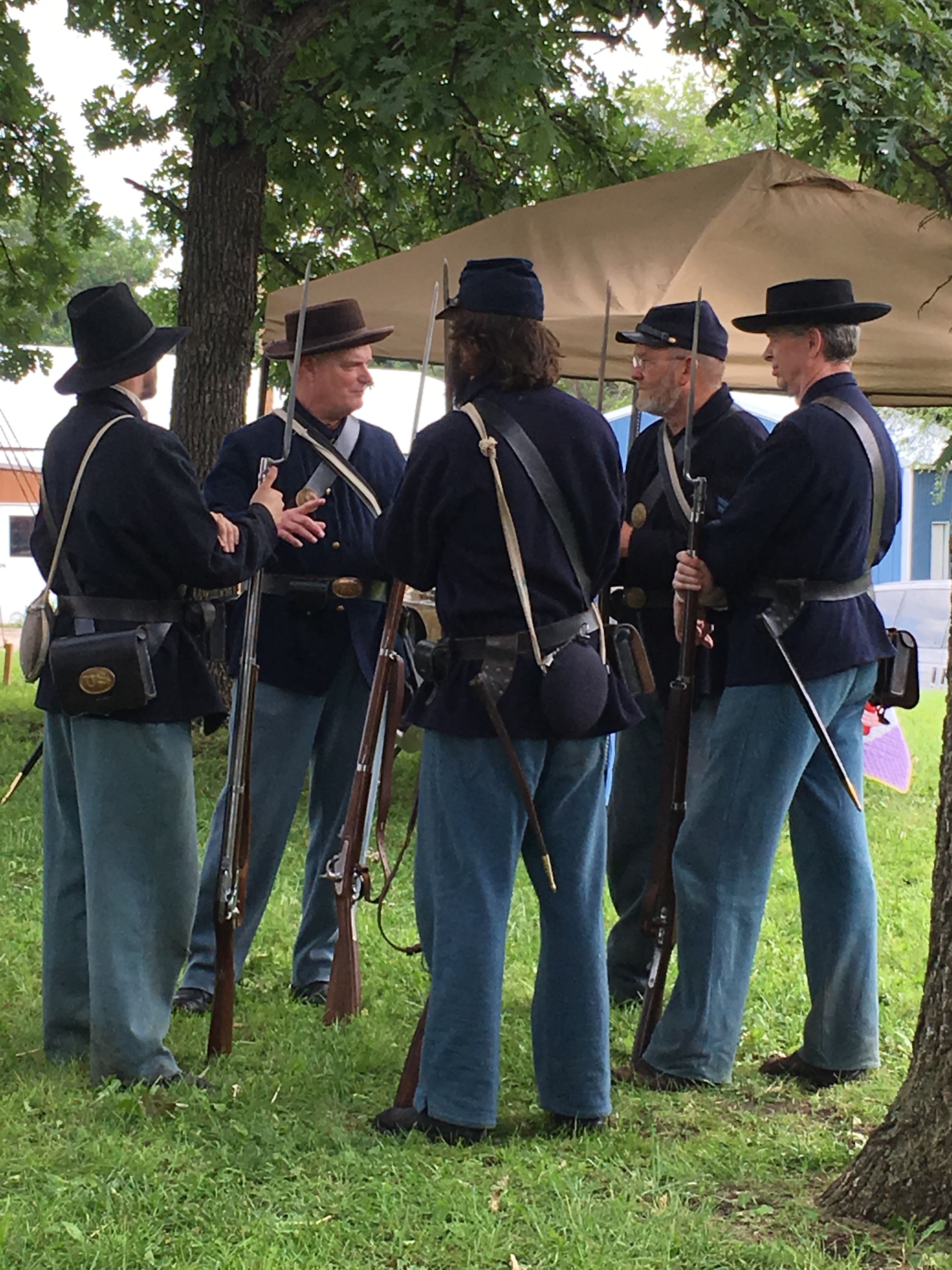
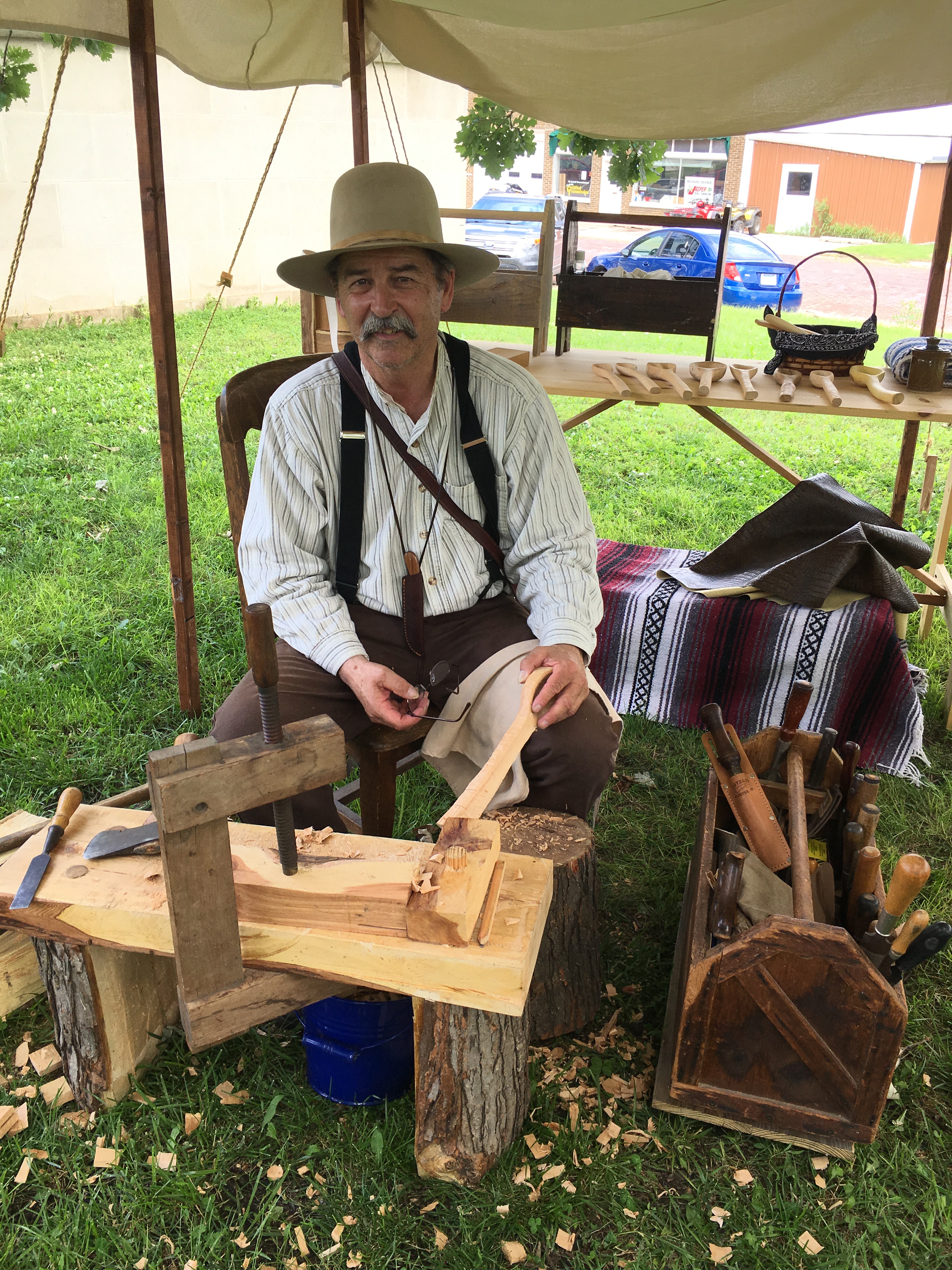
Folklife vendors and reenactors surrounded the courthouse in June this year. Many had returned year after year. Some had local roots but others traveled from distant places to be part of the Folklife Festival community.

Marti McCartney, who has been a vendor at the Festival most of its 25-year history, explained why she returns every summer. “I love it when people who don’t know each other connect with shared memories and traditions. I love sharing history—we’re all part of the same history in our own ways.”

First-year attendee Melissa Mathis circled the tents continually with her camera to capture important scenes. She agreed with Marti. “The history and techniques once commonplace are dying. We need to hold onto that history and keep it alive.”

Darrell Kerr, luthier and knife maker at Silver Dollar City, raved, “What really caught my eye this year were the second story windows with bars. They mark the former jail.”

Still intact, though not in use, the jail draws curious visitors year-round. Former city resident Nancy Zirkel recalled stories about the jail. Her favorite involved Sheriff Towle in the early 1970s. County Sheriffs and their families used to live in the courthouse directly below the jail. At one point Sheriff Towle rescued a fawn whose mother had been hit on the highway. He raised the young deer in his family’s courthouse apartment.

Basket makers Al and Teri Seeger have enjoyed bringing baskets to the Festival for the last three years. “There’s a sense of community among vendors,” says Teri. “It’s fun to see people who return every year.”

Petin Hammerton voiced agreement. She and her husband Jerry grew up in southern California, but now call Lindsborg home. “The people here make you feel like family,” Petin said.

“I’ve searched my whole life for a lifestyle that’s right for me and people who share similar values,” Jerry said. “I found what I was looking for here in Kansas.”

Though the Flint Hills Folklife Festival may have seen its final year, Sue Smith pointed out many other reasons to sit under the oaks on the courthouse lawn. History thrives on the square along with modern activities. Concerts, contra dances, and re-enactments are scheduled throughout the year. Every June, the Kansas City Symphony holds a concert on the nearby prairie. The Chase County Courthouse is only a few miles from the Tallgrass Prairie National Preserve. And a big celebration is planned on the Courthouse square for October 6 and 7 this year to observe the sesquicentennial of this historic landmark.

Sue summed it up. “Such memories! And such great friends!”

Isaac Alexander would be pleased.

A Festive Time at College Hill Coffee

Come chat with Ann and take a look at Firestorm Sonata.

Saturday, September 23, 2023

Noon until 2:00 pm

College Hill Coffee, 403 Soward Street, Winfield, Kansas

About Firestorm Sonata:

In peak condition, scout Sharenda Kamine is certain her field skills will insure her safety as she seeks supplies needed by the fortress she calls home. She must, however, prove her worth to the authoritarian commander of this isolated pocket of survivors. With reluctance, he grants her request to work alone and she heads across dust dunes of what once was southern Kansas, confident she will master any challenge she meets. But she is unprepared to find a window into the past, which simultaneously offers a future ripe with possibilities. She must decide whether she will honor her commitment to the Fort, or escape to freedom with Gran, the only family she knows.

Firestorm Sonata is the third in a series of dramatic stories featuring pianos and their families. It follows Sundrop Sonata (2016) and Sonata of Elsie Lenore (2020). Book 3, Firestorm Sonata, is the first book in the series which is set in a future with very different landscapes than we know today. A Climate Fiction tale, it explores the roles of pianos and musicians in a changing environment such as those predicted by today’s climatologists.

Known to many as the local piano tuner, few people realize that Ann Christine Fell has been a naturalist all her life and taught science in the Winfield schools before she opened her piano business. As a musician, piano technician, photographer, mother, and grandmother, she has gleaned details from a lifetime of wide-ranging experiences that bring her fictional stories to life for Kansas friends and neighbors. She lives on the edge of the scenic Kansas Flint Hills with her husband, her grandson, and her piano.


Firestorm Sonata: The Story Behind the Story

The third novel in my Sonata series of adventure tales featuring pianos and their families is now available on Amazon. I have mixed feelings about it. The completion of this journey has been months in the making and I’m relieved to finally get there. It’s been a lot of hard work, with repeated readings and editing through the summer, each time thinking this would be it, and each time finding more things that needed to change. I finally drew a line. This is it. Ready or not. And Firestorm is launched. May she find a path through the maze of words out there in the cyberverse and not disappoint.

Firestorm Sonata:

In peak condition, scout Sharenda Kamine is certain her field skills will insure her safety as she seeks supplies needed by the fortress she calls home. She must, however, prove her worth to the authoritarian commander of this isolated pocket of survivors. With reluctance, he grants her request to work alone and she heads across dust dunes of what once was southern Kansas, confident she will master any challenge she meets. But she is unprepared to find a window into the past, which simultaneously offers a future ripe with possibilities. She must decide whether she will honor her commitment to the Fort, or escape to freedom with Gran, the only family she knows.

This tale is a first for me, to set the events in the future. During my work on the second Sonata, Sonata of Elsie Lenore, a friend I respect, a retired college professor and elder in my community, shared an article with me. “Confronting the Climate Crisis Through Fiction: Visualizing a climate-ravaged world may actually be the key to mobilizing action.” Those who know me well know my passion for the natural world, for the planet Earth. As a college freshman 50 years ago—get that FIFTY—I took a life-changing class called “Can Man Survive?” in the biology department at Fort Hays State University in Kansas. It was based on the then-current knowledge about all the impacts our human activities had on water, air, land—and climate. We’ve known about greenhouse gasses for my entire life. Even longer. Some folks predicted serious impacts early in the industrial revolution, over a hundred years ago.

The evidence is mounting in 2023. This summer is already setting records. Extreme weather events around the world fill the news from catastrophic flooding to record-setting temperatures and untamable fires. Chile, Canada, Greece, Italy, China, India, Japan, Taiwan, Philippines, Sudan, Madagascar, Zimbabwe–the list goes on. In North America, water temperatures in the Gulf of Mexico hit 100+ in places, with 100% mortality in some coral reefs.

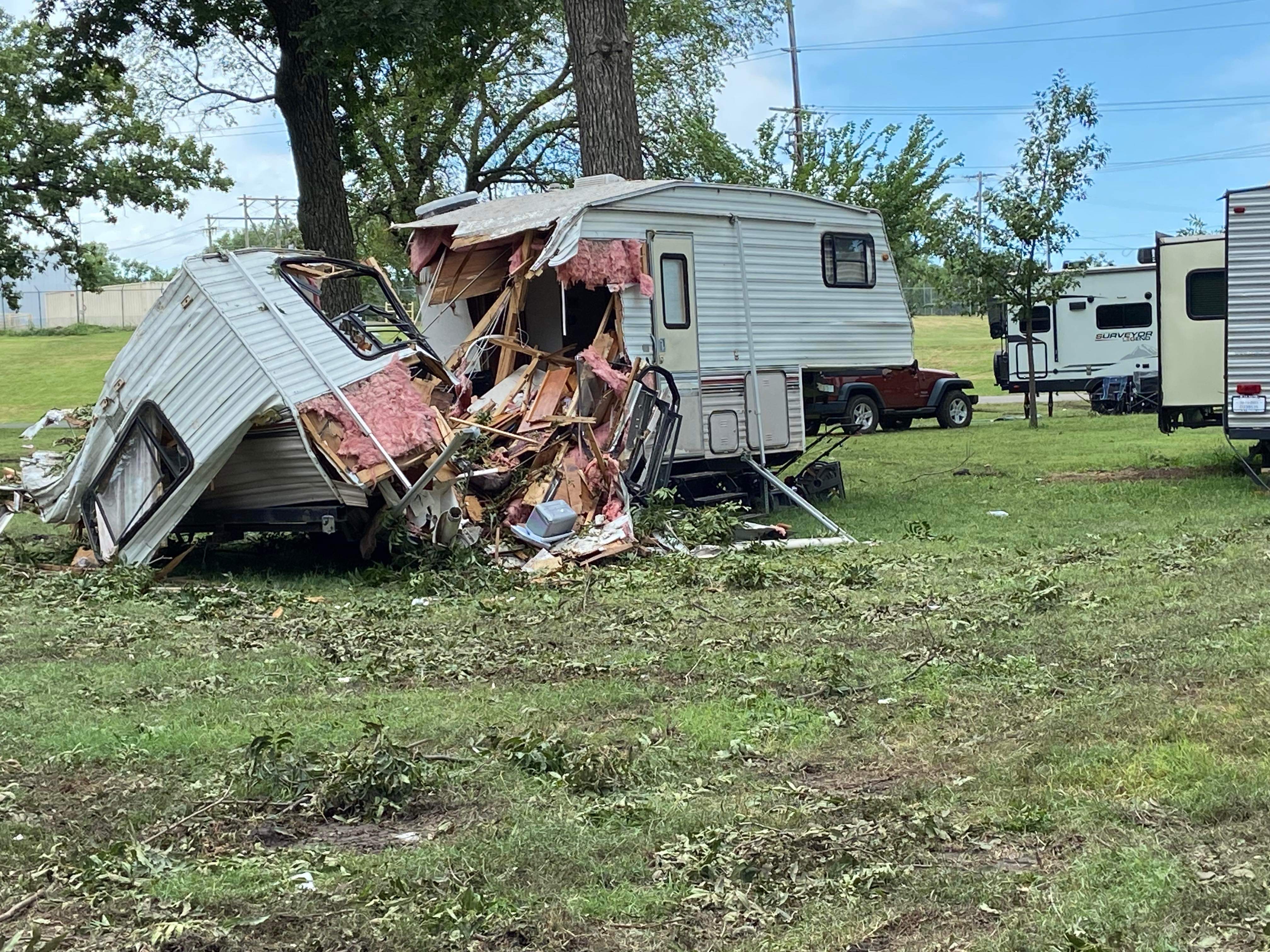
My own community cleans up after a straight-line windstorm that downed whole trees in our favorite parks and city streets, demolished our neighbor’s hay storage barn, and wreaked havoc on the county fair. Cleanup will continue for weeks. The cost has soared toward $2,000,000 already in our one small town.  And yet, we humans continue a path deemed to be disastrous for all life on the planet, just so oil companies can reap growing mega-profits at the expense of everything else we hold dear. If fictional tales set in a grim future environment will shake us into action, I decided I must try.

It’s been my privilege to offer continued piano service across south-central Kansas for nearly thirty years. I’ve kept climate records at each job, recording temperature and humidity. It’s increasingly hard to advise piano owners what their best plan of service should be. With seasonal swings in temperature and humidity becoming more unpredictable, the effects on pianos are easy to see. Tuning stability is now a figment of the imagination.

Pianos are my world. So is the prairie ecosystem. I began to ask some hard questions as I twisted those pins on my annual calls. “What’s with all the earthquakes in Kansas and Oklahoma?” In my college geology classes I learned this area is the “stable” part of the continent. Earthquakes are supposed to be extremely rare. And yet here we are.

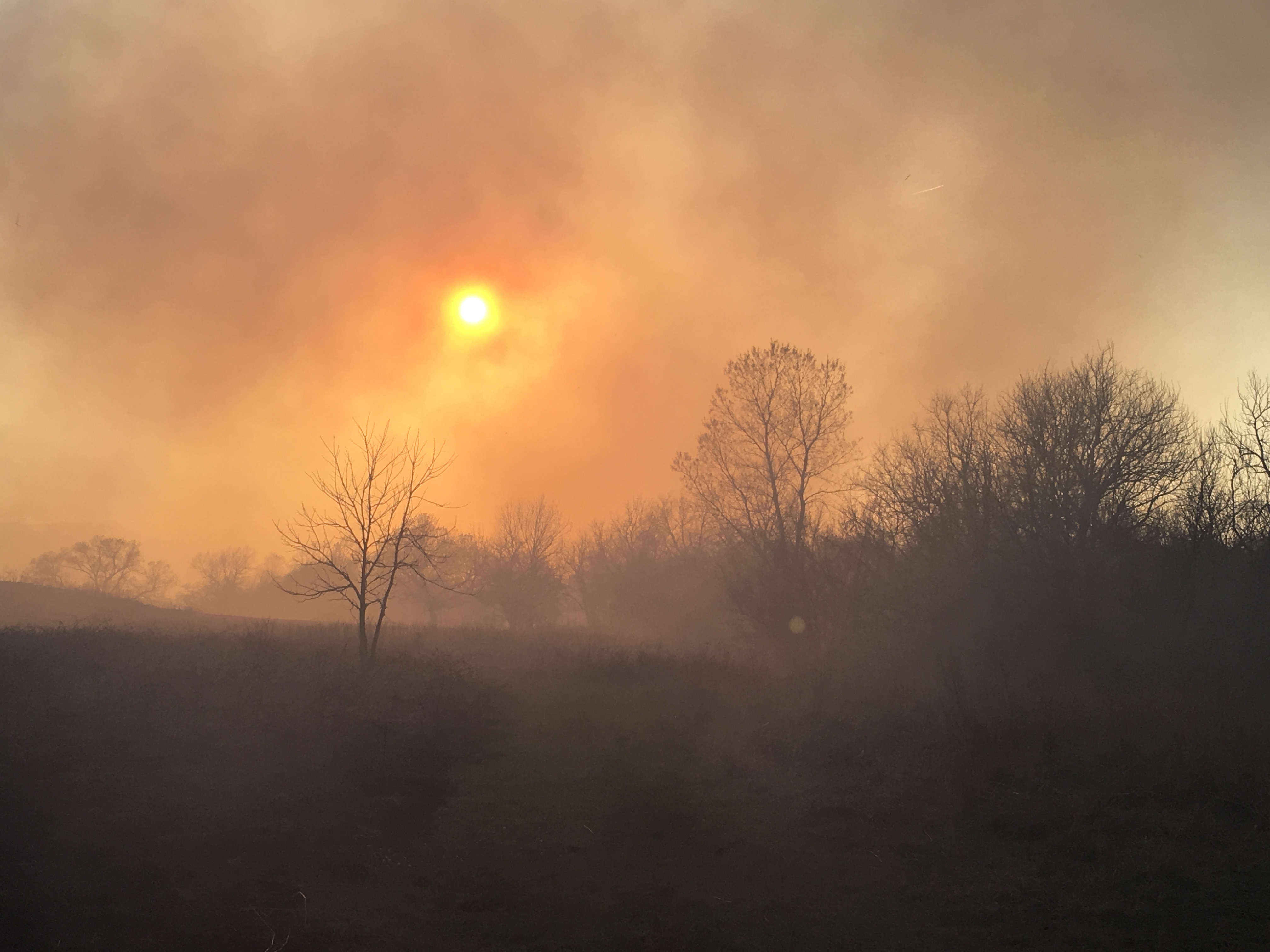
“What about the wildfires?” Every year we hear about more extreme fires. California, Oregon, Texas, Idaho. There have been successive record-breaking fires that started in Oklahoma and raged across the state line into Kansas, burning hundreds of thousands of grass acres, killing animals (including livestock) that were trapped in its path.April 2016, a fire burned over 400,000 acres, the largest blaze ever in Kansas (at the time);  March 2017, 600,000 acres burned in southwest Kansas, people were evacuated from small towns in the area; December 2021—fires in northwest Kansas, fanned by winds stronger than hurricane force, burned 400,000 acres.

Then there were the Canadian fires this summer that burned for weeks, sending ash and smoke into the air across northern US. And Maui—MAUI?? An island in the middle of the Pacific Ocean with a drought and a spark? The death toll from the Maui fire continues to grow.

I tried to imagine what my home county would look like after an extended drought, followed by a massive firestorm. Perhaps lightning would ignite an oil spill created by one of those fracking earthquakes. Add to the mix technology that can’t receive satellite signals, towers that topple in storms, and no way to receive news from the rest of the world.

The field of stepping stones.

What would my piano family do? What would become of them and their pianos? Would it even matter anymore if basic survival was the most pressing need? Unfortunately basic survival is already the most pressing need for far too many of Earth’s creatures, including pockets of human beings.

Thus, Firestorm Sonata was born. My deepest thanks to everyone who begged for another tale, who listened when I felt discouraged, and who offered words that bolstered me to keep on writing. You all comprise the village which raised Firestorm Sonata from a small seed to fruition. May she have wings to take her beyond my imagination and in her own way make our planet and our future a little brighter for all living things.


Of Snow and Violins

I don’t recall a time when I didn’t love books. I must have been hooked at my first page in my first picture book. Naturally, I wanted to write them also. English class in Junior High expanded my love of language. When the home economics teacher there assigned everyone to write a picture book for preschool children, a passion was born. I embarked on a lifelong adventure with words.

Though there have been lengthy gaps when I was too involved with family matters to spend time with a pen and typewriter, whenever I could  I outlined projects, made deadlines for myself, subscribed to writing magazines, and submitted my work.

One early project started with a dream.  I don’t recall my age when this dream seared itself into my subconscious, but upon recollection it was an outlandish and delightful story. In my young adulthood, married but BC (before children) I decided to write the dream story as a picture book. It involved a couple of seals and a polar bear in the Arctic, a snowman, and a violin. A violin you ask? Yes. A violin.

Not skilled with paint or colored pencils, I figured I could illustrate this Arctic story using my photographic skills. I needed only to make the characters. I designed patterns to sew stuffed animals as well as stuffed snowmen and a violin. After careful construction, I lined up the cast on a board covered with quilt batting sprinkled with glitter, set up my trusty OM-1 35mm SLR on a tripod, and headed into the morning sunshine outside the little farmhouse we rented in Morton County, Kansas.

Crowned with a bluer-than-blue sky, the still morning was perfect for the illustrative slides. I had a blast moving the characters through the plot and snapping photos of every scene. When the slides returned from the processor, I had the story and the illustrations. I submitted the idea and samples to a few children’s book publishers, and received their kind rejections. I eventually chose Plan B and took the collection of stuffed animals, a slide projector, screen, and the story to several local libraries as a guest reader for their children’s story times. Again, I had a blast and the kids enjoyed hands-on time with the characters from the story.

The years raced by. Life happened. My own children arrived. Daily routines became strictly regimented trying to keep up with everyone’s activities. Other than a session or two sharing the story with my own kids, the stuffed characters were stored away in a big plastic tub until last December.

As Christmas approached last year, I recognized there was no good reason to hide the stuffed animals away. My daughters were grown with children of their own—and half of the grandkids were already too old for picture books. Either I pull the old critters out of the closet, or I never would. I gifted a couple to my 6-year-old granddaughter for Christmas and took along the set of photos to read her the story. On our homeward journey I realized that I now had the means to publish A Very Special Snowman myself. After digitizing the illustrations and formatting a children’s book, I sent this same granddaughter her very own copy of the book featuring the Arctic characters for her 7th birthday in March.

I launched the decades-old project to the public Thursday April 20. The “Women Score Higher” conference in Wichita solicited women authors as vendors and I was happy to be able to bring a variety of books for many different readers, including the freshly published A Very Special Snowman.

A few days after 7-year-old Mia received her book in the mail, her 9-year-old sister wrote to me saying she was writing a book and wanted to know how to publish it. It makes a grandmother proud.

Even with a peaceful ending for two careless seal pups, A Very Special Snowman is a little sad for me. Since those days of innocence long ago, the emergency situation in the Arctic has escalated as our warming Earth melts the polar ice. The fate of Arctic animals like polar bears and seals has taken a perilous turn since my early writing years.

But every stage of this project has been a thrill for me—from the dream, to construction of the characters, to photographing the scenes, telling the story, and designing a book in 2023. And the piercing blue sky in the photos of 1979 amazes me still, a reminder that this precious planet is very much worth defending for all of us, polar bears and seals included.