
The solar energy system on our house came online in July 2011. For the next fourteen years, few days passed when our inverter reported no energy produced by the sun. Then, in June this summer, it all changed. The status window on the inverter, a necessary device that converts the direct current produced by the sun to alternating current for use in our home, toggled error messages constantly during daylight hours. “Peak overvolt,” “AC Voltage Low,” “AC Voltage High.” Production ceased. Given my determination to support the national Sun Day (https://www.sunday.earth) on September 21 with a local event, we had to do something! An error-ridden system just would not suffice.
The people who installed our system are no longer in that business, so I called local electricians to help diagnose the problem. But we were put on a back-logged wait list, with no real intent to take us off since we were not a priority for the local electricity experts.
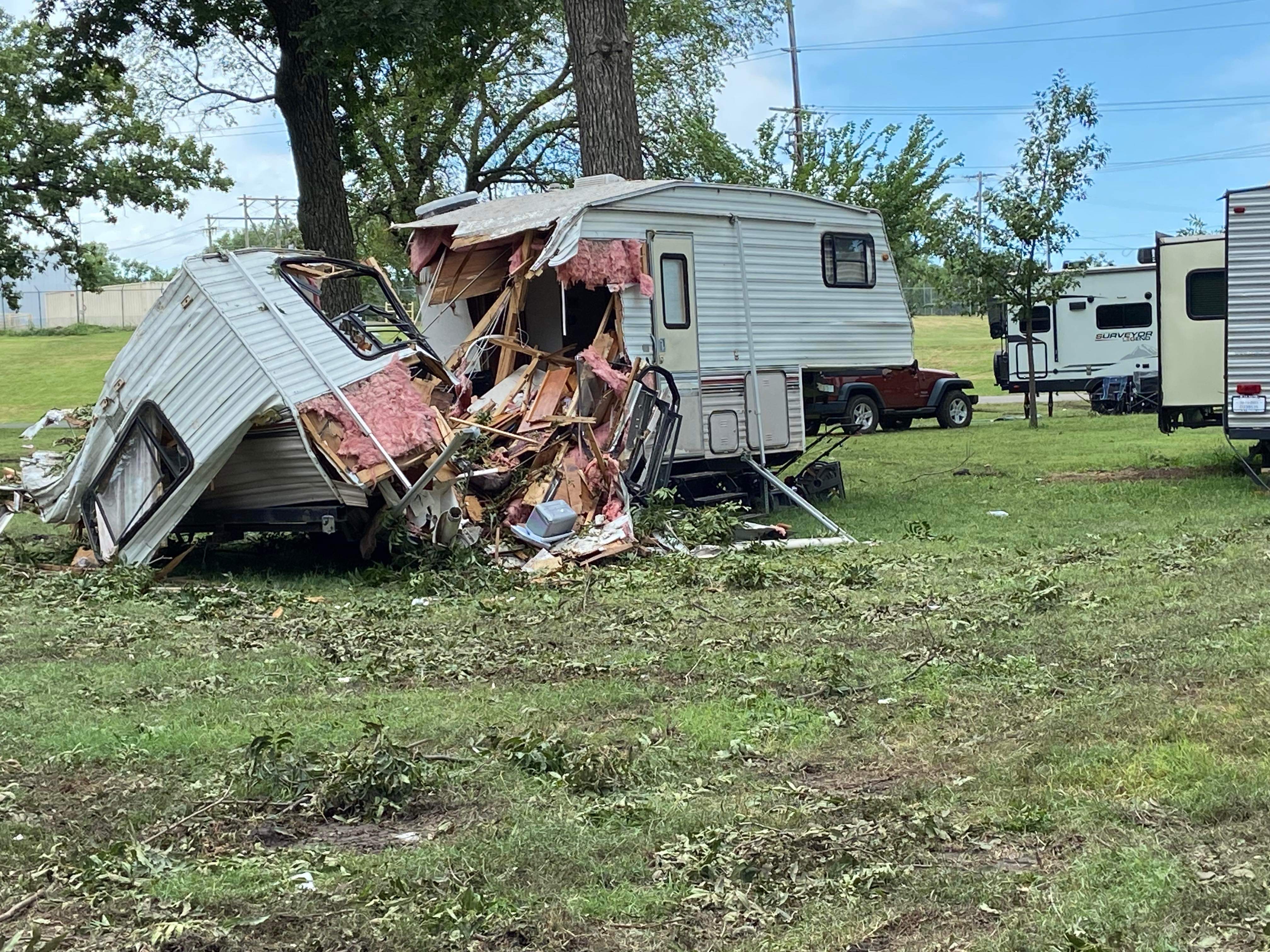
I turned to a recommended solar company headquartered ninety miles away. Weeks passed with no appreciable action, but after the devastating baseball sized hailstorm damaged several Solar installations in Ark City, a repair and maintenance specialist from this company stopped to take a look. He found nothing wrong, and assumed there was an issue with a computer chip in the inverter. His advice was to do a hard reset, that is, turn off the whole system for ten days to two weeks to allow the capacitors inside to fully discharge, then turn it on and hope for the best.
It didn’t resolve the error messaging.
I reported back to the solar company and declared that we were ready to replace the inverter and upgrade our home system. That’s when things became interesting.
On Friday afternoon, J, a system designer/project manager, arrived to do a site visit. We agreed on a 3:00 time via email messages. And at precisely 3:00, his white company pickup rolled to a stop in front of our house.
He’s punctual. Impressive.
J chatted about options as he took pictures of several important components in our system, utility meters, and structures on the property. A friendly, 40-something bearded man, he easily answered our questions. I noticed ear piercings as well as tattoos on his forearms. One tattoo was a caterpillar. Another broadcast in a fairly large font, “Practice Resurrection.”
Who was this guy? What did that mean, practice resurrection? Was he part of a strict religious cult? A rigid fundamentalist?
His knowledge of everything solar was obvious and the time flew by. It crossed my mind to ask about the tattoo, yet in the end I let it be. But later, that phrase wouldn’t let me be and I did a search. It turns out that “Practice resurrection” is part of a poem by Wendell Berry.
This system designer for a solar company has poetry tattooed on his arm for all the world to see. Wendell Berry, no less. Impressive!
My encounter with Wendell Berry and his writing has been a meandering path. Earlier this summer, a good friend presented me with an envelope that held a poem by Wendell Berry. M turned to this poem when he needed solace and he wanted to share it with me. That well-worn envelope is in the bag I carry daily. I shared the “practice resurrection” poem with M that evening, whereupon he loaned me Poetry of Presence II, a small volume of poems he didn’t want to part with permanently. It included a few by Wendell Berry, and M urged me to take a look at the poet’s life.
“Look him up,” he said.
Wendell Berry is not to be confused with Thomas Berry, whose book The Dream of the Earth is one of my cherished tomes. Still, there are similar themes in their writing. A thumbnail bio in the back of the loaned poetry book tells me that Wendell Berry writes poetry, essays, and novels. He is an environmentalist “with one primary message: Either we humans will learn to respect and live in harmony with the natural rhythms of this planet, or we will perish.”
Yes. That is prophecy. And Wendell Berry’s important message becomes clearer by the day as humans who have no business leading us continue to lead us toward devastation. It smacks me that this poet’s words have been swimming through my consciousness for years. I have one of his novels in my treasured books collection—as yet unread, but it’s on my list. It just moved a little higher.
There are eleven of Wendell Berry’s poems in my revered 1991 copy of Earth Prayers from Around the World: 365 Prayers, Poems, and Invocations for Honoring the Earth. Included in this volume is an excerpt from the poem that concludes with the words, “Practice Resurrection.”
What, exactly, does that mean? A description that popped up in another search. To practice resurrection means to embody the spirit of new life, hope, and transformation in the face of death, despair or brokenness. Often this is accomplished in acts of faith and love, through perseverance. It involves a daily commitment to find new life in death, to cultivate resilience, to see possibilities for redemption in difficult situations.

That, my inner voice says, is what we need right now, a sense of partnership with the creative Spirit responsible for all life on our amazing planet. That, my inner voice adds, is the theme of the novel I’m currently writing. That inner voice, I swear, also adds, that may be the theme of many great works of fiction through the ages.
Excerpts from Berry’s poetic verse prompt more from my nagging inner voice.
Berry: “So, friends, . . . love someone who does not deserve it.”
Fell: Love is the greatest power. Believe it.
Berry: “Denounce the government and embrace the flag. Hope to live in that free republic for which it stands.”
Fell: Berry, who is 91 in 2025, wrote this before 1991. How did he know?!
Berry: “Give your approval to all you cannot understand. Praise ignorance, for what man has not encountered he has not destroyed.”
Fell: And everything he has encountered, he is in the process of destroying.
Berry: “ . . . please women more than men . . .”
Fell: Hear, hear!
Berry: “Put your faith in the two inches of humus that will build under the trees every thousand years. Listen to carrion . . .”
Fell: The cycle of life; from death comes new life.
Berry: “Laugh. Laughter is immeasurable. Be joyful though you have considered all the facts.”
Fell: Not the fake facts. Consider the factual facts. This is a difficult thing, and yet, laughter is healing. When one can laugh, one can love.
Berry: “As soon as the generals and the politicos can predict the motions of your mind, lose it. . . make tracks in the wrong direction.”
Fell: I am losing my mind.
Berry: “Practice resurrection.”
Which brings me back to the topic of this essay. We need a new Bible. There. I’ve said the thing that’s been on my mind a long time—like decades. Writers know that communication is a give-and-take experience. Half a conversation belongs to the listener. Half the communication through reading belongs to the reader. Given the infinite life experiences of any single life (no two are alike) each reader may interpret a sentence, a verse, a chapter or a book in ways that astonish the writer. This has happened to me, when readers express things they got from my writing that I didn’t know were there. And so, in 2025, with our lives so very different from the ages when scriptures were written, is it any wonder that we misconstrue, misunderstand, and misrepresent the ancient verse?
When our scriptures offer some people excuses to act in cruelty with arrogance rather than teach us how to get along, there is something wrong. When our holy verse teaches that some humans have more rights than others, this is not good. We need lessons and prayers that include reverence and consideration for all peoples around the world, for all life forms created by the Spirit from elements on Earth; we need to cherish and care for the planet as She has cared for us. We need inclusive Scriptures, not exclusive retaliatory verse. We need the insights of various faiths that developed in different locations, including those of indigenous peoples. Inclusive, not exclusive. We need to learn to respect each other, to love with abandon, and to honor those forces and cycles that brought us into being, be they of heaven or of Earth.
We need to practice resurrection.









 The Bridge