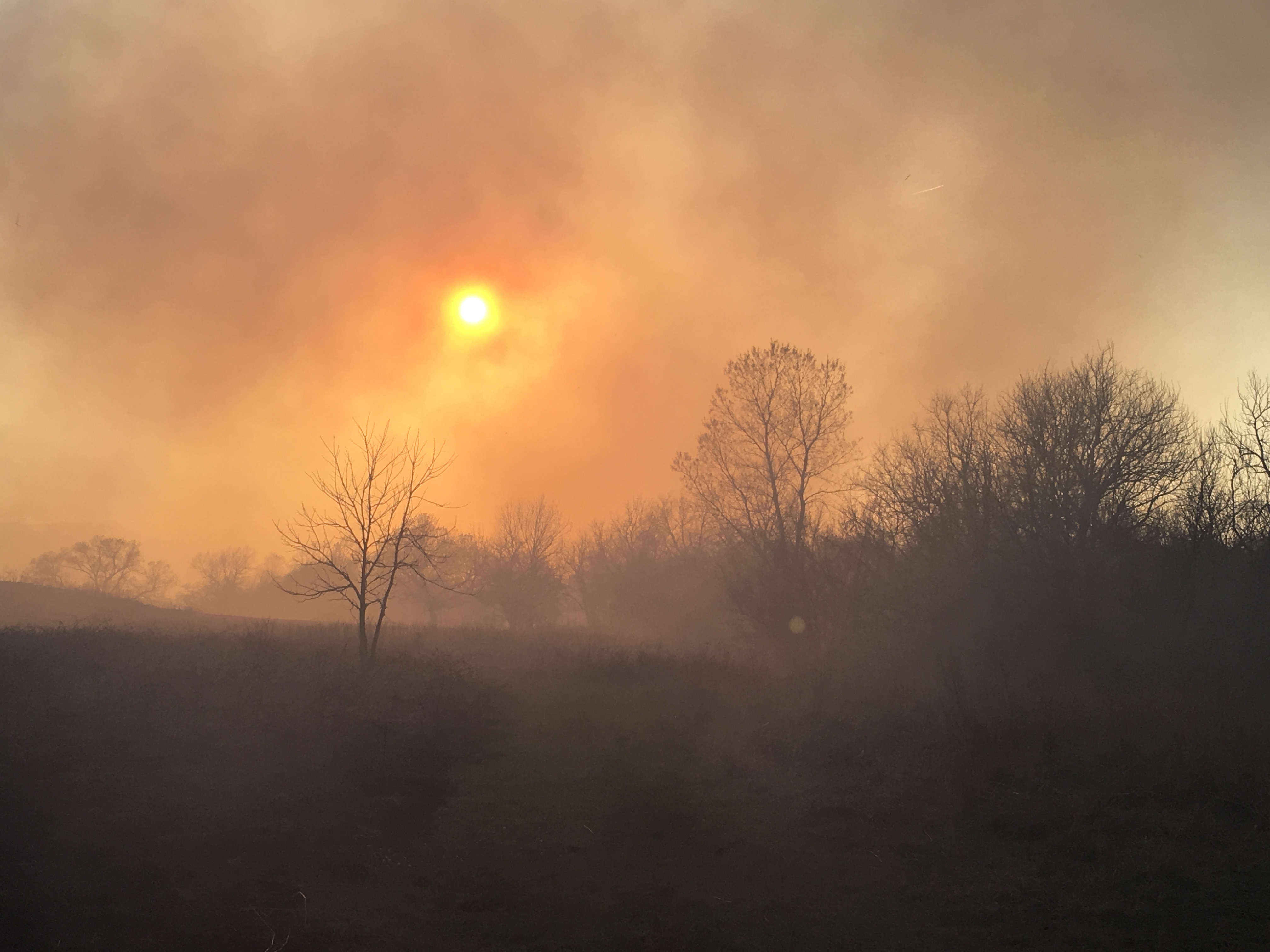
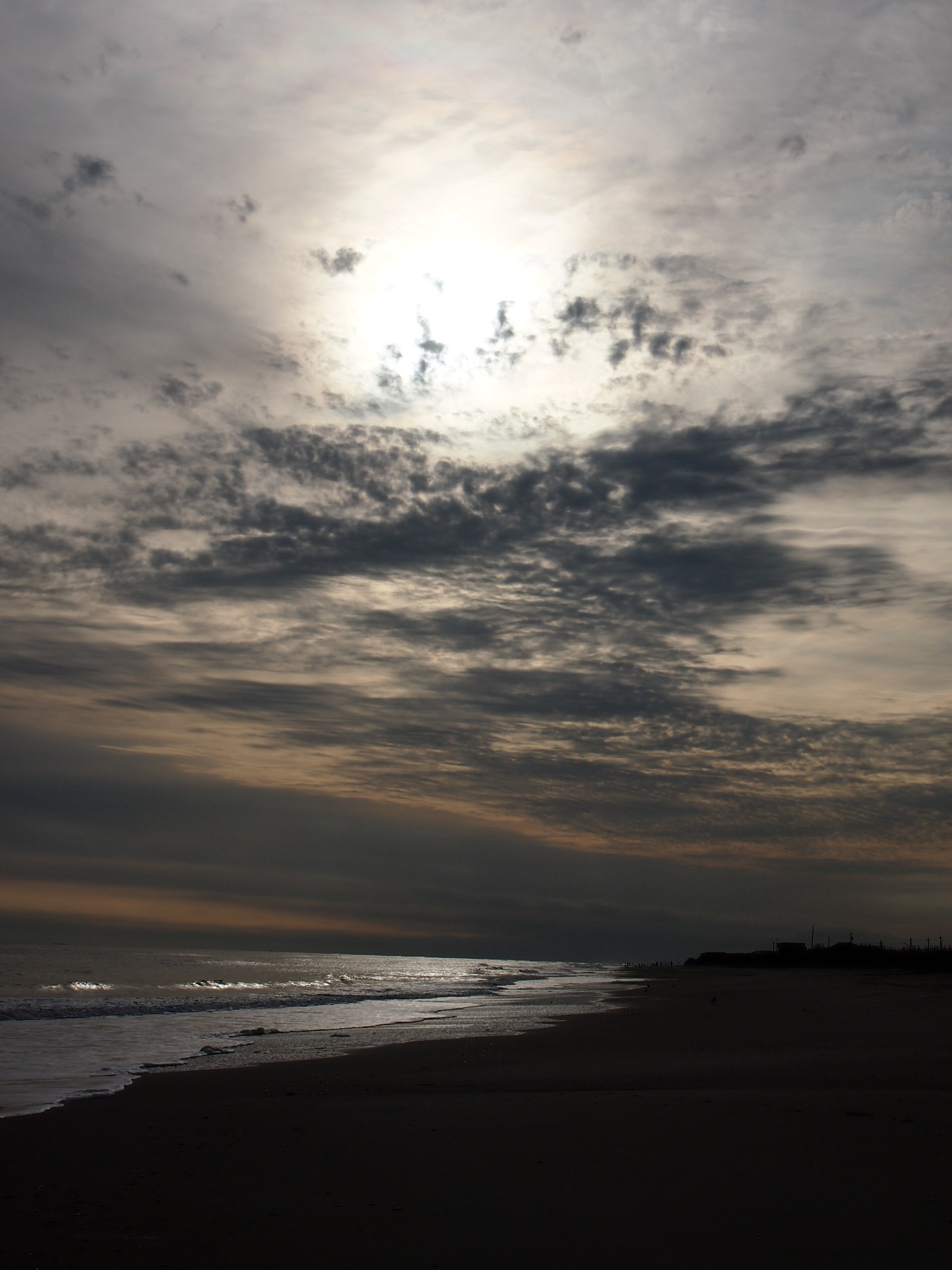
The devastating storm system that tore through a dozen states in mid-March wreaked havoc in all of them. Over a hundred tornadoes ripped through communities from Louisiana to Illinois, east to the Atlantic coast. The funnels destroyed hundreds of homes and left over 24 people dead. In northwest Kansas, the system’s unprecedented straight-line winds of 50 to 60 mph with gusts over 70 mph blew in a dust cloud that engulfed Interstate 70. Over fifty drivers lost sight of the highway and plowed into other cars and semi-trucks in front of them. Eight fatalities resulted from the largest pile-up of automobiles in decades. The highway remained closed for days.
None of this should come as a surprise. Shock, maybe, but no surprise. We’ve known for decades that our actions stress the living veneer on our miraculous home planet, Earth. Yet we meet steeper resistance to action with each passing day. If the unprecedented storms across our country aren’t enough to shake sense into our leaders, what will be?
I fell in love with nature years ago and my devotion to wilderness, landforms and wildlife led me to share our growing predicament many times since Earth Day #1 in 1970. As a public high school student enrolled in Earth Science class at the time, I proudly sported my green armband through all the activities of that day. Since then, after earning a bachelor of science degree in geology, I’ve helped with Earth Day exhibits at our local park, highway cleanups, recycling efforts, care packages for extended family featuring Earth-friendly products for daily life, helped my own students with environmental projects, wrapped trees with green ribbons (and later removed them for the trees’ sake), planned and orchestrated a series of environmental film screenings at our local theater, and connected the dots with 350.org in the crazy weather of 2012. It became obvious that our amazing planet deserves attention not just one day each year, but every day. As indigenous leaders on every continent teach us, the Earth does not belong to humans. Rather we belong to the Earth. We ignore the warning signs at our own peril.
I continue efforts to educate others. Several weeks ago, I came across a link to an article titled “These 15 Foods Could Disappear Due to Climate Change.” (https://worth.com/15-foods-disappear-due-to-climate-change/) The probable impact of climate disruption on familiar foods was shocking. If only people knew, I thought. The list gave me an idea: I could promote local gatherings that served many of the foods on the list. To kick it off, I invited a diverse group of friends for a “Dinner with Purpose: For the Earth.” I set up a buffet with information cards about each food item and how the Earth’s delectable gifts may become rare for our grandkids. The menu included chocolate candy appetizers, taco salad with all the trimmings, scalloped potatoes, with mixed fruit salad and blueberry muffins for dessert. Drinks included fresh squeezed limeades, coffee, and wine. In all we enjoyed 14 of the 15 listed items from the list of disappearing foods.
The dinner was a hit and I consider the evening a two-fold success. The information cards spurred good conversations about climate disruption and its consequences, and we all enjoyed ourselves at the same time—an act of total resistance under an administration that wants us to cower in fear and apprehension.
Several in attendance expressed their intention to hold an Earth dinner themselves, a delicious way to spread the word. Perhaps you’d like to join the fun and host a dinner for your family and friends. April 22 is the 55th anniversary of Earth Day #1, but any day will serve to honor and celebrate the generosity of our home planet and remind ourselves what is at stake.
Guests discuss information about the food items at risk.
Never, no never, did nature say one thing and wisdom say another. (Edmund Burke)
Heading to Wichita years ago for a Sunday dinner with my husband’s parents, a stiff breeze buffeted our car.
“Look out for that bird!” I yelled. “Why do they do that?”
“Do what?” Craig asked from the driver’s seat.
“Fly at the car. You know, when we’re driving along, it seems like most of the birds sitting on the roadside wait until we’re almost there and then jump into our path. Haven’t you noticed? That last one was a close call.”
“You’ve heard of bird brains, haven’t you?”
“Very funny. Well then, why don’t half of them fly the other way? No wonder so many birds get hit by cars.”
“There’s another reason.”
“What’s that?”
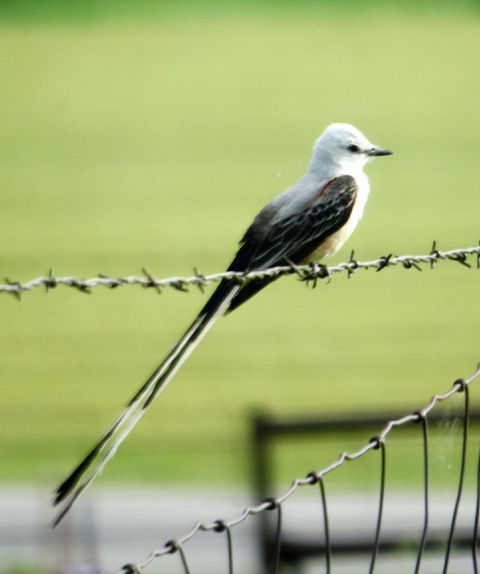
“The wind. It depends what direction the wind is blowing. Watch. There are a couple of meadowlarks up on the crest of the next hill. They will jump into the wind—right at us—to get airborne.”
I studied the larks as we approached. Sure enough, just before we achieved the crest, they each leapt directly into the path of our car. They swerved sharply and fluttered to the north, over a dormant winter pasture.
“Why not just fly away from the car to begin with?”
“They get lift a lot faster if they jump into the wind,” he said.
“Really? You mean they couldn’t fly if they didn’t meet the wind head-on?”
“Pretty much. It probably depends on wind velocity. I think if the wind isn’t too strong, they could take off with a breeze, but it would take more effort to get airborne going with the wind. You see how they turn and go with the wind once they get in the air?”
We watched another pair of meadowlarks follow the same pattern.
“They know they can get up faster heading into the wind, and if the wind is too strong they won’t get lift unless they face into it,” he said.
~~
Since the inauguration of #47, I have felt like one of those larks. A barrage of insane and appalling executive orders sweeps from the White House with category 5 hurricane force, devastating every state in the union regardless of geographic location or political leaning. I don’t know how to begin to resist the devastation, or even to absorb all the news. You may feel the same way. But unless we get out there to face the onslaught and jump headlong into the gale force winds, we’re sunk. In whatever way each of us can manage, we need to launch against the wind of insanity and rise above it to soar toward a better future. Don’t run. Don’t hide. Don’t ignore the news. Instead, rise up and ride on the wings of the wind. It will make a difference for our future.
“Joy to the World, the Lord is Come! Let earth receive her King,” I sang with my friends from Campfire Girls. Bundled in warm coats and woolen hats, we hardly noticed the night’s chill as we sang to our neighbors one December evening, long ago. My piano teacher smiled at us from her doorway. A toddler laughed in her arms, clinging to her with one hand and pointing to us with the other.
“Merry Christmas!” we said when we had finished. “Merry Christmas!”
We turned to the street and tromped to the next house. “Race you,” Sara said. She lunged into an awkward jog on the snow-covered street. She darted ahead of me, gaining momentum.
“Slow down, Sara,” said her mother, the adult who accompanied us.
Sara stopped running and slid in her boots along the packed tire tracks. I slid too. Other girls joined in and we ran and slid to the next house. Sara’s mother led us to the porch and rang the doorbell. A retired couple opened the door and we sang, “O Come, All Ye Faithful. . .” Our words wafted into the crisp air on puffs of vapor.
Our youthful energy carried us from door to door. Snowflakes fluttered through the black sky and smattered my cheeks with sprinkles. We passed under a street light and paused to watch the new snow float down. The flakes glinted in the light beam as they settled onto knee-high drifts on the ground. Tiny crystals of fallen snow sparkled like tiny polished gemstones.
We cut a trail across unbroken snow in a neighborhood park and skirted tennis courts which had been transformed into a winter ice-skating rink. Pine trees flanked our exit from the park, each cluster of needles decorated with tufts of snow.
As I passed the pines, Sara ran up behind me and bounced a limb. Snow sprayed in every direction, showering my face with needles of ice. I brushed the snow from my coat and chased her onto the residential street. We proceeded from house to house, sending joyous strains of familiar Christmas carols into the night air and wishing all a Merry Christmas.
Ontario Street marked the edge of town and we paused when we arrived. On the other side stood an apple orchard, still tended by an aging farmer. I expected that we would turn around and head back but Sara’s mother nodded across the street to the little farm house nestled in drifts of unbroken snow. “Let’s go there.”
“Nobody’s home, Mom,” Sara said.
“I bet he’s there,” her mother said. “Come on, girls, one more stop before we head home.”
I shivered, suddenly cold. The only time I’d seen the elderly farmer had been months ago when I had ridden my bicycle into his blooming orchard. He gruffly told me this was no place to play. “Go home,” he said, his face unsmiling and stern.
I dragged along with the last of the girls as we trudged across Ontario Street. None of us laughed now. We didn’t run and slide up his path. We plodded up the driveway, a smooth field of unbroken whiteness glowing in the night between rows of trees, the bare branches skeletal against mounds of snow.
We reached the back porch of the old farm house and crowded onto the landing. One of the girls broke an icicle from the porch roof and handed it to Sara.
“I don’t think anybody’s here,” Sara said again.
“Knock anyway. I see a light in there,” her mother said.
Sara knocked, timidly at first. She knocked louder the second time. The porch light came on. “How about ‘What Child is This?’ Ready?” Sara’s mother whispered.
The door swung open and the old farmer stared at us, a strange look on his face.
We sang, “What child is this who, laid to rest, on Mary’s lap is sleeping?”
Tears filled his eyes as we sang. At the last chord, he tried to speak, but the words caught in his throat. Sara’s mother took his elbow and guided him to a chair at the kitchen table.
“Have them come in,” he managed to whisper.
Sara’s mom motioned us into the kitchen. Someone started “Dashing through the snow,” and the rest joined in. We sang other songs, filling his house with music.
“Want some hot chocolate?” He leaned forward to stand.
“Let me,” Sara’s mom said. She bustled about the kitchen, stirring chocolate syrup into warming milk on the stove. It was the best hot chocolate I’d ever had.
We sang more songs. We sang all the Christmas songs we knew. I helped Sara wash the cups and return them to their cupboard.
“I’ve got to get these girls home,” her mother said.
We filed out the door and sang one more time, a hearty rendition of “We Wish You a Merry Christmas.”
“Merry Christmas!” we called as we turned away. “Merry Christmas!” Our boots crunched through the crystalline snow on our way toward Ontario Street. We had not quite reached the end of the driveway when a bell rang behind us. We turned to look back toward the farm house and the barn behind it. The tones deep and clear from an old school bell, rose from a belfry on top of the barn and floated through the air above us.
I tipped my head backwards, as if I could see the tones mingling with the snowflakes in the dark sky. The bell rang on, filling my heart with wonder. None of us spoke when the ringing stopped. The chimes died away in the pristine night air and stillness blanketed us with the enchantment of a winter evening.
Sara’s mother spoke with reverence and awe. “I haven’t heard that bell ring in twenty years.”
Twenty years.
Ever since that crystalline December night when I witnessed the magic of music, the custom of caroling has been a favorite holiday tradition. Music bridges generations, unites families, heals broken hearts, and brings good will to all. Seasons come and seasons go and I am now an old woman, pondering all the Christmases of my past. The love, the feasting, the hugs from distant family members coming together, the festive decorations, and anticipated years to come, but of all those years, none has quite matched the experience of hearing that old church bell peal across a snow-covered neighborhood, a message of hope, joy, and gratitude from one generation to the next.
May Heaven and Nature ring for generations to come.
I chased sunsets in my youth. Often, my mother would ride along as evening approached, and I drove to the west side of town. A favorite hilltop offered a spectacular unobstructed view of the evening sky. This was back in the day when color photography was off limits to many but I wanted to give it a try. My dad ran a black and white portrait studio in our basement when I was very young, and I’d help him nurse the images to life in the darkroom under our stairs. But color was a different story altogether. It was the next thing, a new generation of photo art, and I took what I had learned from him and launched into color printing in our basement laundry room—new town, new home.
In those days, I could purchase the developing chemicals at our local K-Mart, just up the street. I used a “Unicolor” system, with a plastic drum, that had channels for various sizes of prints, up to an 8 x 10. You were to expose the paper with your enlarger, using color filters for the proper mix of pigmentation, and then fit the paper into the drum, in the dark, and seal it with the press-on lid. From there, you could operate in daylight, pouring each designated chemical through the spout into and out of the drum at the prescribed times. At the end—wallah!—I removed my color prints.
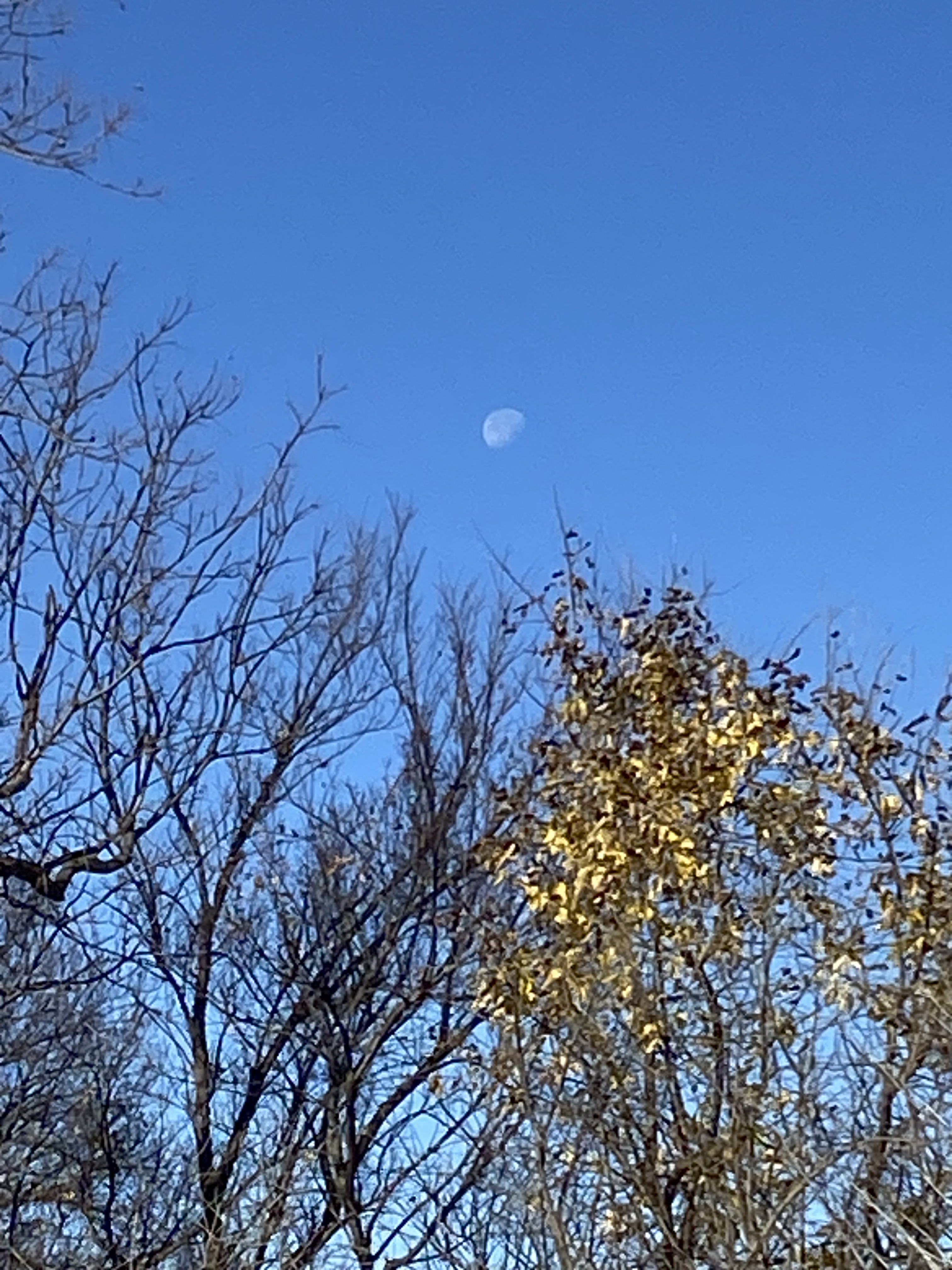
MoonriseMoonset
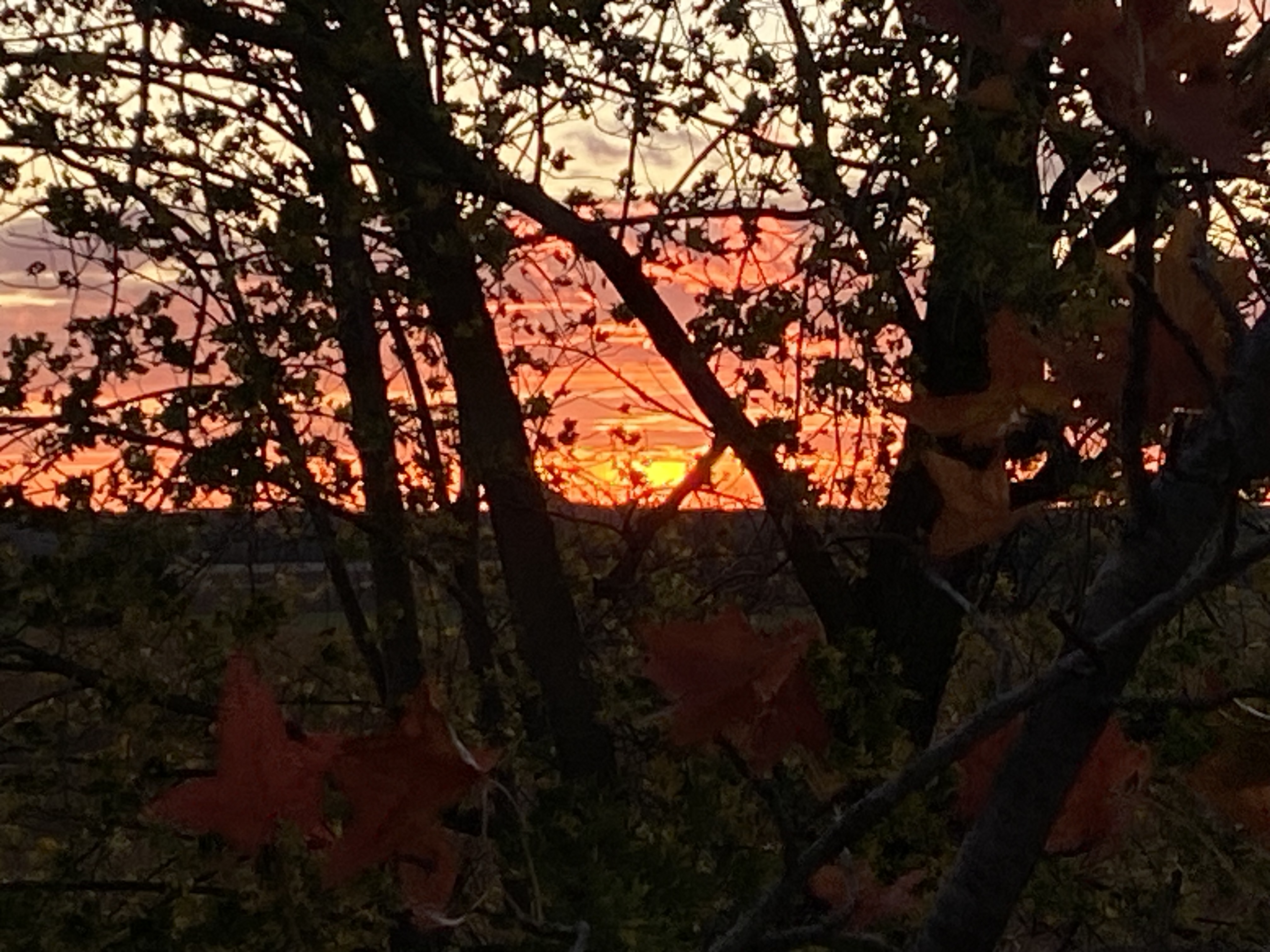
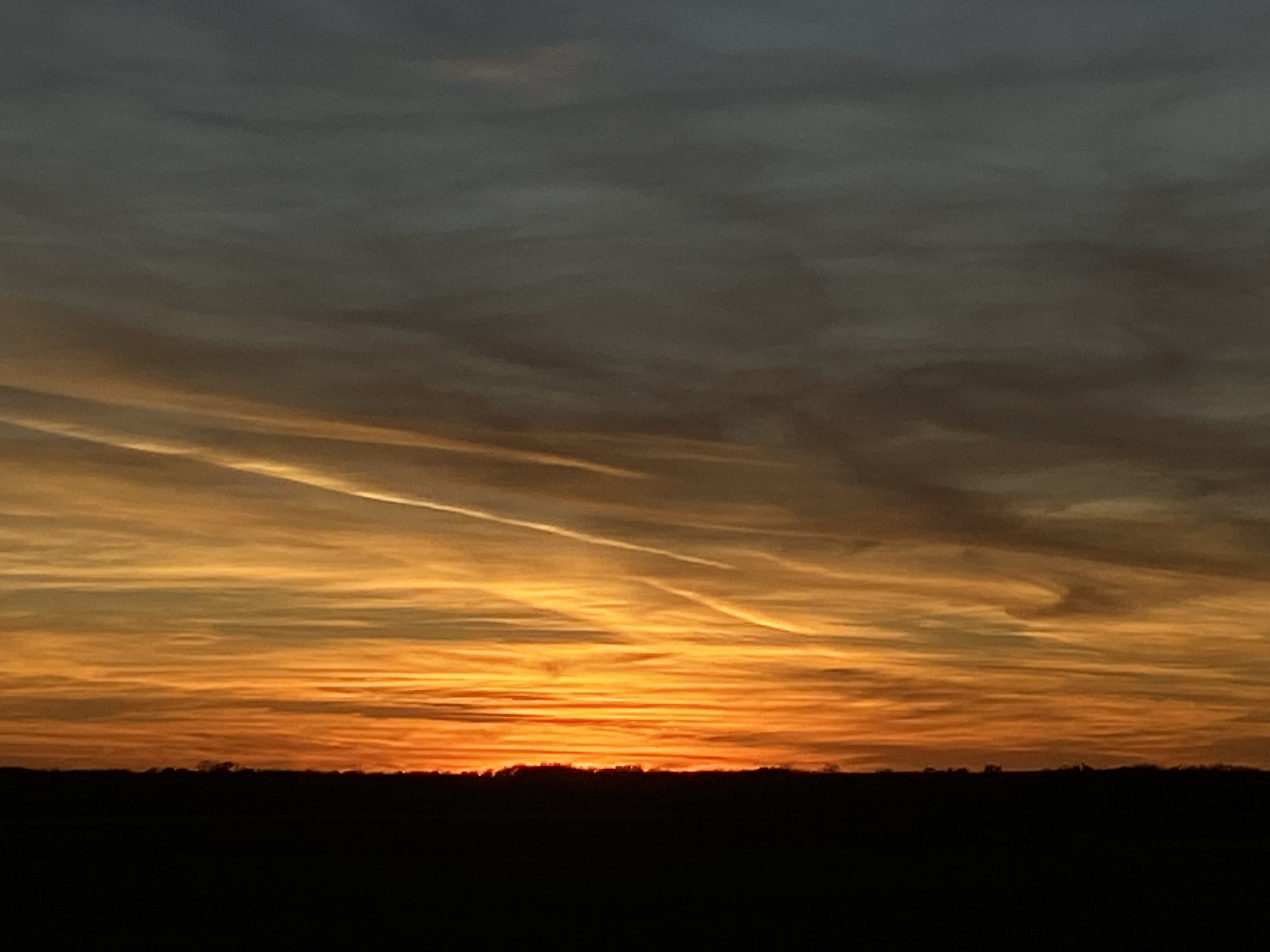
With our Kansas state motto, “Ad astra per aspera,” (to the stars through difficulties) it’s a logical pastime to watch the sky. Here in the western plains, often the sky provides the most intriguing scenery to be found. Some sunsets are stunning. And no two are alike. The interplay of light with moisture in the air, as well as dust at times, provide distractions from ordinary difficulties along with the continuously changing scenery. I don’t print color enlargements these days, but try to find images worthy of sharing in a digital format. New generation. Next thing.
I found myself sky-watching again after the election a month ago. The vistas overhead provided consistency through their constant metamorphosis and it was comforting. If not exactly ad astra per aspera, then at least ad caelum.
Last month I attended a few presentations at the Kansas Book Festival in Topeka. The one I remember most was by author and administrator at Haskell Indian Nations University Daniel R. Wildcat. I bought his book, On Indigenuity: Learning the Lessons of Mother Earth, a long essay on what indigenous peoples can teach the rest of us about protecting our miraculous home planet. I have long been concerned about protecting the home we share with all life forms, including people around the world and millions of other species. When greed and lust for power impact the lives of innocents around the world, I am enraged. Destruction of the biosphere that sustains us is now threatened with acceleration. Communities of wild things and minority populations will be the first to feel the impact.
In the early pages of his book, Daniel Wildcat recommended that we should become more familiar with Nature. One thing which compounds and complicates the rampant destruction of our planet is our distance from the elements. We sit inside our comfortable homes in front of screens far too much, and should become more familiar with how the natural world near us is impacted by our decisions and policies. To that end, today I decided I would walk the deer trails on my small patch of virgin tall grass prairie and look for the beauty in Nature. Even if you aren’t close to a 40-acre meadow, you can still take a walk and feel the fresh air and sunshine, listen to whatever birds are in the trees lining the streets, and enjoy the colors of autumn.
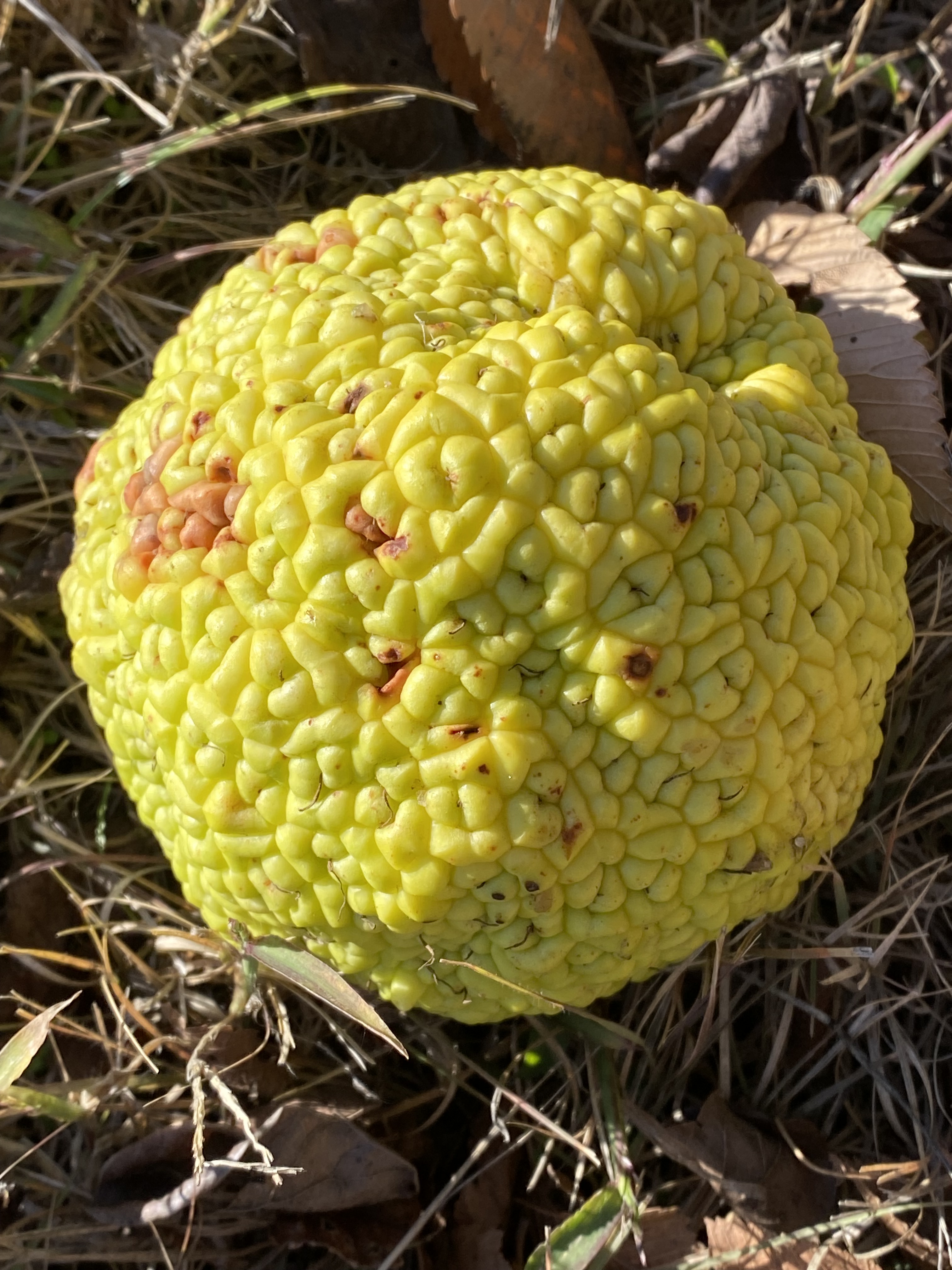
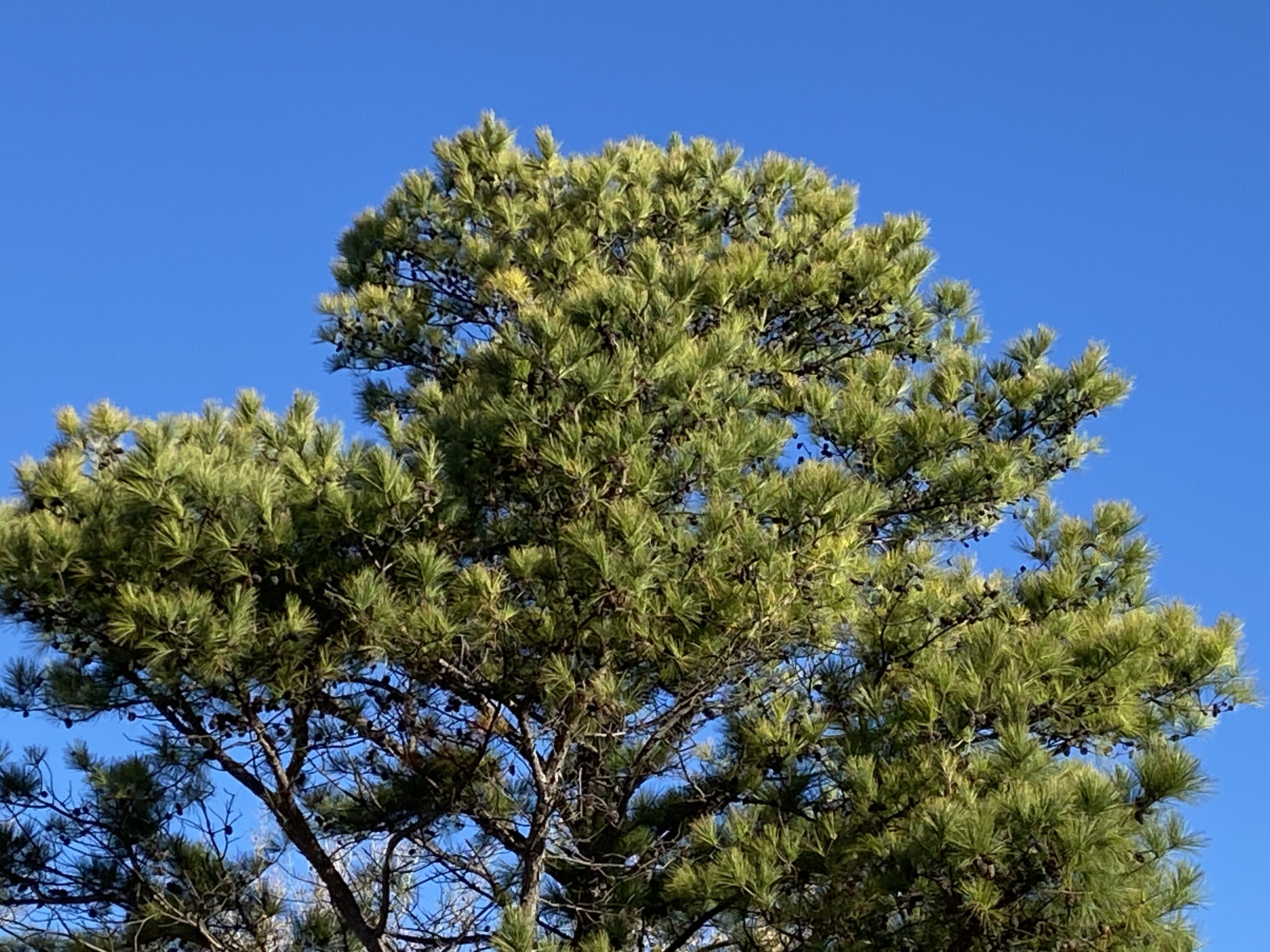
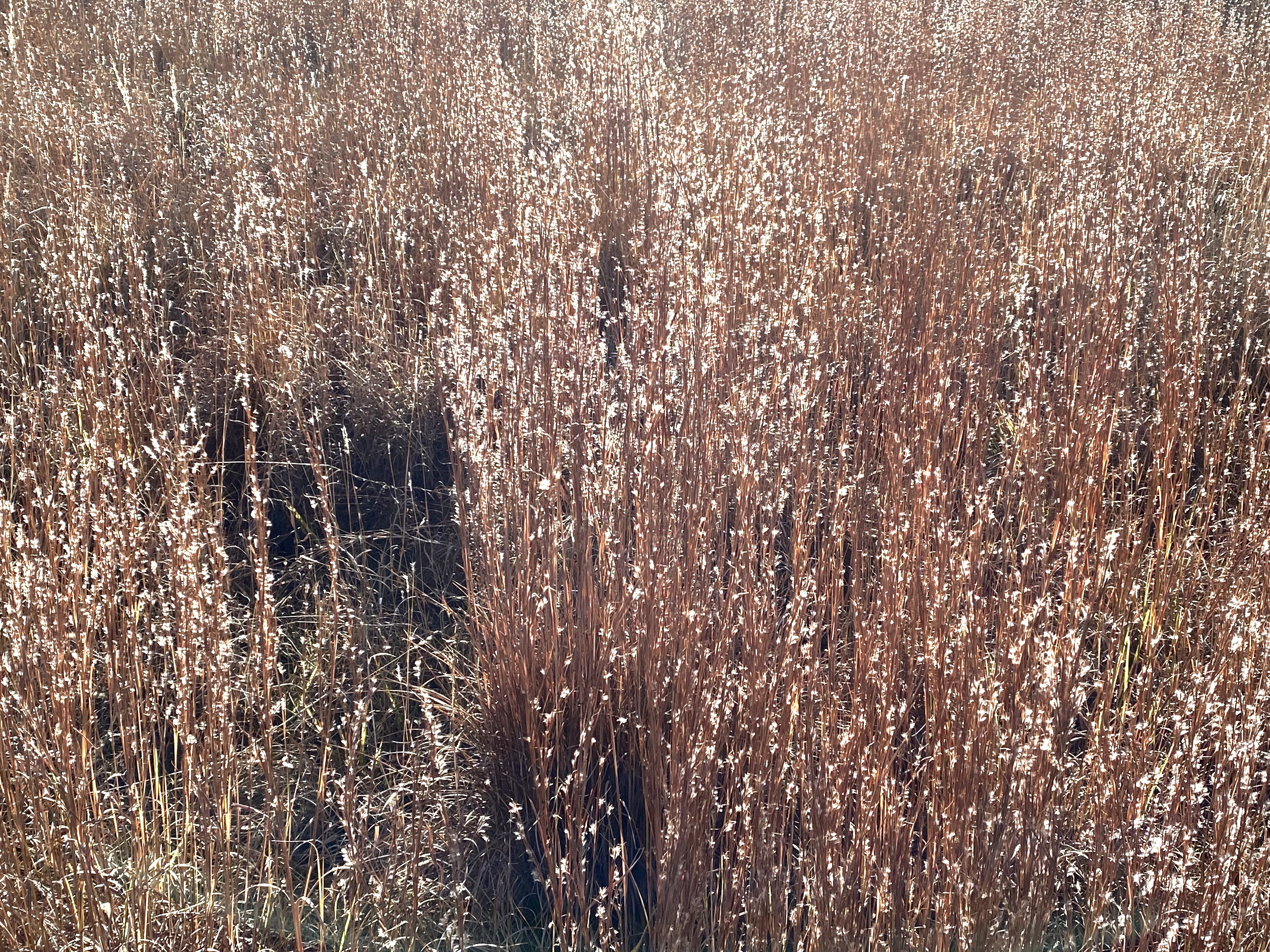
These scenes are from my morning walk today.
Sweetgum tree in our front yard, blazing orange.
A fallen Osage orange, with closely fitted puzzle-piece segments. No two alike. Just like people.
One of the two pine trees on our place, laden with pinecones. I keep wondering when the pine bark beetles will invade, but so far we’ve been lucky.
A backlit patch of little bluestem, with fluffs of seeds gleaming like a field of fallen stars.
One of my favorite grasses: Indian grass. The seedheads are still there, though they are far more impressive earlier in the autumn season. This reminds me of Native American writers that I admire, including Daniel Wildcat and Robin Wall Kimmerer. Kimmerer’s book Braiding Sweetgrass changed my life during the Covid shutdown.
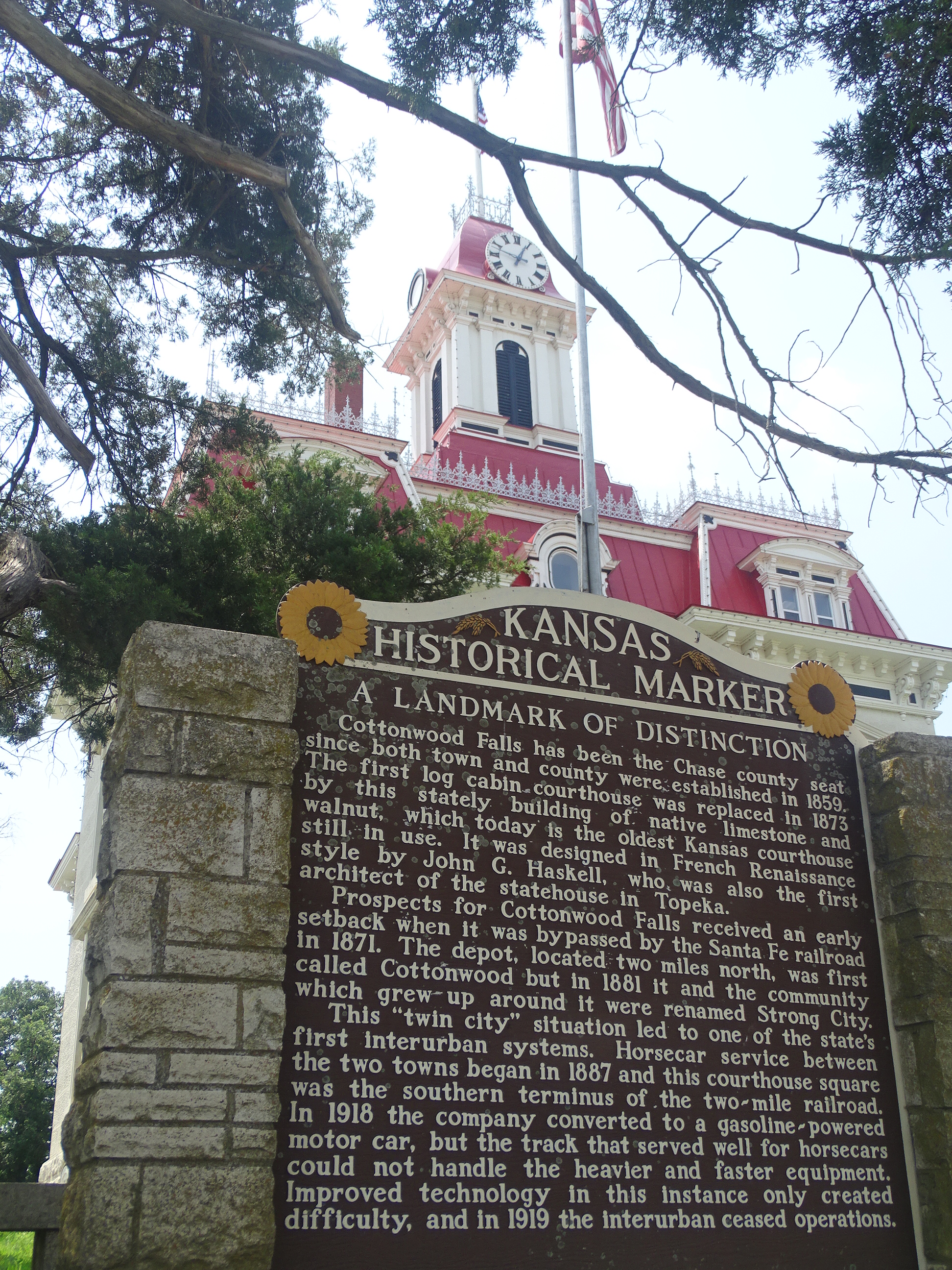
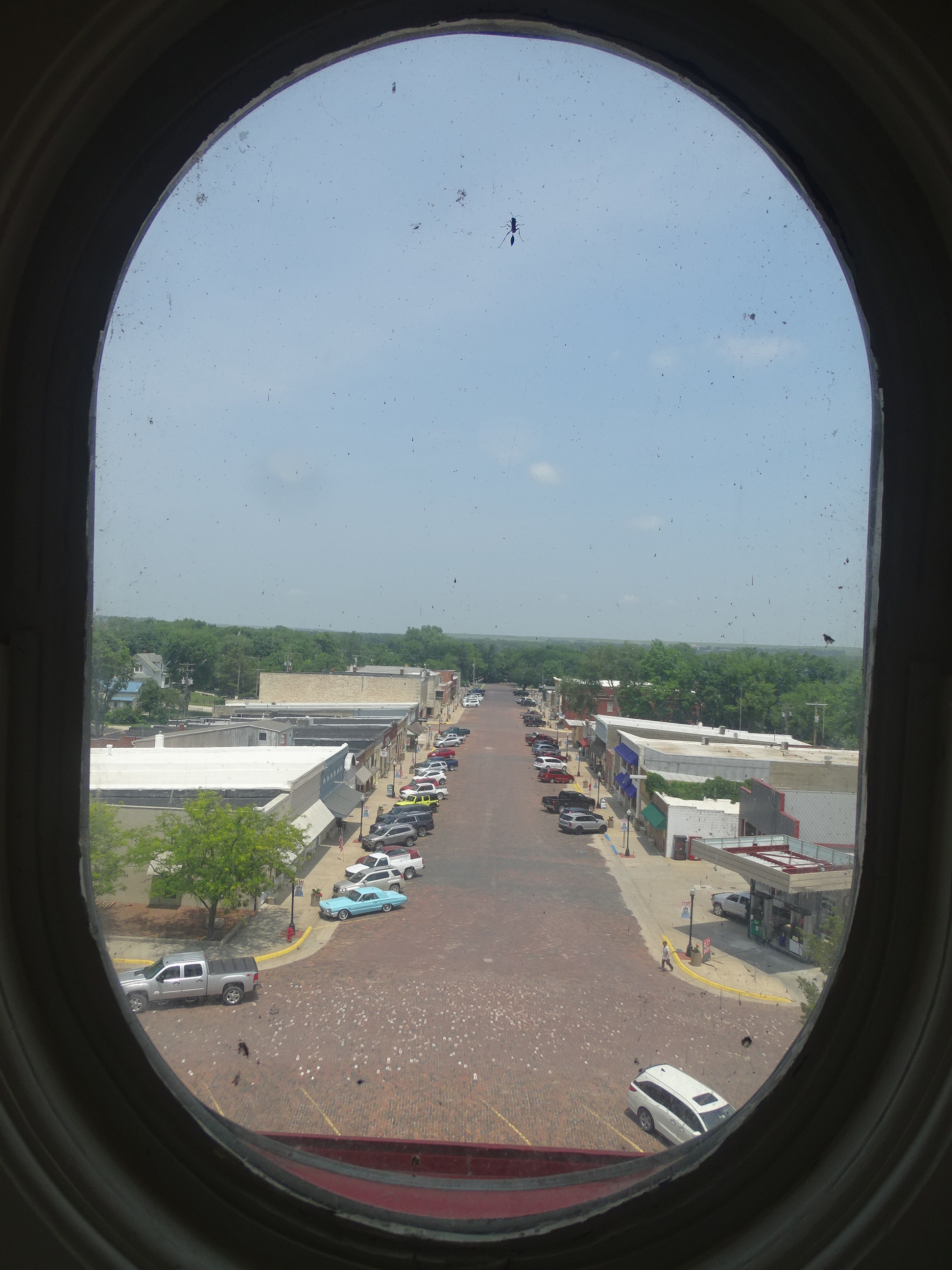
The walnut trees along the Cottonwood River blazed yellow. Crimson sumac foliage lined the hillsides near the new settlement of Cottonwood Falls, Kansas. It was autumn 1871 and businesses along Broadway Street bustled with ranchers from around the county who had converged for an election.
Settler Isaac Alexander leaned against a tree at the south end of the street. Often poll workers nodded his direction, gesticulating in a referral that sent distant neighbors his way. They all wanted the same information. “You are donating land for the building?”
With a nod, Isaac affirmed his offer. “Two and a half acres. If the project is approved, this square will belong to the county.”
By evening, with the votes tallied, the result was clear. Voters had approved the building project and Chase County would have a new courthouse. Those still in town cheered at the announcement and Isaac stepped forward. When he had the crowd’s attention, he affirmed his gift. “I am pleased to provide this square for our new courthouse. It’s something we need in order for our county to thrive. I have but one condition. The building will sit on the hilltop in the center of the square. But the land surrounding it is to be used as a park area and gathering place or my offer will be retracted. That is my condition.”
The crowd burst into resounding hurrahs, and the project moved forward.
A Leavenworth contractor employed an architect to design the three-story limestone structure. It utilized a French Renaissance Chateau design from the Louis XIII period, durable enough to remain in constant use for 150 years and beyond. Workers quarried and hand-cut limestone blocks from Isaac Alexander’s land on Spring Creek, a half mile west of the site. The stones were transported to the building in horse-drawn wagons, some blocks weighing over six tons.
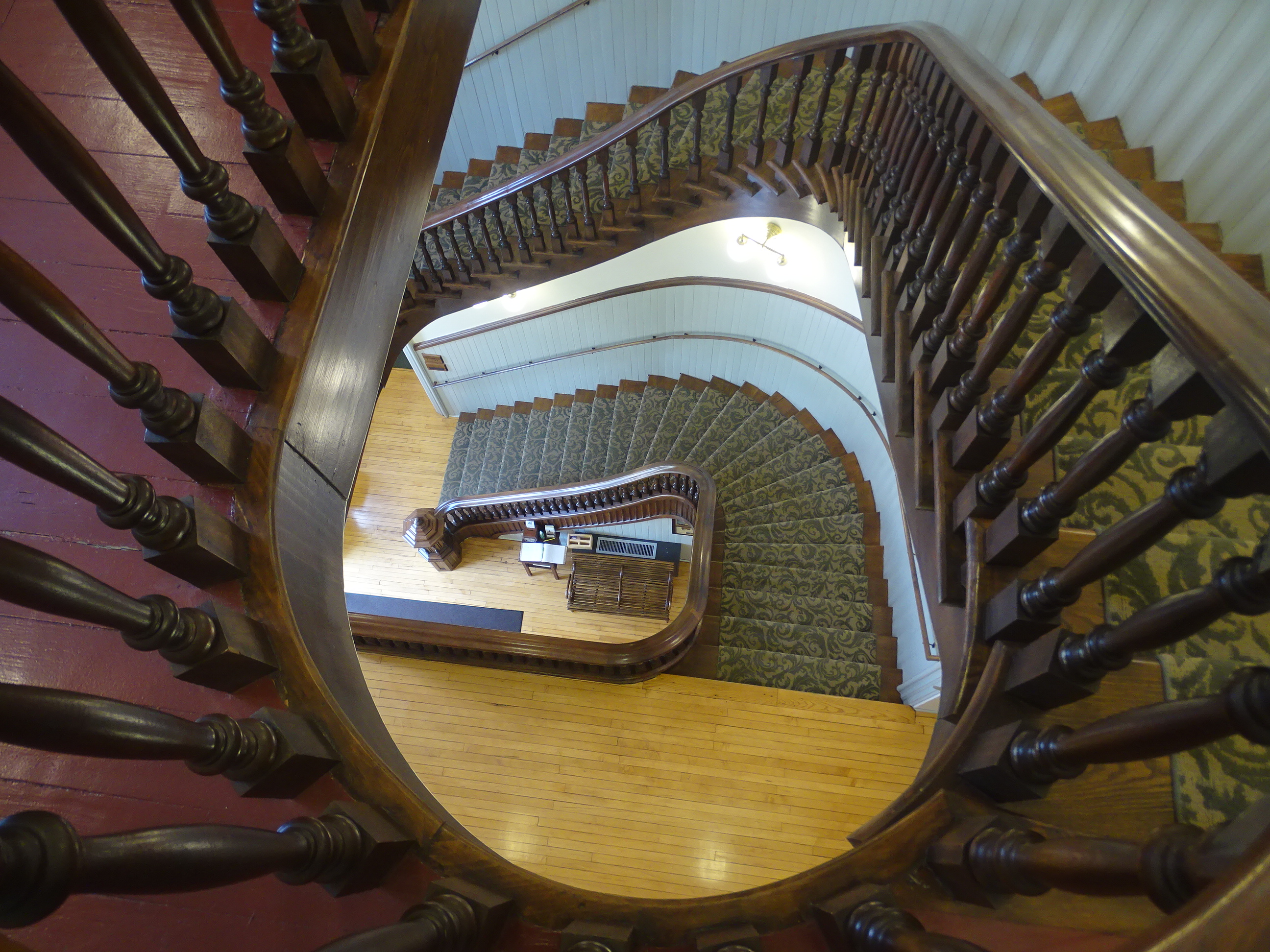
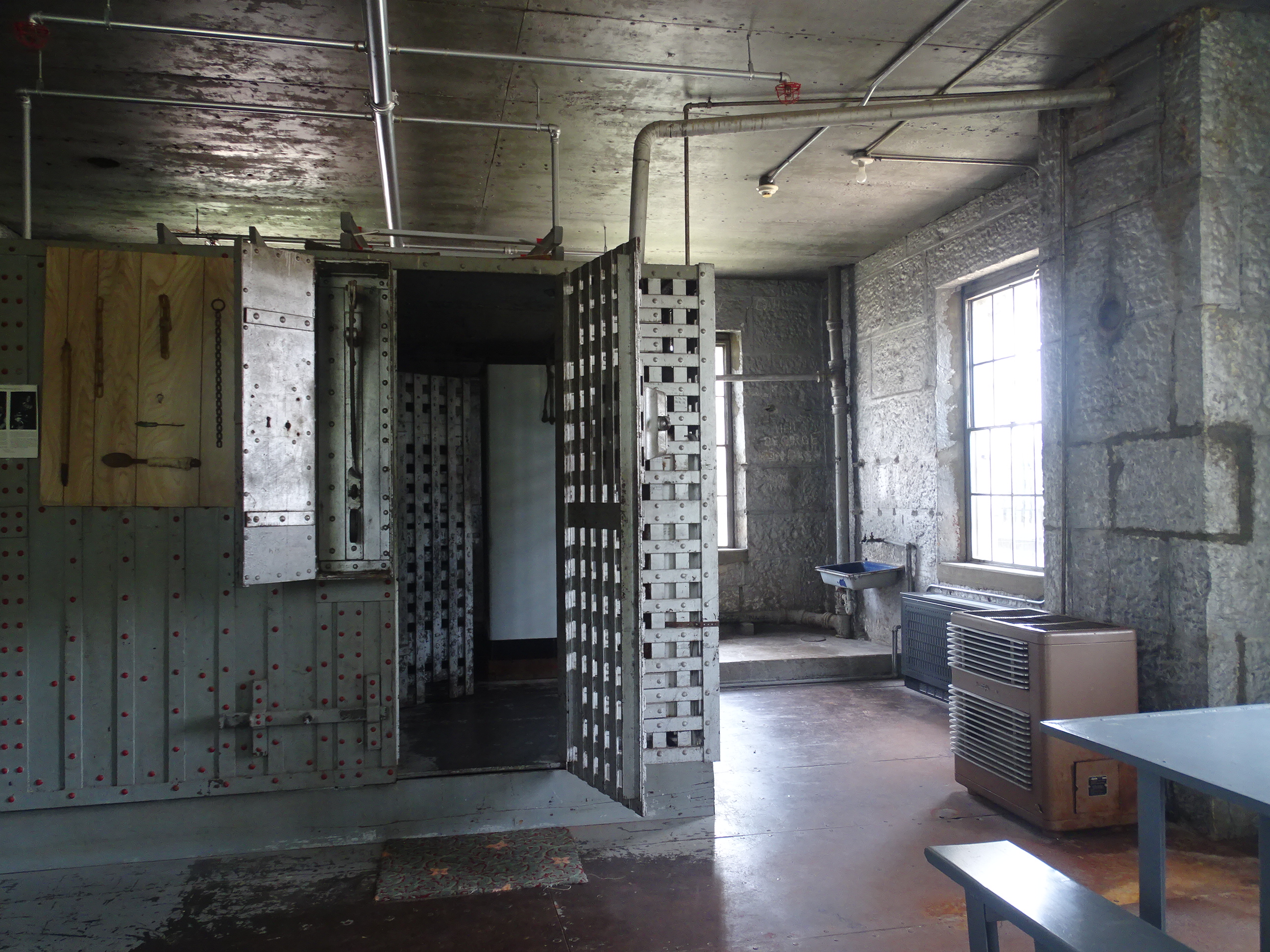
Inside, spiral staircases wound complete circles between the floors, each spiral directly in line with the one above or below. Locally harvested black walnut trees were crafted into the stairway balustrades. A jail on the second story was accessed through the courtroom and jury room. In use for a hundred years, new safety regulations in the 1970s forced the jail’s closure.
Construction on the courthouse took two years, but on October 8, 1873, it was complete. The people celebrated with a grand ball in the courtroom itself.
A hundred and fifty years later, the celebrations continue. Shady areas surrounding the building still host concerts, galas, dances, and festivals. At one corner of the square, the Roniger Memorial Museum showcases life in the Flint Hills past and present. Exhibits include stellar collections of indigenous artifacts crafted from flint nodules infused in the limestone layers.
The Flint Hills Folklife Festival in June has attracted travelers to historical booths and demonstrations for the last twenty-five years. Festival organizer Sue Smith is quick to point out that the Chase County Courthouse, the oldest courthouse in the state still in daily use, is the most frequently photographed building in Kansas, even more than the capitol building in Topeka.
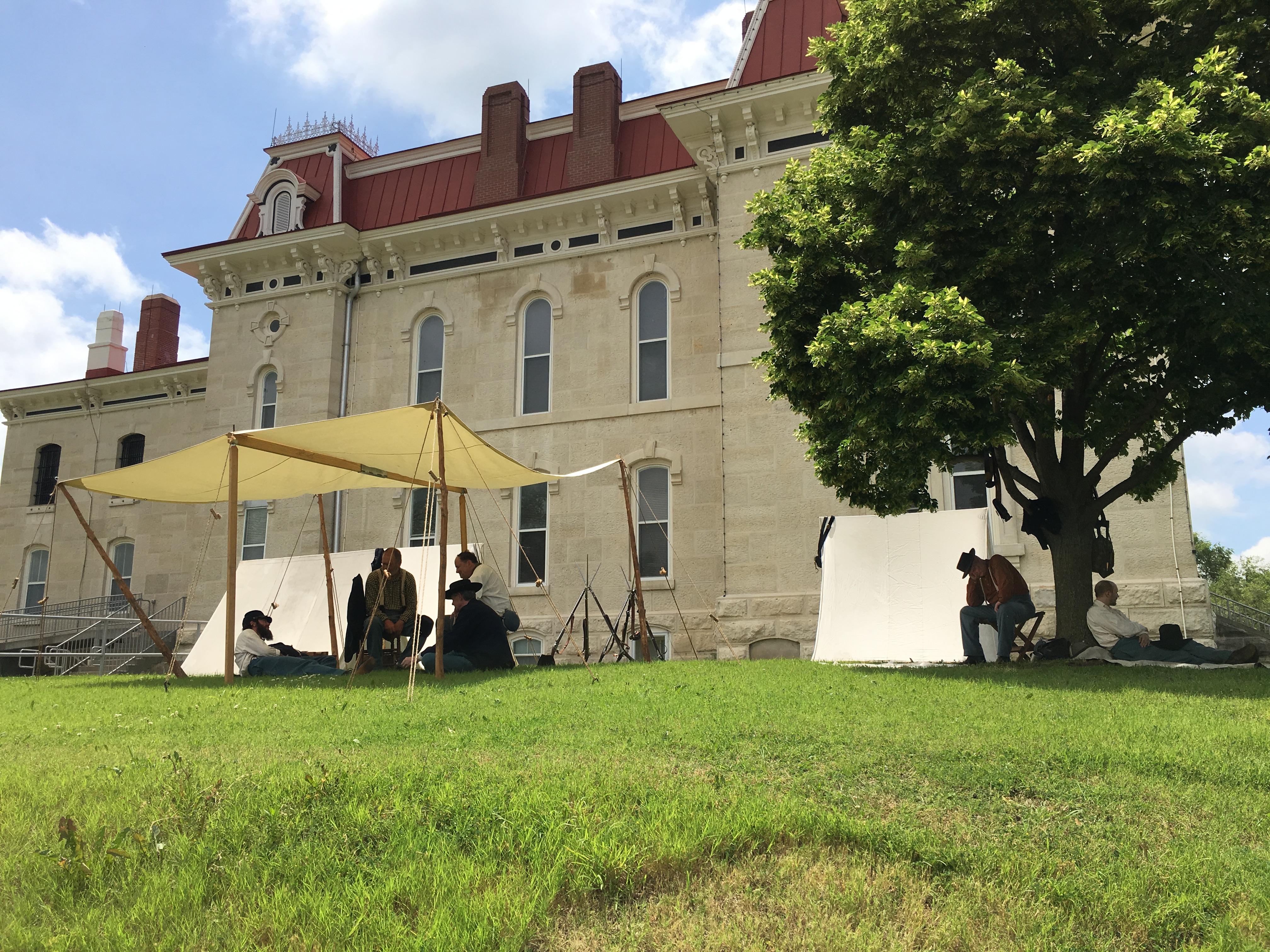
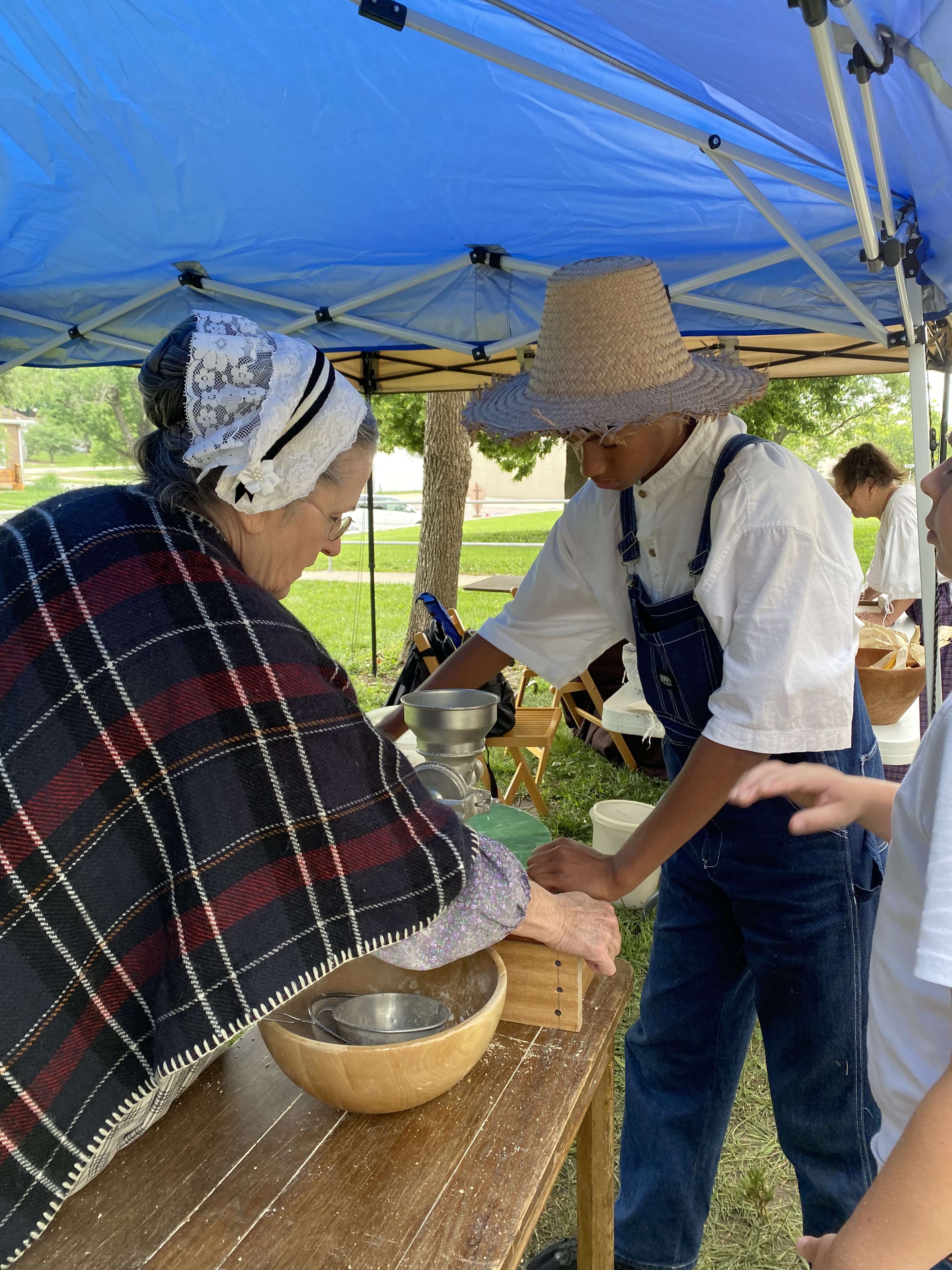
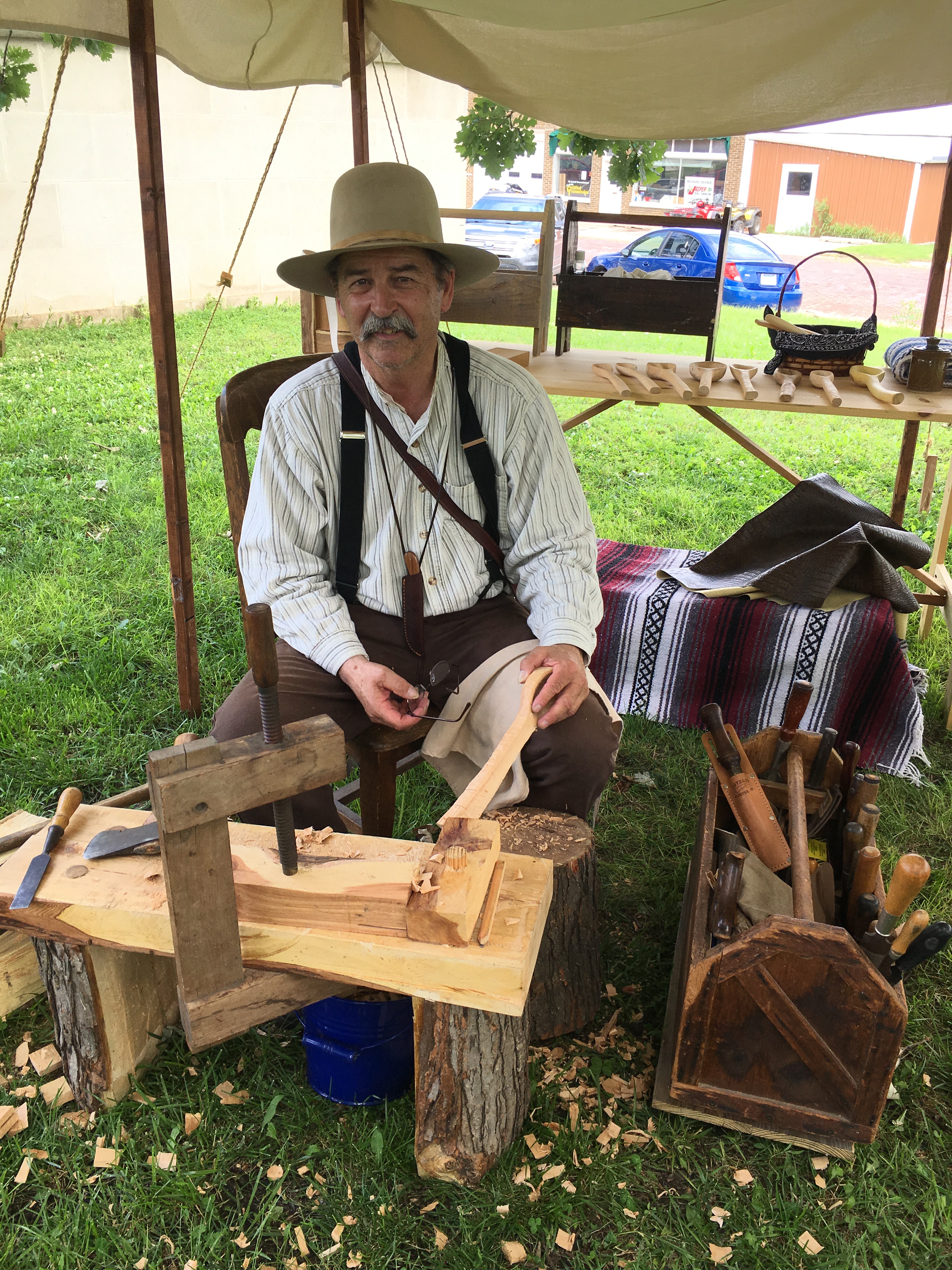
Folklife vendors and reenactors surrounded the courthouse in June this year. Many had returned year after year. Some had local roots but others traveled from distant places to be part of the Folklife Festival community.
Marti McCartney, who has been a vendor at the Festival most of its 25-year history, explained why she returns every summer. “I love it when people who don’t know each other connect with shared memories and traditions. I love sharing history—we’re all part of the same history in our own ways.”
First-year attendee Melissa Mathis circled the tents continually with her camera to capture important scenes. She agreed with Marti. “The history and techniques once commonplace are dying. We need to hold onto that history and keep it alive.”
Darrell Kerr, luthier and knife maker at Silver Dollar City, raved, “What really caught my eye this year were the second story windows with bars. They mark the former jail.”
Still intact, though not in use, the jail draws curious visitors year-round. Former city resident Nancy Zirkel recalled stories about the jail. Her favorite involved Sheriff Towle in the early 1970s. County Sheriffs and their families used to live in the courthouse directly below the jail. At one point Sheriff Towle rescued a fawn whose mother had been hit on the highway. He raised the young deer in his family’s courthouse apartment.
Basket makers Al and Teri Seeger have enjoyed bringing baskets to the Festival for the last three years. “There’s a sense of community among vendors,” says Teri. “It’s fun to see people who return every year.”
Petin Hammerton voiced agreement. She and her husband Jerry grew up in southern California, but now call Lindsborg home. “The people here make you feel like family,” Petin said.
“I’ve searched my whole life for a lifestyle that’s right for me and people who share similar values,” Jerry said. “I found what I was looking for here in Kansas.”
Though the Flint Hills Folklife Festival may have seen its final year, Sue Smith pointed out many other reasons to sit under the oaks on the courthouse lawn. History thrives on the square along with modern activities. Concerts, contra dances, and re-enactments are scheduled throughout the year. Every June, the Kansas City Symphony holds a concert on the nearby prairie. The Chase County Courthouse is only a few miles from the Tallgrass Prairie National Preserve. And a big celebration is planned on the Courthouse square for October 6 and 7 this year to observe the sesquicentennial of this historic landmark.
Sue summed it up. “Such memories! And such great friends!”
Come chat with Ann and take a look at Firestorm Sonata.
Saturday, September 23, 2023
Noon until 2:00 pm
College Hill Coffee, 403 Soward Street, Winfield, Kansas
About Firestorm Sonata:
In peak condition, scout Sharenda Kamine is certain her field skills will insure her safety as she seeks supplies needed by the fortress she calls home. She must, however, prove her worth to the authoritarian commander of this isolated pocket of survivors. With reluctance, he grants her request to work alone and she heads across dust dunes of what once was southern Kansas, confident she will master any challenge she meets. But she is unprepared to find a window into the past, which simultaneously offers a future ripe with possibilities. She must decide whether she will honor her commitment to the Fort, or escape to freedom with Gran, the only family she knows.
Firestorm Sonata is the third in a series of dramatic stories featuring pianos and their families. It follows Sundrop Sonata (2016) and Sonata of Elsie Lenore (2020). Book 3, Firestorm Sonata, is the first book in the series which is set in a future with very different landscapes than we know today. A Climate Fiction tale, it explores the roles of pianos and musicians in a changing environment such as those predicted by today’s climatologists.
Known to many as the local piano tuner, few people realize that Ann Christine Fell has been a naturalist all her life and taught science in the Winfield schools before she opened her piano business. As a musician, piano technician, photographer, mother, and grandmother, she has gleaned details from a lifetime of wide-ranging experiences that bring her fictional stories to life for Kansas friends and neighbors. She lives on the edge of the scenic Kansas Flint Hills with her husband, her grandson, and her piano.
The third novel in my Sonata series of adventure tales featuring pianos and their families is now available on Amazon. I have mixed feelings about it. The completion of this journey has been months in the making and I’m relieved to finally get there. It’s been a lot of hard work, with repeated readings and editing through the summer, each time thinking this would be it, and each time finding more things that needed to change. I finally drew a line. This is it. Ready or not. And Firestorm is launched. May she find a path through the maze of words out there in the cyberverse and not disappoint.
Firestorm Sonata:
In peak condition, scout Sharenda Kamine is certain her field skills will insure her safety as she seeks supplies needed by the fortress she calls home. She must, however, prove her worth to the authoritarian commander of this isolated pocket of survivors. With reluctance, he grants her request to work alone and she heads across dust dunes of what once was southern Kansas, confident she will master any challenge she meets. But she is unprepared to find a window into the past, which simultaneously offers a future ripe with possibilities. She must decide whether she will honor her commitment to the Fort, or escape to freedom with Gran, the only family she knows.
This tale is a first for me, to set the events in the future. During my work on the second Sonata, Sonata of Elsie Lenore, a friend I respect, a retired college professor and elder in my community, shared an article with me. “Confronting the Climate Crisis Through Fiction: Visualizing a climate-ravaged world may actually be the key to mobilizing action.” Those who know me well know my passion for the natural world, for the planet Earth. As a college freshman 50 years ago—get that FIFTY—I took a life-changing class called “Can Man Survive?” in the biology department at Fort Hays State University in Kansas. It was based on the then-current knowledge about all the impacts our human activities had on water, air, land—and climate. We’ve known about greenhouse gasses for my entire life. Even longer. Some folks predicted serious impacts early in the industrial revolution, over a hundred years ago.
The evidence is mounting in 2023. This summer is already setting records. Extreme weather events around the world fill the news from catastrophic flooding to record-setting temperatures and untamable fires. Chile, Canada, Greece, Italy, China, India, Japan, Taiwan, Philippines, Sudan, Madagascar, Zimbabwe–the list goes on. In North America, water temperatures in the Gulf of Mexico hit 100+ in places, with 100% mortality in some coral reefs.
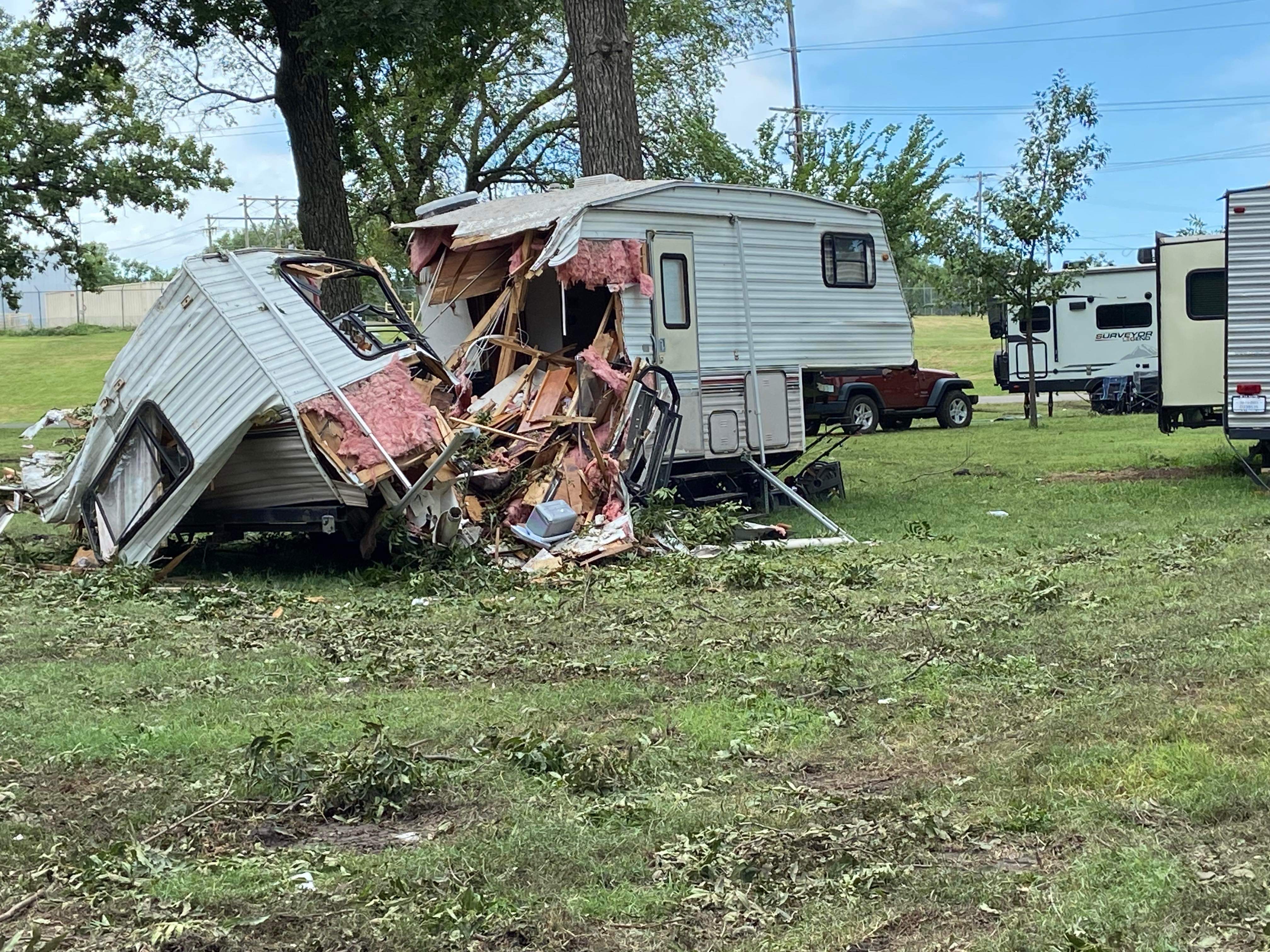
My own community cleans up after a straight-line windstorm that downed whole trees in our favorite parks and city streets, demolished our neighbor’s hay storage barn, and wreaked havoc on the county fair. Cleanup will continue for weeks. The cost has soared toward $2,000,000 already in our one small town. And yet, we humans continue a path deemed to be disastrous for all life on the planet, just so oil companies can reap growing mega-profits at the expense of everything else we hold dear. If fictional tales set in a grim future environment will shake us into action, I decided I must try.
It’s been my privilege to offer continued piano service across south-central Kansas for nearly thirty years. I’ve kept climate records at each job, recording temperature and humidity. It’s increasingly hard to advise piano owners what their best plan of service should be. With seasonal swings in temperature and humidity becoming more unpredictable, the effects on pianos are easy to see. Tuning stability is now a figment of the imagination.
Pianos are my world. So is the prairie ecosystem. I began to ask some hard questions as I twisted those pins on my annual calls. “What’s with all the earthquakes in Kansas and Oklahoma?” In my college geology classes I learned this area is the “stable” part of the continent. Earthquakes are supposed to be extremely rare. And yet here we are.
“What about the wildfires?” Every year we hear about more extreme fires. California, Oregon, Texas, Idaho. There have been successive record-breaking fires that started in Oklahoma and raged across the state line into Kansas, burning hundreds of thousands of grass acres, killing animals (including livestock) that were trapped in its path.April 2016, a fire burned over 400,000 acres, the largest blaze ever in Kansas (at the time); March 2017, 600,000 acres burned in southwest Kansas, people were evacuated from small towns in the area; December 2021—fires in northwest Kansas, fanned by winds stronger than hurricane force, burned 400,000 acres.
Then there were the Canadian fires this summer that burned for weeks, sending ash and smoke into the air across northern US. And Maui—MAUI?? An island in the middle of the Pacific Ocean with a drought and a spark? The death toll from the Maui fire continues to grow.
I tried to imagine what my home county would look like after an extended drought, followed by a massive firestorm. Perhaps lightning would ignite an oil spill created by one of those fracking earthquakes. Add to the mix technology that can’t receive satellite signals, towers that topple in storms, and no way to receive news from the rest of the world.
The field of stepping stones.
What would my piano family do? What would become of them and their pianos? Would it even matter anymore if basic survival was the most pressing need? Unfortunately basic survival is already the most pressing need for far too many of Earth’s creatures, including pockets of human beings.
Thus, Firestorm Sonata was born. My deepest thanks to everyone who begged for another tale, who listened when I felt discouraged, and who offered words that bolstered me to keep on writing. You all comprise the village which raised Firestorm Sonata from a small seed to fruition. May she have wings to take her beyond my imagination and in her own way make our planet and our future a little brighter for all living things.
There is only one week left before we’ll know where our future is heading. If you are still undecided about candidates and questions on the ballot, I recommend staying as far from the Republican Party of “No” as possible. Even if Democratic candidates seem inexperienced, at least they are likely to be honest. Here in a state—purple even though we’re lumped in with red states—elected Democrats have to be more responsive to the needs and concerns of the people than any of their Republican opponents will be. If they aren’t, they’ll be railroaded out pronto. If you want politicians who care about your concerns, vote for the Democratic candidates. They will listen.
Take a look at what the Democratic Party has brought to us.
Women’s Right to Vote (Woodrow Wilson)
Social Security (FDR) This, unlike the hype, is a program that belongs to the people who contributed to it from their wages throughout their careers. It is not a government handout.
Minimum Wage Law (FDR)
Unemployment Insurance (FDR)
FDIC Bank Account Insurance (FDR)
G.I. Bill of Rights (FDR)
Securities & Exchange Act (FDR)
Marshall Plan (Truman)
Water Quality Act of 1948 (Truman)
Peace Corps (Kennedy)
First Man on the Moon (Kennedy)
Civil Rights Act of 1964 (LBJ)
Voting Rights Act of 1965 (LBJ)
Medicare (LBJ) Again, paid for by the workers throughout their careers.
Medicaid (LBJ)
Guaranteed Pell Student Loan Program (LBJ)
Operation Head Start (LBJ)
Motor Voter Act (Clinton)
Budget Surplus (Clinton)
Family and Medical Leave Act (Clinton)
Affordable Care Act (Obama)
Inflation Reduction Act (Biden)
American Rescue Plan (Biden)
Violence Against Women Act (Biden)
Hate Crime Prevention Act
What has Republican leadership offered? Massive tax cuts for the richest billionaires among us, and vows to fight every program and act that benefit all of us. The party of “No.”
Recognizing how unpopular their typical “no” stance is among the majority of voters, they have resorted to underhanded tactics. They flood the post office with flyers spewing ridiculous fiction about honest candidates. They resort to tricks to manage and control voters. It all reminds me of pirates.
We face modern day piracy in our recent elections. Remember the scenes from the popular Disney movie Pirates of the Caribbean? In the scene where Will Turner meets Jack Sparrow, Jack pulls an unconventional move to disarm Will.
Will says, “You cheated.”
Jack, rolling his eyes, “Pirate.” (As if what else did you expect?)
Will answers, “You didn’t beat me. You ignored the rules of engagement. In a fair fight I’d have killed you.”
To which Jack says, “That’s not much incentive for me to fight fair then, is it?”
I can hear the same exchange between our two major political parties. Republicans are the pirates, taking steps to ignore free and fair elections, those “rules of engagement” we have in the past taken for granted. But we now have ridiculously gerrymandered lines for voting districts, purging of voter lists, challenging results of an honest election, stacking of the courts, refusal to accept a peaceful transfer of power, declarations of refusal to accept future election results if they don’t go the way a candidate wants—throwing out the rules so that the far-right extremists can “win”. We have promiscuous lying. And the extremists already in power set important constitutional questions on the ballot in historically low-turnout elections. Every conceivable trick has been employed to control the outcome of elections at every level.
This is piracy.
The situation is dire. If the extremists on the political right prevail in next week’s election, this very well could be the Last Election open to all voters in our country. If they prevail, and continue reckless exploitation of the planet, the future for all of us—democrats, republicans, adults, children, unborn, indeed all life on earth—will be taxed to the extreme by climate crises already set in motion.
Cheating? Given the fact that there are more non-Republican voters in Kansas than those who identify as Republican, is it any wonder that they are taking every step to cheat and control the outcomes while they can? Non-Republicans include the Democrats and non-affiliated voters. In a fair fight, the people’s will would be clearly heard. But we can’t have that, can we? Republicans have taken steps to hold onto power every which way they can. Call it cheating. It certainly lacks fairness.
Yet . . . If the extremists prevail, it will be the end of Earth as a habitable planet. We have to make this election count!
Perhaps once in a lifetime, a person might just encounter an unforgettable spirit whose influence extends far beyond one human lifespan. This is the story of my chance meeting with such a woman who gave her heart to music and pianos all her life. February being the month for passion, it seems like a good time to share the story of E. Marie Burdette.
Back in my early days of piano service work, I offered my limited skills to local friends, just trying to help out. Joyce was one of those friends. At one piano appointment, she invited me to play with her in an upcoming county-wide piano duet festival. I’d never heard of such an event, but the idea intrigued me. Through the teacher of her teenage step daughters, we signed up. The year was 1992. The piano teacher was E. Marie Burdette. The event itself was one in a long history of monster piano concerts in Cowley County, dating back to the 1930s, all of them organized or influenced by this tiny whirlwind of a musician and piano teacher.
That 1992 festival was held in the gymnasium at Cowley College, with about 25 home model acoustic pianos loaned by local families, churches, and music stores. They arced in rows around a director’s podium. The whole experience was a blast. For me, it was also a life-changer.
The idea of getting two dozen borrowed pianos together–and tuned!–in time for a weekend rehearsal and concert astounded me. I was hooked. And I wanted to be part of the next one. Sponsored in every leap year by local music clubs as well as the county’s Walnut Valley Music Teachers Association, I decided to support the groups, and to get my own children involved in the next piano duet experience. I joined the WVMTA. Later I located the Wichita PTG chapter and joined it also, in hopes of being part of the prep work on the 1996 monster concert. Sadly, never since 1992 were acoustic instruments involved, and never again on the gym floor. Instead, ten or twelve Clavinovas were provided for stage use in the Brown Center auditorium at Cowley College. A couple times, we added a few of the college’s acoustic pianos, and in 2020, we utilized the stage Steinway D piano, but the challenge of tuning up to 30 pianos did not present itself.
Those monster concerts were the idea of the amazing devotee of keyboard music and pedagogy, Miss E. Marie Burdette. In 1992, she observed her 91st birthday, and though not present at the festival itself, she sent her students in droves. It would be another five years before I actually met her, when she called on me for piano service. With a bit of trepidation, and a bit more awe, I answered her call to the modest brick home her parents built in 1942. I have taken care of her 1966 Mason and Hamlin A ever since.
Emma Marie Burdette, (E. Marie) whose name is nearly synonymous with “piano” in Winfield, was born July 3, 1901 in Cedar Vale, Ks. She was half of a set of twins, born moments after her brother Penrose. Her family moved to Winfield in 1909, where they settled. Her first piano lesson at age 8 was at Winfield’s College of Music, a school on Main Street that exists today only in the historical museum. From that first lesson, she knew she wanted to be a piano teacher. She excelled in the art of performance, and joined the College of Music faculty before graduating from Winfield High School in 1920.
After four years teaching at the College of Music, she spent a year in New York as the assistant to nationally recognized composer and teacher Mrs. Crosby Adams. At the end of her year, she returned to Winfield with continued employment at Southwestern College, where she taught until her retirement in 1970. During the summers of 1927 and 1930, she studied organ with Marcel Dupre and piano with renowned European masters in Paris, France. Her friendship with the Dupre family lasted a lifetime, and she brought them to Winfield for performance and speaking engagements at Southwestern College.
Miss Burdette belonged to all the music organizations in existence during her lifetime–piano, organ, and teaching groups. She served as an officer in most of them. Through her connections, she brought international talent to Kansas and Winfield. Some noted guests were Marcel Dupre, Mrs. Crosby Adams, and the widow of Edward McDowell. There is even a report that she brought Rachmaninoff as a performer to an early regional music conference held at Southwestern College.
But her biggest legacy involves the students she taught. She loved teaching, and she loved her students. There are many Winfield residents who remember her lessons and how much she cared. She never turned down a student, regardless of age. My friend Joyce, that 1992 duet partner, took lessons from Miss Burdette as an adult. “She never treated me like a child, but asked why I wanted to study piano. What were my goals? And then her focus was to help me reach those goals.”
She never pushed a student to do anything they didn’t want to do, but instead offered understanding and gentle encouragement. “You can do it. You have what it takes!”
Encouragement was a hallmark of her teaching method. “Even when her aging eyes fluttered closed, she knew when I made a mistake,” Joyce said. “Her eyes opened, and she offered a gentle reminder—’remember the fingering”, or she helped with the count ‘one-sy, two-sy’, was all she’d say.”
Jim, who started piano lessons with Miss Burdette as a Middle School student during the 1970s, still hears her voice as he plunges today into a Chopin Prelude he’s always wanted to play. “I have a heavy touch and she had this way—when I butchered a note, she touched my shoulder to demonstrate. ‘Not this touch,’ and then with another touch to my shoulder, ‘Like this.’” And he felt the technique in her touch.
Her students were her family, and her life. Single for every one of her 104 years, she worked tirelessly to teach, to pass on her love of music and pianos and organs. Her biggest efforts came about in those monster concerts.
A mass piano concert in Winfield probably in the 1950s
She organized several at Southwestern College in the 1930s, and one in Wichita as well. The 1939 Winfield event featured 340 participants and 42 pianos, including 15 grand pianos. But the 1945 event surpassed them all.
With help from countless community members, Miss Burdette organized a monster concert with 100 pianos on the gymnasium floor at Southwestern College. It caught the attention of William F. McDermott who wrote an article for Recreation about the music life in Winfield, Kansas, leading off with the piano event. The article “Mad About Music” ran in the October 1945 edition of Recreation and was reprinted in a shorter version in the November 1945 Reader’s Digest.
From McDermott’s article: “It soon will be time for another ‘Piano raid’ at Winfield, Kansas. . .Sedate citizens, with sleeves rolled up, will help to ‘hustle’ pianos from homes, churches, and club rooms—but mostly from Cunningham’s, the town’s leading music store—to the huge gymnasium of Southwestern College. There the volunteer movers will set up ‘pianistic battalions,’ ready to renew one of the most unusual music festivals ever held anywhere.
“. . .While the town of 11,000 ran riot with bands, orchestras, and choruses, for years there was nothing to satisfy the ensemble desires of the piano players. A piano teacher, E. Marie Burdette, pioneered the idea of a mass piano festival.
“The piano shifting is on a huge scale. Here and there home-built ‘dollies’ are used to trundle two or three pianos of a neighborhood into one living room for a week or two. There a group of players practice every evening from supper until midnight. Next they assemble at the music store where up to fifteen pianos are used for a week’s rehearsal each by consolidated groups—and finally there’s the grand rush on the gym with 100 pianos.
“For two days and a night at the gym, relays of players, assembling in company formation, rehearse in groups of fifty, polishing off their ensemble performance. A battery of tuners goes over the instruments and puts them in harmony. Now the big night arrives.
“Through an arch come the performers—lawyers, bankers, debs in evening gowns, mothers in their Sunday best, bobby-soxers and college athletes, grocers and insurance men, barbers and preachers. They march with heads high and eyes gleaming. . . At a signal the players seat themselves, two to a piano. The director lifts his baton, and 400 hands begin rolling over the keys.
“The music pours out like a mighty wave, filling the vast room to the rafters. The crescendo passes, and the roar of 100 pianos played in unison diminishes to a note so soft that it seems impossible so many instruments are in action. The crowd holds its breath as the nuances make richer the melody of the piece. Here is more than unity of performance; it is a unity of spirit born out of love for music.”
There was nothing E. Marie wouldn’t do for the love of her students, to share the music. Jim still hears her words of instruction and encouragement, her voice echoing in his mind as he practices. “I think she’d be smiling to know that she’s still teaching,” he said. “That has to be the greatest legacy of any teacher.”
E. Marie Burdette preparing to celebrate her 100th birthday.
A few years ago, Jim chose a Mason/Hamlin grand piano for his own, remembering Miss Burdette’s teaching instrument. Interestingly, her own 1966 model continues to inspire musicians in a generation she never met. In 2000, at age 99, E. Marie Burdette was recognized by the Kansas governor as the oldest working woman in the state. Soon after that, she did retire for good, after teaching four generations how to play the piano. Her Mason/Hamlin was donated to the Winfield public schools and I continued to care for it there. In early 2016, ten years after she died at age 104, a young man who had never had a single lesson, whose parents frowned on his interest in music, fell in love with Miss Burdette’s piano in the Winfield Middle School vocal room. School music staff helped foster Emerson’s interest, gave him lessons, encouraged him along. As a senior at Winfield High School, after only four years of sporadic piano study, he participated in the most recent piano duet festival at Cowley College. That fall he enrolled in the music program there.
When most of the music faculty in the Winfield school system retired following the COVID shut down, Emerson convinced the new music teachers (who were more into electronic instruments) that, rather than let the little mahogany grand piano just sit, unwanted and unused, they should give it to him. And they did. I have twice called at his little house to tune the Burdette Mason/Hamlin. While I’m there, we also talk music, pianos, pedagogy, and technology.
Nearing the end of his course of study in music at Cowley College, Emerson plans to continue piano study at Wichita State University, and possibly learn piano service work as well. Though he never met E. Marie Burdette, her piano changed his life and she would be smiling to know that also.
Through her passion for pianos, her gift to the world continues. This post is dedicated to her love affair with music that extends beyond the grave. May she rest in peace, secure in the knowledge that her music and her teaching will continue to impact lives for many years to come.