Tuned Up!

My adventure at the mini-Chautauqua event sponsored by the Winfield Public Library through Humanities Kansas

For the last few months, a traveling Smithsonian exhibit has circulated around the state, setting up in six different cities, with one more to go. The Voices and Votes: Democracy in America exhibit has spent the last month at our local library and will soon travel on to Belleville in the northern tier of counties.

Each hosting community has featured something specific about how that location supported the sharing of information, citizen involvement, and the voting process.

Winfield’s focus was on the Chautauqua meetings of a hundred or more years ago.

Founded in 1874 in Lake Chautauqua, New York as an educational tool for adults, its original intent by founder Rev. Joh Heyl Vincent, a Methodist minister, and businessman Lewis Miller was to expand the idea of a Sunday School for adults. The idea soon grew until Chautauqua meetings became an important source of education, culture, recreation, and socialization for millions of Americans. Everyone was welcome.

Winfield’s Chautauqua events were held annually at the town’s iconic Island Park from 1887 to 1924. Some years, as many as 10,000 people flocked to the island, camping in an area reserved for family tents for a week to ten days. For a number of years, it ranked as the third most popular Chautauqua event in the nation.

The Winfield Public Library staff selected the historic Chautauqua events, with their focus toward education and giving people a platform to share ideas and opinions, as the local highlight for the Smithsonian exhibit. As part of that, a mini-Chautauqua was held last Sunday evening in the community building. Ten local citizens were invited to present short talks about “It’s Intense: Voices on Good Tension.” It was my honor to be included as one of those ten.

Other speakers included business managers, the newspaper publisher, a farmer, a county judge, city manager, physical therapist, and a retired activist teacher. The emcee shared a short bio for each of us. My presentation used images to focus on  metaphorical tension from the perspective of a professional piano tuner.

Bio: A young widow with a preschool daughter, Ann Fell came to Winfield 35 years ago to teach at Winfield High School. She met and married fellow teacher Mike Fell and with their combined resources they raised a blended family. After a few years she quit teaching and opened a regional piano service business. With the loss of her parents a few years ago, she returned to her early calling—writing—and now has six published books. A dedicated environmentalist, musician, grandmother, and writer, she is no stranger to life’s tensions. Here’s Ann to talk about keeping life Tuned Up!

A dictionary tells me that tension is the act of being stretched to stiffness, maintaining a balance between opposing forces.

As a piano tuner, it’s my job to adjust tension—over and over again.

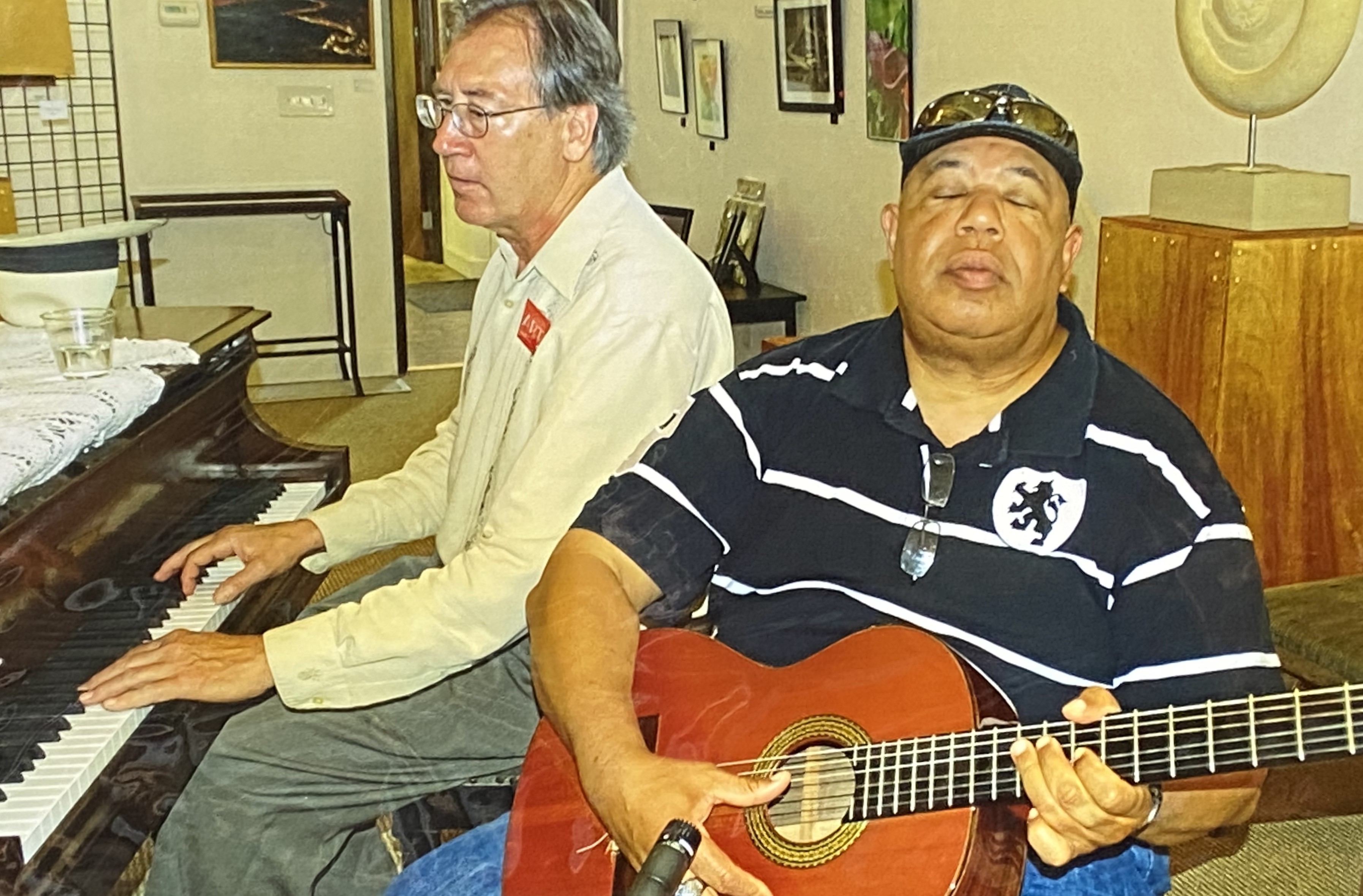
All stringed instruments need tuning as well,
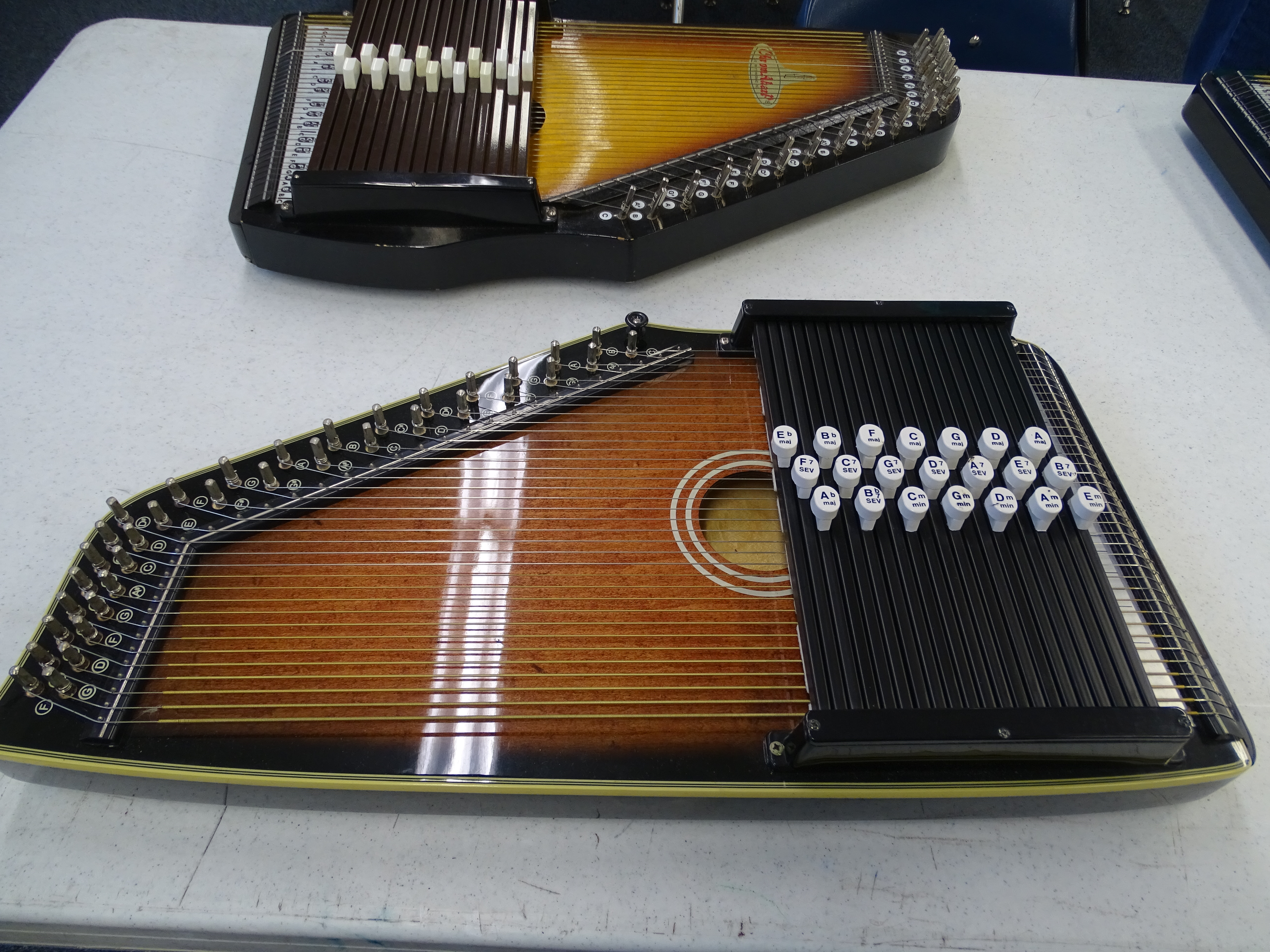
but with 88 keys in a piano and multiple strings for most keys there are around 225 strings to tune.
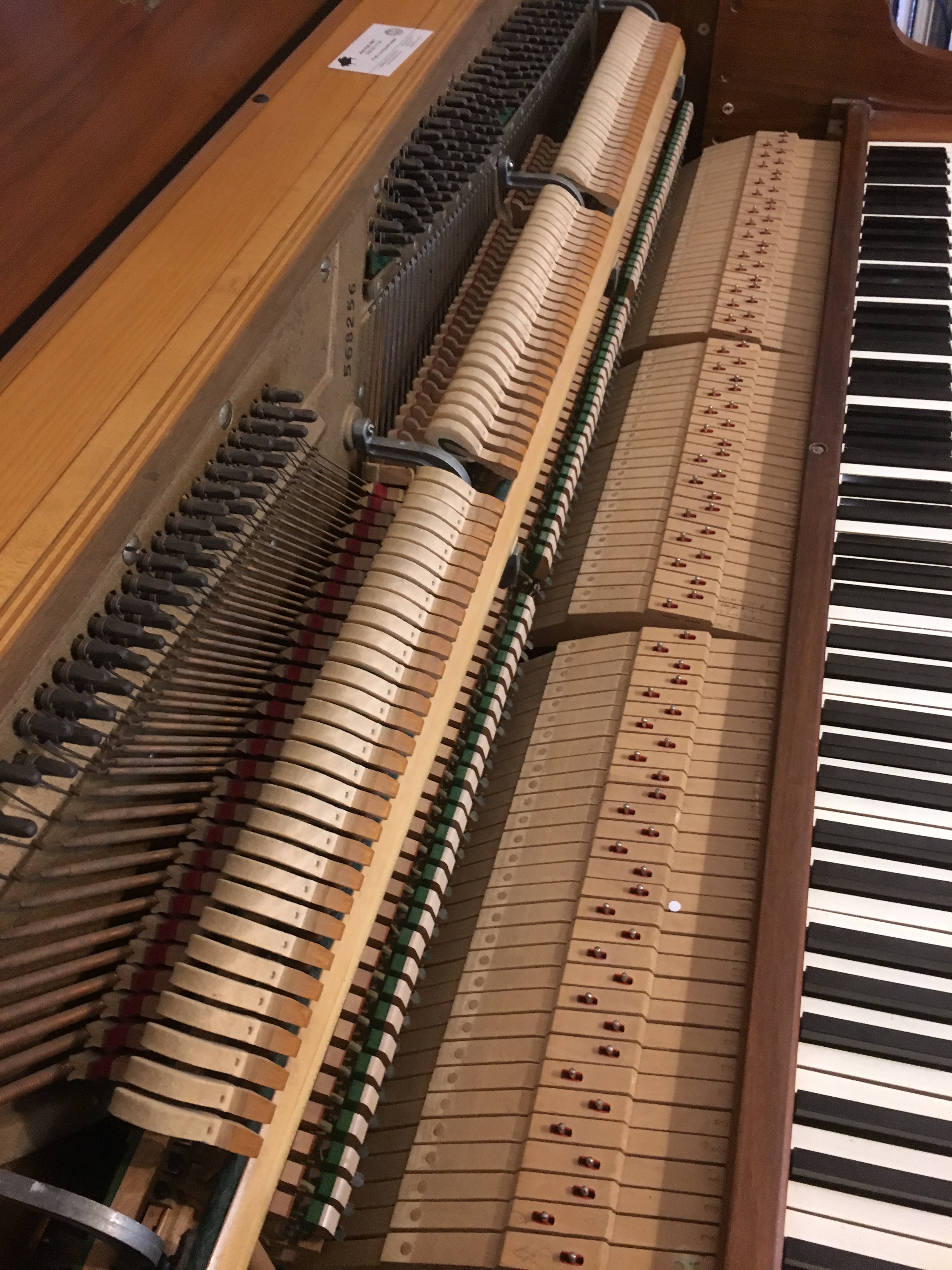
With an average 160 pounds of tension per string, that gives an ordinary piano about 18 tons of tension across its plate–30 tons for a concert grand. That’s a lot of tension! Believe it or not, I spend half the year lowering tension, and half the year raising it, since wooden soundboards react to our seasonal humidity changes.

If a string is stretched too tight, it can break. On the other hand, if it doesn’t have enough tension and is limp it will not vibrate with the desired pitch. It will not sing.

It’s all about balance.

In our lives, tension just happens, and we stretch between opposing forces. Some of those forces relate to daily family interactions,

disagreements between parents about children,  disagreements between children and their parents. I might find myself facing a troubling medical diagnosis, or watching financial reserves dribble away.
I might have opposing opinions about current issues with extended family. I might be asked by our amazing local librarians to prepare a 5 minute presentation about Good Tension. I might face major life changes like starting a new job or moving to another community.
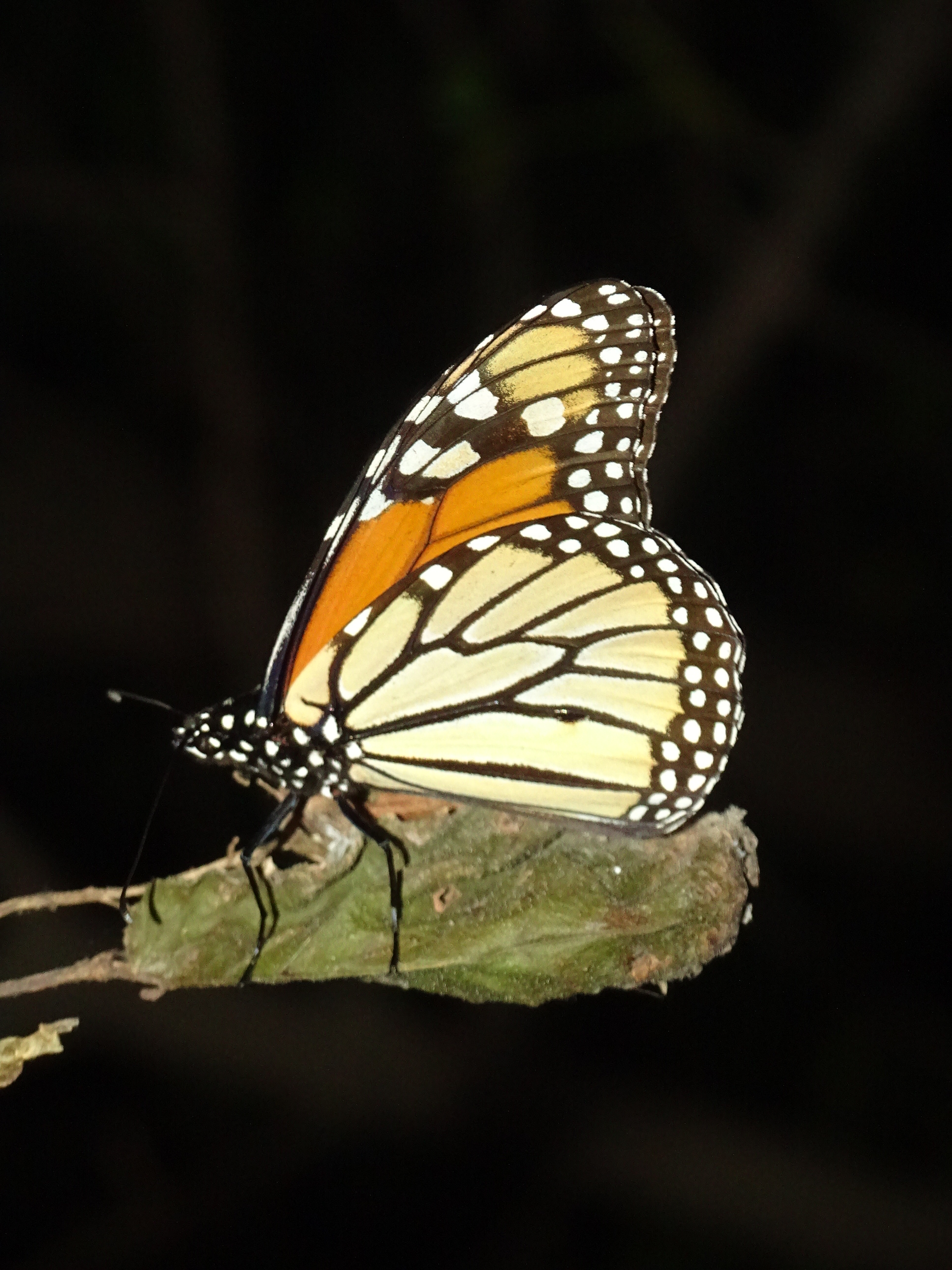
I might find myself dealing with tragic loss and grief, balancing the emptiness of the future with joyous memories.
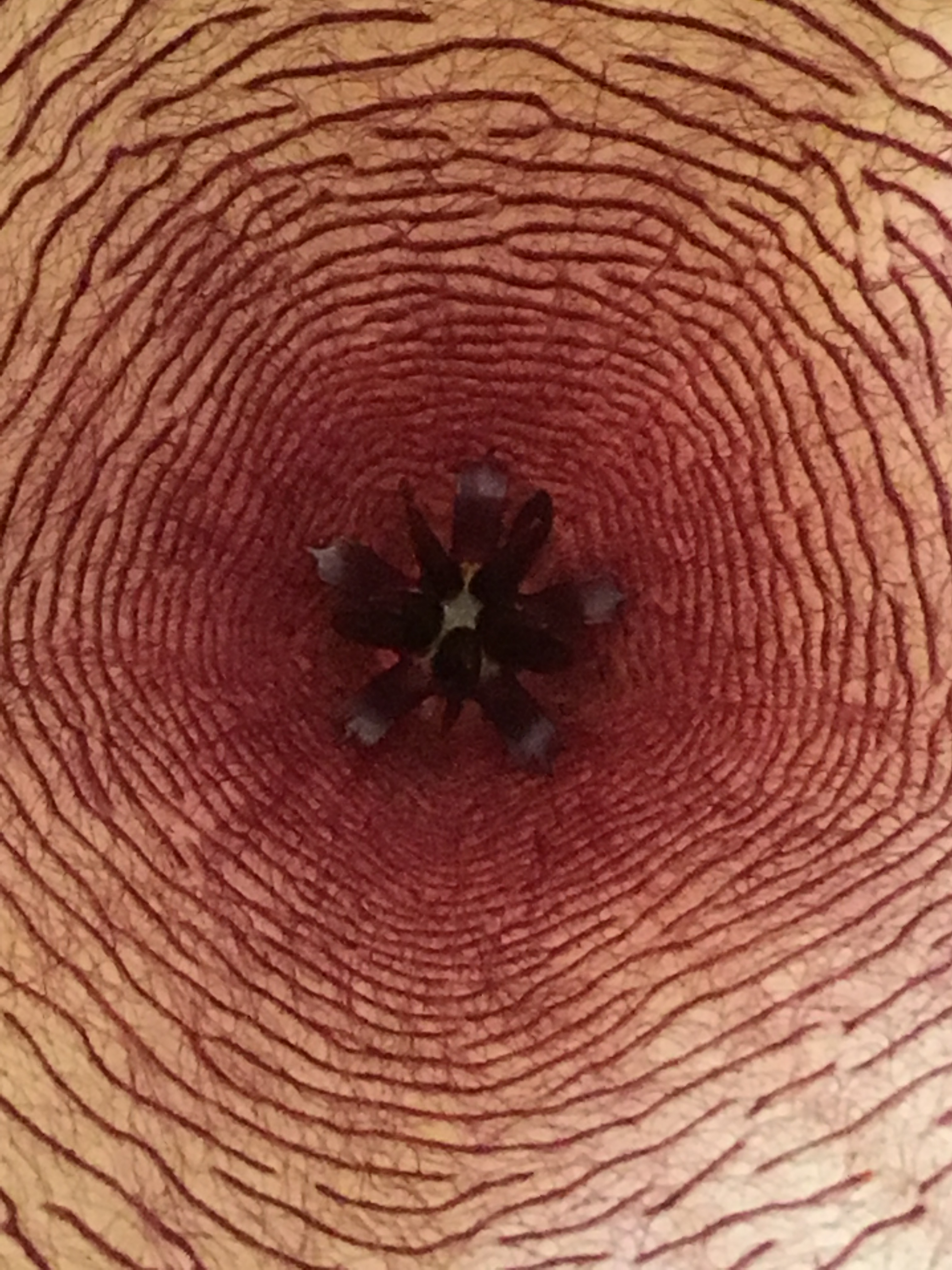
How do I find the optimum balance for tension in life? In the piano tuning world, we have special tools.

But what about tools to balance life tension?
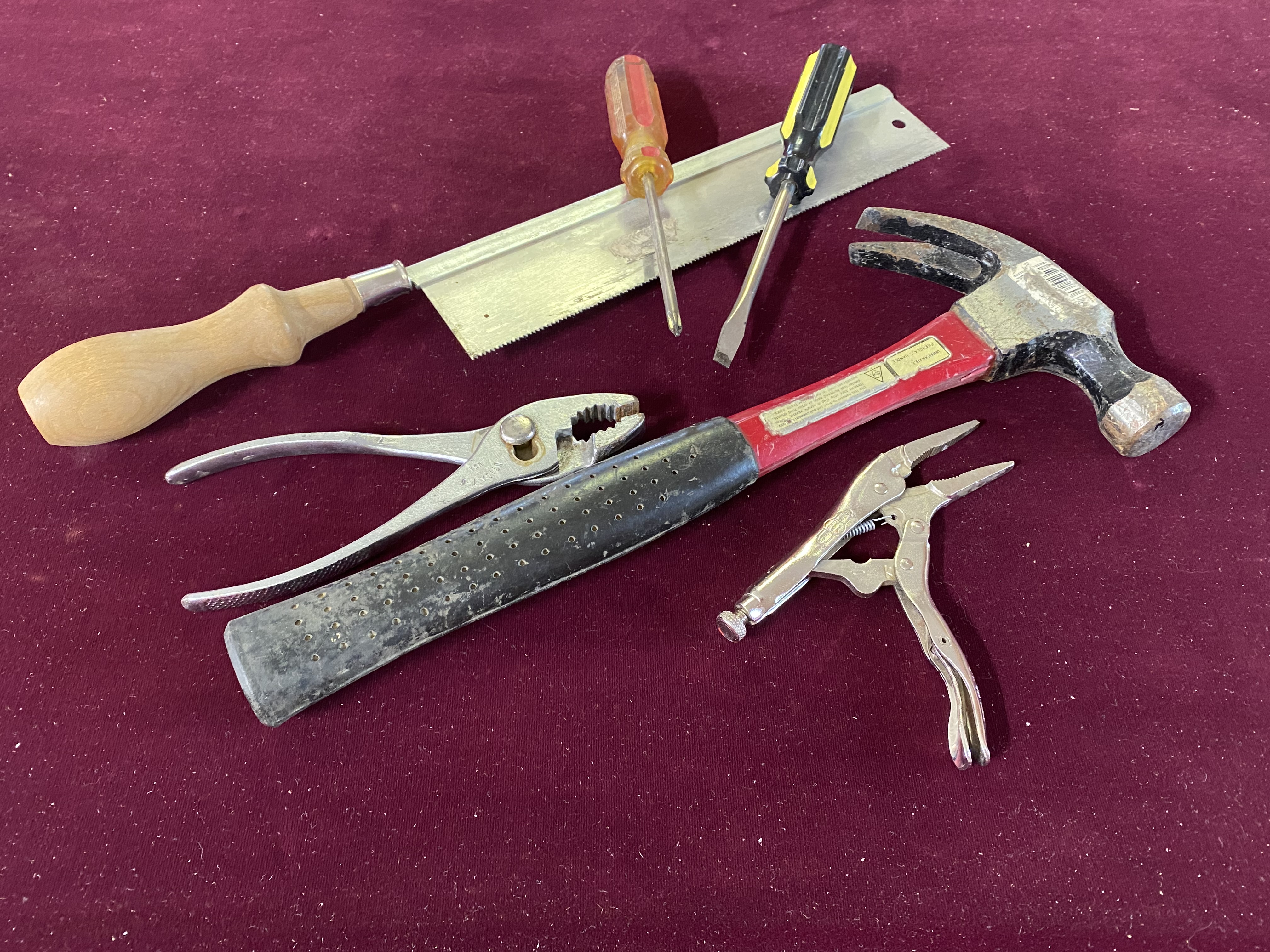
Nothing as concrete as tools I’d find in the kitchen or garden.

What tools are good for tense life situations?

I suggest intrinsic ones, habits, and careful choices.

Perhaps many of us have identified passions in our lives,

answering questions like “Who am I?”
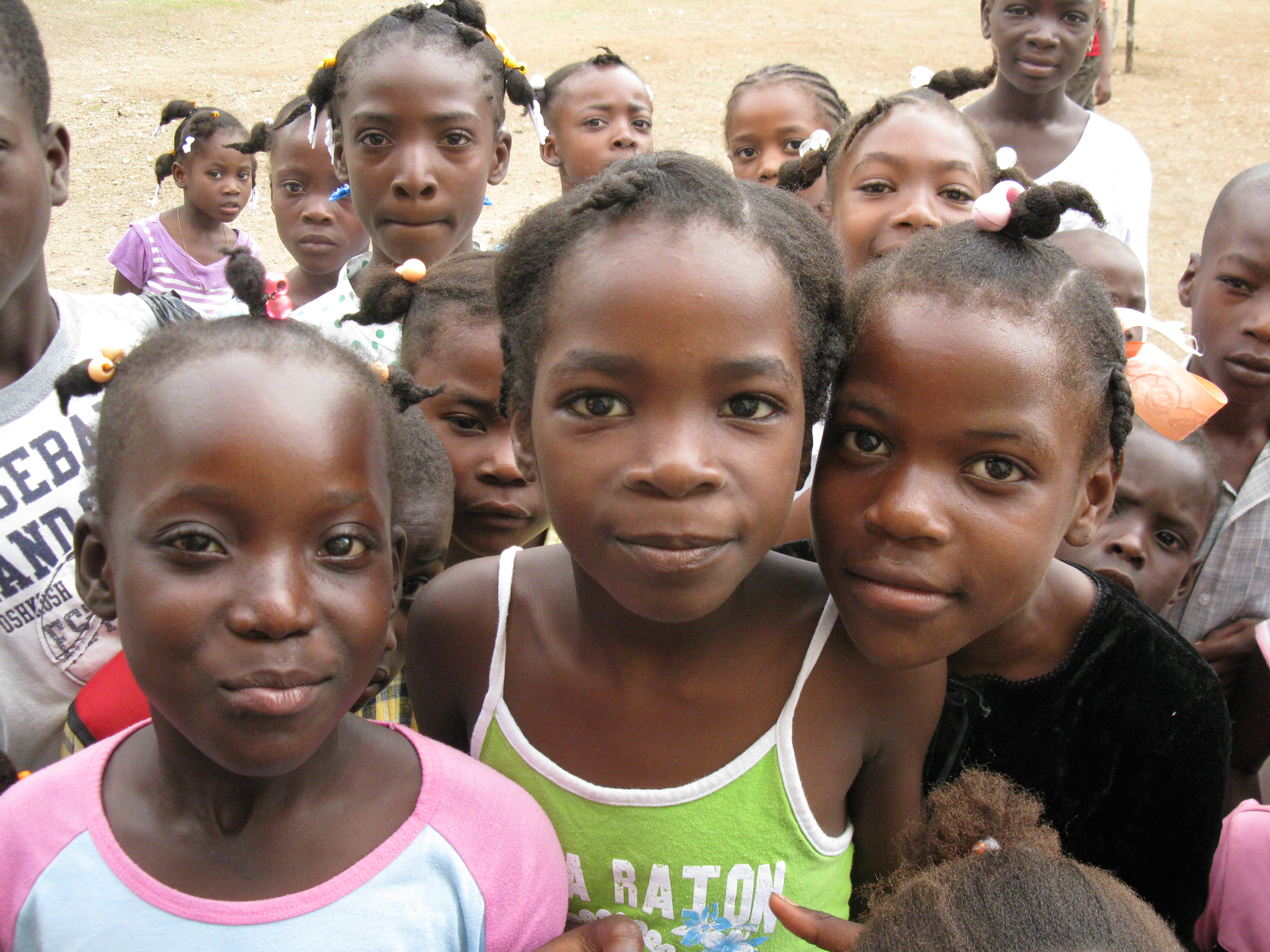
and “Why am I here?” Hopefully most of our passions will leave a better place for those who come after us.

The details can be different for everyone, but we find a cause that we can support.
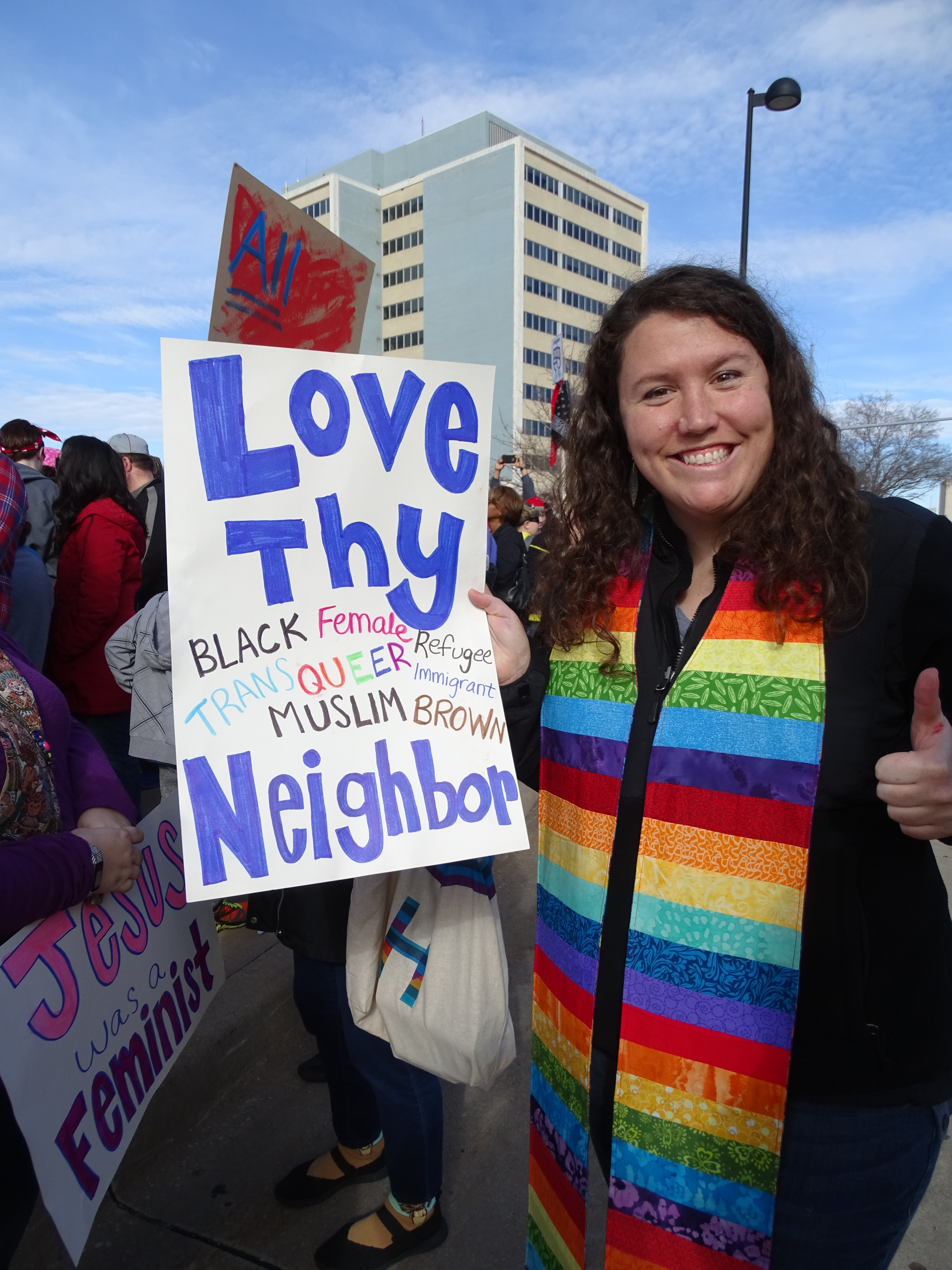
Maybe two or three.

When it’s time to raise the pitch—to increase tension and produce harmony—I find ways to follow my passions and take a stand on issues of the day,

to engage in life, to volunteer, befriend someone who needs a friend.

I try to recognize those things that I can let go and those I will support in every way I can think of.

But what can I do when the weather changes and I sense a storm coming? How do I keep from breaking under tension? Tools to relieve tension arrive as life gifts, different for everyone.
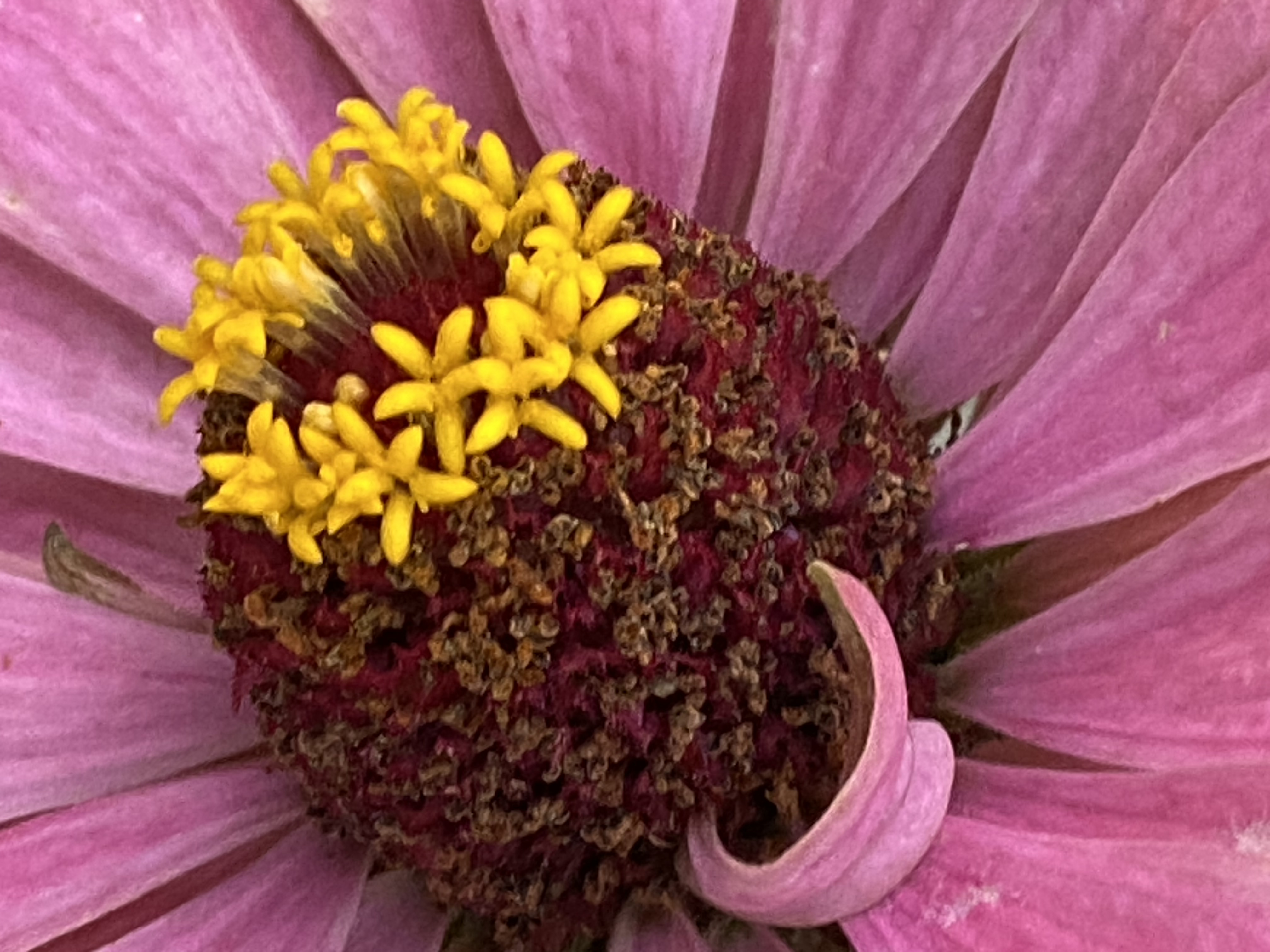
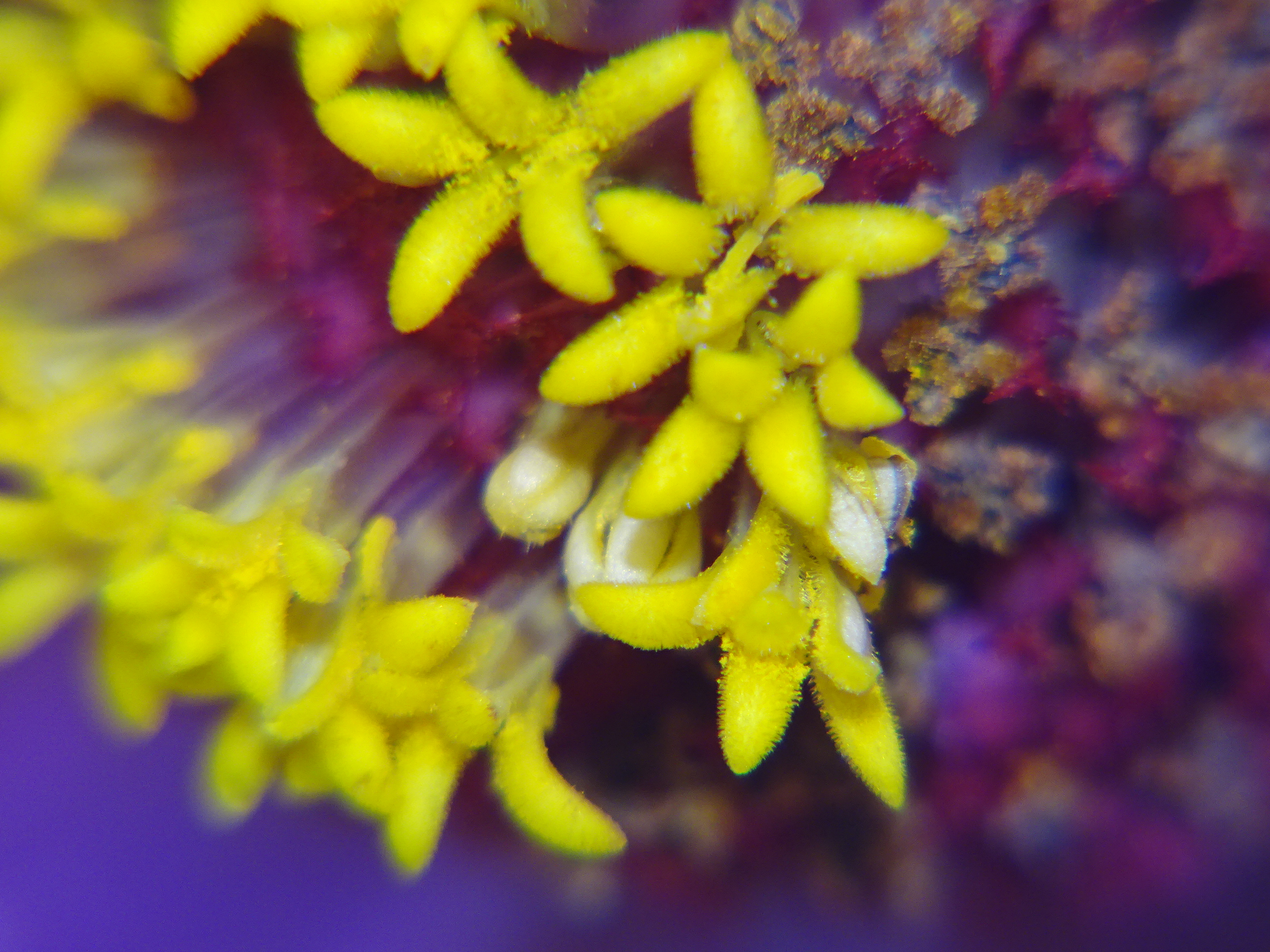
Some may go for a run or a bike ride.
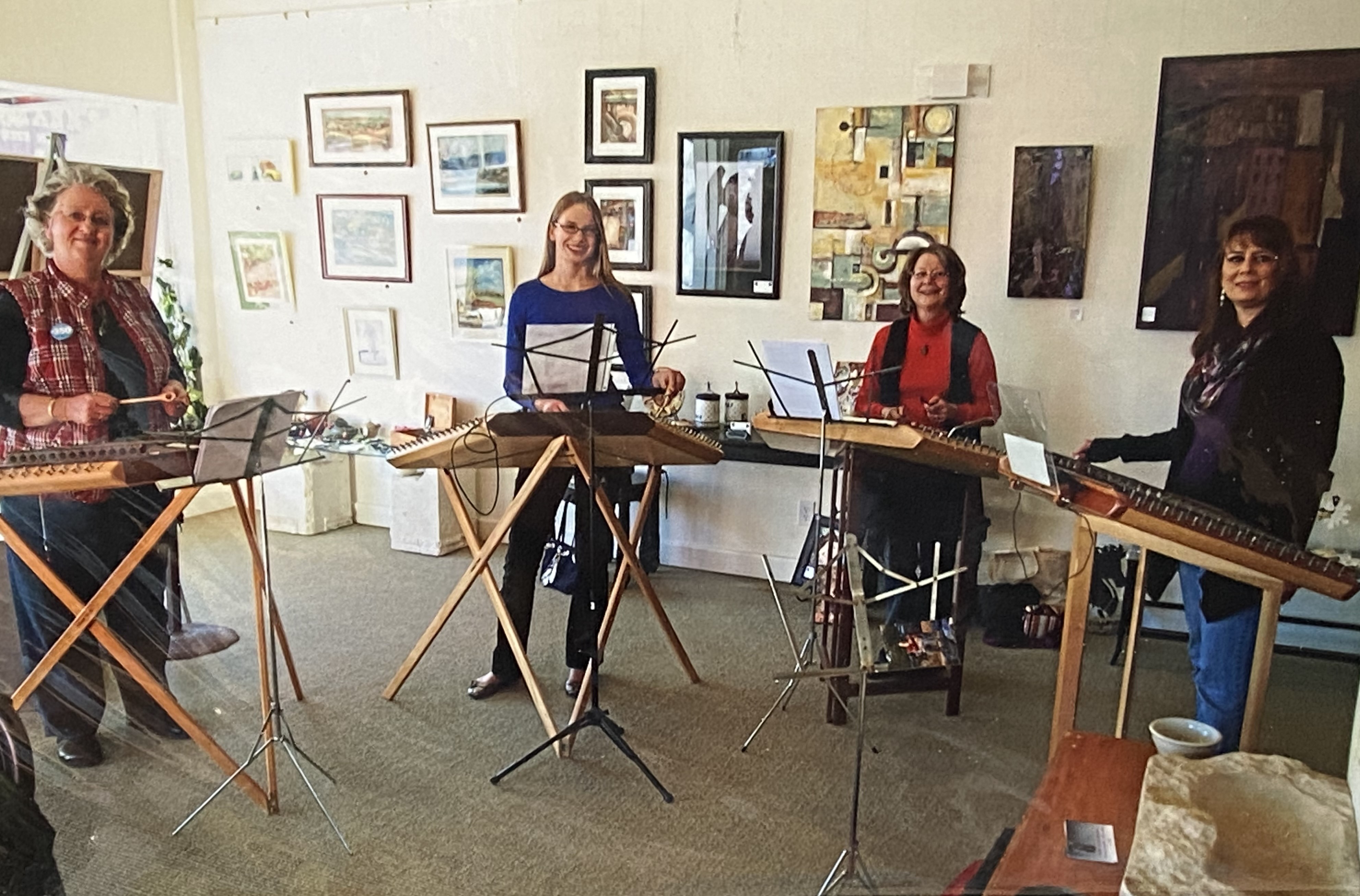
Others grab a book to escape to an imaginary world, or write in a journal. Some people make music.

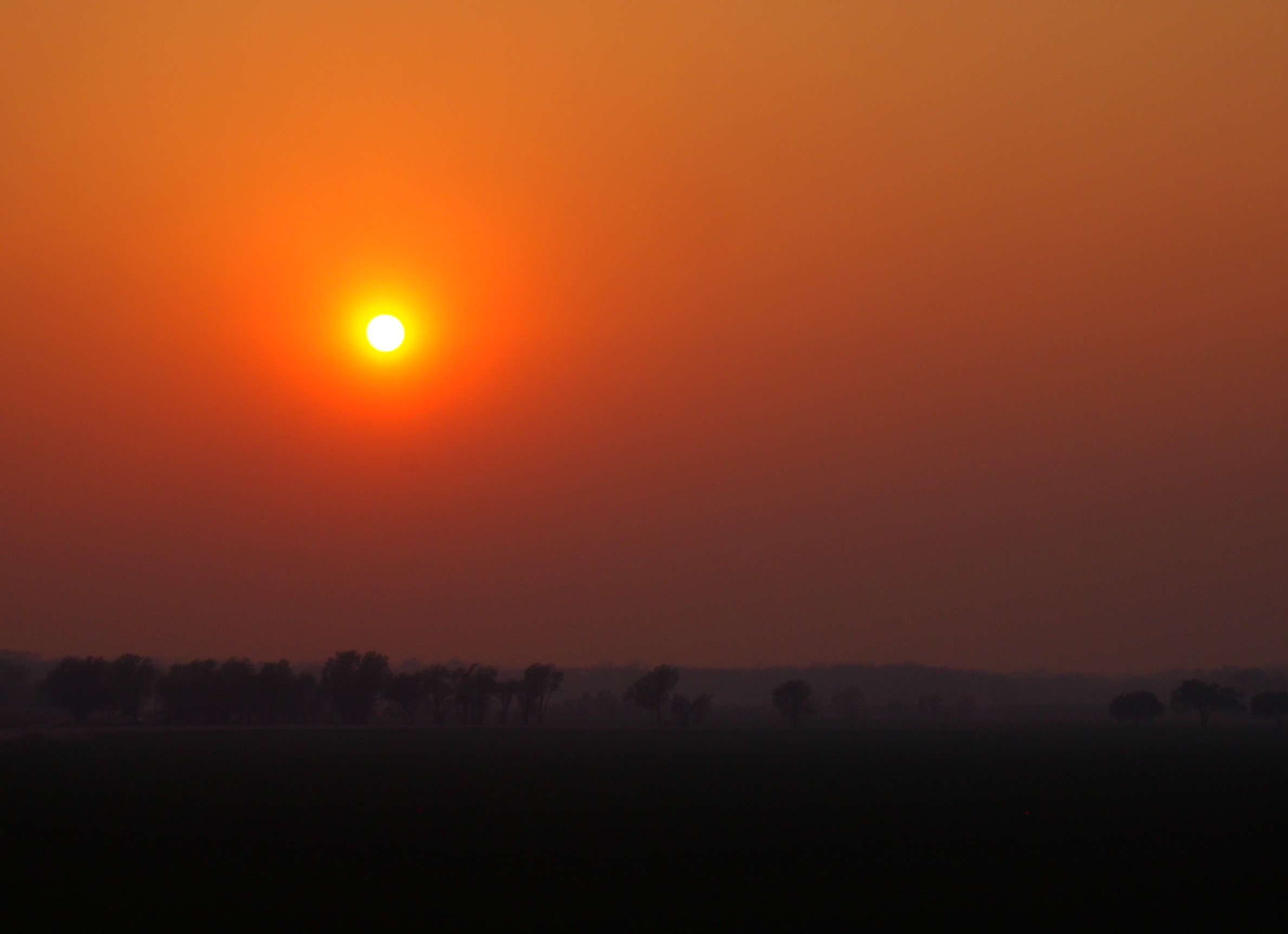
I like to take a camera and look for beauty in the world around me. And the world responds.

Some things I have learned:

Life is complicated—there is nothing simple about it.

Acknowledgement of mistakes helps build bridges.
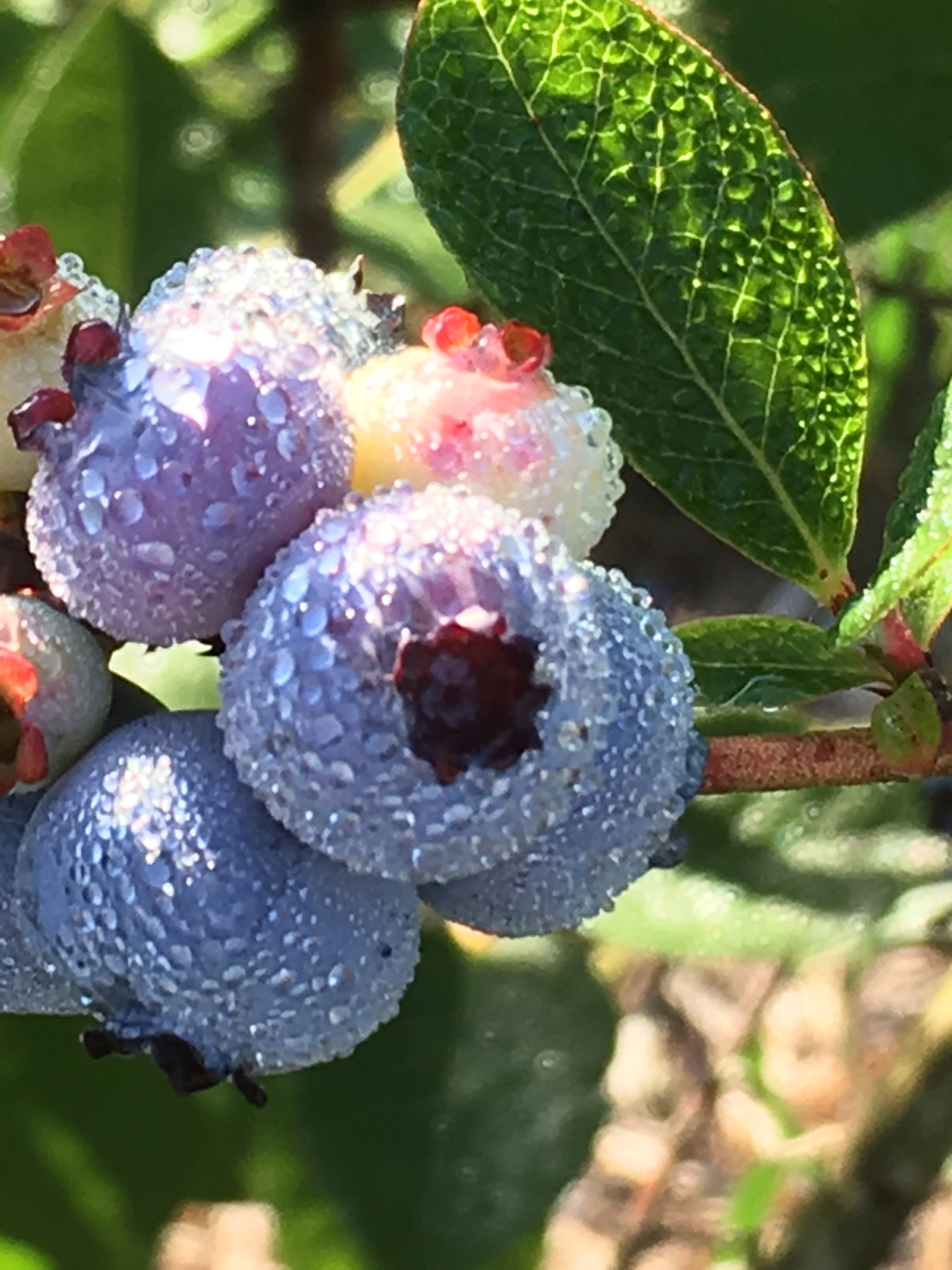
Love is the greatest power.

Laughter heals.

At least half of communication involves listening.
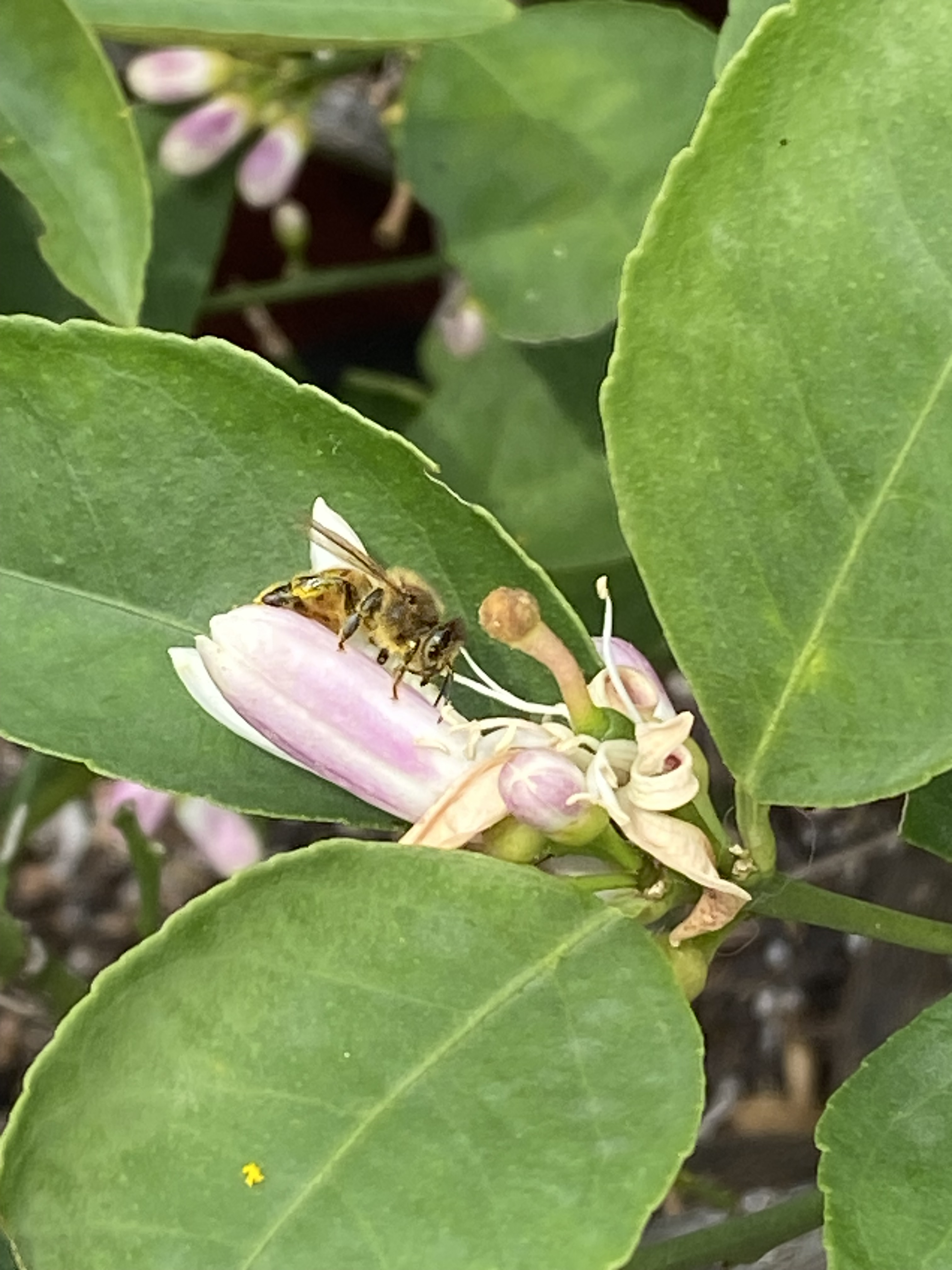
There is beauty and wisdom in tiny things and overlooked places. It’s healing to find wonder in miniature worlds.

I always find what I’m looking for, so I try to look for the positives.
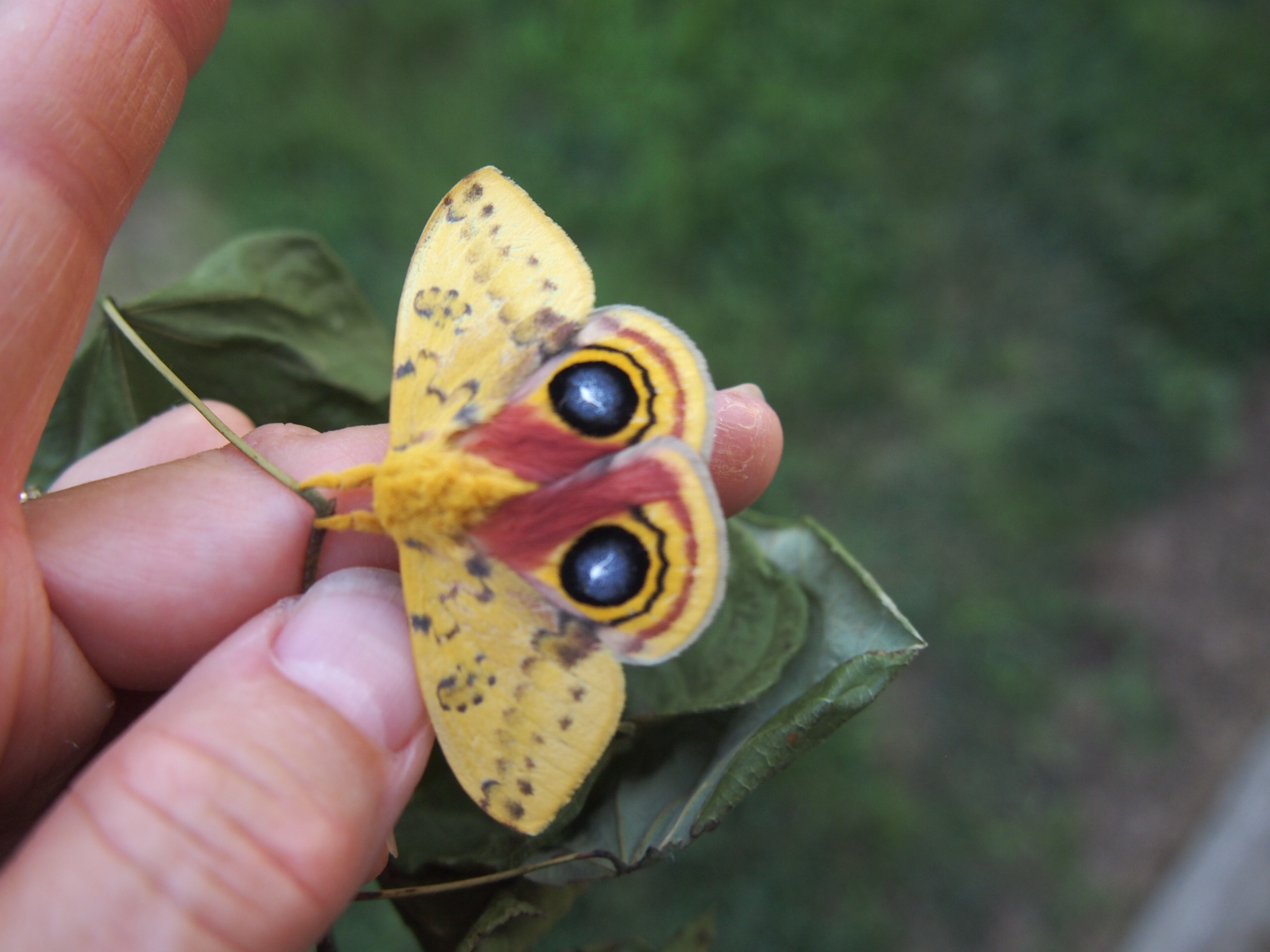
When the future looms dim, I hold fast to my values, and take one small thing at a time.

Bird by bird, scene by scene, note by note, day by day or even minute by minute, I can make choices that support my values.

Like a seed, sprouting under dire conditions, but sprouting anyway. That is the essence of optimism.

Danielle Orner, a young woman who has battled cancer since she was a teenager said, “Life is a balance between what we can control and what we cannot.”

Between effort and surrender—two forces in life that keep us in tune. That is the essence of good tension, insuring that those yet to come can sing.

(P.S. To answer your question: I should add photographer to my list of dedicated endeavors in the above bio. Yes, I took all the photos, except for those in which I appear, and the group of Haitian children.)

Firestorm Sonata: The Story Behind the Story

The third novel in my Sonata series of adventure tales featuring pianos and their families is now available on Amazon. I have mixed feelings about it. The completion of this journey has been months in the making and I’m relieved to finally get there. It’s been a lot of hard work, with repeated readings and editing through the summer, each time thinking this would be it, and each time finding more things that needed to change. I finally drew a line. This is it. Ready or not. And Firestorm is launched. May she find a path through the maze of words out there in the cyberverse and not disappoint.

Firestorm Sonata:

In peak condition, scout Sharenda Kamine is certain her field skills will insure her safety as she seeks supplies needed by the fortress she calls home. She must, however, prove her worth to the authoritarian commander of this isolated pocket of survivors. With reluctance, he grants her request to work alone and she heads across dust dunes of what once was southern Kansas, confident she will master any challenge she meets. But she is unprepared to find a window into the past, which simultaneously offers a future ripe with possibilities. She must decide whether she will honor her commitment to the Fort, or escape to freedom with Gran, the only family she knows.

This tale is a first for me, to set the events in the future. During my work on the second Sonata, Sonata of Elsie Lenore, a friend I respect, a retired college professor and elder in my community, shared an article with me. “Confronting the Climate Crisis Through Fiction: Visualizing a climate-ravaged world may actually be the key to mobilizing action.” Those who know me well know my passion for the natural world, for the planet Earth. As a college freshman 50 years ago—get that FIFTY—I took a life-changing class called “Can Man Survive?” in the biology department at Fort Hays State University in Kansas. It was based on the then-current knowledge about all the impacts our human activities had on water, air, land—and climate. We’ve known about greenhouse gasses for my entire life. Even longer. Some folks predicted serious impacts early in the industrial revolution, over a hundred years ago.

The evidence is mounting in 2023. This summer is already setting records. Extreme weather events around the world fill the news from catastrophic flooding to record-setting temperatures and untamable fires. Chile, Canada, Greece, Italy, China, India, Japan, Taiwan, Philippines, Sudan, Madagascar, Zimbabwe–the list goes on. In North America, water temperatures in the Gulf of Mexico hit 100+ in places, with 100% mortality in some coral reefs.

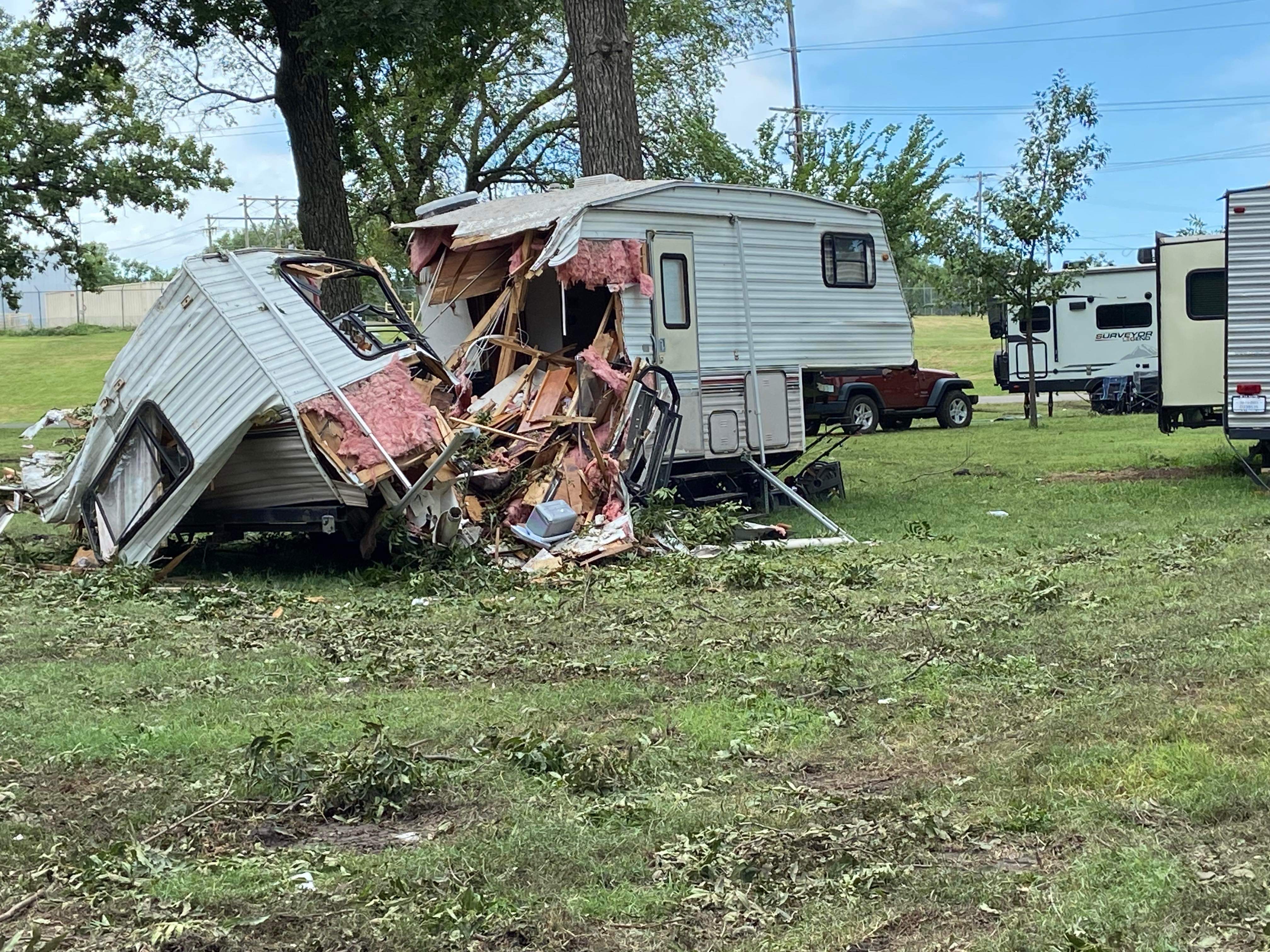
My own community cleans up after a straight-line windstorm that downed whole trees in our favorite parks and city streets, demolished our neighbor’s hay storage barn, and wreaked havoc on the county fair. Cleanup will continue for weeks. The cost has soared toward $2,000,000 already in our one small town.  And yet, we humans continue a path deemed to be disastrous for all life on the planet, just so oil companies can reap growing mega-profits at the expense of everything else we hold dear. If fictional tales set in a grim future environment will shake us into action, I decided I must try.

It’s been my privilege to offer continued piano service across south-central Kansas for nearly thirty years. I’ve kept climate records at each job, recording temperature and humidity. It’s increasingly hard to advise piano owners what their best plan of service should be. With seasonal swings in temperature and humidity becoming more unpredictable, the effects on pianos are easy to see. Tuning stability is now a figment of the imagination.

Pianos are my world. So is the prairie ecosystem. I began to ask some hard questions as I twisted those pins on my annual calls. “What’s with all the earthquakes in Kansas and Oklahoma?” In my college geology classes I learned this area is the “stable” part of the continent. Earthquakes are supposed to be extremely rare. And yet here we are.

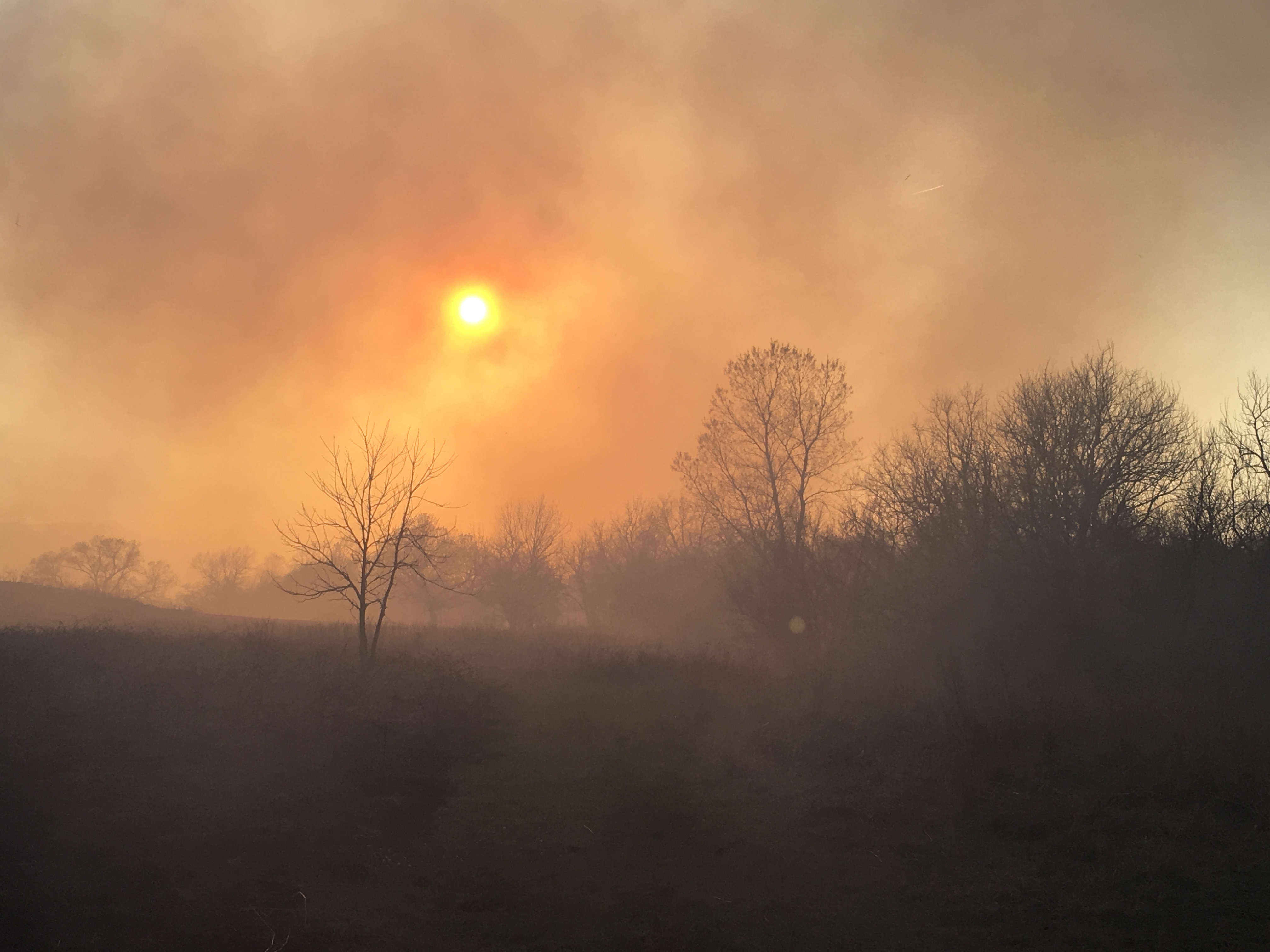
“What about the wildfires?” Every year we hear about more extreme fires. California, Oregon, Texas, Idaho. There have been successive record-breaking fires that started in Oklahoma and raged across the state line into Kansas, burning hundreds of thousands of grass acres, killing animals (including livestock) that were trapped in its path.April 2016, a fire burned over 400,000 acres, the largest blaze ever in Kansas (at the time);  March 2017, 600,000 acres burned in southwest Kansas, people were evacuated from small towns in the area; December 2021—fires in northwest Kansas, fanned by winds stronger than hurricane force, burned 400,000 acres.

Then there were the Canadian fires this summer that burned for weeks, sending ash and smoke into the air across northern US. And Maui—MAUI?? An island in the middle of the Pacific Ocean with a drought and a spark? The death toll from the Maui fire continues to grow.

I tried to imagine what my home county would look like after an extended drought, followed by a massive firestorm. Perhaps lightning would ignite an oil spill created by one of those fracking earthquakes. Add to the mix technology that can’t receive satellite signals, towers that topple in storms, and no way to receive news from the rest of the world.

The field of stepping stones.

What would my piano family do? What would become of them and their pianos? Would it even matter anymore if basic survival was the most pressing need? Unfortunately basic survival is already the most pressing need for far too many of Earth’s creatures, including pockets of human beings.

Thus, Firestorm Sonata was born. My deepest thanks to everyone who begged for another tale, who listened when I felt discouraged, and who offered words that bolstered me to keep on writing. You all comprise the village which raised Firestorm Sonata from a small seed to fruition. May she have wings to take her beyond my imagination and in her own way make our planet and our future a little brighter for all living things.


Of Snow and Violins

I don’t recall a time when I didn’t love books. I must have been hooked at my first page in my first picture book. Naturally, I wanted to write them also. English class in Junior High expanded my love of language. When the home economics teacher there assigned everyone to write a picture book for preschool children, a passion was born. I embarked on a lifelong adventure with words.

Though there have been lengthy gaps when I was too involved with family matters to spend time with a pen and typewriter, whenever I could  I outlined projects, made deadlines for myself, subscribed to writing magazines, and submitted my work.

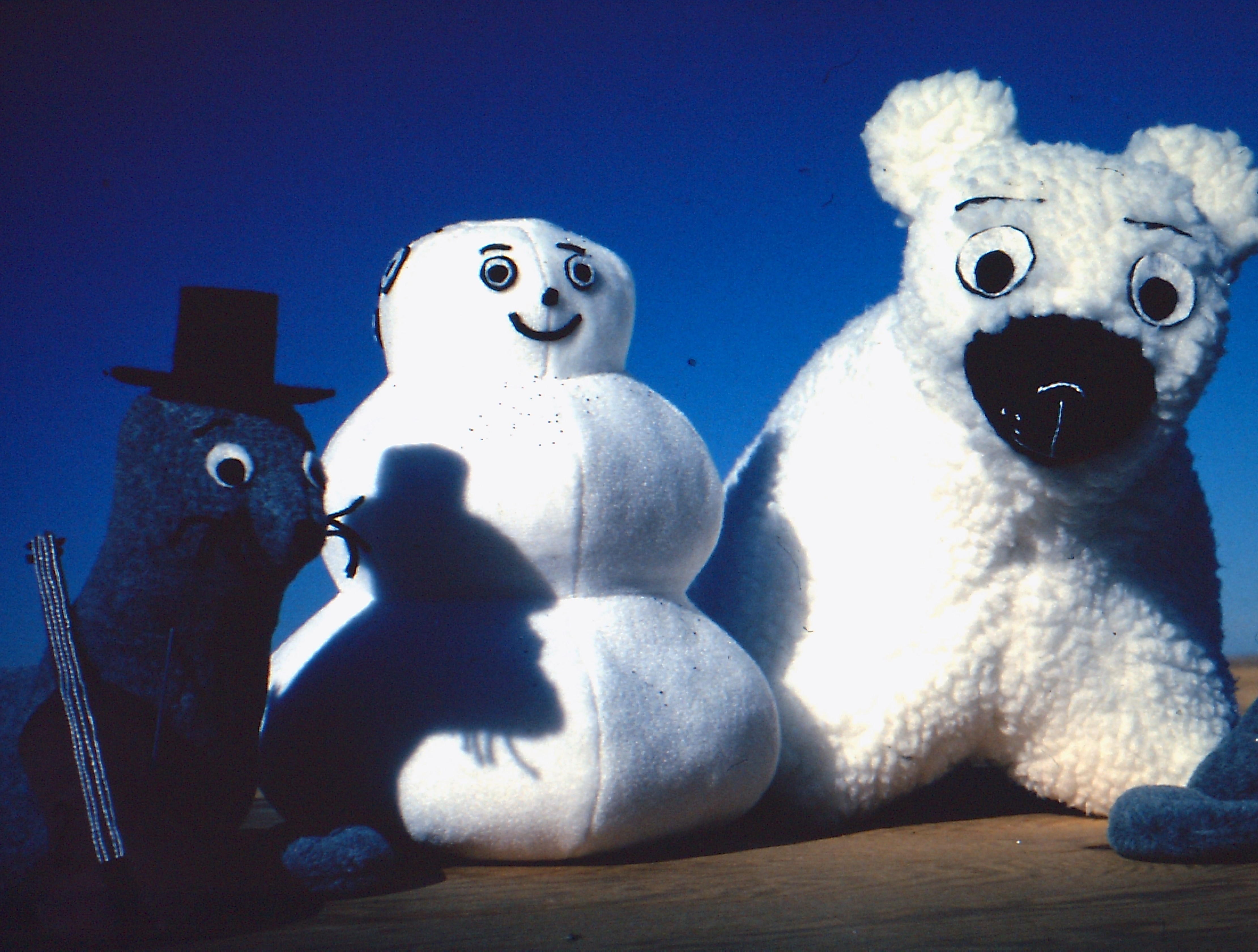
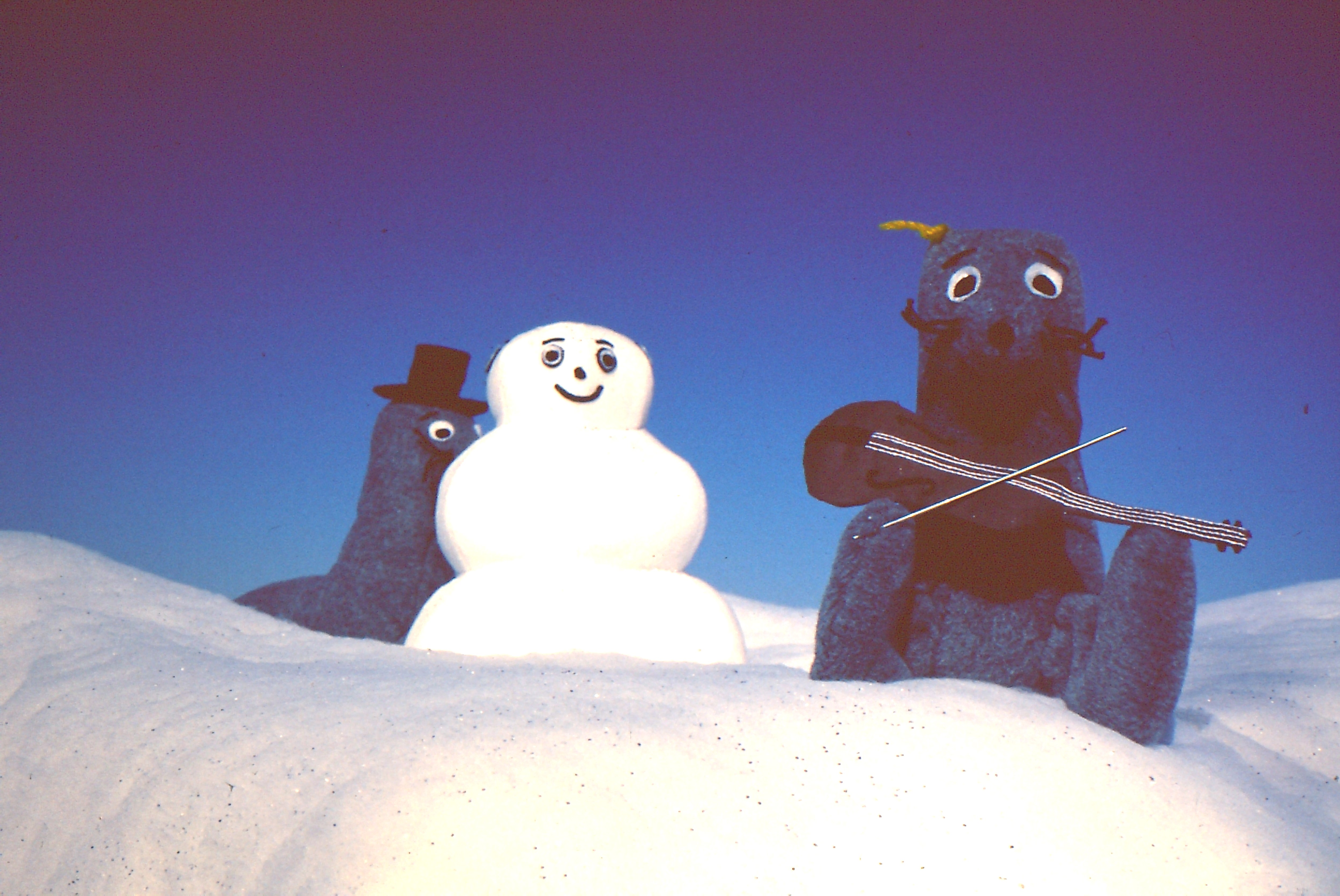
One early project started with a dream.  I don’t recall my age when this dream seared itself into my subconscious, but upon recollection it was an outlandish and delightful story. In my young adulthood, married but BC (before children) I decided to write the dream story as a picture book. It involved a couple of seals and a polar bear in the Arctic, a snowman, and a violin. A violin you ask? Yes. A violin.

Not skilled with paint or colored pencils, I figured I could illustrate this Arctic story using my photographic skills. I needed only to make the characters. I designed patterns to sew stuffed animals as well as stuffed snowmen and a violin. After careful construction, I lined up the cast on a board covered with quilt batting sprinkled with glitter, set up my trusty OM-1 35mm SLR on a tripod, and headed into the morning sunshine outside the little farmhouse we rented in Morton County, Kansas.

Crowned with a bluer-than-blue sky, the still morning was perfect for the illustrative slides. I had a blast moving the characters through the plot and snapping photos of every scene. When the slides returned from the processor, I had the story and the illustrations. I submitted the idea and samples to a few children’s book publishers, and received their kind rejections. I eventually chose Plan B and took the collection of stuffed animals, a slide projector, screen, and the story to several local libraries as a guest reader for their children’s story times. Again, I had a blast and the kids enjoyed hands-on time with the characters from the story.

The years raced by. Life happened. My own children arrived. Daily routines became strictly regimented trying to keep up with everyone’s activities. Other than a session or two sharing the story with my own kids, the stuffed characters were stored away in a big plastic tub until last December.

As Christmas approached last year, I recognized there was no good reason to hide the stuffed animals away. My daughters were grown with children of their own—and half of the grandkids were already too old for picture books. Either I pull the old critters out of the closet, or I never would. I gifted a couple to my 6-year-old granddaughter for Christmas and took along the set of photos to read her the story. On our homeward journey I realized that I now had the means to publish A Very Special Snowman myself. After digitizing the illustrations and formatting a children’s book, I sent this same granddaughter her very own copy of the book featuring the Arctic characters for her 7th birthday in March.

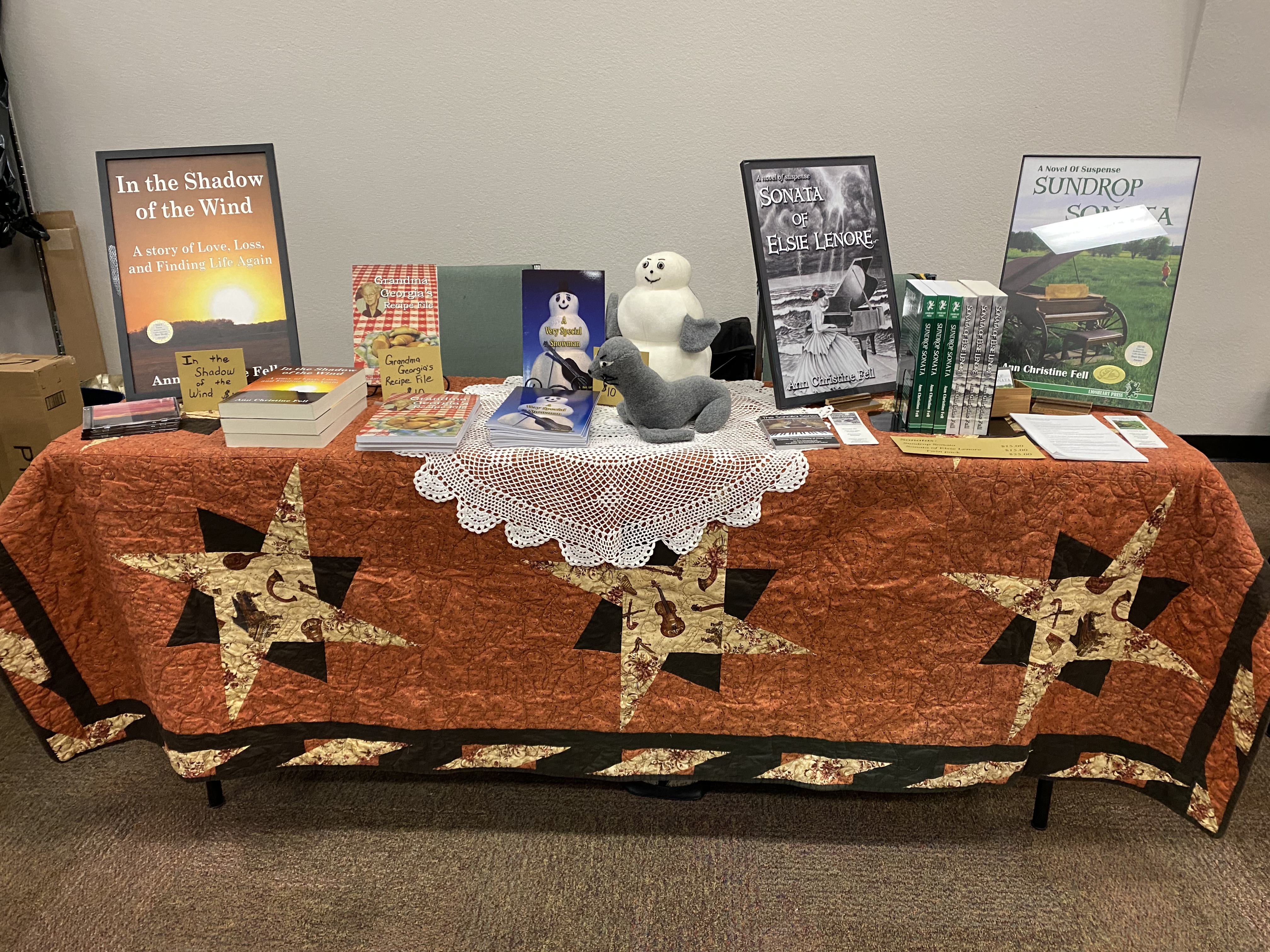
I launched the decades-old project to the public Thursday April 20. The “Women Score Higher” conference in Wichita solicited women authors as vendors and I was happy to be able to bring a variety of books for many different readers, including the freshly published A Very Special Snowman.

A few days after 7-year-old Mia received her book in the mail, her 9-year-old sister wrote to me saying she was writing a book and wanted to know how to publish it. It makes a grandmother proud.

Even with a peaceful ending for two careless seal pups, A Very Special Snowman is a little sad for me. Since those days of innocence long ago, the emergency situation in the Arctic has escalated as our warming Earth melts the polar ice. The fate of Arctic animals like polar bears and seals has taken a perilous turn since my early writing years.

But every stage of this project has been a thrill for me—from the dream, to construction of the characters, to photographing the scenes, telling the story, and designing a book in 2023. And the piercing blue sky in the photos of 1979 amazes me still, a reminder that this precious planet is very much worth defending for all of us, polar bears and seals included.


Who Do You Trust?

Steady . . . 

A dear friend, one of my first writing companions from decades ago, recently asked, “Are you better off than you were two years ago?”

I have given it some thought, and my answer is this: I think we are all better off now than we were when Donald Trump was in the White House.

Are things perfect? No. When are they ever? But with leaders who will tackle problems that will help make life better for all the people rather than their  billionaire friends, there is hope. And I want to preserve that in our country’s leadership.

I find it sad that many of my friends and neighbors have been pulled in by the lies fed to us continually by the former president and his supporters. My friend sent me a link to a speech by someone she trusts, an online Reverend who has a YouTube channel. I googled his name and ended up with a lot of red flags. I don’t see myself trusting him. With all the extreme rhetoric on many topics, how do you trust anyone?

I lean more toward someone like Dan Rather and his comments on Steady. As news anchor on CBS for much of my life, Dan Rather has covered a lot of  topics in the past five decades. He’s from my parents’ generation and I respect the perspective on history the elders have. Like others I hold in high esteem in his generation, Dan Rather has never seen anything as troubling for our country as Donald Trump’s leadership.

From a recent post on his Steady website, ( https://steady.substack.com ):

“Let us not pretend everything is okay.”

“Let us not give up hope.”

“Let us not minimize the problems before us.”

“Let us not deny reality.”

“Let us not demonize one another.”

“We are facing a midterm election in which everything feels like it is at stake. And indeed it is.”

It’s tempting to raise my hands in despair, thinking that all is already lost. But we can’t afford that. The keynote speaker at the recent convention for the Kansas Authors Club mentioned it’s okay to keep trying, even if you don’t know whether you’ll ever succeed. Not knowing doesn’t relieve us of the obligation to try.

And we can’t stop trying to make a better world for our descendants. It is our obligation for the future.

Electing politicians who will negate the results of the next election they don’t like will be disastrous to everything we hold dear,  even the future of our home planet.

Now is the time to get out the vote. Let’s not sit this one out, friends.

From Alpha . . . to Omega Part 2

Since I was young, I found peace and unconditional acceptance in the natural world, even in difficult times. Especially in difficult times. During a traumatic adolescence, I surrounded myself with nature in my hideaway room at home. There was a fifty-gallon aquarium, and shelves in the windows filled with houseplants. Some even vined across the ceiling. My own private forest.

In Nature, I found evidence of a supreme being beyond what our senses show. Through countless moments filled with awe and wonder at the mystery of life, of connections with other beings, I grew to love the Earth, its life, and its mysteries. As we approach a precipice of no-return in the global crisis brought on by our industrial and consumer-oriented lifestyle, I feel great sadness, along with deep gratitude for the gift of life itself, and for all the moments when I sense the Beyond through simple contacts with other living things. Climate grief is a true thing.

I wonder what awe-filled moments do you recall that you wish your grandchildren—and theirs—could experience?

Have you ever . . .

Watched an eagle soar and listened to its distant call?

Sat on a trailside boulder and watched an aspen seed float to the ground?

Had a hummingbird check your red bandanna for nectar?

Watched a glacier calve an iceberg?

Heard a rush of wings in the stillness of a heavy mist?

Watched a loggerheaded shrike hang a field mouse on a locust thorn?

Risen before dawn to visit booming grounds of lesser prairie chickens?


Watched a lone prairie dog scamper away from its village into the sunset?

Surprised a family of deer on a winter walk?

Watched a flock of robins sip melting snow from your house gutters?

Walked with a flashlight after dark in September to watch orb spiders at work?

Witnessed a black bear check out the milo fields on the high plains of Kansas?

Heard the scream of a cougar outside your tent in the middle of the night?

Watched autumn leaves dance with hundreds of migrating monarch butterflies at dusk?

Held a newly metamorphosed moth in your hand and watched its virgin flight?

Heard barking sea lions as they congregated on the shore below the seaside cliff where you stood?

Through six decades, travels from Oregon and California to Maryland and Florida, Minnesota to Arizona, as well as journeys to Japan, India, Hawaii, Canada, Alaska, Cuba, and Mexico—not to mention my own backyard—the wonderments of Earth have held me spellbound in every little nook. With deep gratitude for all I have been fortunate to witness, and with fervent hope that we can stop our catapult into disaster at COP26, I offer Part 2 of the slide show from my younger days. Let humanity not be responsible for the Omega curtain on our gem of a planet.

Music: Beethoven’s Symphony No. 9 in D minor, “Chorale Symphony.”


From Alpha . . . to Omega

A week from today in Glasgow, Scotland, COP26 is set to begin. The 26th Conference of the Parties (COP) of the 1994 United Nations treaty on Climate Change has been called the planet’s last best chance to establish commitments around the globe that will mitigate the worst consequences of human blundering and greed. Glasgow, a Global Green City with plans to achieve carbon neutrality by 2030, is an appropriate location for the conference. Like Greta Thunberg, I have grave doubts that anything pertinent will come from the proceedings.

But, it’s crucial that we take drastic steps to reverse the damage humanity has done to this gem of a planet. Every culture and faith tradition that I know of dictates great honor and respect for the forces that created the living biosphere we call home and rely on for our very existence. My background is the Christian tradition, where in earliest stories, God the divine, the Creator, brought into being the systems on Earth—and saw that it was very good.

Grand Canyon, Arizona

The greatest crime against the universe is human arrogance and greed that ignores the rest of our brother and sister species to bring about catastrophic change and ultimately destruction of the Earth systems that support all life forms.

I fell in love with nature in my childhood. My parents took us traveling to wonderful places every year and we camped in the wilderness before RV-ing became a “thing.” The church were I learned “God is Love” used beautiful scenic photos on the weekly bulletins, and I wanted to take photos like them.

In college, my best friend (who later became my husband) and I bonded over escapades in natural settings. We reveled in outings where we traipsed joyfully through hills and meadows with our 35mm SLR cameras slung over our shoulders.

The first church we attended as newlyweds was a country Mennonite church in southwestern Kansas. Though neither of us had a Mennonite background, the love, the service, and the music of this congregation provided a perfect support for beginning our married life. For these people, we put together a slide show of our own scenic shots, accompanied by scripture from the Bible. The original show was held in 1978 in a local auditorium, using a Kodak carousel projector and reading scripture at a microphone as we advanced the slides. At the time we thought how nice it would have been to include musical background, but lacked technological skills to accomplish that.

I lost my first soul mate to cancer. A lifetime later, with advancing digital products and home computers, I was able to convert the original 35mm slides to digital format, set it all to music with the help of a tech-savvy stepson, and post to a YouTube video channel.

I offer the show here, for love of the Earth, of Creation, of our gem of a planet which unquestionably deserves better than we’ve allotted to it. As COP26 approaches, can we all agree that Earth is unique in the universe? Can we, out of respect for its Creator and Creation itself, and for love of generations to come—generations of all species that make up our Earth family—commit to protecting and preserving this unique planet which holds mystery and miracles and wondrous splendor?

See Part 1 of the slide show we called “In the Beginning” here, set to Beethoven’s Egmont Overture in F minor op. 84:

Part 2 to come.

What’s a Grandma to do?

With the preponderance of plastic items everywhere you turn, it’s a real challenge to figure out how to reduce my use. Take, for instance, the celebratory picnic of grandson’s swim team season two weeks ago. Hotdogs and hamburgers would be furnished, but each family was to bring along “prepackaged” sides to make the meal complete. Prepackaged? I visualized single serving chip bags, plastic containers of fruit or pudding, industrial cookies and brownies, wrapped and sealed in plastic before packaging in paperboard boxes.

How to reduce my family’s plastic contribution?

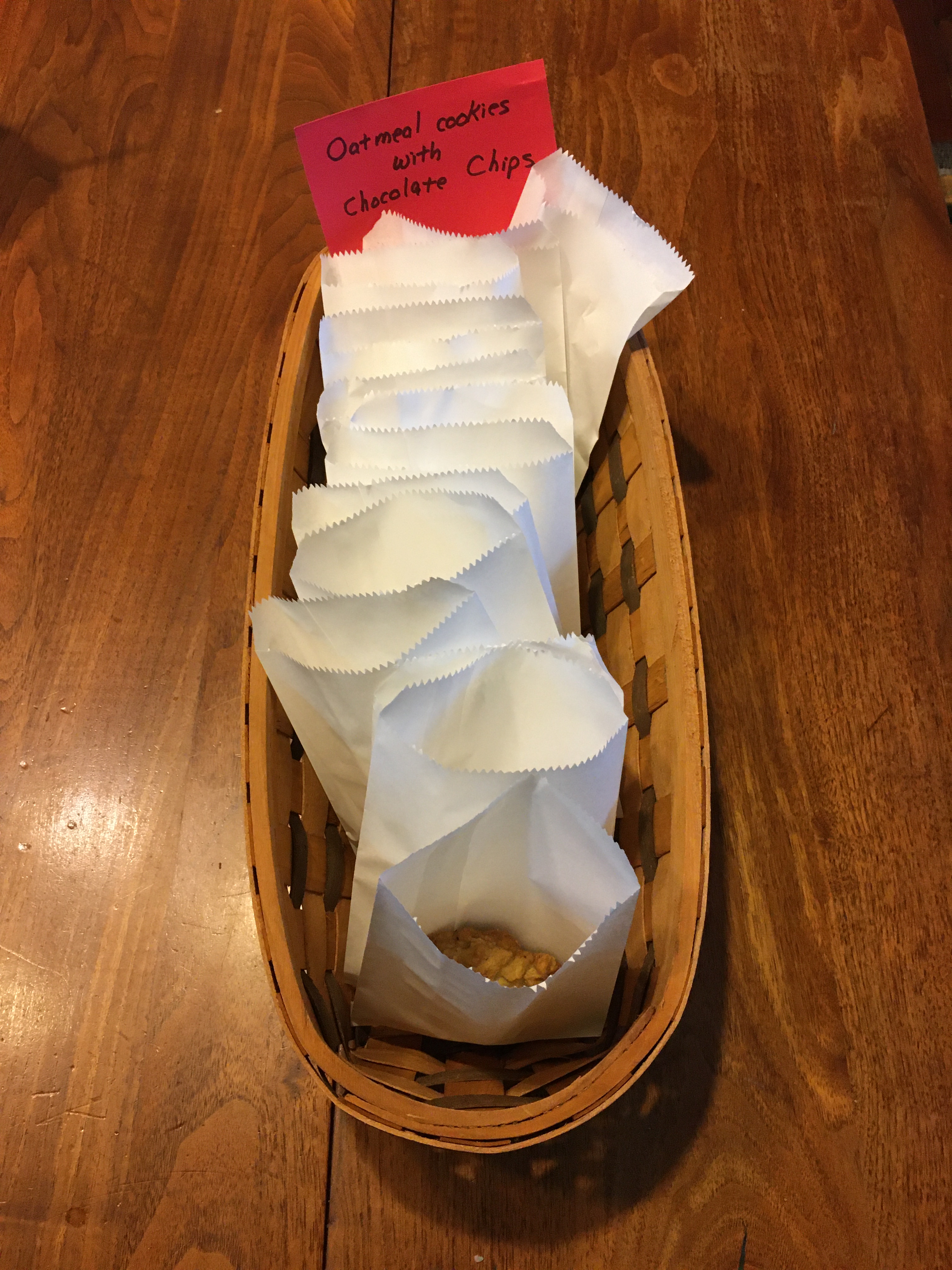
Here’s what I decided to do. I baked a batch of home-made oatmeal cookies with chocolate chips, and put one cookie each inside a single paper sleeve.

I had found a supply of these online when preparing a promotion of Grandma Georgia’s Recipe File at an old-time crafts festival.

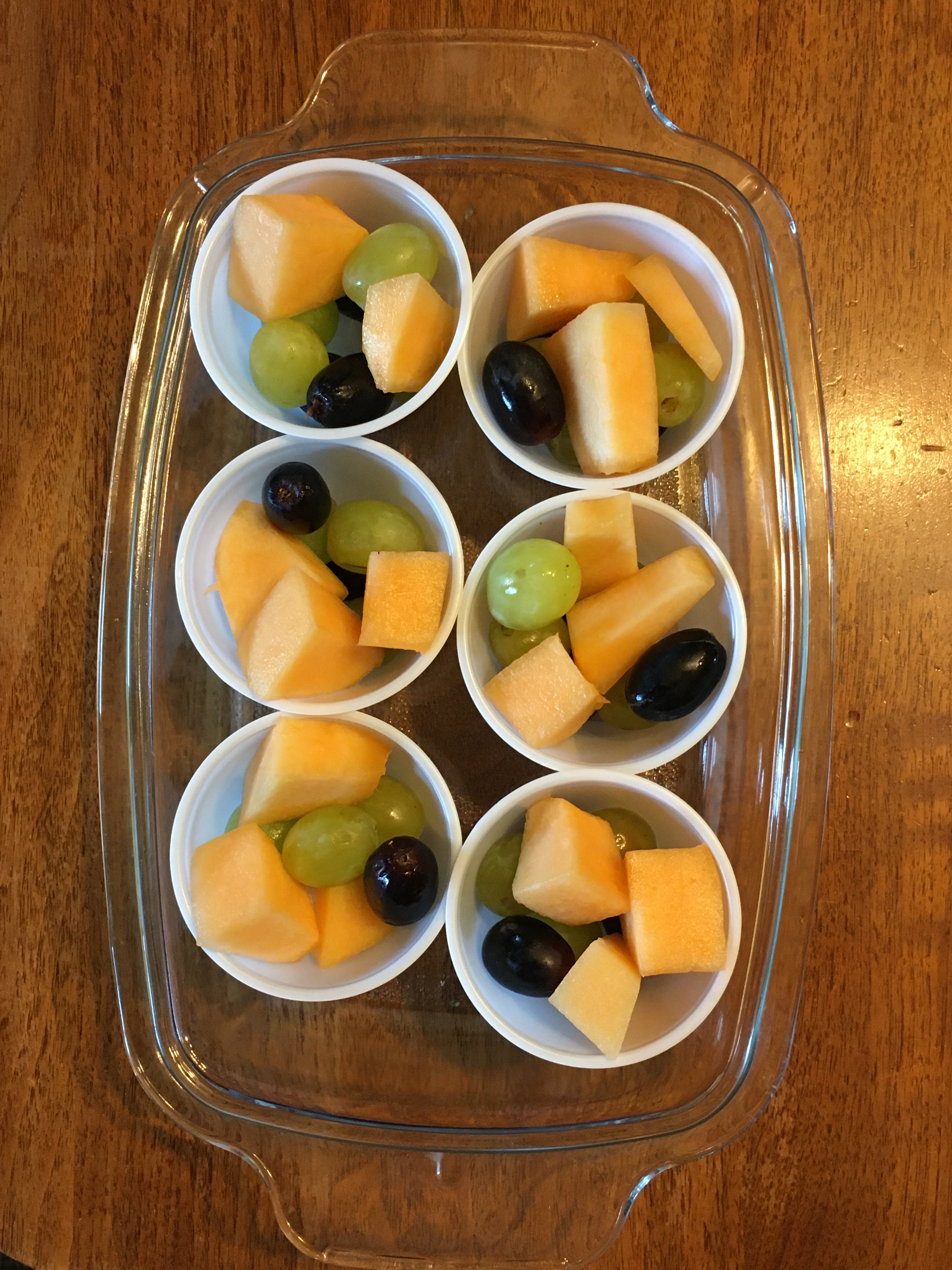
Then I cleaned and sanitized 24 small plastic cups that included plastic lids, which came with the free USDA summer lunches provided during COVID for the grandson. I selected ripe and attractive grapes, chunks of melon, and a bing cherry, and made two dozen fresh fruit cups. I sealed them with the cleaned lids. Okay, I know. This was still in plastic, but at least it was re-used plastic before it was tossed into the trash bins.

(Fruit cups similar to the picnic items. I forgot to take a picture of those.)

This reducing plastic thing is hard. It’s everywhere, and we’re so used to it, we don’t even think about it anymore.

Moving Toward Zero Plastic One Step at a Time

After watching the documentary The Story of Plastic with several friends and neighbors last month, and reading Beth Terry’s Plastic-Free: How I Kicked the Plastic Habit and How You Can Too,  I am convinced we need to move toward a plastic free world sooner, rather than later. Like maybe, yesterday. Or last year.

It’s not going to be easy. Look around. Nearly everything we do, everything we have, everything we shop for at the local stores is–if not made of plastic itself–wrapped up in it, sealed with it, packaged, bottled, bagged in it. We are so used to plastic in our lives, where do we even begin?

Beth Terry has some really good ideas about that. Her book is chock-full of tips, personal stories (mostly from her experiences), and suggestions for alternatives. I highly recommend it for everyone. It’s written so engagingly, that I was trying some of her ideas with each chapter, without waiting to finish the book. For quick starters, she also blogs at https://myplasticfreelife.com/

For instance, take plastic bags. These nuisances are very bad for the environment, totally unnecessary, but so hard to avoid. I am old enough to recall the days before plastic bags when everything was bagged in paper bags. And of course, we were urged to change our habits then to save the trees! What about the days before paper bag convenience? What about a hundred years ago? What, even, do some other countries do today (or at least in the more recent past, before the bag-pushers got to them)?

People once were responsible for providing their own take-out crates, bags, or boxes. And in some places, that custom still exists. Here at home, it seems that every worthy organization offers free re-usable shopping bags. Some are more road-worthy than others, but at least they aren’t hard to find. I have a dozen in my car, ready for toting new purchases. The good thing about cloth bags is that they can be tossed into the laundry and cleaned for reuse. We just have to remember to take a few into the store when we get the week’s provisions.

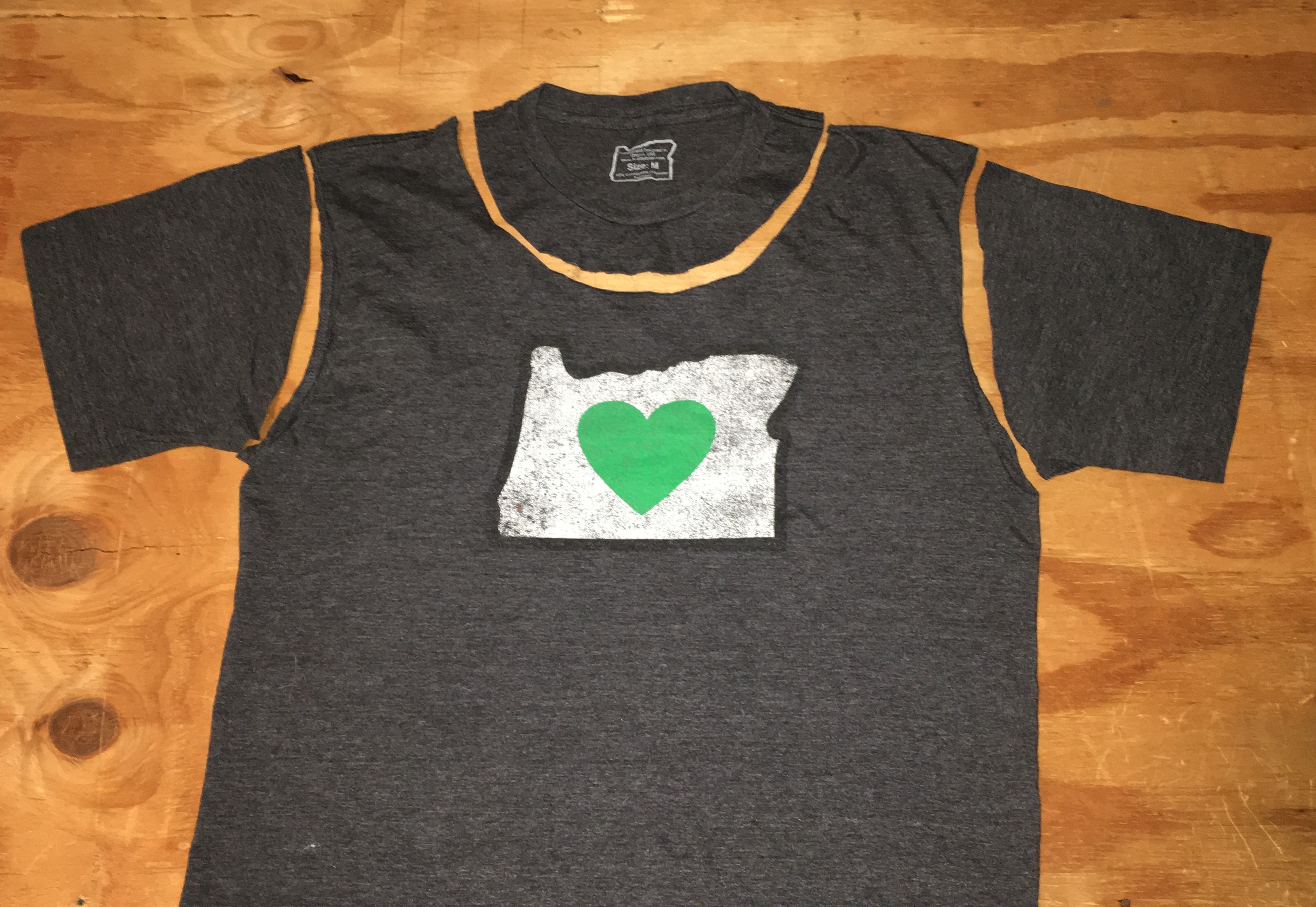
If you are a little short on bags, Beth Terry offered good ideas for making your own. How many of us have a drawer-full of old t-shirts we’ve collected at various events? I know I do. They serve a purpose for a day or two, and then gradually get buried under other shirts. Try digging out some t-shirts you haven’t worn for years and make them into shopping bags.

It’s easy–

  1. Trim the sleeves off, just outside the seams. Trim the neckline to make the top opening bigger. This need not be hemmed, just leave it raw cut.
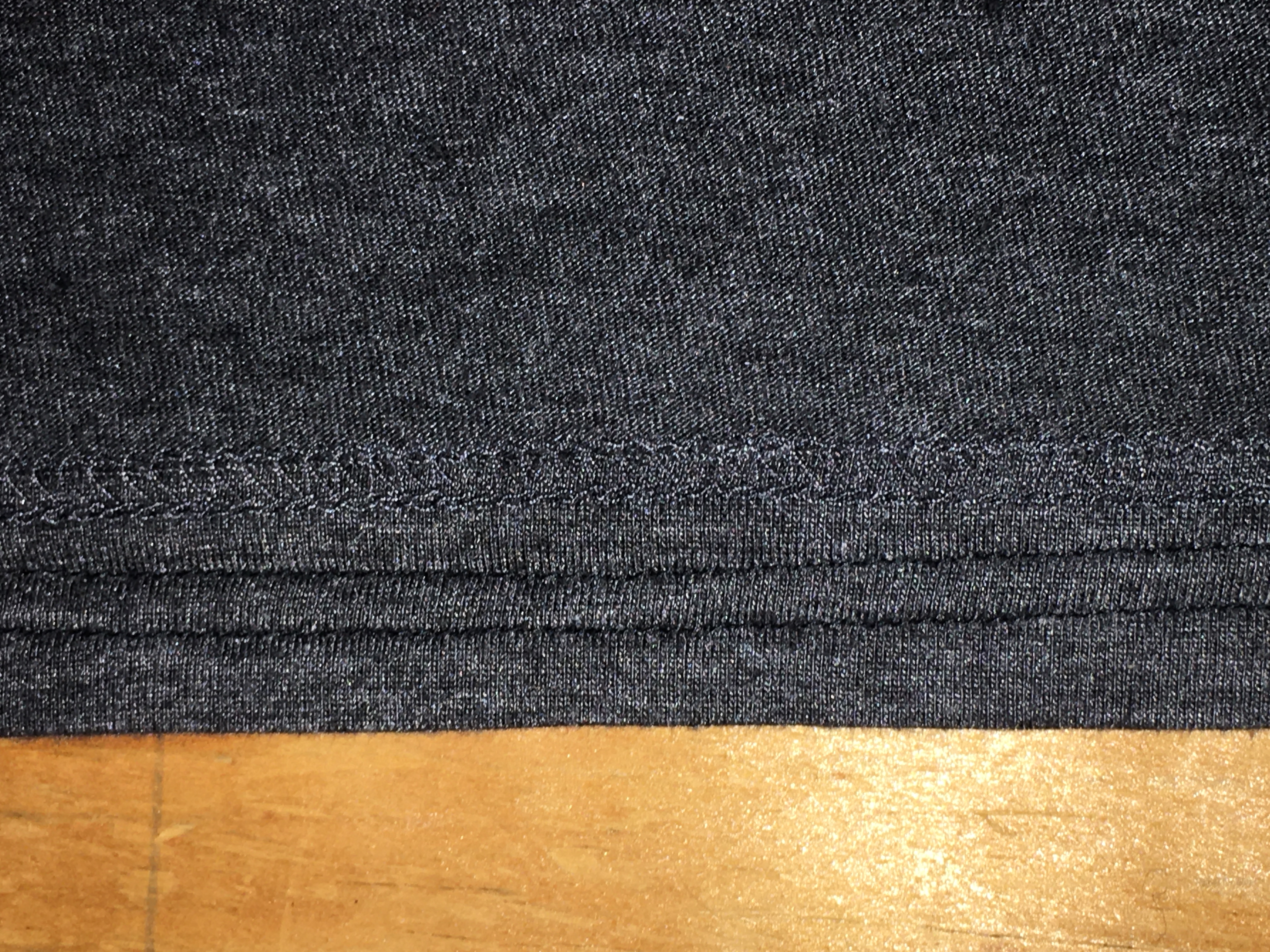
  2. Turn the shirt inside out and sew two seams across the bottom. Two seams adds strength.
  3. Turn it right-side out, and you’ve got a bag.

If you happen to have a tank top that hasn’t been worn for a long time, it’s even easier. No sleeves to trim! Just double-seam the bottom edge and it’s a ready-made bag.

If you have no sewing machine, just cut a fringe and tie knots along the bottom. For a festive look, add beads, or other bits of things.

You can express yourself with the shirts you choose, and have a Uniquely You collection of reusable shopping bags. Or make some to give away each time you shop.

One other homemade  bag suggested in the book is one crocheted out of plarn. I had never heard of plarn, but it’s a thing. Google it and you’ll find all kinds of video instructions on how to make a ball of “plarn” (that is, plastic yarn) from shopping bags. There are detailed instructions on the crocheting process, and even patterns for other items, like bedrolls for homeless people. (Really!) Talk about re-using something. A bedroll would take lots of bags from landfills already overflowing with once-used plastic stuff, or re-purpose hundreds that otherwise might blow into the trees in your hometown or the pond in your park, and might even provide a bit of comfort for those with precious little of that commodity.

My experimental plarn bag, still light-weight, but with the strength of 50 single-use bags:

Show and tell reusable homemade bags at the screening of The Story of Plastic:

Zero Plastic, Step One: Carry (and use!) reusable shopping bags.

Plastics and Me

Trash in the forest

Sometimes I am so overwhelmed by a glut of information on a topic, the immensity of a problem or a challenge, that I quite literally don’t know where to begin. Plastic pollution is such a topic. Plastics and me have had a decades-long feud. Though I grew up in the early days of the plastic boom, love for the natural world and wilderness led me to associate plastics with everything cheap and shoddy. The preponderance of the growing available products—from cheap tourist souvenirs to Tupperware (remember the parties??!)—helped me associate the word “plastic” with things that lacked authenticity: cheap imitations, counterfeit, false, fake, superficial, synthetic, and MAN-MADE.

As I moved from my parents’ home, my older sister gave me a set of dinnerware; four each of plates, bowls, and cups—a generous gift to start my adult life. But I was horrified because they were PLASTIC! I’m sure she felt conflicted and confused by my reaction, but the plastic set was returned to the store and traded for a couple pieces of cast iron cookware. (I later settled on a set of ceramic dinnerware.)

Shortly after that, I discovered No More Plastic Jesus by Adam Daniel Finnerty that became a guide book for life. Once again here, plastic meant fake, artificial, and superficial. It has been my lifelong passion to seek genuine things. Some of those are indeed crafted by human hands (take pianos, for example, or the handcrafted furniture in my office made in my father’s woodworking shop), but they use what Nature provides, not what chemists can create by manipulating petroleum into indestructible other stuff.

Having studied a science discipline in my undergraduate curriculum, (geology, a “natural science”) I get testy when people sneer at science and scientists in general. I recall a class I took in preparation for a secondary teaching certificate in the physical sciences. It was called “Science, Technology, and Society” and was a forum to examine ethical questions behind scientific exploitation of Nature’s gifts. Just because we CAN do something, doesn’t mean we SHOULD.

Chemists are scientists too. Just because we know how to re-form the molecules in petroleum and natural gas into long, indestructible polymers, doesn’t necessarily mean we should. Discarded plastic products pile up in waste streams and emit the toxins added somewhat secretly by petro-chemical companies to enhance product qualities, clog waterways and swirl in our oceans. It’s becoming clear that even though we humans discovered how to make cheap single-use plastic products, we should not be inundating our planet with the stuff.

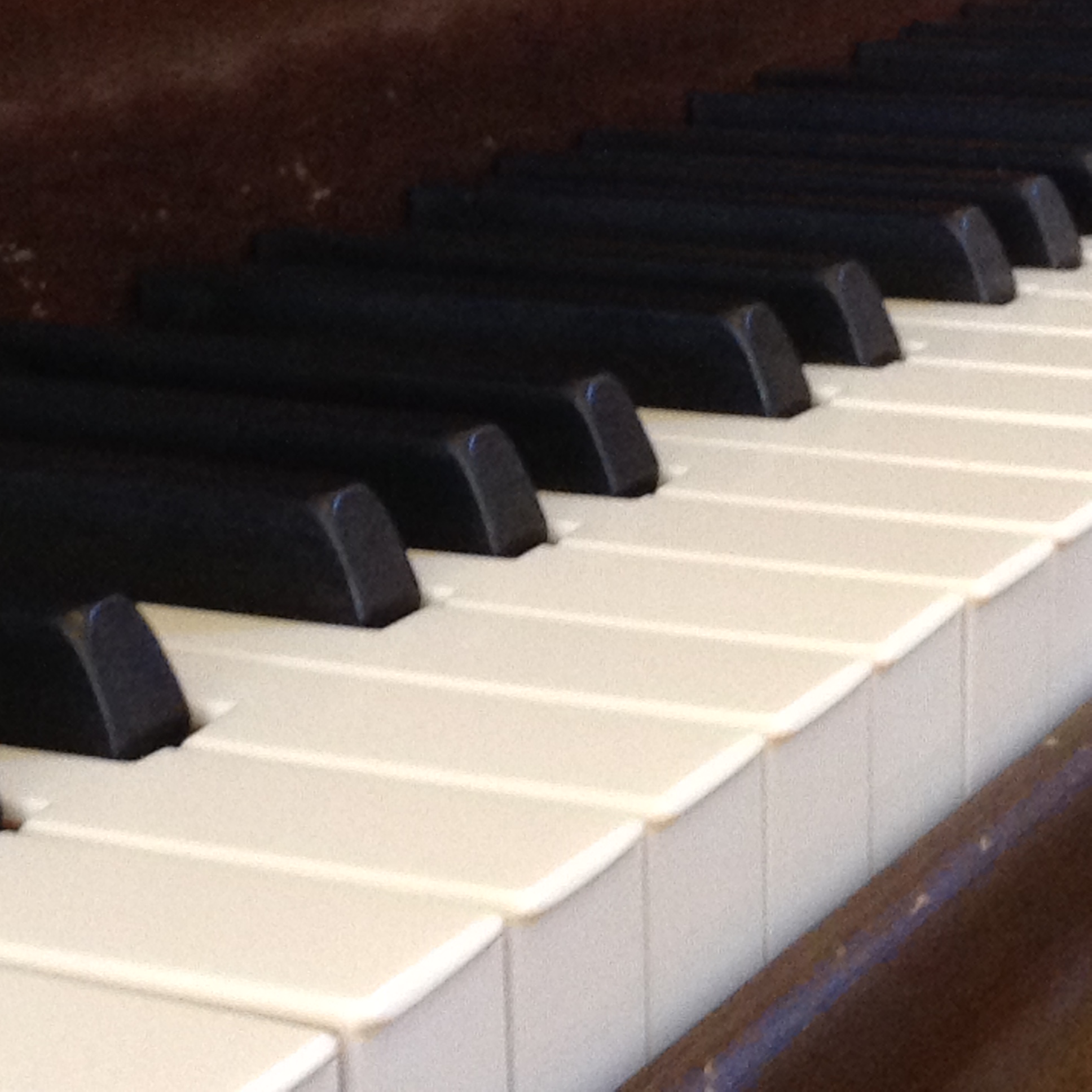
Environmental writers around the world note that some plastic products are very beneficial. In the medical field, plastics save lives. In transportation, they help make our vehicles more fuel efficient. On a piano keyboard, plastic saves the lives of elephants whose tusks formerly were used to cover wooden keysticks.

Piano keys

Most of the beneficial plastics are meant to endure for decades. Those we encounter on grocery shopping trips are meant to be thrown away. Single-use plastic products, packaging, and shopping bags have become a huge global problem. And that’s got lots of people riled up, justifiably.

This month of July has become the month of plastic trash awareness in my house. YES! Magazine issued an invitation to join their team for a “Plastic Free Ecochallenge” through July. On the website are hundreds of ideas to cut or eliminate personal plastic consumption in areas of food, personal care, life style, pets, family, and community action. There are campaigns against single-use plastic around the globe. Break Free From Plastic lists campaigns by the groups Beyond Plastic, City to Sea, GAIA, Greenpeace, People Over Petro, Plastic Free Seas, Plastic Pollution Coalition, Plastic Soup Foundation, Recycling Network, Friends of the Earth, Surfrider Foundation, and others. GAIA offers a “Zero Waste World Masterplan.”

I’ve been reading Gone Tomorrow: The Hidden Life of Garbage by Heather Rogers, Turning the Tide on Plastic by Lucy Siegle, and Plastic Free: How I Kicked the Plastic Habit and How You Can Too by Beth Terry. In addition, there are numerous blogs addressing plastic pollution with ideas for each of us to make a statement–and a difference–in various ways.

The pictures painted by each of these authors show a global emergency. If we don’t curtail the production and use of single-use disposable plastics before the plastics industry is a century old, there will be more plastic items in the Earth’s oceans than ocean life. No form of animal life –not even humans—will be free from synthetic polymers in the organs of their bodies. (Discover Magazine, “Microplastics are Everywhere, But Their Health Effects on Humans are Still Unclear”, Jillian Mock, January 11, 2020)

Plastic pollution is a global crisis and it’s driven by the petro-chemical industry. In my hometown, every year a group of volunteers cleans our beautiful park of plastic trash as an April, Earth Day project. How disheartening to see the confounded stuff return before May 1! Some trash blows in, other items are carelessly littered, still more is “harvested” from appropriate trash receptacles by roaming nocturnal wildlife.

Our homes are filled with the indestructible polymers. With daunting names like low density polyethylene, (LDPE), high density polyethylene (HDPE), polypropylene (PP), polyvinyl chloride (PVC), polystyrene, (PS), polytetrafluoroethylene (PTFE), polychlorotrifluoroethylene (PCTFE), nylon, or thermoplastic polyurethane (TPU), these “poly-mers” are found in items from children’s toys to floor coverings, to toothbrushes, to water pipes, to cookware and grocery packaging to nearly everything else.

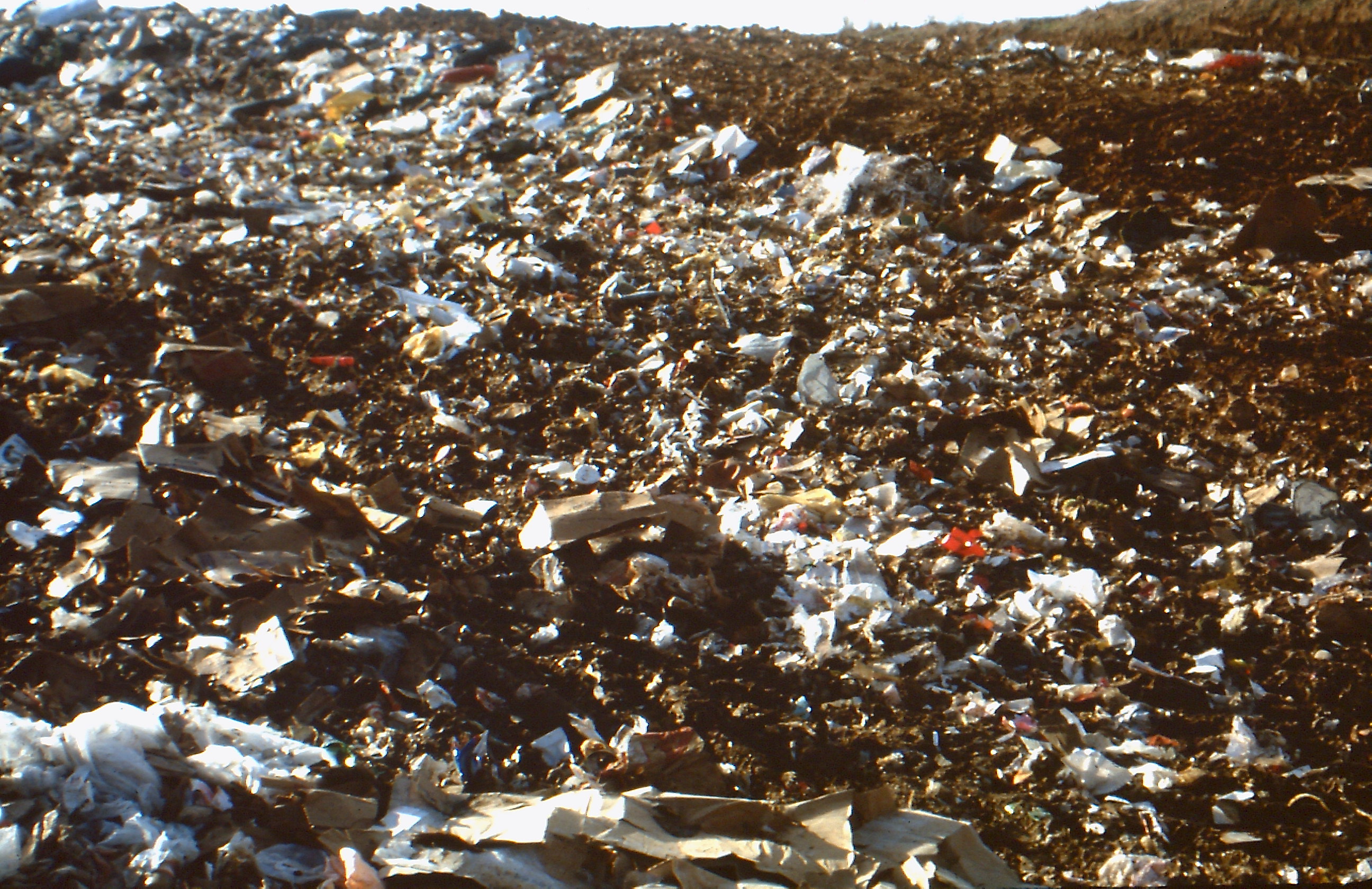
The Story of Stuff organization has produced a documentary, The Story of Plastic. This film takes a sweeping look at the man-made crisis of plastic pollution and the worldwide effect it has on the health of our planet and the people who inhabit it. Spanning three continents, the film illustrates the ongoing catastrophe: fields full of garbage, veritable mountains of trash, rivers and seas clogged with waste, and skies choked with the poisonous emissions from plastic production and processing. With engaging original animation, archival industry footage beginning in the 1930s, and first-person accounts of the unfolding emergency, the film distills a complex problem that is increasingly affecting the well-being of the planet and its residents.

Locally, we’ve been given a chance to view this highly acclaimed film as part of Marquee’s Green Screen summer film series, Saturday July 24, 7:00 pm in the lobby of the theater. Local residents are invited to come to the screening. There is no admission charge. To view the film’s trailer, check https://www.youtube.com/watch?v=37PDwW0c1so. Bring questions and ideas about combatting the local glut of plastic trash. Be sure to RSVP on Marquee’s Facebook event page so organizers can plan accordingly.  For a five-minute animated condensation of the documentary, see https://www.storyofstuff.org/movies/story-of-plastic-animation/

Landfill trash

High Courage: The Great Kansas Blizzard of 1882 – IV

Bushong, Kansas 100 years after Mabel’s story

A pioneer story of Kansas by Mabel Chandler Harris.

Part IV

George Chandler, his son Gene, and the horse Ned went doggedly forward and when the man felt sleepy in spite of himself, he knew he must act. He stopped the horse and slid out of the saddle. He could hardly support himself and clung to the stirrup. The horse dropped his head to the snow and snorted furry icicles from his nostrils. The man pulled the chilled boy into the saddle and carefully wrapped the blanket about his cold feet and legs. He removed the long wool scarf from his own neck and wound it round and round the head and shoulders of his son. He slapped his hands against his chest and stomped up and down until he felt renewed circulation of blood in his veins and his feet did not feel so much like frozen lumps.

When he felt somewhat restored, he gave Ned a slap on the rump and grasped the stirrup firmly. They proceeded on their way. The wind remained bitter and fierce. The cold grew more intense. George thought it must be after midnight. He was sure they were still several miles from home.

He gave himself up to thought. He believed in prayer and he had to have some help right now. He asked God for strength and endurance. He prayed for the son in the saddle and for the precious daughter who had been so faithful during these months when he had been forced to be away from home. As he prayed, he was strengthened. He felt reassured that they would reach home.

Gene seemed to be sleep on the horse. George’s thoughts drifted. He remembered himself as a mere lad in the Army of the Republic. He recalled the joyful day he married Hannah Priscilla Crabtree. He remembered the home life in Missouri and the glowing reports of cheap land in Kansas. These reports had fired both his and his wife’s imagination, so he had purchased their present home from a local land agent whom he had trusted implicitly. They had loaded their belongings in the two big wagons. With the crated chickens fastened underneath the wagon beds, and the boys driving the cows and extra horses, they came west from Kansas City on the great trail.

The Chandlers reached their destination in northern Lyon County, Kansas a week later. No one would ever know his bitter disappointment when he had first seen the treeless, poor upland farm that he had bargained for. He had not known there was so much pasture in all the world. He had dreamed of a farm in the bend of a creek, but the creek turned out to be a gully that passed through his land as a raging torrent after a big rain, a dry slough the remainder of the time.

The horse dragged on. George staggered as he clung to Ned. His arms ached. With thoughts of the family that waited for him, he poured his last ounce of determination into his efforts. He resolutely lifted one foot after the other, glad that Gene was quiet.

The night was clearing enough that he recognized the little cemetery in the whiteness. Ned must have come this far west to avoid some very deep snow drifts. The horse was doing fine to know so much even it if did make the way a mile longer.

Thoughts continued like a rushing stream that would not be stopped. The Chandlers had worked at making a home on that upland claim. And then—oh dear God—there had been Delphia, the blue baby. Disconnected scraps of memories filled his laboring mind. “Dust to dust. Ashes to ashes.” Preachers always said those words in burial services.

With cold misgivings he asked himself, “Is there more than that in life?” Hannah was taken when he had needed her so badly. Was she better off than he this terrible night? The harrowing experience of moving little Delphia’s body from the corner to the place at the head of her mother haunted him. It was noon on a warm May day when the little disinterred coffin rested on the green grass. His helpers stood around while he obeyed an impulse to open the lid to peek at his darling child again. In the first instant as they all looked the baby form was there in its original angelic beauty. With the impact of warm air, the little form crumbled into a tiny mound of ashes.

Shuddering, George forced his mind back to his present surroundings. “I must be awfully cold to let myself think in this way,” he thought. “I will not doubt. The word says the spirit shall return to God who gave it. God help me,” he prayed, “to be able to say, even tonight, The Lord hath given and the Lord hath taken away.” Aloud he said, “Blessed be the name of the Lord. I know that God giveth His children strength.”

At his voice, Gene mumbled “What did you say, Pa?”

The father answered, “We will get home. We are almost there.”

It was about three o’clock in the morning when the horse stopped at the stone house. The man gave a shout and dragged the nearly frozen boy from the saddle. The door flew open and Henry, followed by the tall neighbor boy, rushed out and half carried them into light and warmth. Charlie, the lame boy, limped away with old Ned, and while the people in the house worked over the man and the boy, restoring them with a tub of snow, Charlie fed and rubbed the animal that had brought his father and brother home safely home.

When only partially recovered from his night’s experience, the man whose sandy hair had turned white during the last twelve hours, turned to the bedside of his sick daughter.

As he stroked her hair, she spoke her last words, “I knew you would come, Pa.”

The father, with spasms of pain crossing and re-crossing his fine face, held the hand that so confidently had been placed in his. He realized his efforts to save this beloved daughter had been in vain.

As dawn broke over the windswept hillside, Etta Viola Chandler died. George gathered as many of his children as he could clasp into his arms. They clung to him or to each other as he bowed his head in submission and whispered so all could hear, “Thy will be done.”

That was the morning of January 19, 1882. The place was a quarter of a mile south of the original Santa Fe Trail that wended its way across northern Lyon County, Kansas. The Old Santa Fe Trail was the way thousands of people followed west in the 1800s. With their heads, hearts, and hands they literally created a democracy the likes of which is not found anywhere else on our earth.

Because of the bitter cold, Etta Viola Chandler, seventeen-and-a-half years of age, could not be buried in the little Bushong Cemetery beside her mother until January 24, 1882.

The End

Notes about Mabel Chandler Harris, the author of this historical narrative, and the setting of the story.

Mabel was born to George Chandler and his second wife, Carrie, in 1890. She was one of eight children of this second marriage. The children in her “High Courage” story were mostly grown when Mabel was a child, but she must have heard this family story and her heart went out to their struggles.

Mabel married Loren Scott Harris, the older brother of my grandfather Charley Harris, on June 7, 1915. They had one child, Florence Ethel, born December 22, 1927, who was a favorite cousin of my father, Wallace. He called Florence by the nickname Pete.

Pete moved to Wichita during her adult years and shared this “High Courage” story with her dear friend and tax accountant. When Wallace moved to Cowley County from Lyon County, he also hired Pete’s accountant friend to handle his taxes, and I followed suit. During one of my annual tax meetings, she presented me with a copy of Mabel’s story about the blizzard of 1882.

Loren and Mabel lived in Dunlap, Kansas, just up the road from the Harris family homestead on the Neosho River where my grandfather and father lived. Mabel had the distinguished honor to become the first woman to be ordained as a minister of the Methodist Church in the entire state of Kansas. She performed wedding ceremonies, and funerals, for many rural folks, including the Harris family.

The settler’s town named in the story, Bushong, Kansas, is today little more than a few neighborly homes on the paved county road due north of Americus, Kansas. To put more perspective on the horseback journey of Gene and his father on Ned the trusty horse, Bushong is a good 20 miles from the heart of Emporia. The stone cabin where Etta waited would have been even further. Gene and Ned traveled more than 40 miles in that storm, 20 of them on the return trip with George, in the dark, facing into the wind. That blows my mind. Teenage Gene indeed showed great courage, as well as a deep love for his sister and the rest of the family.