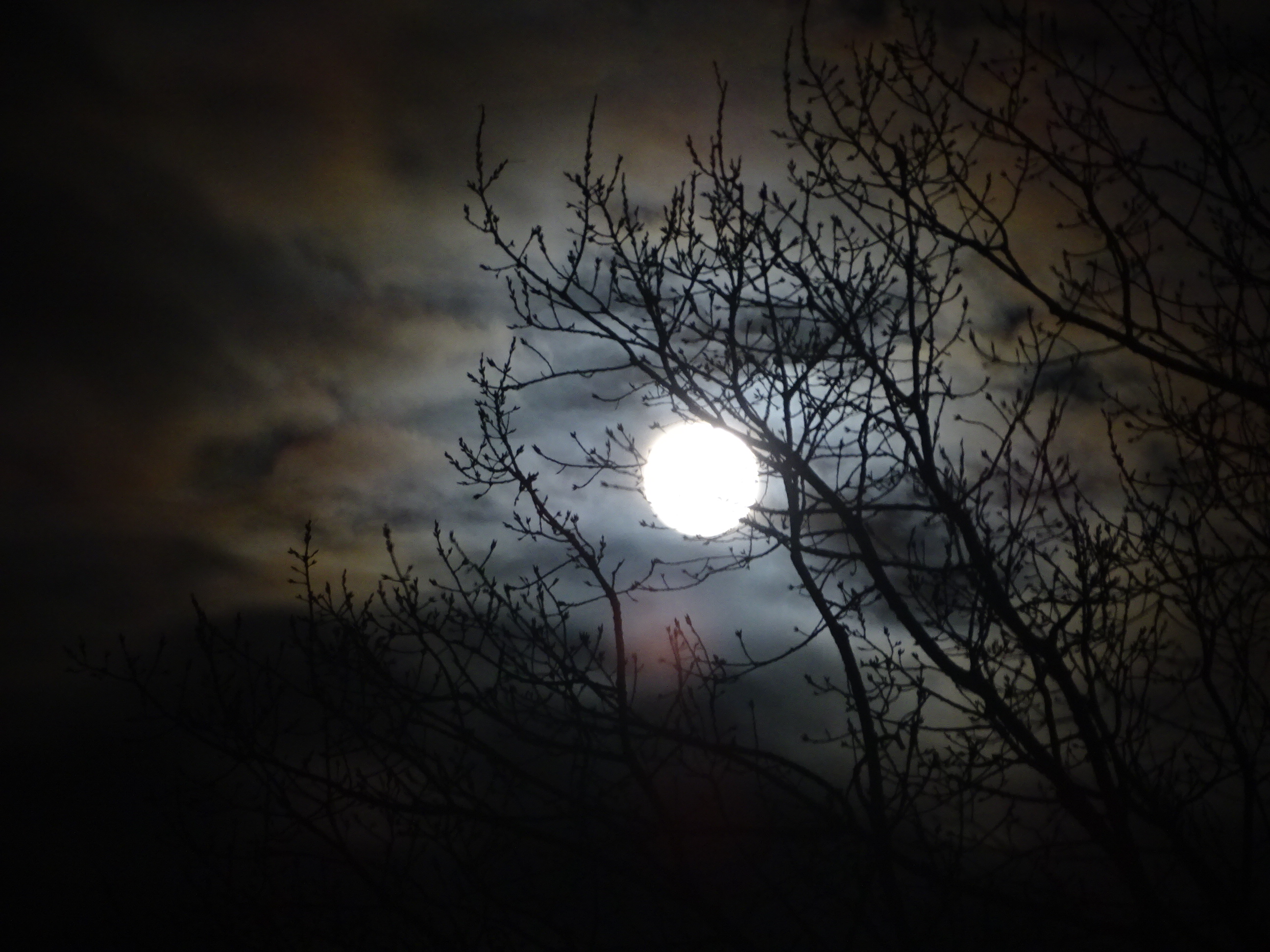
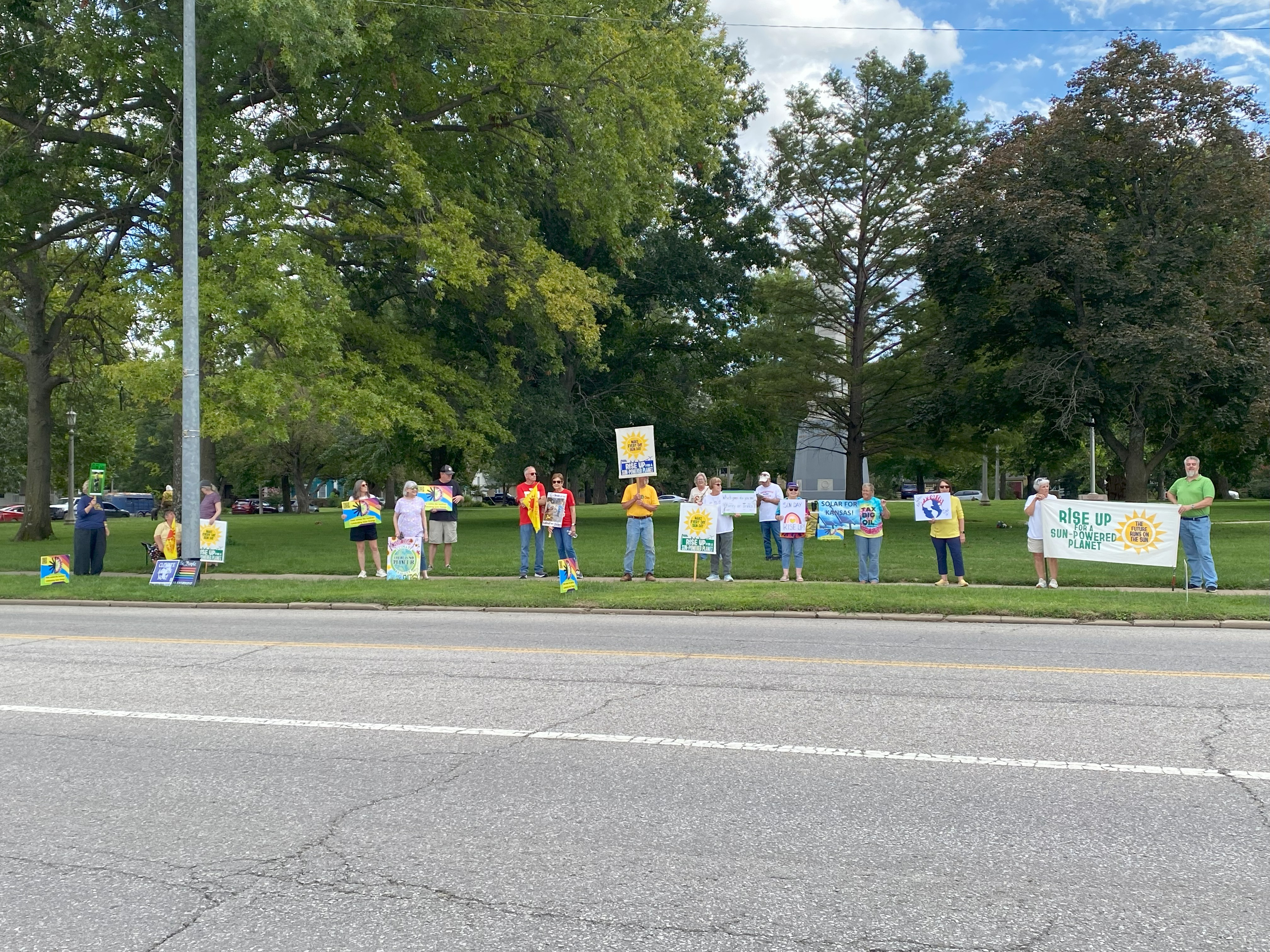
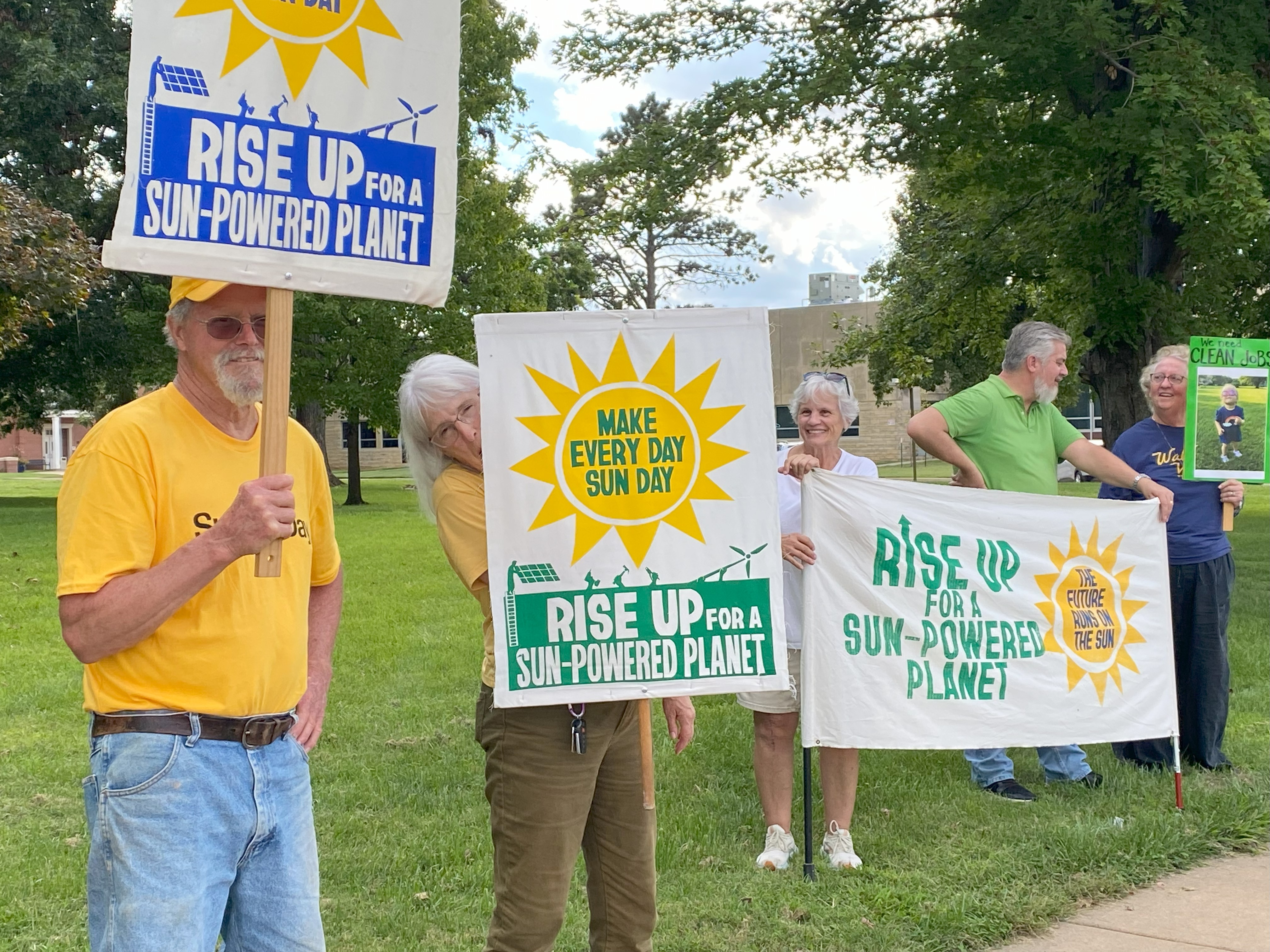
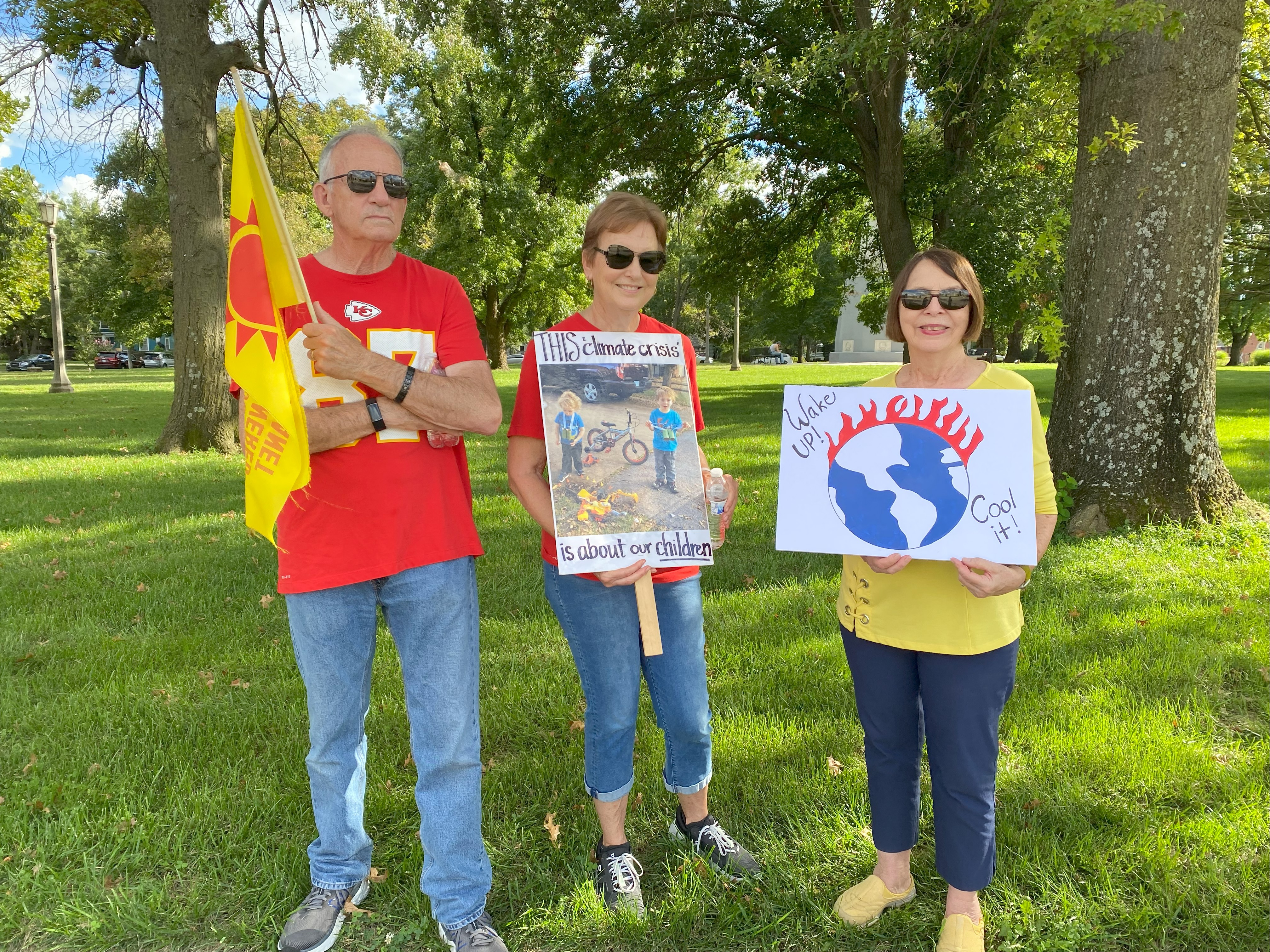
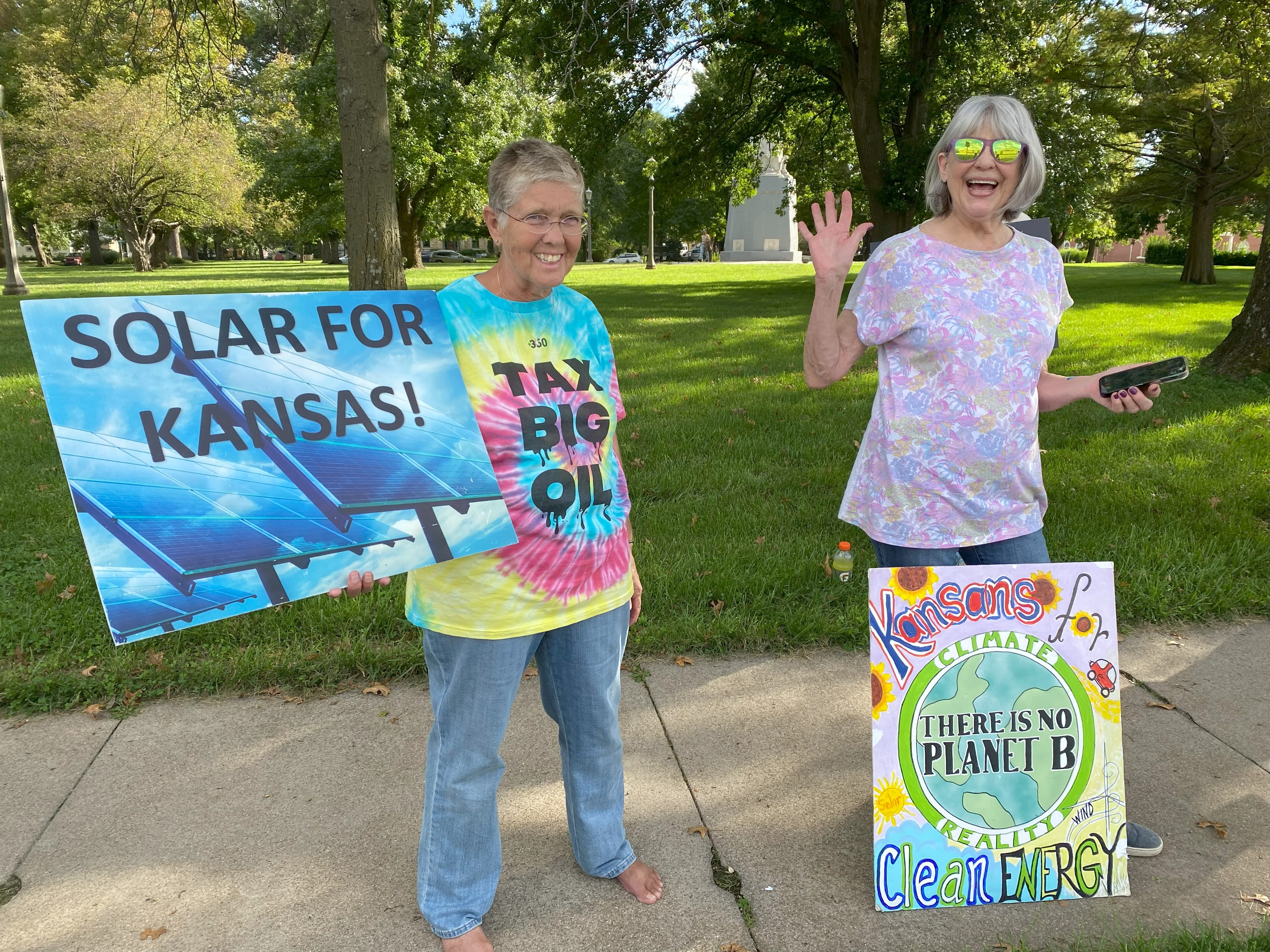
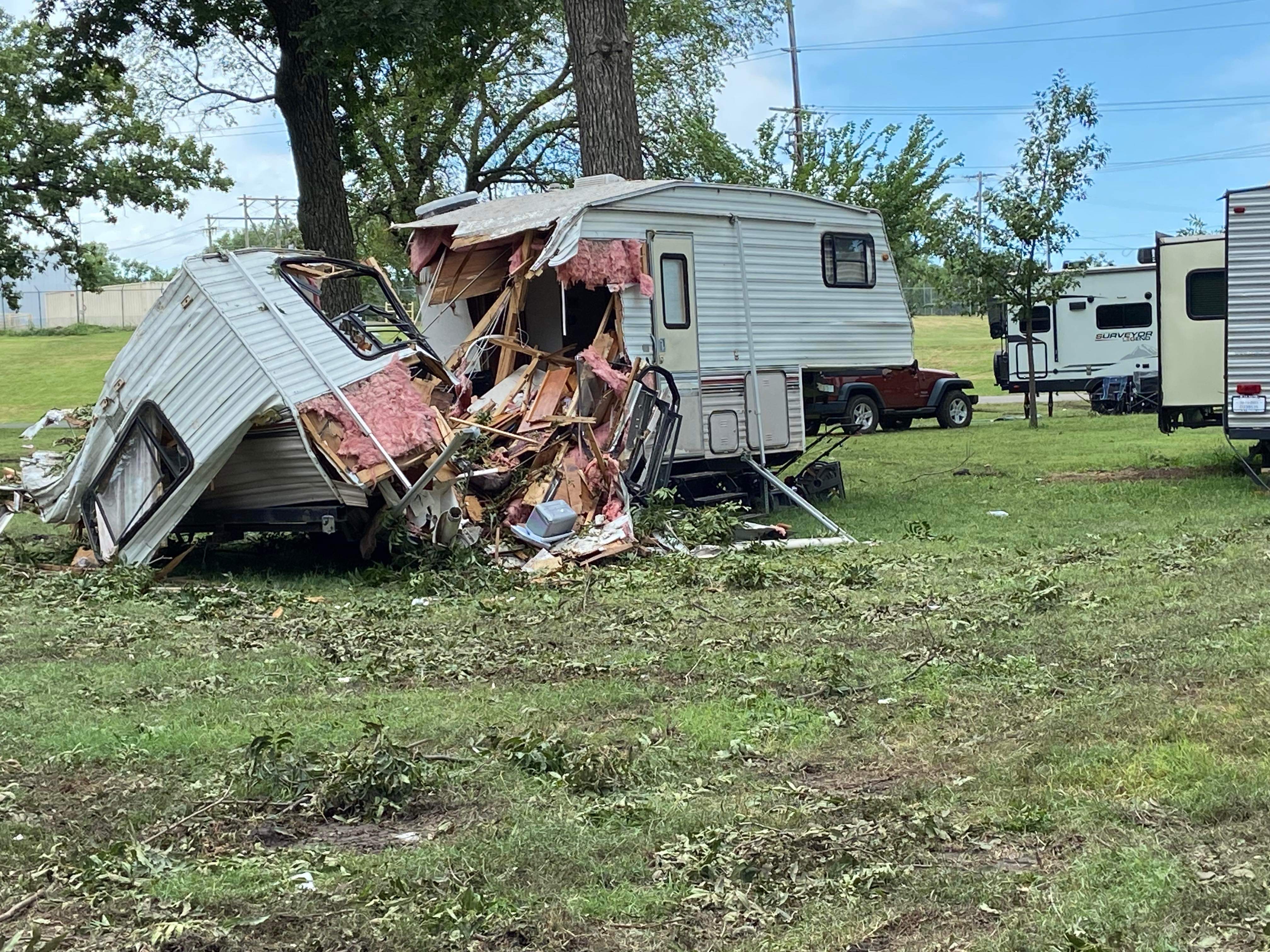
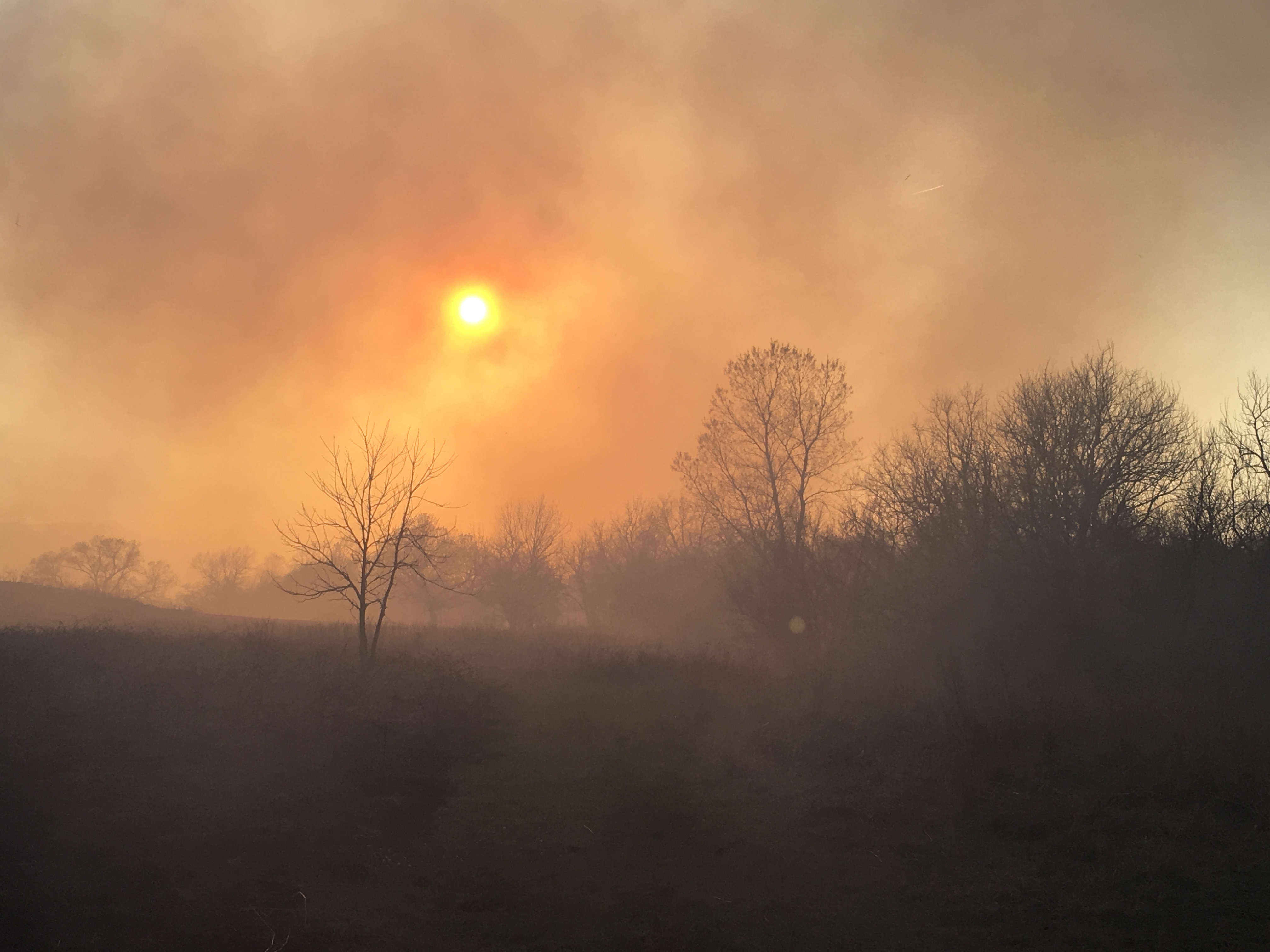
The Sun Day 2025 Experience in Cowley County, Kansas

Here Comes the Sun-Day!

For over 50 years,  Winfield, Kansas has been home to the Walnut Valley Festival on the third weekend in September. That made planning a Sun Day 2025 event here challenging.  If we were to correlate with the national effort to raise awareness and celebrate the explosion of solar energy around the world, we had to get creative. Fortunately, Cowley County is full of creative people.

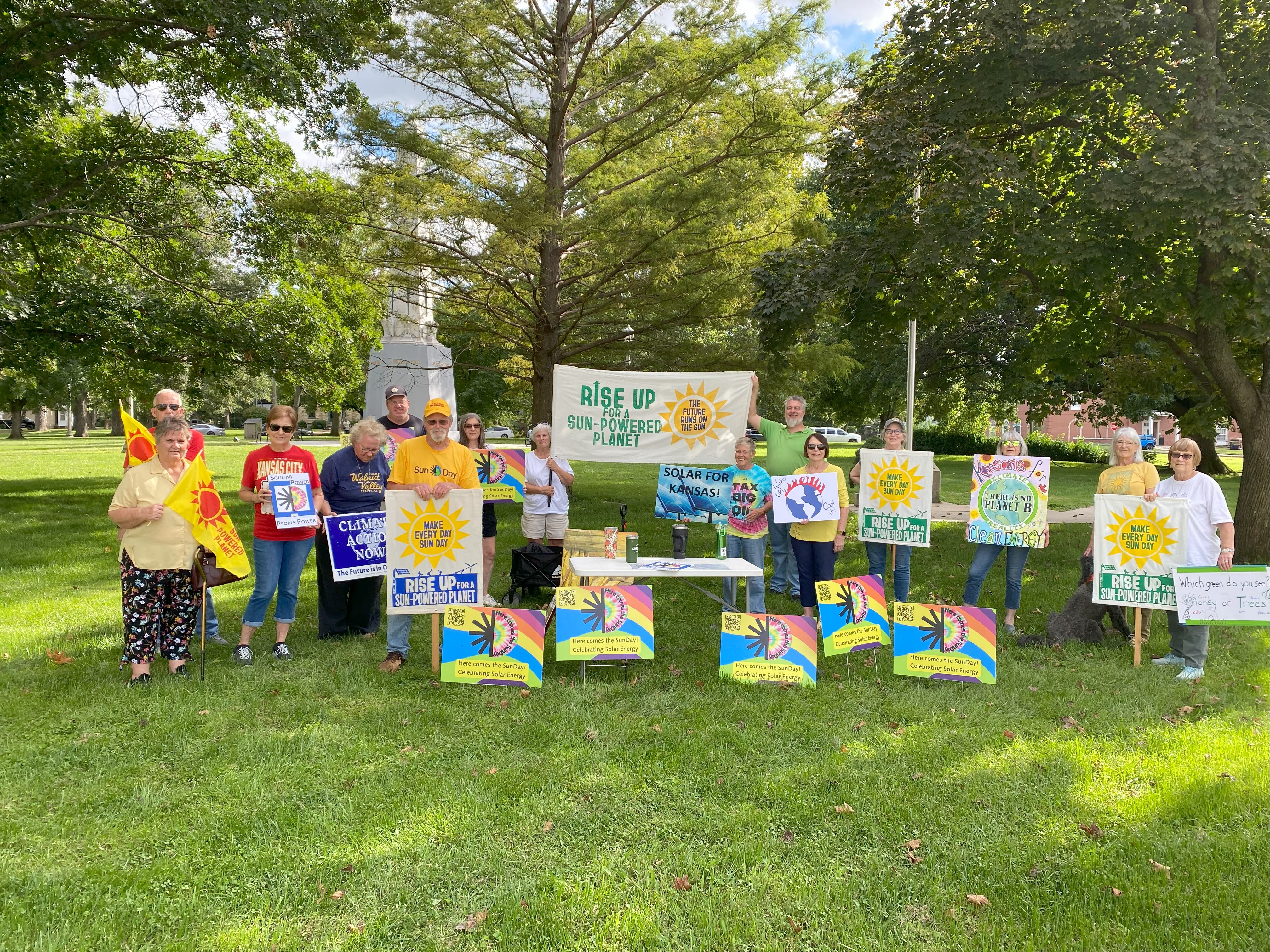
We decided to feature a variety of events preceding that big day.  And thus our “Here Comes the Sun-Day” project was born. Now that it’s over, enjoy a photo tour of the local events for Sun Day 2025.

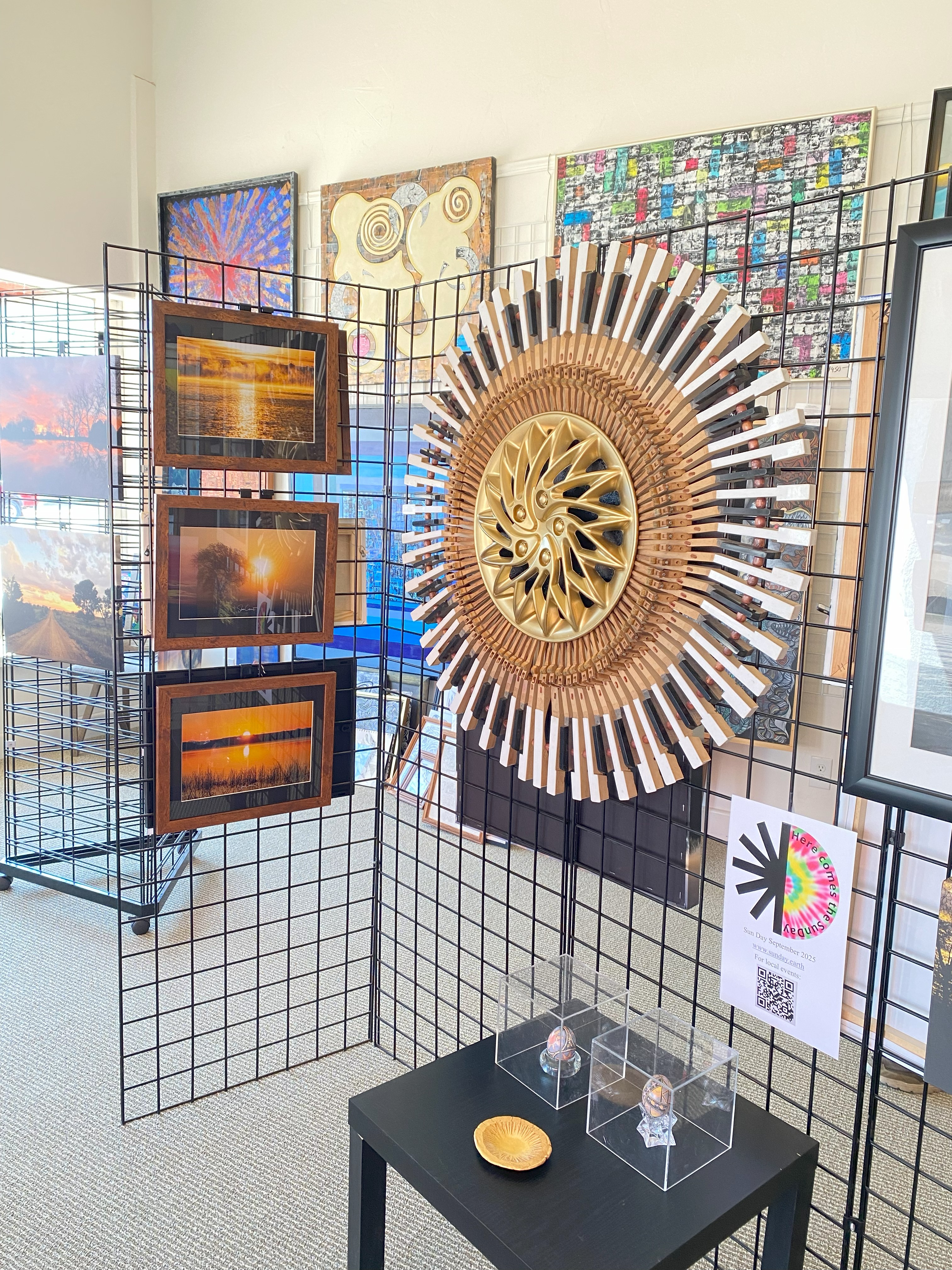
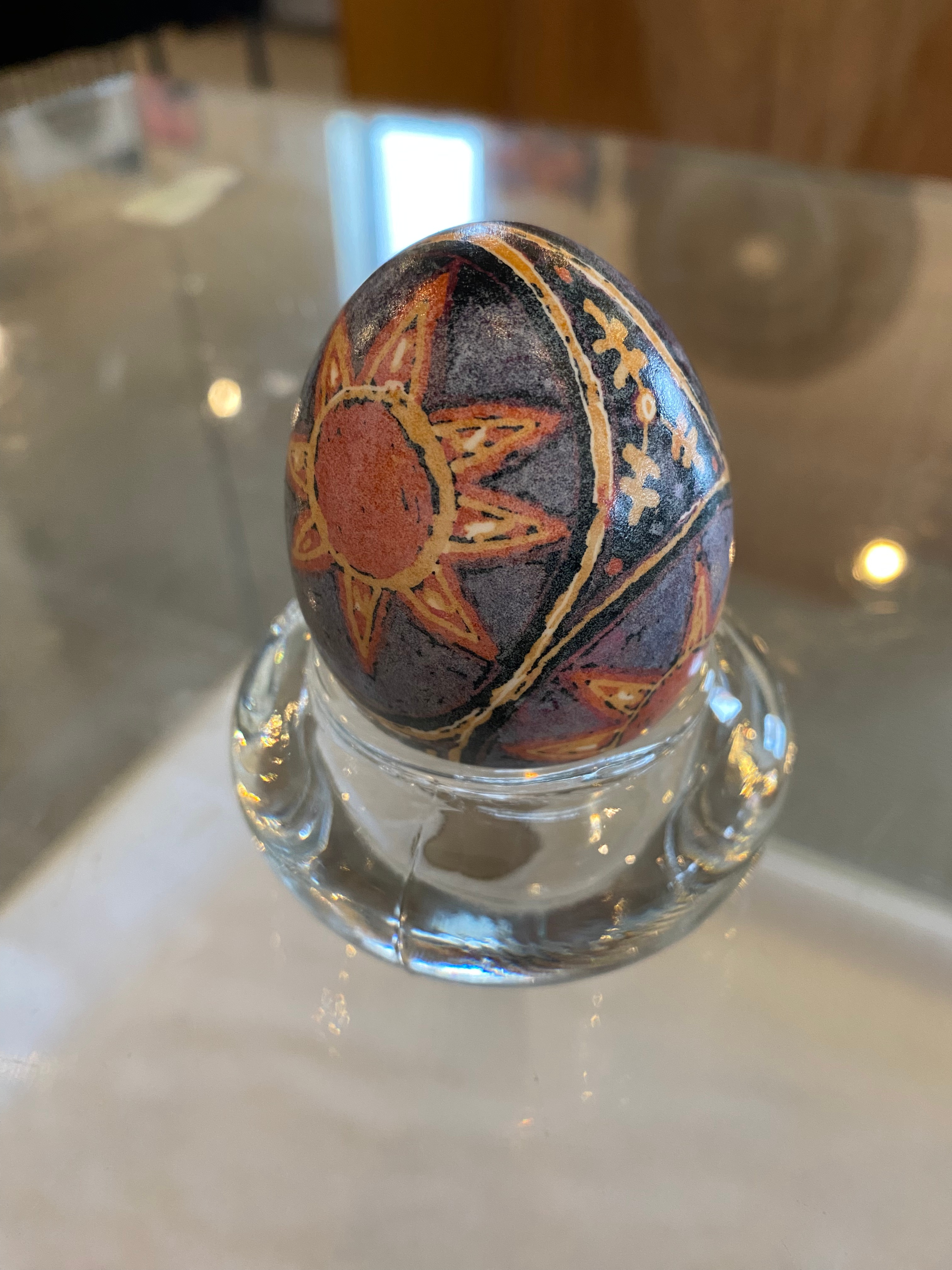
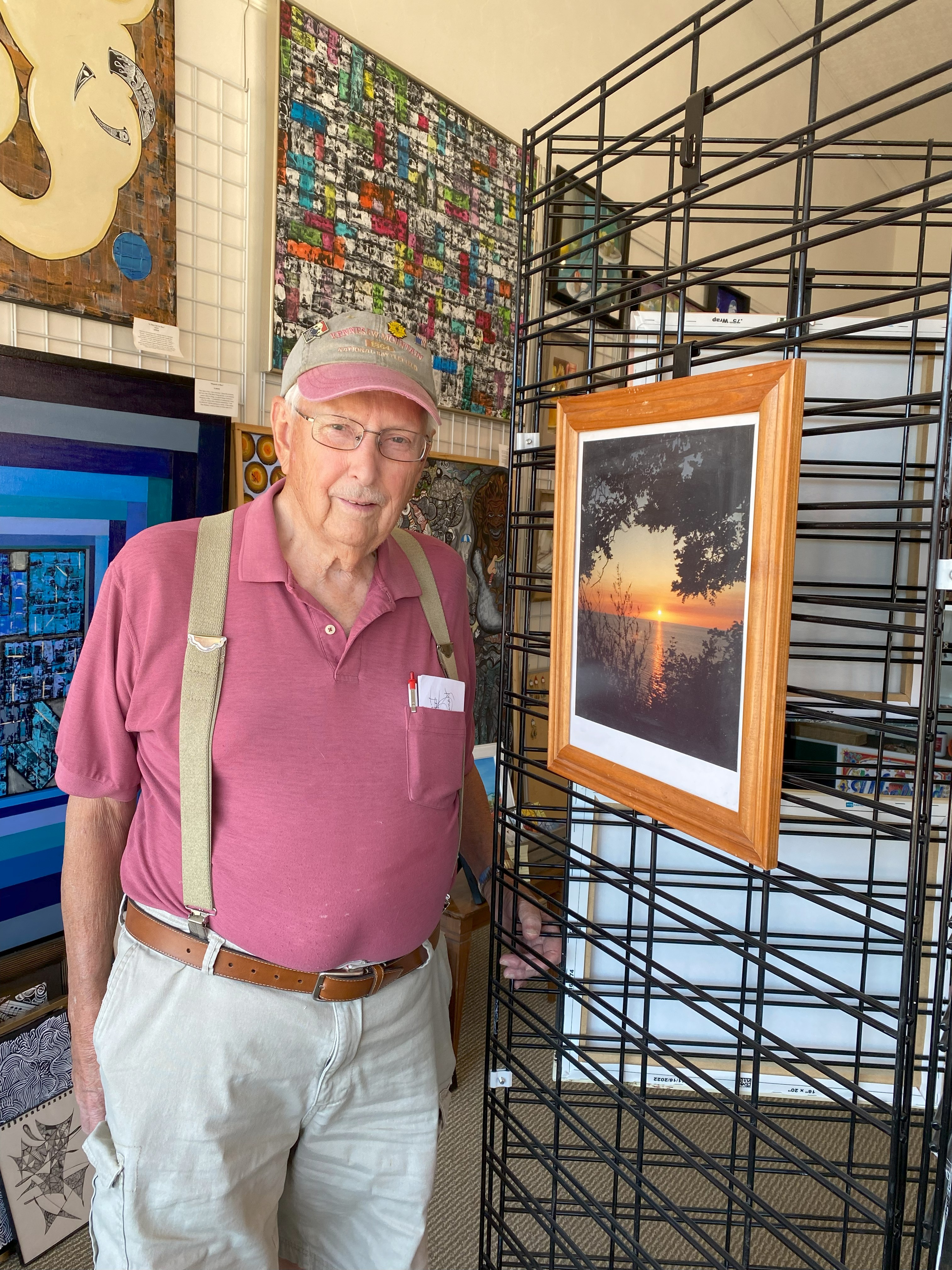
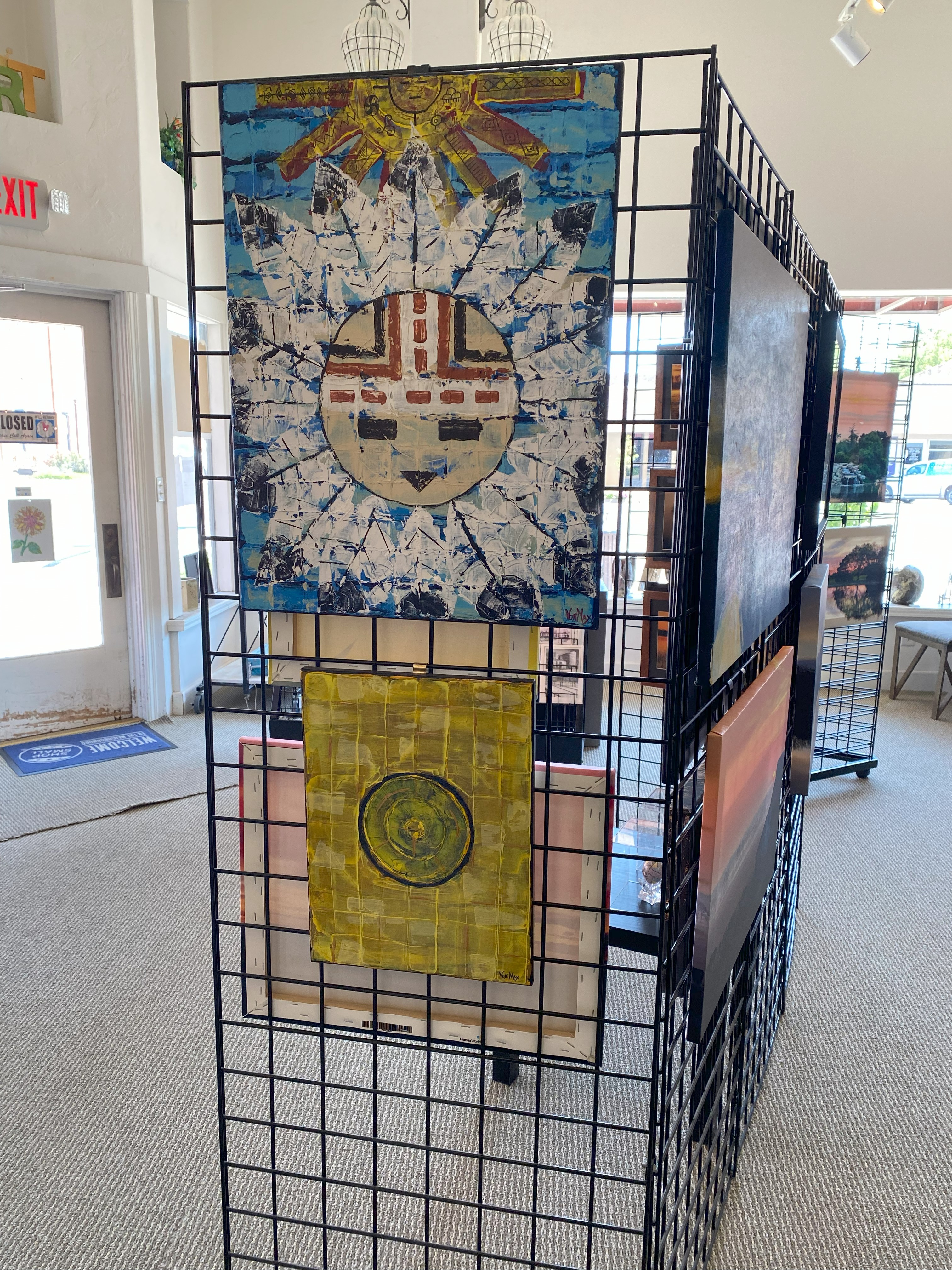
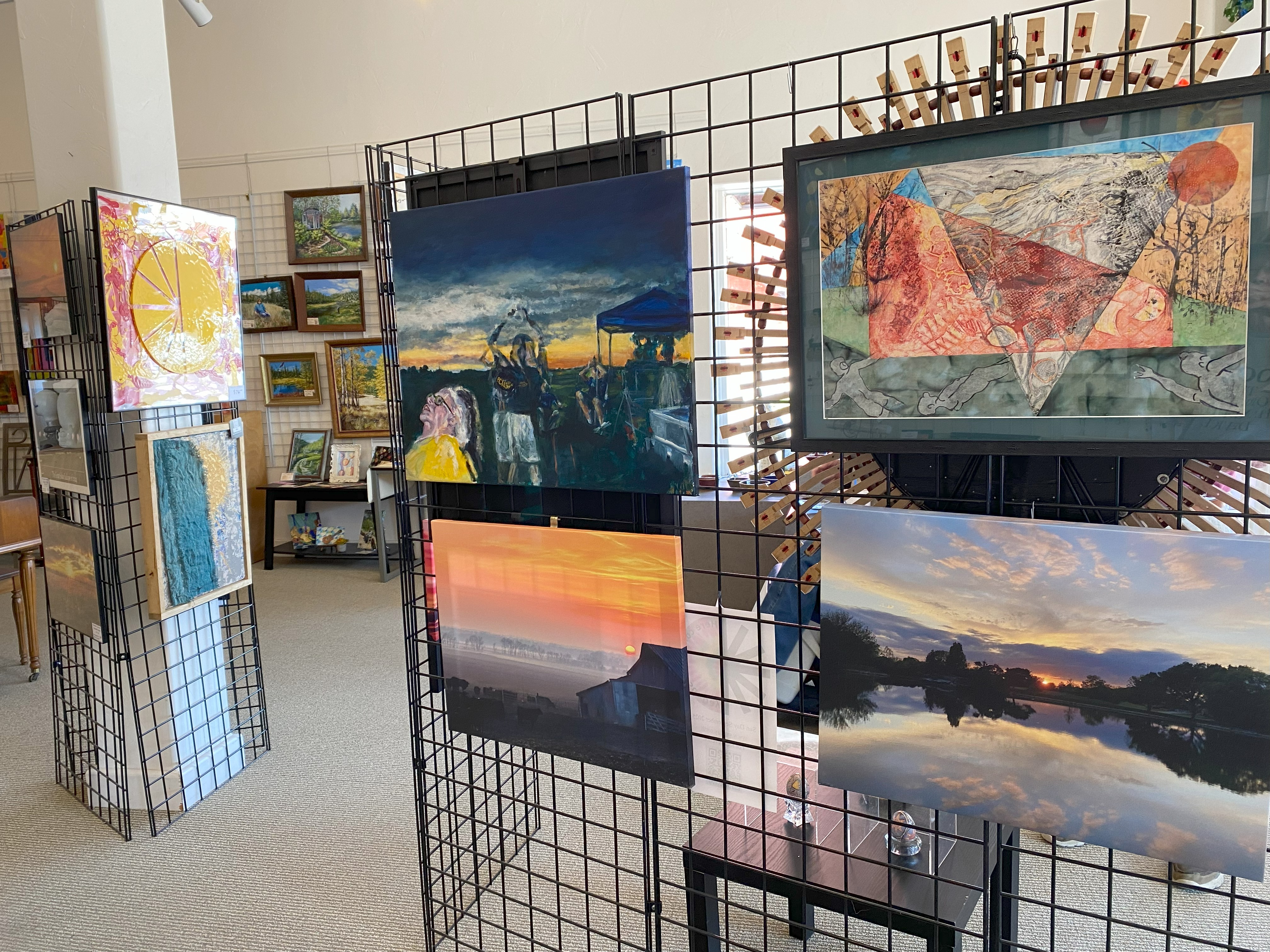
Solar Art Exhibit Featured at Gallery 1001 through September

The Winfield Public Library and the Arkansas City Public Library featured solar books and STEM projects through the month.

Local Coffeeshops and Restaurants offered sun-related specialties.

College Hill Coffee featured a “golden sun turmeric latte” and Sunshine sandwich special. They also provided media for customers to create their own “Sun Day Art”.

Downtown, the Oasis designed a special “Sunset Refresher” drink.

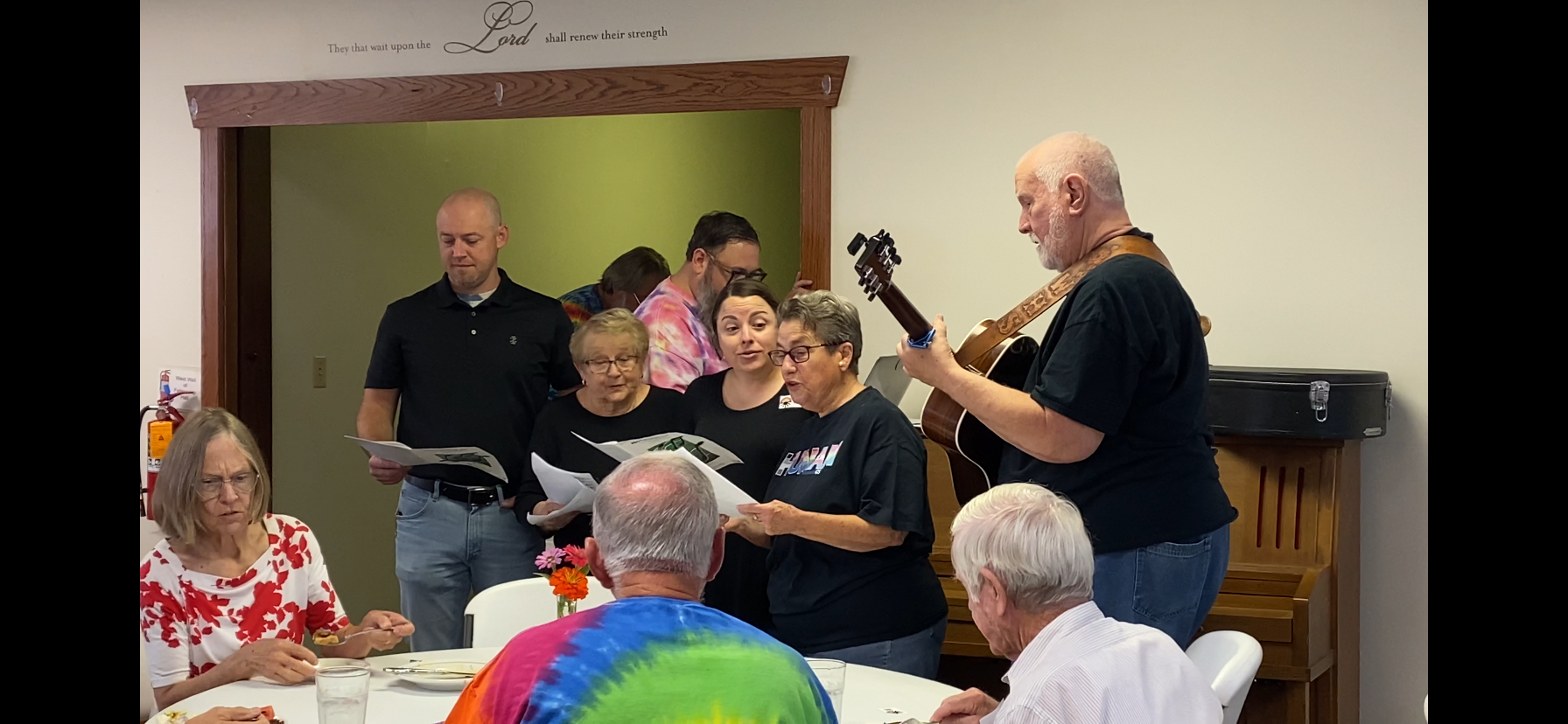
Grace United Methodist Church got into the Sun-Spirit after installing a large solar array on their education building a couple years ago. They kicked off the big Sun Week with special music from campers at the Walnut Valley Festival, followed by a covered dish dinner–with a few sunny delights!

A sweet “sunflower” and sunflower seed pie.

And a local quartet shared an arrangement of  “Here Comes the Sun!”

Meanwhile, out at the Festival, campers and music lovers could show their solar support with specially designed stickers, and enter a drawing for solar camping equipment.

The Winfield Arts and Humanities Council teamed up with the Walnut Valley Festival to offer children a chance to create t-shirts, printed by the sun!

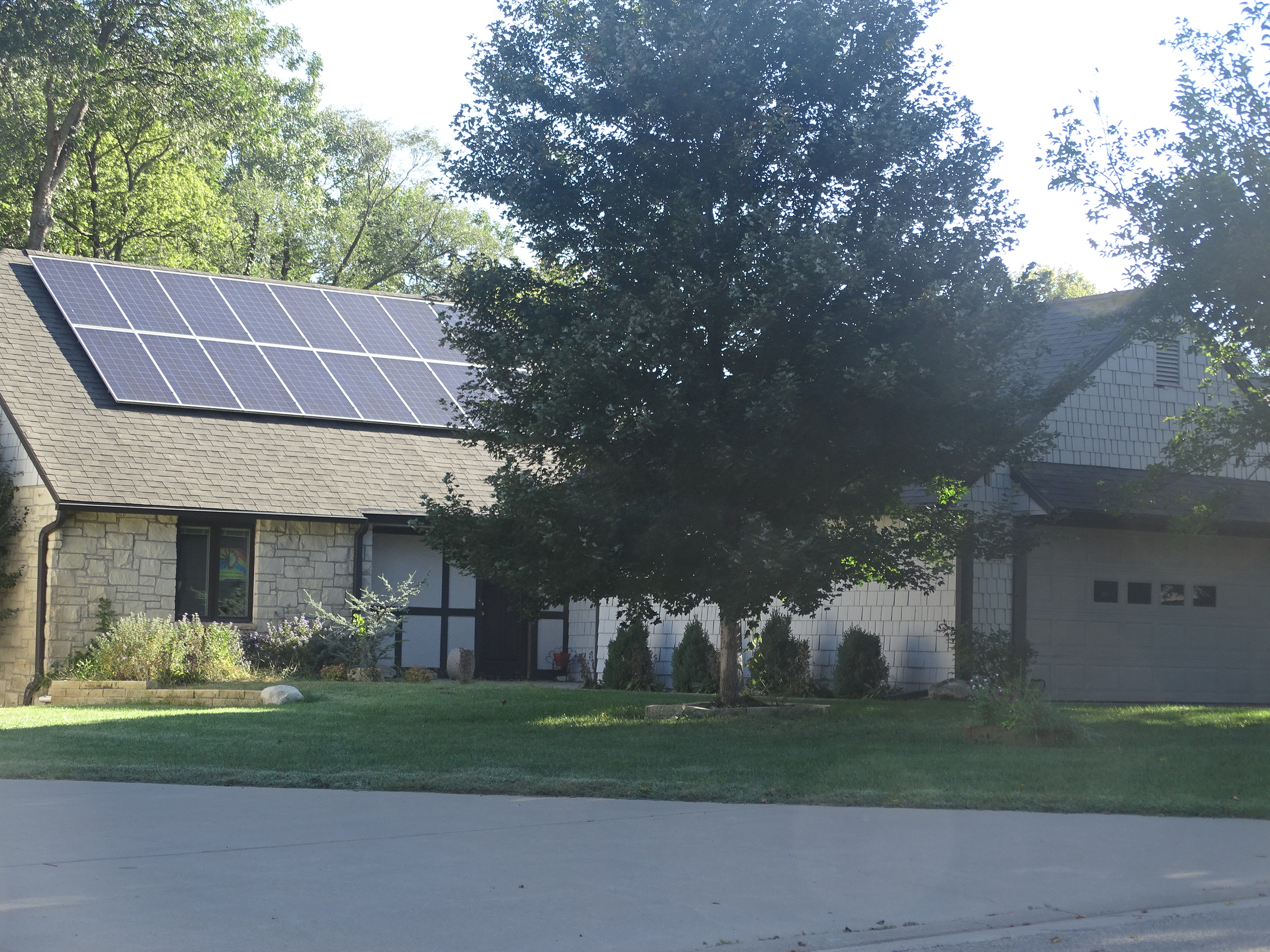
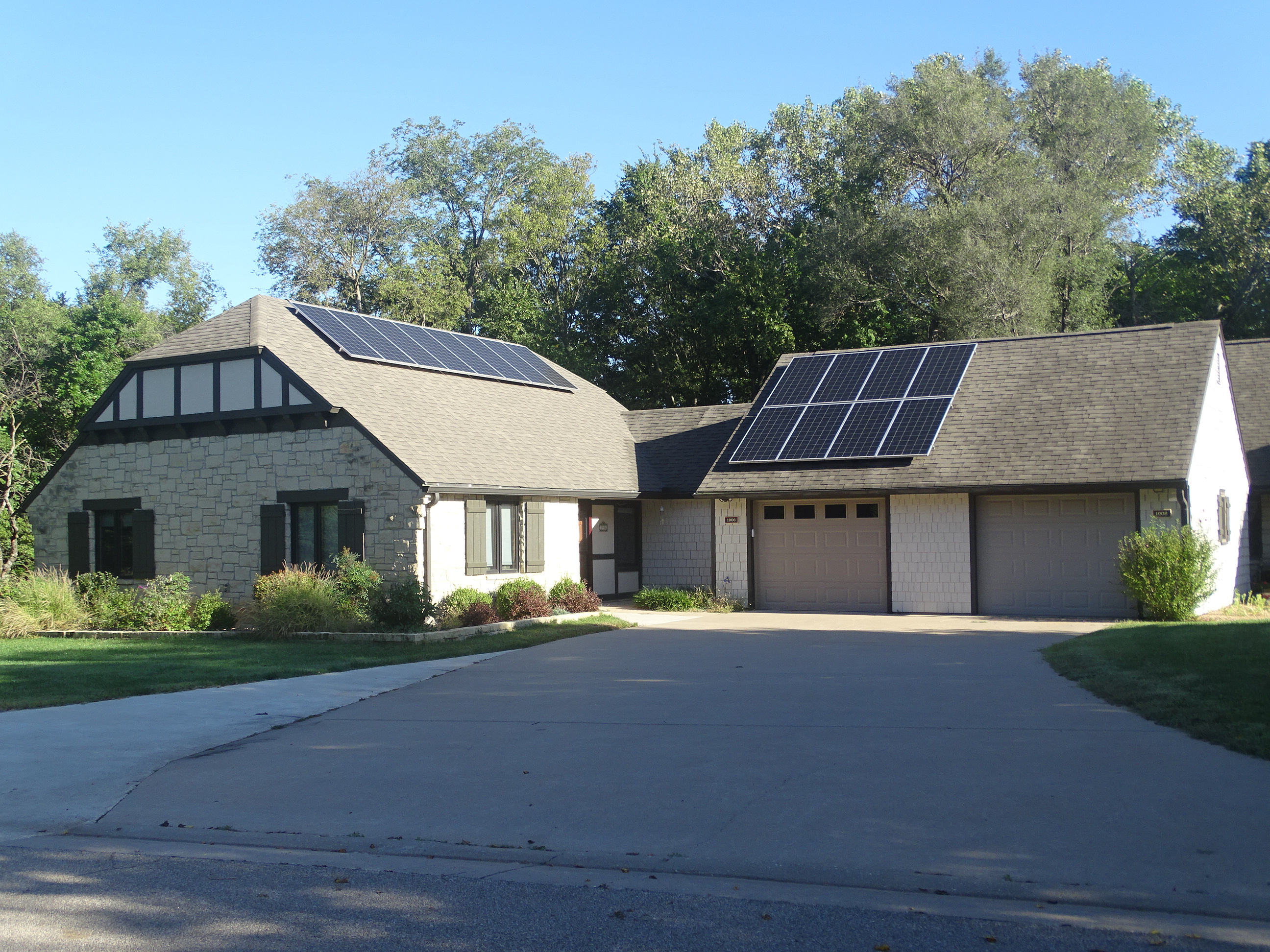
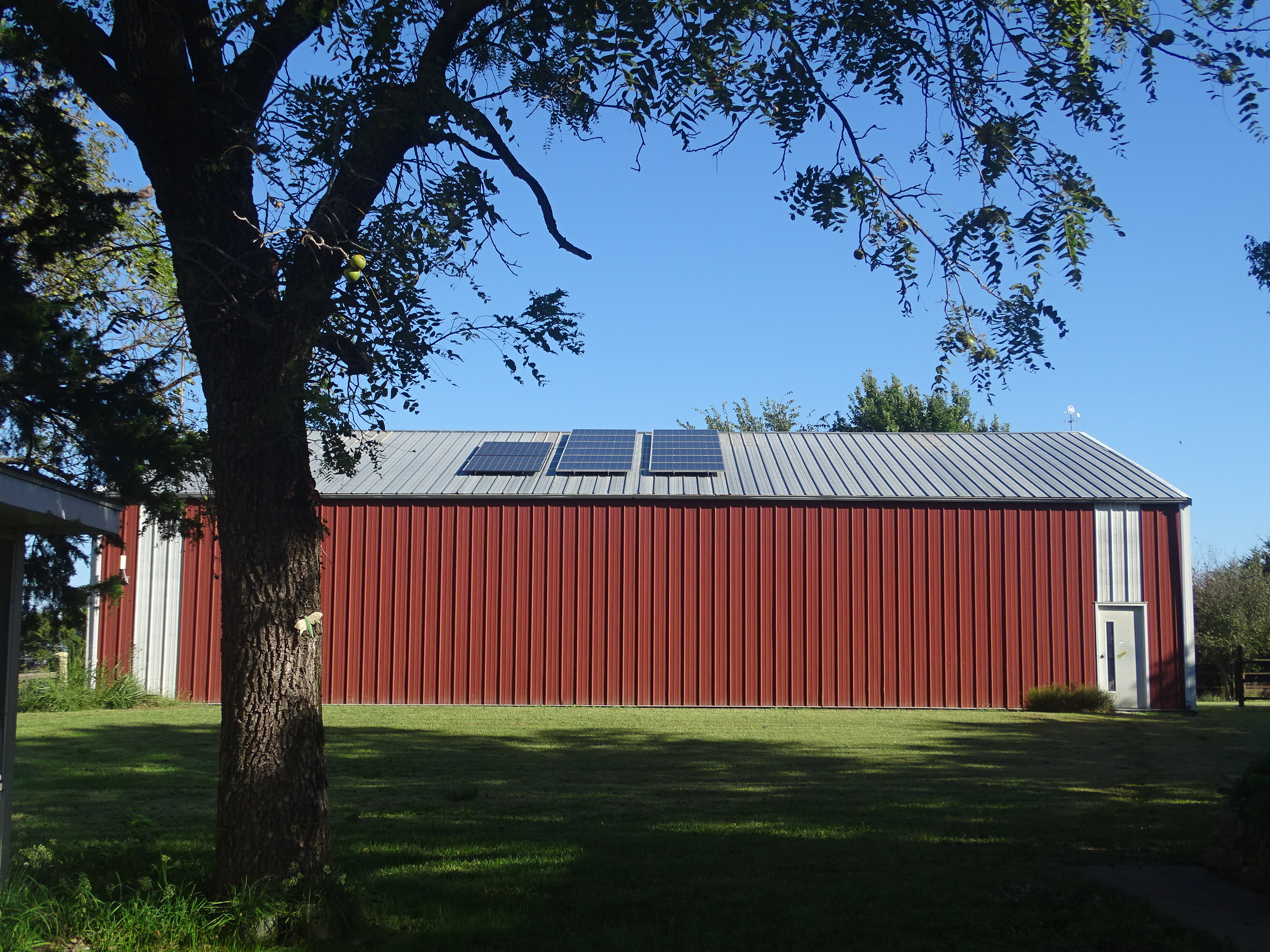
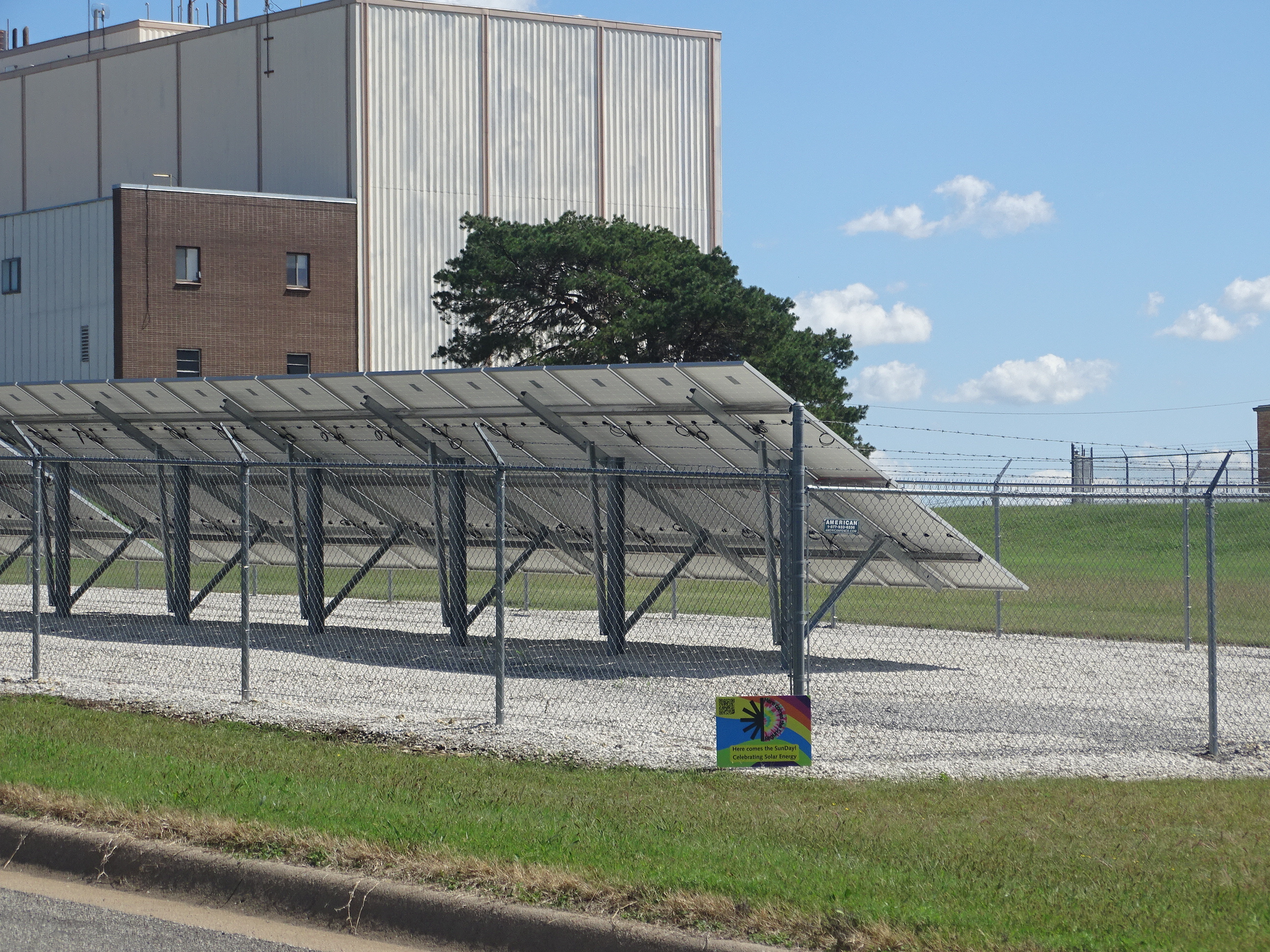
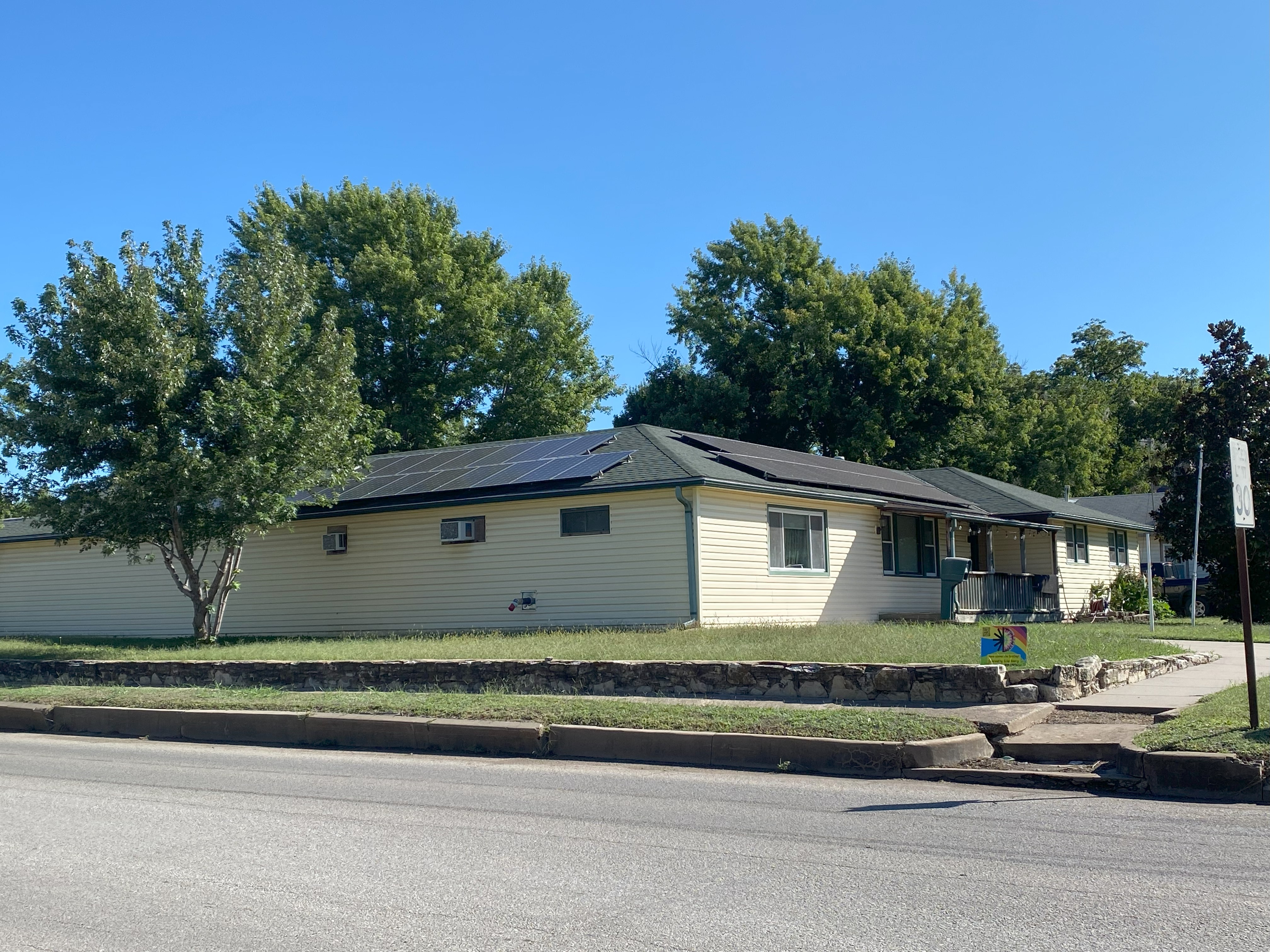
The county Sun Day planning committee provided information for interested folks to tour several local solar installations through the week prior to Sun Day.

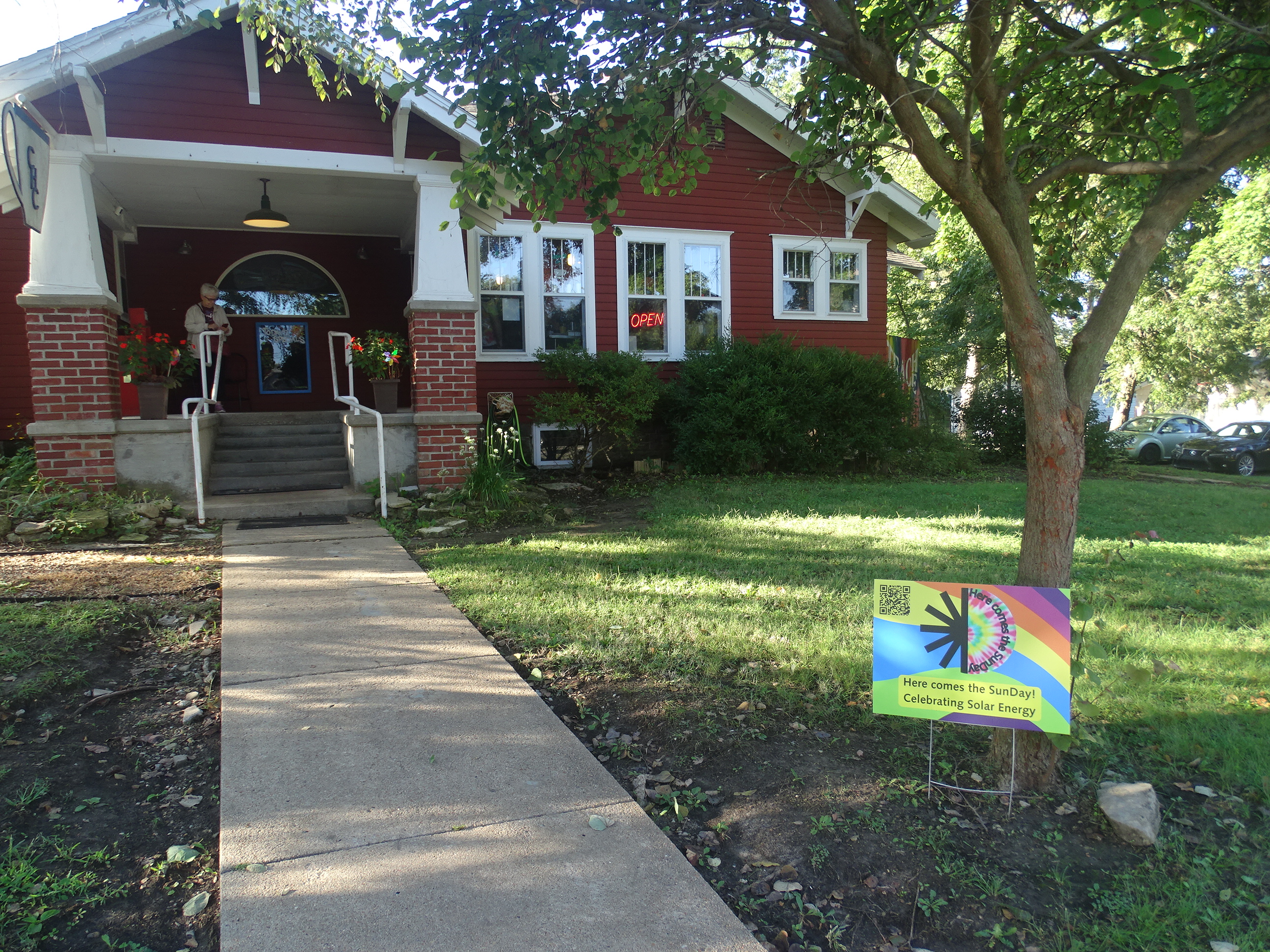
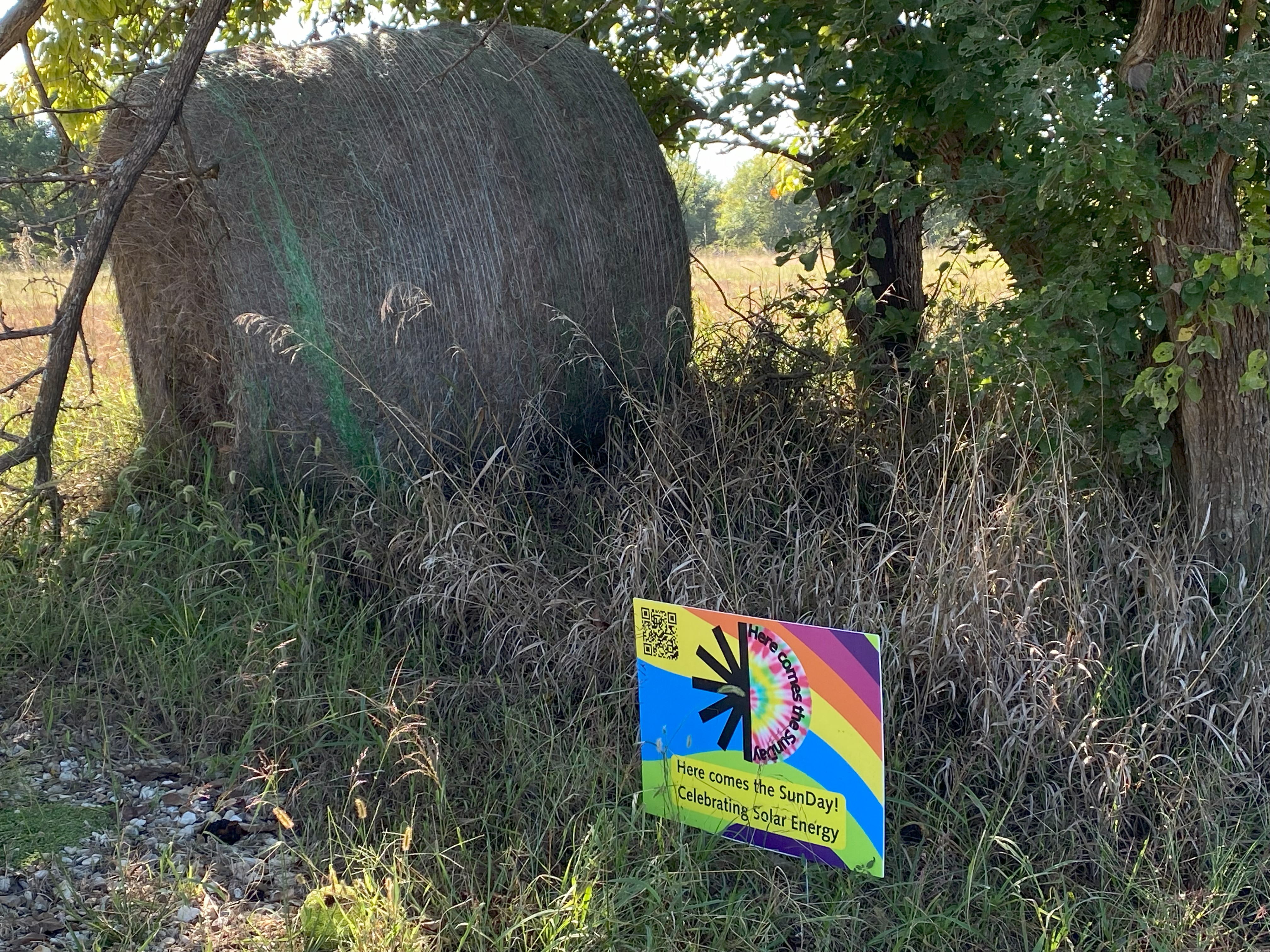
Locations were marked by the special yard sign, within two communities, as well as in the countryside.

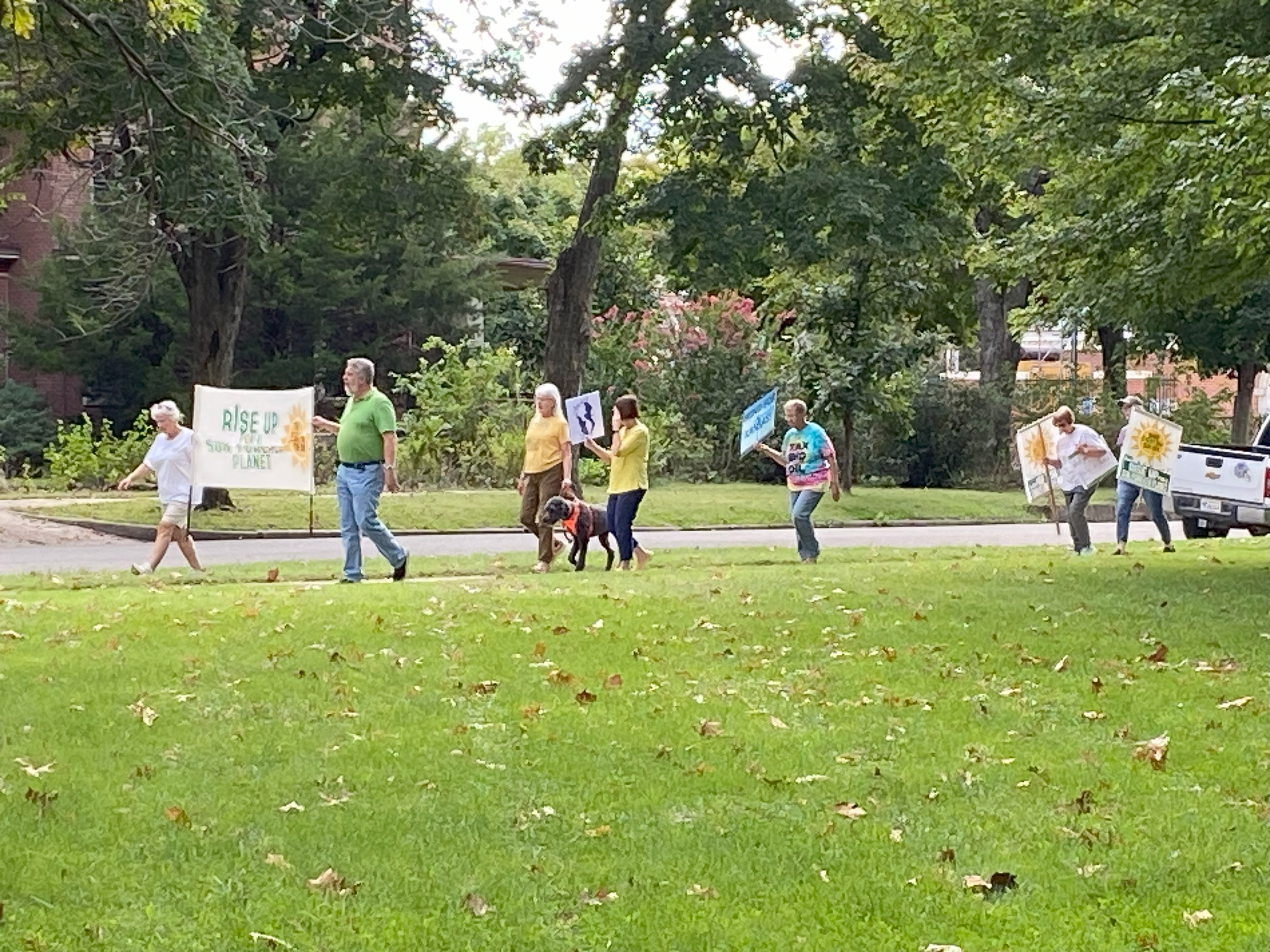
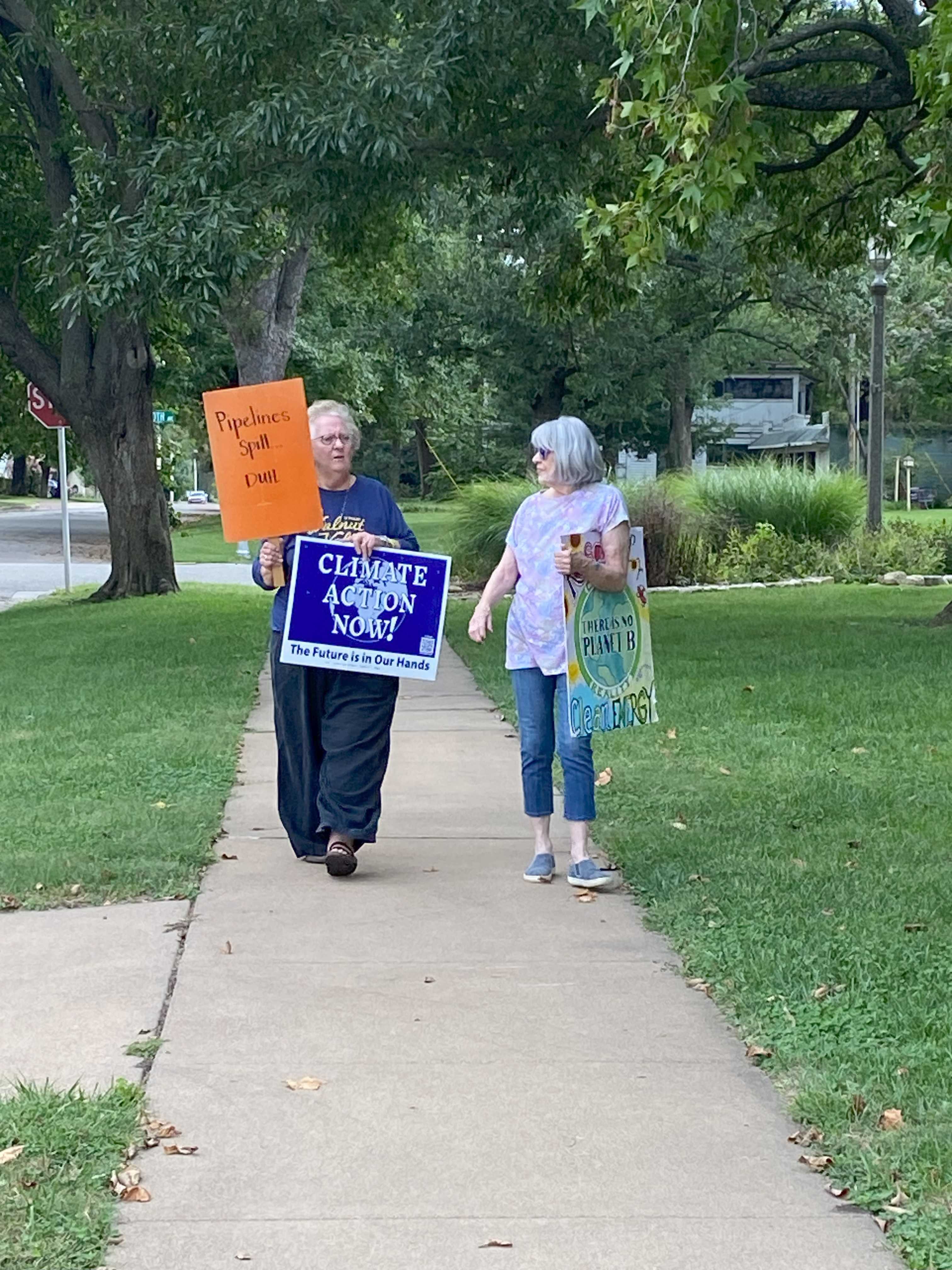
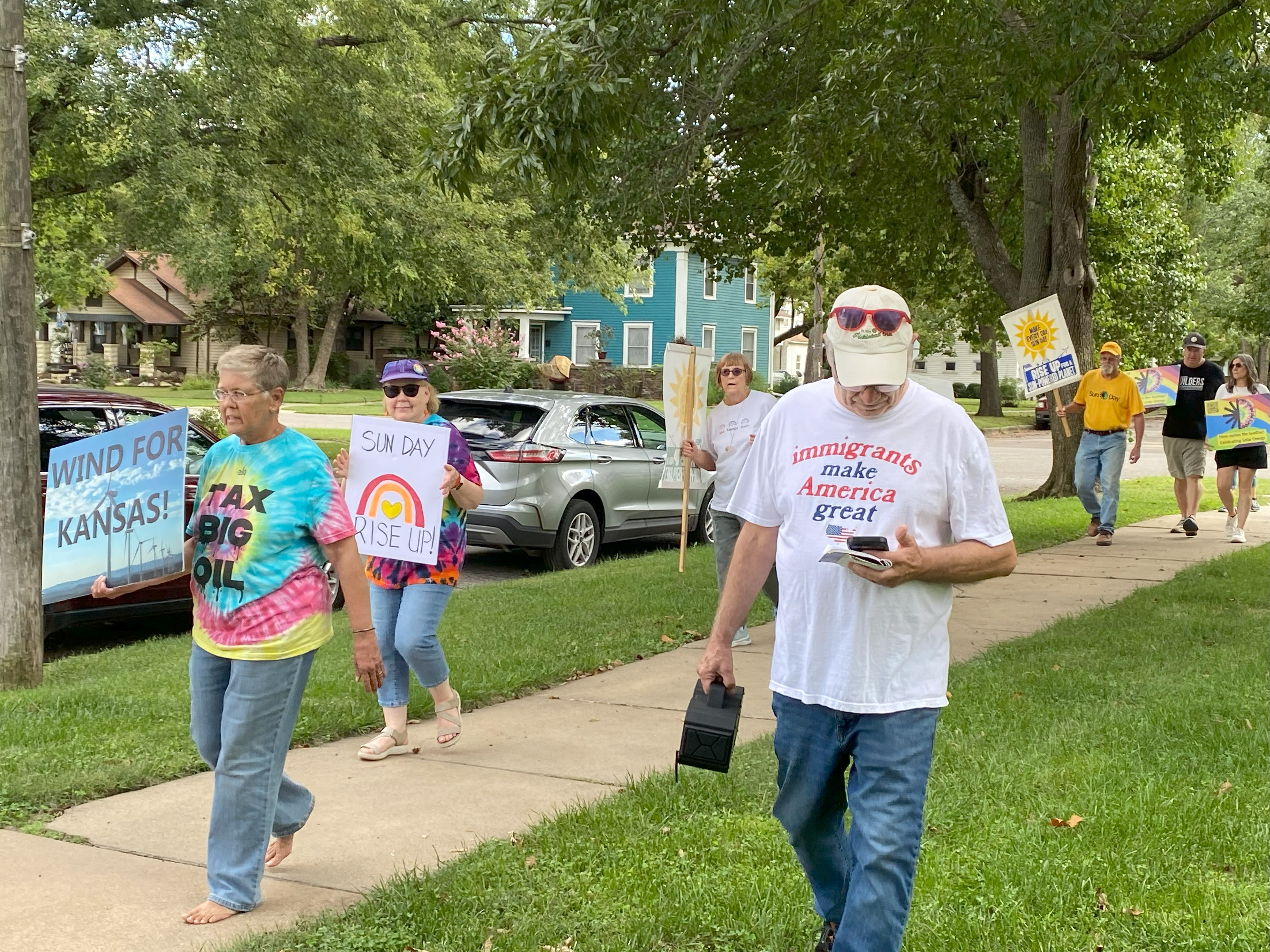
The Final Event was a “Walk for the Sun” to wave at supporters as they traveled home from a remarkable weekend.

Happy Sun Day! May we pursue knowledge and skills, as well as installations of panels that will convert the plentiful energy from our local star into power for all!


Every Hour!

“The history is clear: scientists discovered things, fossil fuel companies lied, and the world heated up. But on a planet that receives more power from the sun in a single hour than the whole of humanity collectively consumes in a year, fossil fuels are not inevitable. We can have better things. We just need to demand them — again and again and again, until we get them!”

Dr. Kate Marvel, Climate Scientist

http://www.sunday.earth

Do We Need a New Bible?

The solar energy system on our house came online in July 2011. For the next fourteen years, few days passed when our inverter reported no energy produced by the sun. Then, in June this summer, it all changed. The status window on the inverter, a necessary device that converts the direct current produced by the sun to alternating current for use in our home, toggled error messages constantly during daylight hours. “Peak overvolt,” “AC Voltage Low,” “AC Voltage High.” Production ceased. Given my determination to support the national Sun Day (https://www.sunday.earth)  on September 21 with a local event, we had to do something! An error-ridden system just would not suffice.

The people who installed our system are no longer in that business, so I called local electricians to help diagnose the problem. But we were put on a back-logged wait list, with no real intent to take us off since we were not a priority for the local electricity experts.

I turned to a recommended solar company headquartered ninety miles away. Weeks passed with no appreciable action, but after the devastating baseball sized hailstorm damaged several Solar installations in Ark City, a repair and maintenance specialist from this company stopped to take a look. He found nothing wrong, and assumed there was an issue with a computer chip in the inverter. His advice was to do a hard reset, that is, turn off the whole system for ten days to two weeks to allow the capacitors inside to fully discharge, then turn it on and hope for the best.

It didn’t resolve the error messaging.

I reported back to the solar company and declared that we were ready to replace the inverter and upgrade our home system. That’s when things became interesting.

On Friday afternoon, J, a system designer/project manager, arrived to do a site visit. We agreed on a 3:00 time via email messages. And at precisely 3:00, his white company pickup rolled to a stop in front of our house.

He’s punctual. Impressive.

J chatted about options as he took pictures of several important components in our system, utility meters, and structures on the property. A friendly, 40-something bearded man, he easily answered our questions. I noticed ear piercings as well as tattoos on his forearms. One tattoo was a caterpillar. Another broadcast in a fairly large font, “Practice Resurrection.”

Who was this guy? What did that mean, practice resurrection? Was he part of a strict religious cult? A rigid fundamentalist?

His knowledge of everything solar was obvious and the time flew by. It crossed my mind to ask about the tattoo, yet in the end I let it be. But later, that phrase wouldn’t let me be and I did a search. It turns out that “Practice resurrection” is part of a poem by Wendell Berry.

This system designer for a solar company has poetry tattooed on his arm for all the world to see. Wendell Berry, no less. Impressive!

My encounter with Wendell Berry and his writing has been a meandering path. Earlier this summer, a good friend presented me with an envelope that held a poem by Wendell Berry. M turned to this poem when he needed solace and he wanted to share it with me. That well-worn envelope is in the bag I carry daily. I shared the “practice resurrection” poem with M that evening, whereupon he loaned me Poetry of Presence II, a small volume of poems he didn’t want to part with permanently. It included a few by Wendell Berry, and M urged me to take a look at the poet’s life.

“Look him up,” he said.

Wendell Berry is not to be confused with Thomas Berry, whose book The Dream of the Earth is one of my cherished tomes. Still, there are similar themes in their writing. A thumbnail bio in the back of the loaned poetry book tells me that Wendell Berry writes poetry, essays, and novels. He is an environmentalist “with one primary message: Either we humans will learn to respect and live in harmony with the natural rhythms of this planet, or we will perish.”

Yes. That is prophecy. And Wendell Berry’s important message becomes clearer by the day as humans who have no business leading us continue to lead us toward devastation. It smacks me that this poet’s words have been swimming through my consciousness for years. I have one of his novels in my treasured books collection—as yet unread, but it’s on my list. It just moved a little higher.

There are eleven of Wendell Berry’s poems in my revered 1991 copy of Earth Prayers from Around the World: 365 Prayers, Poems, and Invocations for Honoring the Earth. Included in this volume is an excerpt from the poem that concludes with the words, “Practice Resurrection.”

What, exactly, does that mean? A description that popped up in another search. To practice resurrection means to embody the spirit of new life, hope, and transformation in the face of death, despair or brokenness. Often this is accomplished in acts of faith and love, through perseverance. It involves a daily commitment to find new life in death, to cultivate resilience, to see possibilities for redemption in difficult situations.

That, my inner voice says, is what we need right now, a sense of partnership with the creative Spirit responsible for all life on our amazing planet.  That, my inner voice adds, is the theme of the novel I’m currently writing. That inner voice, I swear, also adds, that may be the theme of many great works of fiction through the ages.

Excerpts from Berry’s poetic verse prompt more from my nagging inner voice.

Berry: “So, friends, . . . love someone who does not deserve it.”

Fell: Love is the greatest power. Believe it.

Berry: “Denounce the government and embrace the flag. Hope to live in that free republic for which it stands.”

Fell: Berry, who is 91 in 2025, wrote this before 1991. How did he know?!

Berry: “Give your approval to all you cannot understand. Praise ignorance, for what man has not encountered he has not destroyed.”

Fell: And everything he has encountered, he is in the process of destroying.

Berry: “ . . . please women more than men . . .”

Fell: Hear, hear!

Berry: “Put your faith in the two inches of humus that will build under the trees every thousand years. Listen to carrion . . .”

Fell: The cycle of life; from death comes new life.

Berry: “Laugh. Laughter is immeasurable. Be joyful though you have considered all the facts.”

Fell: Not the fake facts. Consider the factual facts. This is a difficult thing, and yet, laughter is healing. When one can laugh, one can love.

Berry: “As soon as the generals and the politicos can predict the motions of your mind, lose it. . . make tracks in the wrong direction.”

Fell: I am losing my mind.

Berry: “Practice resurrection.”

Which brings me back to the topic of this essay. We need a new Bible. There. I’ve said the thing that’s been on my mind a long time—like decades. Writers know that communication is a give-and-take experience. Half a conversation belongs to the listener. Half the communication through reading belongs to the reader. Given the infinite life experiences of any single life (no two are alike) each reader may interpret a sentence, a verse, a chapter or a book in ways that astonish the writer. This has happened to me, when readers express things they got from my writing that I didn’t know were there. And so, in 2025, with our lives so very different from the ages when scriptures were written, is it any wonder that we misconstrue, misunderstand, and misrepresent the ancient verse?

When our scriptures offer some people excuses to act in cruelty with arrogance rather than teach us how to get along, there is something wrong. When our holy verse teaches that some humans have more rights than others, this is not good. We need lessons and prayers that include reverence and consideration for all peoples around the world, for all life forms created by the Spirit from elements on Earth; we need to cherish and care for the planet as She has cared for us. We need inclusive Scriptures, not exclusive retaliatory verse. We need the insights of various faiths that developed in different locations, including those of indigenous peoples. Inclusive, not exclusive. We need to learn to respect each other, to love with abandon, and to honor those forces and cycles that brought us into being, be they of heaven or of Earth.

We need to practice resurrection.


A Book You Should Read

Becoming Earth: How Our Planet Came to Life by Ferris Jabr

I read about this book in Sierra but postponed ordering a copy for several months. When it arrived, I decided I must read it before the sun set on Earth Day this year. I was captivated at the dedication page. Jabr wrote a poem for the myriad parts of our planet’s system that brought tears to my eyes. He concluded, “For our living planet. For our miracle. For Earth.” Each section and chapter ended with equally beautiful poetic summaries.

Becoming Earth is a journey with an excellent tour guide. From a subterranean lab a mile and a half below Earth’s surface, to Brazil’s Amazon Tall Tower Observatory (ATTO) 1066 feet above the Amazon’s canopy, from Siberia’s Pleistocene Park to massive kelp forests off the coast of California, Jabr guides his readers on a tour of the planet through its 4.5-billion-year history to the present day. He examines life forms deep underground to bacteria and bits of organic matter high in the atmosphere which provide core particles for ice crystals and cloud formation.
With a survey of scientific data accumulated in the last few decades, from various fields in the relatively new discipline of Earth system science (ESS), he describes how our home planet is one vast living system. We humans are but one small part of it.

Notable points include the concept that even Earth’s variety of minerals is unique in the known cosmos, dependent as much on the existence of life as living things depend on the chemical composition of the planet. “The chance of two planets having an identical set of mineral species is one in ten to the 322nd power. Given that there are only an estimated ten to the 25th power Earthlike planets in the cosmos, there is almost certainly no other planet [like ours.]”

We inhabit a truly unique “pale, blue dot” in the universe, where life existing deep underground has helped create the land on which the rest of us depend.

Jabr makes the point that humans have altered Earth’s surface and climate since they appeared, but that our species is not the only one which acts to alter its environment. We could learn from pre-historic events. In examining the geologic history of life on the planet, Jabr also compares our current situation to impacts of other species. “Like so many animals before us—from termites to four-ton ground sloths—humans have radically altered Earth’s crust and soils.”

Chapters cover agricultural innovations from the plow to fertilizer and other chemical additives. When we expose soil to the weather, it degrades much faster than soil can be created. “Our living planet typically requires centuries to create a single inch of fertile topsoil.”

The plastic revolution has polluted our oceans to the point where there will soon be more plastic in the seas than there is life. Spewing chemicals, especially extra carbon dioxide and methane into our air has impacted everything, acidifying the oceans, and warming the planet faster than Earth has ever before experienced.

“It has never been more important,” Jabr writes, “to reject the idea that we are masters of the planet, while simultaneously accepting our outsized influence; to recognize that we and all living creatures are members of the same garden. . . humans have a long history of trying to harness and subjugate other species. . .Breaking that cycle has never been more urgent.”

While explaining the severity of our current crisis, Jabr also emphasizes that humans have capabilities that can mitigate the worst of the consequences. If only we would. We can’t afford to wait. The time is now.

In Becoming Earth, we read about life in the most unexpected places. Literally every place on Earth is home to some form of life, whether infinitesimally small, or complex larger species such as trees, and mammals. Though science has typically considered the origin of life as something that happened on Earth, “the two cannot be separated. . .Life is Earth. Our living Earth is the miracle.” The only way for us to survive is together, with all the other life forms that share our planet.

One chapter examines the history of fire on the planet. For millions of years, conditions prevented fires since three things are necessary for a fire to burn: heat, oxygen, and fuel. It took much of Earth’s pre-history for life forms to accumulate enough organic matter that would burn, (fuel) as well as form enough free oxygen in the atmosphere that would allow a flame to burn. Life processes (photosynthesis) created that oxygen, and until the atmosphere held enough of it, fires simply wouldn’t burn. Since that time, fires have become essential for maintaining various systems on the surface.

Life also impacted the carbon cycle. Through respiration, oxygen combines with carbon to form carbon dioxide. Burning fossil fuels adds the greenhouse gas to the atmosphere faster than at any other time in Earth’s history. There have been periods in the past when the surface temperatures were much warmer, when trillions of tons of carbon were released into the atmosphere. This happened over thousands of years, however. “Humanity is releasing a comparable amount in just a few hundred years. . .throughout the greater part of Earth’s 4.5-billion-year history, this much carbon has never been released to the atmosphere this quickly.”

We are in uncharted territory. Nobody really knows what the consequences will be, but they most certainly will change the planet in ways we would not recognize. “If humanity does not drastically cut greenhouse gas emissions, Earth will become a planet incapable of supporting the world as we have known it: the world that our species evolved in.”

As the world’s premier scientists have been telling us for decades, we are living in an escalating planetary emergency that is of our own making. “Without the necessary interventions, the planet will become inhospitable. . . to countless forms of complex life.” Jabr reminds us, though, that we are capable of preserving Earth, “the one living planet we have and the only one we’ve ever found.”

Each of us has a relationship with Earth, through our metabolic processes. Each of us is playing a duet with the planet. May our tunes all be hymns of joy.

Earth Day 55

Sharing my respect and appreciation for our home planet, a truly unique gem in the cosmos that sustains all living things. Today is Earth Day #55, and we stand on a more precarious precipice than before with a hostile leadership that chooses to ignore the warning signs of impending disaster. What kind of creature will take energy and sustenance that Earth provides free to all, and turn it all into a profit-making venture, future be damned? I think we stand alone in that category. Mine may be the first generation who fully recognizes the peril we face and the last generation with the window available to do something to prevent the worst climate disasters.
What are you doing to honor Earth? I’m leading a group (We the People of Cowley County) to fold as many origami fish as we can to share with Wisconsin Sierra Club in a unique protest against Enbridge Line 5 pipeline that endangers the Great Lakes and its human and wild inhabitants.
I’m reading a book (Becoming Earth–How Our Planet Came to Life by Ferris Jabr) with growing amazement at his research results and the growth of knowledge in my field of geology since I earned my diploma. (Stay tuned for a book report.) I highly recommend this book to all.
I’m taking steps to reduce my own and my family group’s consumption of fossil fuel energy in favor of the energy provided by our sun and Earth’s systems.
Please share the things you are doing in the comments. Thank you!

To Dine with Purpose: For the Earth

The devastating storm system that tore through a dozen states in mid-March wreaked havoc in all of them. Over a hundred tornadoes ripped through communities from Louisiana to Illinois, east to the Atlantic coast. The funnels destroyed hundreds of homes and left over 24 people dead. In northwest Kansas, the system’s unprecedented straight-line winds of 50 to 60 mph with gusts over 70 mph blew in a dust cloud that engulfed Interstate 70. Over fifty drivers lost sight of the highway and plowed into other cars and semi-trucks in front of them. Eight fatalities resulted from the largest pile-up of automobiles in decades. The highway remained closed for days.

None of this should come as a surprise. Shock, maybe, but no surprise. We’ve known for decades that our actions stress the living veneer on our miraculous home planet, Earth. Yet we meet steeper resistance to action with each passing day. If the unprecedented storms across our country aren’t enough to shake sense into our leaders, what will be?

I fell in love with nature years ago and my devotion to wilderness, landforms and wildlife led me to share our growing predicament many times since Earth Day #1 in 1970. As a public high school student enrolled in Earth Science class at the time, I proudly sported my green armband through all the activities of that day. Since then, after earning a bachelor of science degree in geology, I’ve helped with Earth Day exhibits at our local park, highway cleanups, recycling efforts, care packages for extended family featuring Earth-friendly products for daily life, helped my own students with environmental projects, wrapped trees with green ribbons (and later removed them for the trees’ sake), planned and orchestrated a series of environmental film screenings at our local theater, and connected the dots with 350.org in the crazy weather of 2012. It became obvious that our amazing planet deserves attention not just one day each year, but every day. As indigenous leaders on every continent teach us, the Earth does not belong to humans. Rather we belong to the Earth. We ignore the warning signs at our own peril.

I continue efforts to educate others. Several weeks ago, I came across a link to an article titled “These 15 Foods Could Disappear Due to Climate Change.” (https://worth.com/15-foods-disappear-due-to-climate-change/) The probable impact of climate disruption on familiar foods was shocking. If only people knew, I thought. The list gave me an idea: I could promote local gatherings that served many of the foods on the list. To kick it off, I invited a diverse group of friends for a “Dinner with Purpose: For the Earth.” I set up a buffet with information cards about each food item and how the Earth’s delectable gifts may become rare for our grandkids. The menu included chocolate candy appetizers, taco salad with all the trimmings, scalloped potatoes, with mixed fruit salad and blueberry muffins for dessert. Drinks included fresh squeezed limeades, coffee, and wine. In all we enjoyed 14 of the 15 listed items from the list of disappearing foods.

The dinner was a hit and I consider the evening a two-fold success. The information cards spurred good conversations about climate disruption and its consequences, and we all enjoyed ourselves at the same time—an act of total resistance under an administration that wants us to cower in fear and apprehension.

Several in attendance expressed their intention to hold an Earth dinner themselves, a delicious way to spread the word. Perhaps you’d like to join the fun and host a dinner for your family and friends. April 22 is the 55th anniversary of Earth Day #1, but any day will serve to honor and celebrate the generosity of our home planet and remind ourselves what is at stake.

Guests discuss information about the food items at risk.

Another Broken Treaty

Painting by Ardith Fell

Last fall I met Haskell Indian Nations University professor Daniel Wildcat at the Kansas Book Fair in Topeka. He spoke about his recent book On Indigenuity: Learning the Lessons of Mother Earth (2023 Fulcrum Publishing). Robin Wall Kimmerer calls the book “a compelling framework to rethink the role of the western worldview . . .” His presentation proved compelling as well. I left with a deep sense of gratitude for indigenous leadership in these trying times, and an autographed copy of his book.

That was before the 2024 election reduced our hope for a viable future on this planet to warm ashes. One of the latest hits to our collective understanding of America was the firing of 30% of Haskell’s staff on Valentine’s Day this year. Students were left mid-semester without mentors and instructors. Banned faculty evidently faced arrest should they set foot on campus to teach, even at no compensation. Volunteers require federal approval.
Friends in Lawrence tell me that Haskell is one of two schools the government supports through treaties to provide higher education to Native Americans. The other is Southwestern Indian Polytechnic Institution. Both schools had significant cuts enacted on Valentine’s Day.

Another treaty with the Indians, broken like many before.

Do we care?

As Daniel writes in his book, “. . . not caring is too lonely a space to occupy.” He exhorts us in an opening poem to “Stand up. For those whose voices are silenced . . . Stand up. With those who fight for justice unmoved by fear and moved by love.”

As he autographed the book I had purchased, I asked how to express gratitude in his native language. Smiling, he coached me.

Thus: For the long-suffering spirit of resilience that never gives up; for the leadership in treating our home planet with the reverence it deserves; for the quick willingness to forgive us European settlers eons of arrogant thoughtlessness—

Sonjae Keriocitae.

(my attempt at phonetic spelling of the Yuchee/Creek expression for “Thank you.” Any inaccuracies belong to me, the student, not to Prof. Wildcat.)

Let us stand up for the Native Americans and others now, as the rogue government rips uncaring through our communities.

Painting by Ardith Fell

Craig, Carter, and Compassion

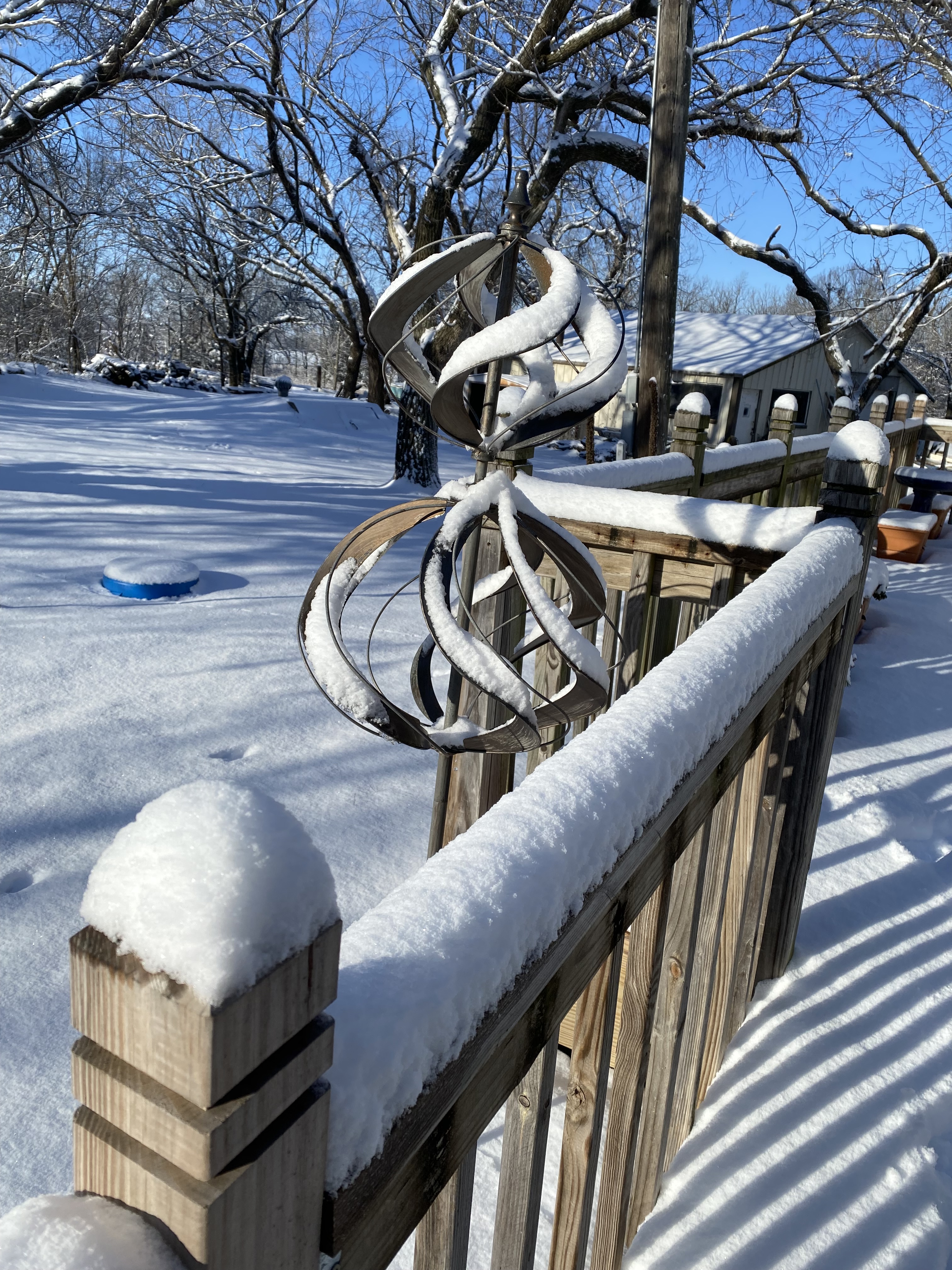
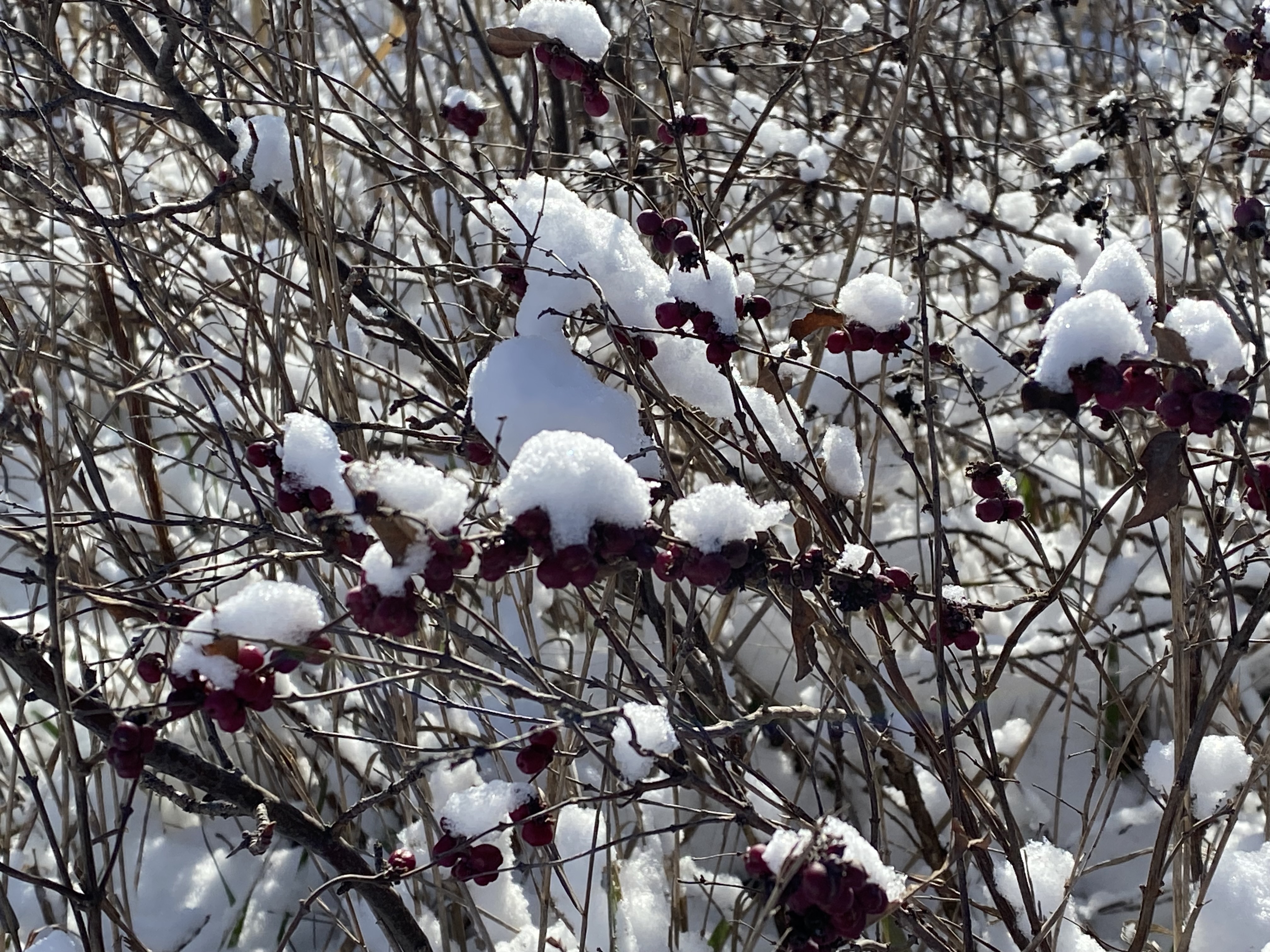
Seventy-three years ago today, at 10:10 in the morning, a baby boy arrived in this world who would become a significant part of my life. Two decades later, I met Craig Winter in college at FHSU. We enjoyed traipsing around public parks and nature reserves in Kansas with our cameras, taking pictures of the wonders of nature. This morning I celebrated his life with a walk in the winter wonderland, taking a few pictures of the snow that fell overnight.

Craig and I were married in 1977, during Jimmy Carter’s presidency. Having taken a class in the biology department at FHSU together–a class called “Can Man Survive?” that examined all the environmental issues of the day, including the greenhouse effect and global warming as climate change was called then–we were united in our commitment to support the natural world and reduce humanity’s harmful effects that were due to our unmitigated greed. Jimmy Carter was our guy. They say he was ahead of his time. I don’t think so. The probability of a global consequence to our short-sighted ravaging of our planet was known more than 100 years ago. Society knew all the benefits of alternative energy in the 60s and 70s. But harnessing free energy from the sun didn’t make any corporations much money. Craig and I were supporters of Carter’s conservation methods–turn down the winter thermostat, 55 mph speed limit, his installation of solar panels on the White House. And we dreamed of becoming reliant on our own private energy production, even then.

Carter acted with the well-being of his neighbors in mind, a true Christian quality. He wasn’t ahead of his time. The “resistance” at that time was just way behind. Look where that got us as they gained and assumed power.

Craig became a cancer statistic 9 days after his 33rd birthday in 1985, and I became a widow. (Quite the stigma for someone not yet 30 years old.) But I haven’t forgotten our joint priorities, nor our admiration for President Jimmy Carter.

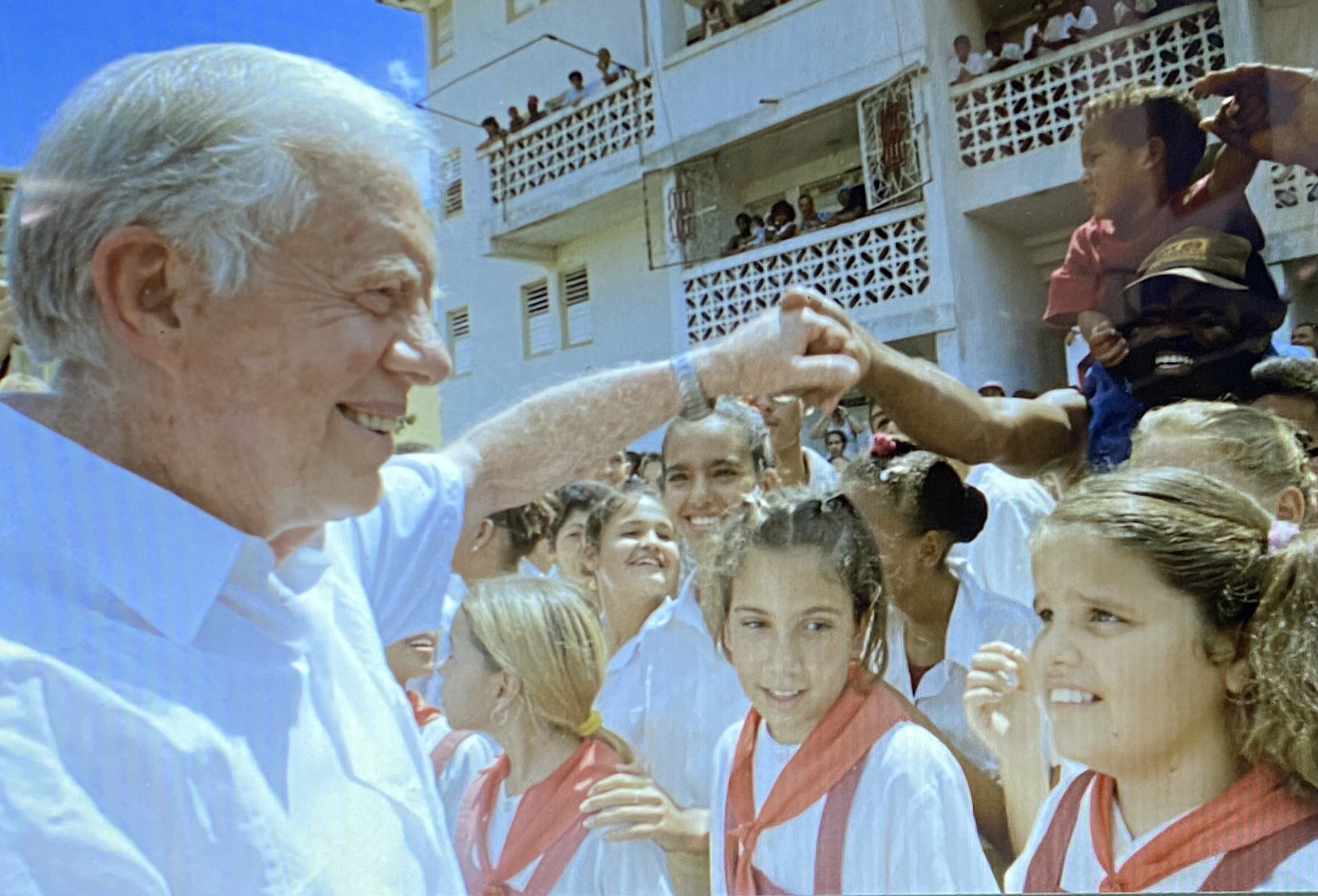
Photo courtesy of The Carter Center.             Cuba 2002–The Carter Center’s delegation to Cuba, being the first time since the 1959 Revolution that a sitting or former president visited Cuba.

After his time in office ended, President Carter showed that you don’t have to be the elected leader of the country to make a huge difference, and today, a day after President Jimmy Carter’s funeral in Washington, DC, I renew my commitment to make a difference for those in my circle, for the inhabitants of Earth’s future, and for all the non-human neighbors that are as dependent on this planet as we are dependent on their well-being. Those of us with the future of our planet and its life forms in mind are now the “resistance.”

This morning, in honor of Craig Winter, I was trekking around our acreage in the fresh snow with my camera, capturing scenes, just like we used to do. Thinking of you Craigie, as I always do on this day. With love.

NOTE: I am deeply grateful and indebted to my second husband, Mike, for his generous and compassionate heart for the last 36 years. He has never objected to my memories or to my honoring people from my personal history that helped make me what I am today. We are all products of our histories and our memories, not just the stimuli we receive at the present time. Thank you for being dad to all our children, and grandpa to all our grandchildren as well as allowing my heart to grieve through the years.

Firestorm Sonata: The Story Behind the Story

The third novel in my Sonata series of adventure tales featuring pianos and their families is now available on Amazon. I have mixed feelings about it. The completion of this journey has been months in the making and I’m relieved to finally get there. It’s been a lot of hard work, with repeated readings and editing through the summer, each time thinking this would be it, and each time finding more things that needed to change. I finally drew a line. This is it. Ready or not. And Firestorm is launched. May she find a path through the maze of words out there in the cyberverse and not disappoint.

Firestorm Sonata:

In peak condition, scout Sharenda Kamine is certain her field skills will insure her safety as she seeks supplies needed by the fortress she calls home. She must, however, prove her worth to the authoritarian commander of this isolated pocket of survivors. With reluctance, he grants her request to work alone and she heads across dust dunes of what once was southern Kansas, confident she will master any challenge she meets. But she is unprepared to find a window into the past, which simultaneously offers a future ripe with possibilities. She must decide whether she will honor her commitment to the Fort, or escape to freedom with Gran, the only family she knows.

This tale is a first for me, to set the events in the future. During my work on the second Sonata, Sonata of Elsie Lenore, a friend I respect, a retired college professor and elder in my community, shared an article with me. “Confronting the Climate Crisis Through Fiction: Visualizing a climate-ravaged world may actually be the key to mobilizing action.” Those who know me well know my passion for the natural world, for the planet Earth. As a college freshman 50 years ago—get that FIFTY—I took a life-changing class called “Can Man Survive?” in the biology department at Fort Hays State University in Kansas. It was based on the then-current knowledge about all the impacts our human activities had on water, air, land—and climate. We’ve known about greenhouse gasses for my entire life. Even longer. Some folks predicted serious impacts early in the industrial revolution, over a hundred years ago.

The evidence is mounting in 2023. This summer is already setting records. Extreme weather events around the world fill the news from catastrophic flooding to record-setting temperatures and untamable fires. Chile, Canada, Greece, Italy, China, India, Japan, Taiwan, Philippines, Sudan, Madagascar, Zimbabwe–the list goes on. In North America, water temperatures in the Gulf of Mexico hit 100+ in places, with 100% mortality in some coral reefs.

My own community cleans up after a straight-line windstorm that downed whole trees in our favorite parks and city streets, demolished our neighbor’s hay storage barn, and wreaked havoc on the county fair. Cleanup will continue for weeks. The cost has soared toward $2,000,000 already in our one small town.  And yet, we humans continue a path deemed to be disastrous for all life on the planet, just so oil companies can reap growing mega-profits at the expense of everything else we hold dear. If fictional tales set in a grim future environment will shake us into action, I decided I must try.

It’s been my privilege to offer continued piano service across south-central Kansas for nearly thirty years. I’ve kept climate records at each job, recording temperature and humidity. It’s increasingly hard to advise piano owners what their best plan of service should be. With seasonal swings in temperature and humidity becoming more unpredictable, the effects on pianos are easy to see. Tuning stability is now a figment of the imagination.

Pianos are my world. So is the prairie ecosystem. I began to ask some hard questions as I twisted those pins on my annual calls. “What’s with all the earthquakes in Kansas and Oklahoma?” In my college geology classes I learned this area is the “stable” part of the continent. Earthquakes are supposed to be extremely rare. And yet here we are.

“What about the wildfires?” Every year we hear about more extreme fires. California, Oregon, Texas, Idaho. There have been successive record-breaking fires that started in Oklahoma and raged across the state line into Kansas, burning hundreds of thousands of grass acres, killing animals (including livestock) that were trapped in its path.April 2016, a fire burned over 400,000 acres, the largest blaze ever in Kansas (at the time);  March 2017, 600,000 acres burned in southwest Kansas, people were evacuated from small towns in the area; December 2021—fires in northwest Kansas, fanned by winds stronger than hurricane force, burned 400,000 acres.

Then there were the Canadian fires this summer that burned for weeks, sending ash and smoke into the air across northern US. And Maui—MAUI?? An island in the middle of the Pacific Ocean with a drought and a spark? The death toll from the Maui fire continues to grow.

I tried to imagine what my home county would look like after an extended drought, followed by a massive firestorm. Perhaps lightning would ignite an oil spill created by one of those fracking earthquakes. Add to the mix technology that can’t receive satellite signals, towers that topple in storms, and no way to receive news from the rest of the world.

The field of stepping stones.

What would my piano family do? What would become of them and their pianos? Would it even matter anymore if basic survival was the most pressing need? Unfortunately basic survival is already the most pressing need for far too many of Earth’s creatures, including pockets of human beings.

Thus, Firestorm Sonata was born. My deepest thanks to everyone who begged for another tale, who listened when I felt discouraged, and who offered words that bolstered me to keep on writing. You all comprise the village which raised Firestorm Sonata from a small seed to fruition. May she have wings to take her beyond my imagination and in her own way make our planet and our future a little brighter for all living things.


Of Snow and Violins

I don’t recall a time when I didn’t love books. I must have been hooked at my first page in my first picture book. Naturally, I wanted to write them also. English class in Junior High expanded my love of language. When the home economics teacher there assigned everyone to write a picture book for preschool children, a passion was born. I embarked on a lifelong adventure with words.

Though there have been lengthy gaps when I was too involved with family matters to spend time with a pen and typewriter, whenever I could  I outlined projects, made deadlines for myself, subscribed to writing magazines, and submitted my work.

One early project started with a dream.  I don’t recall my age when this dream seared itself into my subconscious, but upon recollection it was an outlandish and delightful story. In my young adulthood, married but BC (before children) I decided to write the dream story as a picture book. It involved a couple of seals and a polar bear in the Arctic, a snowman, and a violin. A violin you ask? Yes. A violin.

Not skilled with paint or colored pencils, I figured I could illustrate this Arctic story using my photographic skills. I needed only to make the characters. I designed patterns to sew stuffed animals as well as stuffed snowmen and a violin. After careful construction, I lined up the cast on a board covered with quilt batting sprinkled with glitter, set up my trusty OM-1 35mm SLR on a tripod, and headed into the morning sunshine outside the little farmhouse we rented in Morton County, Kansas.

Crowned with a bluer-than-blue sky, the still morning was perfect for the illustrative slides. I had a blast moving the characters through the plot and snapping photos of every scene. When the slides returned from the processor, I had the story and the illustrations. I submitted the idea and samples to a few children’s book publishers, and received their kind rejections. I eventually chose Plan B and took the collection of stuffed animals, a slide projector, screen, and the story to several local libraries as a guest reader for their children’s story times. Again, I had a blast and the kids enjoyed hands-on time with the characters from the story.

The years raced by. Life happened. My own children arrived. Daily routines became strictly regimented trying to keep up with everyone’s activities. Other than a session or two sharing the story with my own kids, the stuffed characters were stored away in a big plastic tub until last December.

As Christmas approached last year, I recognized there was no good reason to hide the stuffed animals away. My daughters were grown with children of their own—and half of the grandkids were already too old for picture books. Either I pull the old critters out of the closet, or I never would. I gifted a couple to my 6-year-old granddaughter for Christmas and took along the set of photos to read her the story. On our homeward journey I realized that I now had the means to publish A Very Special Snowman myself. After digitizing the illustrations and formatting a children’s book, I sent this same granddaughter her very own copy of the book featuring the Arctic characters for her 7th birthday in March.

I launched the decades-old project to the public Thursday April 20. The “Women Score Higher” conference in Wichita solicited women authors as vendors and I was happy to be able to bring a variety of books for many different readers, including the freshly published A Very Special Snowman.

A few days after 7-year-old Mia received her book in the mail, her 9-year-old sister wrote to me saying she was writing a book and wanted to know how to publish it. It makes a grandmother proud.

Even with a peaceful ending for two careless seal pups, A Very Special Snowman is a little sad for me. Since those days of innocence long ago, the emergency situation in the Arctic has escalated as our warming Earth melts the polar ice. The fate of Arctic animals like polar bears and seals has taken a perilous turn since my early writing years.

But every stage of this project has been a thrill for me—from the dream, to construction of the characters, to photographing the scenes, telling the story, and designing a book in 2023. And the piercing blue sky in the photos of 1979 amazes me still, a reminder that this precious planet is very much worth defending for all of us, polar bears and seals included.