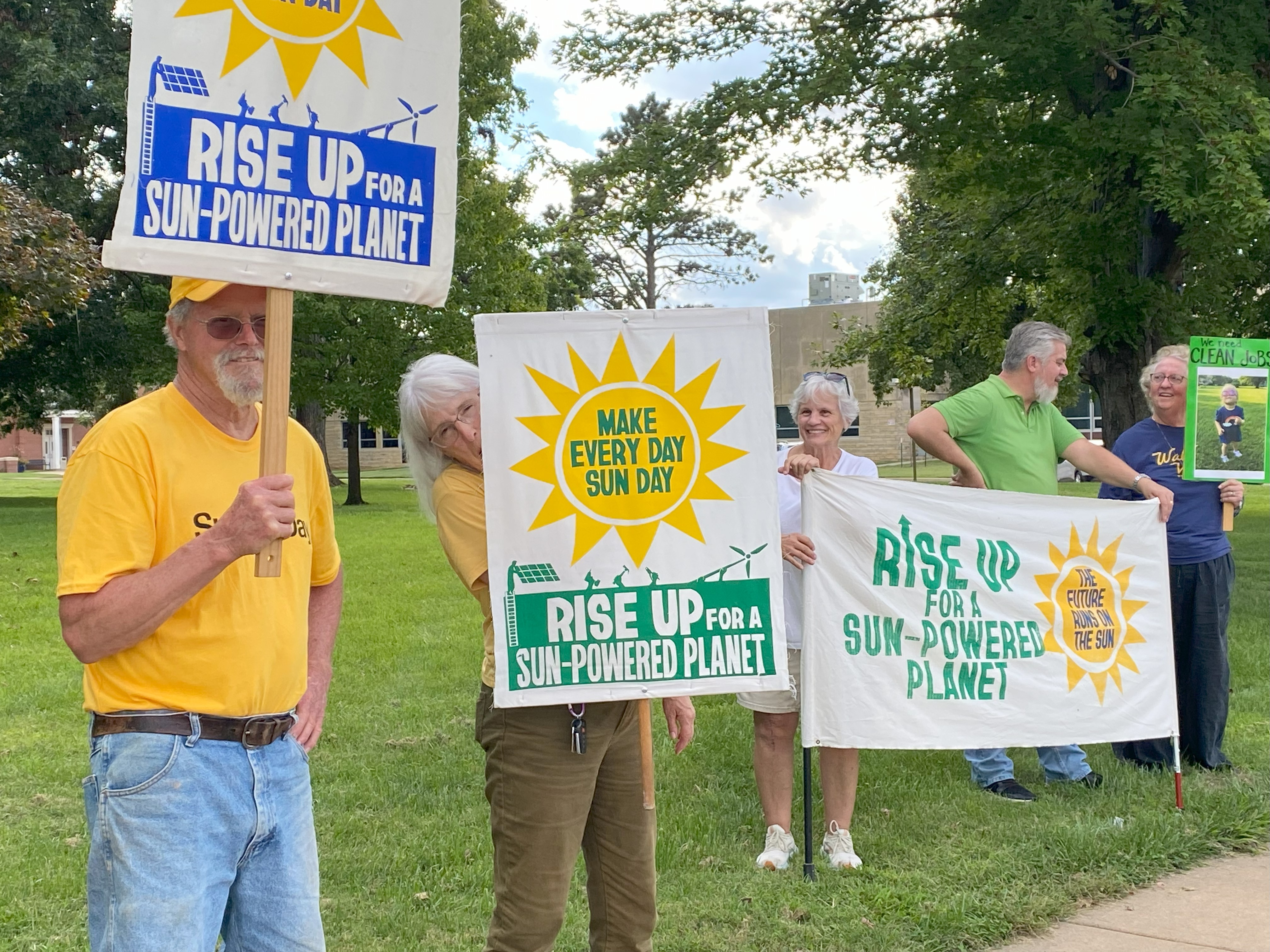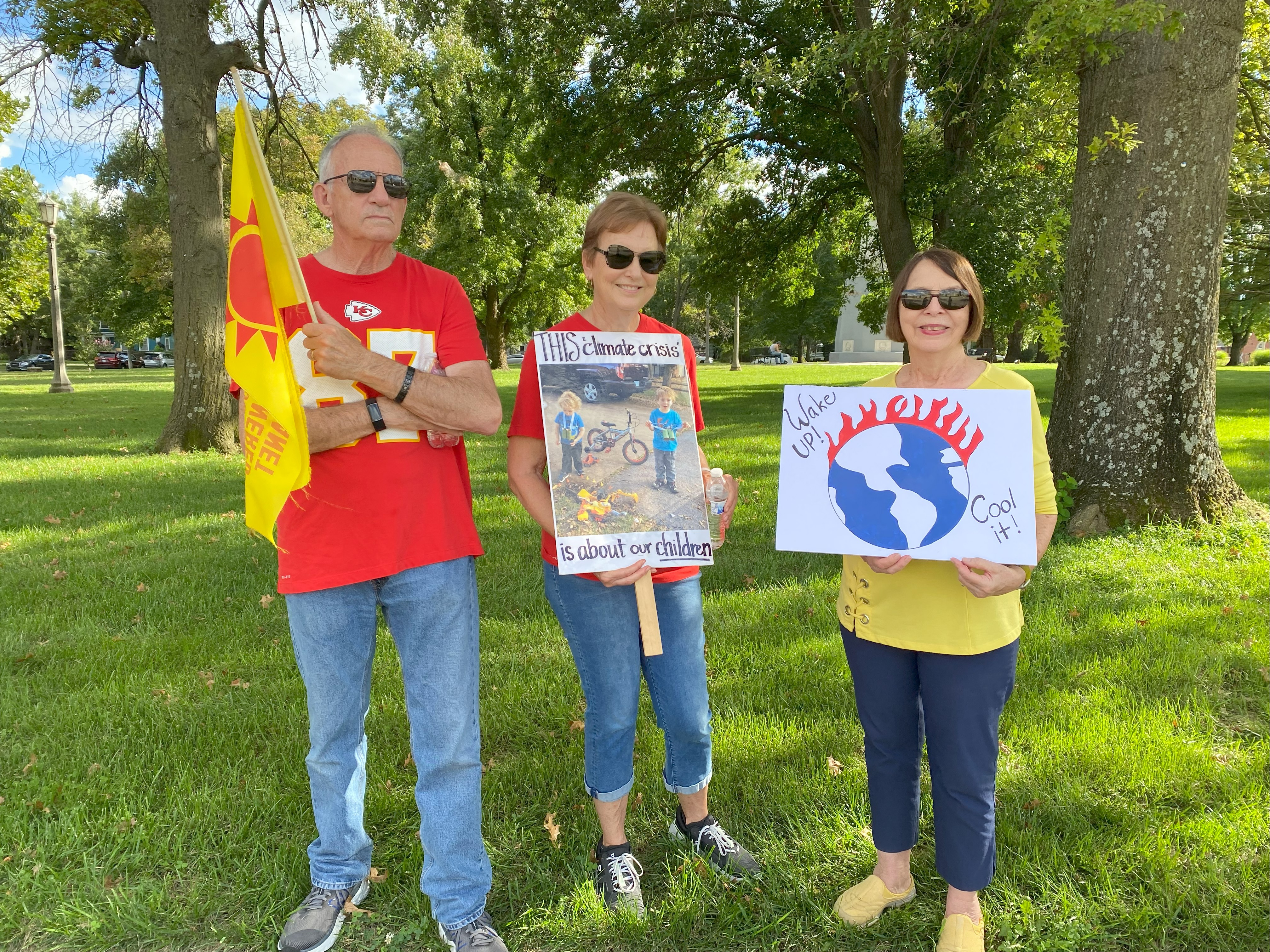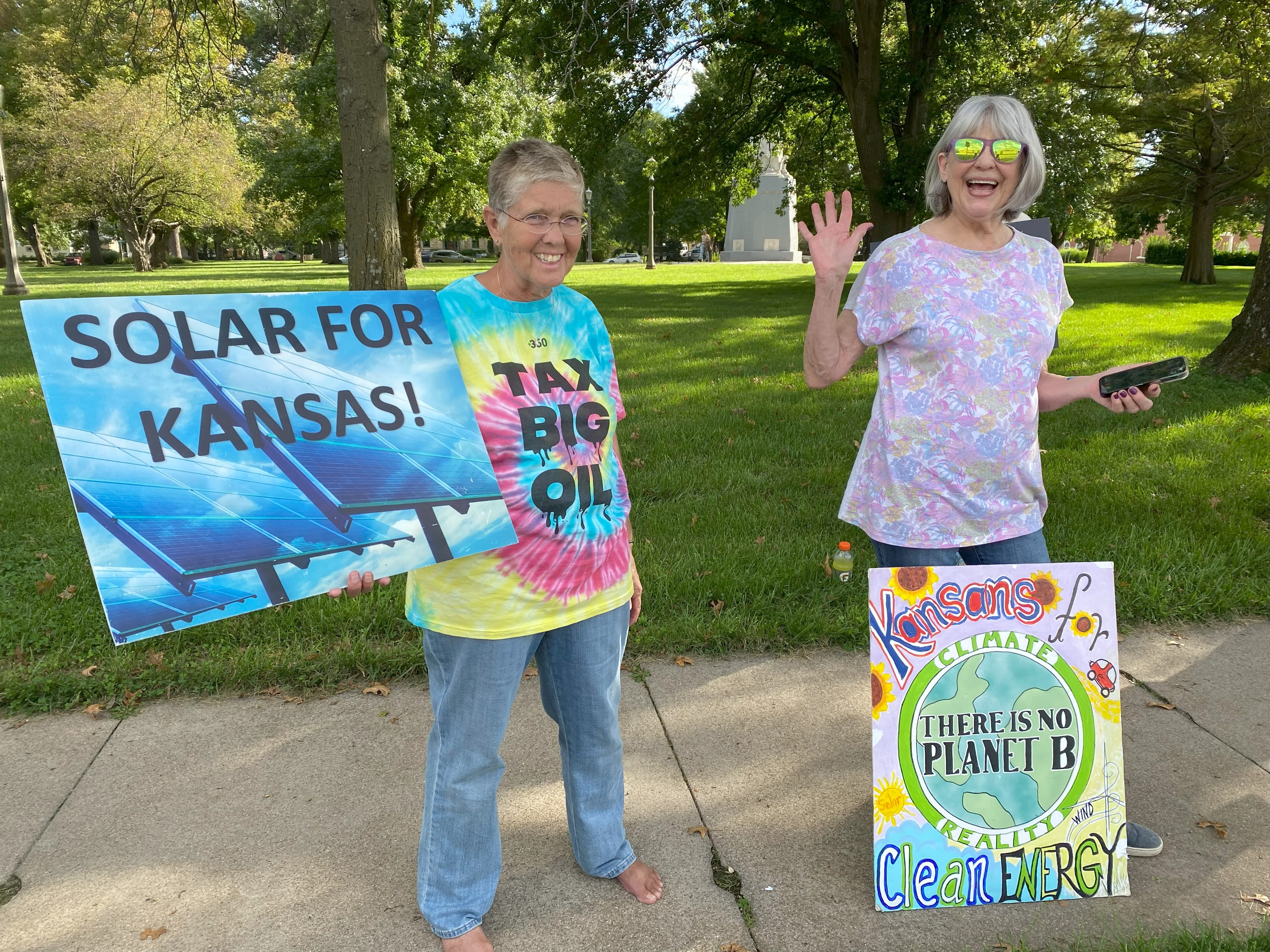
The Sun Day 2025 Experience in Cowley County, Kansas

Here Comes the Sun-Day!

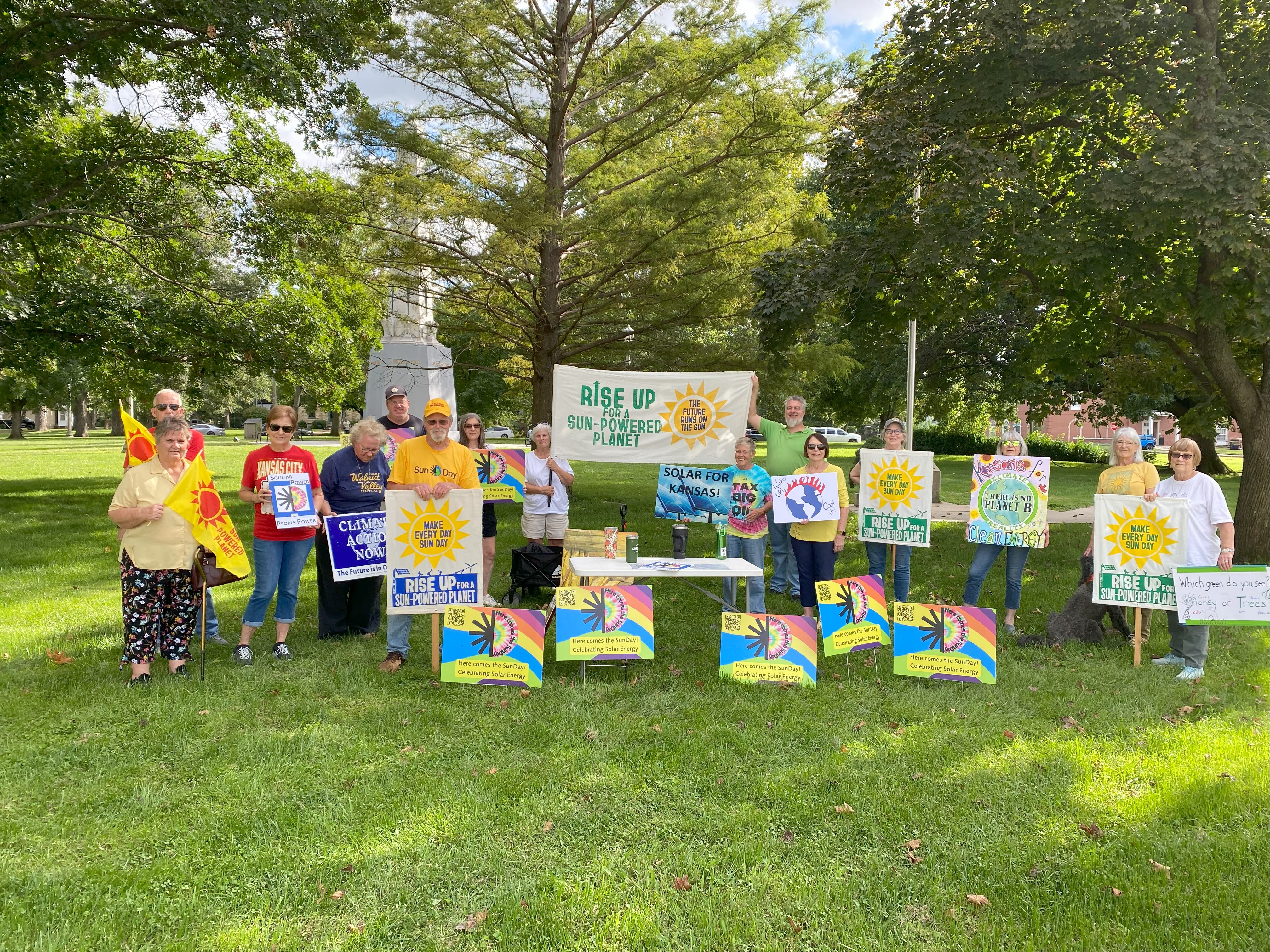
For over 50 years,  Winfield, Kansas has been home to the Walnut Valley Festival on the third weekend in September. That made planning a Sun Day 2025 event here challenging.  If we were to correlate with the national effort to raise awareness and celebrate the explosion of solar energy around the world, we had to get creative. Fortunately, Cowley County is full of creative people.

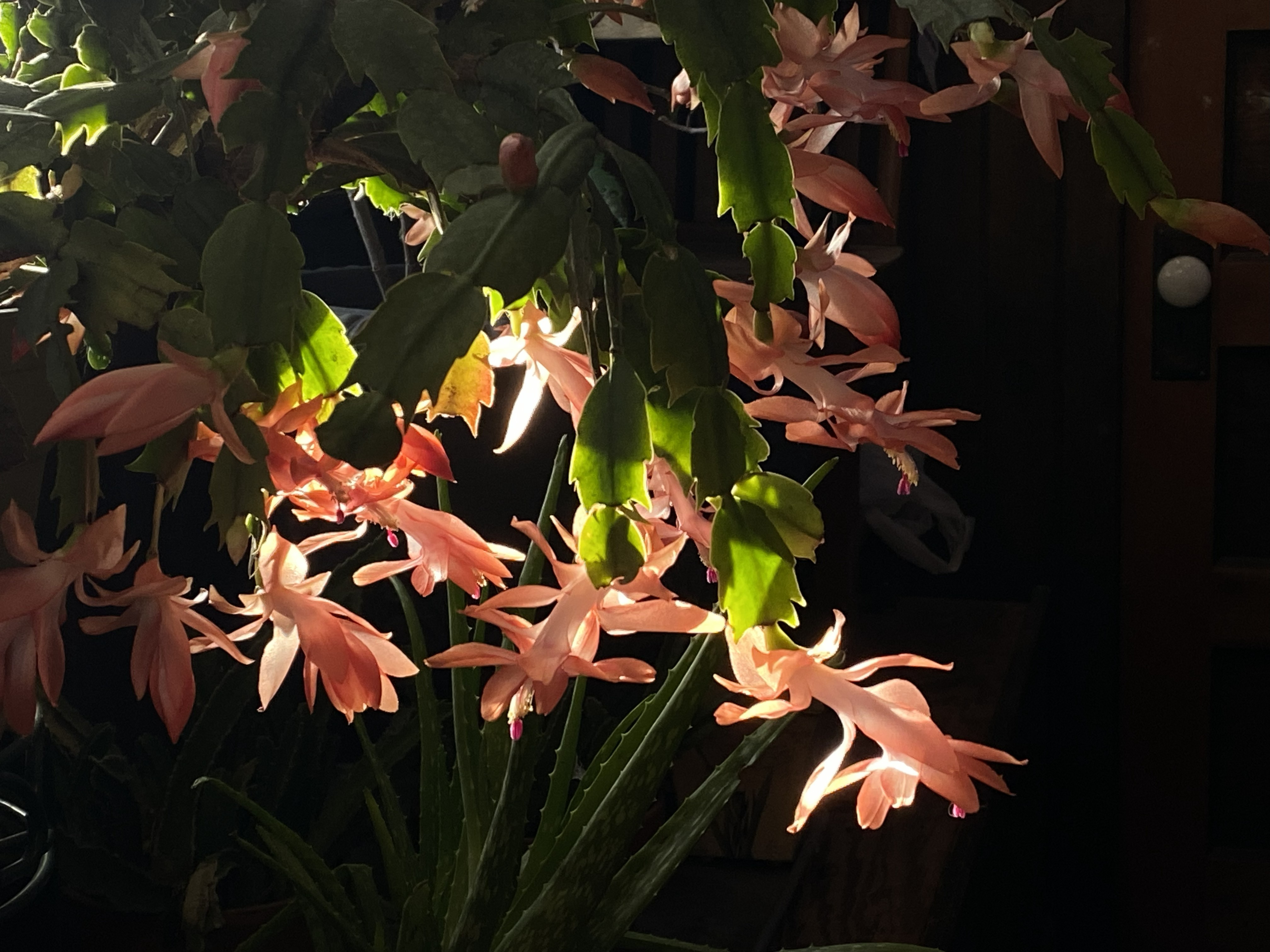
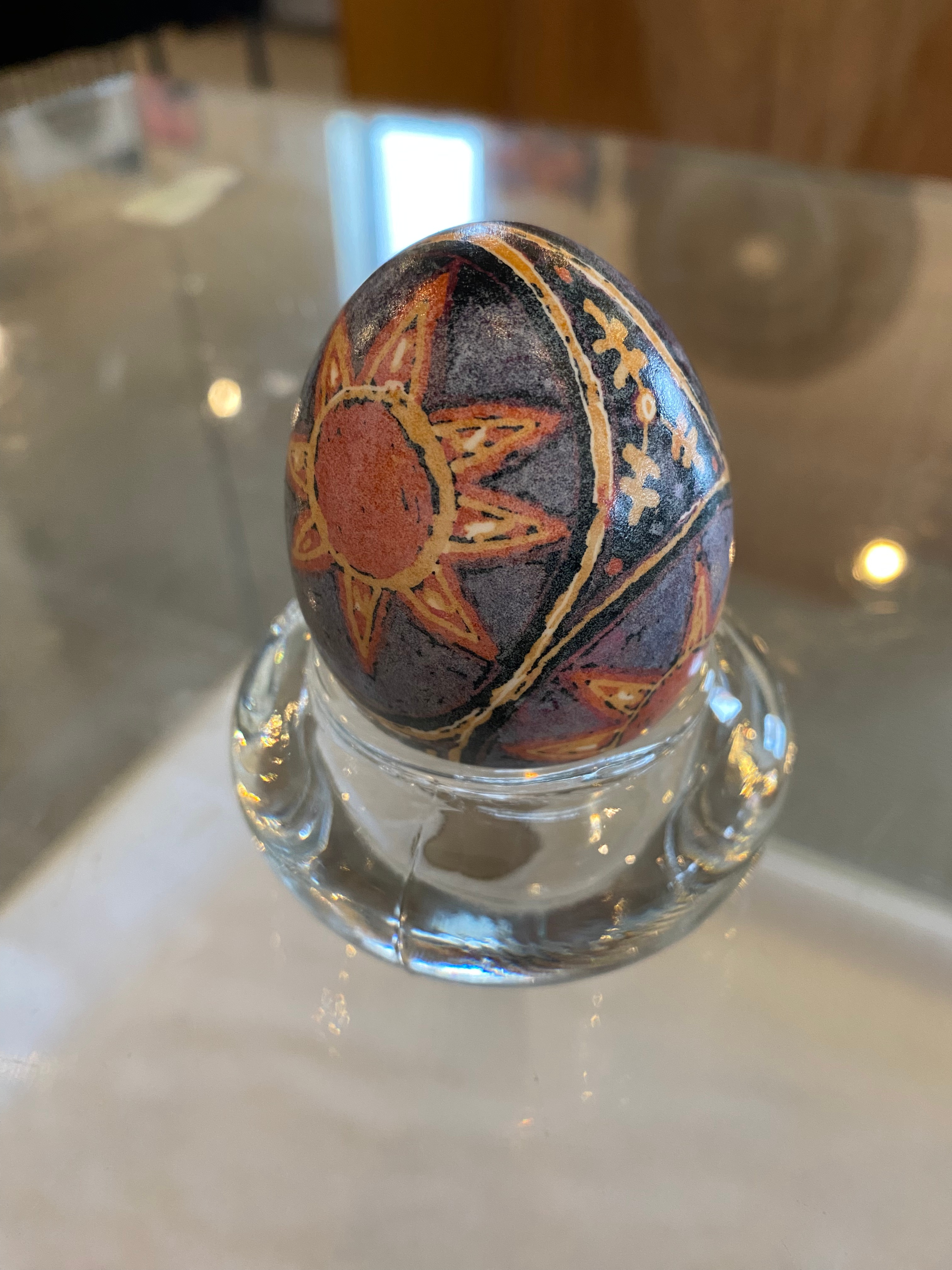
We decided to feature a variety of events preceding that big day.  And thus our “Here Comes the Sun-Day” project was born. Now that it’s over, enjoy a photo tour of the local events for Sun Day 2025.

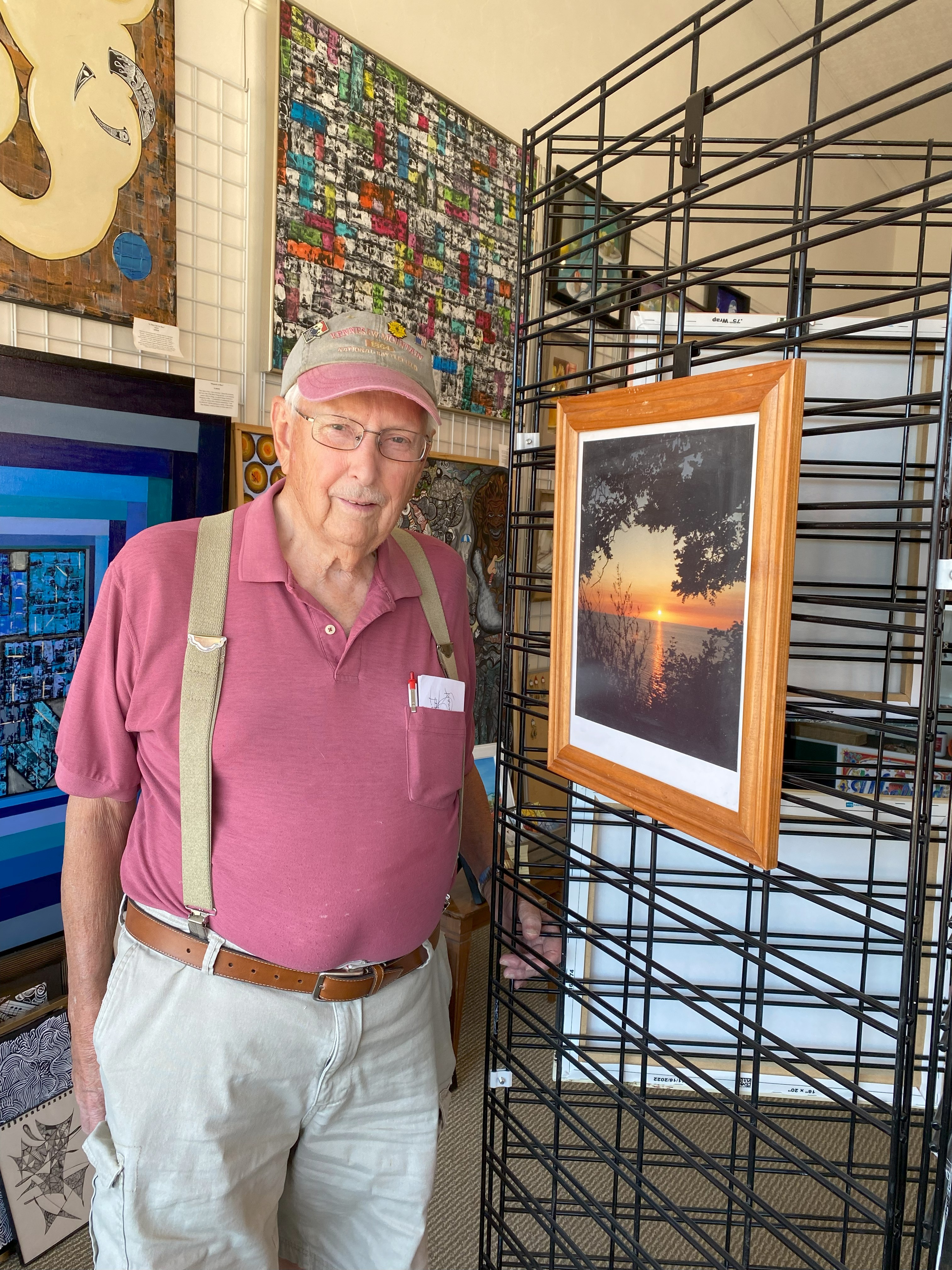
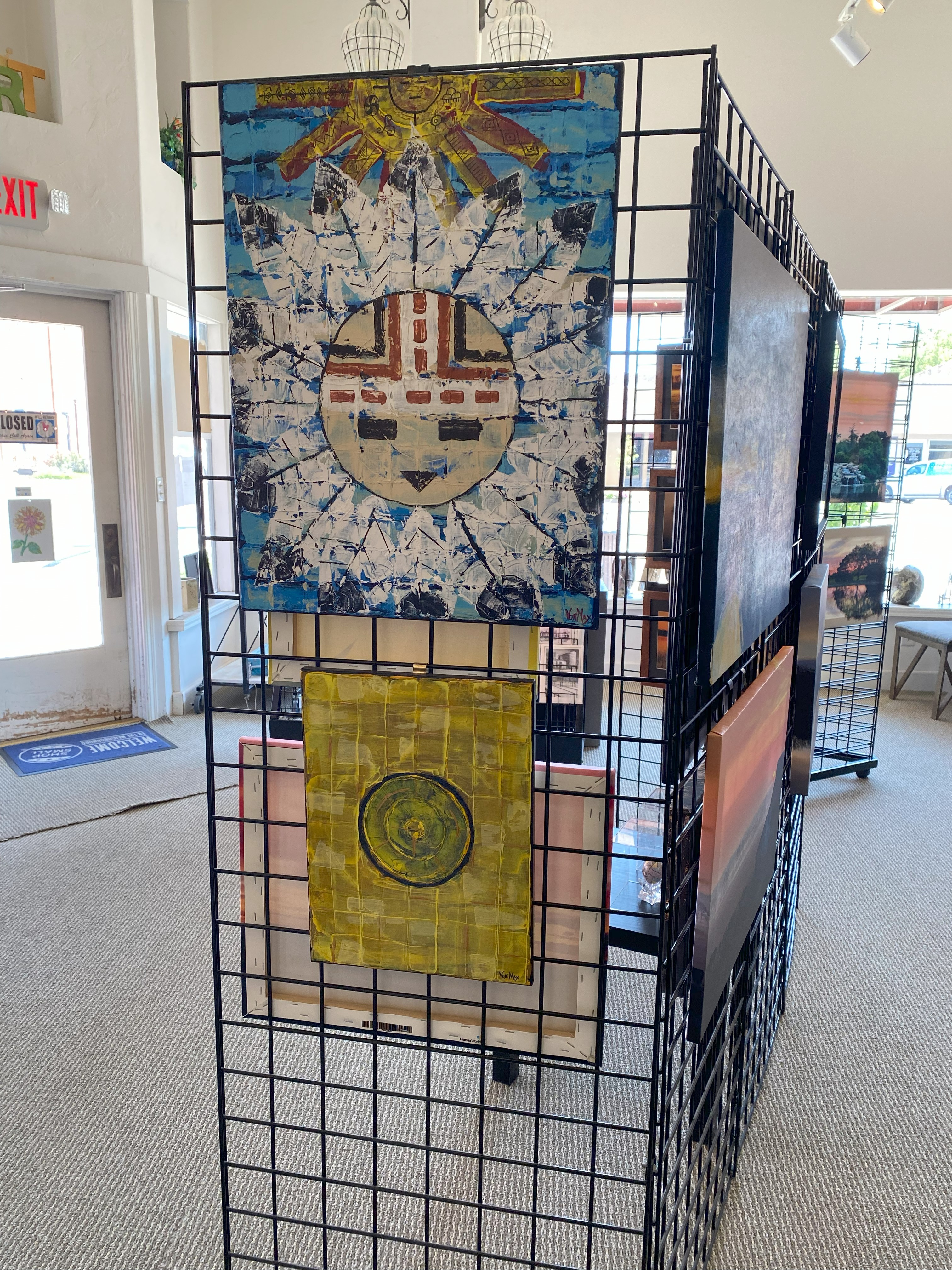
Solar Art Exhibit Featured at Gallery 1001 through September

The Winfield Public Library and the Arkansas City Public Library featured solar books and STEM projects through the month.

Local Coffeeshops and Restaurants offered sun-related specialties.

College Hill Coffee featured a “golden sun turmeric latte” and Sunshine sandwich special. They also provided media for customers to create their own “Sun Day Art”.

Downtown, the Oasis designed a special “Sunset Refresher” drink.

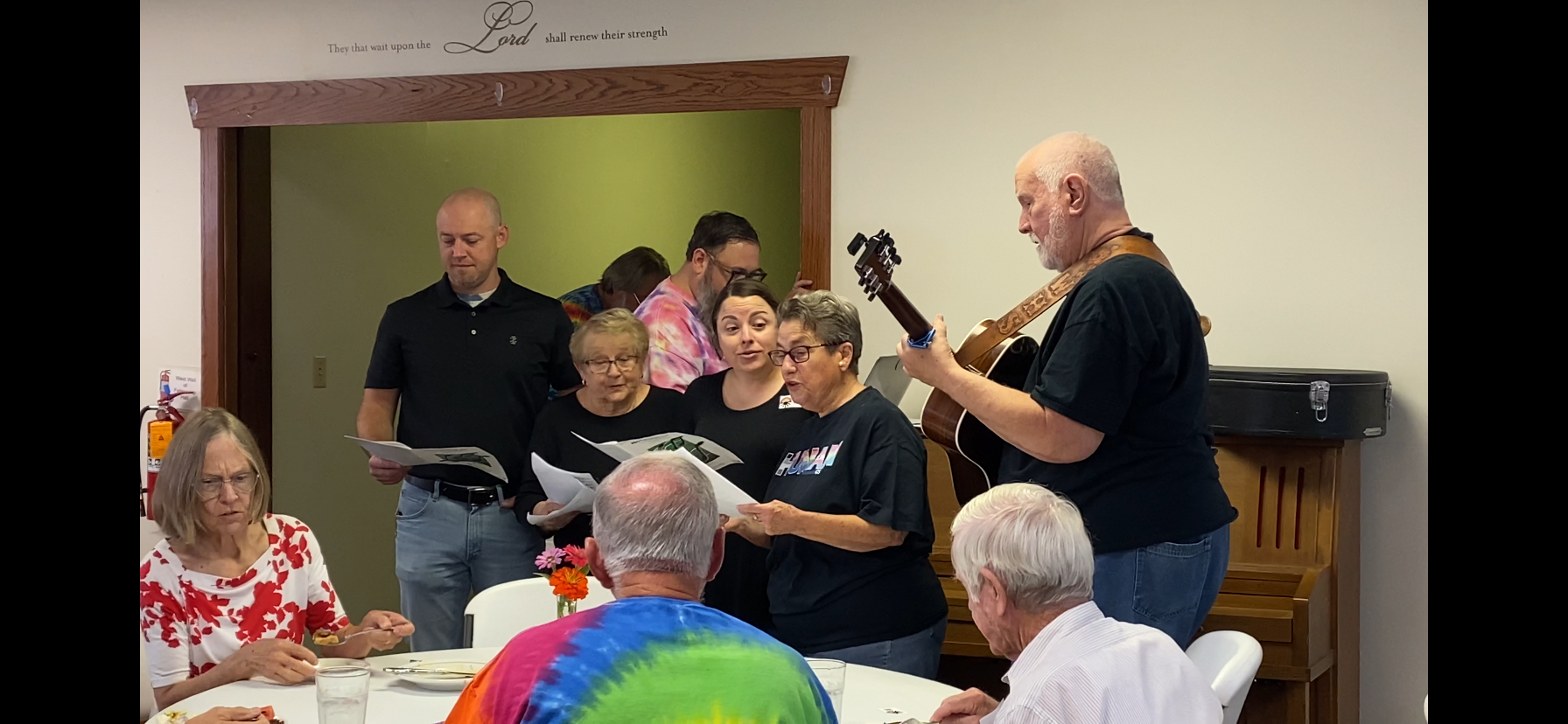
Grace United Methodist Church got into the Sun-Spirit after installing a large solar array on their education building a couple years ago. They kicked off the big Sun Week with special music from campers at the Walnut Valley Festival, followed by a covered dish dinner–with a few sunny delights!

A sweet “sunflower” and sunflower seed pie.

And a local quartet shared an arrangement of  “Here Comes the Sun!”

Meanwhile, out at the Festival, campers and music lovers could show their solar support with specially designed stickers, and enter a drawing for solar camping equipment.

The Winfield Arts and Humanities Council teamed up with the Walnut Valley Festival to offer children a chance to create t-shirts, printed by the sun!

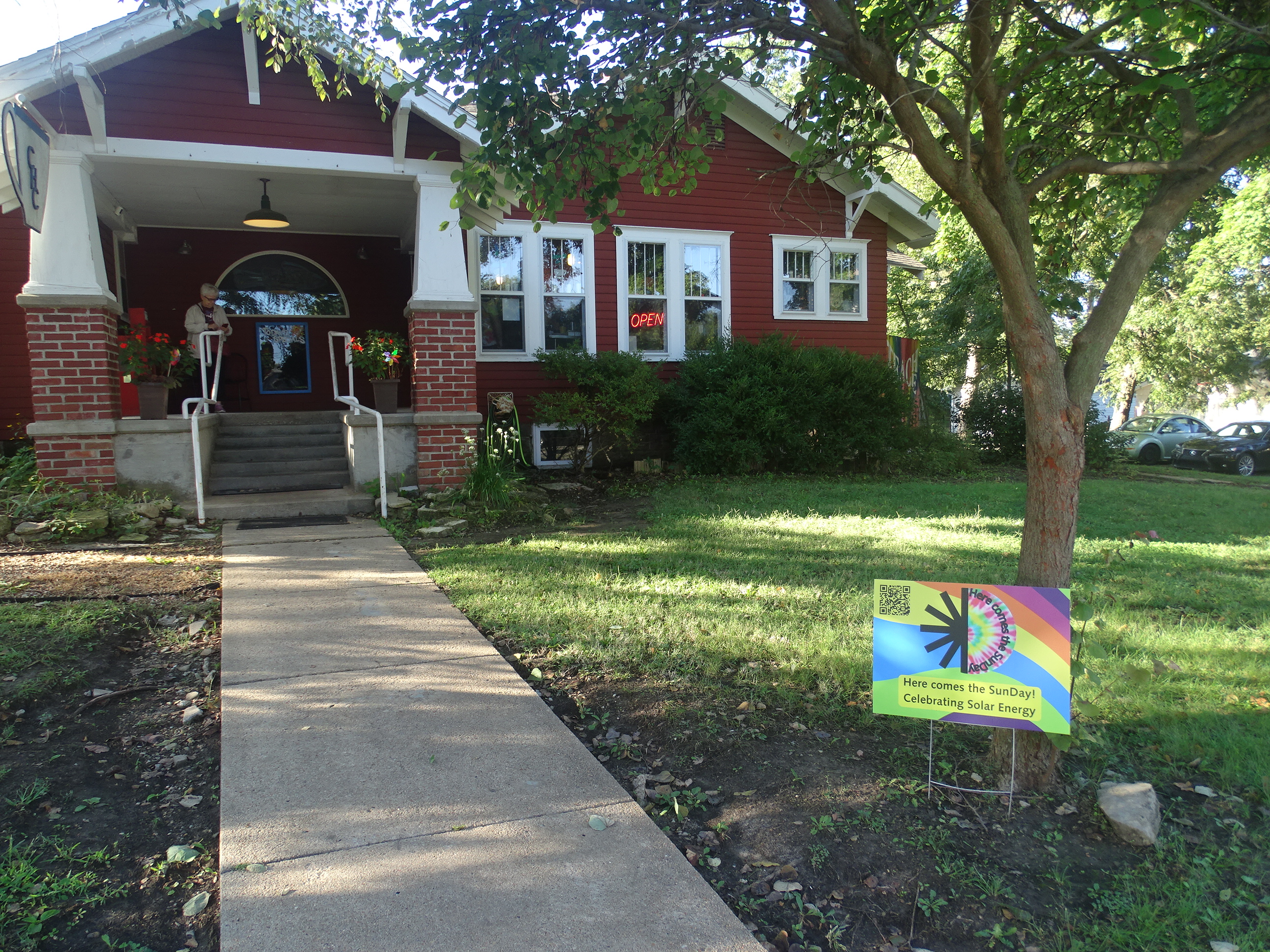
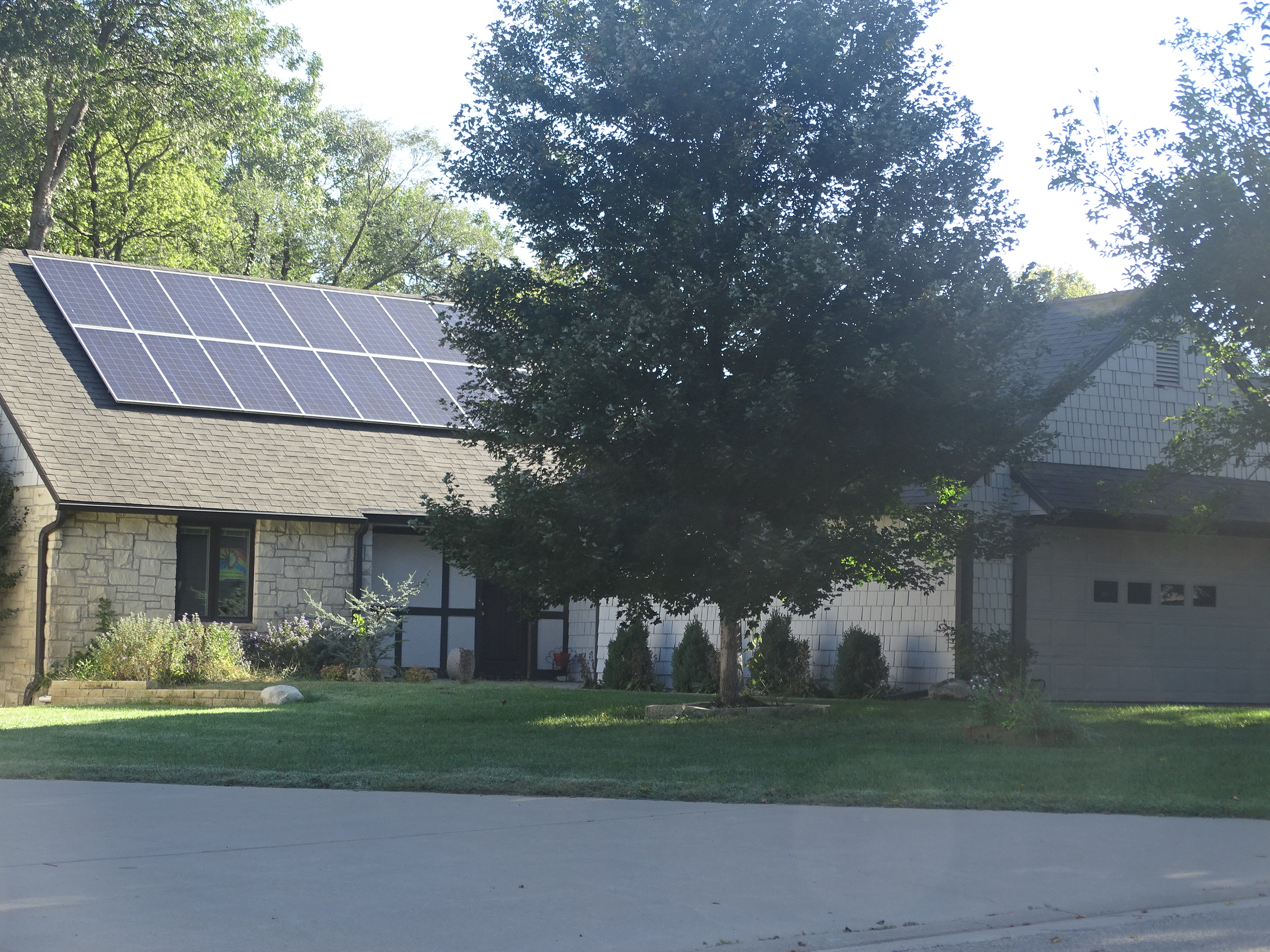
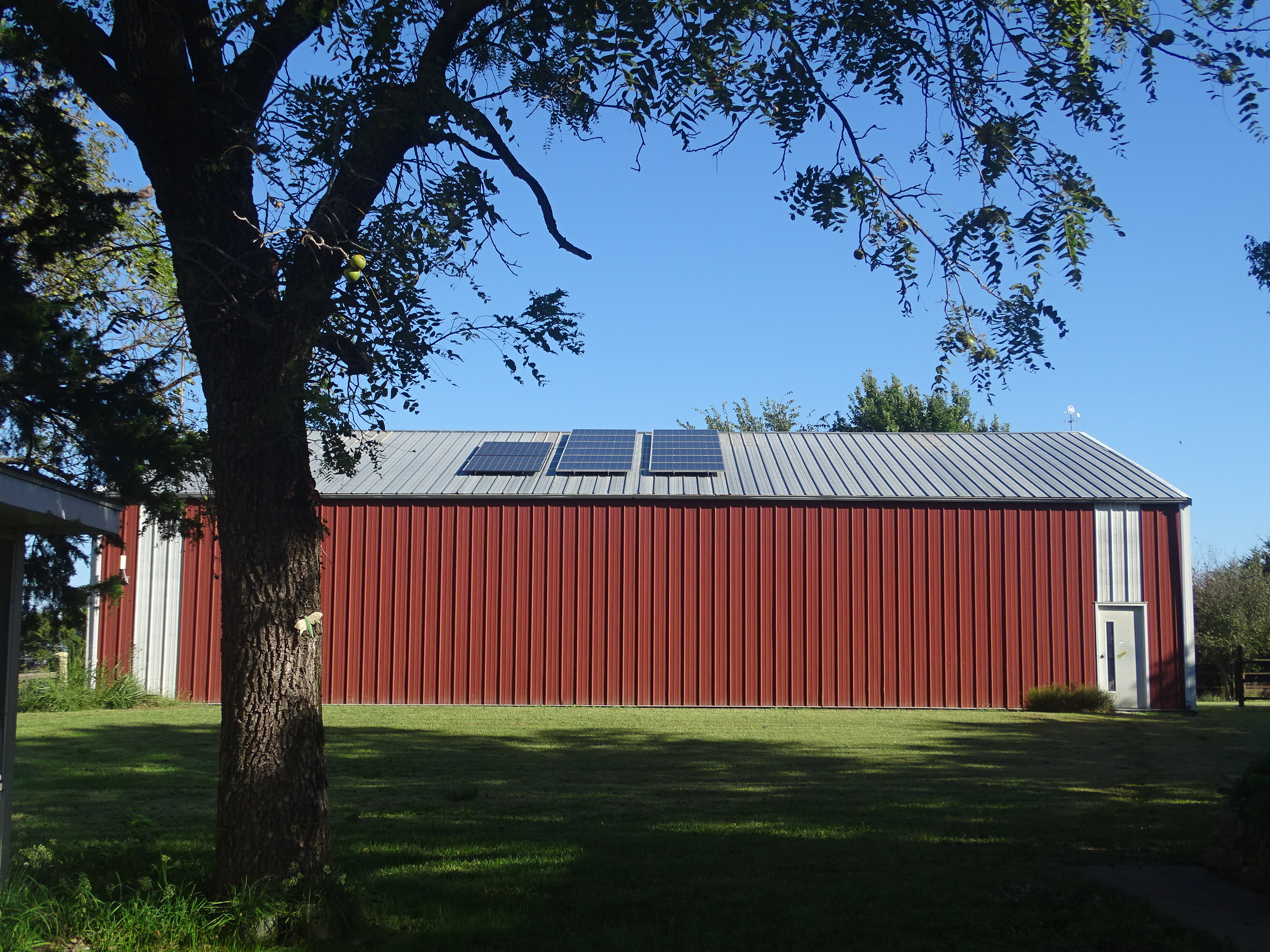
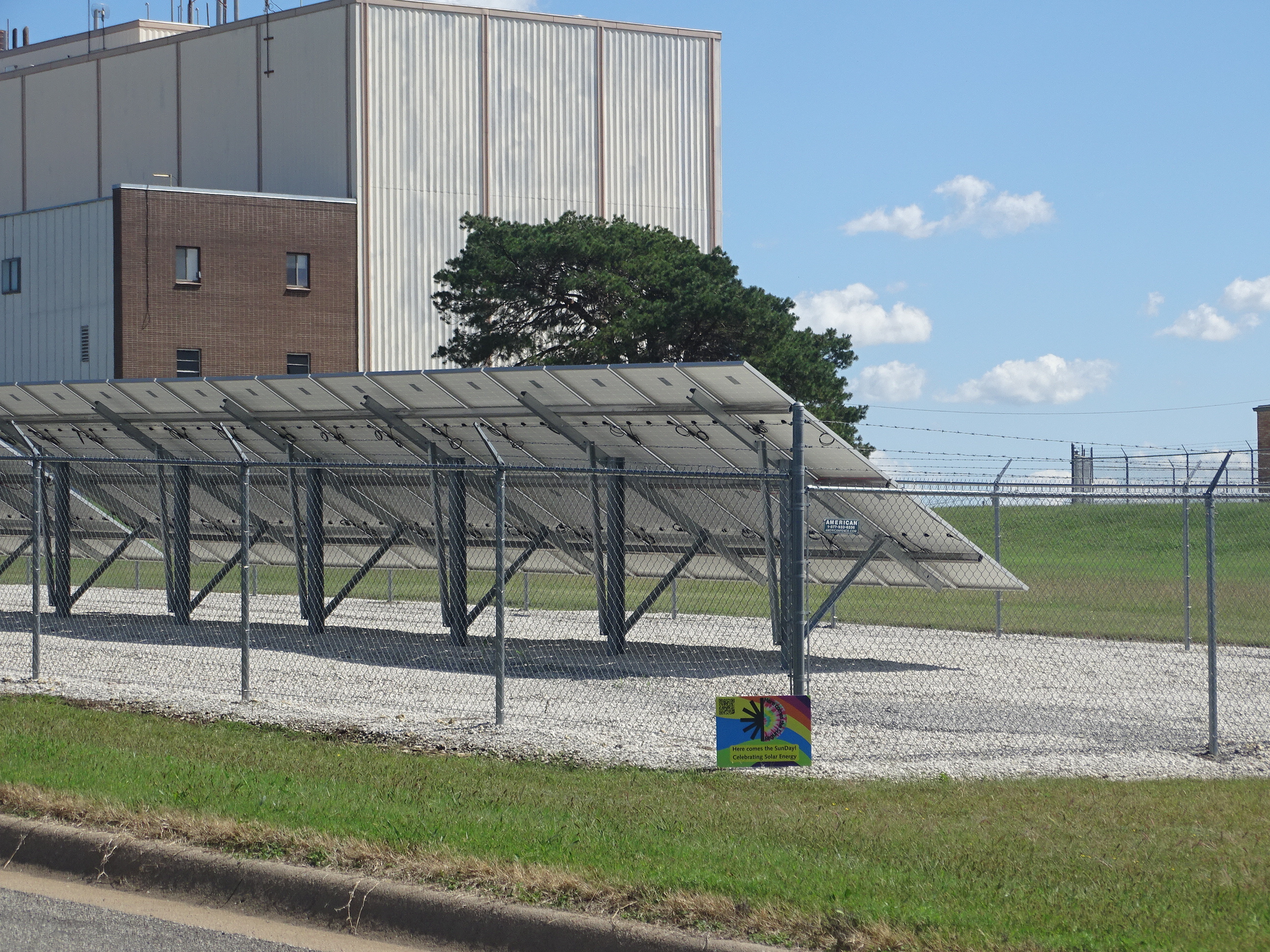
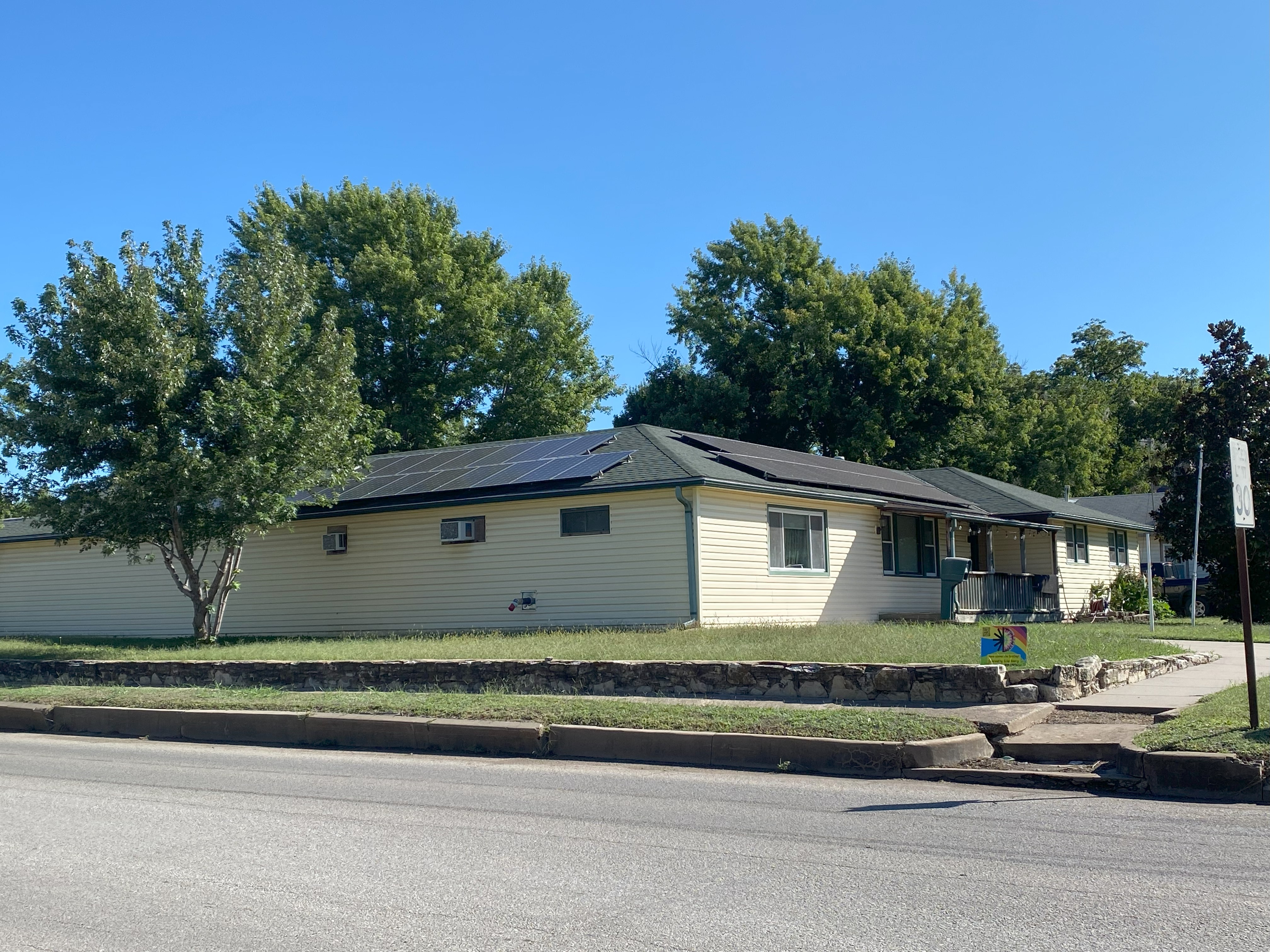
The county Sun Day planning committee provided information for interested folks to tour several local solar installations through the week prior to Sun Day.

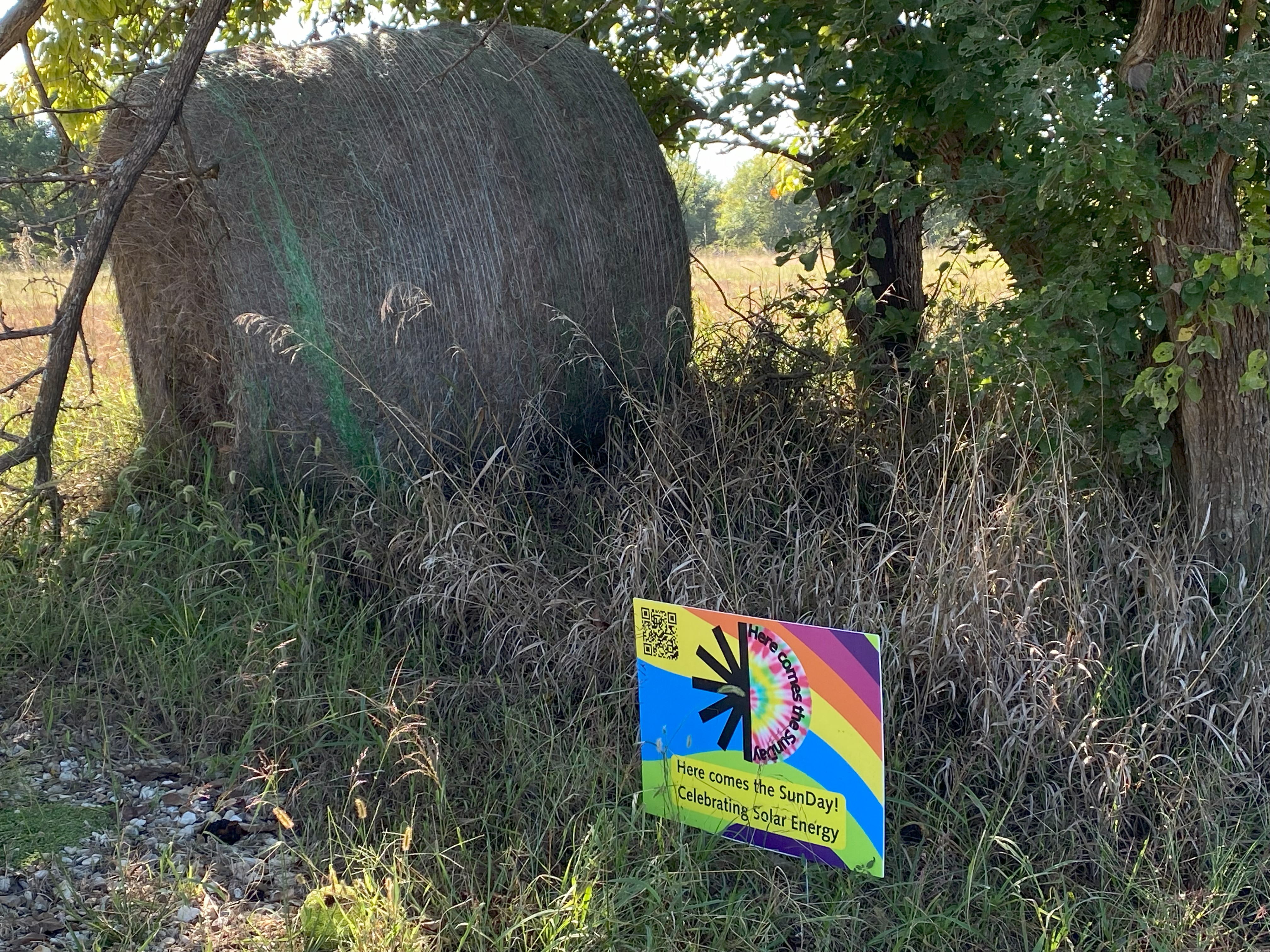
Locations were marked by the special yard sign, within two communities, as well as in the countryside.

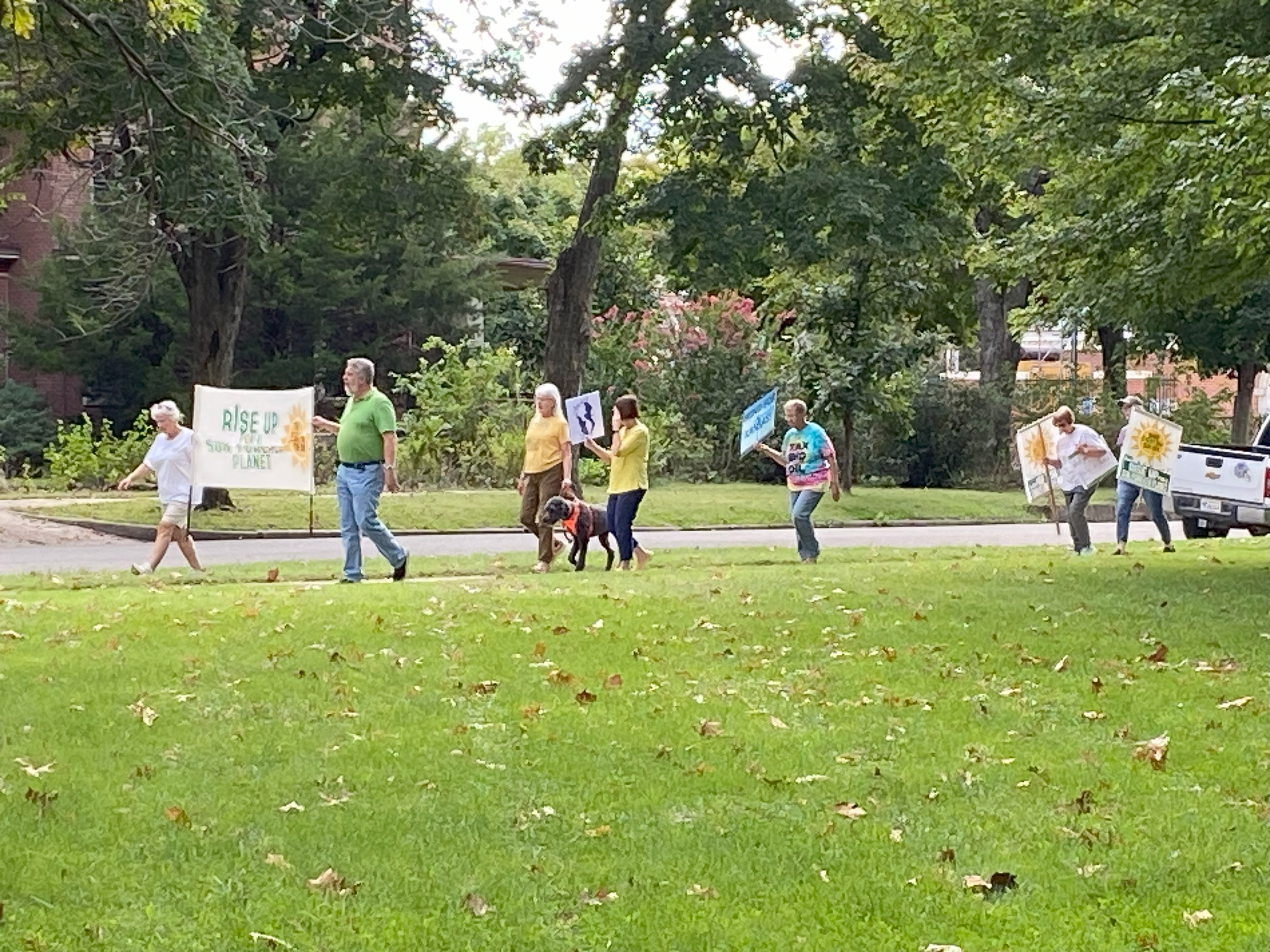
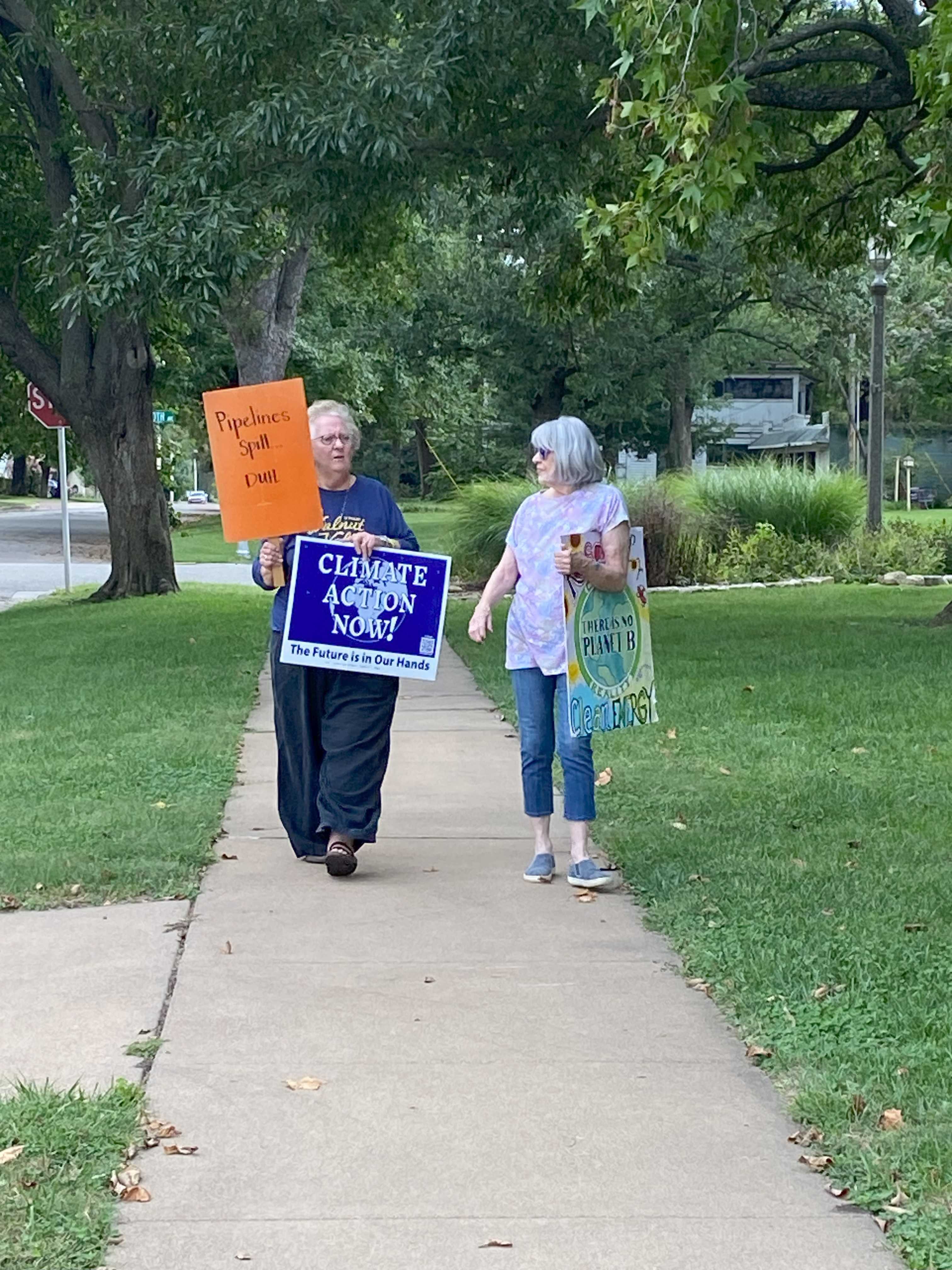
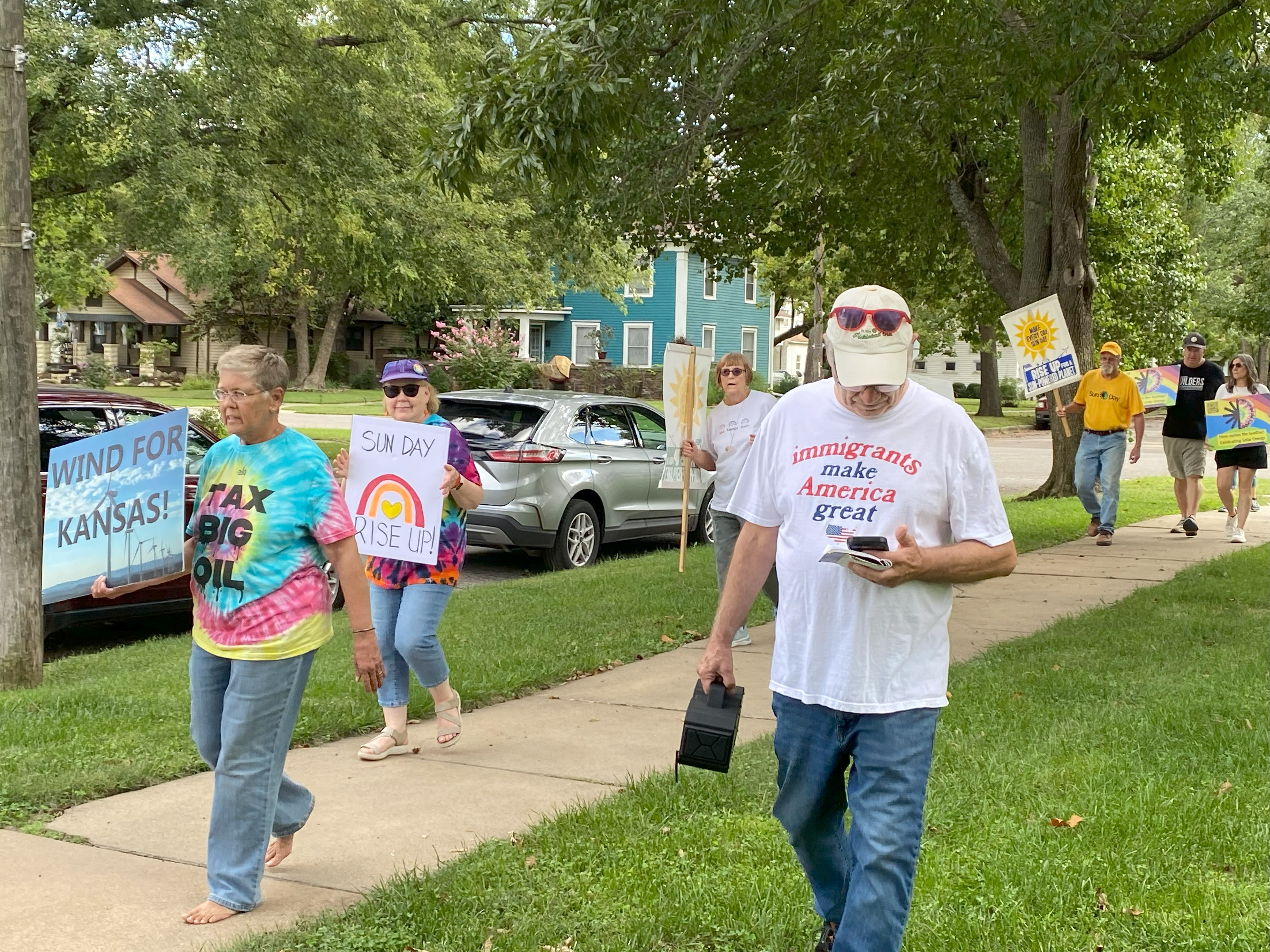
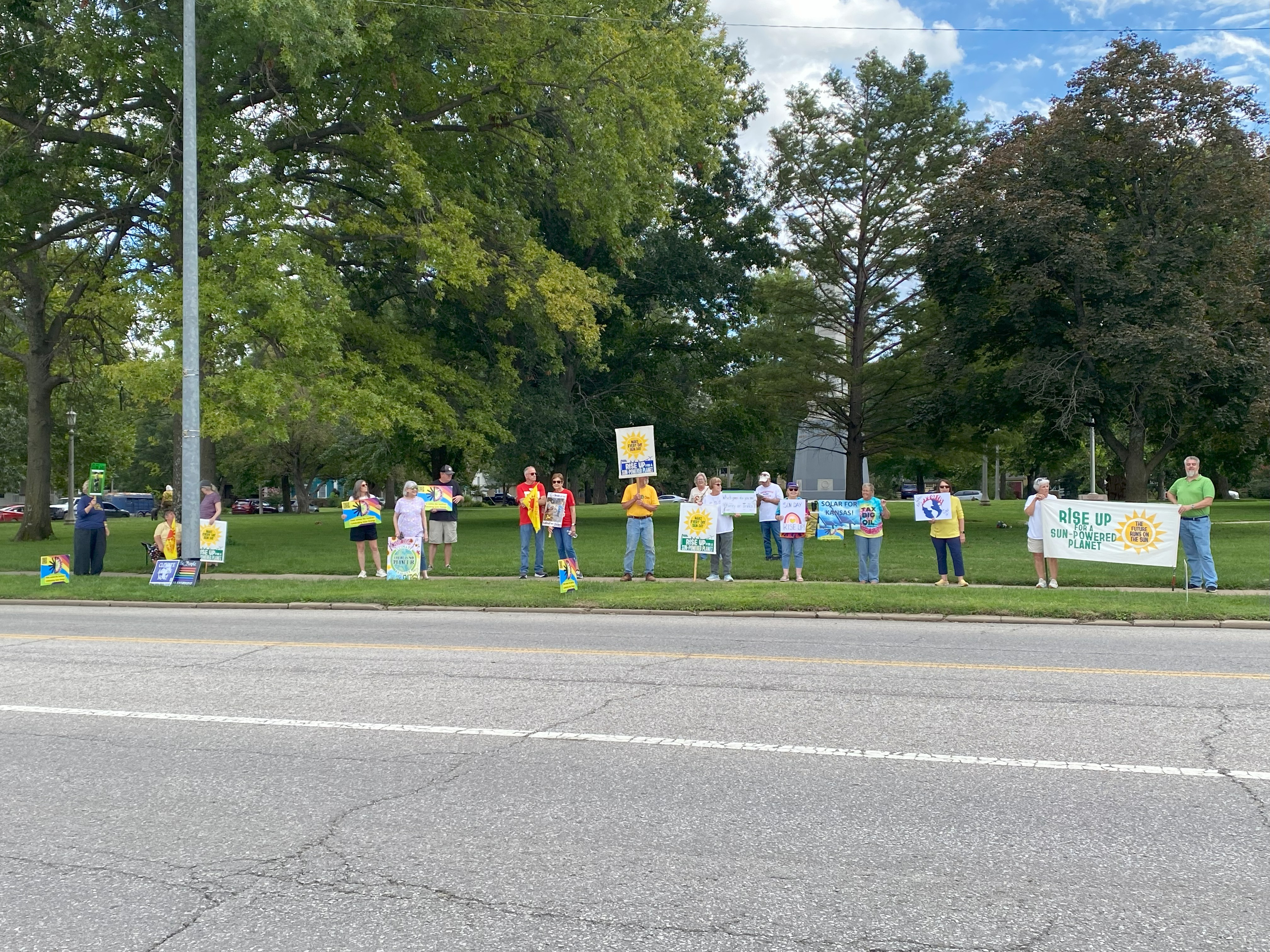
The Final Event was a “Walk for the Sun” to wave at supporters as they traveled home from a remarkable weekend.

Happy Sun Day! May we pursue knowledge and skills, as well as installations of panels that will convert the plentiful energy from our local star into power for all!


Do We Need a New Bible?

The solar energy system on our house came online in July 2011. For the next fourteen years, few days passed when our inverter reported no energy produced by the sun. Then, in June this summer, it all changed. The status window on the inverter, a necessary device that converts the direct current produced by the sun to alternating current for use in our home, toggled error messages constantly during daylight hours. “Peak overvolt,” “AC Voltage Low,” “AC Voltage High.” Production ceased. Given my determination to support the national Sun Day (https://www.sunday.earth)  on September 21 with a local event, we had to do something! An error-ridden system just would not suffice.

The people who installed our system are no longer in that business, so I called local electricians to help diagnose the problem. But we were put on a back-logged wait list, with no real intent to take us off since we were not a priority for the local electricity experts.

I turned to a recommended solar company headquartered ninety miles away. Weeks passed with no appreciable action, but after the devastating baseball sized hailstorm damaged several Solar installations in Ark City, a repair and maintenance specialist from this company stopped to take a look. He found nothing wrong, and assumed there was an issue with a computer chip in the inverter. His advice was to do a hard reset, that is, turn off the whole system for ten days to two weeks to allow the capacitors inside to fully discharge, then turn it on and hope for the best.

It didn’t resolve the error messaging.

I reported back to the solar company and declared that we were ready to replace the inverter and upgrade our home system. That’s when things became interesting.

On Friday afternoon, J, a system designer/project manager, arrived to do a site visit. We agreed on a 3:00 time via email messages. And at precisely 3:00, his white company pickup rolled to a stop in front of our house.

He’s punctual. Impressive.

J chatted about options as he took pictures of several important components in our system, utility meters, and structures on the property. A friendly, 40-something bearded man, he easily answered our questions. I noticed ear piercings as well as tattoos on his forearms. One tattoo was a caterpillar. Another broadcast in a fairly large font, “Practice Resurrection.”

Who was this guy? What did that mean, practice resurrection? Was he part of a strict religious cult? A rigid fundamentalist?

His knowledge of everything solar was obvious and the time flew by. It crossed my mind to ask about the tattoo, yet in the end I let it be. But later, that phrase wouldn’t let me be and I did a search. It turns out that “Practice resurrection” is part of a poem by Wendell Berry.

This system designer for a solar company has poetry tattooed on his arm for all the world to see. Wendell Berry, no less. Impressive!

My encounter with Wendell Berry and his writing has been a meandering path. Earlier this summer, a good friend presented me with an envelope that held a poem by Wendell Berry. M turned to this poem when he needed solace and he wanted to share it with me. That well-worn envelope is in the bag I carry daily. I shared the “practice resurrection” poem with M that evening, whereupon he loaned me Poetry of Presence II, a small volume of poems he didn’t want to part with permanently. It included a few by Wendell Berry, and M urged me to take a look at the poet’s life.

“Look him up,” he said.

Wendell Berry is not to be confused with Thomas Berry, whose book The Dream of the Earth is one of my cherished tomes. Still, there are similar themes in their writing. A thumbnail bio in the back of the loaned poetry book tells me that Wendell Berry writes poetry, essays, and novels. He is an environmentalist “with one primary message: Either we humans will learn to respect and live in harmony with the natural rhythms of this planet, or we will perish.”

Yes. That is prophecy. And Wendell Berry’s important message becomes clearer by the day as humans who have no business leading us continue to lead us toward devastation. It smacks me that this poet’s words have been swimming through my consciousness for years. I have one of his novels in my treasured books collection—as yet unread, but it’s on my list. It just moved a little higher.

There are eleven of Wendell Berry’s poems in my revered 1991 copy of Earth Prayers from Around the World: 365 Prayers, Poems, and Invocations for Honoring the Earth. Included in this volume is an excerpt from the poem that concludes with the words, “Practice Resurrection.”

What, exactly, does that mean? A description that popped up in another search. To practice resurrection means to embody the spirit of new life, hope, and transformation in the face of death, despair or brokenness. Often this is accomplished in acts of faith and love, through perseverance. It involves a daily commitment to find new life in death, to cultivate resilience, to see possibilities for redemption in difficult situations.

That, my inner voice says, is what we need right now, a sense of partnership with the creative Spirit responsible for all life on our amazing planet.  That, my inner voice adds, is the theme of the novel I’m currently writing. That inner voice, I swear, also adds, that may be the theme of many great works of fiction through the ages.

Excerpts from Berry’s poetic verse prompt more from my nagging inner voice.

Berry: “So, friends, . . . love someone who does not deserve it.”

Fell: Love is the greatest power. Believe it.

Berry: “Denounce the government and embrace the flag. Hope to live in that free republic for which it stands.”

Fell: Berry, who is 91 in 2025, wrote this before 1991. How did he know?!

Berry: “Give your approval to all you cannot understand. Praise ignorance, for what man has not encountered he has not destroyed.”

Fell: And everything he has encountered, he is in the process of destroying.

Berry: “ . . . please women more than men . . .”

Fell: Hear, hear!

Berry: “Put your faith in the two inches of humus that will build under the trees every thousand years. Listen to carrion . . .”

Fell: The cycle of life; from death comes new life.

Berry: “Laugh. Laughter is immeasurable. Be joyful though you have considered all the facts.”

Fell: Not the fake facts. Consider the factual facts. This is a difficult thing, and yet, laughter is healing. When one can laugh, one can love.

Berry: “As soon as the generals and the politicos can predict the motions of your mind, lose it. . . make tracks in the wrong direction.”

Fell: I am losing my mind.

Berry: “Practice resurrection.”

Which brings me back to the topic of this essay. We need a new Bible. There. I’ve said the thing that’s been on my mind a long time—like decades. Writers know that communication is a give-and-take experience. Half a conversation belongs to the listener. Half the communication through reading belongs to the reader. Given the infinite life experiences of any single life (no two are alike) each reader may interpret a sentence, a verse, a chapter or a book in ways that astonish the writer. This has happened to me, when readers express things they got from my writing that I didn’t know were there. And so, in 2025, with our lives so very different from the ages when scriptures were written, is it any wonder that we misconstrue, misunderstand, and misrepresent the ancient verse?

When our scriptures offer some people excuses to act in cruelty with arrogance rather than teach us how to get along, there is something wrong. When our holy verse teaches that some humans have more rights than others, this is not good. We need lessons and prayers that include reverence and consideration for all peoples around the world, for all life forms created by the Spirit from elements on Earth; we need to cherish and care for the planet as She has cared for us. We need inclusive Scriptures, not exclusive retaliatory verse. We need the insights of various faiths that developed in different locations, including those of indigenous peoples. Inclusive, not exclusive. We need to learn to respect each other, to love with abandon, and to honor those forces and cycles that brought us into being, be they of heaven or of Earth.

We need to practice resurrection.


Keys of His Success

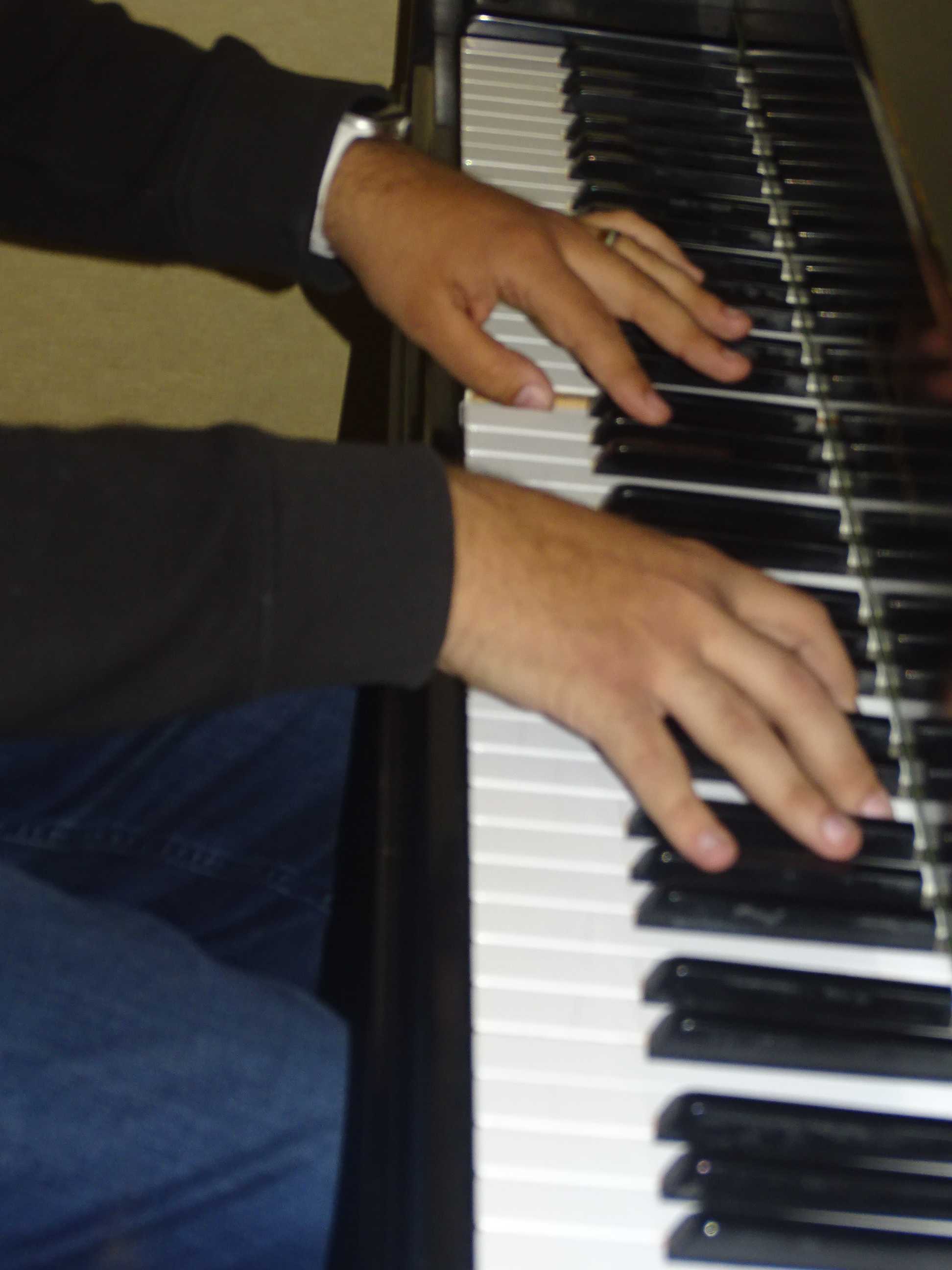
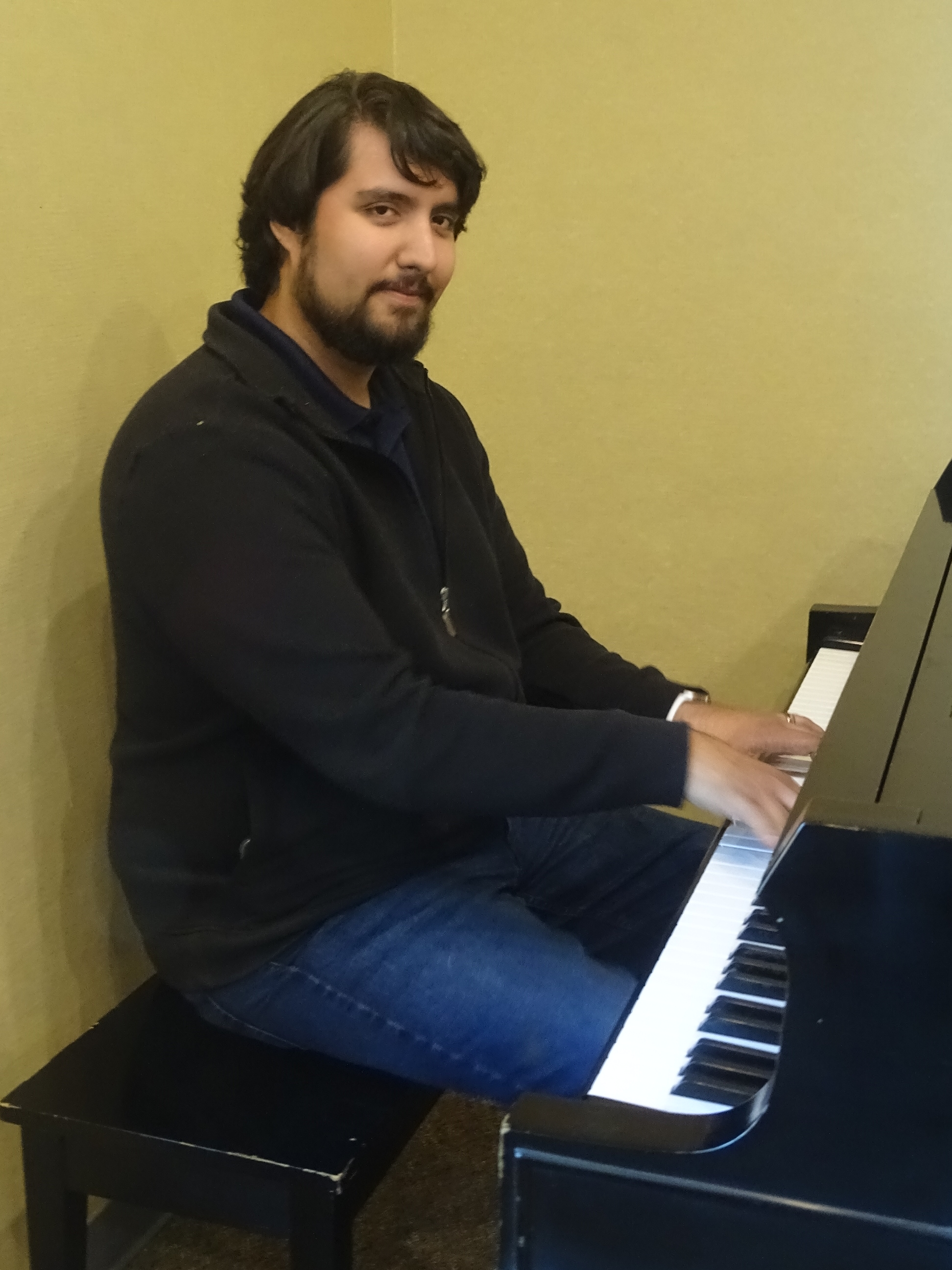
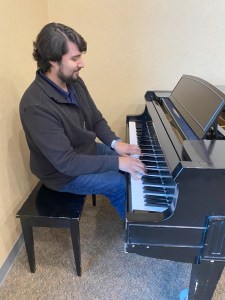
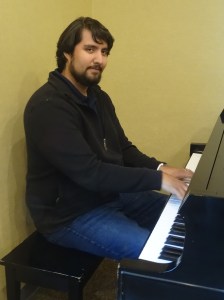
Emerson Talkington opens the lid on the grand piano and settles on the bench. His hands spread across the keys and exquisite music rises from the strings. From Chopin to Brahms to Rachmaninoff, he plays as if the piano is part of him. Days away from his college graduation, he’s on target to achieve a goal he’s dreamed about for years. From an unlikely and late start, Emerson has cleared more hurdles in the last decade than many people face in their entire lives.

Since the first commencement in June 1889, Southwestern College (SC) has held graduation exercises each spring. This year’s event is planned for May 4 at 2:30 in the Richard L. Jantz Stadium. As he receives his diploma for a Bachelor of Arts in Music that day, Emerson will join hundreds of alumni since that 1889 ceremony with degrees in Music. This year, he has the distinction to be the only music major. “And,” he says, “I’m the last one.”

Born in Winfield in 2002, he attended the local schools, graduating from Winfield High School with the class of 2020, in the Year of Covid. His love for piano began when he was a student at Winfield Middle School. The vocal music classroom housed a Mason & Hamlin grand piano donated from the estate of legendary pianist and teacher E. Marie Burdette. Emerson became fascinated with that piano and lingered after school most days in hopes of a chance to play it. His innate ability coupled with YouTube tutorial videos allowed him to pick out melodies by ear and the school’s music faculty encouraged him as his love for piano flourished.

Paige Camp, the vocal teacher at the time, says, “It seems like yesterday that he was a student in middle-level choir.  He spent many days after school in the music hall, tinkering with the piano.  I nicknamed him ‘Cling-on’ as he was usually there until we had to lock up for the day.”

Allen Dilley, band teacher, accompanist for the middle school choirs, and accomplished pianist himself, often used the Burdette piano after school for practicing. “Dr. Dilley introduced me to piano technique and music theory,” Emerson says.

“I first met Emerson in the vocal music room at WMS,” Dilley says. “Classes had concluded for the day and I recall practicing Chopin’s Scherzo in Bb minor—a challenging composition. A few days later Emerson was in the room playing excerpts from the same piece, albeit without having ever seen the music. I suggested that as he began his keyboard journey, he might want to start with something a little less intimidating.”

From the middle school choir, he went on to the WHS choir where he found another friend and mentor in accompanist Billy Bearden. Lacking the Burdette grand piano he’d enjoyed at the middle school, Emerson found a small console piano in a storeroom to tinker with. He often sought out Bearden for tips on piano performance.

It was during his senior year in high school that he encountered a huge obstacle in his path—he had cancer. Bearden shares, “[After] the diagnosis . . . there’s a moment for Emerson (or maybe a thousand of them) where it feels that the universe is playing a cruel joke.” However, Bearden notes that there’s a “miracle in the mundane: he keeps playing.  Even when his physical pain makes it hard to sit up.  Even when he’s told music is a waste of time, and when all he can hear in his head is how he started too late and he’s not good enough—Emerson keeps playing.”

Emerson tapped local jazz pianist and renowned performing artist Scott Williams as his first official private piano teacher. Williams says, “I began teaching Emerson between his sophomore and junior years of high school. This is later than most people start learning the piano, but I sensed right away how serious he was. He progressed quickly, and soon sounded like he had been playing much longer. It wasn’t that long before he started getting hired as a pianist.”

With the private lessons, his early mentors noticed his growing skill with jazz. Dilley notes, “His knowledge of chords and harmony and the ability to apply them to existing melodies is excellent. He showed me how to turn a well-known hymn into a “blues” piece!” The student turned into a teacher.

Paige Camp worked with him through high school. “He joined the high school jazz band, and later the symphonic band.  There were hours of rehearsal and many performances. . . But despite the cancer diagnosis, he kept a very dry sense of humor about it all.  And he kept playing the piano.”
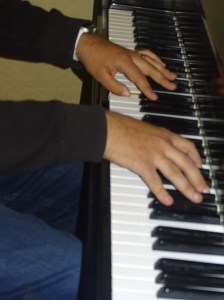
Through the cancer and Covid chaos, he never quit playing. It was clear to him that music, through pianos, was his life’s calling and he embraced it with his whole heart. After he graduated from WHS, he enrolled with a scholarship in Cowley College as a music major. His first experience working with Cowley piano instructor Steve Butler was when he was a high school senior. He was asked to fill in as accompanist when Butler took over conducting the Cowley Singers at a concert. “I had a couple weeks to prepare, but I was still nervous,” Emerson recalls. Since that debut audition, he has performed many times for Butler, including as a duet partner. “Playing duets with Steve brought out my best,” Emerson says.

Pastor at Hackney Baptist church as well as music instructor at Cowley College, Butler considers Emerson a good friend and has been pleased to recommend him when people ask for a keyboard artist.

During the semesters at Cowley, Emerson also became the proud owner of that E. Marie Burdette Mason & Hamlin grand piano. Covid prompted staff changes at USD 465, and the new music staff members were willing to transfer the custody and maintenance of that gem of a piano to the school alumnus who had fallen in love with music through it. Emerson kept playing on the original mesmerizing instrument.

He transferred to Southwestern College as a music major with a piano performance emphasis but soon after he enrolled, Southwestern announced it was terminating its music degree program. To its credit, the college committed to completing the degrees of the majors that were currently enrolled and Emerson persevered.

Cancer struck again with a vengeance later that same fall, and delayed his coursework while he battled the relapse at MD Anderson Cancer Center in Houston, Texas. Fellow cancer survivor and associate professor of music at Southwestern College Jeremy Kirk said, “Living through chemo as he did—twice—influences your tenacity. You have to be tenacious. There’s a feeling that: If I can do this, there’s nothing I can’t do.”

Returning months later with his cancer in remission, Emerson picked up where he’d left off, married Rosalyn, the love of his life, and with support from the music faculty and the college administration, he continued his pursuit of a Bachelor of Arts in Music. His grit and determination impressed the staff at Southwestern to the point where the instructors were as determined as Emerson to fulfill his goal.

Professor Kirk shares his insights. “Emerson possesses first rate music talent and he seeks opportunities for growth as a musician outside his comfort zone.” As a student in Kirk’s World Music class, he joined the performing ensemble and traveled to Hawaii with the group in December 2022. He participated in the jazz and pep bands at SC, served as librarian for the South Kansas Symphony, took private organ lessons from James Leland, and even helped Leland with the day-to-day maintenance of the pipe organ in Richardson Performing Arts Center. He completed his coursework mostly through online classes and independent studies, but he never gave up and never quit playing.

In addition to a bustling student schedule, Emerson supported himself through the years with a variety of outside jobs. His interest in automobile mechanics secured him a job as a manager at O’Reilly’s for a while. He also worked in fast food places, installed signs for Cardinal Signs, did custodial work, served as the accompanist at area churches including a couple years as organist at Winfield’s First Presbyterian Church, and as the accompanist at Ark City Middle School for the last four years. He also has a few piano students of his own.

Leland says, “I have unparalleled appreciation for the noble and realistic way he worked through college. He is conscientious about finishing any work he starts.”

Emerson has triumphed through all the challenges the universe threw at him. Bearden, his accompanist pal during high school, says, “It wasn’t triumph in any grandiose sense—no concerts or sudden label deals—but it was something better: a private rebellion, a refusal to quit.  Each day he chose the small and seemingly insignificant choice to create beauty in a world that kept offering pain.”
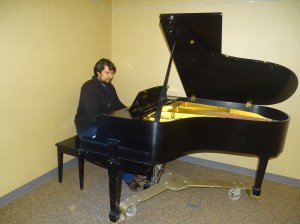
And he became more than just a student. “He became an artist,” Bearden says.

With graduation approaching, he prepares to launch into his next chapter of life. Emerson will join fellow SC music alumni Butler (1997) and Bearden (2005) as well as hundreds of musicians with roots at Southwestern College who became dedicated schoolteachers in small towns and cities across the nation, performed with respected symphonies, taught in colleges and universities, or worked as church musicians and composers.

For the immediate future, he plans to travel this summer, to embrace as much of life’s opportunities as possible. “I want to travel while I can. I might not make it through a third cancer occurrence.”

When he is home, Emerson plans a public performance where he will share his spark for life. Details will be announced later. He plans to expand his studio to offer more private lessons, and hopes to teach music at an area school. He is interested in piano technology and wants to eventually rebuild the Mason & Hamlin piano that opened the world of music to him.

Kirk feels certain that Emerson will have success with whatever he chooses to pursue because of the qualities of his personality. What are those qualities? According to those who know him well he is flexible, humble, inquisitive, compassionate, and kind. With a gentle nature, he is always there to help a friend—a good recipe for success in any situation.

For now, each of his instructors feels what Steve Butler expresses, “To have played a small part in his musical and spiritual growth gives me great joy!” His hometown and expanded community join the instructors to wish him the best as he graduates with his coveted BA degree in music, with an emphasis in piano performance.
 

Craig, Carter, and Compassion

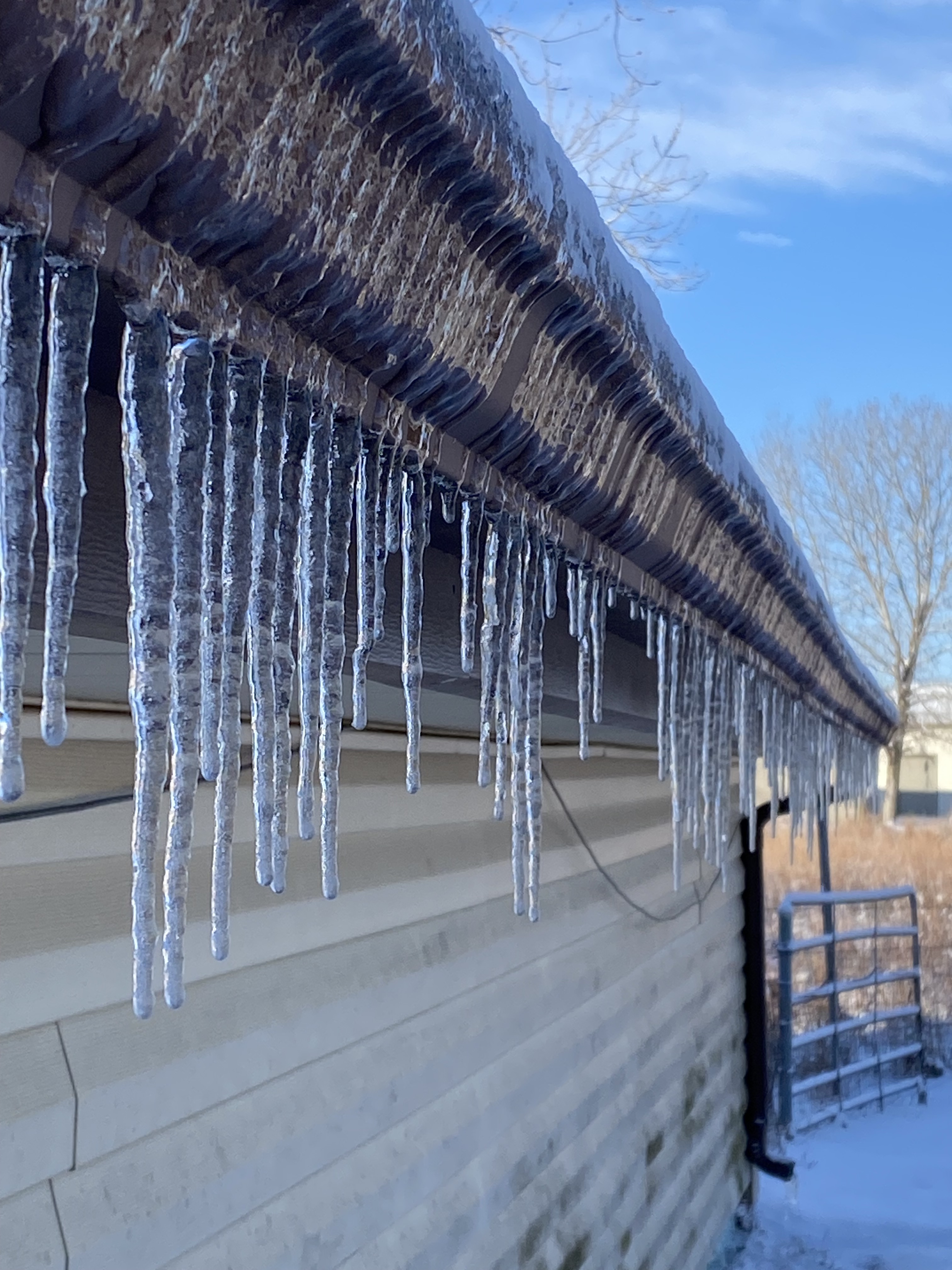
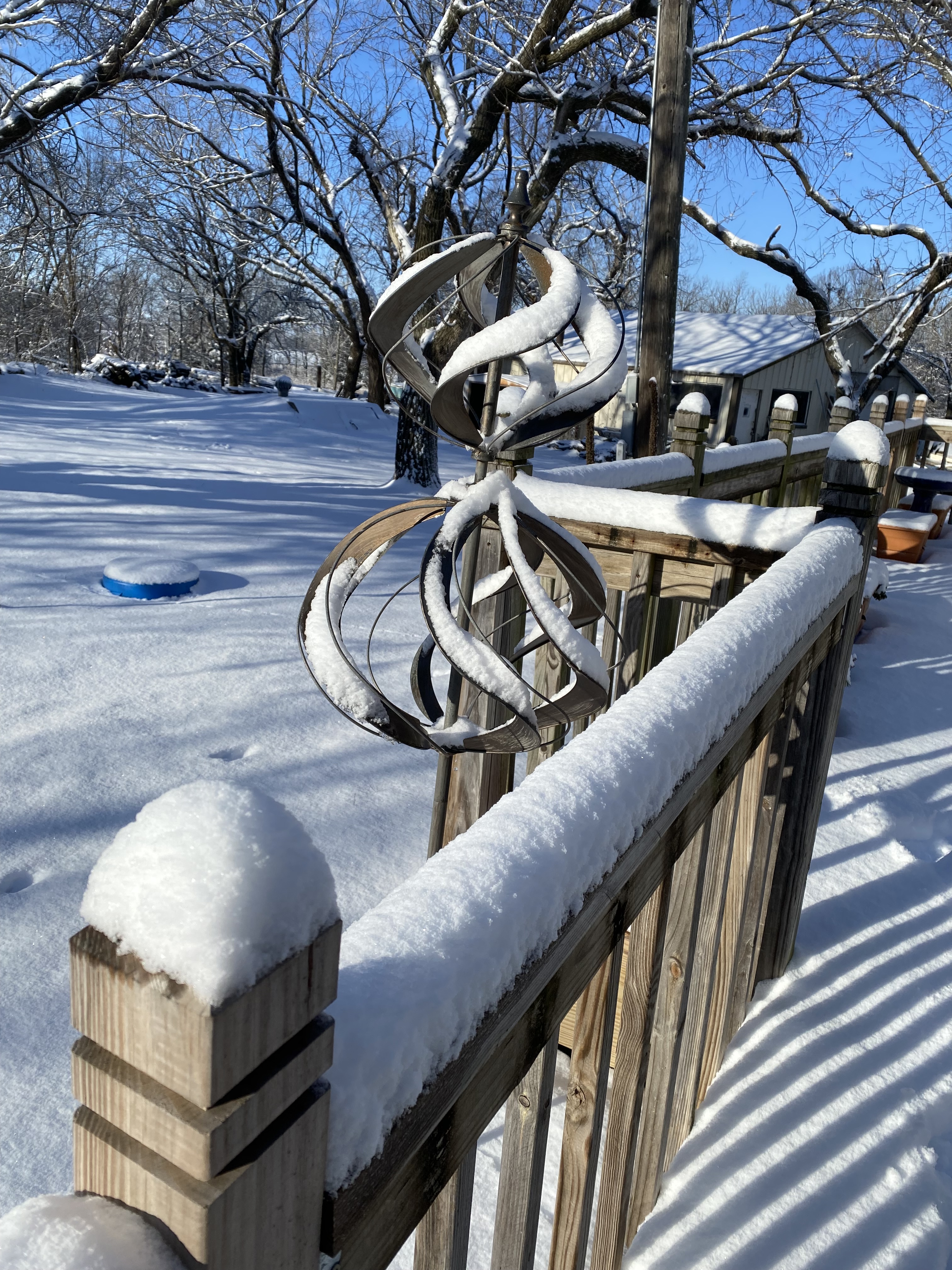
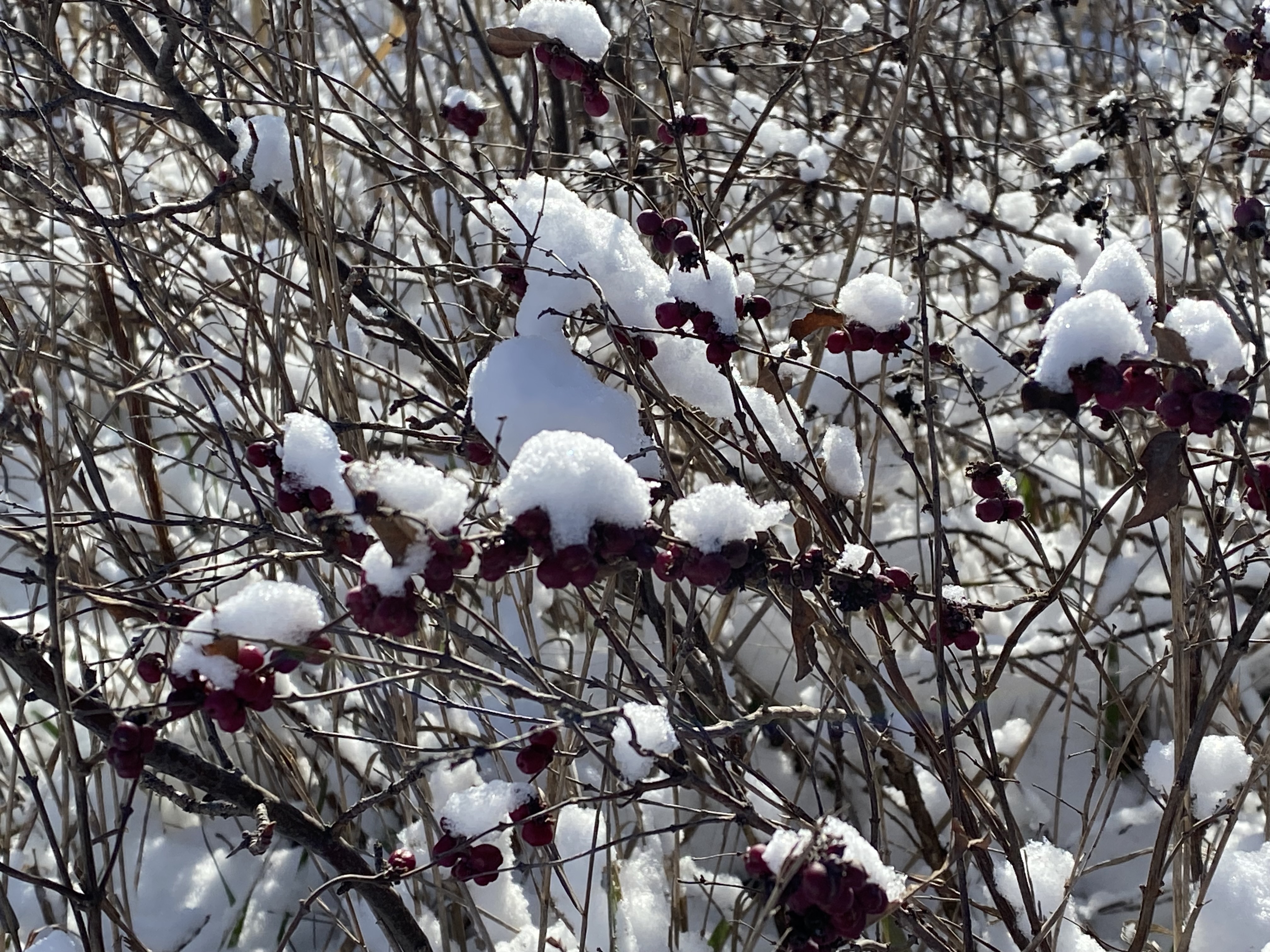
Seventy-three years ago today, at 10:10 in the morning, a baby boy arrived in this world who would become a significant part of my life. Two decades later, I met Craig Winter in college at FHSU. We enjoyed traipsing around public parks and nature reserves in Kansas with our cameras, taking pictures of the wonders of nature. This morning I celebrated his life with a walk in the winter wonderland, taking a few pictures of the snow that fell overnight.

Craig and I were married in 1977, during Jimmy Carter’s presidency. Having taken a class in the biology department at FHSU together–a class called “Can Man Survive?” that examined all the environmental issues of the day, including the greenhouse effect and global warming as climate change was called then–we were united in our commitment to support the natural world and reduce humanity’s harmful effects that were due to our unmitigated greed. Jimmy Carter was our guy. They say he was ahead of his time. I don’t think so. The probability of a global consequence to our short-sighted ravaging of our planet was known more than 100 years ago. Society knew all the benefits of alternative energy in the 60s and 70s. But harnessing free energy from the sun didn’t make any corporations much money. Craig and I were supporters of Carter’s conservation methods–turn down the winter thermostat, 55 mph speed limit, his installation of solar panels on the White House. And we dreamed of becoming reliant on our own private energy production, even then.

Carter acted with the well-being of his neighbors in mind, a true Christian quality. He wasn’t ahead of his time. The “resistance” at that time was just way behind. Look where that got us as they gained and assumed power.

Craig became a cancer statistic 9 days after his 33rd birthday in 1985, and I became a widow. (Quite the stigma for someone not yet 30 years old.) But I haven’t forgotten our joint priorities, nor our admiration for President Jimmy Carter.

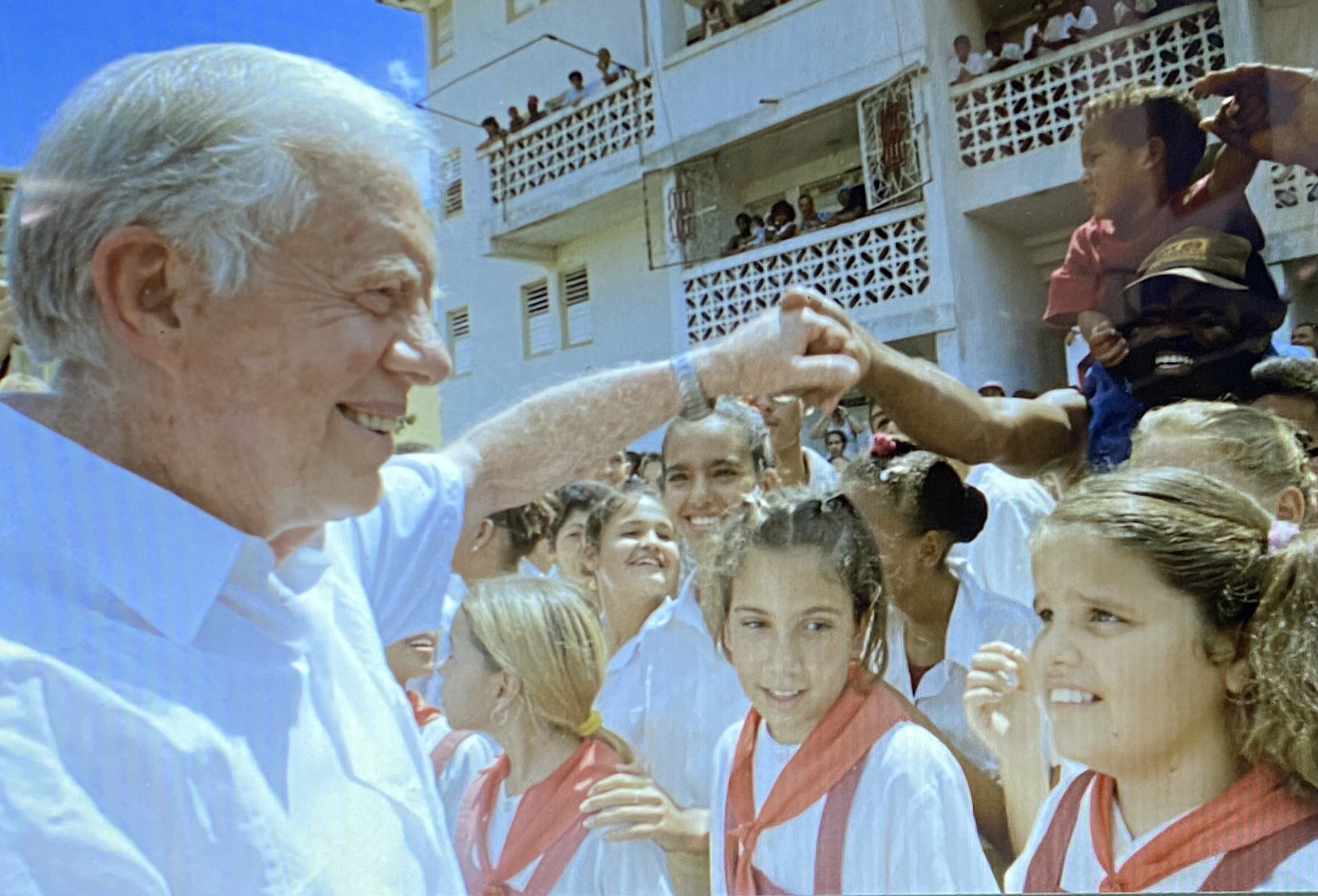
Photo courtesy of The Carter Center.             Cuba 2002–The Carter Center’s delegation to Cuba, being the first time since the 1959 Revolution that a sitting or former president visited Cuba.

After his time in office ended, President Carter showed that you don’t have to be the elected leader of the country to make a huge difference, and today, a day after President Jimmy Carter’s funeral in Washington, DC, I renew my commitment to make a difference for those in my circle, for the inhabitants of Earth’s future, and for all the non-human neighbors that are as dependent on this planet as we are dependent on their well-being. Those of us with the future of our planet and its life forms in mind are now the “resistance.”

This morning, in honor of Craig Winter, I was trekking around our acreage in the fresh snow with my camera, capturing scenes, just like we used to do. Thinking of you Craigie, as I always do on this day. With love.

NOTE: I am deeply grateful and indebted to my second husband, Mike, for his generous and compassionate heart for the last 36 years. He has never objected to my memories or to my honoring people from my personal history that helped make me what I am today. We are all products of our histories and our memories, not just the stimuli we receive at the present time. Thank you for being dad to all our children, and grandpa to all our grandchildren as well as allowing my heart to grieve through the years.

On the Verge

Remember what it was like. After a long wait, it finally happened. With guarded optimism, you look forward to the big event. Though you know things can happen, chances are you won’t be in that slim margin. So you dance. You laugh. You hug everyone and share the good news. You imagine life after the event, the realization of a dream come true. The anticipation of anniversaries, holidays, and journeys to wondrous locations, savoring the unfettered excitement as your long-awaited dream discovers the world. Never a dull moment. Of course there will be challenges, but nothing you can’t work through and be stronger for it. You look forward to years of living, loving, and learning together.

Until there are none.

It all comes crashing down. Something was wrong at a routine checkpoint. No  heart beat. Emergency trip to the hospital. Before you have time to process the news, joy morphs into heartbreak. A birth becomes a funeral. It’s over. Dreams die hard.

After November 5, it struck me how similar the election loss was to the loss of an infant. Though it’s been decades ago, I feel the same sad aimless wandering and hopelessness with the election results as with my two sweet babes who died before they had a chance to live. Gone are the anticipated celebrations and birth anniversaries. Gone are all the anticipated years of discovering the world together. Gone are the memories and the history I looked forward to making.

Every morning brings more bad news to my inbox and I move through life on the verge of tears, almost—yet not quite—ready to open the floodgates.

How will I manage the coming hard times? How will I step forward, keep moving, go through the motions, when my heart is sorely wounded? How can I show up for others when I can’t even manage to cheer myself up? Where did all the good in the world, all the anticipated conquests of our precarious future—where did they go?

One of the writers I follow suggested asking two questions every day.

  • What do I still know and believe as truth?
  • Is my heart still beating?

In other words, my values remain and I can embrace them until my dying breath. It reminds me of the weeks and months following the burials of my sweet babes. It’s been forty years. (Almost 43 for the first and 42 for the second.) How did I work through the devastation?

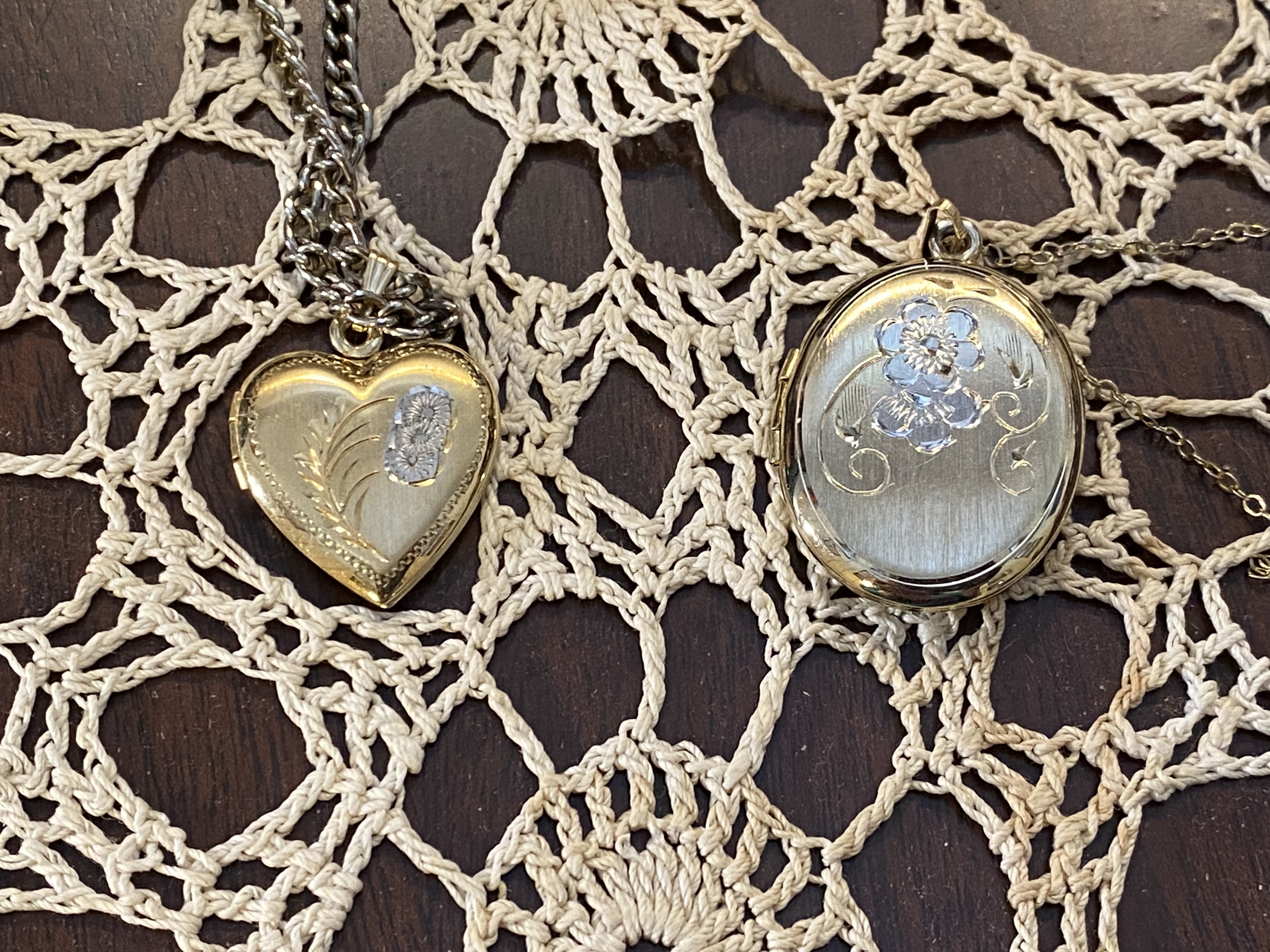
Perhaps some things I did then will help now too. I journaled regularly, poured my soul onto pages in my notebooks. With tiny locks of hair and photos that spoke to me, I made lockets and hung them near my heart. Little by little, I dared to venture forth. I told myself I would make choices and take actions—small at first—but I would do it for the lost children. I would live for those who didn’t have the chance, and I would face each day for the sake of my lost loved ones. I would do my best to make a good life. For them.
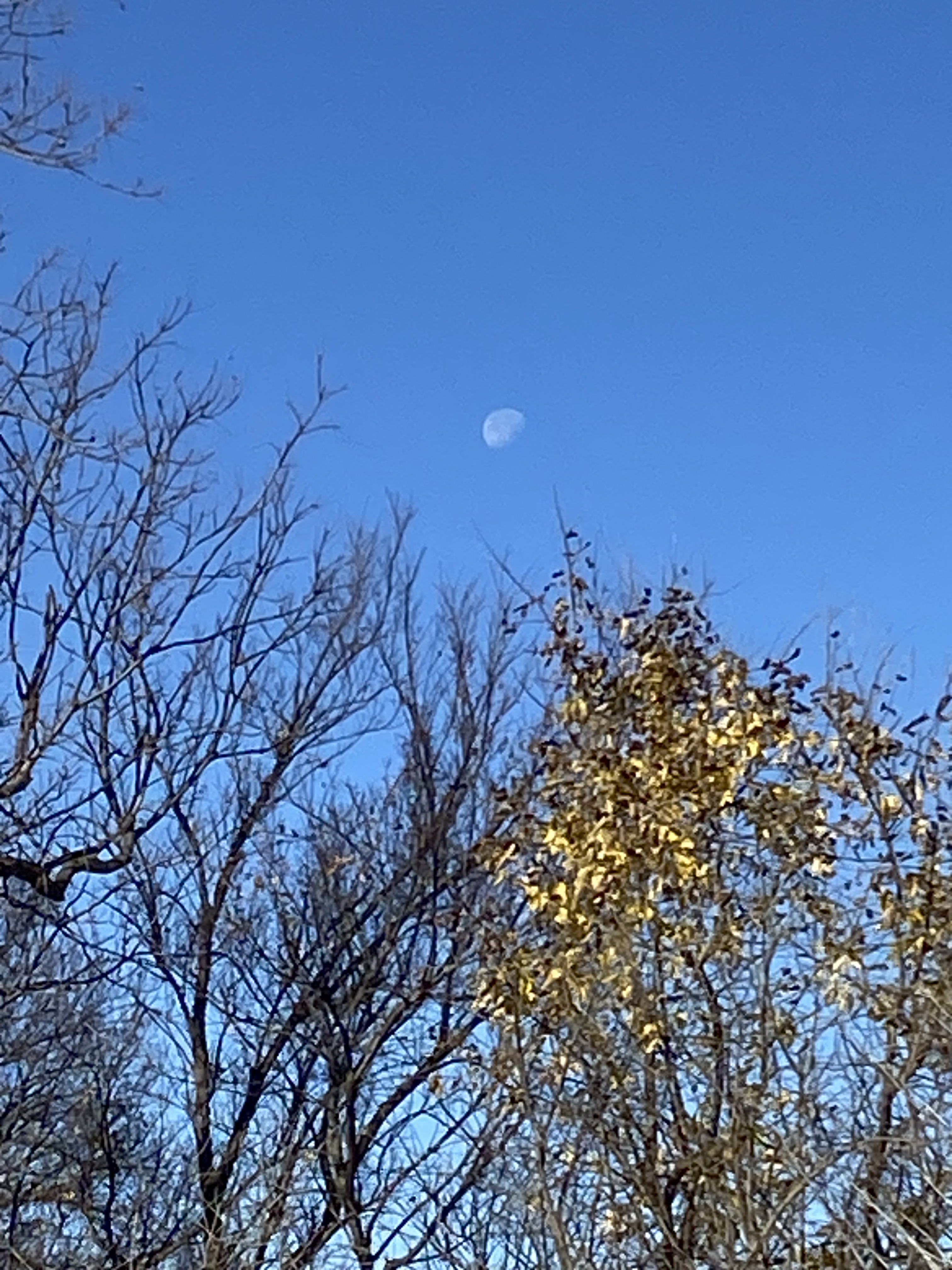
I don’t know what lies ahead, though I face it with a certain amount of dread. I can only work with what is here, today, and do my best to make a difference for my family and for as many others as I can.

Do all the good you can,
By all the means you can,
In all the ways you can,
In all the places you can,
At all the times you can,
To all the people you can,
As long as ever you can.
― John Wesley

To the Stars

I chased sunsets in my youth. Often, my mother would ride along as evening approached, and I drove to the west side of town. A favorite hilltop offered a spectacular unobstructed view of the evening sky. This was back in the day when color photography was off limits to many but I wanted to give it a try. My dad ran a black and white portrait studio in our basement when I was very young, and I’d help him nurse the images to life in the darkroom under our stairs. But color was a different story altogether. It was the next thing, a new generation of photo art, and I took what I had learned from him and launched into color printing in our basement laundry room—new town, new home.

In those days, I could purchase the developing chemicals at our local K-Mart, just up the street. I used a “Unicolor” system, with a plastic drum, that had channels for various sizes of prints, up to an 8 x 10. You were to expose the paper with your enlarger, using color filters for the proper mix of pigmentation, and then fit the paper into the drum, in the dark, and seal it with the press-on lid. From there, you could operate in daylight, pouring each designated chemical through the spout into and out of the drum at the prescribed times. At the end—wallah!—I removed my color prints.

Moonrise
Moonset

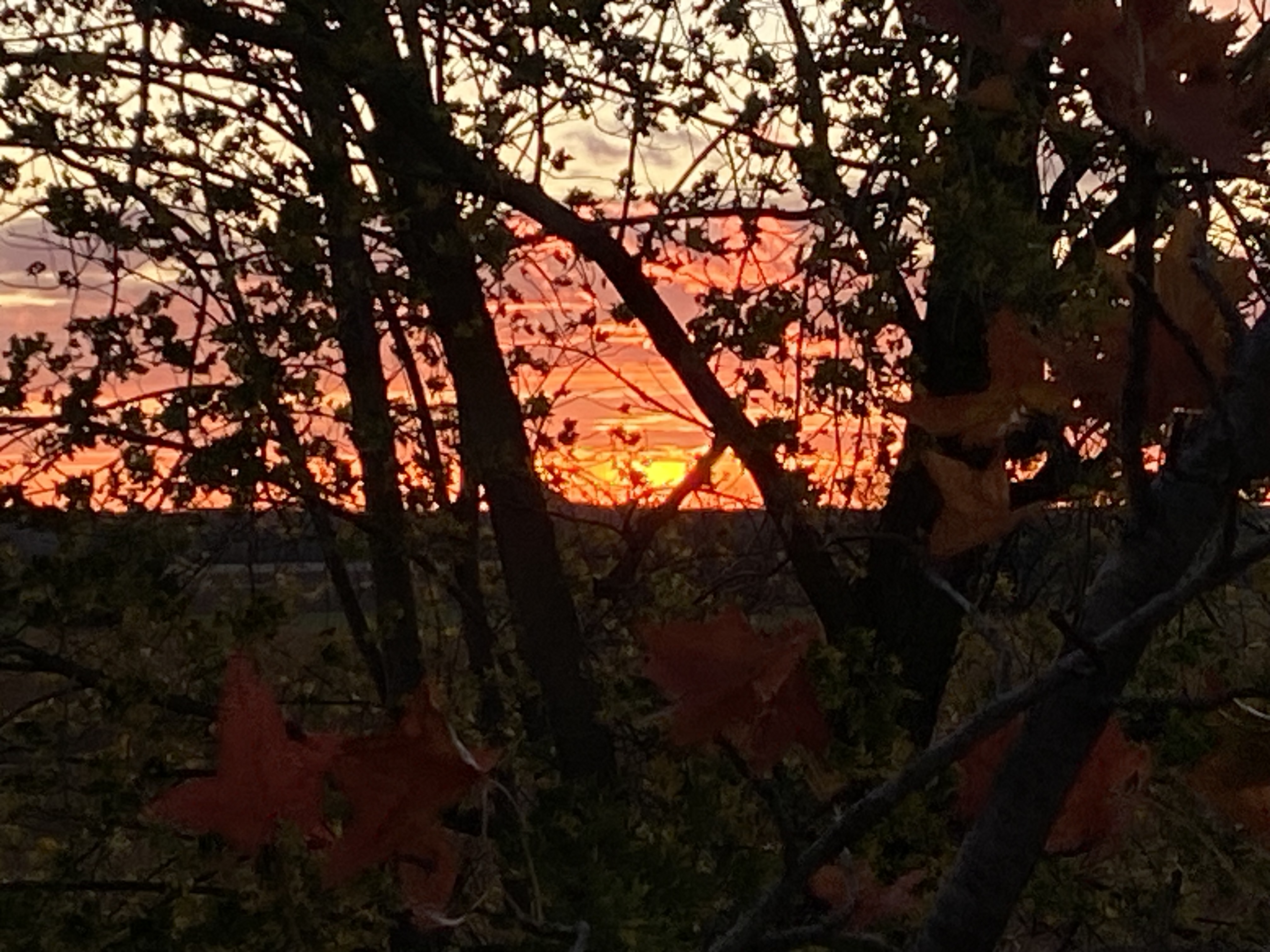
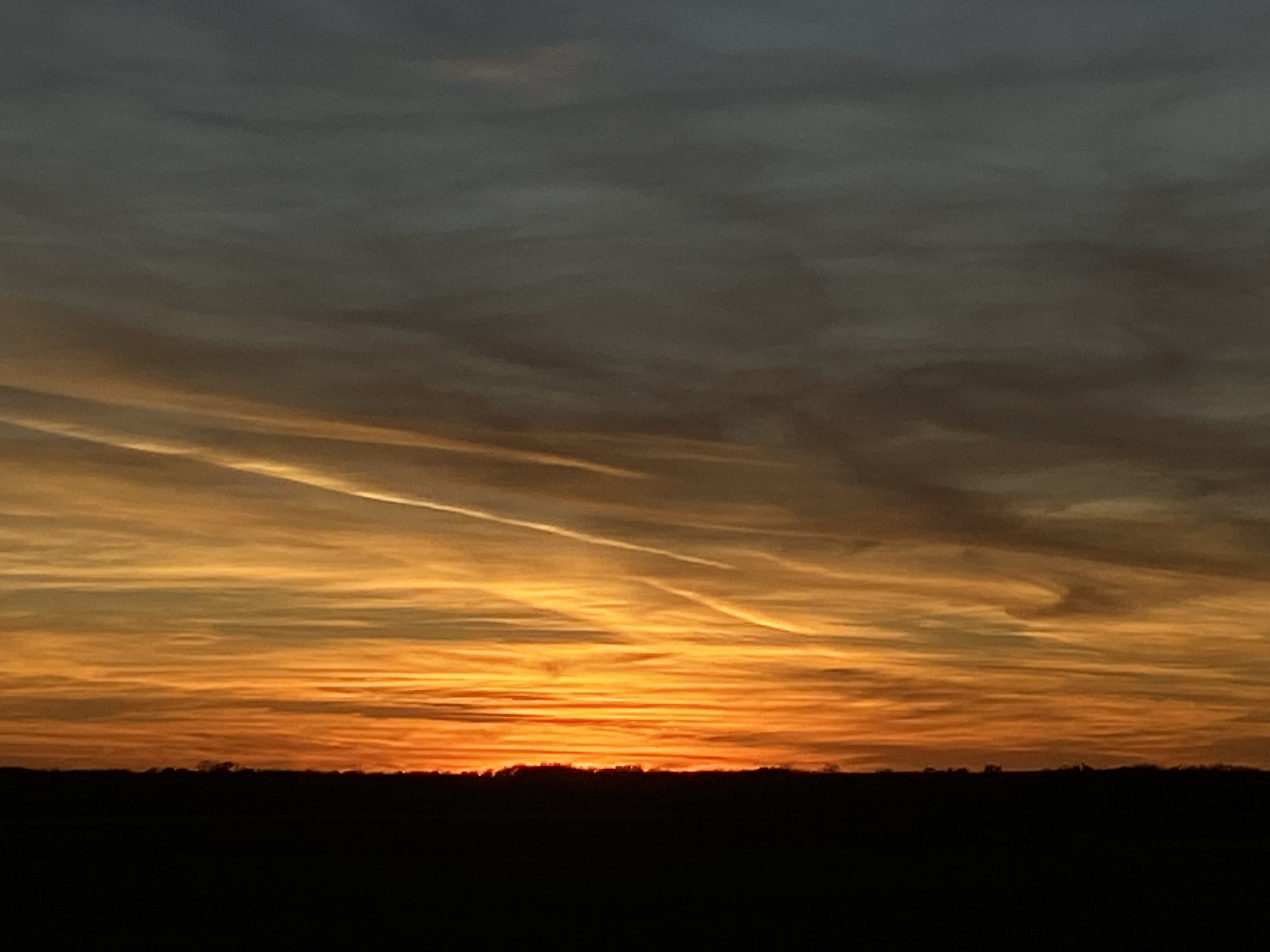
With our Kansas state motto, “Ad astra per aspera,” (to the stars through difficulties) it’s a logical pastime to watch the sky. Here in the western plains, often the sky provides the most intriguing scenery to be found. Some sunsets are stunning. And no two are alike. The interplay of light with moisture in the air, as well as dust at times, provide distractions from ordinary difficulties along with the continuously changing scenery. I don’t print color enlargements these days, but try to find images worthy of sharing in a digital format. New generation. Next thing.

I found myself sky-watching again after the election a month ago. The vistas overhead provided consistency through their constant metamorphosis and it was comforting. If not exactly ad astra per aspera, then at least ad caelum.

I will find something beautiful provided by Nature

Last month I attended a few presentations at the Kansas Book Festival in Topeka. The one I remember most was by author and administrator at Haskell Indian Nations University Daniel R. Wildcat. I bought his book, On Indigenuity: Learning the Lessons of Mother Earth, a long essay on what indigenous peoples can teach the rest of us about protecting our miraculous home planet. I have long been concerned about protecting the home we share with all life forms, including people around the world and millions of other species. When greed and lust for power impact the lives of innocents around the world, I am enraged. Destruction of the biosphere that sustains us is now threatened with acceleration. Communities of wild things and minority populations will be the first to feel the impact.

In the early pages of his book, Daniel Wildcat recommended that we should become more familiar with Nature. One thing which compounds and complicates the rampant destruction of our planet is our distance from the elements. We sit inside our comfortable homes in front of screens far too much, and should become more familiar with how the natural world near us is impacted by our decisions and policies. To that end, today I decided I would walk the deer trails on my small patch of virgin tall grass prairie and look for the beauty in Nature. Even if you aren’t close to a 40-acre meadow, you can still take a walk and feel the fresh air and sunshine, listen to whatever birds are in the trees lining the streets, and enjoy the colors of autumn.

These scenes are from my morning walk today.

Sweetgum tree in our front yard, blazing orange.

A fallen Osage orange, with closely fitted puzzle-piece segments. No two alike. Just like people.

One of the two pine trees on our place, laden with pinecones. I keep wondering when the pine bark beetles will invade, but so far we’ve been lucky.

A backlit patch of little bluestem, with fluffs of seeds gleaming like a field of fallen stars.

One of my favorite grasses: Indian grass. The seedheads are still there, though they are far more impressive earlier in the autumn season. This reminds me of Native American writers that I admire, including Daniel Wildcat and Robin Wall Kimmerer. Kimmerer’s book Braiding Sweetgrass changed my life during the Covid shutdown.

Grieve and then Resist

Here we are, one week post-election, one week post D-day (diagnosis day for our flailing democracy.) Most of you share the horror and grief I feel after the count, so I’m “preaching to the choir” so to speak. If you happen to be someone who felt smug and victorious after the tally, I don’t know what to say to you. When my nephew was left homeless after a hurricane ravaged his mountain town (Asheville) 400 miles inland, when cousins in southern California find their neighborhood threatened by raging wildfires, when my Cuban friend’s parents near Havana have been without electricity for weeks, I am dumbstruck to realize so many of my countrymen would vote for an aging insurrectionist, convicted felon, rapist, and conman when one of his first orders of business is to increase the drilling and use of fossil fuels.

Are you one who would object, “But wait, I didn’t vote for him!”  Yet at the same time, you couldn’t bring yourself to vote for the one candidate who had the best chance to defeat the ugliness and destruction that’s bound to happen. Since my first visit abroad in 1977, I have worked to disprove the myth of the “ugly American.” Yet with this election, you have helped engrave it deeper in the history of the world.

Most of my friends, though, feel as I do. We’re compatriots, we’re family in a broad adoptive sense of the word, and I take comfort from our conversations and correspondence. We need each other to talk to, to share our mutual pain, our disbelief, and our fears. It means a lot to me that we have connected, not only during the weeks before November 5, but in the days since. Bolstering friendships has been one positive thing to come from this heartbreak.

A couple of thoughts about the outcome. I find a smidge of agreement on one of the MAGA points, though the target is polar opposite of theirs. We should beware one certain immigrant from South Africa who just bought a president with his billions.

For those who were all about—“Oh, the New World Order! We can’t have that. Biden has those plans in WRITING!”

Welcome to the New World Order. After the election, Elon Musk crowed on his X account, “Novus ordo seclorum” (Latin for New World Order.) And the written plan? Project 2025, which some have claimed was all lies. They aren’t even trying to deny the project now, and it has been in WRITING the whole time.

For the rest of us who are hurting and grieving over what we’ve lost—a country founded on democratic principles—I will say a few words about grief. We’ve probably all faced loss at some earlier point in our lives. As someone intimately familiar with that deepest of human emotions, I will remind you that you are not alone. Please remember that there is no “right” or “wrong” way to grieve. Allow yourself the privilege to mourn as you are called to, and then join the resistance. I caution you not to blame yourself for the election’s outcome, especially if you did everything you could to prevent the disaster. Try to avoid assigning blame to others, also. There is likely a myriad cluster of circumstances that brought this on us and we will all suffer the consequences together. Some groups will feel it first and worst. We need to support those of our friends who are at greatest risk.

From my own history of loss and recovery, I will offer this: it’s easier in small doses. One day at a time. One hour. Maybe even minute by minute. To that end, I plan to start a thread called, “Just for Today,” in which I’ll share ideas for facing the world and resisting the worst, finding resilience and ways to persevere. If you have ideas to share, let me know.

(See Post #1 Just for Today: I will find something beautiful provided by Nature.)

Many Facets of Grief

“This is so sad.” My husband said as he read a post on Facebook.

A former student of his, now working as a nurse in Wichita, had found her soulmate and recently became engaged to a man at the hospital where she worked. He was an EMT on helicopter runs. They excitedly planned a wedding and looked forward to their future together.

Then the helicopter he was on crashed in Oklahoma on a return flight from delivering a patient. Her fiancé, the love of her life, died in that crash. And her world fell apart.

It is sad. My husband looked at me and asked, “Do you think it would help her if we sent your book?”

He was referring to my memoir In the Shadow of the Wind, telling my own story from younger years of a lost love and how I was able to embrace life after the loss. “Someday maybe,” I answered. “This is too fresh for her. The book can be hard to read if your grief is fresh.”

It got me to thinking about grief again. We all experience the devastation of loss at times in our lives. To love someone is to risk heartbreak. One or the other in a loving relationship will someday face that inevitable loss. You just hope it will be years down the road, not tomorrow. But when a tragic accident happens, what can we do to help the survivor?

First, I think, we need to understand that every loss is complex. If no two people are identical, it can also be said that no two losses can be the same either. Nor is there any “proper” way to grieve. Each survivor has to find their own way forward, best done without others suggesting that they need to try a different approach, that their feelings are wrong, or mistaken.

There is no proper way to grieve. What we can do to help is just be there. Offer hugs, if hugs are wanted. Listen to a grieving friend without trying to solve a problem for them. Just listen. Give them a safe place to open their hearts and work through their grief.

It’s easy to understand the emptiness someone feels when they lose a friend, a fiancé, or a spouse. It’s perhaps more difficult to realize the many faces their grief takes on. The young nurse who lost her love already knows that the future they planned is gone. It no longer exists. She grieves for their lost years. Perhaps they talked of children. They too are gone, before they were born, along with all the family holidays and vacations, birthday parties, visits to grandparents, sports outings—everything that might have been is different now. It has changed and cannot be recovered. Each of those burst dreams compounds her feelings of grief.

What this newly bereaved nurse can benefit from are friends who listen as she rails against the universe and cries for her fiancé, and as she bemoans those babes who will never be born, as she lets go of the future they once dreamed together. She needs friends who wrap her in love and compassion and offer hugs to ease heavy arms that ache to hold her soulmate and those babes. She needs friends who travel the path with her as she lets go of a future that has evaporated in a fraction of a second, and give her permission to grieve in a way that works for her, never pushing her to be done with it, but recognizing that her journey is her own.

There is no right or wrong way to travel that road. The upheaval will grow easier with time, but the journey never ends. And each survivor’s path is unique.

On the Power of Love

Love abides, though sometimes it goes into hibernation. Then the sound of a voice, a memory, an object, a passage from a book wakens it, and you know it has been there all the time. Sometimes a crisis awakens it. Sometimes standing on a peak of suffering before a cliff, it not only awakens but overwhelms you. It is the kind of love that transcends the love of a person for a person and embraces all.

-Marvin Swanson