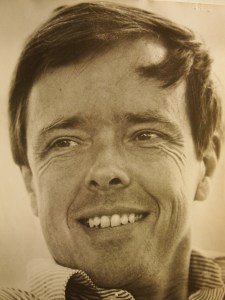
Reprise TJ Junkins

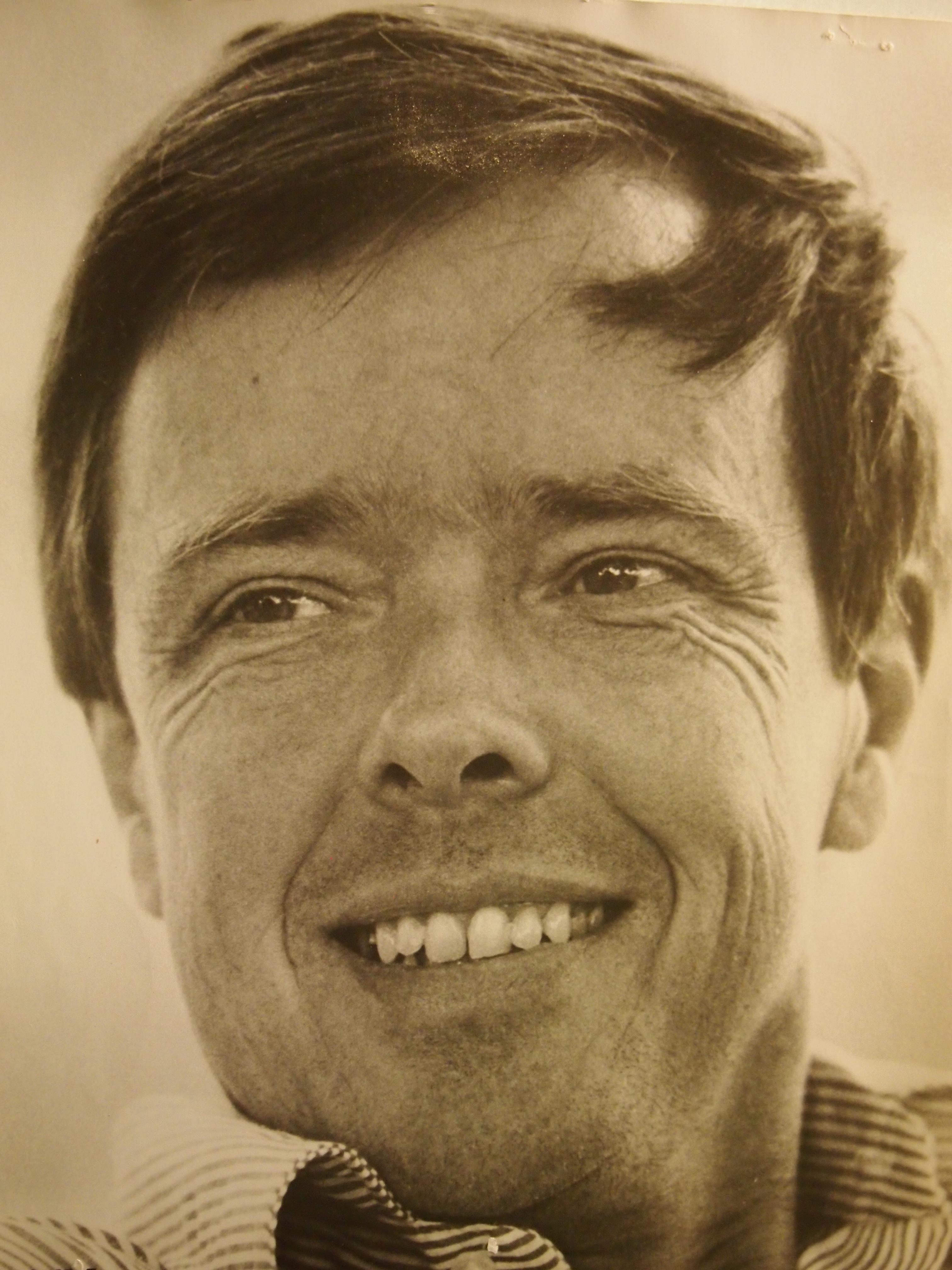
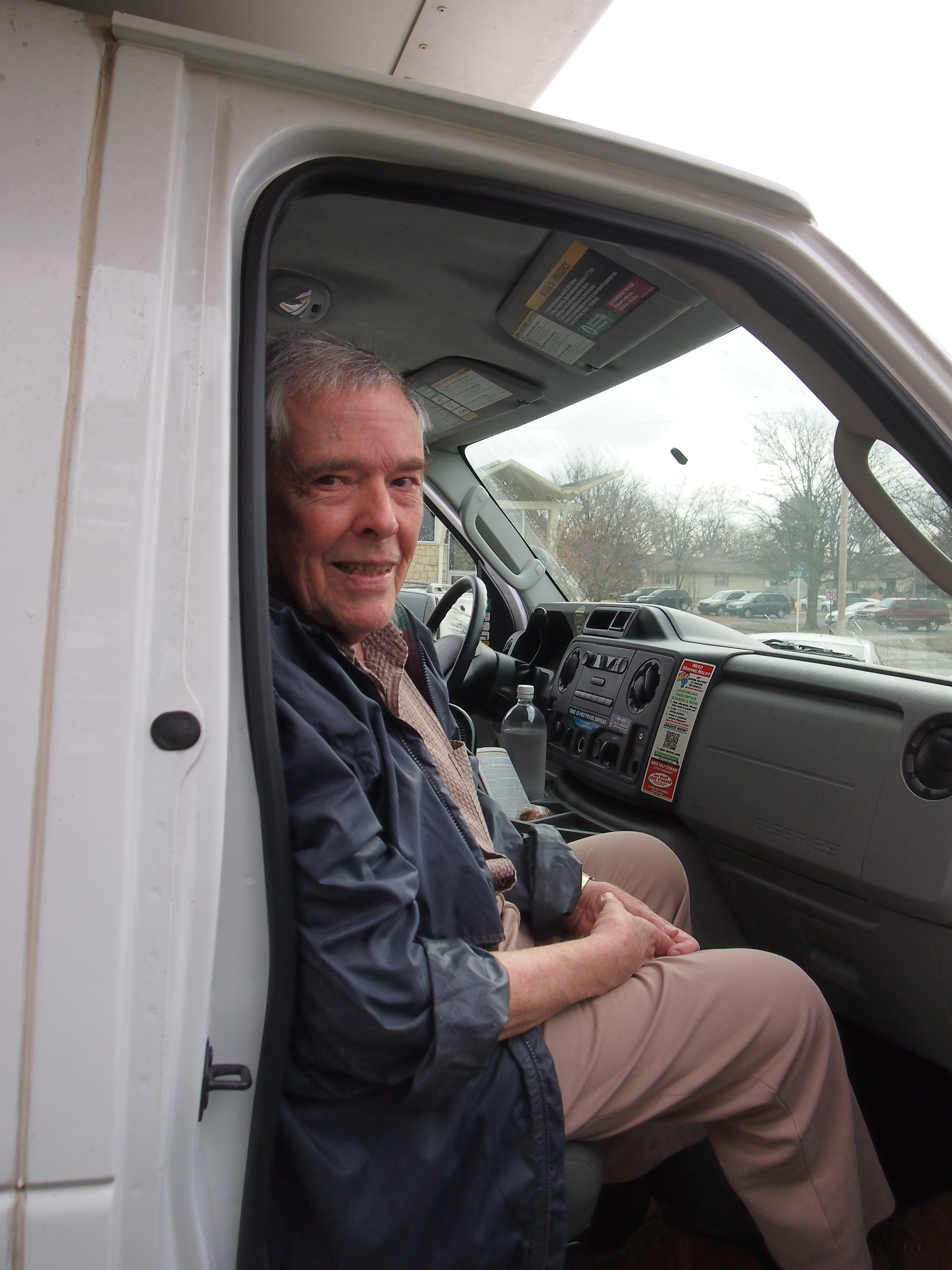
OLYMPUS DIGITAL CAMERAOn this journey through life, a chance meeting with another person occasionally develops into a unique and treasured friendship.  Today I honor World War II veteran and fellow writer Tom Junkins.

I met Tom at the first writing event I attended following my return to writing.  About the age of my own father, Tom had devoted his waning years to recording his life experiences.  He printed books, bound them, and offered them to his family and friends.  He threw himself enthusiastically into the writing life.

Together we traveled to monthly meetings.  He provided enthusiastic encouragement for my projects.  I helped him produce one of his memoir volumes.  In a conversational voice, Tom’s memoirs recorded his stories as if he spoke to his grandchildren.  When his health declined, he responded with wit and good humor, in the style I came to know as Tom’s unique voice.

He wrote, “On Friday June the third at five in the evening, my right leg went numb.  I called 911.  They put me in an ambulance and sent me to Via Christi, St. Francis.  They landed on me like a bunch of crows on road kill, ran all kinds of scans and tests, and scheduled surgery with a vascular surgeon for Sunday morning to remove a blood clot.”

Our days of writer’s meetings drew to a close with his move to the Veteran’s Home.  Tom still wrote daily, even as he struggled with growing physical limitations.  What have I learned from this writer?  He displayed grace and courage when facing his health issues.  In this way he reminded me of my own father.

But more than that, Tom’s dedication to the written word is testament to the vitality we find in books.  By writing stories for his family, Tom created a gift they can enjoy forever.  As I sit in my office, I am surrounded by books, by journals of my lost parents, and letters from long-gone relatives and friends.  They live through their words.  Their essence and personality shine into my life.  When I read words written by giants of my past, their voices echo in my mind.  And I know they are still with me, in words and in spirit.

OLYMPUS DIGITAL CAMERAOne week ago, Tom Junkins passed from this life. His words speak now only from pages he wrote. With his passing, he joined those giants of my past whose journals and letters provide sustenance for my future. I humbly repost this blog in his honor. I will long remember his enthusiasm for writing. Here’s to you, Tom. May your adventures continue into the next life.

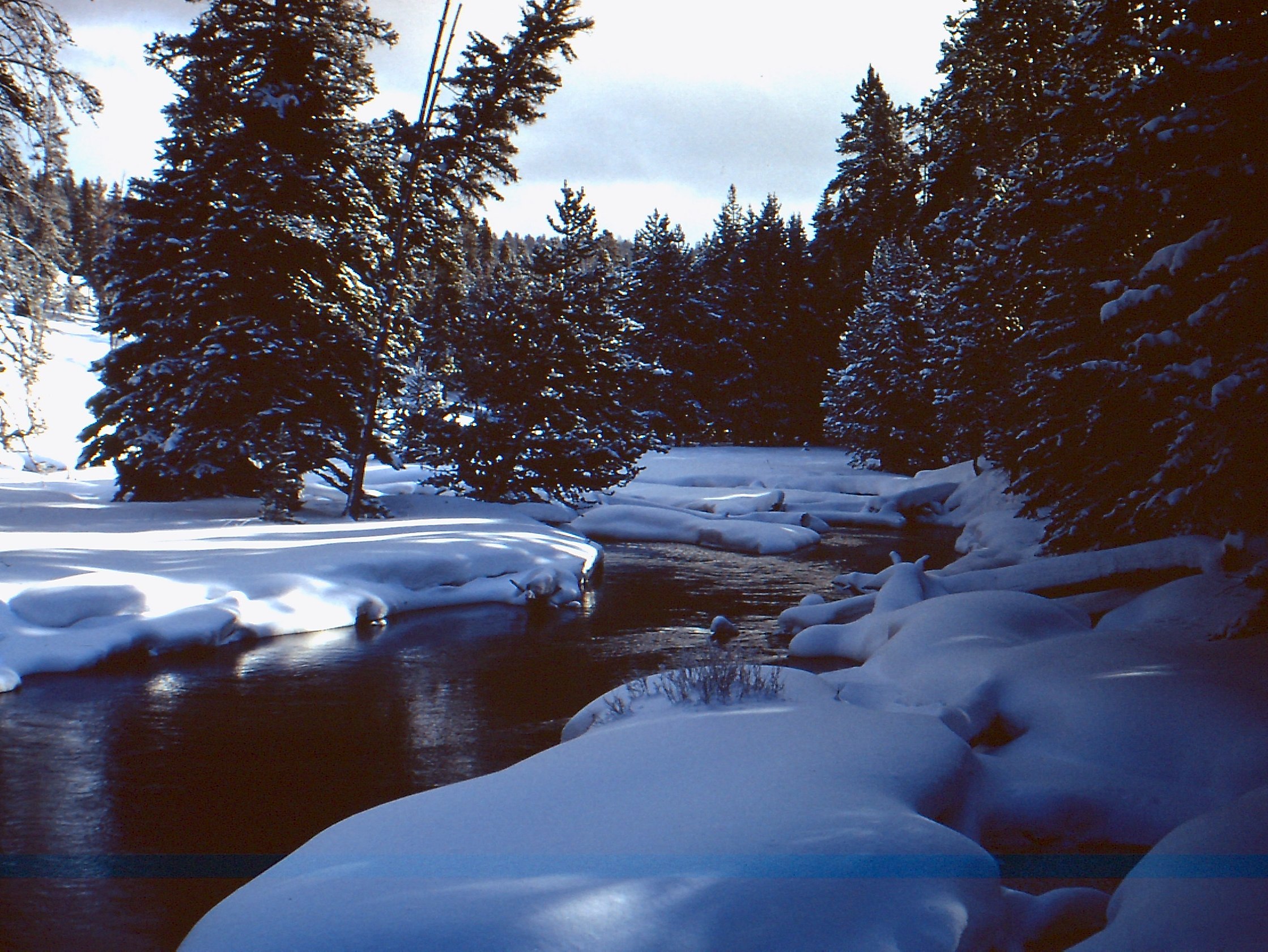
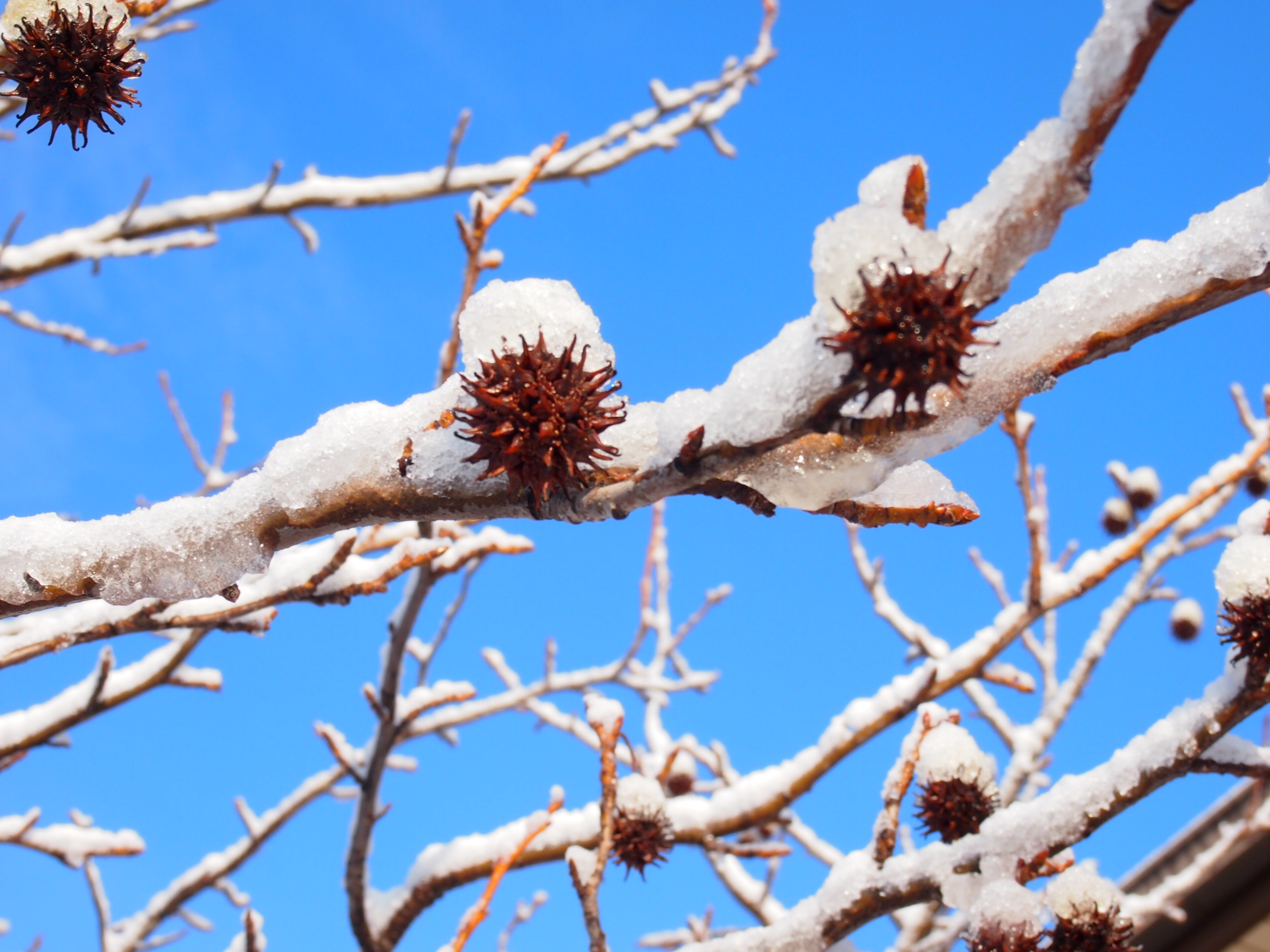
Winter Wanderlust

OLYMPUS DIGITAL CAMERA

* * * * * *

I long to be thrust into the cold embrace of a winter wilderness,

To tramp upon the crunch of crusted snow,

To smell the pain of icy air expanding when inhaled

* * * * * *

                                                                                                                                                                      DSC_0012

And feel the softness of a flake of snow as it settles warmly on my frozen nose,

* * * * * *

To open and reclose my brittle lips on teeth which shiver in the biting air,

To feel the nip of winter’s ravenous jaws and wind heed not my heavy winter clothes,

* * * * * *

PICT0612To feel the life-blood freezing in my naked fingers

* * * * * *

and walk on sticks of toes which feel no more;

* * * * * *

* * * * * *

PICT0625All this with longing wakens in me when every year the autumn season ends,

The strange emotion which comes just to restless people,

The lonely call of winter wanderlust.

* * * * *

* * * * * *

PICT0628To feel these tiny bits of cold and dying is the best way I can appreciate

* * * * * *

The fire-warmth of a little one-room cabin

* * * * * *

* * * * * *

OLYMPUS DIGITAL CAMERA

* * * * * *

Or the stubborn life within a twisted tree.

* * * * * *

* * * * * *

To live within the wildness meant forever

* * * * * *

And realize our whims are not supreme

* * * * * *

* * * * * *

PICT0618

* * * * * *

But Nature, when the time comes, will reclaim us—

* * * * * *

All this makes up the winter wanderlust.

* * * * * *

* * * * * *

PICT0263

* * * * * *

After the thrust into a wilderness,

* * * * * *

After tramping on the crunch of crusted snow,

* * * * * *

* * * * * *

OLYMPUS DIGITAL CAMERA

After blood has frozen in my sticks of fingers and of toes,

After the soft, warm snowflake has melted

From some mysterious heat within my nose,

* * * * * *

* * * * * *

* * * * * *

PICT0608

* * * * * *

After the wind has chilled me to the bone,

* * * * * *

Then comes the culmination of this wanderlust—

* * * * * *

The return to warmth, to shed my icy coat,

* * * * * *

* * * * * *

* * * * * *

OLYMPUS DIGITAL CAMERAStand and tingle as the rushing blood thaws out my frozen skin,

* * * * * *

Wince in pain as toe-sticks reawaken, and glow as life returns again.

 * * * * * *

* * * * * *

* * * * * *

PICT0128

* * * * * *

* * * * * *

This is the essence of the wanderlust.

* * * * * *

To long to suffer in the wilderness,

* * * * * *

* * * * * *

PICT0087

* * * * * *

To will to make my feet and fingers dead-like,

To greet the icy wind with a welcome thrill,

Ultimately, I renew my life.

* * * * * *

* * * * * *

OLYMPUS DIGITAL CAMERAAfter touching death’s cold icy fingers,

To come again and live to love the warmth—

This strange emotion which comes just to restless people,

OLYMPUS DIGITAL CAMERA

To touch the ruthless side of Mother Nature

And love as life returns again—

* * * * *

This death, and life, with longing wakens in me

* * * * * *

* * * * * *

PICT0606

* * * * * *

* * * * * *

The lonely call of winter wanderlust.

 The lonely call of winter wanderlust.

Recalculating

Half a century ago, young Manuel set out from his home in Quito, Ecuador, to follow his heart to America.  Last summer Manny became the newest member of our family when he married our sister.  We recently met our new brother-in-law for the first time.  What we found was a very young seventy-four-year old man.

OLYMPUS DIGITAL CAMERA

The question is, “How does he manage to stay so young?”

The answer starts with five-o-four.  This is the time his alarm wakes him every day.  At 5:04, he heads to his living room and spends part of his waking hour on his rowing machine.  Then he progresses into a hundred and twenty push-ups.  Over breakfast, he completes the day’s crossword puzzle to limber his mind.  And he’s off to work, a serious volunteer at a near-by hospital where he spends hours every day just helping people.

After work, he refreshes with a few laps at a YMCA pool before he heads home to cook up dinner for himself, his new wife, and any visitors who happen to be there, like us.  He’s ready to engage anyone with an examination of life’s unanswered questions over dinner and a little wine.

Probably the questions, as much as anything, keep his mind spry.  He’s figured a few things out, and he’s not afraid to share his thoughts.

Most pills, he insists, only lead to side effects that necessitate another pill.  If we could get off the meds, we’d be much healthier.

What about headaches?  No pill needed.  Simply take a few minutes to concentrate on slow, deep breathing.  Increased oxygen in your blood will cure many aches.

Questions keep his mind active.  His search for answers wins him many friends.  Generosity with his time and his talents builds relationships.  His service to others nurtures friendships.  With solicitous attention to our needs and comfort, he hosted our short stay with royal treatment.

While not everyone might be able to throw away their medications, or soothe a headache with breathing exercises, perhaps we can all learn something from this remarkable man.  We need to question our lives and listen for answers.  The art of questioning brings the power of listening.  Maybe we all need to listen to what our bodies tell us and take preventive steps to conserve our health.  We need to trust our own minds and trust our own spirits.  I think perhaps we are losing the ability to hear what our bodies and the rest of the world try to tell us.

Contrast Manny’s finely-tuned awareness with the habits of successively younger generations.  We are losing something—something which someday we might be desperate to find.  We’ve been seduced by a life of ease.  Seduced by technology.  Seduced by laziness.  Instead of listening to our bodies, we want others to tell us how to feel better, right now!  We want a pill for everything.  And the pills keep appearing.

We’re seduced by entertainment technology.  We plop down and veg out in front of the large flat-screens in our homes and we lose the gift of creatively filling our spare time.

We download music and forget how to make our own.

We are mesmerized with cell phone technology.  And we forget how to connect with another person in the same room.

We are seduced by shorter and shorter messages, texts, tweets and abbreviated words.  And we forget how to touch others with a long hand-written letter from the heart.  There is a debate in a nearby town whether children should be taught cursive writing any more.  We are forgetting how to write our names.

Automatic transmissions, automatic dishwashers, automatic cameras, and remote controls for almost everything I can imagine fill our homes, our garages, and our lives.

We have been seduced by technology until most of us suffer an orientation disability.  We seem to be lost.  We can’t navigate without a GPS.  (Whatever happened to map-reading or just plain-old-following-directions?)  We don’t know where we are anymore, or where we need to go.  We want somebody else to tell us where to go, to think for us, to add for us, to write for us, to drive for us, to work for us.  Could it be we’re waiting for others to live for us as well?

We’re losing the ability to find ourselves and find our way around life’s perilous paths. We could learn a lot from elders like Manny.  He knows how to ask questions and how to listen to his own heart.  Welcome to the family, Manuel.  It’s nice to have an elder again.

Re-cal-cu-la-ting . . . .

The Consideration Project

Image

I’ve been thinking about my mother a lot lately.  Last week marked a full decade since we celebrated her last birthday with her.  It’s only natural she has been in my thoughts.   For our appreciation of all the finer things in life, my sisters and I have Mother to thank.  She loved music, literature, and the finer aspects of our culture fostered through the arts.  Education was a priority for her.  Based on her own experience, continuing education was the key to rise above desperation and hardship.  She fostered within each of her daughters the value of knowledge, hard work, and a sense of justice and opportunity for those down on their luck.  She was also pretty hard-nosed about second chances if one failed to recognize the gift of a first chance.  But she remained generous to others all her days.

Actively involved in our childhood education, Mother assigned me the first big project I recall.  She became upset by the daily arguing of her three daughters.  To combat the incessant cacophony of our constant bickering, she assigned each of us to do a “Consideration Project.”  We were to consider each other’s feelings and viewpoints before we erupted into a shouting match.  There was paperwork involved.  By the due date, I had written a journal of thoughts, choices, and conclusions.  This project became a major activity for me. Though I don’t have a copy of my final report, I learned a great deal from the activity.  I believe this was the first major writing project assigned in my school years.  It was Mother who assigned it, and I still remember the “Consideration Project.”

I can draw parallels to lessons recorded in the gospel books of the Bible.  Jesus instructed, “If anyone forces you to go one mile, go also the second mile.”  (Matt. 5:41)  “If anyone strikes you on the cheek, offer the other also, and from anyone who takes away your coat, do not withhold even your shirt.”  (Luke 6:29)  In other words, Jesus also encouraged his followers to be considerate of others.

Is there anything more difficult to master about life?  My natural response toward someone who has acted harshly against me is to retaliate in kind.  Yet, if I stop a moment and give consideration to the other, I might imagine a bit of bad news they may be facing, a hardship in their family, or an argument they may have had with the most important person in their life.  Even though a person may treat me unfairly, it helps no one if I pass that injustice along.  Not even me.

There have been times after I finish a service job when I am offered payment with a check that bounces.  I fretted.  I worried.  I fretted some more.  But when, in my heart, I made a gift to the person of my work, my distress was instantly relieved.  Jesus’ instructions for giving beyond expectations were spoken not to benefit those who wrong me, but to lift the load of hatred and resentment from my own heart.  Freedom and contentment were my immediate rewards.

Jesus also said, “Do not judge, so that you may not be judged.”  (Matt. 7:1)  How can I possibly know all the details of another person’s choices?  I can’t.  Granted, I have never been on the receiving end of a violent criminal act.  I have never faced the loss of everything I hold dear at the spiteful actions of others.  I honestly don’t know how I would react in those cases.  But I do know that I can choose my actions carefully today.  I have the power to affect my own life and future, and I can support others who face unknown crises without judging them from my own perspective.

It seems that our nation is in need of a consideration project.  Diversity has always been one of the strengths of our country.  We defend the right of others to live as their hearts dictate, as long as their choices hurt no one.  The bitterness and rancor we see today in our nation gets us nowhere in the long run.  The art of politics should be the art of compromise, striking a deal somewhere in the middle that the majority of people can embrace.   We defend the rights of those who have few resources.   We defend our diversity.

Extremists who deny compromise and refuse action of any sort unless it’s what they want only hurt our country.  There should be no room for a “My-way-or-the-highway” attitude.  How do we find common ground with folks who will not listen to differing views?  On a national scale, we seem to lack something basic.  Something like . . . consideration.

Mother, we need your “Consideration Project.”  I suspect that if we try, we could find some common ground between the blue and the red.  If we consider the views and thoughts of those who differ from us, we might find we share many things.  We love our children.  We revere the life and opportunities we’ve had.  We want others to share similar good fortunes.  We worry about what the future holds.  The basics of humanity exist in the hearts of people regardless of their political persuasions.  If we listened considerately to each other, we might find we share a lot.  Our states are not totally red nor blue, just as our own hearts are not absolutely conservative or liberal.  We are closer to various shades of purple than perfectly red or perfectly blue.  Purple should be the color of our future as we strive to find commonalities in our concerns.

How about a little consideration for each other?  I’m ready.  Are you?

My Favorite Books

OLYMPUS DIGITAL CAMERA

In his keynote address at the annual Scene Conference for the Kansas Writer’s Association last spring, author William Bernhardt said, “Write.  There is no more important work in the world.”  The point was that the pen is, indeed, more powerful than the sword in creating change throughout our world.  I’ve thought about his statement many times.  How have books impacted my life?  I am amazed to think how my favorite books seem to parallel qualities and events throughout my life.

From primary school days, I still have A Baby for Betsy byAnne GuyThis story of a young girl follows her wish for a younger sibling.  Her parents ended up adopting triplets.  Then I ended up raising three children only weeks apart in age.  Folks called them our triplets.

Favorite grade school books included Molly’s Miracle by Linell Smith.  In this story, an old mare adopts a filly that arrives from a pre-historic land through a tunnel.  Molly names this young eohippus Dawn.  The filly never grows bigger than a cat, and ends up leading the barnyard friends back through the tunnel for an adventure in the dawn of time.  And I chose geology as my major college field.

Jim Kjelgaard wrote books about animals and outdoor life.  Big Red, Irish Red,  and Outlaw Red chronicled stories about Irish setters that enthralled me.  I read all of the Kjelgaard books I could get my hands on.  In Wildlife Cameraman, I learned of an exciting career that supported both my growing love of nature and the intricacies of quality photo shoots.

There were other beloved books from my childhood.  The Incredible Journey, My Side of the Mountain, and Island of the Blue Dolphins shared adventures in the natural world and fed my growing love for travel and nature.

Thoreau’s Walden became important when I pored over literary lists for college-bound students. “I went to the woods because I wished to live deliberately, to front only the essential facts of life, and see if I could learn what it had to teach, and not, when I came to die, discover that I had not lived,” wrote Thoreau.  Nor did I want to live a life that became empty and meaningless through the years

Tolkien’s The Hobbit and The Lord of the Rings trilogy kept me entertained for months as I trekked with Bilbo and Frodo through middle earth.

Thor Heyerdahl’s records of adventures in the south Pacific fascinated me with his “back to nature” ideas in Kon Tiki  and Fatu Hiva.

W.H. Hudson’s Green Mansions told the story of Rima, an arboreal maid of the Venezuelan rain forest who designed her garments from spider webs.

As a college student during the seventies, I took a general education class called “Can Man Survive?”   This course used books like Aldo Leopold’s Sand County Almanac and E.F. Schumacher’s Small Is Beautiful as texts.  The experience nurtured what would become a life-long advocacy for Earth care and environmentalism.

Early in my adulthood, The Secret Life of Plants by Tompkins and Bird impacted my relationship with other living things.

Adam Daniel Finnerty’s No More Plastic Jesus changed my life through its pledge to live by teachings of the master.

“‘Lord, when was it that we saw you hungry and gave you food, or thirsty and gave you something to drink?  And when was it that we saw you a stranger and welcomed you, or naked and gave you clothing?  And when was it that we saw you sick or in prison and visited you?’  And He will answer them, ‘Truly I tell you, just as you did it to one of the least of these who are members of my family, you did it to me.’”  Matthew 25: 37-40

For an escape into historical fiction, nothing appealed to me more than M. M. Kaye’s novels of India in the 1800’s.  Far Pavilions inspired my visit to India in 2008, where I slept in palaces such as those described in her pages.  I walked in Ashok’s and Anjuli’s footprints on the parapets of fortresses.

An article in a writing magazine urged me to read Pilgrim at Tinker Creek by Annie Dillard to study mastery of literary art.  Her vivid descriptions of life in the woods filled me with awe for her skill.

Most recently, Bill McKibben’s prophetic words in Eaarth have renewed my quest to take a stand for the planet I love.

The discovery of The Green Biblewith more than a thousand references of God’s love of creation printed in green letters, revived my respect for Scripture.  The green letters in this version highlight how God and Jesus interact with and care for all of creation, how the elements of nature are interdependent, how nature responds to God, and how we are charged with the care of creation.

We have been blessed with a jewel among the stars in the universe.  We absolutely must find a way to preserve it for the sake of future generations, plants, wildlife, Irish setters, horses, triplets and everything else that writers may write about today or tomorrow.

Can books shape a life?  They have mine.  William Bernhardt must be right.  There is no more important job on earth than to write.  The words we share have the power to shape lives for generations to come. We should craft our words with care.

Christmas is a family time

OLYMPUS DIGITAL CAMERA


I baked cookies yesterday.  Funny how simple things flood my mind with memories.  The recipes are family traditions.  Using recipe cards hand-written by my parents or grandmother, I find myself thinking of them.  Their contributions to our holiday table continue long past their days on earth.

Many memories of Mother involve simple, delicious, baked goods.  She was known for fixing a certain apple coffee cake whenever any of her progeny visited—and sending it home with us.  In a visit with my younger sister on the sixty-second anniversary of their wedding, we noted how this same recipe has found its way into the next generation or two.  Mother would be pleased.

Grandma Georgia baked cookies.  Her son, my dad, was a cookie lover.  In his retirement years, he mastered his mother’s recipes and shared the products with the rest of us.  Keeping the tradition, I pulled out the recipe for molasses sugar cookies and whipped up a batch.  The smells and the tastes coming from my oven brought Daddy and Grandma vividly to mind.

OLYMPUS DIGITAL CAMERA


Somehow, I ended up with my grandmother’s recipe box.  It is full of recipe cards in her own handwriting.   The collection is precious beyond words.  Gone from earth more than twenty years, it’s almost as if she lives within those inked cards.

Expert cooks from my past also provided recipes for contentment and success in life.  Ironically, their lessons become more clear the longer I live without them.

Christmas is a family time and I find myself missing my parents very much.  Through memories and traditions, they live in my heart.  My children scatter across the miles to establish homes of their own.  Some of these traditions live in their lives also.  We weave threads that show up in tapestries that link different generations together.  It’s hard to predict when the connections will show up in the lives of our children.  But when they do, it’s like Christmas any day in my heart.

Thank you, Mother and Daddy.  Thank you, Grandma Georgia and Grandmother Mary.  I remember you at Christmas time with deep gratitude.

Barry McGuire

One of the best things about piano service is the fascinating people I meet along the way. Barry McGuire qualifies. I met him when a music store in Wichita sent me to tune his recently purchased piano. Little did I know that chance meeting would develop into a unique and rewarding friendship.

Barry McGuire, retired actor, puppeteer and magician, a native of my home county, and about the age of my father, settled into tiny Elk Falls—for the third time—a couple years ago. Decades earlier, his creative genius spurred an artistic revival in this dying town. Never allergic to hard work, he transformed stone foundations into tiered native flower gardens that brought busloads of tourists to this forgotten place. Through the work of a group of artists, Elk Falls became a thriving haven of creativity. Barry had a theater constructed and entertained tourists with puppet shows and magic acts.

With a restlessness that characterizes him to the present day, he left Elk Falls to return to acting. His credit list includes stages and rave reviews from New York and Florida to Indiana and California. Health issues of his advancing age brought him back to Elk Falls at the urging of his Kansas friends. That is when I met this octogenarian.

I tuned his piano and left, never expecting to see him again. As I headed down the board walk outside his home, I heard him tickle the ivories on the freshly tuned piano. Beautiful, intricate classical music followed me to my car. Actor, magician, puppeteer and accomplished pianist!

A few weeks later, I happened to meet him in the aisle of a grocery store in my hometown. Restless again, he planned a move to Winfield where he would be closer to medical service, mechanics, and stages. By the end of the year, he’d moved into a local apartment complex. The only person in town he knew was the piano tuner. Me.

More than happy to introduce him to Winfield, I gladly referred him to doctors, mechanics and senior services. I accompanied him to college and community drama and music productions, and included him in our family gatherings.

Without a nuclear family of his own, Barry began sending me daily emails. Should a day pass when I didn’t receive a message, I was to check on him. As insurance for his safety and well-being, he issued me a spare key to his apartment.

The months passed. Barry’s difficulties with mobility and hearing loss led him to spend more and more time hermitted away in his apartment. He gave up the piano because it didn’t sound right to his failing ears. But he relished afternoons surrounded by fine classical recordings with his speakers on either side of his easy chair turned to their loudest volume. He read widely, in both English and Spanish, and wished for someone with whom to hone his conversational Spanish skills.

He readily showed scrap books of his stage performances to me. Years of varied productions and rave reviews of his acting prowess filled page after page in several volumes. We updated his Facebook page with copies of his old publicity photos. He loaned me recordings from the Golden Age of television. Fifty years after they premiered on television, I enjoyed episodes of “Gunsmoke,” “Perry Mason,” and “The Real McCoys” in which he was a featured guest star.

Together, on his computer, we traveled to a place in Mexico he longed to visit. From there we headed to Ecuador, to a fancy retirement community high in the mountains.

I brought him produce from my garden and fresh eggs from the hen house. The master gardener graciously accepted my humble vegetables. He even asked for more.

When my red spider lilies sent up flower spikes in September, I brought him one in a pot. The next day, we toured a Lycoris radiata festival in Japan, a field covered with the same dainty red petals.

I lamented the loss of a favorite araucana hen during the summer. The next day he wrote, “Saturday and perhaps as well as can be expected. Sorry to hear about your pet hen. I read that some chickens can live into their teens but average seems to be 5/6 years and maybe up to 10. Longevity may correspond to breeds. Breeds that have been bred for super egg production have short life spans. Also read that those developed as fast growing fryers have really short life spans even should they escape the skillet (none do). Araucanas were developed in Chile and perhaps are more susceptible to heat…dunno. How old was she?”

In October, a cactus I inherited from my father burst into rather rank-smelling blooms. The next day, Barry wrote, “Your plant is a Stephelia also known as Starfish Flower, Toad Plant and, yes!, Carrion Flower. There is a big variety of them with blooms in many different colors. You will find lots of photos of them on internet. Do a search for Dave’s Gardens where several are shown. They are pollinated as you saw by insects (flies, etc). However, the fly, though drawn to it due to the odor, gets no reward for pollinating as there is no nectar. Should the fly lay eggs on the flower the offspring will starve to death.”
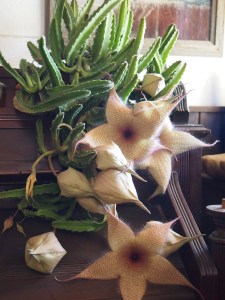
Now my restless friend has located an apartment near good friends in California. He leaves Saturday, moving west again, following his dreams into the sunset. Even if we never meet again, I shall always remember this gentle man. His inquisitive mind forever seeks new knowledge. I will never forget how he stops in his labored shuffle, draws himself up a little taller and summons his stage voice to proclaim some tidbit of wisdom, humor, philosophy or (horrors!) theology. And how we laugh.

Though physical ailments limit his ability to enjoy familiar activities, he demonstrates resourcefulness to find new paths of fulfillment. Barry McGuire is a model of perpetual youth. He shows me how to keep your heart young, even as your body wilts around it. May I be as lucky to keep my dreams alive, and be as restless to follow my heart’s bidding! Here’s one Kansan that will miss him very much.
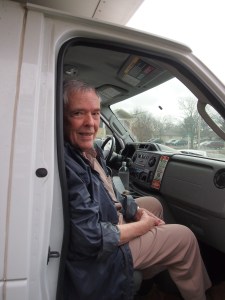
We are halfway through the infamous year of 2020 and perhaps an update on the life of Barry McGuire is in order. He spent all of a year in sunny southern California, and decided to move back to Kansas, where we had remodeled a small farmhouse near our own. The country life beckoned and he joyfully moved into the cottage, planted more flowers, entertained locals with a few magic illusions, and shared his passion for life, rich in experiences and loyalty to friends. After a year, he headed for another senior apartment, closer to groceries and doctors once again.
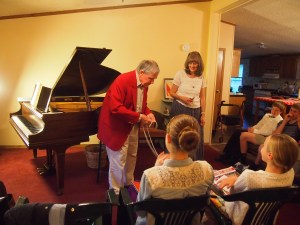
Thinking ahead towards the day that he might need nursing care, he put in an application to move to assisted living at the Actors Fund Home in New Jersey. In November of 2018, I was honored to assist in his move across the country east for that adventure, which was over within a few months. Disillusioned by policies of the administration of that facility, Barry decided he’d made a grave error in the move to assisted living. I was honored and delighted to assist him in his return to Kansas in May 2019. And surely now at age 90, his wanderlust satisfied, here he’ll stay among devoted friends until the great checkout.
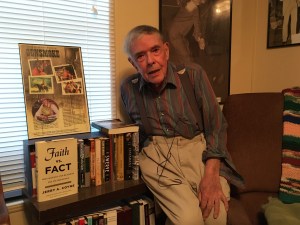
Holed away against the COVID virus, he appreciates all the kind searches and notes from friends around the world, as well as regular contacts from friends nearby.

A Poem and a Piano

en : A player piano in action performing a pia...

The familiar voice on my answering machine began with an apology. The reason, his voice continued, was that his wife had taken ill a year ago.  He lost her in March.  Now there was no one around to play the piano, but he wanted to keep it tuned in her honor.

I thought of Julia with sadness.  She had not been in good health for years, but the last time I was at their home, she shared a bit of happiness with me.  She and Ralph had just celebrated sixty years of marriage.  Cards from their friends and family decorated a table near the piano.  I wished then that I had known about their anniversary, for I would have liked to send a card.  Now, once more, I wished that I had known about her last illness.  Again, I would have liked to send a card. I called Mr. Dagenais immediately and we scheduled a tuning appointment.

He met me at the door as he had every time I arrived.  We exchanged a few pleasantries.  I expressed my condolences at his loss and mentioned their 60th anniversary.  Soon I sat down at the piano and began to work.  Except for knowing that Julia was not sitting quietly in another part of the house, the service call was just like my previous calls to their home.

When I finished, I asked briefly about his plans for the harpsichord which sat across the room.  He thought one of his daughters might be interested in the harpsichord.  The children already had pianos.  This one was played only when his grown children were home for a visit.  He regretted that he had never learned to play a keyboard instrument, but was proud that all three children had received piano lessons.

“It’s never too late to learn,” I suggested with a smile.

“For me, it probably is.”

At that point he handed me a paper he had been holding.  “I want to give this to you,” he said.  “It’s a poem Julia wrote.  You know, she was only six years old when her mother died.”

MY MOTHERS PIANO (used with permission)

By Julia Dagenais

  • Huddled beneath that keyboard
  • I peered out through Corinthian columns
  • A priestess surveying with pity
  • The silent world outside my singing sanctuary.
  • Above my head sounds ripples and crashed
  • From her fingers.
  • Beside me the firm feet pressed a pattern
  • From the worn-bright brass.
  •  
  • Long after the music stopped
  • I, a weeping votary,
  • Washed the cracked and yellowed keys
  • And polished the rosewood varnish.
  • Still smooth and shiny in protected places,
  • It was mostly rough and crazed by time.
  •  
  • Before I could quite name the notes
  • She summoned with such mastery,
  • The song was over and a stillness struck
  • That muffled all melody.
  • What did I learn then from the flashing hands
  • And the doomed figure swaying on the claw-foot stool?
  • That a woman should sing;
  • That joy should flow in beauty
  • From her fingers and her feet;
  • That the rising chord re-echoes
  • When the hands and lips are stilled.

Six and sixty. The heartbreak of a six-year old girl became sixty years of devotion to her family.  Julia’s determination to pass on a love of music through her verse is a tribute to all families, their pianos, and their music.  Her words speak of life and death, of joy and sorrow, and of a song that we endeavor to pass on to the next generation.   For those of us who dedicate our lives to the service of instruments beloved by others, Julia’s words remind us what it’s all about.

Surrounded by Giants

OLYMPUS DIGITAL CAMERAOn this journey through life, a chance meeting with another person occasionally develops into a unique and treasured friendship.  Today I honor World War II veteran and fellow writer Tom Junkins.
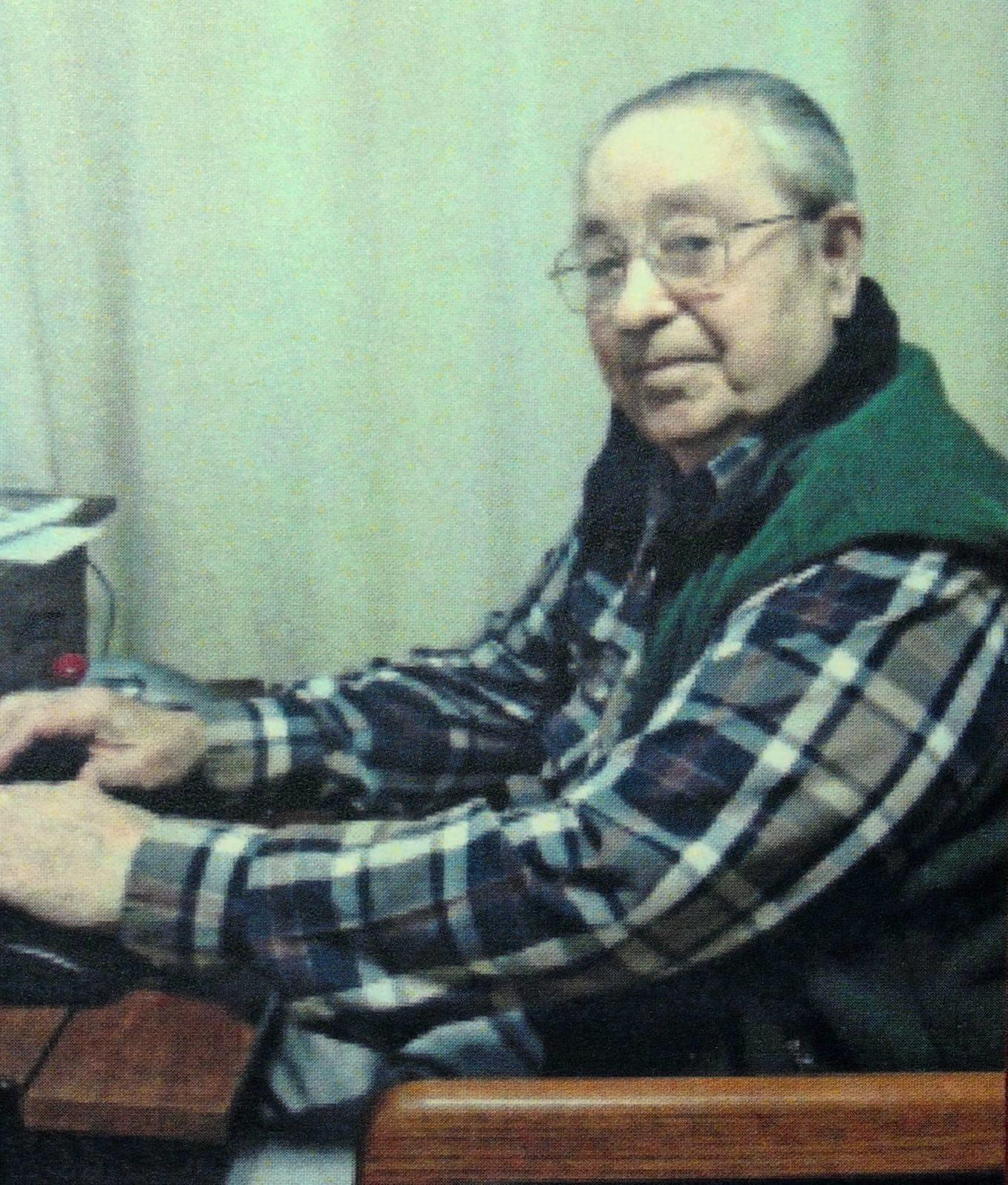
I met Tom at the first writing event I attended following my return to writing.  About the age of my own father, Tom had devoted his waning years to recording his life experiences.  He printed books, bound them, and offered them to his family and friends.  He threw himself enthusiastically into the writing life.

Together we traveled to monthly meetings.  He provided enthusiastic encouragement for my projects.  I helped him produce one of his memoir volumes.  In a conversational voice, Tom’s memoirs recorded his stories as if he spoke to his grandchildren.  When his health declined, he responded with wit and good humor, in the style I came to know as Tom’s unique voice.

He wrote, “On Friday June the third at five in the evening, my right leg went numb.  I called 911.  They put me in an ambulance and sent me to Via Christi, St. Francis.  They landed on me like a bunch of crows on road kill, ran all kinds of scans and tests, and scheduled surgery with a vascular surgeon for Sunday morning to remove a blood clot.”

Our days of writer’s meetings drew to a close with his move to the Veteran’s Home.  Tom still wrote daily, even as he struggled with growing physical limitations.  What have I learned from this writer?  He displayed grace and courage when facing his health issues.  In this way he reminded me of my own father.

But more than that, Tom’s dedication to the written word is testament to the vitality we find in books.  By writing stories for his family, Tom created a gift they can enjoy forever.  As I sit in my office, I am surrounded by books, by journals of my lost parents, and letters from long-gone relatives and friends.  They live through their words.  Their essence and personality shine into my life.  When I read words written by giants of my past, their voices echo in my mind.  And I know they are still with me, in words and in spirit.

OLYMPUS DIGITAL CAMERAOne week ago, Tom Junkins passed from this life. His words speak now only from pages he wrote. With his passing, he joined those giants of my past whose journals and letters provide sustenance for my future. I humbly repost this blog in his honor. I will long remember his enthusiasm for writing. Here’s to you, Tom. May your adventures continue into the next life.

The pig and the piano

OLYMPUS DIGITAL CAMERAMost piano service calls are pretty routine.  Occasionally, though, I do encounter a bit of a bizarre situation.

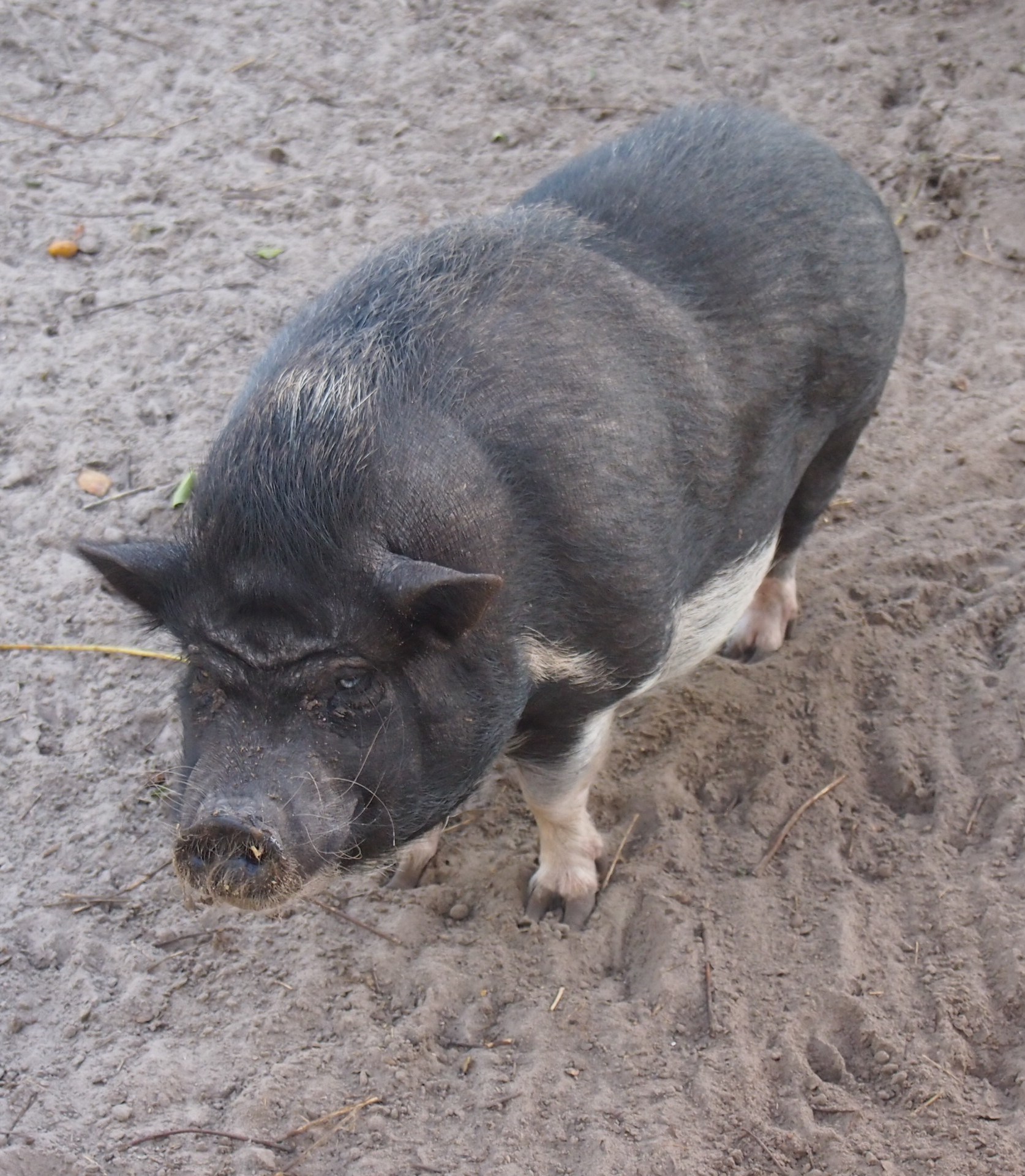
Not long ago, I was tuning for a new client in a nice new home.  The piano was in the basement on a wall next to the laundry room door.  Corralled in the laundry room by a child security gate was the family’s pet, Gretel, a miniature pot-belly pig.  I tuned away, working through the piano’s mid-section, when all of a sudden, the laundry door swung shut.  Bang!

There I was, trying to work around grunts, grumbles and the occasional little squeal, thinking to myself, “Okay.  A bit unusual, but I can do this.”

Gretel, oh the other hand, must have been thinking, “Okay.  A bit unusual.  SHE’S DRIVING ME CRAZY!”

The pig slammed the door shut.