Let’s Stop Pretending the Climate Crisis Isn’t Real

I sit in front of a fan with a glass of ice water to check the weather forecast. With a heat dome settling on top of us, we’ll see a week of triple-digit highs and daily heat advisories. There were three heat domes over the US in one month this summer. Ours is comparatively mild when you consider that on July 26, the heat index in western Illinois was 130 F.

My inbox is full of reports about the global outbreak of extreme heat. Europe and the UK, under heat dome after heat dome, have seen record high temperatures.  Wildfires have devastated vast areas of Spain and France. Government officials in Europe have declared the climate crisis to be a national security emergency for their countries.

In Iran, basic temperatures have soared to 127, and US troops remain deployed nearby. People in India are dying from the heat as they struggle to construct more dams with hand tools to retain what little life-saving water they get.

The Rhine River in Europe flows at a record low level, while in our country, the Colorado River and Rio Grande are dry for miles. Lake Meade and Lake Powell on the Colorado are so low they will soon be unable to release water downstream for human use.

We deal with fires on this side of the Atlantic too, with another record year for Canadian wildfires, not to mention those in our western states. Look at a map of current fires in the US and the whole western half is in flames.

The northern hemisphere is suffering from what climate scientists refer to as “weather whiplash.” Warmer than usual air carries more water and brings heavy rains. This promotes a spring season of lush plant growth. We saw some of that in June with combined 9” rainfalls in just a few days. Follow that with what scientists call “flash droughts”—extremely dry and hot weather—and all those plants become fuel for the raging fires.

Yes, it’s hot, and it’s getting hotter. Heat kills. More people die from heat stroke or hyperthermia than from all tornadoes, floods, and hurricanes combined. 2024 was the hottest year on record, with this year predicted to come in a close second. Ten of the hottest years were in the last decade. But 2027 may shatter all records with the developing El Nino.

There’s no doubt that all these extreme weather events are connected to the accelerated burning of fossil fuels. This is no time for our government officials to engage in “climate hushing,” afraid to even mention this biggest threat we’ve faced since the dawn of time. Ignoring it won’t make it go away. Nor will denying that it is happening.

We hear about actions to open our national parks and monuments to more oil and gas drilling, while clean energy projects are abruptly halted. The gutting of institutions like NCAR, EPA, and NOAA have made the situation worse. Provisions in last summer’s Big Beautiful Bill boosted fossil fuels. And now we learn that our president has sent a Texas oil company to Greenland—Greenland!—to drill for oil in the remote Jameson region in a country that is literally melting in the warming global climate.

Are you angry yet? I am. This is insane. Since the mid-1800s we’ve known the consequences of burning the “buried sunlight” stored with the organic matter from millions of years ago. Popular Mechanics ran an article in 1912 predicting chaos within a “few centuries” due to continued release of carbon dioxide to the atmosphere. The prediction proved true, but not the timeline, as it’s been only a few decades.

Kate Marvel, a climate scientist with Project Drawdown, wrote on July 30, “The science is clear about what will happen if we keep spewing greenhouse gases into the atmosphere. But it’s also clear that . . .  we have everything we need” to address the worst of the developing crisis.

What can be done? First, we need leaders who recognize that action can no longer be delayed or denied, those with the courage to re-start the programs from the Inflation Reduction Act of 2022. We need to recognize the planet-wide emergency for what it is, listen to those who can lead us toward a better future, and act on their recommendations. There is something every one of us can do, if only our government would let us.

Firestorm Sonata: The Story Behind the Story

The third novel in my Sonata series of adventure tales featuring pianos and their families is now available on Amazon. I have mixed feelings about it. The completion of this journey has been months in the making and I’m relieved to finally get there. It’s been a lot of hard work, with repeated readings and editing through the summer, each time thinking this would be it, and each time finding more things that needed to change. I finally drew a line. This is it. Ready or not. And Firestorm is launched. May she find a path through the maze of words out there in the cyberverse and not disappoint.

Firestorm Sonata:

In peak condition, scout Sharenda Kamine is certain her field skills will insure her safety as she seeks supplies needed by the fortress she calls home. She must, however, prove her worth to the authoritarian commander of this isolated pocket of survivors. With reluctance, he grants her request to work alone and she heads across dust dunes of what once was southern Kansas, confident she will master any challenge she meets. But she is unprepared to find a window into the past, which simultaneously offers a future ripe with possibilities. She must decide whether she will honor her commitment to the Fort, or escape to freedom with Gran, the only family she knows.

This tale is a first for me, to set the events in the future. During my work on the second Sonata, Sonata of Elsie Lenore, a friend I respect, a retired college professor and elder in my community, shared an article with me. “Confronting the Climate Crisis Through Fiction: Visualizing a climate-ravaged world may actually be the key to mobilizing action.” Those who know me well know my passion for the natural world, for the planet Earth. As a college freshman 50 years ago—get that FIFTY—I took a life-changing class called “Can Man Survive?” in the biology department at Fort Hays State University in Kansas. It was based on the then-current knowledge about all the impacts our human activities had on water, air, land—and climate. We’ve known about greenhouse gasses for my entire life. Even longer. Some folks predicted serious impacts early in the industrial revolution, over a hundred years ago.

The evidence is mounting in 2023. This summer is already setting records. Extreme weather events around the world fill the news from catastrophic flooding to record-setting temperatures and untamable fires. Chile, Canada, Greece, Italy, China, India, Japan, Taiwan, Philippines, Sudan, Madagascar, Zimbabwe–the list goes on. In North America, water temperatures in the Gulf of Mexico hit 100+ in places, with 100% mortality in some coral reefs.

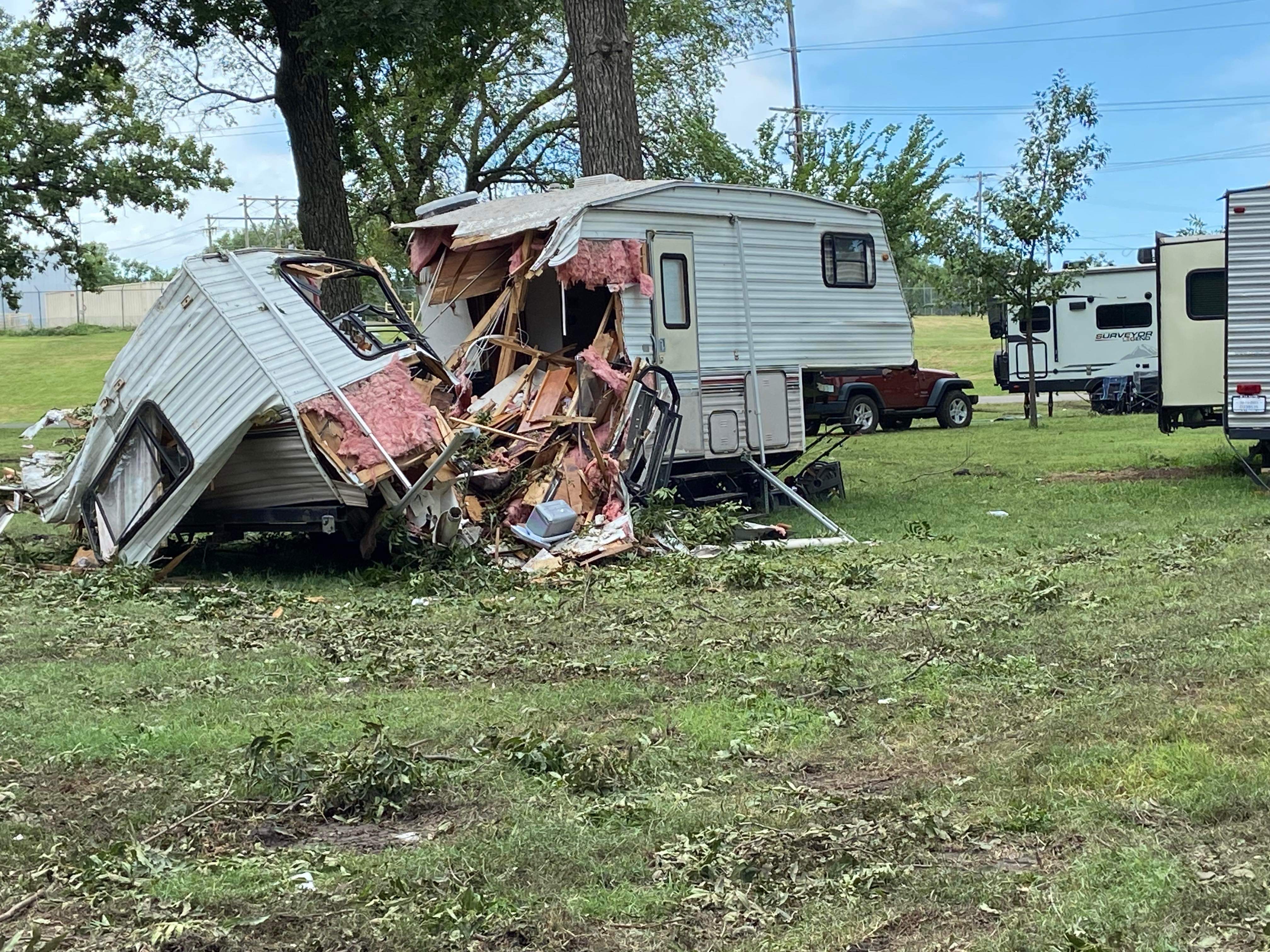
My own community cleans up after a straight-line windstorm that downed whole trees in our favorite parks and city streets, demolished our neighbor’s hay storage barn, and wreaked havoc on the county fair. Cleanup will continue for weeks. The cost has soared toward $2,000,000 already in our one small town.  And yet, we humans continue a path deemed to be disastrous for all life on the planet, just so oil companies can reap growing mega-profits at the expense of everything else we hold dear. If fictional tales set in a grim future environment will shake us into action, I decided I must try.

It’s been my privilege to offer continued piano service across south-central Kansas for nearly thirty years. I’ve kept climate records at each job, recording temperature and humidity. It’s increasingly hard to advise piano owners what their best plan of service should be. With seasonal swings in temperature and humidity becoming more unpredictable, the effects on pianos are easy to see. Tuning stability is now a figment of the imagination.

Pianos are my world. So is the prairie ecosystem. I began to ask some hard questions as I twisted those pins on my annual calls. “What’s with all the earthquakes in Kansas and Oklahoma?” In my college geology classes I learned this area is the “stable” part of the continent. Earthquakes are supposed to be extremely rare. And yet here we are.

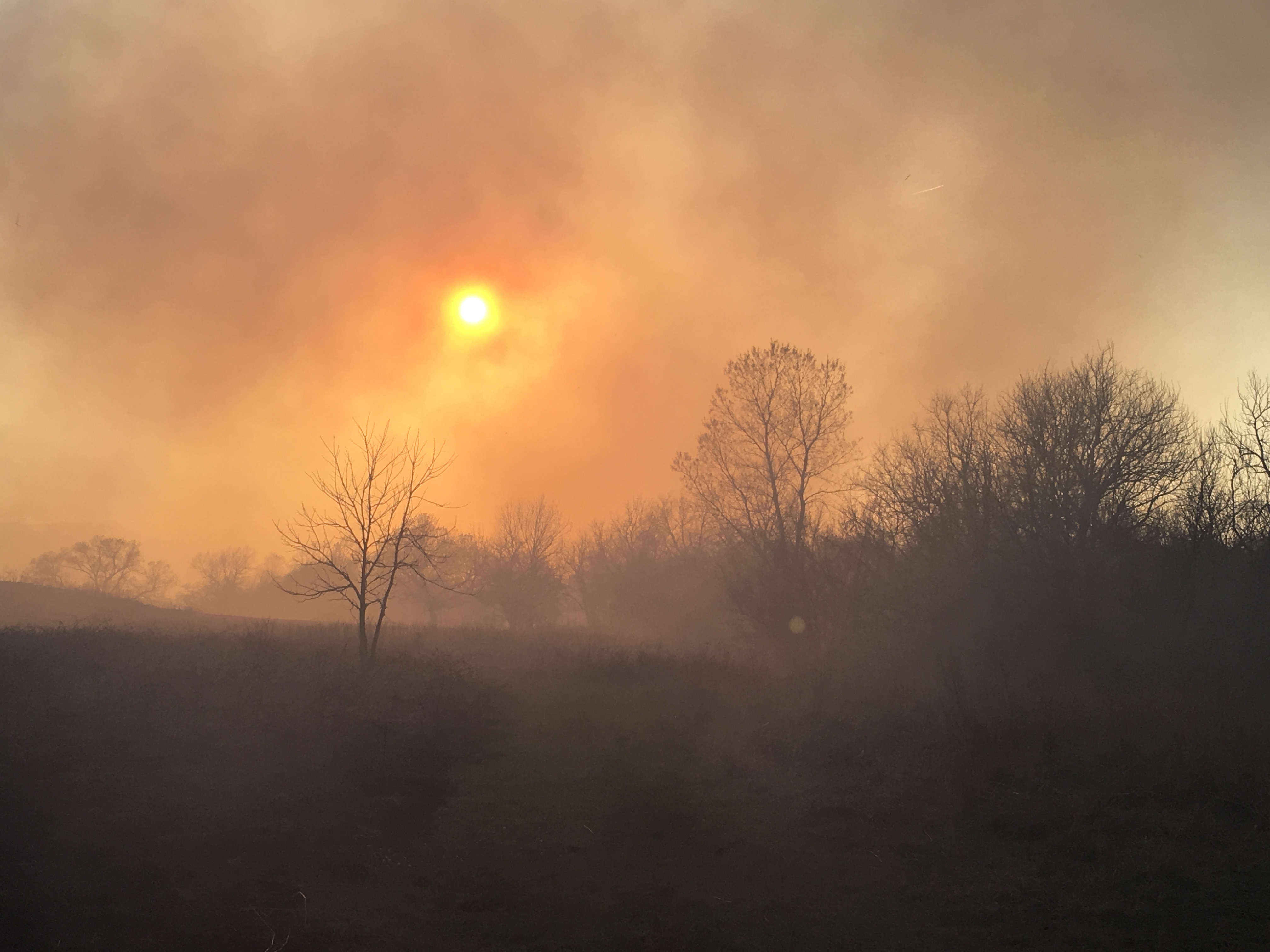
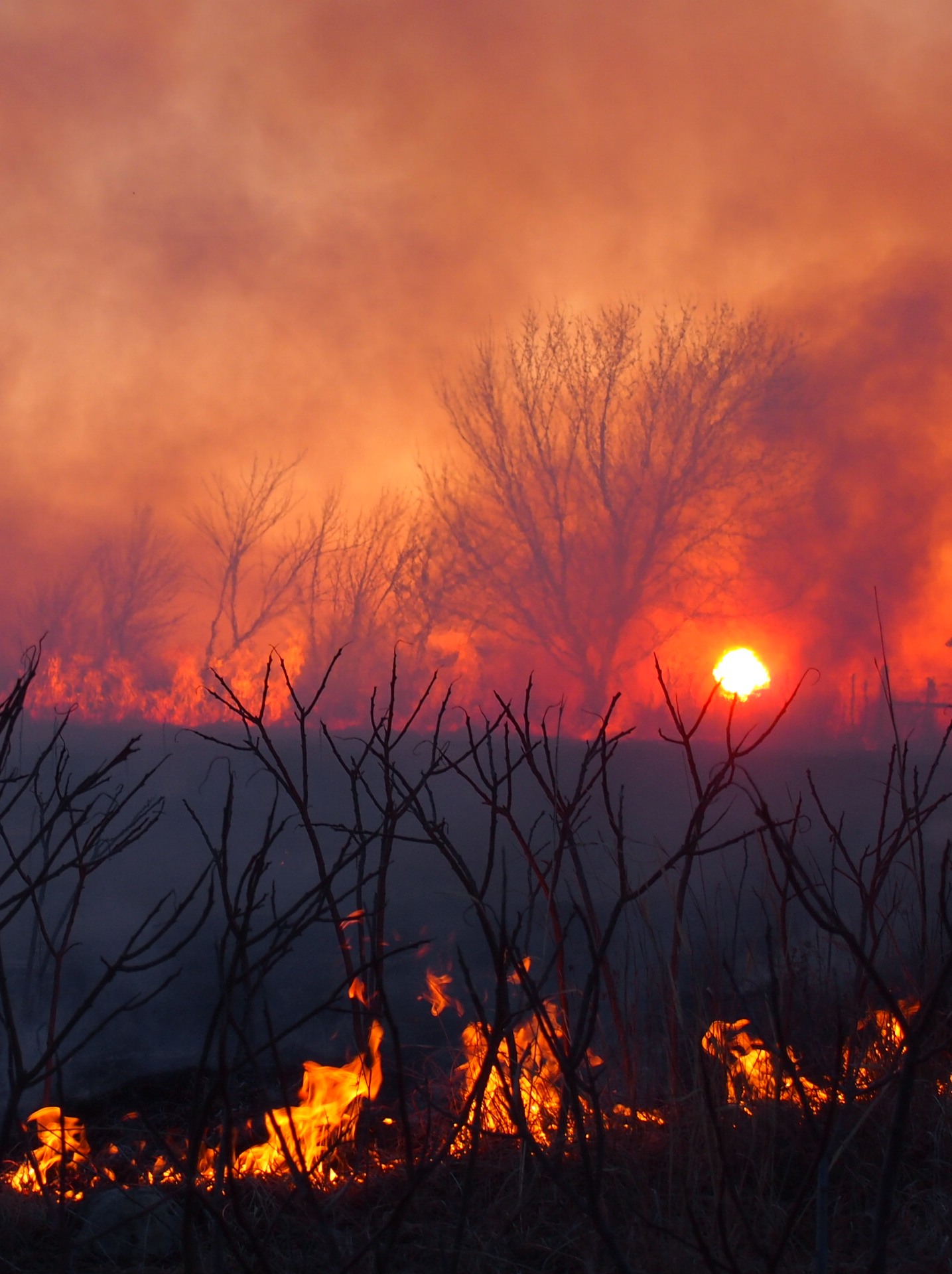
“What about the wildfires?” Every year we hear about more extreme fires. California, Oregon, Texas, Idaho. There have been successive record-breaking fires that started in Oklahoma and raged across the state line into Kansas, burning hundreds of thousands of grass acres, killing animals (including livestock) that were trapped in its path.April 2016, a fire burned over 400,000 acres, the largest blaze ever in Kansas (at the time);  March 2017, 600,000 acres burned in southwest Kansas, people were evacuated from small towns in the area; December 2021—fires in northwest Kansas, fanned by winds stronger than hurricane force, burned 400,000 acres.

Then there were the Canadian fires this summer that burned for weeks, sending ash and smoke into the air across northern US. And Maui—MAUI?? An island in the middle of the Pacific Ocean with a drought and a spark? The death toll from the Maui fire continues to grow.

I tried to imagine what my home county would look like after an extended drought, followed by a massive firestorm. Perhaps lightning would ignite an oil spill created by one of those fracking earthquakes. Add to the mix technology that can’t receive satellite signals, towers that topple in storms, and no way to receive news from the rest of the world.

The field of stepping stones.

What would my piano family do? What would become of them and their pianos? Would it even matter anymore if basic survival was the most pressing need? Unfortunately basic survival is already the most pressing need for far too many of Earth’s creatures, including pockets of human beings.

Thus, Firestorm Sonata was born. My deepest thanks to everyone who begged for another tale, who listened when I felt discouraged, and who offered words that bolstered me to keep on writing. You all comprise the village which raised Firestorm Sonata from a small seed to fruition. May she have wings to take her beyond my imagination and in her own way make our planet and our future a little brighter for all living things.