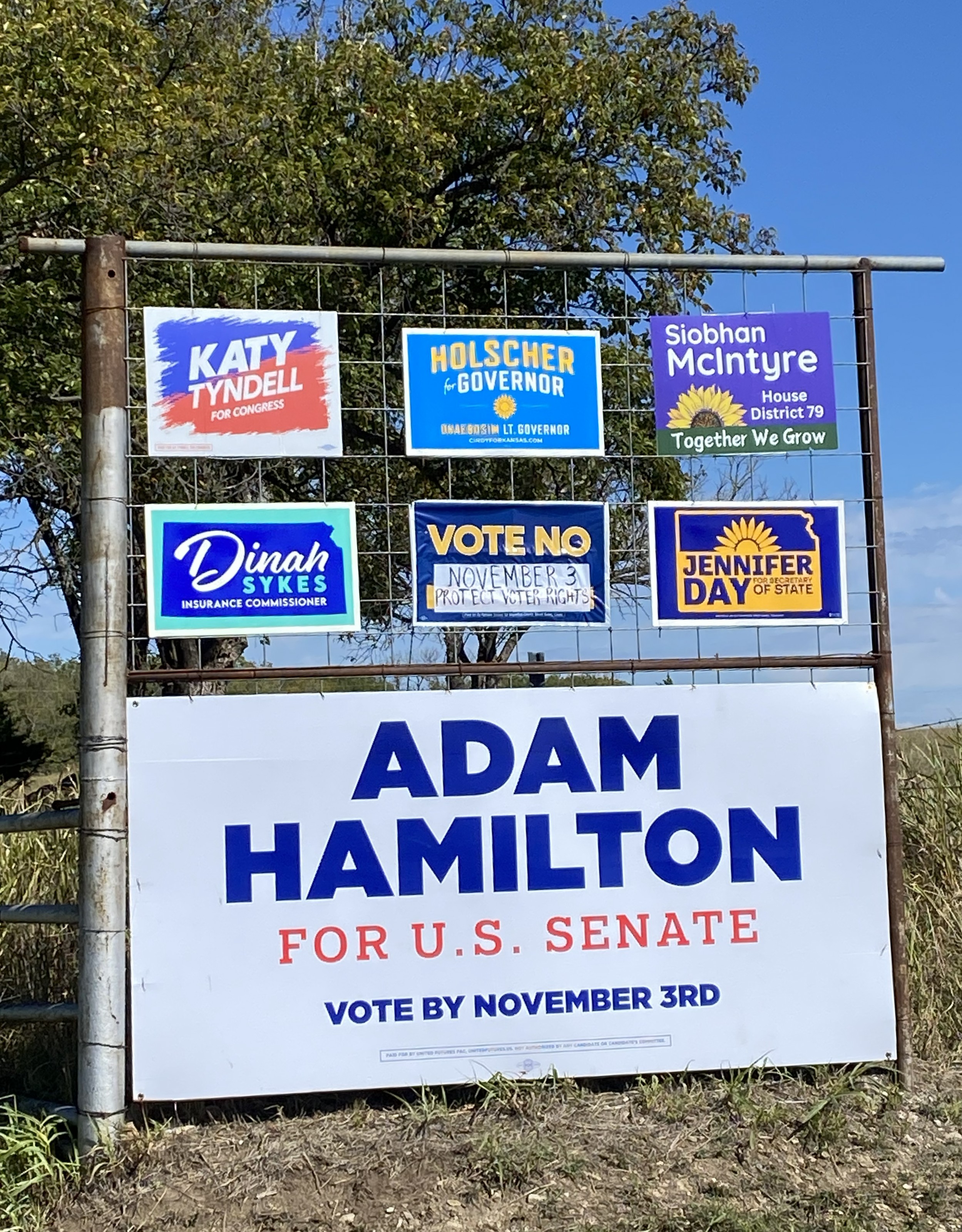
Did you know that any US citizen residing in Kansas who is 17 years old can register to vote? If their 18th birthday falls before the next election, they can vote in that election.
I learned this two years ago. A friend I’d met on a trip abroad moved to Kansas on a student visa to study at university. He fell in love with a young woman who was born and raised in Kansas, married her, and he was on track to complete his US citizenship requirements. His final ceremony would happen between the deadline to register and election day in 2024. Thus, his situation resembled that of a 17-year-old with a Halloween birthday. He was not legit by the registration deadline, but would be before the election.
Could he, I wondered, register pending his citizenship completion? A call about this to our county clerk prompted her to call the Secretary of State.
Turns out, no, he could not register before he was a citizen. To do so was a felony offense.
Don’t our Republican state house representatives already know that non-citizens can’t even register to vote? The proposed amendment on our November 3 ballot is unnecessary and frivolous, a waste of tax dollars. Per our current constitution, only US citizens can vote in Kansas now. To vote fraudulently, or even register, carries stiff penalties.
Why do our elected representatives keep throwing amendment proposals at us? Ulterior motives maybe? A slight change of wording here, add a word there, and you have an opening to change definitions. Those who know more about constitutional language than I do have suggested that the new language, if approved, would allow our extremist legislature to define who can—and who can’t—vote in Kansas without the people’s approval. It’s a sneaky attempt to strip rights from some segments of our population.
For instance, women.
Pat Proctor, who is running for SOS against Jennifer Day, is known for his proposals to limit voting rights. Remember the bill he sponsored that eliminated the 3-day grace period to count mailed-in ballots? Thankfully, our courts have put it on hold for now. How about “family voting” where the male head of the family casts a vote for everyone?
Or the infamous SAVE act registration restrictions? It’s no secret that extremists in the US want to require birth certificates or passports for voter registration. For women, this is problematic, since women often take their husband’s surname when they marry. Their married name doesn’t match their birth certificate. The required supporting documents cost money. Passports are expensive too.
For those of us already registered, if we move someday in the future, our new address would require a new registration.
It’s part of a broad effort to concentrate authority in the hands of rich white men, ultimately an issue of control. The US is getting a reputation for repressing civil rights. The 70th Annual Commission on the Status of Women (CSW70) was held in March this year at the UN headquarters in New York. Hundreds of participants from 45 member nations around the world attended. For the first time ever, the agreed conclusions (a document pre-negotiated by member-states) were put to a vote. The document passed with overwhelming support and only one vote against—that of the USA.
Why? Because the US had proposed amendments regarding DEI, the effects of climate change on women and girls, the definition of gender, and reproductive health rights for women. The amendments were rejected by the rest of the world.
The lone “No” vote among all the United Nations came from our country. Who are we anyway?
Lately, the men in charge want to whittle away rights: voting rights, bodily autonomy, health care, and legal defense. But “Liberty and justice for all,” right?
Only if you are the right gender, the right ethnicity, the right color, and have the right ideas and goals.
Early voting in Cowley County starts today, Monday, October 19 at the courthouse annex. You can see a sample ballot at myvoteinfo.voteks.org/voterview. Read that amendment proposal yourself. It is an unnecessary attempt by our statehouse leaders to fix something that’s not even broken.
Vote No on the amendment. Vote for Jennifer Day for Secretary of State to protect elections for all of us.