Another Broken Treaty

Painting by Ardith Fell

Last fall I met Haskell Indian Nations University professor Daniel Wildcat at the Kansas Book Fair in Topeka. He spoke about his recent book On Indigenuity: Learning the Lessons of Mother Earth (2023 Fulcrum Publishing). Robin Wall Kimmerer calls the book “a compelling framework to rethink the role of the western worldview . . .” His presentation proved compelling as well. I left with a deep sense of gratitude for indigenous leadership in these trying times, and an autographed copy of his book.

That was before the 2024 election reduced our hope for a viable future on this planet to warm ashes. One of the latest hits to our collective understanding of America was the firing of 30% of Haskell’s staff on Valentine’s Day this year. Students were left mid-semester without mentors and instructors. Banned faculty evidently faced arrest should they set foot on campus to teach, even at no compensation. Volunteers require federal approval.

Friends in Lawrence tell me that Haskell is one of two schools the government supports through treaties to provide higher education to Native Americans. The other is Southwestern Indian Polytechnic Institution. Both schools had significant cuts enacted on Valentine’s Day.

Another treaty with the Indians, broken like many before.

Do we care?

As Daniel writes in his book, “. . . not caring is too lonely a space to occupy.” He exhorts us in an opening poem to “Stand up. For those whose voices are silenced . . . Stand up. With those who fight for justice unmoved by fear and moved by love.”

As he autographed the book I had purchased, I asked how to express gratitude in his native language. Smiling, he coached me.

Thus: For the long-suffering spirit of resilience that never gives up; for the leadership in treating our home planet with the reverence it deserves; for the quick willingness to forgive us European settlers eons of arrogant thoughtlessness—

Sonjae Keriocitae.

(my attempt at phonetic spelling of the Yuchee/Creek expression for “Thank you.” Any inaccuracies belong to me, the student, not to Prof. Wildcat.)

Let us stand up for the Native Americans and others now, as the rogue government rips uncaring through our communities.

Painting by Ardith Fell

What a Difference a Smile Makes

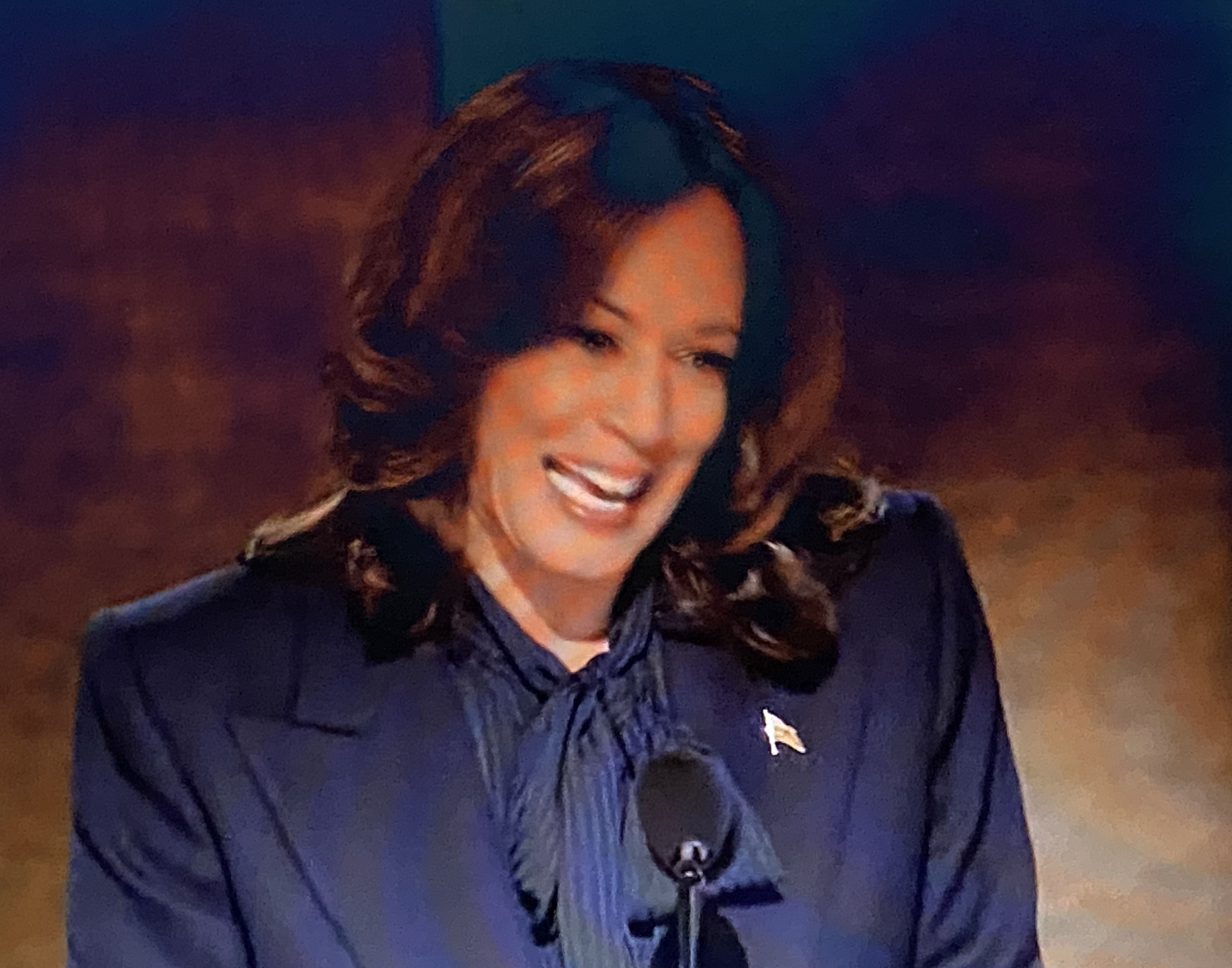
One of the starkest contrasts between the presidential candidates of 2024 involves their facial demeanors. While Donald Trump puts on a stern, angry façade, Kamala Harris is often seen smiling. Anger versus joy. Which is really a symbol of strength?

In my personal history, when I feel strong, capable, competent and on-top-of-the-world, I have often completed a difficult goal, like mastery of a Liszt piano composition. What a thrill! My heart is buoyed and I smile easily at anyone and everyone. When I have had a bad day and feel overwhelmed, when I lack confidence in my capabilities, when I doubt myself, I am gruff and sullen, giving off a vibe of anger.

Anger reveals doubt and lack of confidence. It often accompanies people who try to make themselves feel bigger, better, and more important by stripping others of their dignity. People who behave like that are called bullies.

In my world, joy spells confidence and strength.

Remember the childhood fable that describes a contest between the north wind and the sun? The two decide to test their strength and see who can remove a solitary traveler’s coat. The north wind goes first and blows ferociously, outdoing itself in its bid to strip a man of his coat. No matter how hard the wind blows, the man draws his coat closer around himself and clutches it tighter. Then the sun takes a turn. It shines warmly on the traveler until the man sheds his coat voluntarily, soaking up the sunshine.

Joy is like that.

Another area that might need closer scrutiny is the nature of true wealth. Some of the world’s richest men in their acquisition of dollars tend to support the angry, bitter candidate, the one who feels powerful because he can make others miserable.  Where it really counts though, the joyful candidate is far wealthier—in kindness, compassion, and generosity that morph into a wealth of public support, small dollar donations, election volunteers, and crowd sizes at rallies.

Which candidate is wealthier in things that really matter? It’s clear to me that joy yields far greater rewards than anger.

The prevalence of disinformation and misinformation assaulting us from every source—from mainstream media to social media—makes it difficult to determine what is factual and what isn’t. Both sides level accusations at each other that echo distrust, fear of ulterior motives, or conspiracies to gain unlimited power over the country and the world.

How do we know what to believe? How can we find the truth?

Henry David Thoreau, long recognized for his stand on civil disobedience, wrote, “What I have to do is to see, at any rate, that I do not lend myself to the wrong which I condemn.” I cannot adopt the bitter, vengeful tactics that I find so repulsive. Do Trump supporters view their neighbors, relatives, and co-workers repulsive just because we seek joy in our lives?

It behooves us all to examine with care what we hear and read in our search for underlying truths. For me, the power of joy and the promise it delivers speak very well for truth.