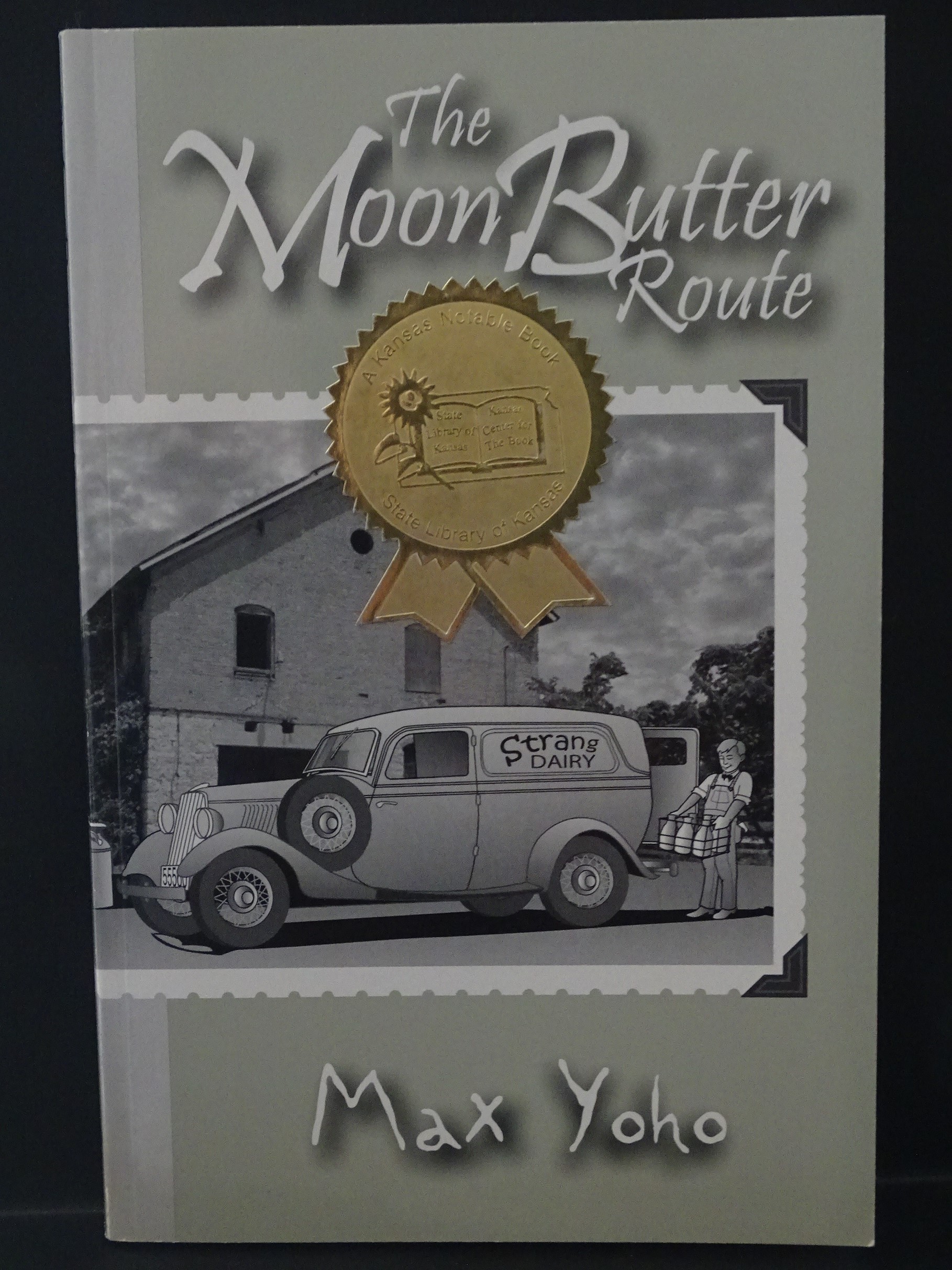
Speaking of comedy, I’ll put in another vote for a historical novel set in prohibition days in southeast Kansas. Topekan Max Yoho spun a good yarn about a boy coming of age during the later years of the prohibition era. The Moon Butter Route follows 12-year-old Wally Gant as he enters his teen years in the 1940’s. His first job was to assist with deliveries for the Strang Dairy, a place that didn’t just deliver milk, but also some of the finest moonshine (Moon Butter) packaged in painted milk bottles.
His adventures amongst the moonshiners and bootleggers—some lovable and some not—follow Wally as he finds love and fortune in a rough part of the state and of history. Told with good humor from Wally’s point-of-view, some of the shenanigans he describes are downright hilarious, which reminds me again how laughter can truly be good medicine for the ills of my soul.
Early in the year, a soft-spoken gentleman in the Wichita author’s group requested volunteers to test-drive a book he’d finished. I signed up, and promptly got distracted by daily life. The year was half over and I was thoroughly disheartened by the accrued crises before I downloaded a Kindle copy and started reading. I admit, I was dubious about a book titled I Rode for the Wigglin’ W. Some kind of western perhaps? Not exactly my cup-o-tea. But I wanted to support my fellow writer.
It wasn’t long before I wondered why I’d waited so long. Wigglin’ is not just a western, it’s a romantic comedy to boot. Loren Harder (as Flynn McGuin) soon had me laughing out loud—just the lift I needed amongst all the sour news and dire predictions of the year.
I Rode for the Wigglin’ W is good, clean fun, a modern tall-tale that you have to read to understand. I’m not going to give away any of its secrets since I don’t want to spoil it for you. But I will say it’s well-written (not a grammatical hiccup anywhere that I recall) and fast-paced. It’s written for folks of my generation, with sentimental clues from our coming-of-age years, but it’s clean enough to share with youngsters. And, it’s hilarious. Thank you, Loren.
American Fascists: The Christian Right and the War on America by Chris Hedges
A third book recommended by a friend proved even more horrifying. Written more than a decade ago, American Fascists: The Christian Right and the War on America by Chris Hedges was more than an eye-opener. Hedges described settings and scenes I’d never dare to experience personally, but they illuminated and explained phenomena I’ve noticed in the growing rigidity and prejudice of many conservative friends and family members. Anyone paying the slightest attention to matters of faith can attest to the truth of his detailed observations.
Today’s most recognized “Christian” community, the right-wing conservatives, are often a far cry from living the teachings of Jesus. When matters of faith fail to uplift and support those most vulnerable among us, but instead attack the differences that make us unique, something has gone very wrong. When those who embrace atheism demonstrate greater generosity and compassion to world inhabitants who are powerless, religion has failed its basic purpose.
A Pascal quote used as the introduction for Hedges’ book put it simply, “Men never do evil so completely and cheerfully as when they do it from religious conviction.”
***
None of these wake-up books were written by authors I know personally, nor do they include specific mention of Kansas, but they impacted my personal life and growth in 2017. Each was recommended by vastly different friends and acquaintances. They remain relevant today and I pass them along as worthy books to read.
A comment on an internet article I skimmed recently caught my eye. “For the first time in history, an American president has declared war on the American people.” There are many sides to this complex issue, many concerns. How we respond to the challenge of resisting our leader will determine the course of our future. A logical first step would include defining what America has been in its almost 250 year history, and what America stands for in our own hearts. What would we preserve for the generations to come?
I cherish the beloved words learned in our daily pledge of allegiance when I was a grade school student years ago, a pledge still recited daily in my local schools. The most important thought, and one I think defines what America should be, is its conclusion, “with liberty and justice for all.” We have a long way to go to realize this kind of society, but I cling to the dream these words paint. Liberty and justice for all.
All means “all”.
Not just the 1%. Not white Americans. Not men only. Not only straight people. Not just right-wing Christians.
All means all. And in our diversity, may we find strength.
On Tyranny: 20 Lessons from the 20th Century by Timothy Snyder
Early in 2017, I sat in an examine room waiting for a dermatologist to examine a suspicious spot on my nose. To pass the inevitable wait time I had brought along the book I was currently reading. When the doctor finally breezed into the room, I was writing a memorable point from the book in my travel journal. He noticed and he asked about the book. Then he recommended one he’d found of utmost importance, On Tyranny: 20 Lessons from the 20th Century by Timothy Snyder.
I was intrigued, as much by the recommendation of a physician to his first-time patient as anything else. On my return home, I looked it up and ordered a copy. Before the week passed, I had devoured Snyder’s treatise. “Americans today are no wiser than the Europeans who saw democracy yield to fascism, Nazism, or communism in the 20th century,” Snyder wrote in the introduction. “Our one advantage is that we might learn from their experience. Now is a good time to do so.”
Using examples from historical incidents within the personal recollection of my elders, Snyder listed steps we should take to stave off a descent into chaos. Among these:
Defend institutions. These include the courts, news outlets, and labor unions. Public schools, libraries and book stores could also make the list.
Beware the one-party state. Become informed. Vote. Run for office yourself.
Be courageous. Stand out. Give courage to others. Set a good example of what America should mean for the sake of coming generations. Hang onto the dream of liberty and justice for all.
On friends: Stay in touch with your neighbors. Make new friends and march with them. Make friends abroad. And keep your passport current.
Defend our language. Refuse to talk like everybody else. Separate yourself from the internet. Read books.
Believe in truth. And search for it. Investigate. Figure things out for yourself. To abandon facts is to abandon freedom.
As the events of 2017 accrued, it became clear that we are being led by a tyrant. I recommend Snyder’s book. Read it while it’s still allowed.
Friends recommended other books in my 2017 journey that carried an impact. The Will to Change: Men, Masculinity and Love by bell hooks, a black feminist writer, delved deeply into the ills of our society as a paternalistic creation. Traditional roles for women and men thrust upon children at very young ages may have contributed significantly to the simmering rage that fuels white supremism, racism, sexism, and ultimately the climate that leads to mass shootings. Until we can embrace the individual talents of every person, there will be violence in our future. Hooks’ study helped frame much of the tragic headliners of 2017 into a new perspective with increased understanding about how frustrated paternalistic roles have impacted events. We collectively need the will to change our ancient traditions of male dominance into an affirmation of every person’s unique gifts.
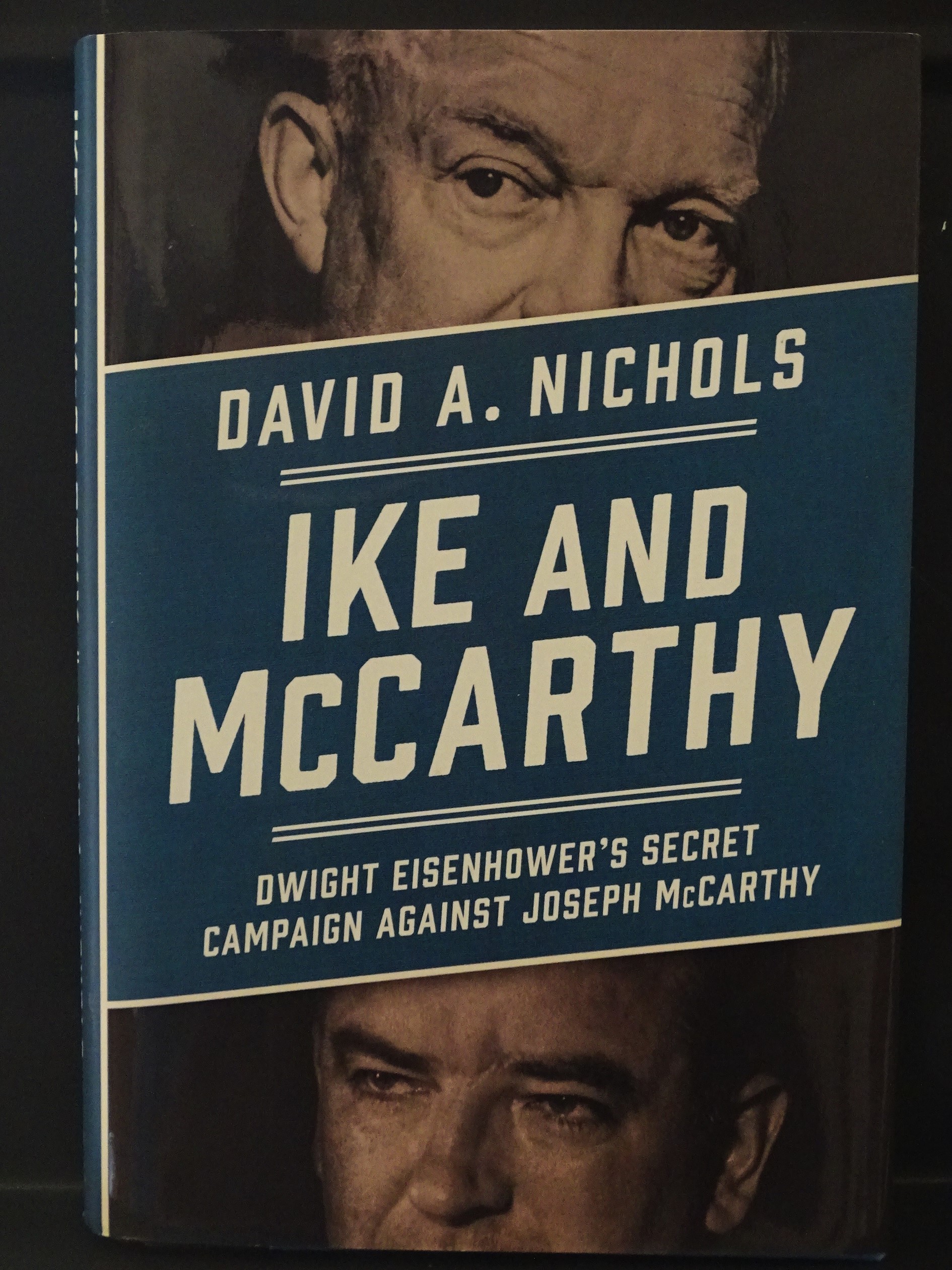
Another true historical narrative on my reading list in 2017 was a new release by Simon & Schuster in the early spring. Given the rash of protests regarding the new administration’s reckless policies, there could not have been a more appropriate time for the release of David Nichols’ new study of Eisenhower, Ike and McCarthy.
Having spent time with Nichols talking about writing and sharing family stories, I was humbled to the extreme to read his well-written treatise on the McCarthy years. This infamous time in our history was over shortly before I was born, but the pages of Nichols’ book included names that would become significant players in world politics as I grew up.
What smacked at me most was the uncanny resemblance between McCarthy’s agenda and his tactics, and those of our current president. Most chilling was the realization that Ike, as a rational and intelligent leader, took clandestine steps to prevent a bid to the presidency by unstable extremist Joe McCarthy. In today’s world, the unstable extremist IS our president, and it is yet to be determined how—or even if—his influence will be checked.
We are tumbling into a deep, deep chasm with no end in sight.
Read Ike and McCarthy by David Nichols to gain insight into this repetition of our history.
History provides real stories that are filled with suspense and drama, such as that found in Apollo 13. Unlike the previously mentioned books, this one was not written by a personal acquaintance, nor is it a recent book. I’m not even sure how the copy, autographed by Jim Lovell himself, made its way to my bookshelf, but it’s one I’m glad I read. The suspenseful tale of the doomed flight of Apollo 13 held my interest throughout. The real miracle is that its three astronauts actually returned to Earth and lived to tell the tale of their crippled spaceship.
The release of the acclaimed movie Hidden Figures in early 2017 made my reading even more pertinent. The movie highlighted the continued and absurd discrimination against black Americans (specifically black American women) even though their efforts proved to be highly valued—even irreplaceable—by the US space program. The team of black mathematicians was instrumental in aiding the successful return of the stranded astronauts.
Though the authors of Apollo 13 had never claimed Kansas to be home, I was delighted to discover the story concluded in Kansas when the spacecraft itself was delivered to its final resting place in Hutchinson at the Kansas Cosmosphere and Space Center. It has found a home since 1995 in the space museum there.
The distinguished speaker rose after her introduction, an engaging and unique smile spreading across her African American countenance. With the ease of an experienced public speaker, Sharon Hill Cranford captivated the room’s listeners. She gave a brief history of her writing adventure, which started when she was confronted by a fellow faculty member at Hesston College in central Kansas, Dwight Roth, a white man with an Amish Mennonite lineage. He challenged her claim to the family name of Mast, a Mennonite name. Thus began their journey to discover a family connection through divergent lines of Amish immigrants to the US in the mid 1700’s. These two respected faculty members discovered they are indeed distant cousins.
The result of the research is a book jointly written by Cranford and Roth, Kinship Concealed. On the surface, it is a family story, a study in geneology that involved close examination of documents from Pennsylvania to North Carolina to Texas. Deeper down, it is a modern examination of the American drama resembling Alex Haley’s Roots.
I was captivated by the family drama unfolding on its pages. How devout Christians could rationalize the purchase of slaves was horrifying and baffling. I cried with Cranford’s great-great-great grandmother as she was ripped from her infant, a boy fathered by the master’s son. Nika was sold away south and lost in history, but never forgotten.
Charley Mast, Nika’s infant son, lived to be emancipated. He passed along his stamina and the desire to excel to his children. Highly educated, Cranford’s family members have earned distinction in today’s world as leaders in their chosen fields. Cranford’s speaking engagement detailed her own experience growing up in Texas during the Civil Rights awakening, the outright prejudice and obstacles thrown in her path by white people in positions of power. Yet she endured and has become an icon to her family.
That these two distant cousins could find it in their hearts to undertake such a personal examination of the sins of our fathers and reunite as kin, signifies a hope that the rest of our society might one day reconcile. The events of 2017 painfully confirm we have a long way to go. But, as Cranford writes in her prologue, “If this story encourages any portion of our society to reexamine its heart, it can play a pivotal role in breaking down the barriers of distrust and prejudice that years of pain and hypocrisy have bred,. . .”
We are, after all, one big human family, built on the same foundation. If we listen to Cranford and Roth, perhaps there is hope yet for our shared future.
Coming next: Apollo 13 by Jim Lovell and Jeffrey Kluger
Gloria Zachgo’s award-winning books The Rocking Horse and Hush Girl: It’s Only a Dream were written by another new writing friend, a leader in the Kansas Author’s Club. Hush Girl, her latest novel, received the 2017 J. Donald Coffin award that my two books received the previous two years. Eager to read another award-winner, I was excited when the first sentence pulled me into the drama. It didn’t let go until the last page.
Told through the agonized confusion of a young woman in therapy, she reveals long-suppressed memories of her traumatic childhood while fighting present-day attempts to stop her efforts. When at last the truth becomes evident, she finds herself alone, facing an insane acquaintance in a death-dance to save her daughter.
Like Hush Girl,Rocking Horse explores an unwelcome truth hidden in the past. Each book follows the private conflicts of a child who witnessed violence and was a victim of abuse. As adults they struggle to reveal the past in order to face a brighter future. Down deep, each narrative is a story of desperate maternal love, sometimes reaching from beyond the grave. Broken families, mental health issues, abusive husbands, alcoholism—the ills of our ailing society are thrust upon innocent children. How they manage to overcome their past makes suspense-filled rides through the pages of these novels.
If you need an escape from your own reality, Zachgo’s novels will transport you into another world in which you’ll find yourself cheering for the mistreated heroines to the very satisfying end. I recommend them as entertaining reads and look forward to more from this talented writer.
One of the best things about 2017 was expanding my circle of writing friends. Ex-cop Jim Potter is one of the most recent. He contacted me in October regarding the possibility of including his new release in the annual bookstore at the Kansas Authors Club convention. I met him in November during my presentation to the writers meeting in Hutchinson and found him to be outgoing and friendly. He enthusiastically endorsed my suspense novel and I found time to read his debut novel as the year drew to a close.
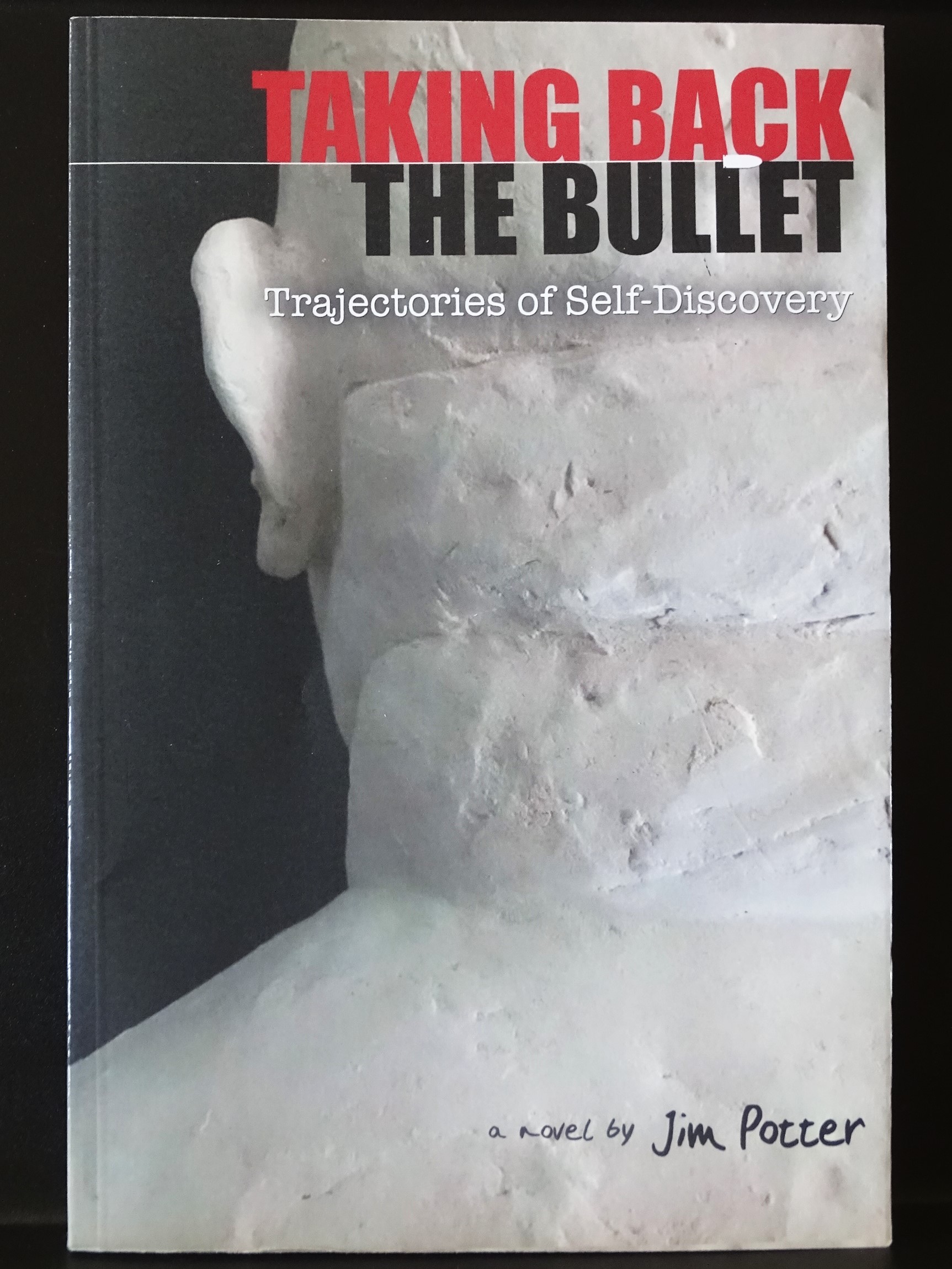
Taking Back the Bullet is a literary and contemplative sequence of character sketches in which a botched bank robbery changes the direction of each life. Bullet is a drop from our collective society. Under a microscope, the drop reveals characters who represent a variety of today’s ills. In the book we encounter prejudice toward obesity, prejudice toward those struggling with mental illness, race related prejudice, particularly as it affects native Americans. We encounter issues faced by those with albinism as well as the LGBTQ community. Indeed, policemen, as much as teachers, medical personnel—and writers—see it all and gain insight into the many issues our country faces.
Bullet is, as Potter explained, a wake-up call for today’s world.
The story is open-ended without a resolution to these issues, but it leaves the reader with hope when the main characters take steps that lead them in new directions.
One of the most fascinating features of Potter’s book is the section of character illustrations at the end. His wife, J. Alex Potter, an accomplished sculptor and art instructor, crafted a series of busts to bring many of the book’s characters into clear focus. Being married to a sculptor/art instructor myself, the photographs of her creations were especially meaningful to me.
I recommend Taking Back the Bullet: Trajectories of Self-Discovery as a revealing snapshot of the mosaic of ills we face in 2018. I hope that Jim Potter will write more, following these characters into their brave, new future, with hopeful and positive results.
A few days ago, my writing cousin and friend Paul Bishop linked to an article about the growing trend of young writers who don’t like to read. Say what?
It has always seemed obvious to me that reading comes first. For me it certainly did. I fell in love with books as a child. When I was quite young I realized that I wanted to not just read books, but write them as well. I was also convinced that the best way to learn the craft of writing was to read widely and voraciously. I learned what worked to hold my interest, to make my heart beat faster, and what gave me a sated feeling of contentment.
The time required to lose myself in a book is at a premium these days. Many things vie for my attention and steal my time. There is a yearning in my heart for that good-old solitude, the luxury of time to lose myself in other worlds presented in books.
A disconnect exists between my longing and the fast-paced technological existence of today. We’re on a course into uncharted lands, where stories are told in tweets and symbols. Youth seem to loathe time they spend alone with themselves, or in genuine face-to-face conversation.
I don’t understand the young ones any more than they understand me, and that is a sad fact. But it doesn’t mean my experiences and values are meaningless. I cling to my cherished books, realizing that those I have spent time reading have shaped the course of my life this past year, as they have every year.
I’d like to share a few notable reading experiences as the first days of 2018 unfold, books that were my companions through the tumultuous times of 2017. It is particularly satisfying to note that I actually know and respect many of the authors of those books. Other books were recommended by friends. I did read a few that I will not recommend, some written by very young writers that were ripe with spelling and grammatical errors. If only those young writers would just read a few really good books. . .
The first reviews will be shared tomorrow. Up next: Jim Potter’s Taking Back the Bullet.





 The Bridge