Do We Need a New Bible?

The solar energy system on our house came online in July 2011. For the next fourteen years, few days passed when our inverter reported no energy produced by the sun. Then, in June this summer, it all changed. The status window on the inverter, a necessary device that converts the direct current produced by the sun to alternating current for use in our home, toggled error messages constantly during daylight hours. “Peak overvolt,” “AC Voltage Low,” “AC Voltage High.” Production ceased. Given my determination to support the national Sun Day (https://www.sunday.earth)  on September 21 with a local event, we had to do something! An error-ridden system just would not suffice.

The people who installed our system are no longer in that business, so I called local electricians to help diagnose the problem. But we were put on a back-logged wait list, with no real intent to take us off since we were not a priority for the local electricity experts.

I turned to a recommended solar company headquartered ninety miles away. Weeks passed with no appreciable action, but after the devastating baseball sized hailstorm damaged several Solar installations in Ark City, a repair and maintenance specialist from this company stopped to take a look. He found nothing wrong, and assumed there was an issue with a computer chip in the inverter. His advice was to do a hard reset, that is, turn off the whole system for ten days to two weeks to allow the capacitors inside to fully discharge, then turn it on and hope for the best.

It didn’t resolve the error messaging.
I reported back to the solar company and declared that we were ready to replace the inverter and upgrade our home system. That’s when things became interesting.

On Friday afternoon, J, a system designer/project manager, arrived to do a site visit. We agreed on a 3:00 time via email messages. And at precisely 3:00, his white company pickup rolled to a stop in front of our house.

He’s punctual. Impressive.

J chatted about options as he took pictures of several important components in our system, utility meters, and structures on the property. A friendly, 40-something bearded man, he easily answered our questions. I noticed ear piercings as well as tattoos on his forearms. One tattoo was a caterpillar. Another broadcast in a fairly large font, “Practice Resurrection.”

Who was this guy? What did that mean, practice resurrection? Was he part of a strict religious cult? A rigid fundamentalist?

His knowledge of everything solar was obvious and the time flew by. It crossed my mind to ask about the tattoo, yet in the end I let it be. But later, that phrase wouldn’t let me be and I did a search. It turns out that “Practice resurrection” is part of a poem by Wendell Berry.

This system designer for a solar company has poetry tattooed on his arm for all the world to see. Wendell Berry, no less. Impressive!

My encounter with Wendell Berry and his writing has been a meandering path. Earlier this summer, a good friend presented me with an envelope that held a poem by Wendell Berry. M turned to this poem when he needed solace and he wanted to share it with me. That well-worn envelope is in the bag I carry daily. I shared the “practice resurrection” poem with M that evening, whereupon he loaned me Poetry of Presence II, a small volume of poems he didn’t want to part with permanently. It included a few by Wendell Berry, and M urged me to take a look at the poet’s life.

“Look him up,” he said.

Wendell Berry is not to be confused with Thomas Berry, whose book The Dream of the Earth is one of my cherished tomes. Still, there are similar themes in their writing. A thumbnail bio in the back of the loaned poetry book tells me that Wendell Berry writes poetry, essays, and novels. He is an environmentalist “with one primary message: Either we humans will learn to respect and live in harmony with the natural rhythms of this planet, or we will perish.”

Yes. That is prophecy. And Wendell Berry’s important message becomes clearer by the day as humans who have no business leading us continue to lead us toward devastation. It smacks me that this poet’s words have been swimming through my consciousness for years. I have one of his novels in my treasured books collection—as yet unread, but it’s on my list. It just moved a little higher.

There are eleven of Wendell Berry’s poems in my revered 1991 copy of Earth Prayers from Around the World: 365 Prayers, Poems, and Invocations for Honoring the Earth. Included in this volume is an excerpt from the poem that concludes with the words, “Practice Resurrection.”

What, exactly, does that mean? A description that popped up in another search. To practice resurrection means to embody the spirit of new life, hope, and transformation in the face of death, despair or brokenness. Often this is accomplished in acts of faith and love, through perseverance. It involves a daily commitment to find new life in death, to cultivate resilience, to see possibilities for redemption in difficult situations.

That, my inner voice says, is what we need right now, a sense of partnership with the creative Spirit responsible for all life on our amazing planet.  That, my inner voice adds, is the theme of the novel I’m currently writing. That inner voice, I swear, also adds, that may be the theme of many great works of fiction through the ages.

Excerpts from Berry’s poetic verse prompt more from my nagging inner voice.

Berry: “So, friends, . . . love someone who does not deserve it.”

Fell: Love is the greatest power. Believe it.

Berry: “Denounce the government and embrace the flag. Hope to live in that free republic for which it stands.”

Fell: Berry, who is 91 in 2025, wrote this before 1991. How did he know?!

Berry: “Give your approval to all you cannot understand. Praise ignorance, for what man has not encountered he has not destroyed.”

Fell: And everything he has encountered, he is in the process of destroying.

Berry: “ . . . please women more than men . . .”

Fell: Hear, hear!

Berry: “Put your faith in the two inches of humus that will build under the trees every thousand years. Listen to carrion . . .”

Fell: The cycle of life; from death comes new life.

Berry: “Laugh. Laughter is immeasurable. Be joyful though you have considered all the facts.”

Fell: Not the fake facts. Consider the factual facts. This is a difficult thing, and yet, laughter is healing. When one can laugh, one can love.

Berry: “As soon as the generals and the politicos can predict the motions of your mind, lose it. . . make tracks in the wrong direction.”

Fell: I am losing my mind.

Berry: “Practice resurrection.”

Which brings me back to the topic of this essay. We need a new Bible. There. I’ve said the thing that’s been on my mind a long time—like decades. Writers know that communication is a give-and-take experience. Half a conversation belongs to the listener. Half the communication through reading belongs to the reader. Given the infinite life experiences of any single life (no two are alike) each reader may interpret a sentence, a verse, a chapter or a book in ways that astonish the writer. This has happened to me, when readers express things they got from my writing that I didn’t know were there. And so, in 2025, with our lives so very different from the ages when scriptures were written, is it any wonder that we misconstrue, misunderstand, and misrepresent the ancient verse?

When our scriptures offer some people excuses to act in cruelty with arrogance rather than teach us how to get along, there is something wrong. When our holy verse teaches that some humans have more rights than others, this is not good. We need lessons and prayers that include reverence and consideration for all peoples around the world, for all life forms created by the Spirit from elements on Earth; we need to cherish and care for the planet as She has cared for us. We need inclusive Scriptures, not exclusive retaliatory verse. We need the insights of various faiths that developed in different locations, including those of indigenous peoples. Inclusive, not exclusive. We need to learn to respect each other, to love with abandon, and to honor those forces and cycles that brought us into being, be they of heaven or of Earth.

We need to practice resurrection.


The Legacy of Congressman John Lewis

July 17, 2025 is a day to honor the John Lewis legacy of nonviolent protest in the face of seemingly insurmountable odds. “Good Trouble Lives On” protests and rallies are planned across the nation. That day is the fifth anniversary of the death of Congressman John Lewis from Georgia. Lewis became known for his leadership during the Civil Rights era, following Martin Luther King, Jr as they marched for equality and civil rights.

His memoir, Walking with the Wind, starts with this story from his childhood. He was with his siblings and cousins, about 15 children total, playing at his aunt’s simple house in Alabama. A storm blew up, and they ran into the house. The small frame building began to sway in the wind. “Wood plank flooring beneath us began to bend. And then, a corner of the room started lifting up. . . The storm was actually pulling the house toward the sky. With us inside it.”

But his aunt took charge. “Line up and hold hands, she said, and we did as we were told. Then she had us walk as a group toward the corner of the room that was rising. From the kitchen to the front of the house we walked, the wind screaming outside, sheets of rain beating on the tin roof. Then we walked back in the other direction, as another end of the house began to lift.

“And so it went, back and forth, fifteen children walking with the wind, holding that trembling house down with the weight of our small bodies. . . Our society is not unlike the children in that house, rocked again and again by the winds of one storm or another, the walls around us seeming at times as if they might fly apart, but the people in the house did the best they could, clasping hands and moving toward the corner that was the weakest.

“We knew another storm would come, and we would have to do it all over again.

“And we did.

“And we still do, all of us. You and I.”

John Lewis was an extraordinary leader of the Civil Rights movement in the 1960s. He later was elected to Congress, to represent Georgia’s 5th congressional district from 1987 until his death on July 17, 2020. He became well-known after he chaired the Student Nonviolent Coordinating Committee (SNCC) and his role in the Selma to Montgomery marches.

Lewis was a staunch advocate of nonviolence and reconciliation, even in the face of violence and adversity. One of his most famous quotes is, “Do not get lost in a sea of despair. Be hopeful, be optimistic. Our struggle is not the struggle of a day, a week, a month, or a year, it is the struggle of a lifetime. Never, ever be afraid to make some noise and get in good trouble, necessary trouble.”

Join your friends and neighbors walking with the winds of adversity to honor the legacy of the civil rights icon, John Lewis, Thursday, July 17. Find an action near you here: https://goodtroubleliveson.org/


Support Public Schools

A month ago, May 4, 2025, the Cowley County Democratic Party sponsored a town hall meeting. The legislators representing us in Topeka and Washington either ignored their invitations, or politely declined to attend. However, Senator Cindy Holscher from the State Senate, drove all the way from Kansas City to talk to attendees and answer questions. One major topic was the attempt to funnel taxpayer funds away from Kansas public schools into a voucher system.

Senator Holscher strongly supports our public schools. She pointed out that 90% of Kansas children attend public schools. Diverting funds toward private schools which have no oversight would harm the vast majority of our children, especially those in rural areas. There would be no follow up on the received voucher money. One of her constituents admitted they planned to use their voucher money to buy new furniture for their lake house.

A study indicated that vouchers would lead to a learning loss in Kansas with the economic equivalent of Hurricane Katrina’s devastation.

Though Kansas has thus far managed to deny school vouchers, the question will return in the next session. It’s a continuing battle. Our state agenda mirrors that of the federal Project 2025, Holscher said.

Yesterday in DC, June 3, 2025, Secretary of Education Linda McMahon presented her proposed budget to the Senate Appropriations subcommittee. Kansas Senator Jerry Moran is on that committee. Part of the package was the Educational Choice for Children Act (ECCA) which is an attempt to expand school vouchers nationwide. It is unconscionable for Congress to cut funding for public schools while providing a lucrative tax loophole for the ultra-rich. Reverse Robin Hood, again.

Years ago, when I was an elementary student, the US was involved in the Space Race and the Cold War. Support for public schools was boosted nationwide because we couldn’t afford to let America fall behind. We had to have the best education there was to offer.

Now, “falling behind” seems to be the goal, to withhold resources that would provide excellent education to all our children. The attacks on our schools parallel those on museums, public libraries, public broadcasting, and public radio. Any institution that exists to support learning and literacy has come under intense scrutiny and criticism.

The recently released film “Free For All: The Public Library” sheds light on the history of literacy, books, and learning. The 90-minute documentary is available on PBS. Highly recommended.

Public libraries, even today, are staunchly supportive of literacy. Whereas once libraries were exclusive, after the Revolutionary War, Ben Franklin supported opening libraries to commoners. “If people are to govern themselves, they need to be educated.” To me, that is democracy’s mission.

It took generations for literacy to be offered to everyone, however. Women were limited in what they could read, and they certainly weren’t welcome to write. In the slave-holding south, it was illegal to teach a slave to read. Before the Civil War, “Literacy literally was the line between citizen and slave.”

For a hundred years we made a lot of progress and then, groups such as the Heritage Foundation started whittling away at our public schools. Now many districts limp along. For the last fifty years, there has been an assault on our collective literacy until currently 21% of American adults are illiterate and 54% of us read below a 6th grade level.

Why? It’s a calculated effort to return us to that time when literacy was the line between those with power and those without. Jess Piper’s column “View From Rural Missouri” explains it this way: “Their goal is to create workers who can be exploited, workers who won’t ask questions or join unions or demand better conditions.”

Project 2025 aims to make us stupid again.

But we see what is happening. We want our schools to excel. We want every child to learn the critical thinking skills that naturally follow reading and writing. “Everyone deserves an education to have a fighting chance against those who would take advantage of them.” (J. Piper 5/29/2025)

Vouchers would weaken our public schools and deprive our children of their future. Please let Jerry Moran know you support public schools and you want him to as well. While you’re at it, let our state legislators know too.

Another Broken Treaty

Painting by Ardith Fell

Last fall I met Haskell Indian Nations University professor Daniel Wildcat at the Kansas Book Fair in Topeka. He spoke about his recent book On Indigenuity: Learning the Lessons of Mother Earth (2023 Fulcrum Publishing). Robin Wall Kimmerer calls the book “a compelling framework to rethink the role of the western worldview . . .” His presentation proved compelling as well. I left with a deep sense of gratitude for indigenous leadership in these trying times, and an autographed copy of his book.

That was before the 2024 election reduced our hope for a viable future on this planet to warm ashes. One of the latest hits to our collective understanding of America was the firing of 30% of Haskell’s staff on Valentine’s Day this year. Students were left mid-semester without mentors and instructors. Banned faculty evidently faced arrest should they set foot on campus to teach, even at no compensation. Volunteers require federal approval.

Friends in Lawrence tell me that Haskell is one of two schools the government supports through treaties to provide higher education to Native Americans. The other is Southwestern Indian Polytechnic Institution. Both schools had significant cuts enacted on Valentine’s Day.

Another treaty with the Indians, broken like many before.

Do we care?

As Daniel writes in his book, “. . . not caring is too lonely a space to occupy.” He exhorts us in an opening poem to “Stand up. For those whose voices are silenced . . . Stand up. With those who fight for justice unmoved by fear and moved by love.”

As he autographed the book I had purchased, I asked how to express gratitude in his native language. Smiling, he coached me.

Thus: For the long-suffering spirit of resilience that never gives up; for the leadership in treating our home planet with the reverence it deserves; for the quick willingness to forgive us European settlers eons of arrogant thoughtlessness—

Sonjae Keriocitae.

(my attempt at phonetic spelling of the Yuchee/Creek expression for “Thank you.” Any inaccuracies belong to me, the student, not to Prof. Wildcat.)

Let us stand up for the Native Americans and others now, as the rogue government rips uncaring through our communities.

Painting by Ardith Fell

The Resistance Begins

“I believe that unarmed truth and unconditional love will have the final word in reality. This is why right, temporarily defeated, is stronger than evil triumphant.”                    MLK

In the approach to January 20 and the changing of the powers in our country’s capital, I’ve read that it’s important to be absent from those events on mainstream media.

Don’t even think about tuning in to watch on television. Keep your distance for a week. Or longer.

I will cling to sanity in the face of the chaos that is sure to come.

I plan to check in with trusted commentators through Substack and/or Bluesky such as Robert Hubbell (Today’s Edition Newsletter), Joyce Vance (Civil Discourse), and Heather Cox Richardson (Letters From an American). Jessica Craven (Chop Wood Carry Water) tries to share good news on her substack, as well as simple things we can do to make a difference. We can all use some of that.

Robert Hubbell dispensed this advice about the coming week: “First, don’t collapse the future into the present moment. The future comes at us one day at a time.”

Second, maintain ’emotional distance’ from bad news. Recognize that you can’t control most of what Trump says or does. Given that fact, recognize that unchanneled anxiety and fear will not change the outcome. Focus on what you can do to change, impede, obstruct, or reverse policies we oppose.”

As I distance myself from the absurd news of January 20, I note that others have recommended that we all delete our Twitter (X) accounts that day, in resistance to the “Mump Regime” (Timothy Snyder’s term for Musk/Trump). That one is easy for me since I never had a Twitter account. Now I’m considering what to do about Facebook and Amazon.

I have already signed up for Bluesky as @prarywren55. Consider checking out that venue for social media. If you are on Bluesky, consider following me. I’m stumbling along. At my age, this whole social media thing is rather mysterious and incomprehensible. But in resistance against billionaire acquiescence to the returning chaos that Donald Trump brings, I plan to limit my Facebook appearances and try to figure out how to effectively use Bluesky. If you have tips for this old lady, I’d be glad to know them.

At one point in the last few months, when we eagerly anticipated the election of Kamala Harris, I endorsed a notion brought out by someone that on January 20, 2025, this year’s observance of Martin Luther King, Jr’s Day, our country’s first Black woman president would take her oath of office on Abraham Lincoln’s Bible, administered by our country’s first Black woman Supreme Court Justice.

Well, that isn’t happening. In another universe, it would have been grand.

So, it’s time to mourn that lost dream. In no way will I tune into the installation of a facist president. Instead, what can I do?

I might look up and read one–or several–of MLK’s sermons or speeches. https://crossculturalsolidarity.com/mlk-speeches-sermons-essays/

I might read a section from the biography of John Lewis: Walking With the Wind: A Memoir of the Movement 

I might review Amanda Gorman’s amazing poem from Joe Biden’s inauguration: “The Hill We Climb.” Or another of her awesome wordsmithing such as anything from her book Call Us What We Carry.  Or the recent poem “New Day’s Lyric,” which ends with the sentiment:

“Know what we’ve fought
Need not be forgot nor for none.
It defines us, binds us as one,
Come over, join this day just begun.
For wherever we come together,
We will forever overcome.”

–Amanda Gorman

For the few days following January 20, 2025, I will resist tuning into all the bad news. I will strive to support the recovery efforts of the horrific fires in California. I will honor my neighbors, of all hues and backgrounds. I will look for and celebrate the beauty of our natural world, and try to share some of it to help lift your spirits. Moment by moment. Day by day. We’ll get through this together.

Grieve and then Resist

Here we are, one week post-election, one week post D-day (diagnosis day for our flailing democracy.) Most of you share the horror and grief I feel after the count, so I’m “preaching to the choir” so to speak. If you happen to be someone who felt smug and victorious after the tally, I don’t know what to say to you. When my nephew was left homeless after a hurricane ravaged his mountain town (Asheville) 400 miles inland, when cousins in southern California find their neighborhood threatened by raging wildfires, when my Cuban friend’s parents near Havana have been without electricity for weeks, I am dumbstruck to realize so many of my countrymen would vote for an aging insurrectionist, convicted felon, rapist, and conman when one of his first orders of business is to increase the drilling and use of fossil fuels.

Are you one who would object, “But wait, I didn’t vote for him!”  Yet at the same time, you couldn’t bring yourself to vote for the one candidate who had the best chance to defeat the ugliness and destruction that’s bound to happen. Since my first visit abroad in 1977, I have worked to disprove the myth of the “ugly American.” Yet with this election, you have helped engrave it deeper in the history of the world.

Most of my friends, though, feel as I do. We’re compatriots, we’re family in a broad adoptive sense of the word, and I take comfort from our conversations and correspondence. We need each other to talk to, to share our mutual pain, our disbelief, and our fears. It means a lot to me that we have connected, not only during the weeks before November 5, but in the days since. Bolstering friendships has been one positive thing to come from this heartbreak.

A couple of thoughts about the outcome. I find a smidge of agreement on one of the MAGA points, though the target is polar opposite of theirs. We should beware one certain immigrant from South Africa who just bought a president with his billions.

For those who were all about—“Oh, the New World Order! We can’t have that. Biden has those plans in WRITING!”

Welcome to the New World Order. After the election, Elon Musk crowed on his X account, “Novus ordo seclorum” (Latin for New World Order.) And the written plan? Project 2025, which some have claimed was all lies. They aren’t even trying to deny the project now, and it has been in WRITING the whole time.

For the rest of us who are hurting and grieving over what we’ve lost—a country founded on democratic principles—I will say a few words about grief. We’ve probably all faced loss at some earlier point in our lives. As someone intimately familiar with that deepest of human emotions, I will remind you that you are not alone. Please remember that there is no “right” or “wrong” way to grieve. Allow yourself the privilege to mourn as you are called to, and then join the resistance. I caution you not to blame yourself for the election’s outcome, especially if you did everything you could to prevent the disaster. Try to avoid assigning blame to others, also. There is likely a myriad cluster of circumstances that brought this on us and we will all suffer the consequences together. Some groups will feel it first and worst. We need to support those of our friends who are at greatest risk.

From my own history of loss and recovery, I will offer this: it’s easier in small doses. One day at a time. One hour. Maybe even minute by minute. To that end, I plan to start a thread called, “Just for Today,” in which I’ll share ideas for facing the world and resisting the worst, finding resilience and ways to persevere. If you have ideas to share, let me know.

(See Post #1 Just for Today: I will find something beautiful provided by Nature.)

Tuned Up!

My adventure at the mini-Chautauqua event sponsored by the Winfield Public Library through Humanities Kansas

For the last few months, a traveling Smithsonian exhibit has circulated around the state, setting up in six different cities, with one more to go. The Voices and Votes: Democracy in America exhibit has spent the last month at our local library and will soon travel on to Belleville in the northern tier of counties.

Each hosting community has featured something specific about how that location supported the sharing of information, citizen involvement, and the voting process.

Winfield’s focus was on the Chautauqua meetings of a hundred or more years ago.

Founded in 1874 in Lake Chautauqua, New York as an educational tool for adults, its original intent by founder Rev. Joh Heyl Vincent, a Methodist minister, and businessman Lewis Miller was to expand the idea of a Sunday School for adults. The idea soon grew until Chautauqua meetings became an important source of education, culture, recreation, and socialization for millions of Americans. Everyone was welcome.

Winfield’s Chautauqua events were held annually at the town’s iconic Island Park from 1887 to 1924. Some years, as many as 10,000 people flocked to the island, camping in an area reserved for family tents for a week to ten days. For a number of years, it ranked as the third most popular Chautauqua event in the nation.

The Winfield Public Library staff selected the historic Chautauqua events, with their focus toward education and giving people a platform to share ideas and opinions, as the local highlight for the Smithsonian exhibit. As part of that, a mini-Chautauqua was held last Sunday evening in the community building. Ten local citizens were invited to present short talks about “It’s Intense: Voices on Good Tension.” It was my honor to be included as one of those ten.

Other speakers included business managers, the newspaper publisher, a farmer, a county judge, city manager, physical therapist, and a retired activist teacher. The emcee shared a short bio for each of us. My presentation used images to focus on  metaphorical tension from the perspective of a professional piano tuner.

Bio: A young widow with a preschool daughter, Ann Fell came to Winfield 35 years ago to teach at Winfield High School. She met and married fellow teacher Mike Fell and with their combined resources they raised a blended family. After a few years she quit teaching and opened a regional piano service business. With the loss of her parents a few years ago, she returned to her early calling—writing—and now has six published books. A dedicated environmentalist, musician, grandmother, and writer, she is no stranger to life’s tensions. Here’s Ann to talk about keeping life Tuned Up!

A dictionary tells me that tension is the act of being stretched to stiffness, maintaining a balance between opposing forces.

As a piano tuner, it’s my job to adjust tension—over and over again.

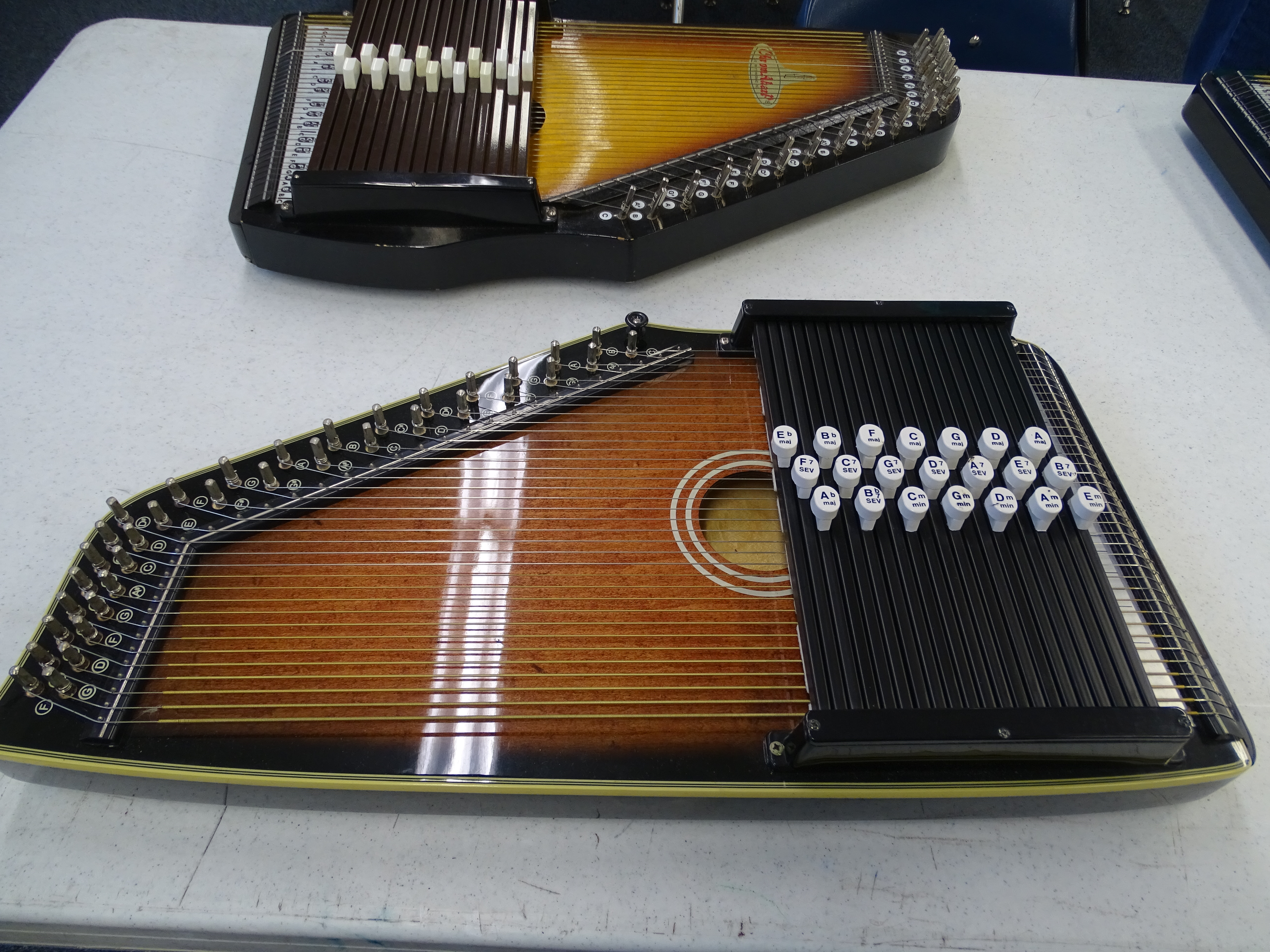
All stringed instruments need tuning as well,

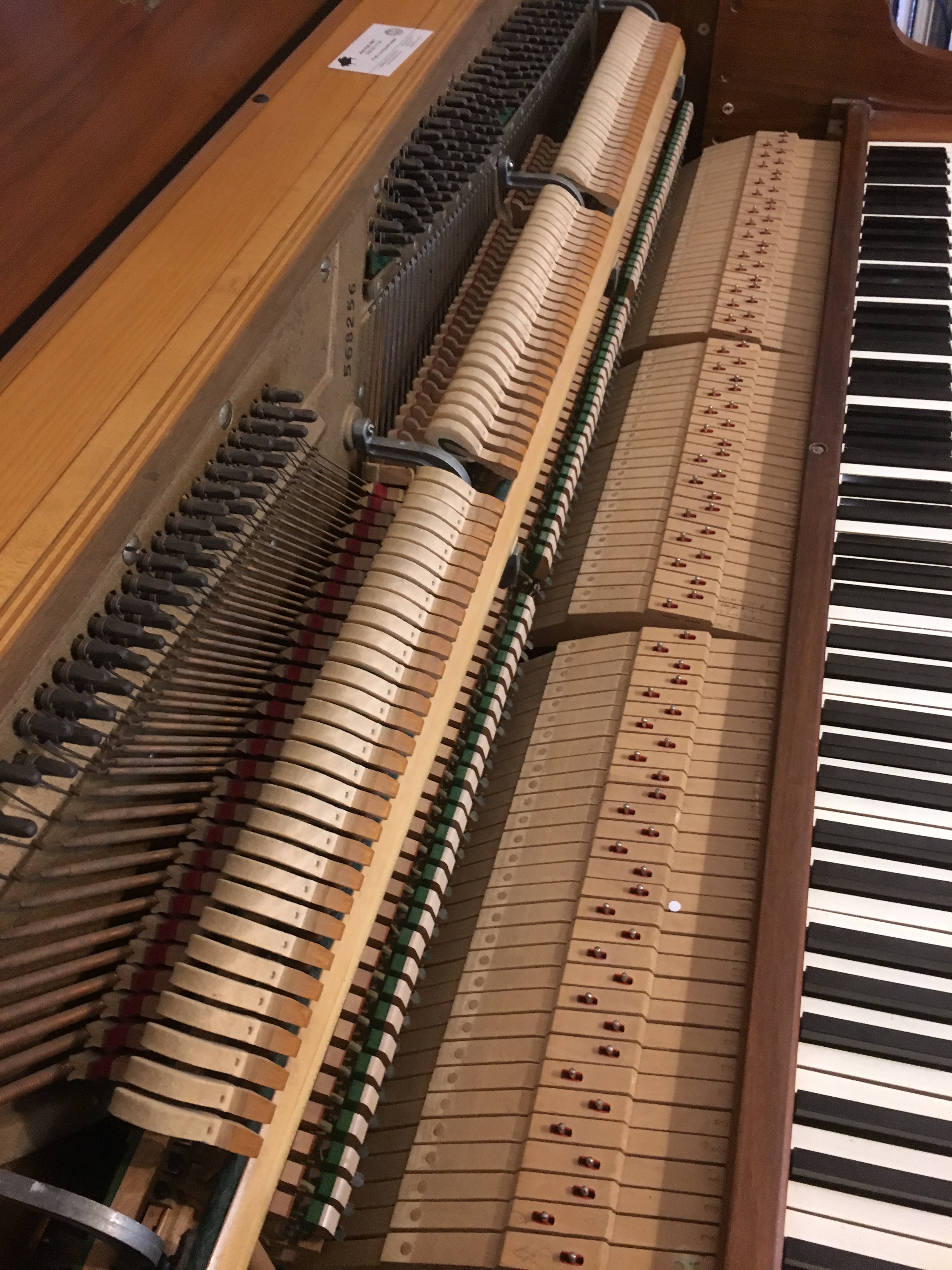
but with 88 keys in a piano and multiple strings for most keys there are around 225 strings to tune.

With an average 160 pounds of tension per string, that gives an ordinary piano about 18 tons of tension across its plate–30 tons for a concert grand. That’s a lot of tension! Believe it or not, I spend half the year lowering tension, and half the year raising it, since wooden soundboards react to our seasonal humidity changes.

If a string is stretched too tight, it can break. On the other hand, if it doesn’t have enough tension and is limp it will not vibrate with the desired pitch. It will not sing.

It’s all about balance.

In our lives, tension just happens, and we stretch between opposing forces. Some of those forces relate to daily family interactions,

disagreements between parents about children,  disagreements between children and their parents. I might find myself facing a troubling medical diagnosis, or watching financial reserves dribble away.

I might have opposing opinions about current issues with extended family. I might be asked by our amazing local librarians to prepare a 5 minute presentation about Good Tension. I might face major life changes like starting a new job or moving to another community.

I might find myself dealing with tragic loss and grief, balancing the emptiness of the future with joyous memories.

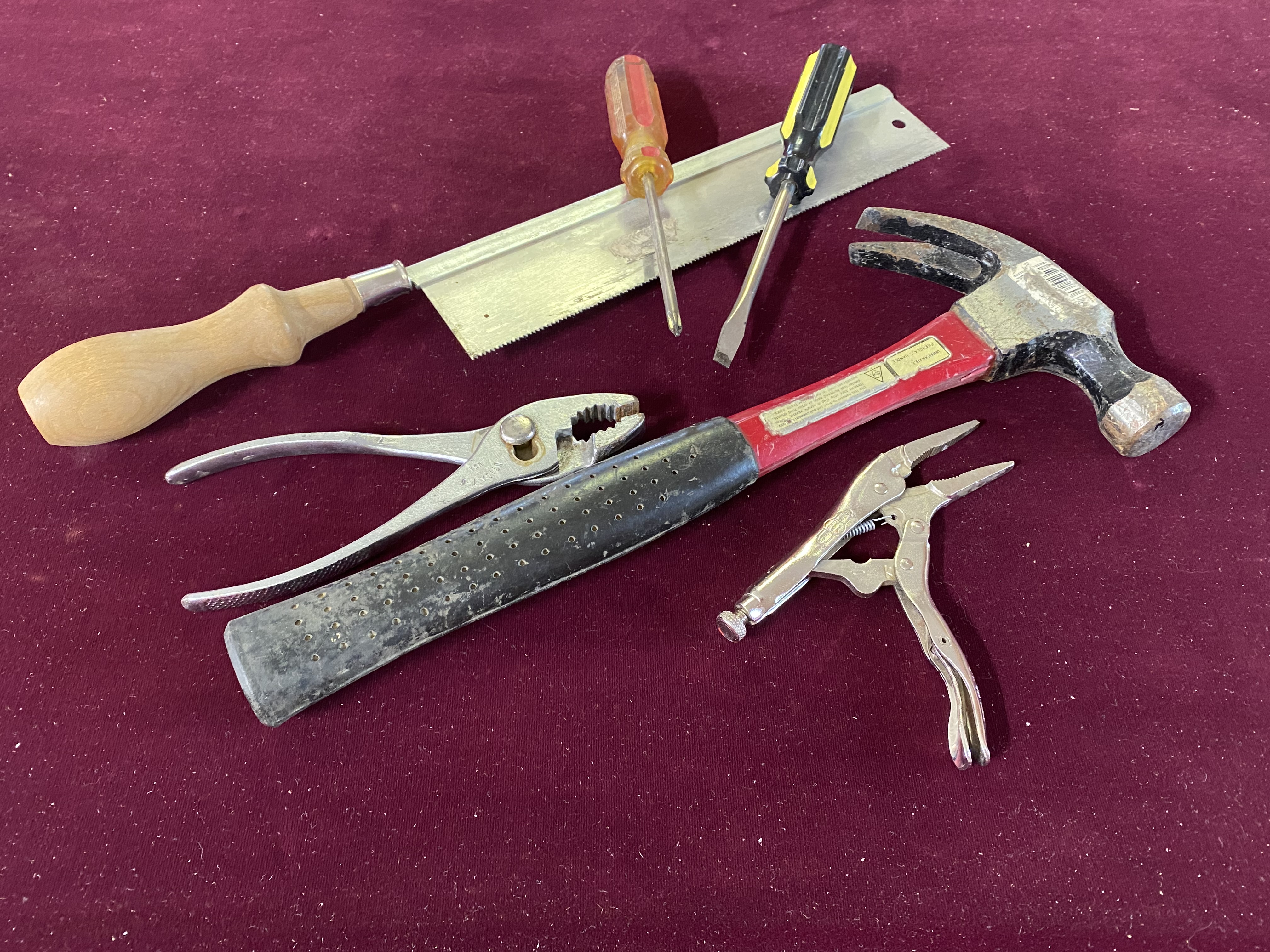
How do I find the optimum balance for tension in life? In the piano tuning world, we have special tools.

But what about tools to balance life tension?

Nothing as concrete as tools I’d find in the kitchen or garden.

What tools are good for tense life situations?

I suggest intrinsic ones, habits, and careful choices.

Perhaps many of us have identified passions in our lives,

answering questions like “Who am I?”

and “Why am I here?” Hopefully most of our passions will leave a better place for those who come after us.

The details can be different for everyone, but we find a cause that we can support.

Maybe two or three.

When it’s time to raise the pitch—to increase tension and produce harmony—I find ways to follow my passions and take a stand on issues of the day,

to engage in life, to volunteer, befriend someone who needs a friend.

I try to recognize those things that I can let go and those I will support in every way I can think of.

But what can I do when the weather changes and I sense a storm coming? How do I keep from breaking under tension? Tools to relieve tension arrive as life gifts, different for everyone.

Some may go for a run or a bike ride.

Others grab a book to escape to an imaginary world, or write in a journal. Some people make music.

I like to take a camera and look for beauty in the world around me. And the world responds.

Some things I have learned:

Life is complicated—there is nothing simple about it.

Acknowledgement of mistakes helps build bridges.

Love is the greatest power.

Laughter heals.

At least half of communication involves listening.

There is beauty and wisdom in tiny things and overlooked places. It’s healing to find wonder in miniature worlds.

I always find what I’m looking for, so I try to look for the positives.

When the future looms dim, I hold fast to my values, and take one small thing at a time.

Bird by bird, scene by scene, note by note, day by day or even minute by minute, I can make choices that support my values.

Like a seed, sprouting under dire conditions, but sprouting anyway. That is the essence of optimism.

Danielle Orner, a young woman who has battled cancer since she was a teenager said, “Life is a balance between what we can control and what we cannot.”

Between effort and surrender—two forces in life that keep us in tune. That is the essence of good tension, insuring that those yet to come can sing.

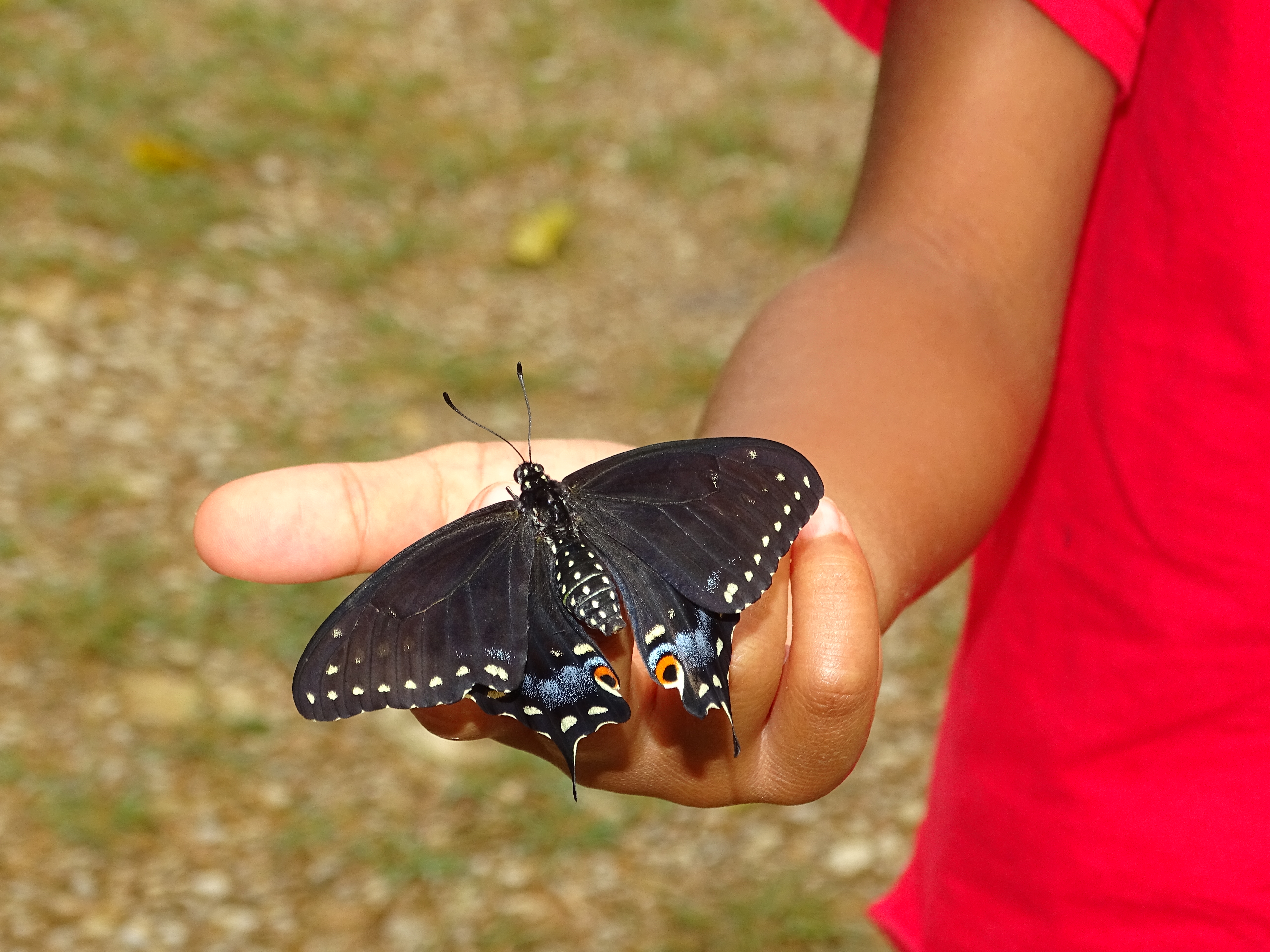
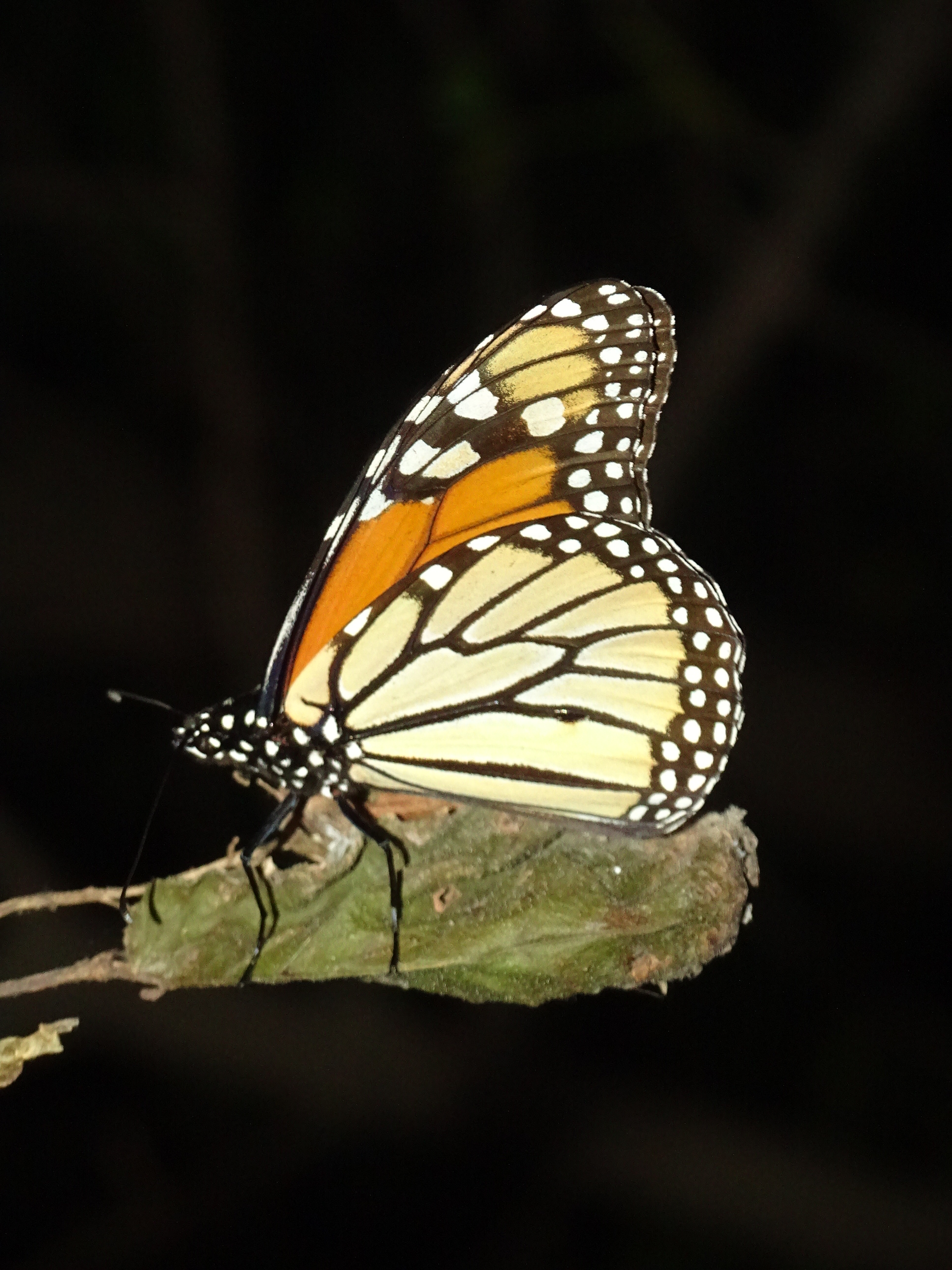
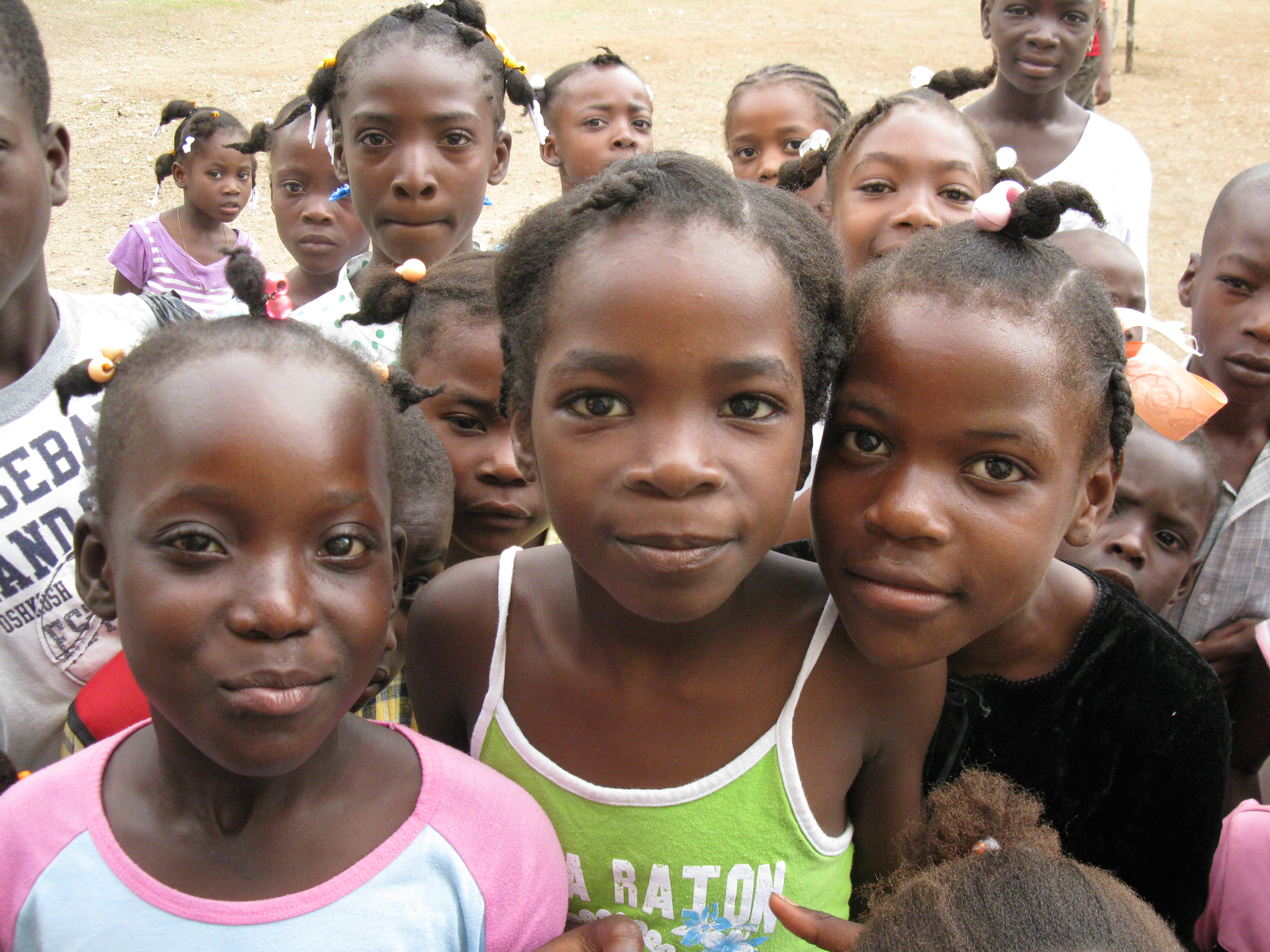
(P.S. To answer your question: I should add photographer to my list of dedicated endeavors in the above bio. Yes, I took all the photos, except for those in which I appear, and the group of Haitian children.)

NOT One-Size-Fits-All, or What Would You Tell a Pregnant 10-year-old?

I turned in my primary election ballot this morning. Folks can still request an advance ballot until tomorrow, or they can vote early at the courthouse for another week. Election day is August 2. For those who might be confused about the amendment issue on the ballot, I think it boils down to whether you trust the legislature to protect the health and future of everyone, or just the unborn? In other words, what would you want for a pregnant 10-year-old rape victim? As I think about my own innocent grandchildren, ages from 1 to 12, the answer is clear to me. A child at that age should not be forced to carry an unwanted pregnancy to term.

Nobody I know is “pro-abortion”. We are, however, pro-choice. Abortion is an option that is tragic, but it is not a simple, right-or-wrong, black-or-white issue. We must keep legal abortion available as an option for women–and girls–in crisis pregnancies.

Before you write me off as a “Baby Killer,” let me assure you I am not. I hate to see anyone or anything hurting. All my life I have befriended the friendless, rescued turtles crossing highways, and taken steps to avoid hurting most other living things for as long as I can remember. (Exceptions: mosquitoes, ticks, and flies.) It is preposterous to think I could choose to end the life of my own unborn child. It’s simply not within the realm of possibilities.

But this is not a simple thing. It’s not a “one-size-fits-all” issue. It is not “one solution for every situation.”

There is not a person on earth who can anticipate all the different factors facing a mother who is considering abortion. Each situation is unique and must be considered individually by those involved—the distressed mother, her family, and the medical team. The rest of us have no right to interfere or to judge.

I come to this realization through a sequence of events unique to my own life. And I wonder, how many of those so quick to condemn other women facing dismal choices know what it’s like to lose a baby?

I do. I lost two. Not through abortion, but through natural deaths. They were both stillborn. The babes would both be 39 and 40 now and not a day goes by that I don’t miss them. They were very much loved and wanted, but it was not to be. I do believe God loves them too and I find comfort thinking they entered his benevolent care the moment of their deaths. We can’t forget what lies beyond.

How many women quick to condemn others for a difficult decision have ever been offered the option of ending a problem pregnancy through abortion? I have. Twice.

After the first baby’s death, the best my medical team had to offer was frequent sonograms during two subsequent pregnancies. They would then recommend an abortion should things start to go wrong.

I declined. Note again: I DECLINED. I couldn’t have opted for an abortion on either one. Instead, I chose not to have any sonograms at all. If something was to happen, I didn’t want to know it.

I am grateful to this day, however, that I was offered the choice. The decision was ultimately mine to make, and nobody else’s. My choice was to cherish every moment I had with my children, for as much time as we had together.

I lost the second baby too. But the third pregnancy, six years later, left me with a precious girl who now has two healthy girls of her own.

I wonder other things about those outspoken critics of pro-choice folks. How many of them have felt the knife-twist of agony to hear that an un-named teenage girl has chosen an abortion for her child rather than allow you to adopt the infant? I have. And I grieved anew for another baby lost. (But I still support her right to choose.)

How many critics have opened their homes to raise a child brought into the world by others? I have. The adoption and the parenting of my daughter proved to be one of the most challenging decisions of my life.

How many have opened their homes, offering shelter to young women wrestling with an unwanted pregnancy? Instead of condemning the unknown young woman who chose abortion over adoption, I became an advocate for girls in crisis situations, offering my home to house them until delivery. I hoped that my actions helped reassure those women that their unborn child would be treasured in an adoptive family.

How many have experienced conversations with a woman who, after hearing my story of loss and adoption, tearfully confessed to ending an unexpected pregnancy years previously. She agonized over her decision and felt a need to apologize to me, an adoptive mom. I offered her my shoulder to cry on and my compassion.

There is nothing simple about this issue.  I’ve never encountered a child as young as age 10 who had to confront the question. I have heard, though, that there were recently three 11-year-olds in my state whose parents sought to end their pregnancies. It should be an individual choice, not something politicians can dictate.

I’m glad I was offered a choice. I chose life for my children. It was God who had other plans for some of them.

With the temperature of our planet climbing beyond the point of no return, there is much more to be concerned with now. I choose life again—life for all of us, born and unborn, children, youth, adults and the aging, people on every continent and island nation, the threatened species on our beautiful and diverse planet.

Preserve individual choice with compassionate support for distressed mothers and let’s move forward. We have a lot of work to do. I am not a baby-killer. I don’t want to be a planet-killer either.

Stop. Just Stop.

This is getting complicated.

So the word is out. There have been millions of babies killed through abortions since the procedure was legalized. I wonder about that. How many of those were fetuses that would never have lived, had they been born? How many procedures were done to save the mother’s life? I have grave reservations about the truth of that statement. Twenty-five million giggly babies just snuffed out? That’s trying to simplify a very complex statistic. After all, in recent years, the objections to terminating a pregnancy have yielded strict limitations on just what kind of pregnancy is eligible.

I am old enough to have come of age during the original fight to legalize abortion. When I was an adolescent, the procedure was illegal. But that didn’t mean abortions didn’t happen. And consequences were severe for desperate women seeking help. Too often, illegal abortions ended up killing or maiming the mother anyway. The legalization of abortion was a life-saving step. Just making it illegal will not stop desperate women from seeking to end a desperate pregnancy.

This all alludes to a sort of class warfare. Did you know, for instance, that 75% of abortions in recent years were for women at or below the federal poverty line? 60% of the women already had children at home that they couldn’t afford to feed. 55% of women who received abortions were single. They had precious little financial help to reach the $196,984 cost of raising a child to age 18. (Yes! Magazine Spring 2022)

It might have been in the early years that the procedure was sought too lightly. But no more. Today, almost all the people I know, pro-choice as well as pro-life, agree that abortion should never be used as a simple form of birth control. We must keep other contraceptives available and affordable and eliminate unwanted pregnancies. Is that a point we all can agree on?

You might find it surprising how many pro-choicers abhor the fact that some women have used abortion as a contraceptive. You might also be surprised how many of us pro-choicers, if offered the choice due to abnormal fetus development, would choose to continue our own pregnancies. After all, if faced with some dire news, you would do that. I would too. But it would be our own choice.

None of us have the right, though, to tell others what they can or can’t do. We simply don’t know all the details.

So has abortion been misused? Sadly, yes, by some. Therefore, you say, we should outlaw all abortions again. It’s just like:

A few people who misuse alcohol and drive drunk. Innocent people have been killed by drunk drivers. Obviously, we’ve banned all alcohol and all cars, right?

Or—A few people misuse guns, and go on shooting rampages, killing children in their school classrooms, and people in shopping centers or theaters or at parades. So of course, we have instituted a national ban on guns, haven’t we?

Oh. . . Wait. . . .

I get it. This is different.

Or is it?

Does mis-use of abortion by a few mean we have to remove that option for all? And if that’s what we gotta do, how about those guns anyway?  Surely the right to life, liberty and the pursuit of happiness for school age children is more important than the right to bear arms.

The intrusion into a person’s medical history and privacy is an unconscionable overstep by our government into our private lives and personal rights. None of us has the right to judge another on this extremely personal matter, nor to tell them what to do. We can offer love, compassion, and assistance, but we can’t make difficult choices impossible by removing options. There is nothing simple about pregnancy. Since every case is different, there is no single solution. All options need to be available. And nobody outside the triumvirate of parents and physician should even have a say in tough personal, medical decisions. No two pregnancies are alike. We can’t possibly know the inside stories of other families.

Vote No August 2. Keep abortion legal.

Reflections on Independence in 2022

In the aftermath of the high court decisions stripping people of privacy and personal rights, I have seen on Facebook where some of my friends plan to wear black on July 4. Some will fly the American flag upside down. And some will celebrate with cookouts and fireworks as always. I haven’t decided what I will do yet. Maybe I will enjoy the explosion of blossoms after recent rains. Flowers do a great job of mimicking those fleeting displays, without all the noise. Or maybe just sharing these musings will be my way of observing the 4th of July, 2022.

Thomas Paine wrote in 1776, “These are the times that try men’s souls.” We have more of those times this year, 246 years after the Declaration of Independence. In Kansas, the day of reckoning fast approaches. It’s interesting to me to note that the original document, though given the date of July 4, 1776, was not fully signed by our founders until August 2, 1776. August 2, 2022 is a very important day for Kansas voters. It’s our primary election day. But not only that, in their infinite wisdom (NOT!) the legislature slated a vote for an amendment on the Kansas constitution on primary day.

This is a problem because voter turnout is typically low for such elections. If you are an independent voter, you usually have no reason whatsoever to go. But this year, even independent voters have the right to vote on the proposed amendment. Use that right and cast your vote, even if it’s the only thing on the ballot you have a say in.

The amendment itself removes a woman’s constitutional right to an abortion and leaves it up to our “esteemed” legislature to decide when and if abortion as health care is warranted. That is a problem right there. These people are not necessarily doctors. Few of them are medically trained. Though some folks, notably the director of Family Life Services in a neighboring town, are confident that the legislature will not ban abortions for cases of rape, incest or ectopic pregnancy, I don’t share that confidence. I don’t trust politicians. Most of them no longer listen to the people they serve. (Kuddos to those who are still trying!)

A very concise letter to the editor of our local newspaper had the best summary of voting on this amendment that I have seen.

Simply this:

  • If you are pro-choice, Vote No.
  • If you are pro-life but want some exceptions in the rule for cases of rape, incest, and health of the mother, Vote No.
  • If you are pro-life and want zero abortions, zero exceptions, then you Vote Yes.


Where do I stand in those three groups? I think many of us lean toward the middle, and I am one of those. It is heartbreaking when a pregnancy becomes problematic, even more so when a mother has to make the insane choice about whether to end her pregnancy. We certainly don’t need to open the doors to prosecute women who have just lived through a personal crisis. Or to have investigators show up at the door of someone who miscarried, suspicious about a pre-meditated ending of the life of the unborn.

In a meeting I attended in early June, an attorney familiar with the Kansas constitution pointed out that since statehood in 1861, there have been 98 amendments passed by the people. This is one of a very few, perhaps the only one, that would REMOVE rights previously established by the constitution. Think carefully about this amendment.

Complicating the issue is the fact that abortions are already highly regulated in the state, so essentially the amendment is not necessary. Already, abortions must be performed by a licensed physician. They are prohibited after 22 weeks, except in cases of life or health endangerment. Late-term abortions, and abortions based on gender selection are absolutely prohibited. Private insurance coverage is limited to cases of life endangerment. Public funding for abortion is available only in cases of life endangerment, rape, or incest. Patients must undergo an ultrasound before a procedure. There is a 24 hour waiting period after state-directed counseling prior to a procedure. Parental consent is required for minors seeking an abortion.

Just as no two people are alike, there are no two pregnancies alike either. In my own immediate family there are six women, from my mother, to her three daughters (of which I am one) and my two daughters. Though all six of us bore children, four of us experienced failed pregnancies. That is 67%. For us, those pregnancies were wanted, the babies anticipated, and their natural demise was tragic. If abortion becomes illegal—zero exceptions—the grief we felt at our losses could be compounded exponentially in future miscarriages by investigating detectives and charges of murder.

If you have never experienced a failed pregnancy, count your lucky stars. Current statistics on failed pregnancies (miscarriages and stillbirths) indicate that 20% of conceptions in North America fail naturally. For those families who eagerly anticipated a bright bubbly baby, and have to go home to an empty nursery, the pain is already too much to bear. It is unconscionable to add the possibility of prosecution for the failure on top of it all.

Given current trends to thwart environmental protections in favor of big corporations, the incidence of failed pregnancies is likely to explode. Naomi Klein states in her book This Changes Everything: Capitalism vs the Climate, “For all the talk about the right to life and the rights of the unborn, our culture pays precious little attention to the particular vulnerabilities of children, let alone developing life. Risk assessments most often focus on effects to adults.”

She quotes biologist Sandra Steingraber who has studied the issue. Steingraber: “Entire regulatory systems are premised on the assumption that all members of the population basically act, biologically, like middle-aged men.” [5’7”, 157# white men at that].

Klein puts it into perspective: “More than three quarters of the mass-produced chemicals in the United States have never been tested for their impacts on fetuses or children. That means they are being released in the environment with no consideration for how they will impact those who weigh, say twenty pounds, like your average one-year-old girl, let alone a half-pound, like a nineteen-week fetus.”

And yet, it’s becoming clear that proximity to environmental degradation, including fracking, increases low birth weight by 50%, and the chances of a low Apgar score double at birth. Communities near refineries or massive tar sands extraction are seeing the normal miscarriage rate double.

The recent high court ruling against the EPA’s ability to regulate emissions from power plants almost certainly will increase environmental hazards. Mutations of growing fetuses, viability at birth, and the incidence of miscarriage will increase. Be prepared.

With a nod to Thomas Paine, These are the times that try a woman’s soul, as well as all who value constitutional freedom.

And in Kansas, the choice is clear. We must keep the option of abortion by trained medical personnel open and legal.

Vote No on the constitutional amendment August 2.