
Sleep has evaded me in recent nights. I wake with a heavy heart, thinking about events of the last week . . . month . . . year. I’m lost. And I think many others are also. This is not the reality we grew up with and anticipated for our adult years, for our children, or for our grandchildren.
One of the earliest pieces of advice offered I heard at a writing convention came from best-selling author David Morrell. He challenged every one of us to figure out why we write. The wrong answer was to make us rich. The best answer to that question is that we have to write. We can’t stop, even if we want to. There is something in our being that drives us to put thoughts to paper. Beyond that, it’s on the arrogant side to think others might want to read those thoughts.
Anne Lamott mentioned much the same sentiment in a TED talk she made. Publishing a bit of writing will never fill the empty spaces in your soul, she said. But writing will. The act of putting yourself onto paper (or a screen), whether people read it or not, whether people care or not is good for your soul, and it is the only thing you’ve been called to do in this life. Tell your story. That is the purpose of journaling, I suppose. It’s therapy.
And yet, the social, political, international, economic, and environmental climate these days make it nearly impossible to pinpoint something to write about. Where do I begin in my quest to find some sort of meaning in the cyclone of disasters we face? The therapy of writing eludes me. In the wake of the violence and killings perpetrated by our country recently, I cannot begin to think how I can offer any wisdom or encouragement. There is an avalanche of written articles available about every kind of thing. The focus of my life and my purpose have been stolen by those who would force their will on the rest of us. Add theft to their list of crimes. In an epidemic of lawlessness, the world is under siege by pirates who would have everything, down to our peace of mind.
My heart weeps.
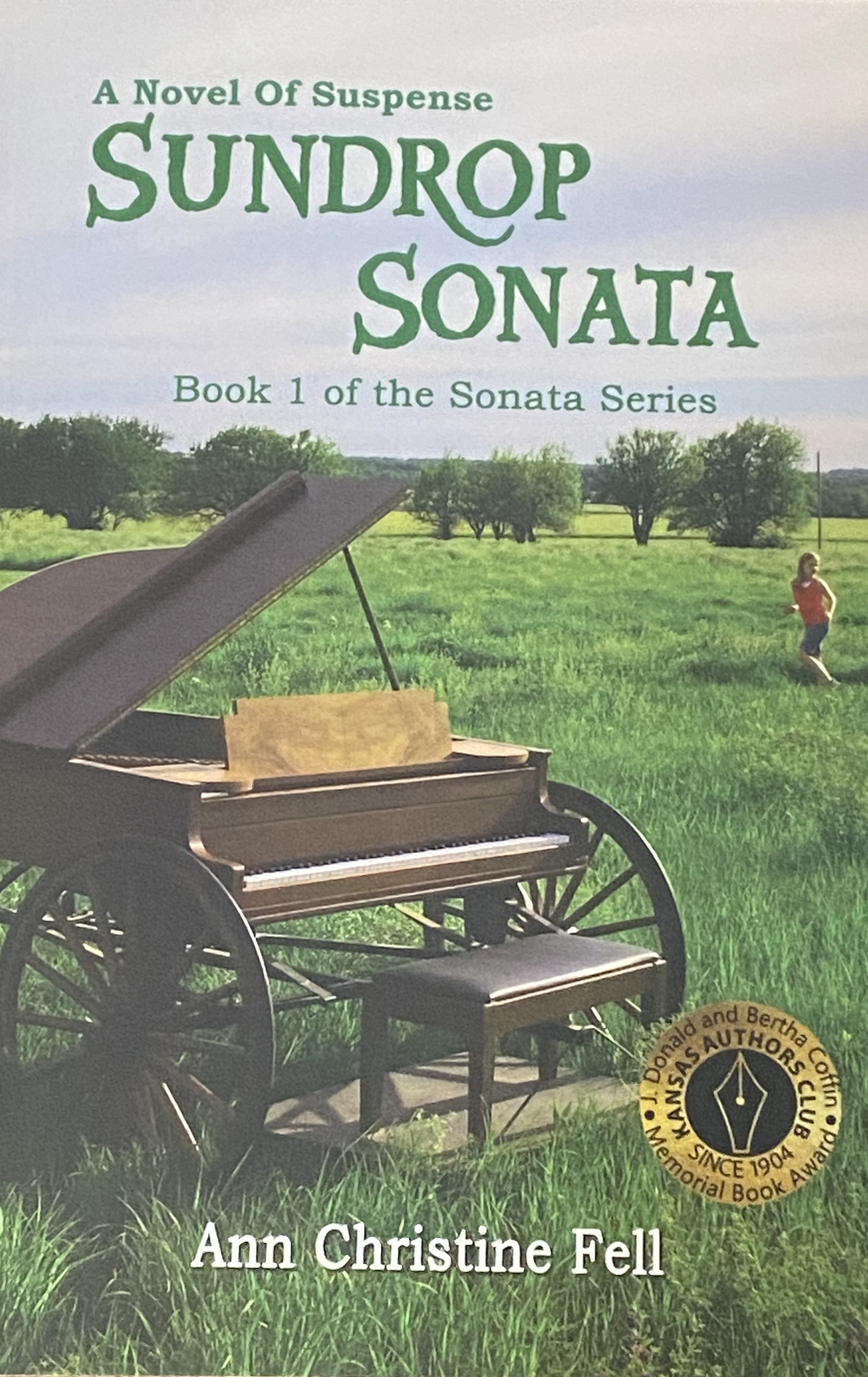
Last year, in the wake of corporate capitulation to administrative demands, I decided to look for a friendlier publisher for my stories and I found Lulu Press, a certified B Corporation. They care about the Earth and its people, and they work to make a better world. This month, through Lulu, I released a Second Edition of the first book in my suspense novel series, while continuing to work on the 4th one. Books 2 and 3 will soon join Book 1 at Lulu. The 2nd edition of Sundrop Sonata is now available, either from me or the Lulu bookstore. This is a positive step forward for me, and yet in the insanity consuming our daily news, I can’t find the heart to celebrate. I rebelled in my own way against corporate interests that have little regard for human rights or civility, but it’s a speck in the vast dust cloud that envelopes us all.
As I was flipping through the proof copy, one segment caught my attention. In Chapter 36, protagonist Izzy talks to her teenage daughter as they sit on an airplane. It reminded me why I wrote this book in the first place. Izzy is a caring mother and professional piano technician who stumbles into a situation in which she needs to find deep within herself the strength and determination to face desperate and dangerous men.
We each might find ourselves in a parallel situation today. I need to reaffirm my values and stand for what I believe in, what is right in the world, and support others who face unspeakable situations such as Alex Pretti and Renee Good, and many others Whose Names are all but Unknown. We must remain true to ourselves
That, then, is one value of writing—and reading—fiction. To learn something about ourselves and to believe in ourselves.
Here’s a segment from Chapter Thirty-six in Sundrop Sonata.
“I feel sorry for Laura,” Melody said. “She’s always going to have to look over her shoulder, wondering if he’s watching. She’ll never be free of her dad, will she?”
“That’s an astute observation, Mel.” I slipped the in-flight magazine back in the seat pocket. “If you think about it, we’re all prisoners in some manner.”
“How? We don’t all have a maniac chasing us.”
“Maybe not, but we are limited by chance circumstances and the choices we make.”
“I don’t get what you mean.”
“You’re young and your personality is still developing. I, on the other hand, am who I am. Things I witnessed and choices I made years ago turned me into the person I am today. I’m a pretty predictable person.”
“You sound boring. Or bored.”
“Far from it. I could no more have turned Nola down when she asked for my help than jump over the moon, or harm somebody on purpose. I’m a prisoner of my own soft heart and look where it’s led me. Sometimes I wish it wasn’t so because life gets complicated.”
Melody laughed. “I can’t see you cold and hard.”
“Exactly. I’m incapable of being different than I am. I see a need and I want to help.”
“Am I a prisoner of circumstances too?”
“You’re still young enough to have lots of future options. This experience with Laura will impact your life, I’m sure. Her life has been shaped by choices people made long before she was born, so she’s got a jump-start on you building her personal prison.”
“Her dad’s life was like that too.”
“Who, Jay?”
“Yeah. His actions are almost understandable considering what happened to him and his mom.”
“You’re right. We all travel through life, on a course set by our parents. Something happens and we turn a corner, head a new direction. Pretty soon, another corner. At some point, the corners define a shape—the proverbial box. We all have unique boxes, depending on how many corners we encounter before we’re boxed in. That becomes the prison from which we view the world and make our choices.”
“Think outside the box, Mom.”
I cuffed her playfully. “Thinking or dreaming outside my box is one thing. To act outside it is another.”
“Not impossible.”
“Nothing is impossible. But to act outside my box—outside my character—would require a crisis, some event that would turn me in desperation another way and catapult me outside my defined box.”
“Something bad enough to make you cruel?”
“I can’t imagine what that would be.”
“If Laura’s dad is operating from his personal prison of rejection and misery, what kind of event would launch him out of it?”
“I don’t know—a crisis of love and kindness?”
“Nothing is impossible, right?”
~~
At the end of the story, which of these characters actually faced a crisis great enough to take uncharacteristic steps? Though I like to believe it’s not impossible for a cold-blooded killer to feel remorse and become a different person, it’s far more likely that a peace-loving and kind-hearted person will be forced to defend herself or others in uncharacteristic ways. In Sundrop Sonata, Isabel Woods must find the strength and courage within herself to take steps she never would have dreamed she could take. But, if she can do it, so can we in real life, in America, in 2026.
Steady. Stand firm for what you believe is right.

 The Bridge