Tuned Up!

My adventure at the mini-Chautauqua event sponsored by the Winfield Public Library through Humanities Kansas

For the last few months, a traveling Smithsonian exhibit has circulated around the state, setting up in six different cities, with one more to go. The Voices and Votes: Democracy in America exhibit has spent the last month at our local library and will soon travel on to Belleville in the northern tier of counties.

Each hosting community has featured something specific about how that location supported the sharing of information, citizen involvement, and the voting process.

Winfield’s focus was on the Chautauqua meetings of a hundred or more years ago.

Founded in 1874 in Lake Chautauqua, New York as an educational tool for adults, its original intent by founder Rev. Joh Heyl Vincent, a Methodist minister, and businessman Lewis Miller was to expand the idea of a Sunday School for adults. The idea soon grew until Chautauqua meetings became an important source of education, culture, recreation, and socialization for millions of Americans. Everyone was welcome.

Winfield’s Chautauqua events were held annually at the town’s iconic Island Park from 1887 to 1924. Some years, as many as 10,000 people flocked to the island, camping in an area reserved for family tents for a week to ten days. For a number of years, it ranked as the third most popular Chautauqua event in the nation.

The Winfield Public Library staff selected the historic Chautauqua events, with their focus toward education and giving people a platform to share ideas and opinions, as the local highlight for the Smithsonian exhibit. As part of that, a mini-Chautauqua was held last Sunday evening in the community building. Ten local citizens were invited to present short talks about “It’s Intense: Voices on Good Tension.” It was my honor to be included as one of those ten.

Other speakers included business managers, the newspaper publisher, a farmer, a county judge, city manager, physical therapist, and a retired activist teacher. The emcee shared a short bio for each of us. My presentation used images to focus on  metaphorical tension from the perspective of a professional piano tuner.

Bio: A young widow with a preschool daughter, Ann Fell came to Winfield 35 years ago to teach at Winfield High School. She met and married fellow teacher Mike Fell and with their combined resources they raised a blended family. After a few years she quit teaching and opened a regional piano service business. With the loss of her parents a few years ago, she returned to her early calling—writing—and now has six published books. A dedicated environmentalist, musician, grandmother, and writer, she is no stranger to life’s tensions. Here’s Ann to talk about keeping life Tuned Up!

A dictionary tells me that tension is the act of being stretched to stiffness, maintaining a balance between opposing forces.

As a piano tuner, it’s my job to adjust tension—over and over again.

All stringed instruments need tuning as well,
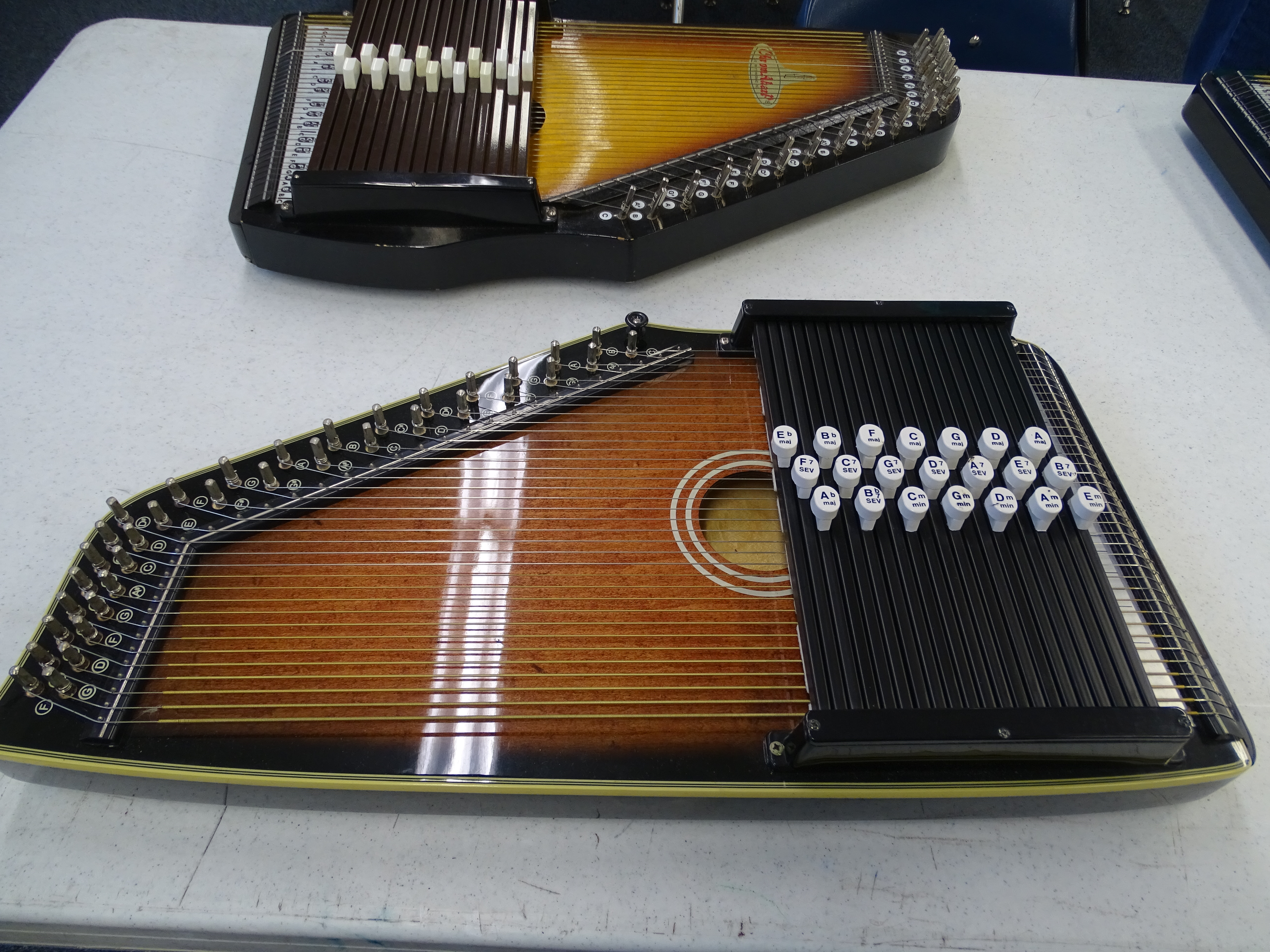
but with 88 keys in a piano and multiple strings for most keys there are around 225 strings to tune.
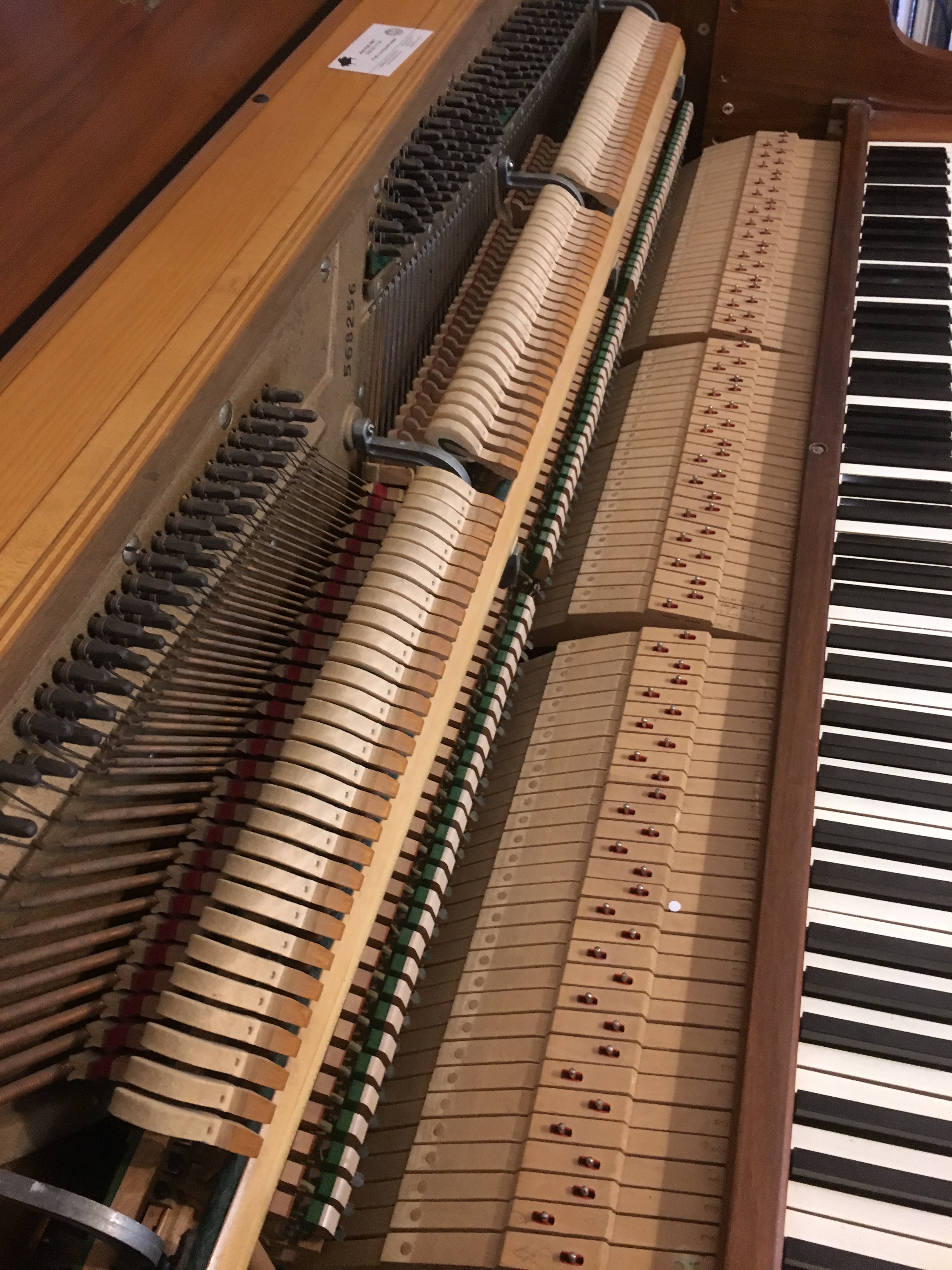
With an average 160 pounds of tension per string, that gives an ordinary piano about 18 tons of tension across its plate–30 tons for a concert grand. That’s a lot of tension! Believe it or not, I spend half the year lowering tension, and half the year raising it, since wooden soundboards react to our seasonal humidity changes.

If a string is stretched too tight, it can break. On the other hand, if it doesn’t have enough tension and is limp it will not vibrate with the desired pitch. It will not sing.

It’s all about balance.

In our lives, tension just happens, and we stretch between opposing forces. Some of those forces relate to daily family interactions,

disagreements between parents about children,  disagreements between children and their parents. I might find myself facing a troubling medical diagnosis, or watching financial reserves dribble away.
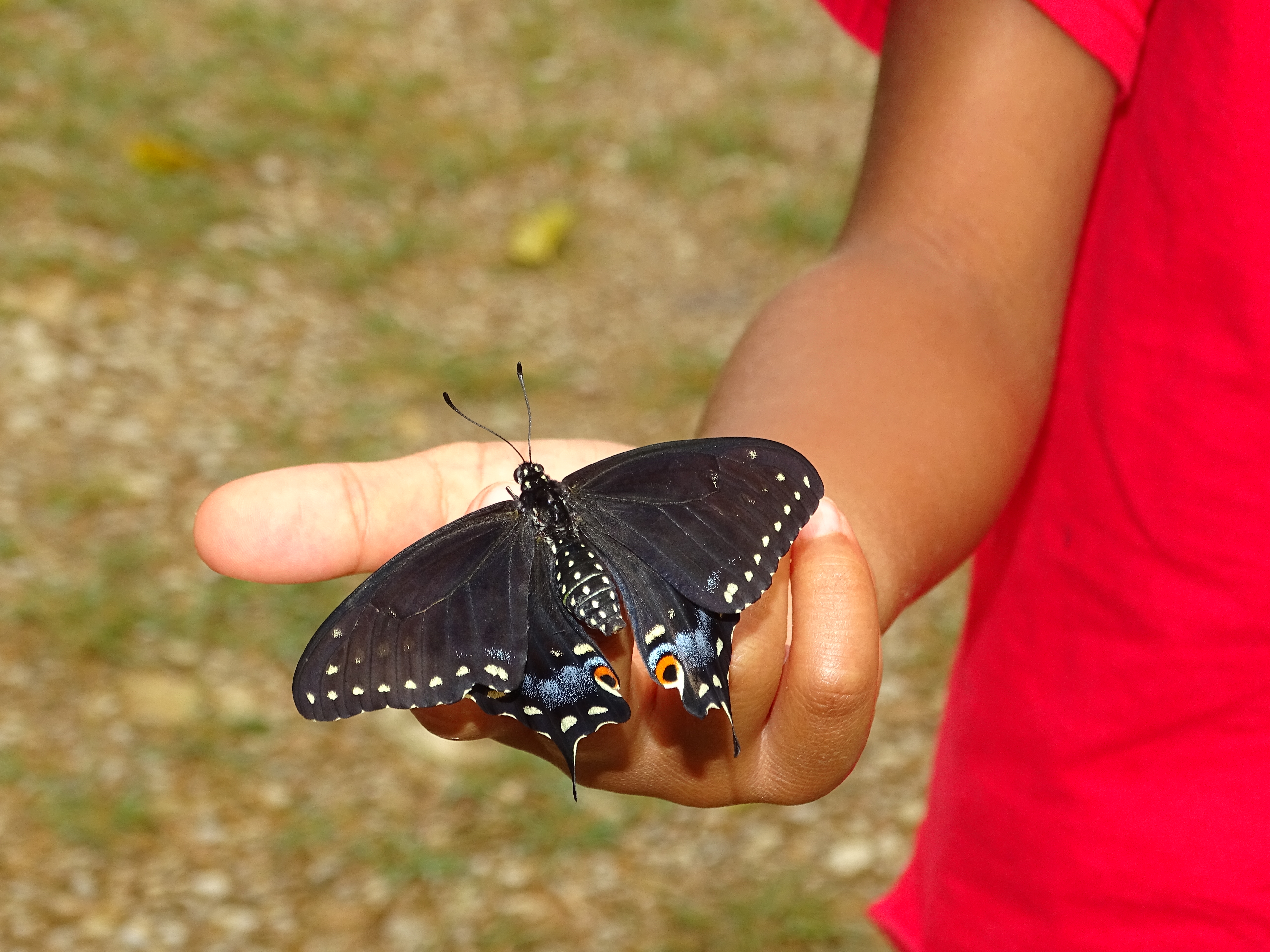
I might have opposing opinions about current issues with extended family. I might be asked by our amazing local librarians to prepare a 5 minute presentation about Good Tension. I might face major life changes like starting a new job or moving to another community.
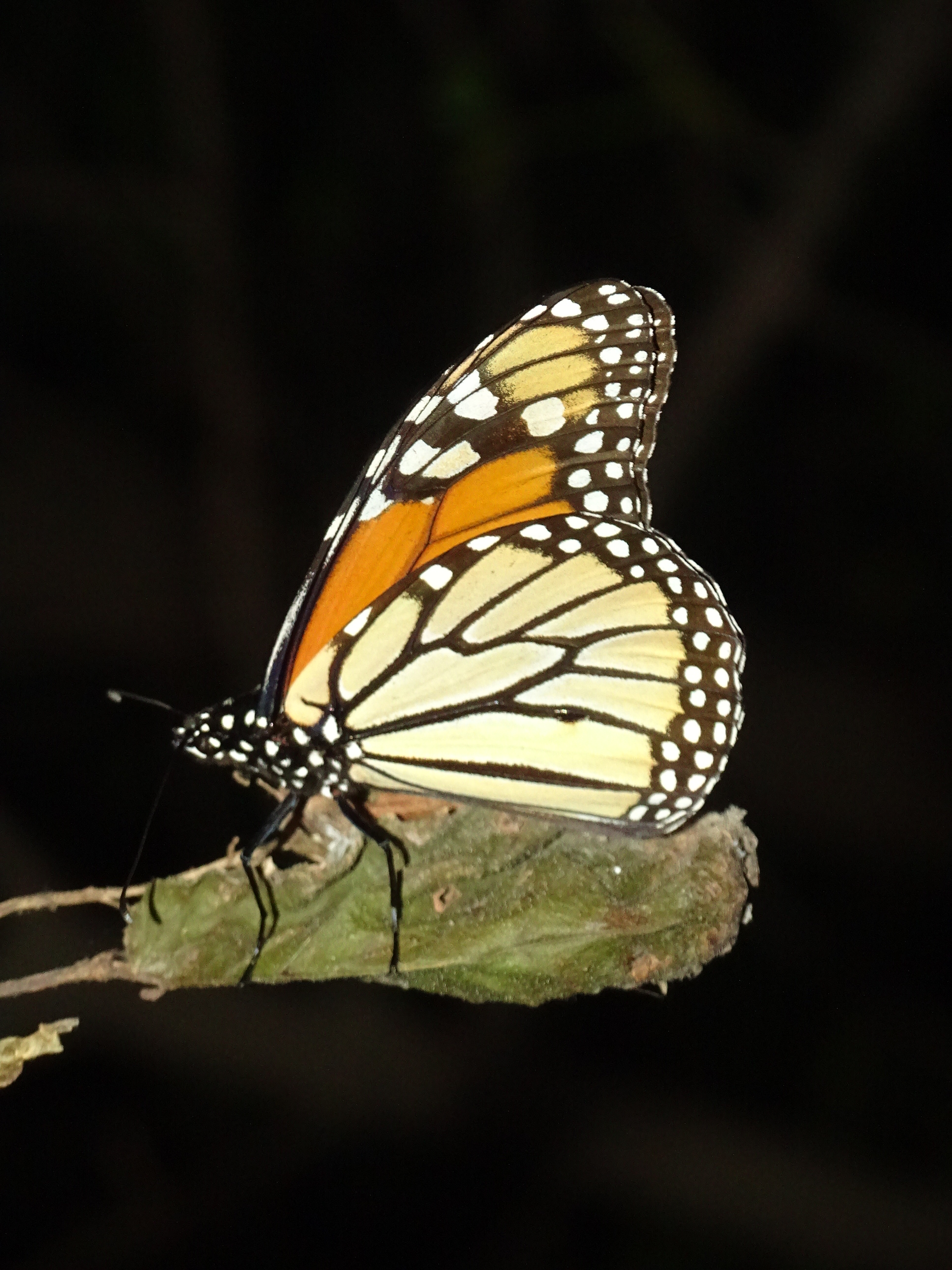
I might find myself dealing with tragic loss and grief, balancing the emptiness of the future with joyous memories.
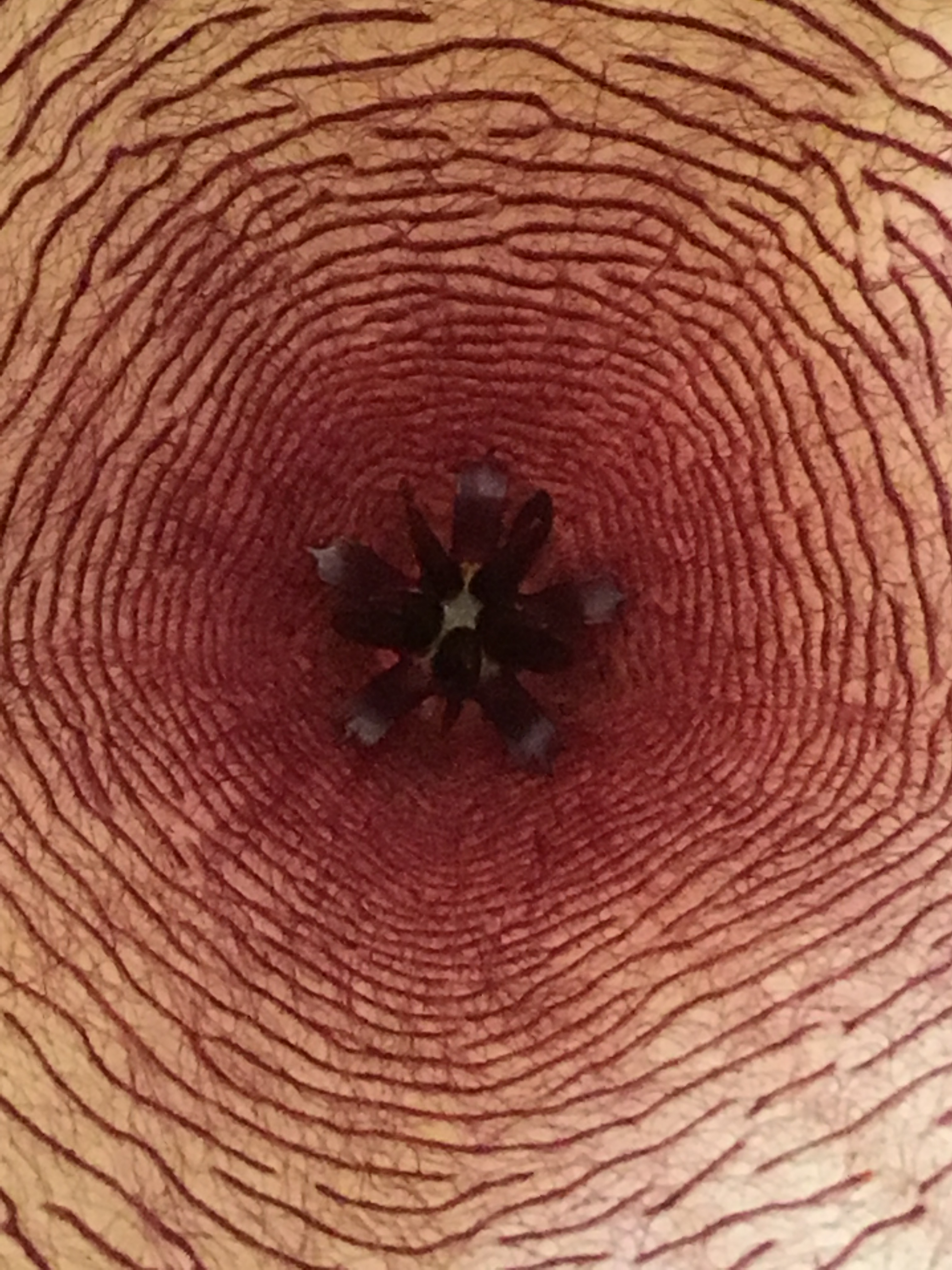
How do I find the optimum balance for tension in life? In the piano tuning world, we have special tools.

But what about tools to balance life tension?
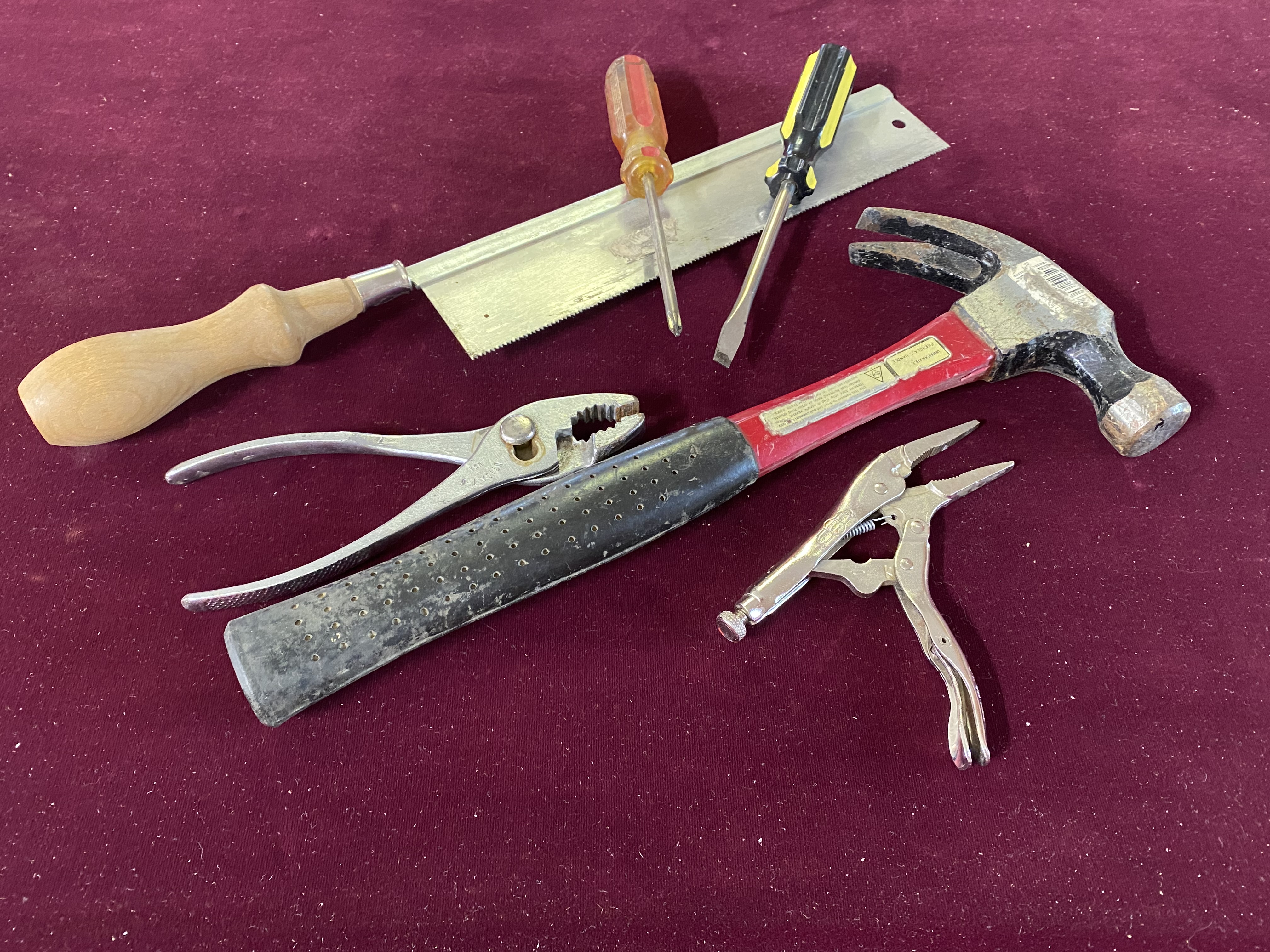
Nothing as concrete as tools I’d find in the kitchen or garden.

What tools are good for tense life situations?

I suggest intrinsic ones, habits, and careful choices.

Perhaps many of us have identified passions in our lives,

answering questions like “Who am I?”
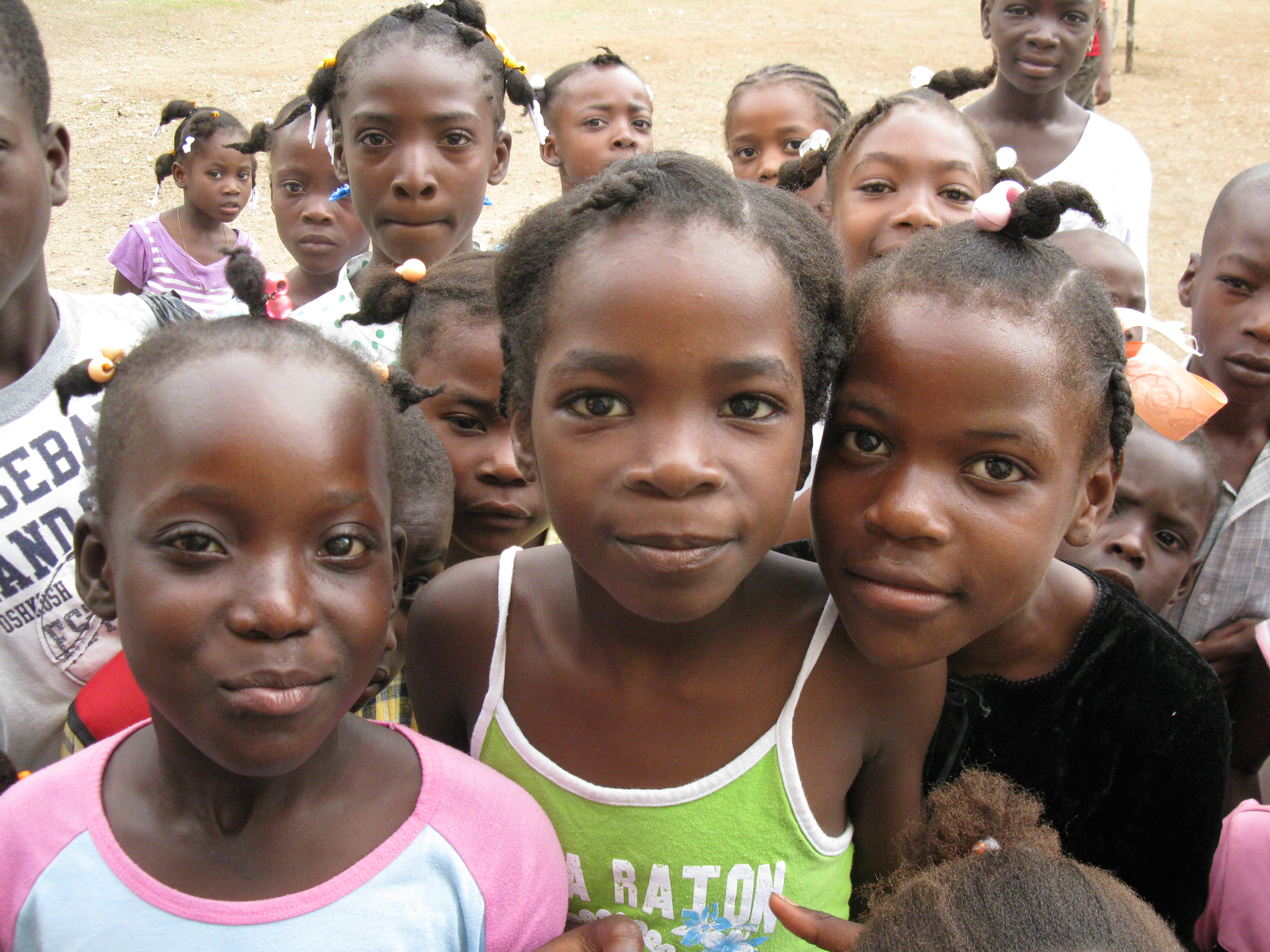
and “Why am I here?” Hopefully most of our passions will leave a better place for those who come after us.

The details can be different for everyone, but we find a cause that we can support.
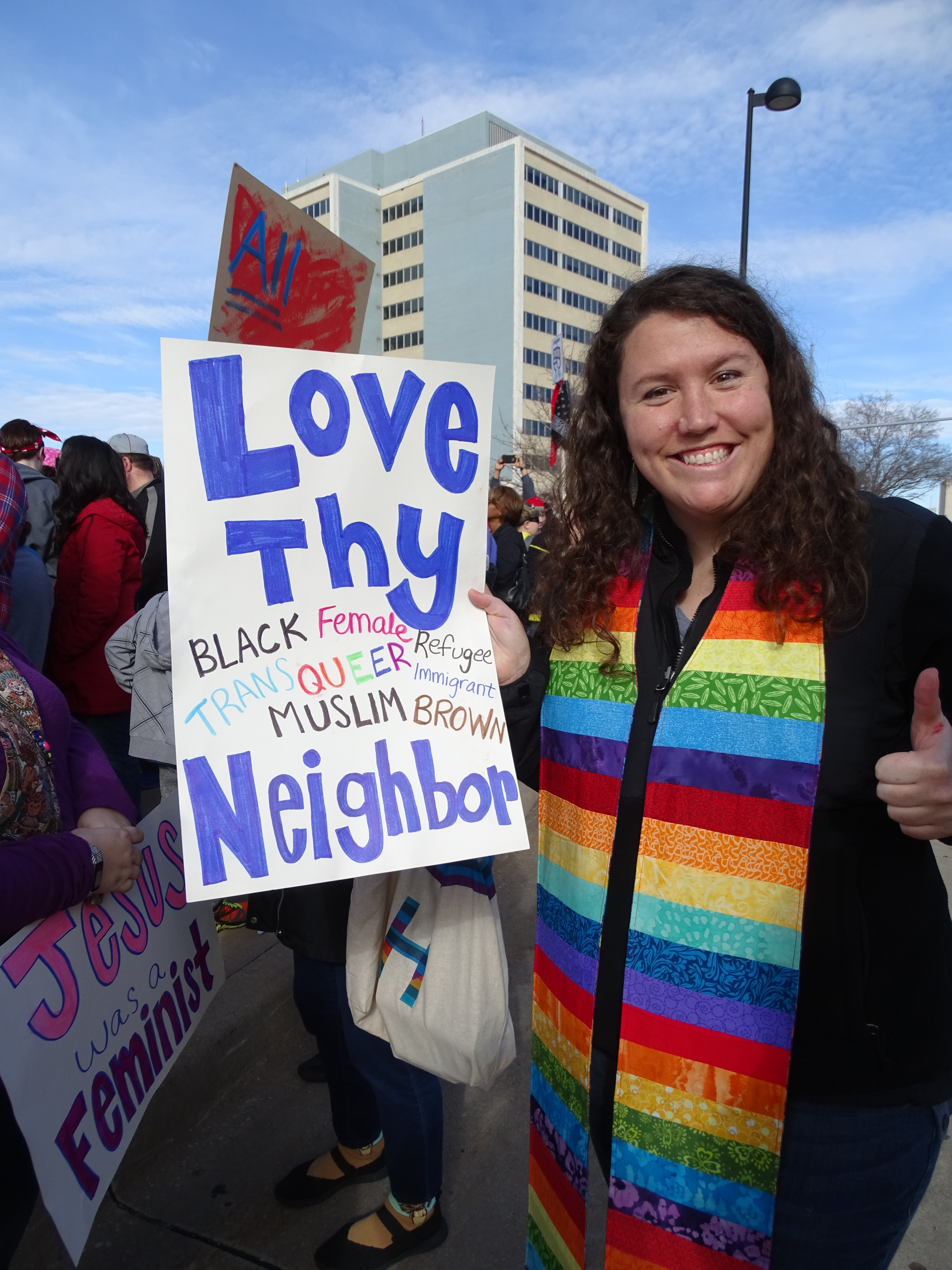
Maybe two or three.

When it’s time to raise the pitch—to increase tension and produce harmony—I find ways to follow my passions and take a stand on issues of the day,

to engage in life, to volunteer, befriend someone who needs a friend.

I try to recognize those things that I can let go and those I will support in every way I can think of.

But what can I do when the weather changes and I sense a storm coming? How do I keep from breaking under tension? Tools to relieve tension arrive as life gifts, different for everyone.

Some may go for a run or a bike ride.
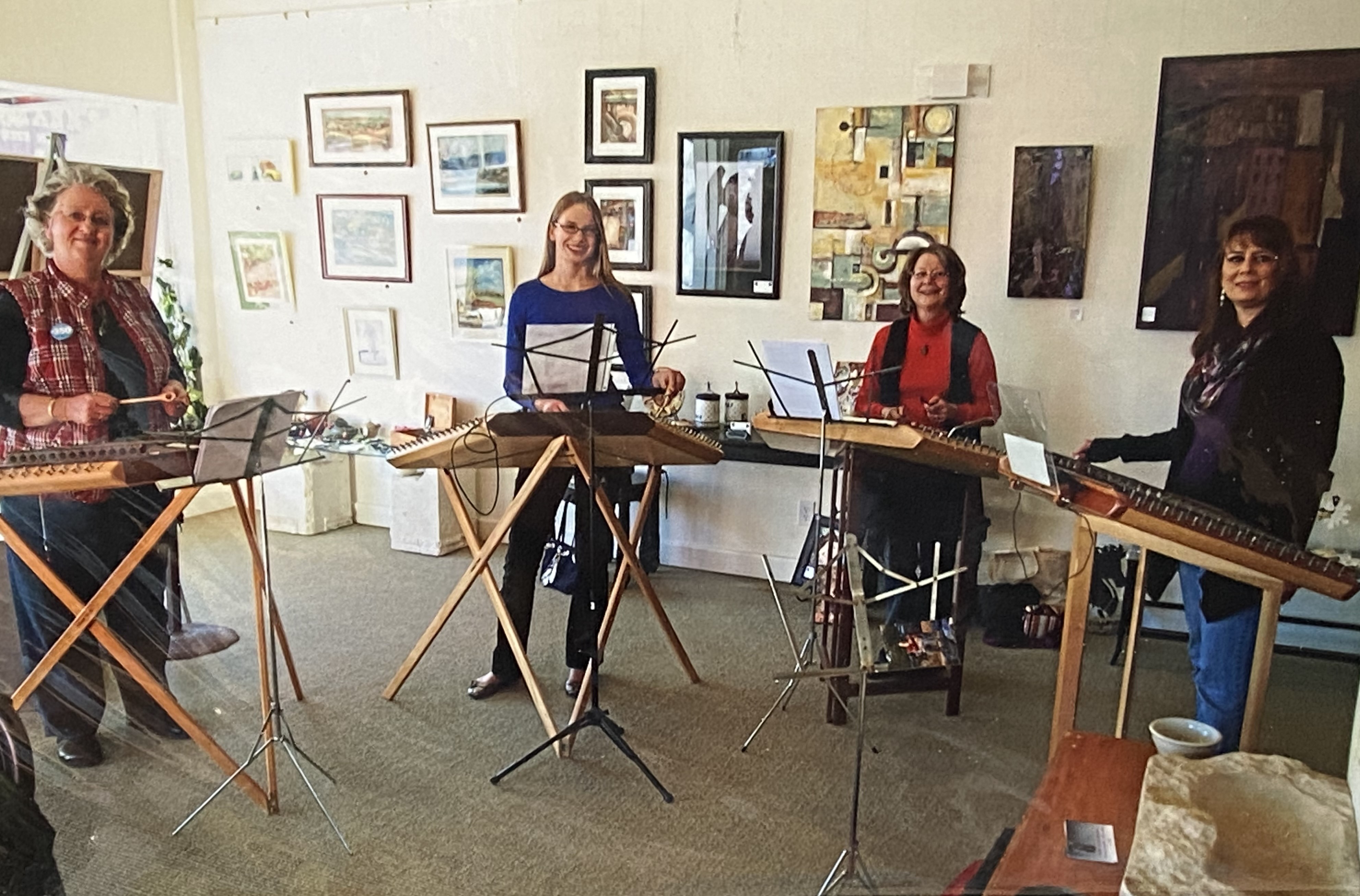
Others grab a book to escape to an imaginary world, or write in a journal. Some people make music.

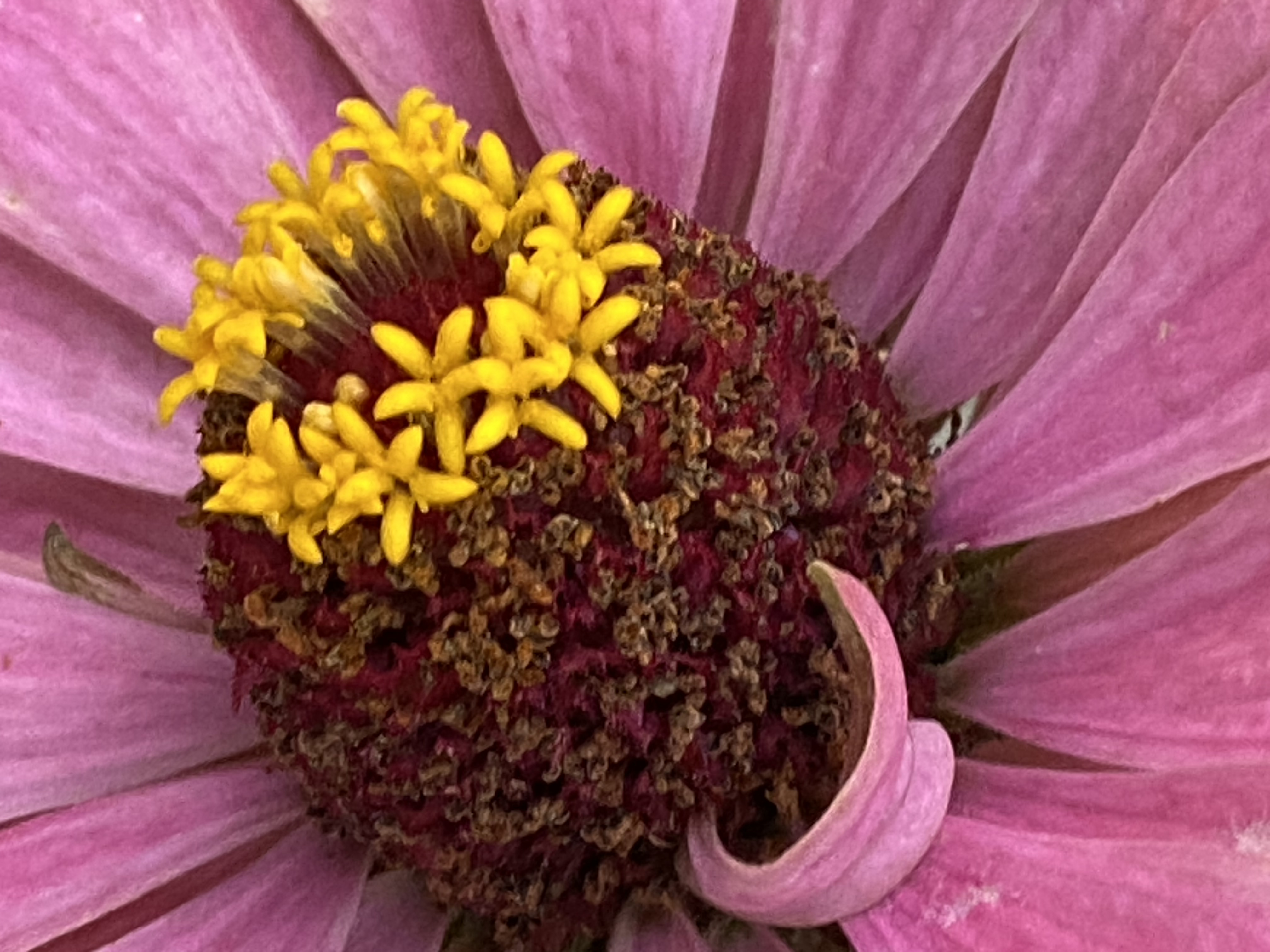
I like to take a camera and look for beauty in the world around me. And the world responds.

Some things I have learned:

Life is complicated—there is nothing simple about it.

Acknowledgement of mistakes helps build bridges.
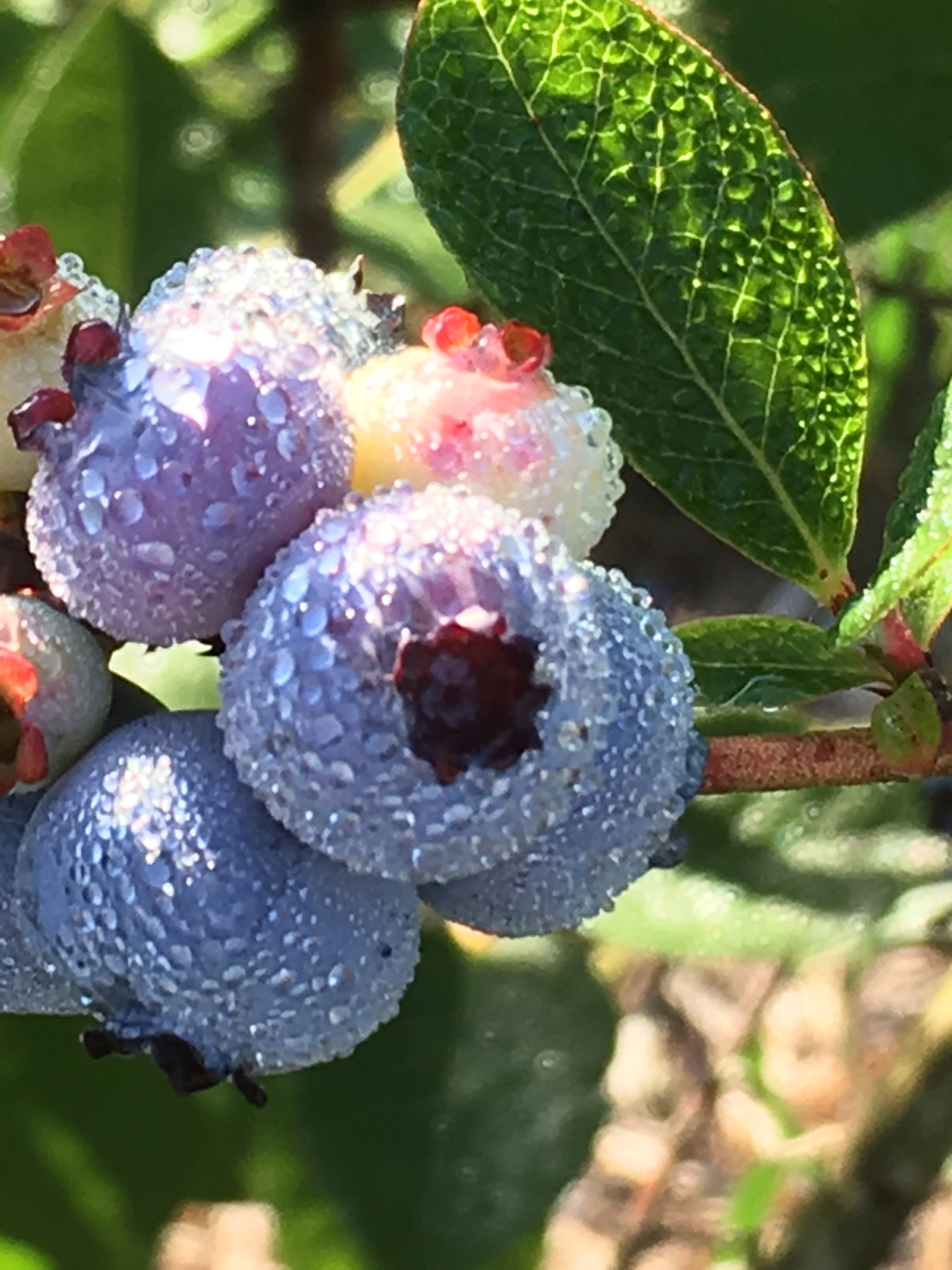
Love is the greatest power.

Laughter heals.

At least half of communication involves listening.
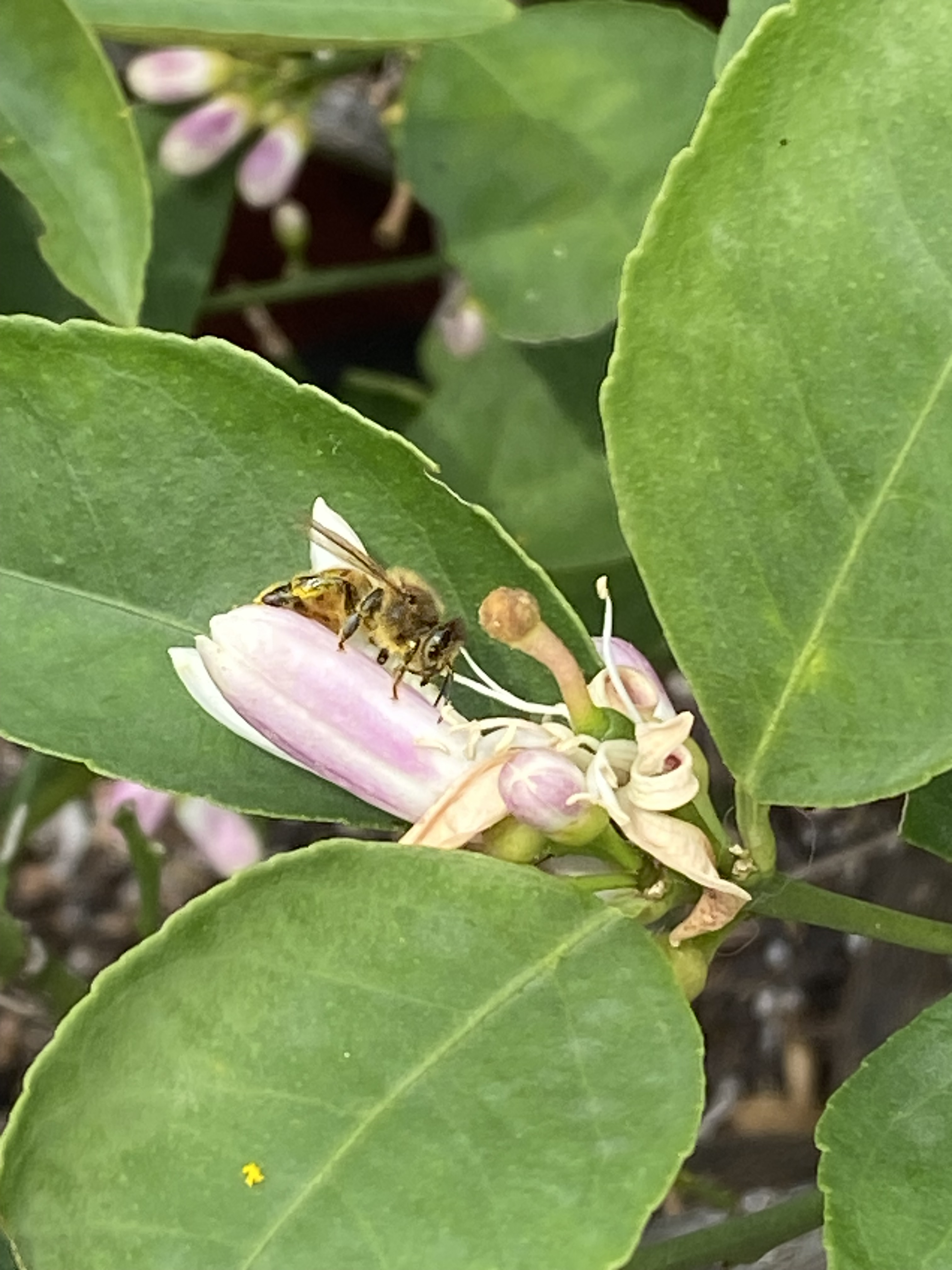
There is beauty and wisdom in tiny things and overlooked places. It’s healing to find wonder in miniature worlds.

I always find what I’m looking for, so I try to look for the positives.

When the future looms dim, I hold fast to my values, and take one small thing at a time.

Bird by bird, scene by scene, note by note, day by day or even minute by minute, I can make choices that support my values.

Like a seed, sprouting under dire conditions, but sprouting anyway. That is the essence of optimism.

Danielle Orner, a young woman who has battled cancer since she was a teenager said, “Life is a balance between what we can control and what we cannot.”

Between effort and surrender—two forces in life that keep us in tune. That is the essence of good tension, insuring that those yet to come can sing.

(P.S. To answer your question: I should add photographer to my list of dedicated endeavors in the above bio. Yes, I took all the photos, except for those in which I appear, and the group of Haitian children.)
On Hope, Peace, and our Future

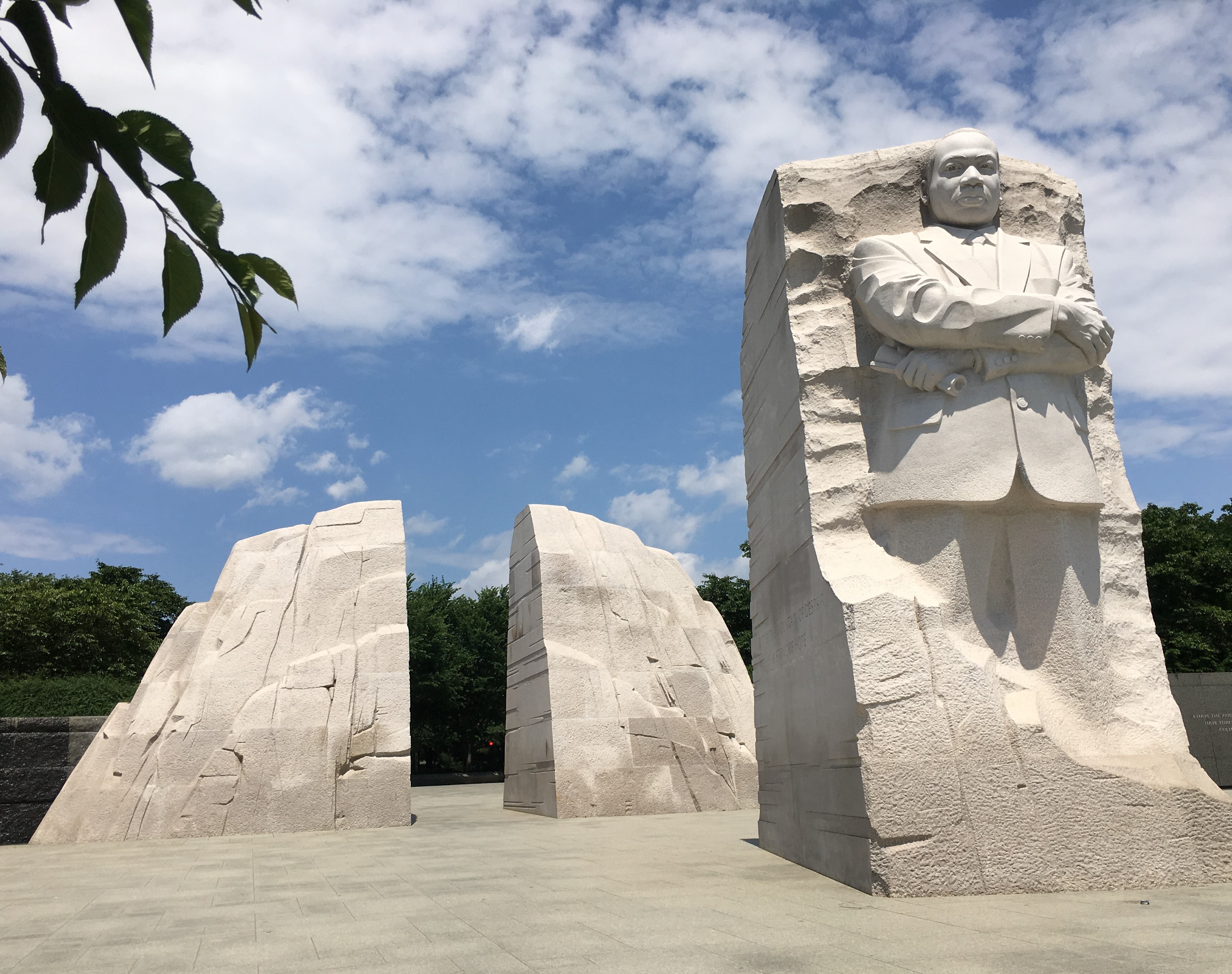
During this tumultuous and challenging time, today’s holiday to remember one of history’s honored leaders, Dr. Martin Luther King, Jr., gives a chance to pause and reflect on some of his favorite speeches. Excerpts from addresses of Dr. King through the course of his career can be found engraved in granite at the MLK memorial in Washington, D.C.

Out of the mountain of despair, a Stone of Hope

We visited there a few years ago. The impact of those words gave a hush of reverence to the area. Today, I remember Dr. King, and ponder his life and his words, in the spirit of hope that the memorial offers to a divided country and world.

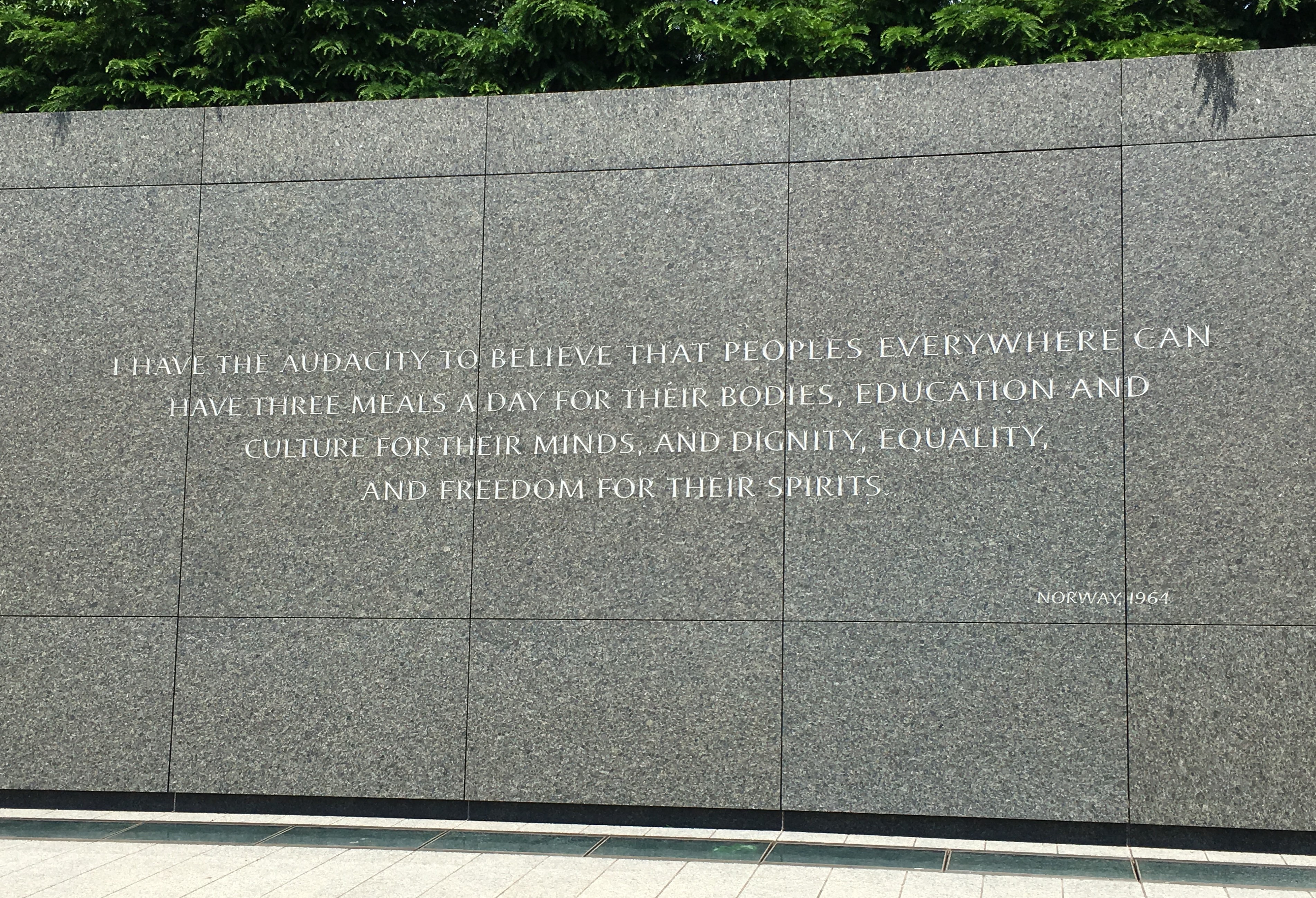
A few of Dr. King’s words, surrounding the massive mountain and engraved for posterity in granite, testify to the power of our spirit, through language. Long may the words provide hope for those in the midst of a struggle for justice and equality, until the day when everyone on Earth is valued as an equal member of the worldwide community.

I have the audacity to believe that peoples everywhere can have three meals a day for their bodies, education and culture for their minds, and dignity, equality, and freedom for their spirits.                                                                             (Norway 1964)

The ultimate measure of a man is not where he stands in moments of comfort and convenience, but where he stands at times of challenge and controversy.          (1963)

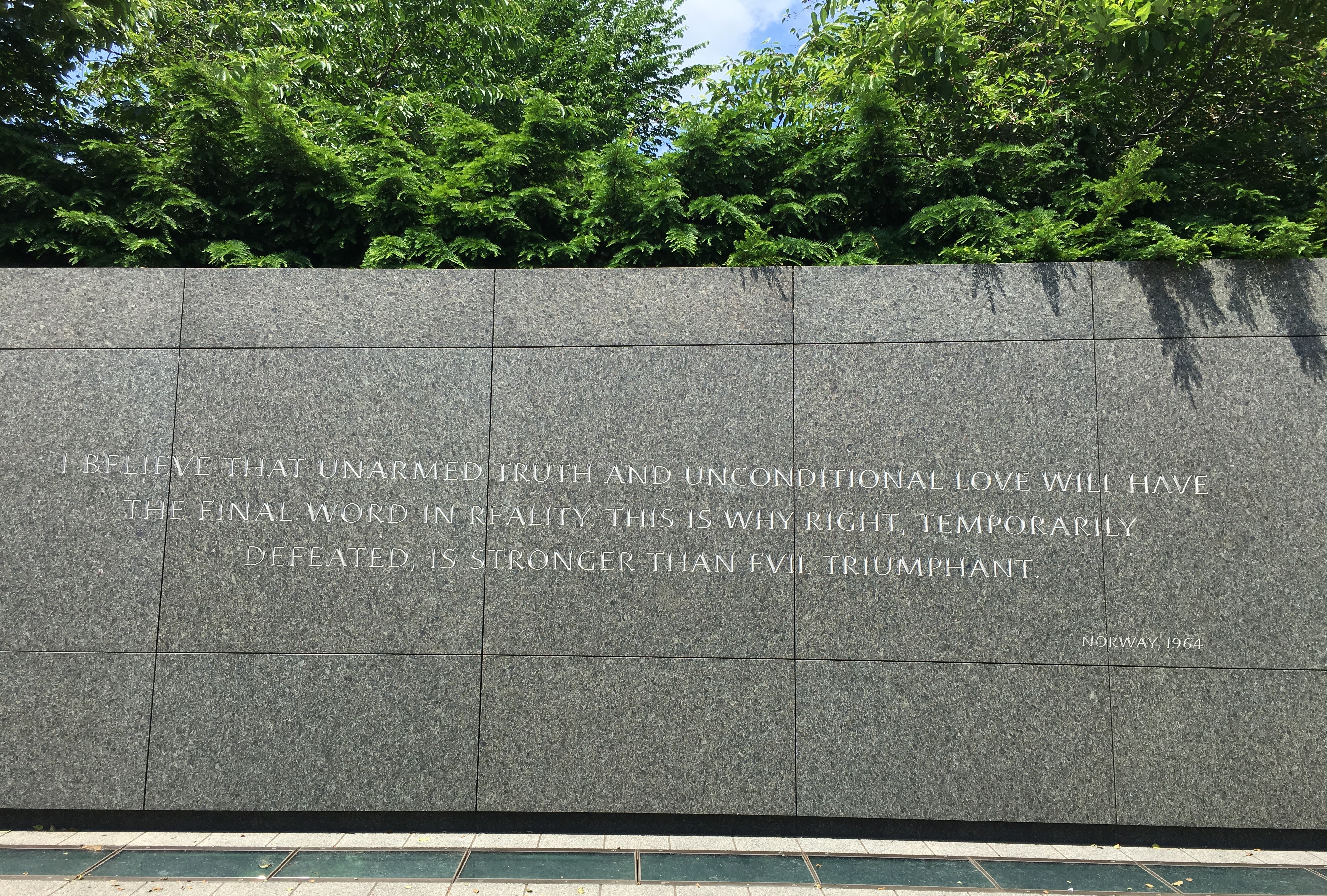
I believe that unarmed truth and unconditional love will have the final word in reality. This is why right, temporarily defeated, is stronger than evil triumphant.          (Norway 1964)

Injustice anywhere is a threat to justice everywhere. We are caught in an inescapable network of mutuality, tied in a single garment of destiny. Whatever affects one directly, affects all indirectly.    (Alabama 1963)

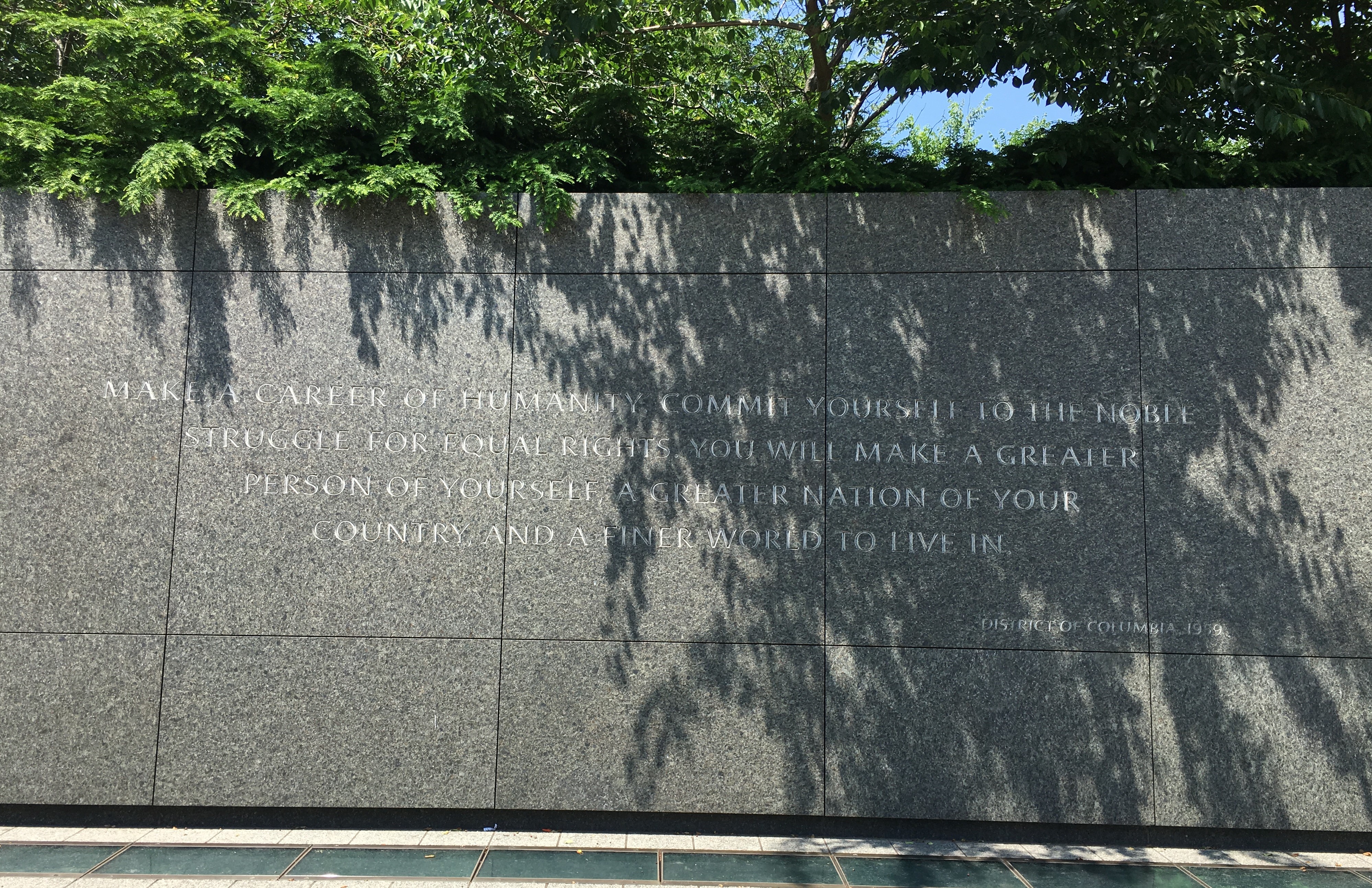
Make a career of humanity. Commit yourself to the noble struggle for equal rights. You will make a greater person of yourself, a greater nation of your country, and a finer world to live in.     (District of Columbia 1959)

I oppose the war in Vietnam because I love America. I speak out against it not in anger but with anxiety and sorrow in my heart, and above all with a passionate desire to see our beloved country stand as a moral example of the world.  (California 1967)

It is not enough to say, “We must not wage war.” It is necessary to love peace and sacrifice for it. We must concentrate not only on the negative expulsion of war, but on the positive affirmation of peace.    (California 1967)

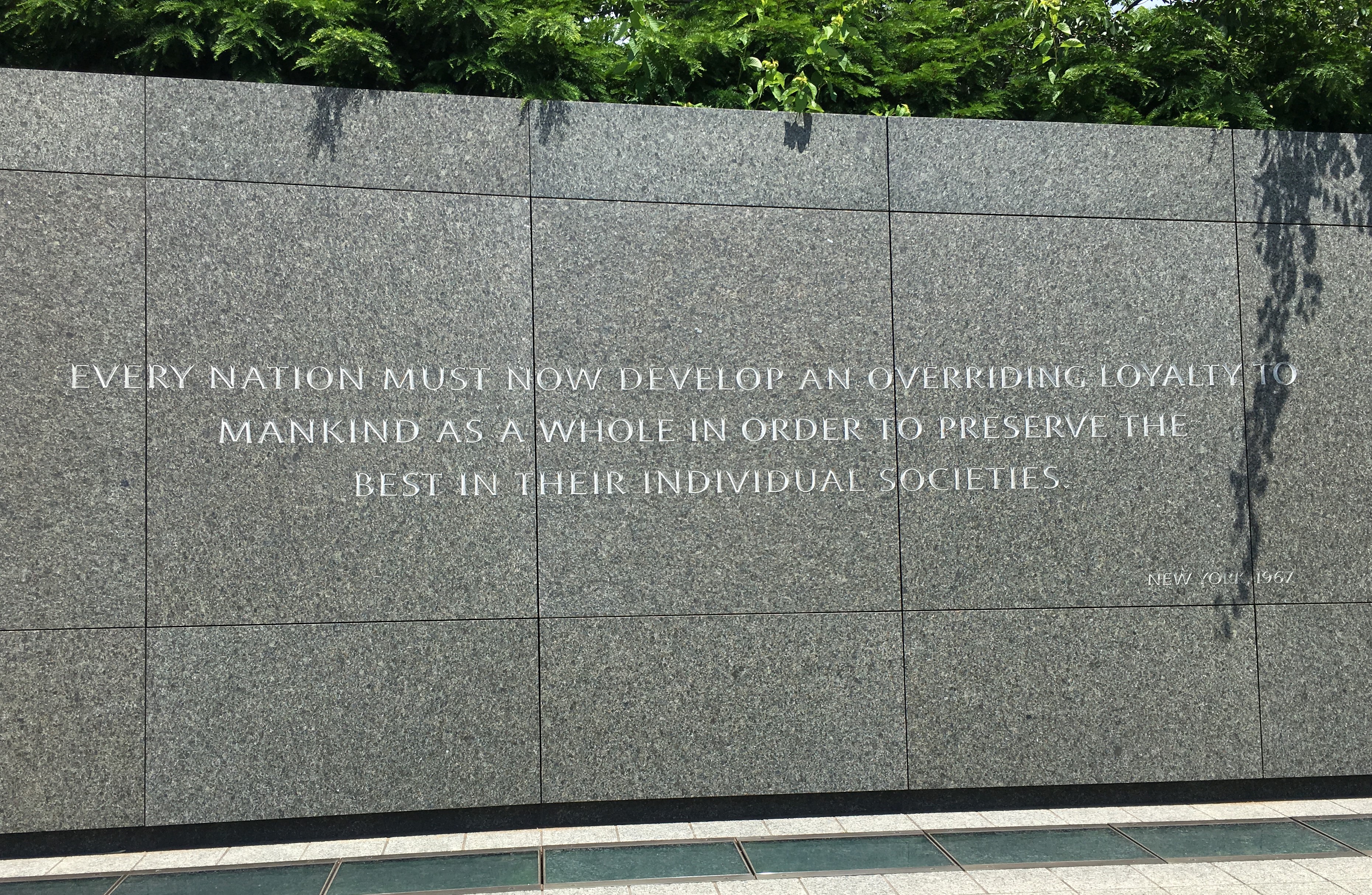
Every nation must now develop an overriding loyalty to mankind as a whole in order to preserve the best in their individual societies.  (New York 1962)

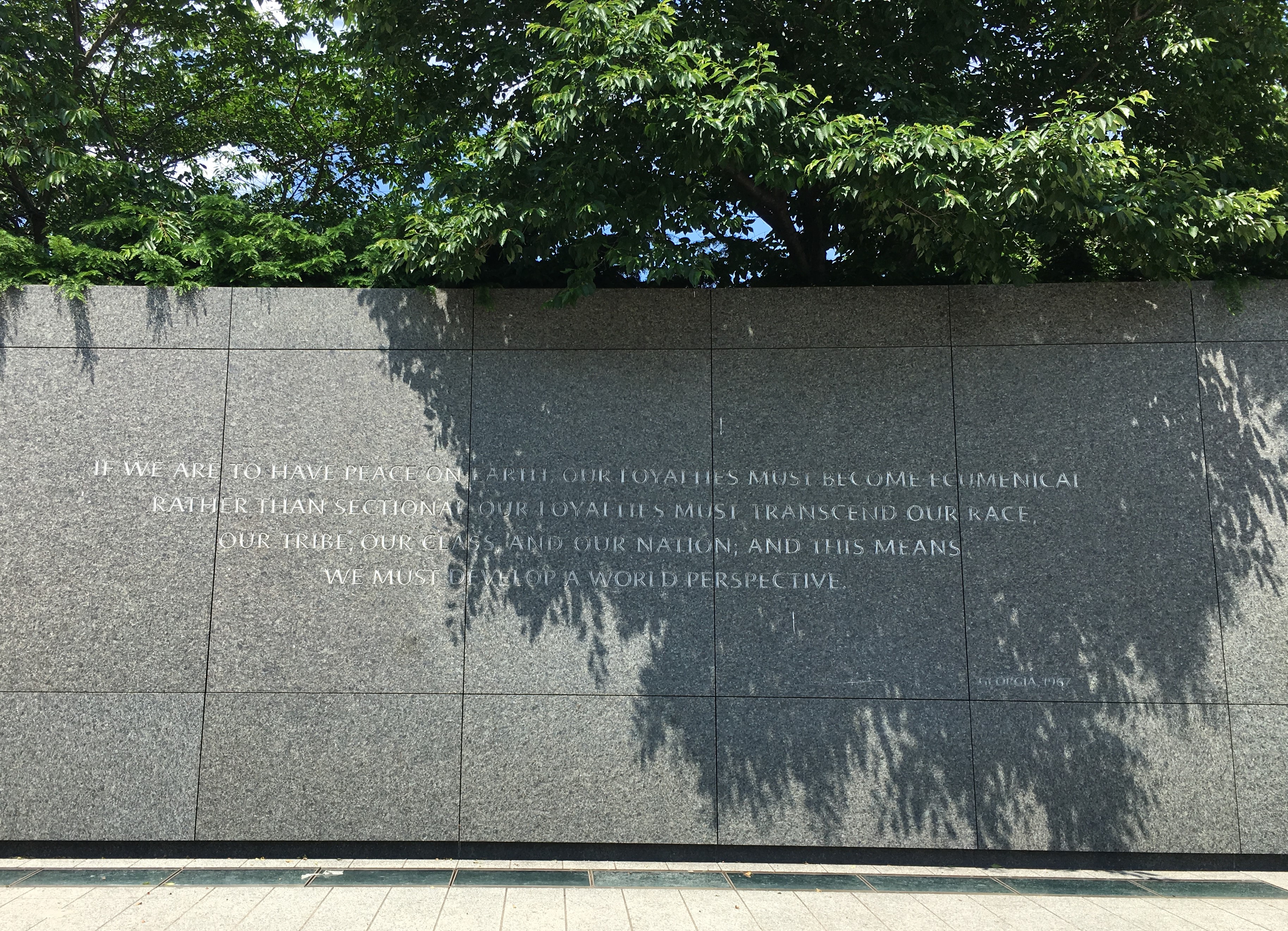
If we are to have peace on Earth, our loyalties must become ecumenical, rather than sectional. Our loyalties must transcend our race, our tribe, our class, and our nation, and this means we must develop a world perspective.  (Georgia 1967)

We shall overcome because the arc of the moral universe is long, but it bends toward justice.   (District of Columbia 1968)

Darkness cannot drive out darkness. Only light can do that. Hate cannot drive out hate. Only love can do that.    (1963)

This is not a complete collection of the quotations at the memorial. But it is most of them. One could spend hours there, meditating on the life of Dr. Martin Luther King, Jr., and pondering his legacy which is forever established through the power of his words. Located amidst the awe-inspiring memorials in our nation’s capital, it is fitting to remember this man’s life today, on the holiday declared to honor his life and legacy. And we return to that stone of hope during these difficult times, with renewed anticipation that a corner of our history has been turned and we will look toward renewed progress to uplift every person, and every living thing on Earth, with honor and respect.

Grateful for Small Things

I recently read a book on the recommendation of a friend. The December Project by Sara Davidson is a collection of thoughts she shared through conversations with Rabbi Zalman Schacter-Shalomi, a higly acclaimed Jewish leader who landed in the US as a young man after fleeing from the Nazis.

The book inspires and assists people as they approach the ultimate check-out point in life. Its final section is a set of exercises to help people navigate their personal last chapters. I found several of those ideas to be applicable to life in general. They could easily be adapted to any situation, at any season of life—good habits to nurture regardless of age.

I will share some of those over the next few posts, offering them as the first building stones for a gap-spanning soul bridge to work toward healing our world.

The first exercise: “Give thanks. . .Why not begin each day by giving thanks?” One way to do this is to make a “gratitude walk” a regular practice. What is a gratitude walk? A short walk you can take anytime or anywhere. Attune yourself to the surroundings and feel gratitude for what you see, hear, or think.

Items in your home can spur memories from the recent or distant past. Offer a grateful heart. The scenic beauty of your local park or a vacation trip generate many reasons to be thankful. Smells in your kitchen can inspire thanks for nourishing food.

Another of the tips suggests hanging a bell in a place that often moves, such as on your car’s visor or mirror, or a frequently used door in your home. Whenever you hear the bell, pause a moment to breathe and think a thought of gratitude.

Lately I have felt overwhelmed by situations or events out of my control. It is hard to feel thankful. Recent election results come to mind, as well as the national news headlines. I find that I have to look small in order to find inspiration for gratitude, but small can be wondrous and beautiful.

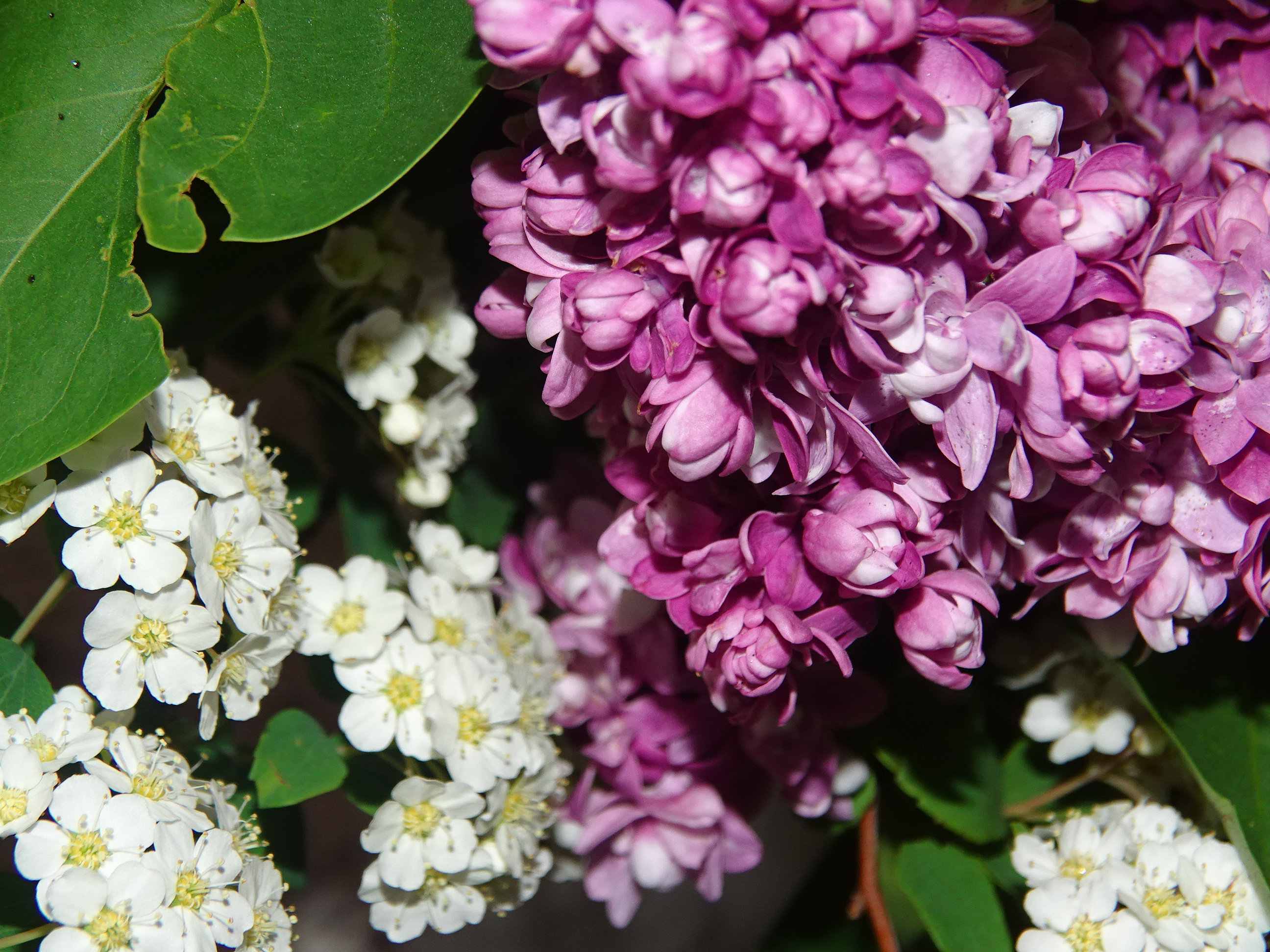
April is a favorite time of year with the abundance of spring flowers. Two of my favorites appear on bushes, lilacs and spirea. Looking small, to the delicate whorls and tiny petals, I find reason to pause in wonder.

Together, the lilacs and spirea are a patriotic pair. We celebrate red, white, and blue as our national colors. But what do you get when you mix red and blue? Purple, of course. Mixed together, we are a beautiful spring bouquet, as intricate and miraculous as the tiny flowerlets of the spirea and lilac blossoms. I am thankful for the array of our differences.

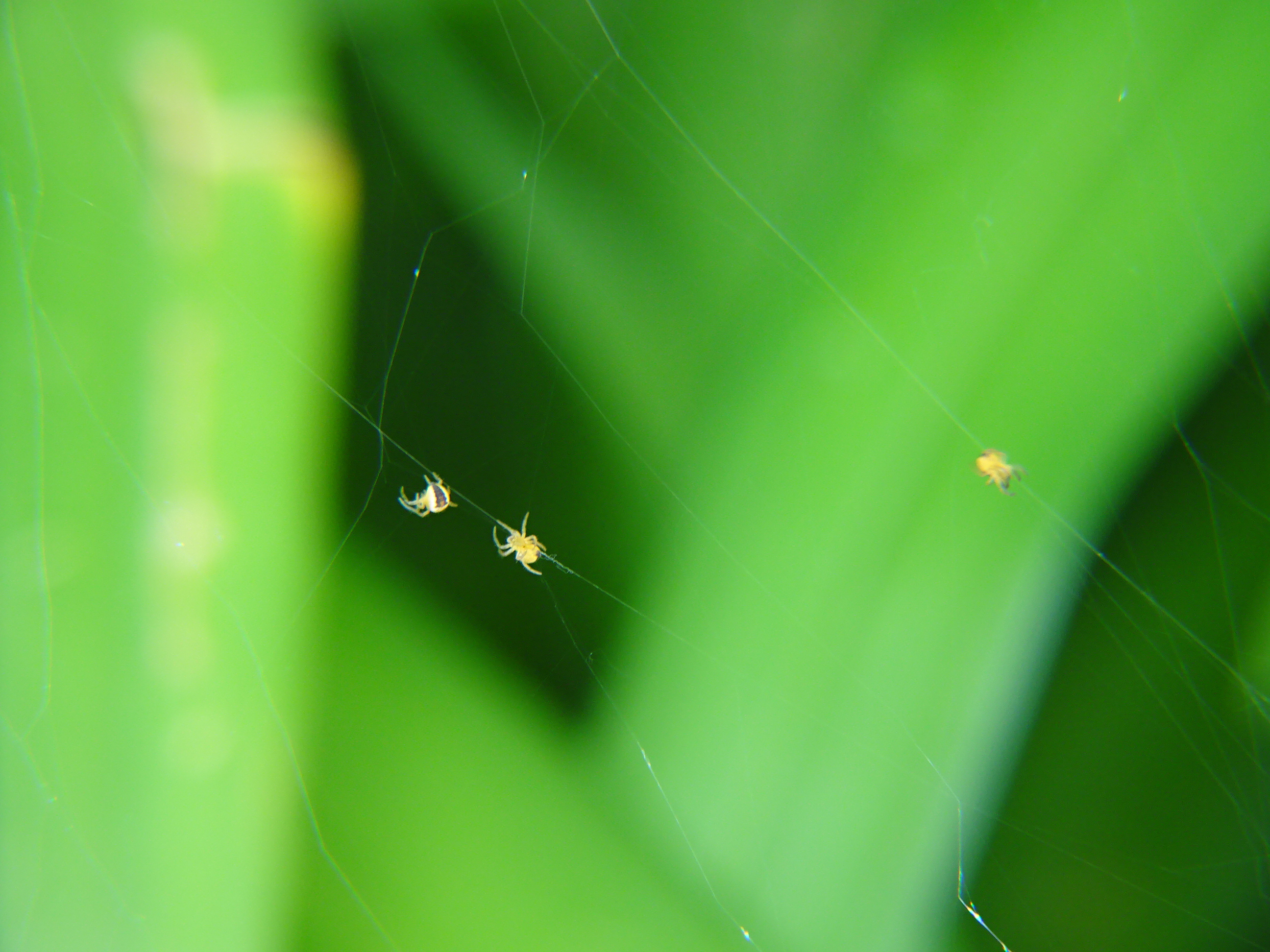
While hunting Easter eggs yesterday, Grandson and I discovered a miniature miracle. Remember Charlotte’s Web? We found a clutch of newly-hatched and itty-bitty spiders dancing on invisible threads above the daylily leaves in our yard. These tiny creatures know nothing of the world’s human events. They just go about doing their spider things on a miniscule scale. I am thankful for the opportunity to peek into their lives, for the moment we spent watching on the bright spring afternoon, and the gift of being a witness to their launch.

Think small. You can always find something marvelous and be thankful.


Diversity Lends Stability

One of the first lessons in Timothy Snyder’s book On Tyranny: Twenty Lessons from the Twentieth Century is “Beware the One-Party State.” Isn’t that what we have now in our country? If not yet, we are certainly approaching it. There’s something immoral, unethical, and deeply wrong with a system that inaugurates a candidate even though his opposition won the approval of voters by a significant majority. There’s also something immoral, unethical, and deeply wrong with a system that allows the majority party in Congress to re-draw voting district lines so their candidates have a clear advantage.

It doesn’t take much intelligence to realize a society is stronger and more stable if all views have a voice in our capitals. The great art of negotiation and compromise benefits us all. We have been created with a wondrous variety in interests, opinions, and talents. Rather than try to squelch those who hold differing views and talents, we’d all be better people if we tried to understand and learn from those who are different.

Diversity lends stability. Sound familiar?

Those of us fascinated by the study of science understand that ecosystems thrive when populated with a wide variety of species. In such vibrant systems, even if one species is decimated by a disease, others can adapt to fill the thinning ranks. If an area is home to only one kind of plant, and a pest or disease invades, the area is laid waste very quickly.

Contrary to some popular beliefs, science and scientists don’t really have an agenda to thrust on the rest of us. Scientists are curious thinkers. They notice something in their world and they want to know why it is the way it is. They watch,  measure, take things apart, get into the very smallest building blocks with increasingly technological equipment. And they keep asking questions. Ecologists noted over and over that “Diversity of species lends stability to an ecosystem.”

Even if you’re not a fan of modern science, maybe you are concerned with finances and the economy. My advisors recommend a retirement plan that utilizes multiple funds, guarding against the dire possibility that one failure would wipe out your life savings. (“Don’t put all your eggs in one basket.”) Many people have watched their pensions disappear after economic disasters in recent years. Let’s not watch our entire country go the same way, with a government run by one party that answers to a few wealthy individuals.

Diversity lends stability.

If, for no other reason, this one reason makes it important for people to vote. Those of us with the opportunity to cast votes in an upcoming election must take the opportunity seriously. My congressional district is one of those. Advance voting is already open and I voted today. I voted for the candidate of the “other” party—the one not in power in Washington. To my friends and neighbors in this 4th district, I urge you to vote as well. Cast a vote to support a diverse Congress. Vote for James Thompson because diversity lends stability.

The Unknown Factor in any Book

This has been a strange week for me, reading two books simultaneously. Both are good books, and neither probably would have been one I would pull from a library shelf had I not encountered them individually somehow. However, I am not sorry to have read them. And reading them together produced a strange melding of thoughts from within, reminding me that the one unknown quantity in any book I might write lies with the reader. Active reading is a creative process, as much as the writing endeavor. Each reader will understand the content of a book, essay or poem within the parameters of her own personal history, making the read a unique experience for every person.

The two books I have been reading are On Tyranny: Twenty Lessons from the Twentieth Century by Timothy Snyder and Wisdom Chaser by Nathan Foster. Put them in the context of my need to search for building blocks to start bridging gaps in our current society, and interesting things happen.

If I find some things to remember in a book I read, I consider the book to be a great book. With Foster’s chasing of elusive wisdom, each chapter included some points he’d learned from climbing mountains with his dad. Described with poetic clarity, many of his points resounded in my soul. For example, Foster described a concept of time. “When we share our time, is this not the pinnacle of human sacrifice? . . .The only thing I have any control over is what I do in this fleeting moment. Time, my most valuable possession, is quite possibly my only real possession.”

And we fritter away so much of that precious treasure. Leaping to Snyder, I find a chapter exhorting us to “Be Kind to our Language.”  “Avoid pronouncing the phrases everyone else does. Think up your own way of speaking, even if only to convey that thing you think everyone is saying. Make an effort to separate yourself from the internet. Read books.”

Ah. The internet. Fortunate is the person who hasn’t been lured into skipping from one site to another, conveniently linked together with the seeming purpose to see how long those webworms can keep you distracted from the rest of your life. Too often I tell myself “I have ten minutes. I’ll just check email.” And then–THEN–I see something that I just have to look up, and something else, and before I know it, an hour has passed and I’m almost late to an appointment. And I have accomplished nothing except wasting sixty minutes of my precious time, stolen by the internet.

The internet, a practiced thief. It is one of the best, for it steals your time with no apology whatsoever. A theft of time is perhaps one of the most heinous of crimes, for along with lost time is lost potential, those things you might have accomplished if you’d directed your efforts elsewhere. Where might we be now if we had not been seduced since childhood by the ease and temptation of impersonal connections online?

Select a book. Enlighten yourself. Escape with some well-crafted characters. But decide when to return to your life, and close the book with a book mark. To be continued. Books are great, aren’t they? Snyder recommended a few books to help us put today’s trending events into perspective. How do they compare with historical examples of other places at other times? And what happened to the people in those situations?

I recommend both of these books to any one who wants to exercise their own thinking while reading. Additionally, Snyder recommended Ray Bradbury’s Fahrenheit 451, George Orwell’s 1984, Dostoevsky’s The Brothers Karamazov, and even J.K.Rowling’s Harry Potter and the Deathly Hallows. 

Any book which places an endearing character complete with personality flaws woven into their compassion and integrity could give a reader pause to think. What would happen if it was you who faced some dire circumstances? Would you even recognize the threat? How far would you go to defend your principles? How much are you willing to sacrifice to assist someone less fortunate than yourself? How much time would you give to save a helpless child? Or an immigrant? Or a refugee?

Then there’s Foster: Giving someone our time and attention is the ultimate sacrifice. That is all we have to give, after all, and in the end it is the only thing we can decide how to spend.

Just my reader’s musings after pondering points from two good books.

Thanks for allowing me a few minutes of your time. . . .online even. May we all find a new direction.