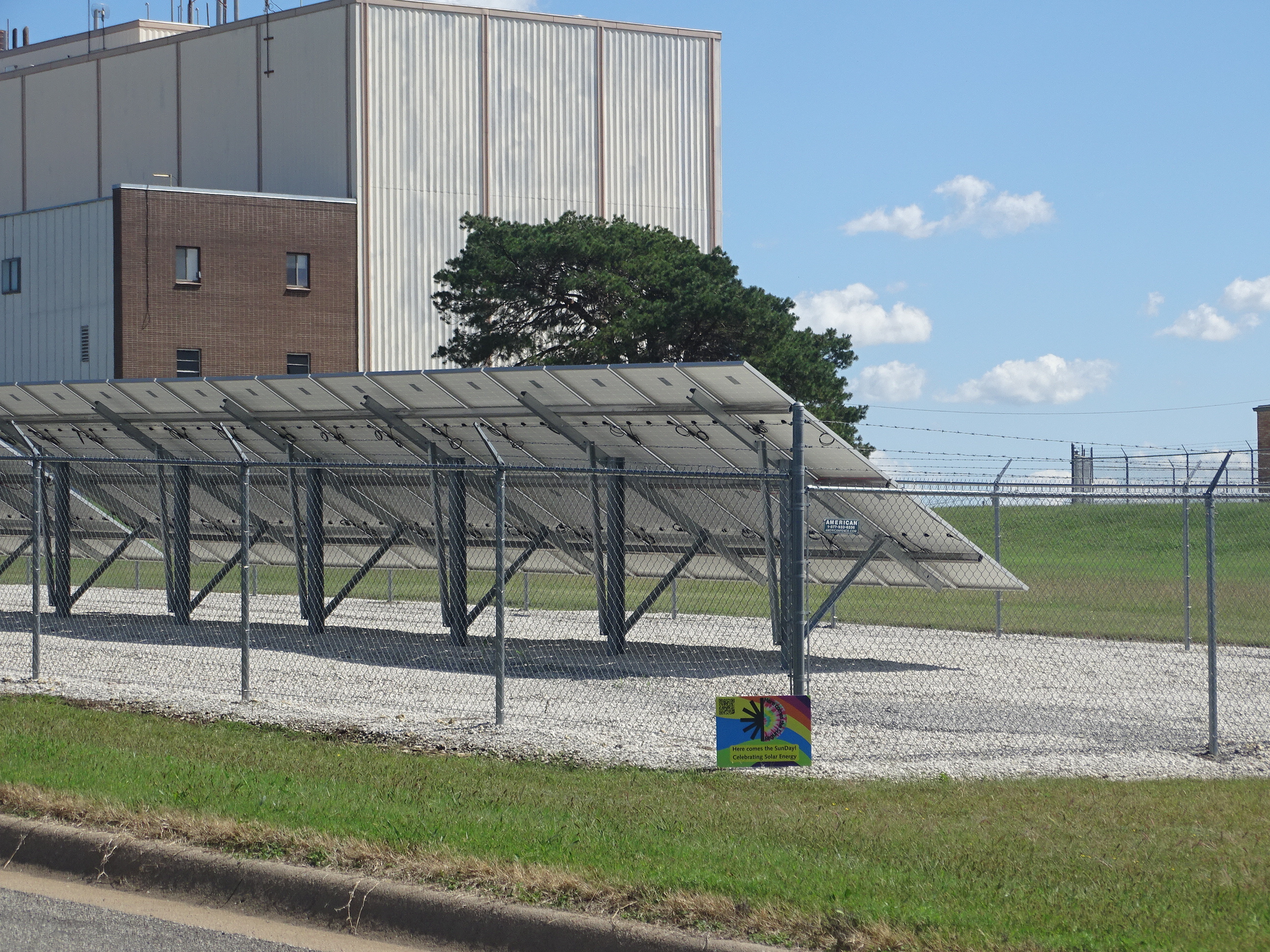
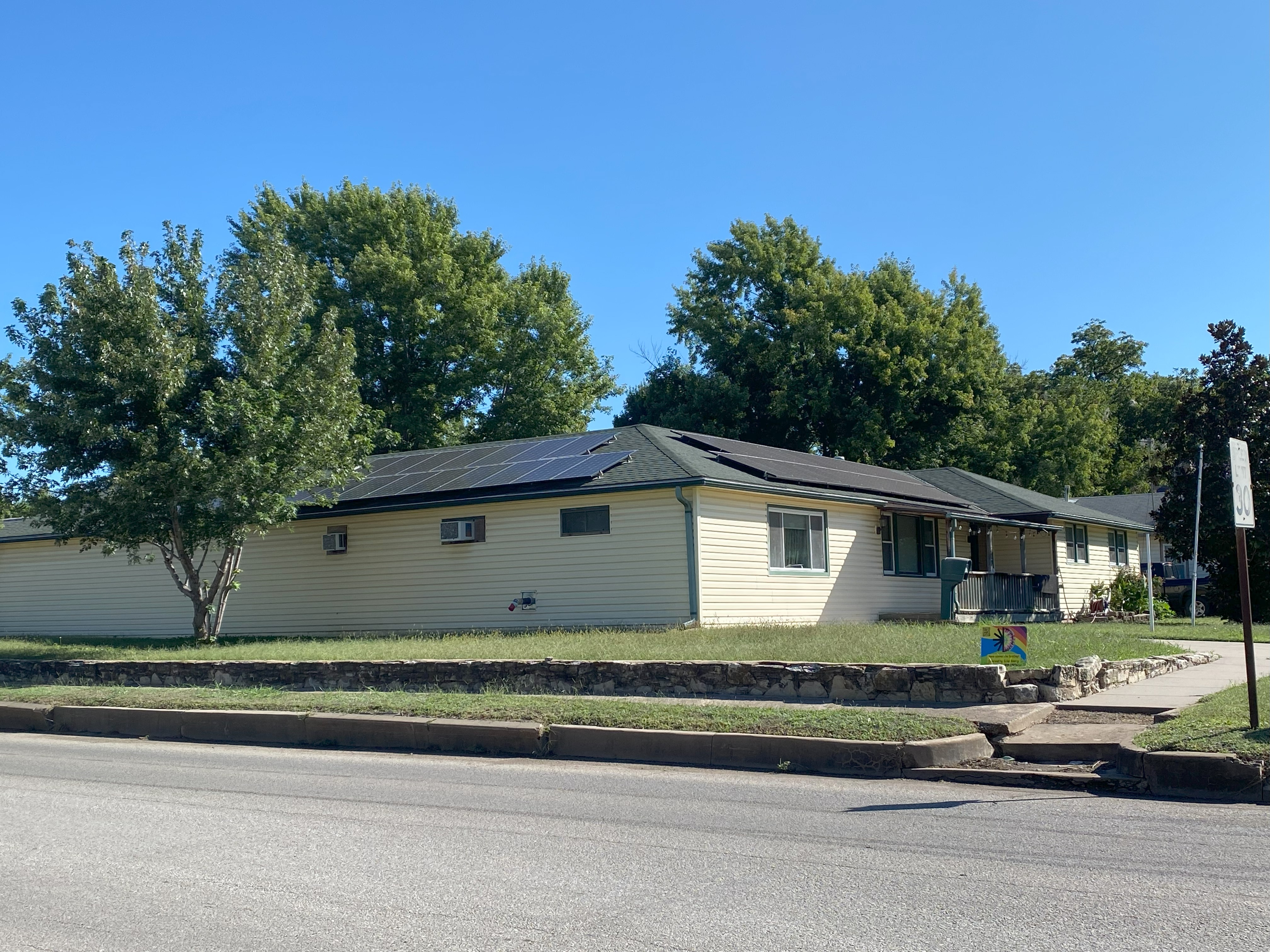
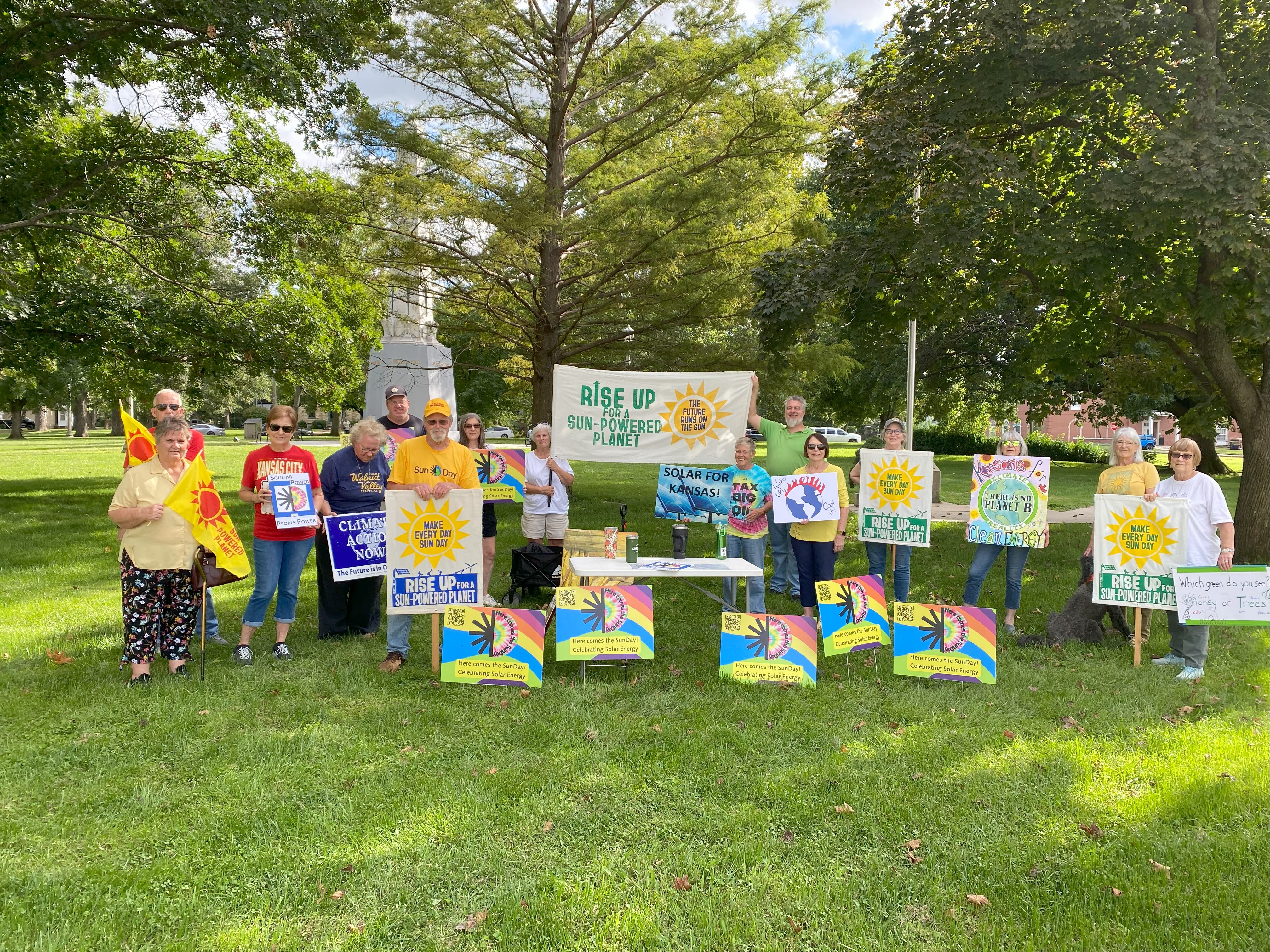
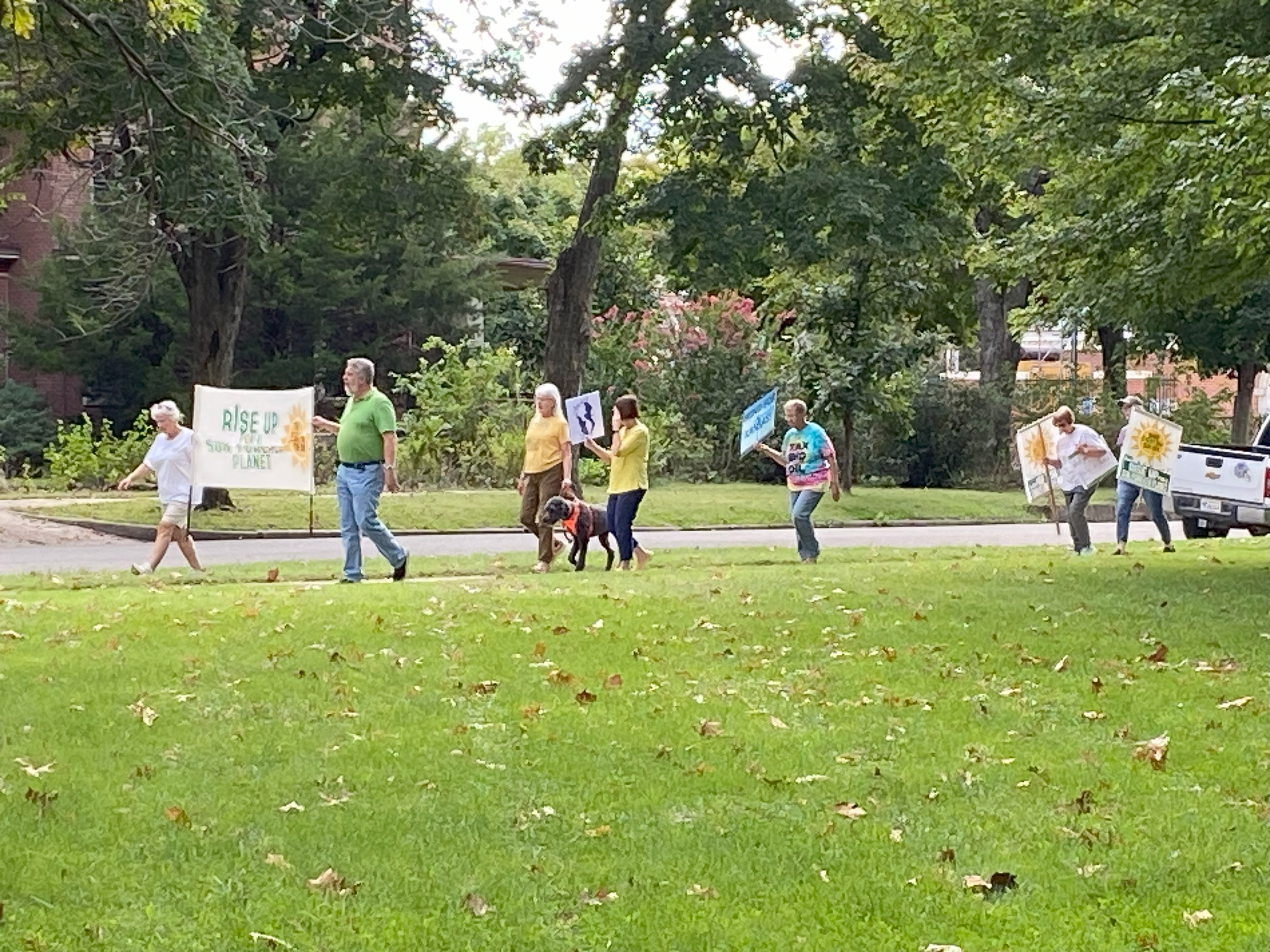
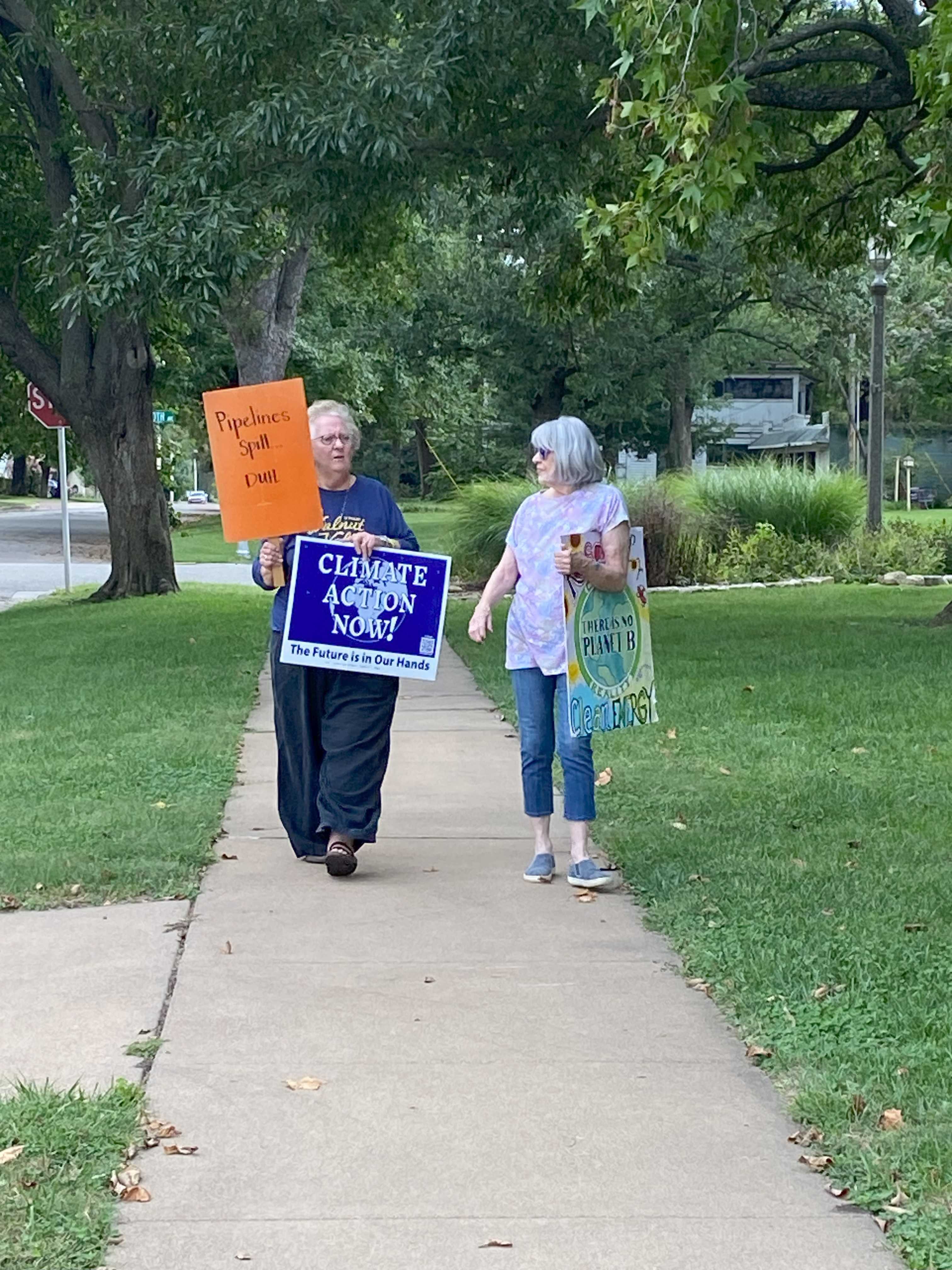
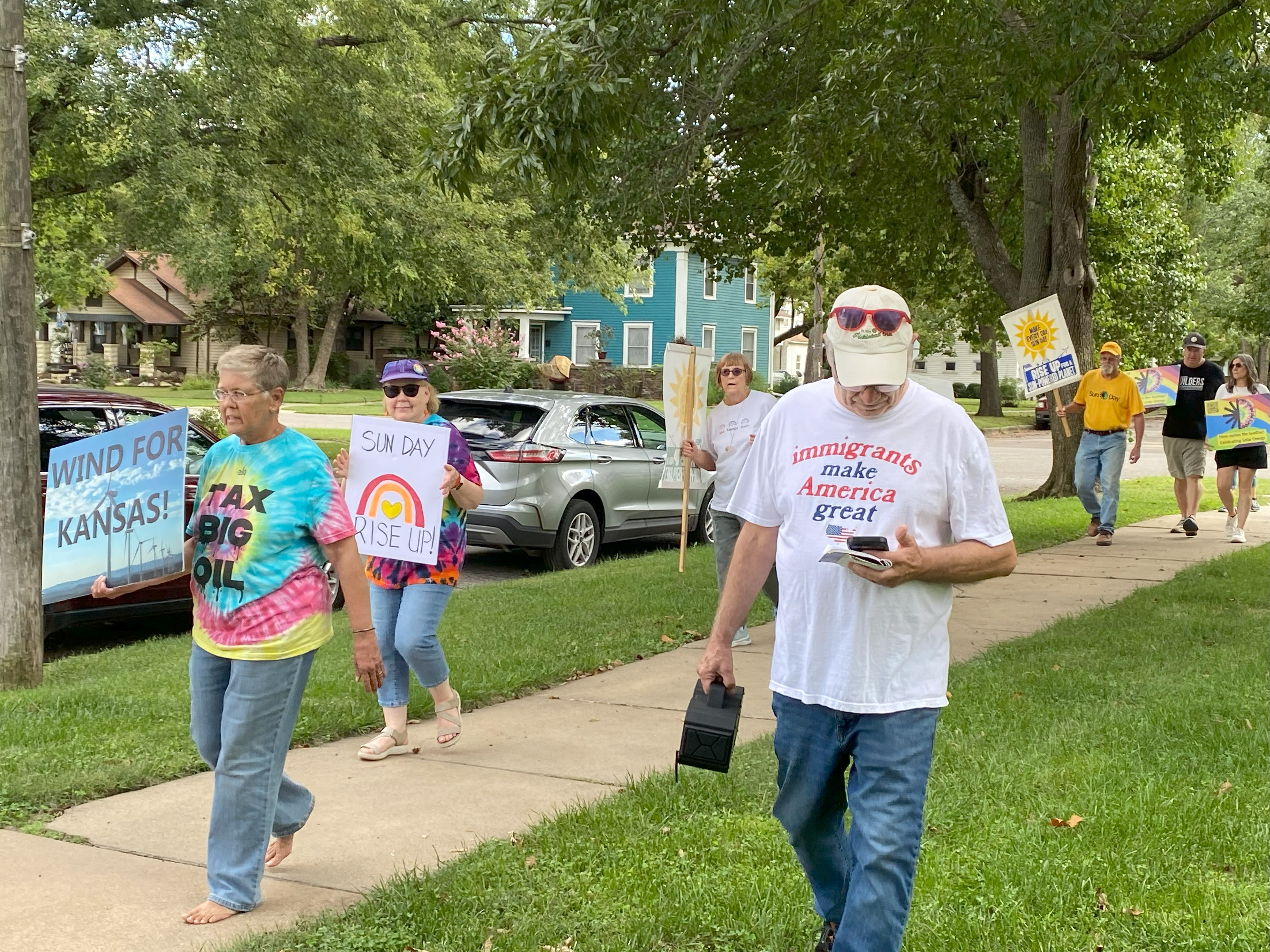
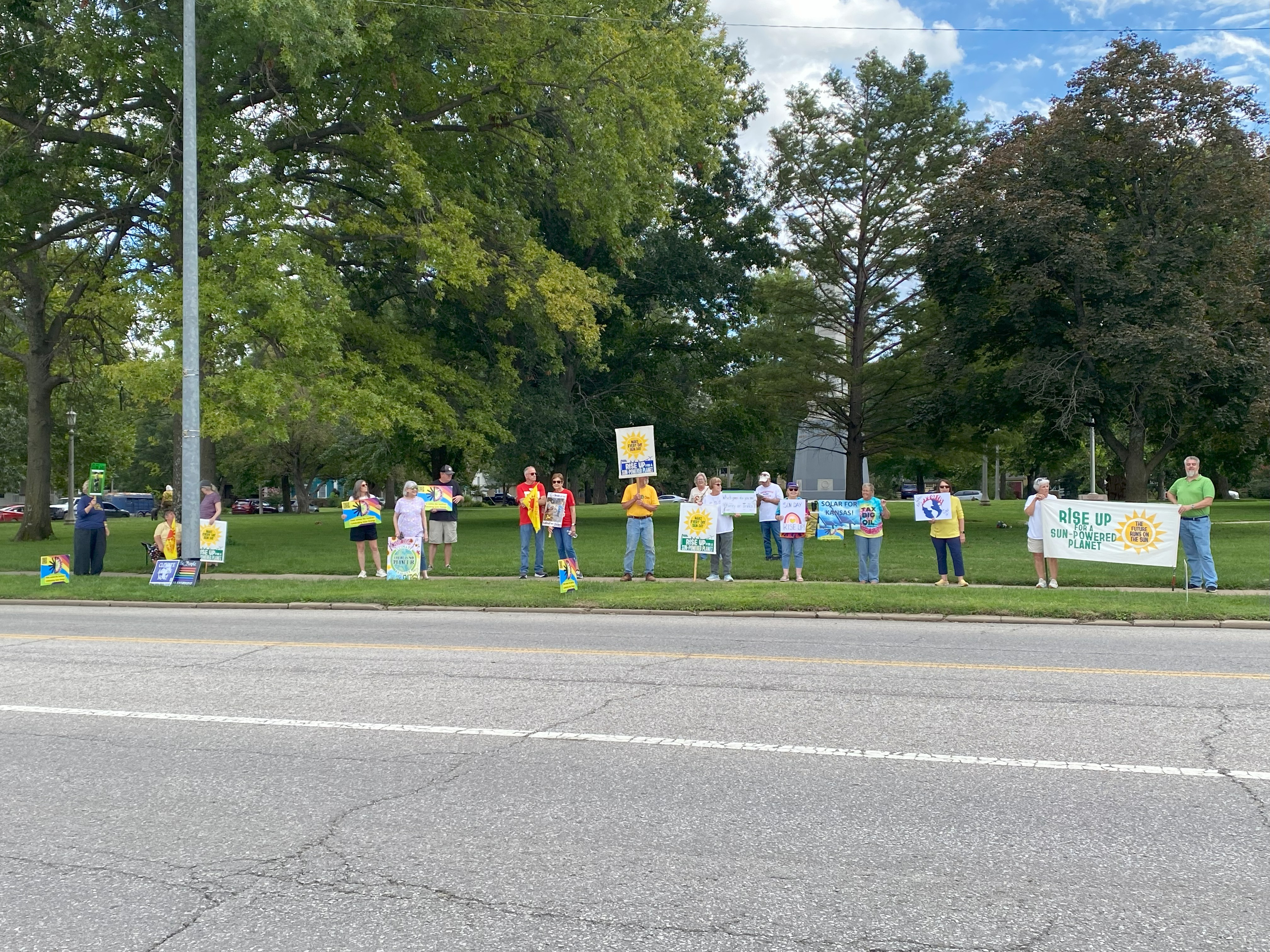
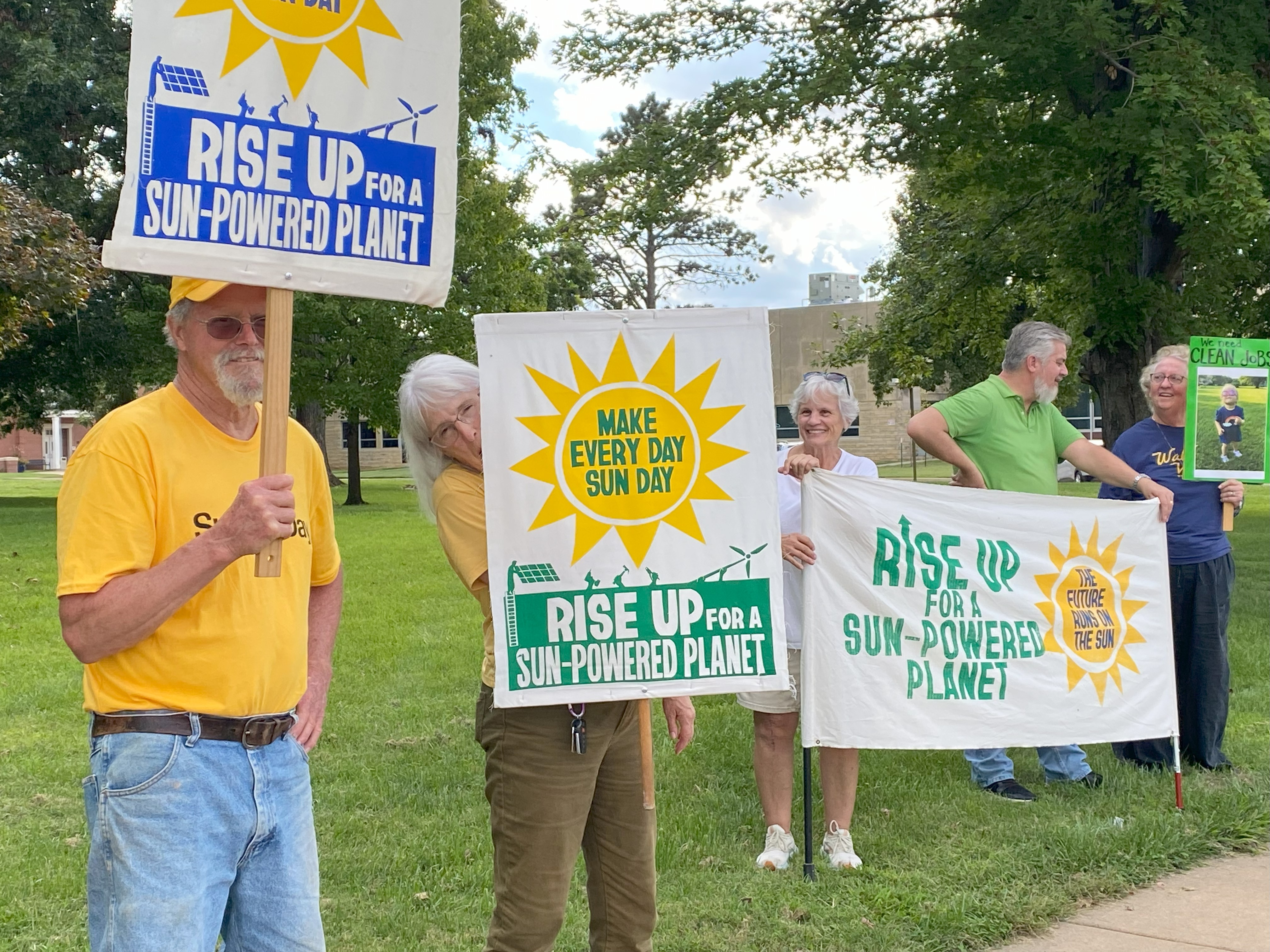
Every Hour!

“The history is clear: scientists discovered things, fossil fuel companies lied, and the world heated up. But on a planet that receives more power from the sun in a single hour than the whole of humanity collectively consumes in a year, fossil fuels are not inevitable. We can have better things. We just need to demand them — again and again and again, until we get them!”

Dr. Kate Marvel, Climate Scientist

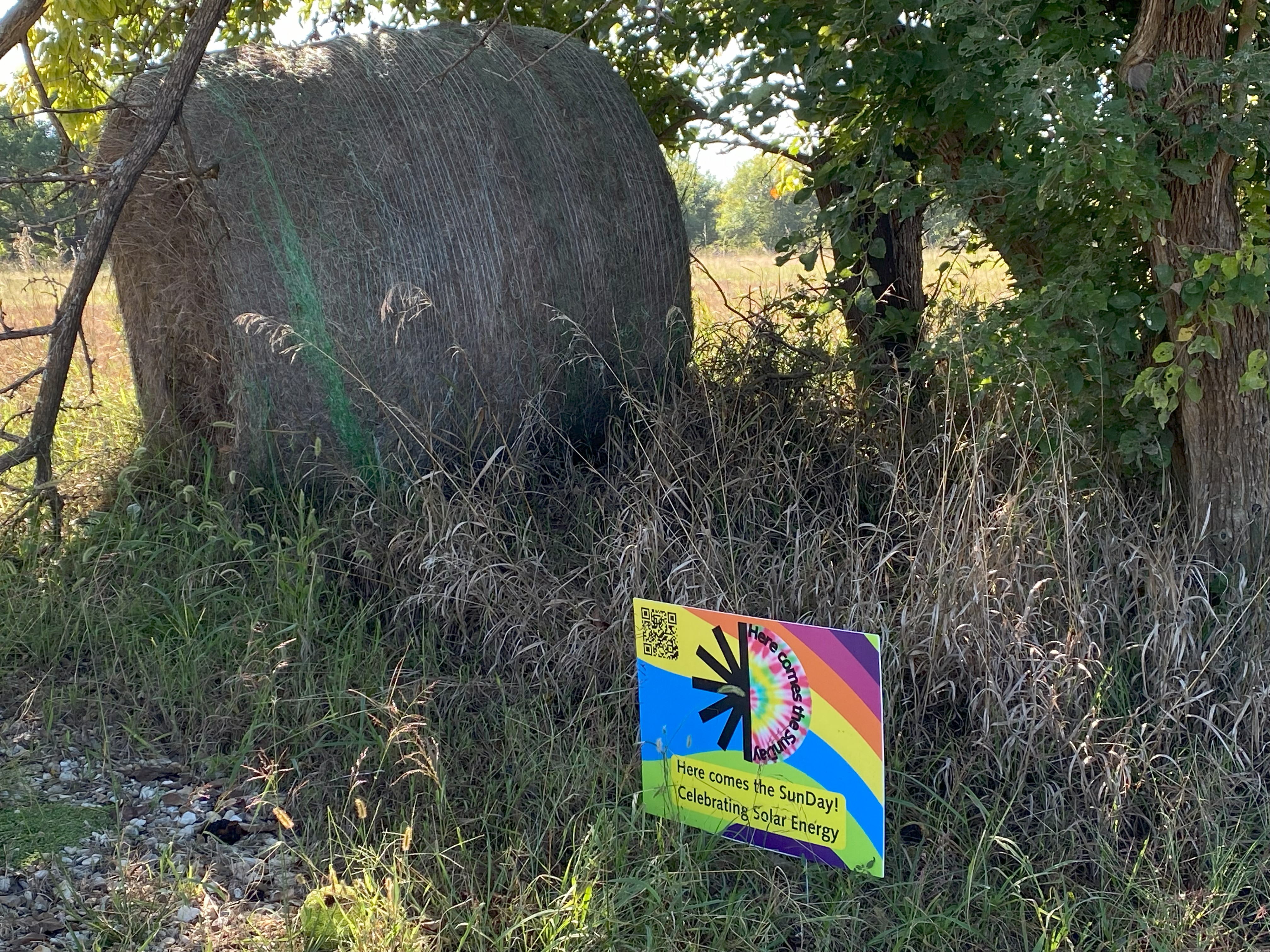
http://www.sunday.earth

Do We Need a New Bible?

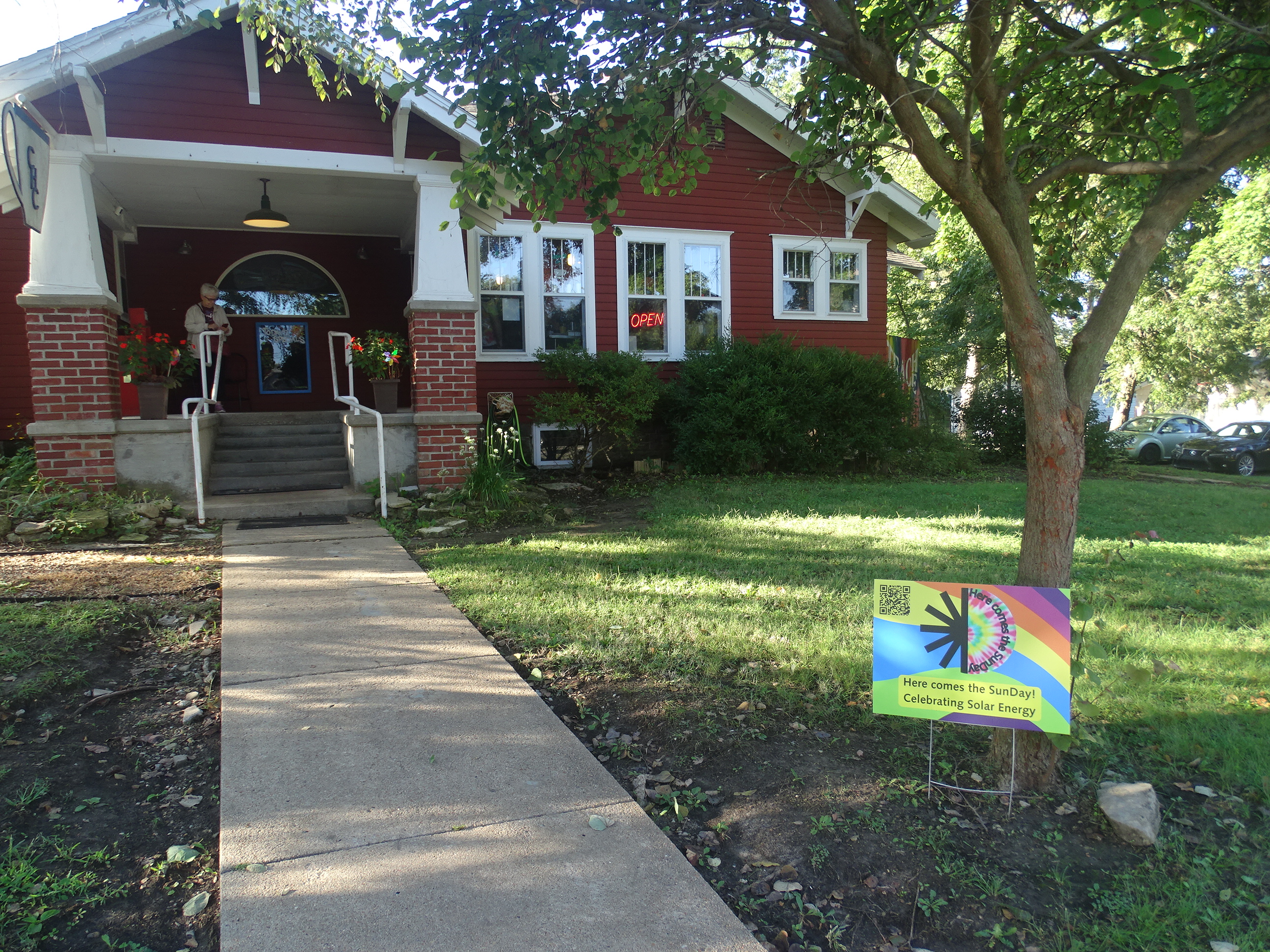
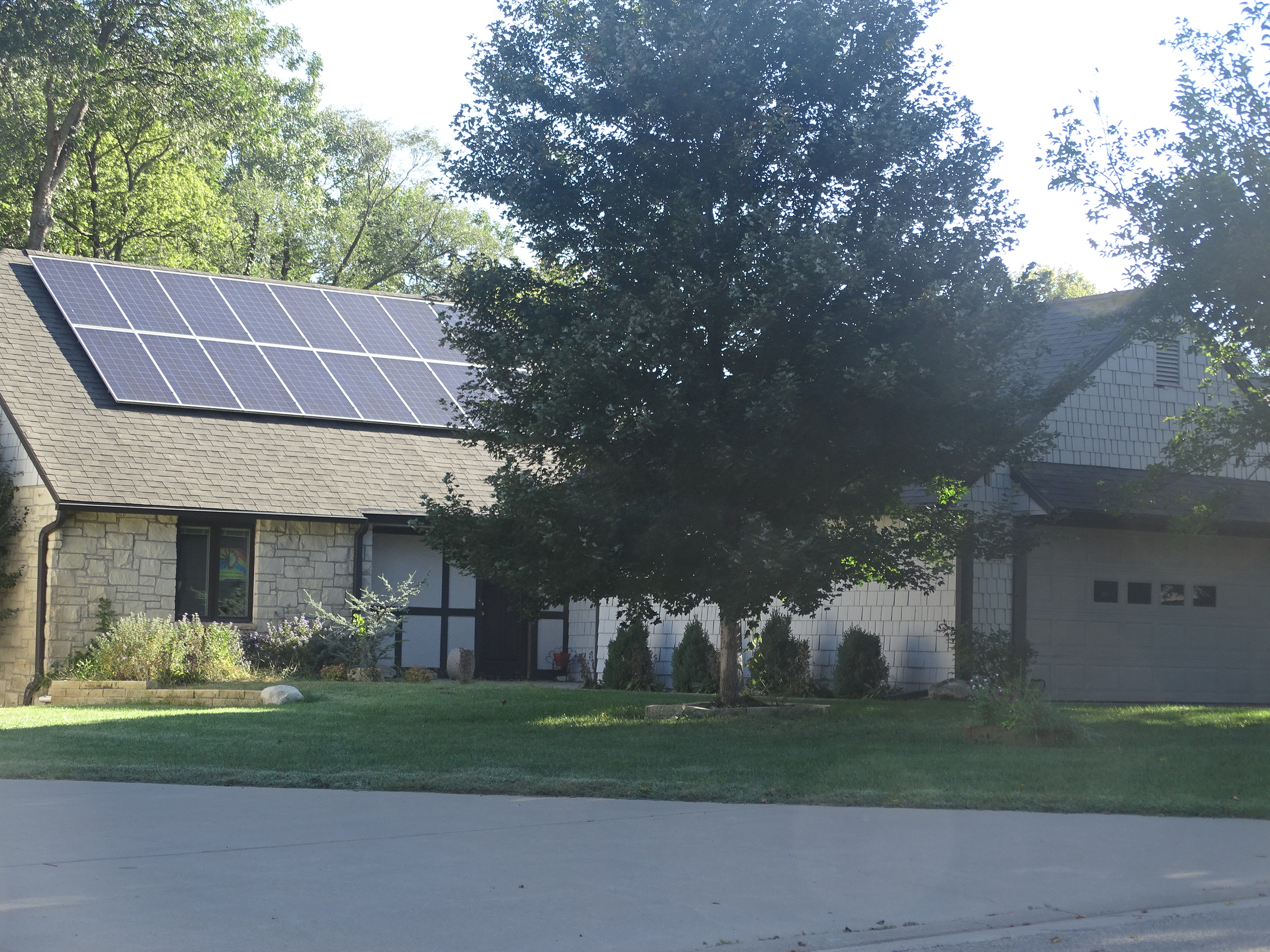
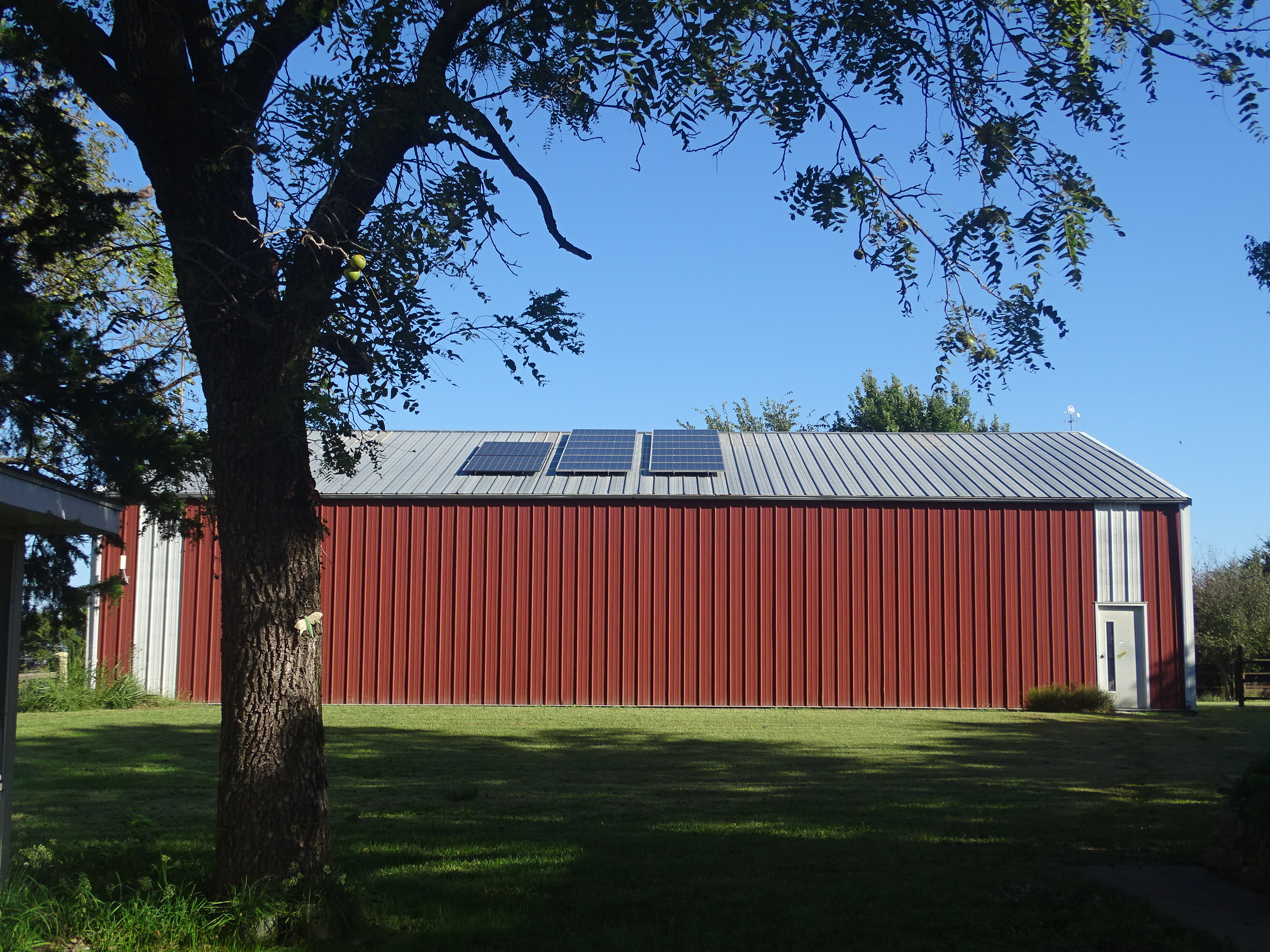
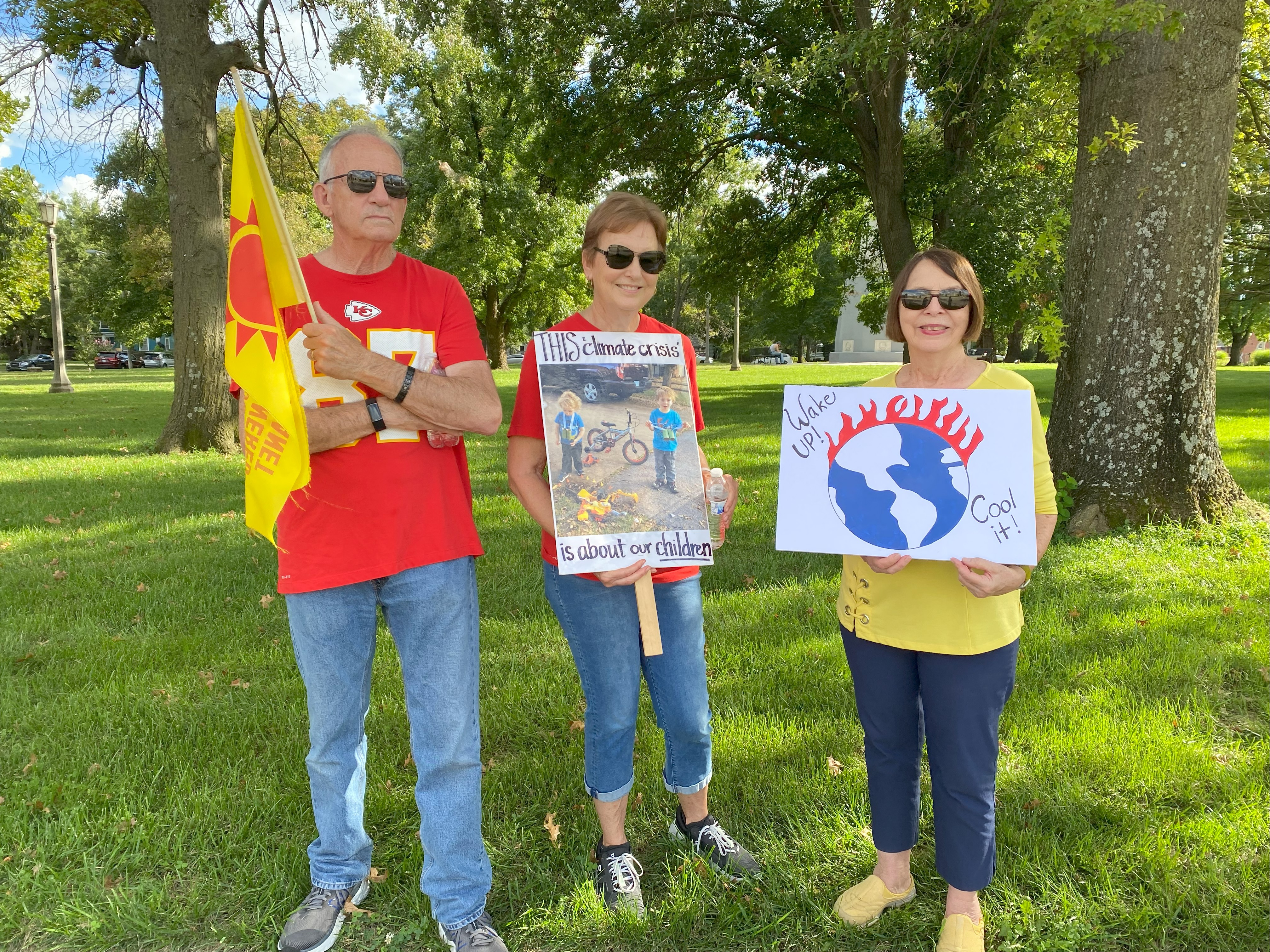
The solar energy system on our house came online in July 2011. For the next fourteen years, few days passed when our inverter reported no energy produced by the sun. Then, in June this summer, it all changed. The status window on the inverter, a necessary device that converts the direct current produced by the sun to alternating current for use in our home, toggled error messages constantly during daylight hours. “Peak overvolt,” “AC Voltage Low,” “AC Voltage High.” Production ceased. Given my determination to support the national Sun Day (https://www.sunday.earth)  on September 21 with a local event, we had to do something! An error-ridden system just would not suffice.

The people who installed our system are no longer in that business, so I called local electricians to help diagnose the problem. But we were put on a back-logged wait list, with no real intent to take us off since we were not a priority for the local electricity experts.

I turned to a recommended solar company headquartered ninety miles away. Weeks passed with no appreciable action, but after the devastating baseball sized hailstorm damaged several Solar installations in Ark City, a repair and maintenance specialist from this company stopped to take a look. He found nothing wrong, and assumed there was an issue with a computer chip in the inverter. His advice was to do a hard reset, that is, turn off the whole system for ten days to two weeks to allow the capacitors inside to fully discharge, then turn it on and hope for the best.

It didn’t resolve the error messaging.

I reported back to the solar company and declared that we were ready to replace the inverter and upgrade our home system. That’s when things became interesting.

On Friday afternoon, J, a system designer/project manager, arrived to do a site visit. We agreed on a 3:00 time via email messages. And at precisely 3:00, his white company pickup rolled to a stop in front of our house.

He’s punctual. Impressive.

J chatted about options as he took pictures of several important components in our system, utility meters, and structures on the property. A friendly, 40-something bearded man, he easily answered our questions. I noticed ear piercings as well as tattoos on his forearms. One tattoo was a caterpillar. Another broadcast in a fairly large font, “Practice Resurrection.”

Who was this guy? What did that mean, practice resurrection? Was he part of a strict religious cult? A rigid fundamentalist?

His knowledge of everything solar was obvious and the time flew by. It crossed my mind to ask about the tattoo, yet in the end I let it be. But later, that phrase wouldn’t let me be and I did a search. It turns out that “Practice resurrection” is part of a poem by Wendell Berry.

This system designer for a solar company has poetry tattooed on his arm for all the world to see. Wendell Berry, no less. Impressive!

My encounter with Wendell Berry and his writing has been a meandering path. Earlier this summer, a good friend presented me with an envelope that held a poem by Wendell Berry. M turned to this poem when he needed solace and he wanted to share it with me. That well-worn envelope is in the bag I carry daily. I shared the “practice resurrection” poem with M that evening, whereupon he loaned me Poetry of Presence II, a small volume of poems he didn’t want to part with permanently. It included a few by Wendell Berry, and M urged me to take a look at the poet’s life.

“Look him up,” he said.

Wendell Berry is not to be confused with Thomas Berry, whose book The Dream of the Earth is one of my cherished tomes. Still, there are similar themes in their writing. A thumbnail bio in the back of the loaned poetry book tells me that Wendell Berry writes poetry, essays, and novels. He is an environmentalist “with one primary message: Either we humans will learn to respect and live in harmony with the natural rhythms of this planet, or we will perish.”

Yes. That is prophecy. And Wendell Berry’s important message becomes clearer by the day as humans who have no business leading us continue to lead us toward devastation. It smacks me that this poet’s words have been swimming through my consciousness for years. I have one of his novels in my treasured books collection—as yet unread, but it’s on my list. It just moved a little higher.

There are eleven of Wendell Berry’s poems in my revered 1991 copy of Earth Prayers from Around the World: 365 Prayers, Poems, and Invocations for Honoring the Earth. Included in this volume is an excerpt from the poem that concludes with the words, “Practice Resurrection.”

What, exactly, does that mean? A description that popped up in another search. To practice resurrection means to embody the spirit of new life, hope, and transformation in the face of death, despair or brokenness. Often this is accomplished in acts of faith and love, through perseverance. It involves a daily commitment to find new life in death, to cultivate resilience, to see possibilities for redemption in difficult situations.

That, my inner voice says, is what we need right now, a sense of partnership with the creative Spirit responsible for all life on our amazing planet.  That, my inner voice adds, is the theme of the novel I’m currently writing. That inner voice, I swear, also adds, that may be the theme of many great works of fiction through the ages.

Excerpts from Berry’s poetic verse prompt more from my nagging inner voice.

Berry: “So, friends, . . . love someone who does not deserve it.”

Fell: Love is the greatest power. Believe it.

Berry: “Denounce the government and embrace the flag. Hope to live in that free republic for which it stands.”

Fell: Berry, who is 91 in 2025, wrote this before 1991. How did he know?!

Berry: “Give your approval to all you cannot understand. Praise ignorance, for what man has not encountered he has not destroyed.”

Fell: And everything he has encountered, he is in the process of destroying.

Berry: “ . . . please women more than men . . .”

Fell: Hear, hear!

Berry: “Put your faith in the two inches of humus that will build under the trees every thousand years. Listen to carrion . . .”

Fell: The cycle of life; from death comes new life.

Berry: “Laugh. Laughter is immeasurable. Be joyful though you have considered all the facts.”

Fell: Not the fake facts. Consider the factual facts. This is a difficult thing, and yet, laughter is healing. When one can laugh, one can love.

Berry: “As soon as the generals and the politicos can predict the motions of your mind, lose it. . . make tracks in the wrong direction.”

Fell: I am losing my mind.

Berry: “Practice resurrection.”

Which brings me back to the topic of this essay. We need a new Bible. There. I’ve said the thing that’s been on my mind a long time—like decades. Writers know that communication is a give-and-take experience. Half a conversation belongs to the listener. Half the communication through reading belongs to the reader. Given the infinite life experiences of any single life (no two are alike) each reader may interpret a sentence, a verse, a chapter or a book in ways that astonish the writer. This has happened to me, when readers express things they got from my writing that I didn’t know were there. And so, in 2025, with our lives so very different from the ages when scriptures were written, is it any wonder that we misconstrue, misunderstand, and misrepresent the ancient verse?

When our scriptures offer some people excuses to act in cruelty with arrogance rather than teach us how to get along, there is something wrong. When our holy verse teaches that some humans have more rights than others, this is not good. We need lessons and prayers that include reverence and consideration for all peoples around the world, for all life forms created by the Spirit from elements on Earth; we need to cherish and care for the planet as She has cared for us. We need inclusive Scriptures, not exclusive retaliatory verse. We need the insights of various faiths that developed in different locations, including those of indigenous peoples. Inclusive, not exclusive. We need to learn to respect each other, to love with abandon, and to honor those forces and cycles that brought us into being, be they of heaven or of Earth.

We need to practice resurrection.


The Legacy of Congressman John Lewis

July 17, 2025 is a day to honor the John Lewis legacy of nonviolent protest in the face of seemingly insurmountable odds. “Good Trouble Lives On” protests and rallies are planned across the nation. That day is the fifth anniversary of the death of Congressman John Lewis from Georgia. Lewis became known for his leadership during the Civil Rights era, following Martin Luther King, Jr as they marched for equality and civil rights.

His memoir, Walking with the Wind, starts with this story from his childhood. He was with his siblings and cousins, about 15 children total, playing at his aunt’s simple house in Alabama. A storm blew up, and they ran into the house. The small frame building began to sway in the wind. “Wood plank flooring beneath us began to bend. And then, a corner of the room started lifting up. . . The storm was actually pulling the house toward the sky. With us inside it.”

But his aunt took charge. “Line up and hold hands, she said, and we did as we were told. Then she had us walk as a group toward the corner of the room that was rising. From the kitchen to the front of the house we walked, the wind screaming outside, sheets of rain beating on the tin roof. Then we walked back in the other direction, as another end of the house began to lift.

“And so it went, back and forth, fifteen children walking with the wind, holding that trembling house down with the weight of our small bodies. . . Our society is not unlike the children in that house, rocked again and again by the winds of one storm or another, the walls around us seeming at times as if they might fly apart, but the people in the house did the best they could, clasping hands and moving toward the corner that was the weakest.

“We knew another storm would come, and we would have to do it all over again.

“And we did.

“And we still do, all of us. You and I.”

John Lewis was an extraordinary leader of the Civil Rights movement in the 1960s. He later was elected to Congress, to represent Georgia’s 5th congressional district from 1987 until his death on July 17, 2020. He became well-known after he chaired the Student Nonviolent Coordinating Committee (SNCC) and his role in the Selma to Montgomery marches.

Lewis was a staunch advocate of nonviolence and reconciliation, even in the face of violence and adversity. One of his most famous quotes is, “Do not get lost in a sea of despair. Be hopeful, be optimistic. Our struggle is not the struggle of a day, a week, a month, or a year, it is the struggle of a lifetime. Never, ever be afraid to make some noise and get in good trouble, necessary trouble.”

Join your friends and neighbors walking with the winds of adversity to honor the legacy of the civil rights icon, John Lewis, Thursday, July 17. Find an action near you here: https://goodtroubleliveson.org/


Support Public Schools

A month ago, May 4, 2025, the Cowley County Democratic Party sponsored a town hall meeting. The legislators representing us in Topeka and Washington either ignored their invitations, or politely declined to attend. However, Senator Cindy Holscher from the State Senate, drove all the way from Kansas City to talk to attendees and answer questions. One major topic was the attempt to funnel taxpayer funds away from Kansas public schools into a voucher system.

Senator Holscher strongly supports our public schools. She pointed out that 90% of Kansas children attend public schools. Diverting funds toward private schools which have no oversight would harm the vast majority of our children, especially those in rural areas. There would be no follow up on the received voucher money. One of her constituents admitted they planned to use their voucher money to buy new furniture for their lake house.

A study indicated that vouchers would lead to a learning loss in Kansas with the economic equivalent of Hurricane Katrina’s devastation.

Though Kansas has thus far managed to deny school vouchers, the question will return in the next session. It’s a continuing battle. Our state agenda mirrors that of the federal Project 2025, Holscher said.

Yesterday in DC, June 3, 2025, Secretary of Education Linda McMahon presented her proposed budget to the Senate Appropriations subcommittee. Kansas Senator Jerry Moran is on that committee. Part of the package was the Educational Choice for Children Act (ECCA) which is an attempt to expand school vouchers nationwide. It is unconscionable for Congress to cut funding for public schools while providing a lucrative tax loophole for the ultra-rich. Reverse Robin Hood, again.

Years ago, when I was an elementary student, the US was involved in the Space Race and the Cold War. Support for public schools was boosted nationwide because we couldn’t afford to let America fall behind. We had to have the best education there was to offer.

Now, “falling behind” seems to be the goal, to withhold resources that would provide excellent education to all our children. The attacks on our schools parallel those on museums, public libraries, public broadcasting, and public radio. Any institution that exists to support learning and literacy has come under intense scrutiny and criticism.

The recently released film “Free For All: The Public Library” sheds light on the history of literacy, books, and learning. The 90-minute documentary is available on PBS. Highly recommended.

Public libraries, even today, are staunchly supportive of literacy. Whereas once libraries were exclusive, after the Revolutionary War, Ben Franklin supported opening libraries to commoners. “If people are to govern themselves, they need to be educated.” To me, that is democracy’s mission.

It took generations for literacy to be offered to everyone, however. Women were limited in what they could read, and they certainly weren’t welcome to write. In the slave-holding south, it was illegal to teach a slave to read. Before the Civil War, “Literacy literally was the line between citizen and slave.”

For a hundred years we made a lot of progress and then, groups such as the Heritage Foundation started whittling away at our public schools. Now many districts limp along. For the last fifty years, there has been an assault on our collective literacy until currently 21% of American adults are illiterate and 54% of us read below a 6th grade level.

Why? It’s a calculated effort to return us to that time when literacy was the line between those with power and those without. Jess Piper’s column “View From Rural Missouri” explains it this way: “Their goal is to create workers who can be exploited, workers who won’t ask questions or join unions or demand better conditions.”

Project 2025 aims to make us stupid again.

But we see what is happening. We want our schools to excel. We want every child to learn the critical thinking skills that naturally follow reading and writing. “Everyone deserves an education to have a fighting chance against those who would take advantage of them.” (J. Piper 5/29/2025)

Vouchers would weaken our public schools and deprive our children of their future. Please let Jerry Moran know you support public schools and you want him to as well. While you’re at it, let our state legislators know too.

Keys of His Success

Emerson Talkington opens the lid on the grand piano and settles on the bench. His hands spread across the keys and exquisite music rises from the strings. From Chopin to Brahms to Rachmaninoff, he plays as if the piano is part of him. Days away from his college graduation, he’s on target to achieve a goal he’s dreamed about for years. From an unlikely and late start, Emerson has cleared more hurdles in the last decade than many people face in their entire lives.

Since the first commencement in June 1889, Southwestern College (SC) has held graduation exercises each spring. This year’s event is planned for May 4 at 2:30 in the Richard L. Jantz Stadium. As he receives his diploma for a Bachelor of Arts in Music that day, Emerson will join hundreds of alumni since that 1889 ceremony with degrees in Music. This year, he has the distinction to be the only music major. “And,” he says, “I’m the last one.”

Born in Winfield in 2002, he attended the local schools, graduating from Winfield High School with the class of 2020, in the Year of Covid. His love for piano began when he was a student at Winfield Middle School. The vocal music classroom housed a Mason & Hamlin grand piano donated from the estate of legendary pianist and teacher E. Marie Burdette. Emerson became fascinated with that piano and lingered after school most days in hopes of a chance to play it. His innate ability coupled with YouTube tutorial videos allowed him to pick out melodies by ear and the school’s music faculty encouraged him as his love for piano flourished.

Paige Camp, the vocal teacher at the time, says, “It seems like yesterday that he was a student in middle-level choir.  He spent many days after school in the music hall, tinkering with the piano.  I nicknamed him ‘Cling-on’ as he was usually there until we had to lock up for the day.”

Allen Dilley, band teacher, accompanist for the middle school choirs, and accomplished pianist himself, often used the Burdette piano after school for practicing. “Dr. Dilley introduced me to piano technique and music theory,” Emerson says.

“I first met Emerson in the vocal music room at WMS,” Dilley says. “Classes had concluded for the day and I recall practicing Chopin’s Scherzo in Bb minor—a challenging composition. A few days later Emerson was in the room playing excerpts from the same piece, albeit without having ever seen the music. I suggested that as he began his keyboard journey, he might want to start with something a little less intimidating.”

From the middle school choir, he went on to the WHS choir where he found another friend and mentor in accompanist Billy Bearden. Lacking the Burdette grand piano he’d enjoyed at the middle school, Emerson found a small console piano in a storeroom to tinker with. He often sought out Bearden for tips on piano performance.

It was during his senior year in high school that he encountered a huge obstacle in his path—he had cancer. Bearden shares, “[After] the diagnosis . . . there’s a moment for Emerson (or maybe a thousand of them) where it feels that the universe is playing a cruel joke.” However, Bearden notes that there’s a “miracle in the mundane: he keeps playing.  Even when his physical pain makes it hard to sit up.  Even when he’s told music is a waste of time, and when all he can hear in his head is how he started too late and he’s not good enough—Emerson keeps playing.”

Emerson tapped local jazz pianist and renowned performing artist Scott Williams as his first official private piano teacher. Williams says, “I began teaching Emerson between his sophomore and junior years of high school. This is later than most people start learning the piano, but I sensed right away how serious he was. He progressed quickly, and soon sounded like he had been playing much longer. It wasn’t that long before he started getting hired as a pianist.”

With the private lessons, his early mentors noticed his growing skill with jazz. Dilley notes, “His knowledge of chords and harmony and the ability to apply them to existing melodies is excellent. He showed me how to turn a well-known hymn into a “blues” piece!” The student turned into a teacher.

Paige Camp worked with him through high school. “He joined the high school jazz band, and later the symphonic band.  There were hours of rehearsal and many performances. . . But despite the cancer diagnosis, he kept a very dry sense of humor about it all.  And he kept playing the piano.”

Through the cancer and Covid chaos, he never quit playing. It was clear to him that music, through pianos, was his life’s calling and he embraced it with his whole heart. After he graduated from WHS, he enrolled with a scholarship in Cowley College as a music major. His first experience working with Cowley piano instructor Steve Butler was when he was a high school senior. He was asked to fill in as accompanist when Butler took over conducting the Cowley Singers at a concert. “I had a couple weeks to prepare, but I was still nervous,” Emerson recalls. Since that debut audition, he has performed many times for Butler, including as a duet partner. “Playing duets with Steve brought out my best,” Emerson says.

Pastor at Hackney Baptist church as well as music instructor at Cowley College, Butler considers Emerson a good friend and has been pleased to recommend him when people ask for a keyboard artist.

During the semesters at Cowley, Emerson also became the proud owner of that E. Marie Burdette Mason & Hamlin grand piano. Covid prompted staff changes at USD 465, and the new music staff members were willing to transfer the custody and maintenance of that gem of a piano to the school alumnus who had fallen in love with music through it. Emerson kept playing on the original mesmerizing instrument.

He transferred to Southwestern College as a music major with a piano performance emphasis but soon after he enrolled, Southwestern announced it was terminating its music degree program. To its credit, the college committed to completing the degrees of the majors that were currently enrolled and Emerson persevered.

Cancer struck again with a vengeance later that same fall, and delayed his coursework while he battled the relapse at MD Anderson Cancer Center in Houston, Texas. Fellow cancer survivor and associate professor of music at Southwestern College Jeremy Kirk said, “Living through chemo as he did—twice—influences your tenacity. You have to be tenacious. There’s a feeling that: If I can do this, there’s nothing I can’t do.”

Returning months later with his cancer in remission, Emerson picked up where he’d left off, married Rosalyn, the love of his life, and with support from the music faculty and the college administration, he continued his pursuit of a Bachelor of Arts in Music. His grit and determination impressed the staff at Southwestern to the point where the instructors were as determined as Emerson to fulfill his goal.

Professor Kirk shares his insights. “Emerson possesses first rate music talent and he seeks opportunities for growth as a musician outside his comfort zone.” As a student in Kirk’s World Music class, he joined the performing ensemble and traveled to Hawaii with the group in December 2022. He participated in the jazz and pep bands at SC, served as librarian for the South Kansas Symphony, took private organ lessons from James Leland, and even helped Leland with the day-to-day maintenance of the pipe organ in Richardson Performing Arts Center. He completed his coursework mostly through online classes and independent studies, but he never gave up and never quit playing.

In addition to a bustling student schedule, Emerson supported himself through the years with a variety of outside jobs. His interest in automobile mechanics secured him a job as a manager at O’Reilly’s for a while. He also worked in fast food places, installed signs for Cardinal Signs, did custodial work, served as the accompanist at area churches including a couple years as organist at Winfield’s First Presbyterian Church, and as the accompanist at Ark City Middle School for the last four years. He also has a few piano students of his own.

Leland says, “I have unparalleled appreciation for the noble and realistic way he worked through college. He is conscientious about finishing any work he starts.”

Emerson has triumphed through all the challenges the universe threw at him. Bearden, his accompanist pal during high school, says, “It wasn’t triumph in any grandiose sense—no concerts or sudden label deals—but it was something better: a private rebellion, a refusal to quit.  Each day he chose the small and seemingly insignificant choice to create beauty in a world that kept offering pain.”

And he became more than just a student. “He became an artist,” Bearden says.

With graduation approaching, he prepares to launch into his next chapter of life. Emerson will join fellow SC music alumni Butler (1997) and Bearden (2005) as well as hundreds of musicians with roots at Southwestern College who became dedicated schoolteachers in small towns and cities across the nation, performed with respected symphonies, taught in colleges and universities, or worked as church musicians and composers.

For the immediate future, he plans to travel this summer, to embrace as much of life’s opportunities as possible. “I want to travel while I can. I might not make it through a third cancer occurrence.”

When he is home, Emerson plans a public performance where he will share his spark for life. Details will be announced later. He plans to expand his studio to offer more private lessons, and hopes to teach music at an area school. He is interested in piano technology and wants to eventually rebuild the Mason & Hamlin piano that opened the world of music to him.

Kirk feels certain that Emerson will have success with whatever he chooses to pursue because of the qualities of his personality. What are those qualities? According to those who know him well he is flexible, humble, inquisitive, compassionate, and kind. With a gentle nature, he is always there to help a friend—a good recipe for success in any situation.

For now, each of his instructors feels what Steve Butler expresses, “To have played a small part in his musical and spiritual growth gives me great joy!” His hometown and expanded community join the instructors to wish him the best as he graduates with his coveted BA degree in music, with an emphasis in piano performance.


A Book You Should Read

Becoming Earth: How Our Planet Came to Life by Ferris Jabr

I read about this book in Sierra but postponed ordering a copy for several months. When it arrived, I decided I must read it before the sun set on Earth Day this year. I was captivated at the dedication page. Jabr wrote a poem for the myriad parts of our planet’s system that brought tears to my eyes. He concluded, “For our living planet. For our miracle. For Earth.” Each section and chapter ended with equally beautiful poetic summaries.

Becoming Earth is a journey with an excellent tour guide. From a subterranean lab a mile and a half below Earth’s surface, to Brazil’s Amazon Tall Tower Observatory (ATTO) 1066 feet above the Amazon’s canopy, from Siberia’s Pleistocene Park to massive kelp forests off the coast of California, Jabr guides his readers on a tour of the planet through its 4.5-billion-year history to the present day. He examines life forms deep underground to bacteria and bits of organic matter high in the atmosphere which provide core particles for ice crystals and cloud formation.

With a survey of scientific data accumulated in the last few decades, from various fields in the relatively new discipline of Earth system science (ESS), he describes how our home planet is one vast living system. We humans are but one small part of it.

Notable points include the concept that even Earth’s variety of minerals is unique in the known cosmos, dependent as much on the existence of life as living things depend on the chemical composition of the planet. “The chance of two planets having an identical set of mineral species is one in ten to the 322nd power. Given that there are only an estimated ten to the 25th power Earthlike planets in the cosmos, there is almost certainly no other planet [like ours.]”

We inhabit a truly unique “pale, blue dot” in the universe, where life existing deep underground has helped create the land on which the rest of us depend.

Jabr makes the point that humans have altered Earth’s surface and climate since they appeared, but that our species is not the only one which acts to alter its environment. We could learn from pre-historic events. In examining the geologic history of life on the planet, Jabr also compares our current situation to impacts of other species. “Like so many animals before us—from termites to four-ton ground sloths—humans have radically altered Earth’s crust and soils.”

Chapters cover agricultural innovations from the plow to fertilizer and other chemical additives. When we expose soil to the weather, it degrades much faster than soil can be created. “Our living planet typically requires centuries to create a single inch of fertile topsoil.”

The plastic revolution has polluted our oceans to the point where there will soon be more plastic in the seas than there is life. Spewing chemicals, especially extra carbon dioxide and methane into our air has impacted everything, acidifying the oceans, and warming the planet faster than Earth has ever before experienced.

“It has never been more important,” Jabr writes, “to reject the idea that we are masters of the planet, while simultaneously accepting our outsized influence; to recognize that we and all living creatures are members of the same garden. . . humans have a long history of trying to harness and subjugate other species. . .Breaking that cycle has never been more urgent.”

While explaining the severity of our current crisis, Jabr also emphasizes that humans have capabilities that can mitigate the worst of the consequences. If only we would. We can’t afford to wait. The time is now.

In Becoming Earth, we read about life in the most unexpected places. Literally every place on Earth is home to some form of life, whether infinitesimally small, or complex larger species such as trees, and mammals. Though science has typically considered the origin of life as something that happened on Earth, “the two cannot be separated. . .Life is Earth. Our living Earth is the miracle.” The only way for us to survive is together, with all the other life forms that share our planet.

One chapter examines the history of fire on the planet. For millions of years, conditions prevented fires since three things are necessary for a fire to burn: heat, oxygen, and fuel. It took much of Earth’s pre-history for life forms to accumulate enough organic matter that would burn, (fuel) as well as form enough free oxygen in the atmosphere that would allow a flame to burn. Life processes (photosynthesis) created that oxygen, and until the atmosphere held enough of it, fires simply wouldn’t burn. Since that time, fires have become essential for maintaining various systems on the surface.

Life also impacted the carbon cycle. Through respiration, oxygen combines with carbon to form carbon dioxide. Burning fossil fuels adds the greenhouse gas to the atmosphere faster than at any other time in Earth’s history. There have been periods in the past when the surface temperatures were much warmer, when trillions of tons of carbon were released into the atmosphere. This happened over thousands of years, however. “Humanity is releasing a comparable amount in just a few hundred years. . .throughout the greater part of Earth’s 4.5-billion-year history, this much carbon has never been released to the atmosphere this quickly.”

We are in uncharted territory. Nobody really knows what the consequences will be, but they most certainly will change the planet in ways we would not recognize. “If humanity does not drastically cut greenhouse gas emissions, Earth will become a planet incapable of supporting the world as we have known it: the world that our species evolved in.”

As the world’s premier scientists have been telling us for decades, we are living in an escalating planetary emergency that is of our own making. “Without the necessary interventions, the planet will become inhospitable. . . to countless forms of complex life.” Jabr reminds us, though, that we are capable of preserving Earth, “the one living planet we have and the only one we’ve ever found.”

Each of us has a relationship with Earth, through our metabolic processes. Each of us is playing a duet with the planet. May our tunes all be hymns of joy.

Earth Day 55

Sharing my respect and appreciation for our home planet, a truly unique gem in the cosmos that sustains all living things. Today is Earth Day #55, and we stand on a more precarious precipice than before with a hostile leadership that chooses to ignore the warning signs of impending disaster. What kind of creature will take energy and sustenance that Earth provides free to all, and turn it all into a profit-making venture, future be damned? I think we stand alone in that category. Mine may be the first generation who fully recognizes the peril we face and the last generation with the window available to do something to prevent the worst climate disasters.
What are you doing to honor Earth? I’m leading a group (We the People of Cowley County) to fold as many origami fish as we can to share with Wisconsin Sierra Club in a unique protest against Enbridge Line 5 pipeline that endangers the Great Lakes and its human and wild inhabitants.
I’m reading a book (Becoming Earth–How Our Planet Came to Life by Ferris Jabr) with growing amazement at his research results and the growth of knowledge in my field of geology since I earned my diploma. (Stay tuned for a book report.) I highly recommend this book to all.
I’m taking steps to reduce my own and my family group’s consumption of fossil fuel energy in favor of the energy provided by our sun and Earth’s systems.
Please share the things you are doing in the comments. Thank you!

To Dine with Purpose: For the Earth

The devastating storm system that tore through a dozen states in mid-March wreaked havoc in all of them. Over a hundred tornadoes ripped through communities from Louisiana to Illinois, east to the Atlantic coast. The funnels destroyed hundreds of homes and left over 24 people dead. In northwest Kansas, the system’s unprecedented straight-line winds of 50 to 60 mph with gusts over 70 mph blew in a dust cloud that engulfed Interstate 70. Over fifty drivers lost sight of the highway and plowed into other cars and semi-trucks in front of them. Eight fatalities resulted from the largest pile-up of automobiles in decades. The highway remained closed for days.

None of this should come as a surprise. Shock, maybe, but no surprise. We’ve known for decades that our actions stress the living veneer on our miraculous home planet, Earth. Yet we meet steeper resistance to action with each passing day. If the unprecedented storms across our country aren’t enough to shake sense into our leaders, what will be?

I fell in love with nature years ago and my devotion to wilderness, landforms and wildlife led me to share our growing predicament many times since Earth Day #1 in 1970. As a public high school student enrolled in Earth Science class at the time, I proudly sported my green armband through all the activities of that day. Since then, after earning a bachelor of science degree in geology, I’ve helped with Earth Day exhibits at our local park, highway cleanups, recycling efforts, care packages for extended family featuring Earth-friendly products for daily life, helped my own students with environmental projects, wrapped trees with green ribbons (and later removed them for the trees’ sake), planned and orchestrated a series of environmental film screenings at our local theater, and connected the dots with 350.org in the crazy weather of 2012. It became obvious that our amazing planet deserves attention not just one day each year, but every day. As indigenous leaders on every continent teach us, the Earth does not belong to humans. Rather we belong to the Earth. We ignore the warning signs at our own peril.

I continue efforts to educate others. Several weeks ago, I came across a link to an article titled “These 15 Foods Could Disappear Due to Climate Change.” (https://worth.com/15-foods-disappear-due-to-climate-change/) The probable impact of climate disruption on familiar foods was shocking. If only people knew, I thought. The list gave me an idea: I could promote local gatherings that served many of the foods on the list. To kick it off, I invited a diverse group of friends for a “Dinner with Purpose: For the Earth.” I set up a buffet with information cards about each food item and how the Earth’s delectable gifts may become rare for our grandkids. The menu included chocolate candy appetizers, taco salad with all the trimmings, scalloped potatoes, with mixed fruit salad and blueberry muffins for dessert. Drinks included fresh squeezed limeades, coffee, and wine. In all we enjoyed 14 of the 15 listed items from the list of disappearing foods.

The dinner was a hit and I consider the evening a two-fold success. The information cards spurred good conversations about climate disruption and its consequences, and we all enjoyed ourselves at the same time—an act of total resistance under an administration that wants us to cower in fear and apprehension.

Several in attendance expressed their intention to hold an Earth dinner themselves, a delicious way to spread the word. Perhaps you’d like to join the fun and host a dinner for your family and friends. April 22 is the 55th anniversary of Earth Day #1, but any day will serve to honor and celebrate the generosity of our home planet and remind ourselves what is at stake.

Guests discuss information about the food items at risk.

Another Broken Treaty

Painting by Ardith Fell

Last fall I met Haskell Indian Nations University professor Daniel Wildcat at the Kansas Book Fair in Topeka. He spoke about his recent book On Indigenuity: Learning the Lessons of Mother Earth (2023 Fulcrum Publishing). Robin Wall Kimmerer calls the book “a compelling framework to rethink the role of the western worldview . . .” His presentation proved compelling as well. I left with a deep sense of gratitude for indigenous leadership in these trying times, and an autographed copy of his book.

That was before the 2024 election reduced our hope for a viable future on this planet to warm ashes. One of the latest hits to our collective understanding of America was the firing of 30% of Haskell’s staff on Valentine’s Day this year. Students were left mid-semester without mentors and instructors. Banned faculty evidently faced arrest should they set foot on campus to teach, even at no compensation. Volunteers require federal approval.

Friends in Lawrence tell me that Haskell is one of two schools the government supports through treaties to provide higher education to Native Americans. The other is Southwestern Indian Polytechnic Institution. Both schools had significant cuts enacted on Valentine’s Day.

Another treaty with the Indians, broken like many before.

Do we care?

As Daniel writes in his book, “. . . not caring is too lonely a space to occupy.” He exhorts us in an opening poem to “Stand up. For those whose voices are silenced . . . Stand up. With those who fight for justice unmoved by fear and moved by love.”

As he autographed the book I had purchased, I asked how to express gratitude in his native language. Smiling, he coached me.

Thus: For the long-suffering spirit of resilience that never gives up; for the leadership in treating our home planet with the reverence it deserves; for the quick willingness to forgive us European settlers eons of arrogant thoughtlessness—

Sonjae Keriocitae.

(my attempt at phonetic spelling of the Yuchee/Creek expression for “Thank you.” Any inaccuracies belong to me, the student, not to Prof. Wildcat.)

Let us stand up for the Native Americans and others now, as the rogue government rips uncaring through our communities.

Painting by Ardith Fell