Grateful for Small Things

I recently read a book on the recommendation of a friend. The December Project by Sara Davidson is a collection of thoughts she shared through conversations with Rabbi Zalman Schacter-Shalomi, a higly acclaimed Jewish leader who landed in the US as a young man after fleeing from the Nazis.

The book inspires and assists people as they approach the ultimate check-out point in life. Its final section is a set of exercises to help people navigate their personal last chapters. I found several of those ideas to be applicable to life in general. They could easily be adapted to any situation, at any season of life—good habits to nurture regardless of age.

I will share some of those over the next few posts, offering them as the first building stones for a gap-spanning soul bridge to work toward healing our world.

The first exercise: “Give thanks. . .Why not begin each day by giving thanks?” One way to do this is to make a “gratitude walk” a regular practice. What is a gratitude walk? A short walk you can take anytime or anywhere. Attune yourself to the surroundings and feel gratitude for what you see, hear, or think.

Items in your home can spur memories from the recent or distant past. Offer a grateful heart. The scenic beauty of your local park or a vacation trip generate many reasons to be thankful. Smells in your kitchen can inspire thanks for nourishing food.

Another of the tips suggests hanging a bell in a place that often moves, such as on your car’s visor or mirror, or a frequently used door in your home. Whenever you hear the bell, pause a moment to breathe and think a thought of gratitude.

Lately I have felt overwhelmed by situations or events out of my control. It is hard to feel thankful. Recent election results come to mind, as well as the national news headlines. I find that I have to look small in order to find inspiration for gratitude, but small can be wondrous and beautiful.

April is a favorite time of year with the abundance of spring flowers. Two of my favorites appear on bushes, lilacs and spirea. Looking small, to the delicate whorls and tiny petals, I find reason to pause in wonder.
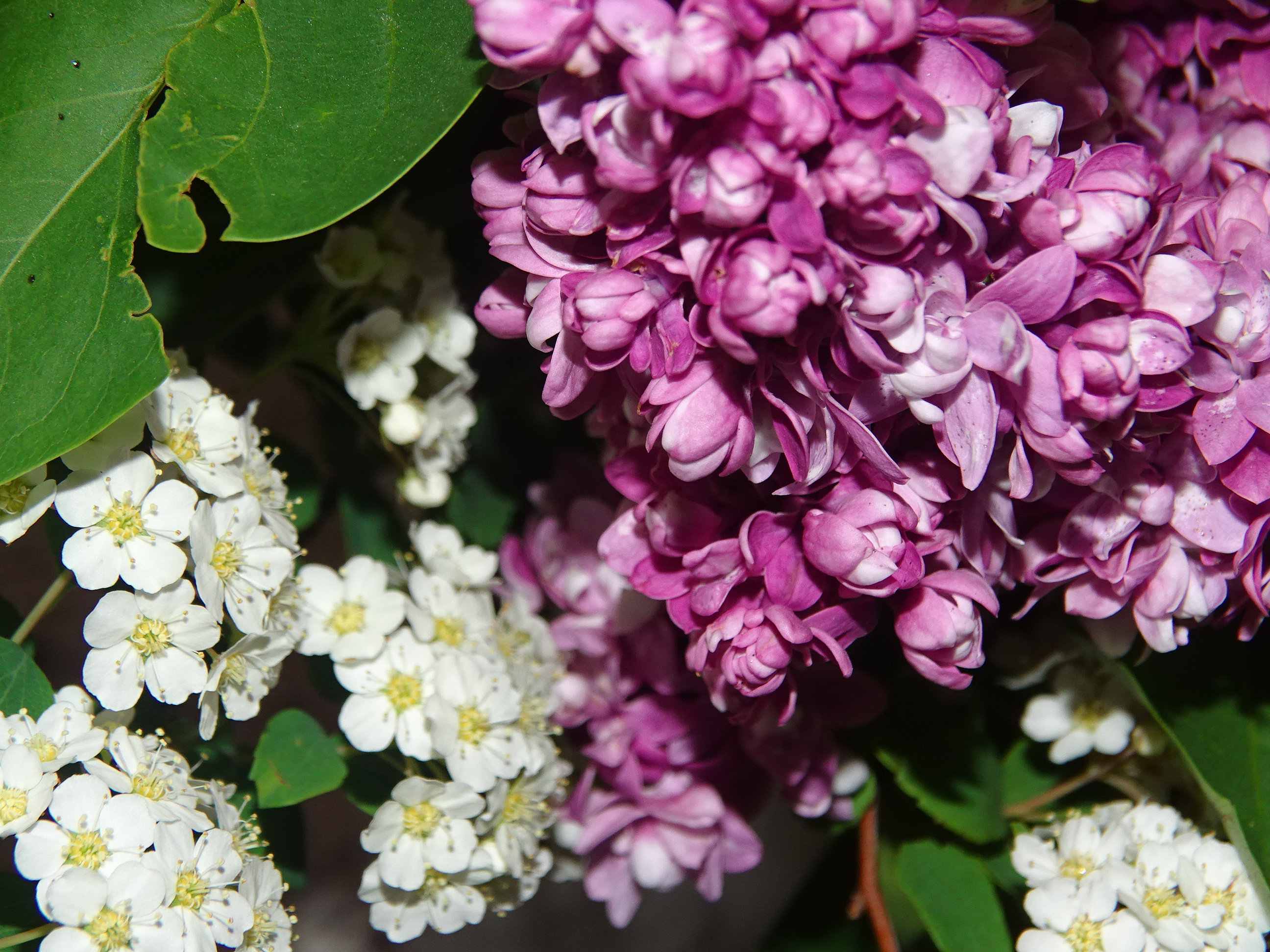
Together, the lilacs and spirea are a patriotic pair. We celebrate red, white, and blue as our national colors. But what do you get when you mix red and blue? Purple, of course. Mixed together, we are a beautiful spring bouquet, as intricate and miraculous as the tiny flowerlets of the spirea and lilac blossoms. I am thankful for the array of our differences.

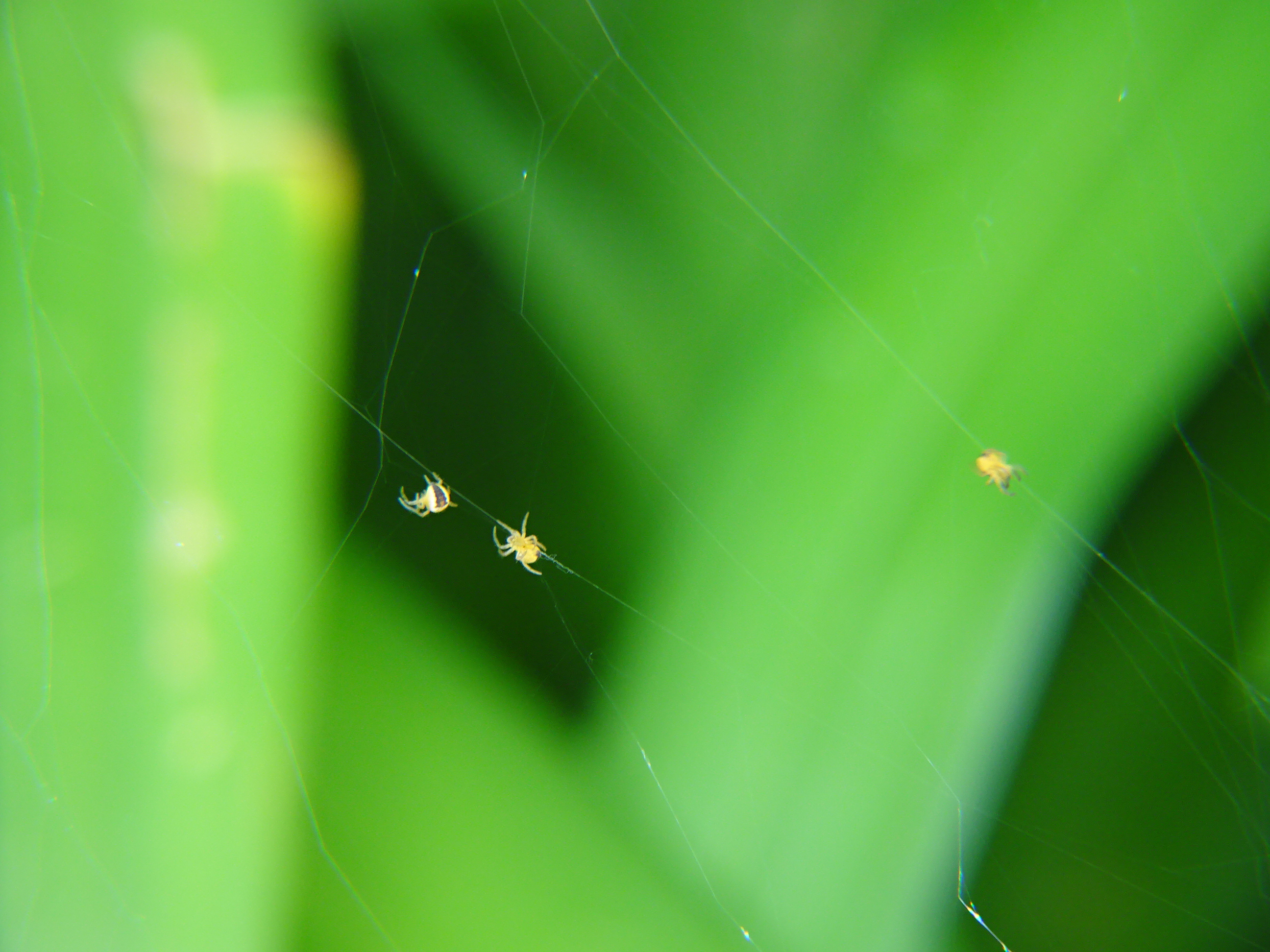
While hunting Easter eggs yesterday, Grandson and I discovered a miniature miracle. Remember Charlotte’s Web? We found a clutch of newly-hatched and itty-bitty spiders dancing on invisible threads above the daylily leaves in our yard. These tiny creatures know nothing of the world’s human events. They just go about doing their spider things on a miniscule scale. I am thankful for the opportunity to peek into their lives, for the moment we spent watching on the bright spring afternoon, and the gift of being a witness to their launch.

Think small. You can always find something marvelous and be thankful.
 

Grandmother’s Stories

I remember being fascinated by the stories my grandmother told of her early days. Horses and wagons. Moving to Kansas in a covered wagon. The tornado which destroyed their farmhouse a few months before my dad was born. The floods they endured after record cloudbursts up-river.

What kind of stories will I be able to tell my grandchildren? Or my children theirs? What could happen if we don’t take immediate steps to change the direction we’re headed? These might become the good old days of fairy tales and adventure stories.

Just imagine. . .

The silver-haired woman smoothed locks of the squirming girl child in front of her. “Hold still, Cam, dear. Two minutes. I’ll get your braids done.”

“Aw, Gran,” the child protested. “I hate when you fix my hair. It hurts.”

“The longer we wait, the more it will hurt. Shush now and sit still.” She combed the locks with knobby fingers, veins of age rising on the backs of her hands. “If only I had a comb.” The woman sighed.

“What’s a comb, Gran?”

“It’s a tool to help work out the knots in a little girl’s hair.”

“You used to have a comb, didn’t you? Years ago, when you were little?”

“I had many things, Cam.”

“Tell me.”

“We had plenty of combs and brushes for our hair. And our teeth.”

“Teeth! You combed knots out of your teeth?”

Gran laughed. “Not exactly. We brushed our teeth to keep them healthy.”

“So they wouldn’t fall out of your mouth, right?”

“You remember, child. Yes. We had a lot of things you’d never believe.”

“Like what?”

“Like cars, to drive us wherever we wanted to go.”

“On wheels?”

“With rubber tires. And we had a whole house for every family. And plenty to eat, with appliances to fix our food.”

“What’s a ‘plance’?”

Gran laughed. “Appliance,” she pronounced the word carefully. “Appliances were tools for a house. There were refrigerators for cooling our food to keep it from spoiling, and stoves to cook our meals. We had tools that would chop our food, or mix it up so we could bake cakes and pies in our ovens.”

The old woman’s fingers worked quickly, easing tangles from the child’s hair. She traced a part down the middle of her granddaughter’s head and tossed half the tresses to the front, across Cam’s chest.

“Tell me about the water,” Cam said.

“Oh yes. There was water, running from faucets in the kitchens and bathrooms—water to wash our food—and the dishes we ate on. We had water to wash ourselves. Even our hair!”

“You washed hair?”

“My yes. There’s nothing that feels so fine as a soft and silky head of clean hair.”

“And you could wash every day?”

“Every single day. Twice if we wanted to.”

“What about the flushes?”

“Our fancy toilets? Every family had one or two in their houses—special thrones for a privy. And you could flick the handle on the tank and flush your products down with swirling water.”

“Like magic.”

“It seems so now, little Cam. It didn’t seem magical to me then. When you have so much that is right at your fingertips, you get lazy. And you take it all for granted.”

“Like it will always be there?”

“Exactly. Like it was always there and always will be. Then something happens that shakes you awake and you realize how lucky you have been.”

Gran finished the second braid, knotted the grimy ends and tied a bit of twine around it.

“Tell me the story again, Gran. Tell me about how you lost my grandpa.”

Gran removed a polished stick from her own silver hair and shook her locks until they cascaded around her shoulders. “What—has Philip given you a day off?”

Cam grinned. “He’s off somewhere with the scouts. Tell me the story again.”

“About Grandpa Stefano?”

“Yes.”

“Ah. That story.” Gran combed her own hair, smoothed it into one long tress and twisted it to the top of her head. Holding it with one hand, she fished the polished stick from her worn skirt pocket and worked it through the twist until her hair was again secured neatly on top of her head. “I think you’ve heard this tale before. Where should I begin?”

“Where you always do.”

“Of course. It’s always best to begin at the beginning. Come with me, Cam. Let’s walk.”

Imagine the wasteland where Cam and her grandmother would walk. Then think of the huge wildfires we’ve seen each of the last two springs. Think of the erratic and unpredictable weather patterns. Think of the epidemic of earthquakes influenced by fracking procedures. We could be one, maybe two, generations from a life very different from what we now know. Our choices matter very  much.

Vote, while you still can. Vote for a candidate who respects the voices of the little guys. If we can’t change our leadership, our landscape and our future could look very bleak.


Diversity Lends Stability

One of the first lessons in Timothy Snyder’s book On Tyranny: Twenty Lessons from the Twentieth Century is “Beware the One-Party State.” Isn’t that what we have now in our country? If not yet, we are certainly approaching it. There’s something immoral, unethical, and deeply wrong with a system that inaugurates a candidate even though his opposition won the approval of voters by a significant majority. There’s also something immoral, unethical, and deeply wrong with a system that allows the majority party in Congress to re-draw voting district lines so their candidates have a clear advantage.

It doesn’t take much intelligence to realize a society is stronger and more stable if all views have a voice in our capitals. The great art of negotiation and compromise benefits us all. We have been created with a wondrous variety in interests, opinions, and talents. Rather than try to squelch those who hold differing views and talents, we’d all be better people if we tried to understand and learn from those who are different.

Diversity lends stability. Sound familiar?

Those of us fascinated by the study of science understand that ecosystems thrive when populated with a wide variety of species. In such vibrant systems, even if one species is decimated by a disease, others can adapt to fill the thinning ranks. If an area is home to only one kind of plant, and a pest or disease invades, the area is laid waste very quickly.

Contrary to some popular beliefs, science and scientists don’t really have an agenda to thrust on the rest of us. Scientists are curious thinkers. They notice something in their world and they want to know why it is the way it is. They watch,  measure, take things apart, get into the very smallest building blocks with increasingly technological equipment. And they keep asking questions. Ecologists noted over and over that “Diversity of species lends stability to an ecosystem.”

Even if you’re not a fan of modern science, maybe you are concerned with finances and the economy. My advisors recommend a retirement plan that utilizes multiple funds, guarding against the dire possibility that one failure would wipe out your life savings. (“Don’t put all your eggs in one basket.”) Many people have watched their pensions disappear after economic disasters in recent years. Let’s not watch our entire country go the same way, with a government run by one party that answers to a few wealthy individuals.

Diversity lends stability.

If, for no other reason, this one reason makes it important for people to vote. Those of us with the opportunity to cast votes in an upcoming election must take the opportunity seriously. My congressional district is one of those. Advance voting is already open and I voted today. I voted for the candidate of the “other” party—the one not in power in Washington. To my friends and neighbors in this 4th district, I urge you to vote as well. Cast a vote to support a diverse Congress. Vote for James Thompson because diversity lends stability.