Letters to Septanna

Contemporary American culture is notoriously short-sighted. We can’t see beyond the tips of our noses, or into the next hour, let alone the next century. Gratification must be instant–because after all, we deserve it.

PICT0634Yet there is a growing need to evaluate our lifestyle choices for the consequences forced onto unborn generations. Native Americans put it this way, “In our every deliberation, we must consider the impact of our decisions on the next seven generations.”   (From the Great Law of the Iroquois confederacy.)

Just how long would that be? It would vary from family to family, of course, but in my own, seven generations covers about 200 years. Could my great- ancestors-times-seven have imagined life in the twenty-first century? I doubt it. Nor can I visualize everyday life in the year 2213. But perhaps there will live a child two hundred years hence, the great-granddaughter of my yet non-existent great-grandchild. She’s the thread of an idea right now, but I’ll call her Septanna. “Sept” for seven and “Anna” for my progeny. What would I tell Septanna about life in my time?

This new category will include letters to the twenty-third century.

Recalculating

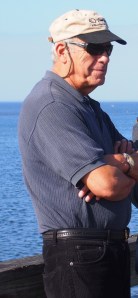
Half a century ago, young Manuel set out from his home in Quito, Ecuador, to follow his heart to America.  Last summer Manny became the newest member of our family when he married our sister.  We recently met our new brother-in-law for the first time.  What we found was a very young seventy-four-year old man.
OLYMPUS DIGITAL CAMERA

The question is, “How does he manage to stay so young?”

The answer starts with five-o-four.  This is the time his alarm wakes him every day.  At 5:04, he heads to his living room and spends part of his waking hour on his rowing machine.  Then he progresses into a hundred and twenty push-ups.  Over breakfast, he completes the day’s crossword puzzle to limber his mind.  And he’s off to work, a serious volunteer at a near-by hospital where he spends hours every day just helping people.

After work, he refreshes with a few laps at a YMCA pool before he heads home to cook up dinner for himself, his new wife, and any visitors who happen to be there, like us.  He’s ready to engage anyone with an examination of life’s unanswered questions over dinner and a little wine.

Probably the questions, as much as anything, keep his mind spry.  He’s figured a few things out, and he’s not afraid to share his thoughts.

Most pills, he insists, only lead to side effects that necessitate another pill.  If we could get off the meds, we’d be much healthier.

What about headaches?  No pill needed.  Simply take a few minutes to concentrate on slow, deep breathing.  Increased oxygen in your blood will cure many aches.

Questions keep his mind active.  His search for answers wins him many friends.  Generosity with his time and his talents builds relationships.  His service to others nurtures friendships.  With solicitous attention to our needs and comfort, he hosted our short stay with royal treatment.

While not everyone might be able to throw away their medications, or soothe a headache with breathing exercises, perhaps we can all learn something from this remarkable man.  We need to question our lives and listen for answers.  The art of questioning brings the power of listening.  Maybe we all need to listen to what our bodies tell us and take preventive steps to conserve our health.  We need to trust our own minds and trust our own spirits.  I think perhaps we are losing the ability to hear what our bodies and the rest of the world try to tell us.

Contrast Manny’s finely-tuned awareness with the habits of successively younger generations.  We are losing something—something which someday we might be desperate to find.  We’ve been seduced by a life of ease.  Seduced by technology.  Seduced by laziness.  Instead of listening to our bodies, we want others to tell us how to feel better, right now!  We want a pill for everything.  And the pills keep appearing.

We’re seduced by entertainment technology.  We plop down and veg out in front of the large flat-screens in our homes and we lose the gift of creatively filling our spare time.

We download music and forget how to make our own.

We are mesmerized with cell phone technology.  And we forget how to connect with another person in the same room.

We are seduced by shorter and shorter messages, texts, tweets and abbreviated words.  And we forget how to touch others with a long hand-written letter from the heart.  There is a debate in a nearby town whether children should be taught cursive writing any more.  We are forgetting how to write our names.

Automatic transmissions, automatic dishwashers, automatic cameras, and remote controls for almost everything I can imagine fill our homes, our garages, and our lives.

We have been seduced by technology until most of us suffer an orientation disability.  We seem to be lost.  We can’t navigate without a GPS.  (Whatever happened to map-reading or just plain-old-following-directions?)  We don’t know where we are anymore, or where we need to go.  We want somebody else to tell us where to go, to think for us, to add for us, to write for us, to drive for us, to work for us.  Could it be we’re waiting for others to live for us as well?

We’re losing the ability to find ourselves and find our way around life’s perilous paths. We could learn a lot from elders like Manny.  He knows how to ask questions and how to listen to his own heart.  Welcome to the family, Manuel.  It’s nice to have an elder again.

Re-cal-cu-la-ting . . . .

The Consideration Project

Image

I’ve been thinking about my mother a lot lately.  Last week marked a full decade since we celebrated her last birthday with her.  It’s only natural she has been in my thoughts.   For our appreciation of all the finer things in life, my sisters and I have Mother to thank.  She loved music, literature, and the finer aspects of our culture fostered through the arts.  Education was a priority for her.  Based on her own experience, continuing education was the key to rise above desperation and hardship.  She fostered within each of her daughters the value of knowledge, hard work, and a sense of justice and opportunity for those down on their luck.  She was also pretty hard-nosed about second chances if one failed to recognize the gift of a first chance.  But she remained generous to others all her days.

Actively involved in our childhood education, Mother assigned me the first big project I recall.  She became upset by the daily arguing of her three daughters.  To combat the incessant cacophony of our constant bickering, she assigned each of us to do a “Consideration Project.”  We were to consider each other’s feelings and viewpoints before we erupted into a shouting match.  There was paperwork involved.  By the due date, I had written a journal of thoughts, choices, and conclusions.  This project became a major activity for me. Though I don’t have a copy of my final report, I learned a great deal from the activity.  I believe this was the first major writing project assigned in my school years.  It was Mother who assigned it, and I still remember the “Consideration Project.”

I can draw parallels to lessons recorded in the gospel books of the Bible.  Jesus instructed, “If anyone forces you to go one mile, go also the second mile.”  (Matt. 5:41)  “If anyone strikes you on the cheek, offer the other also, and from anyone who takes away your coat, do not withhold even your shirt.”  (Luke 6:29)  In other words, Jesus also encouraged his followers to be considerate of others.

Is there anything more difficult to master about life?  My natural response toward someone who has acted harshly against me is to retaliate in kind.  Yet, if I stop a moment and give consideration to the other, I might imagine a bit of bad news they may be facing, a hardship in their family, or an argument they may have had with the most important person in their life.  Even though a person may treat me unfairly, it helps no one if I pass that injustice along.  Not even me.

There have been times after I finish a service job when I am offered payment with a check that bounces.  I fretted.  I worried.  I fretted some more.  But when, in my heart, I made a gift to the person of my work, my distress was instantly relieved.  Jesus’ instructions for giving beyond expectations were spoken not to benefit those who wrong me, but to lift the load of hatred and resentment from my own heart.  Freedom and contentment were my immediate rewards.

Jesus also said, “Do not judge, so that you may not be judged.”  (Matt. 7:1)  How can I possibly know all the details of another person’s choices?  I can’t.  Granted, I have never been on the receiving end of a violent criminal act.  I have never faced the loss of everything I hold dear at the spiteful actions of others.  I honestly don’t know how I would react in those cases.  But I do know that I can choose my actions carefully today.  I have the power to affect my own life and future, and I can support others who face unknown crises without judging them from my own perspective.

It seems that our nation is in need of a consideration project.  Diversity has always been one of the strengths of our country.  We defend the right of others to live as their hearts dictate, as long as their choices hurt no one.  The bitterness and rancor we see today in our nation gets us nowhere in the long run.  The art of politics should be the art of compromise, striking a deal somewhere in the middle that the majority of people can embrace.   We defend the rights of those who have few resources.   We defend our diversity.

Extremists who deny compromise and refuse action of any sort unless it’s what they want only hurt our country.  There should be no room for a “My-way-or-the-highway” attitude.  How do we find common ground with folks who will not listen to differing views?  On a national scale, we seem to lack something basic.  Something like . . . consideration.

Mother, we need your “Consideration Project.”  I suspect that if we try, we could find some common ground between the blue and the red.  If we consider the views and thoughts of those who differ from us, we might find we share many things.  We love our children.  We revere the life and opportunities we’ve had.  We want others to share similar good fortunes.  We worry about what the future holds.  The basics of humanity exist in the hearts of people regardless of their political persuasions.  If we listened considerately to each other, we might find we share a lot.  Our states are not totally red nor blue, just as our own hearts are not absolutely conservative or liberal.  We are closer to various shades of purple than perfectly red or perfectly blue.  Purple should be the color of our future as we strive to find commonalities in our concerns.

How about a little consideration for each other?  I’m ready.  Are you?

Christmas is a family time

OLYMPUS DIGITAL CAMERA


I baked cookies yesterday.  Funny how simple things flood my mind with memories.  The recipes are family traditions.  Using recipe cards hand-written by my parents or grandmother, I find myself thinking of them.  Their contributions to our holiday table continue long past their days on earth.

Many memories of Mother involve simple, delicious, baked goods.  She was known for fixing a certain apple coffee cake whenever any of her progeny visited—and sending it home with us.  In a visit with my younger sister on the sixty-second anniversary of their wedding, we noted how this same recipe has found its way into the next generation or two.  Mother would be pleased.

Grandma Georgia baked cookies.  Her son, my dad, was a cookie lover.  In his retirement years, he mastered his mother’s recipes and shared the products with the rest of us.  Keeping the tradition, I pulled out the recipe for molasses sugar cookies and whipped up a batch.  The smells and the tastes coming from my oven brought Daddy and Grandma vividly to mind.

OLYMPUS DIGITAL CAMERA


Somehow, I ended up with my grandmother’s recipe box.  It is full of recipe cards in her own handwriting.   The collection is precious beyond words.  Gone from earth more than twenty years, it’s almost as if she lives within those inked cards.

Expert cooks from my past also provided recipes for contentment and success in life.  Ironically, their lessons become more clear the longer I live without them.

Christmas is a family time and I find myself missing my parents very much.  Through memories and traditions, they live in my heart.  My children scatter across the miles to establish homes of their own.  Some of these traditions live in their lives also.  We weave threads that show up in tapestries that link different generations together.  It’s hard to predict when the connections will show up in the lives of our children.  But when they do, it’s like Christmas any day in my heart.

Thank you, Mother and Daddy.  Thank you, Grandma Georgia and Grandmother Mary.  I remember you at Christmas time with deep gratitude.

About Passions

Men on a Mountain in Keene New Hampshire

My son-in-law’s mother left a touching letter to her children before she died.  She included advice and philosophy on achieving happiness.


“What is happiness?  It comes from achieving your goals.  But remember that no goal in life worth reaching for is achieved without struggle.  Setting goals means accepting and learning to deal with anxiety, frustration, disappointment, even failure.


“Here’s my recipe to keep you on the right road:


1)      Fight your own battles.


2)      Accept your mistakes.


3)      Be persistent.


4)      Stand on your own feet.


5)      Maximize your talents.”


For her children, wise words from a loving mother.  Mary Ann Barnaby, my daughter’s mother-in-law, and my grandson’s other grandmother, here’s a pledge to honor your memory and to love those you loved.


I sometimes wonder what advice I would leave for my children.  Maybe, “Find your passion and give it your heart.  Let the world be a better place because you lived.”  Have I been any kind of example for that?  What are my passions?  I think they would include family, pianos, nature, and writing.  On the rare occasion when all these come together in one grand concerto of life, it is pure bliss, a little bit of heaven on earth.