Love to Read? Love Pianos? This one is for you.

14

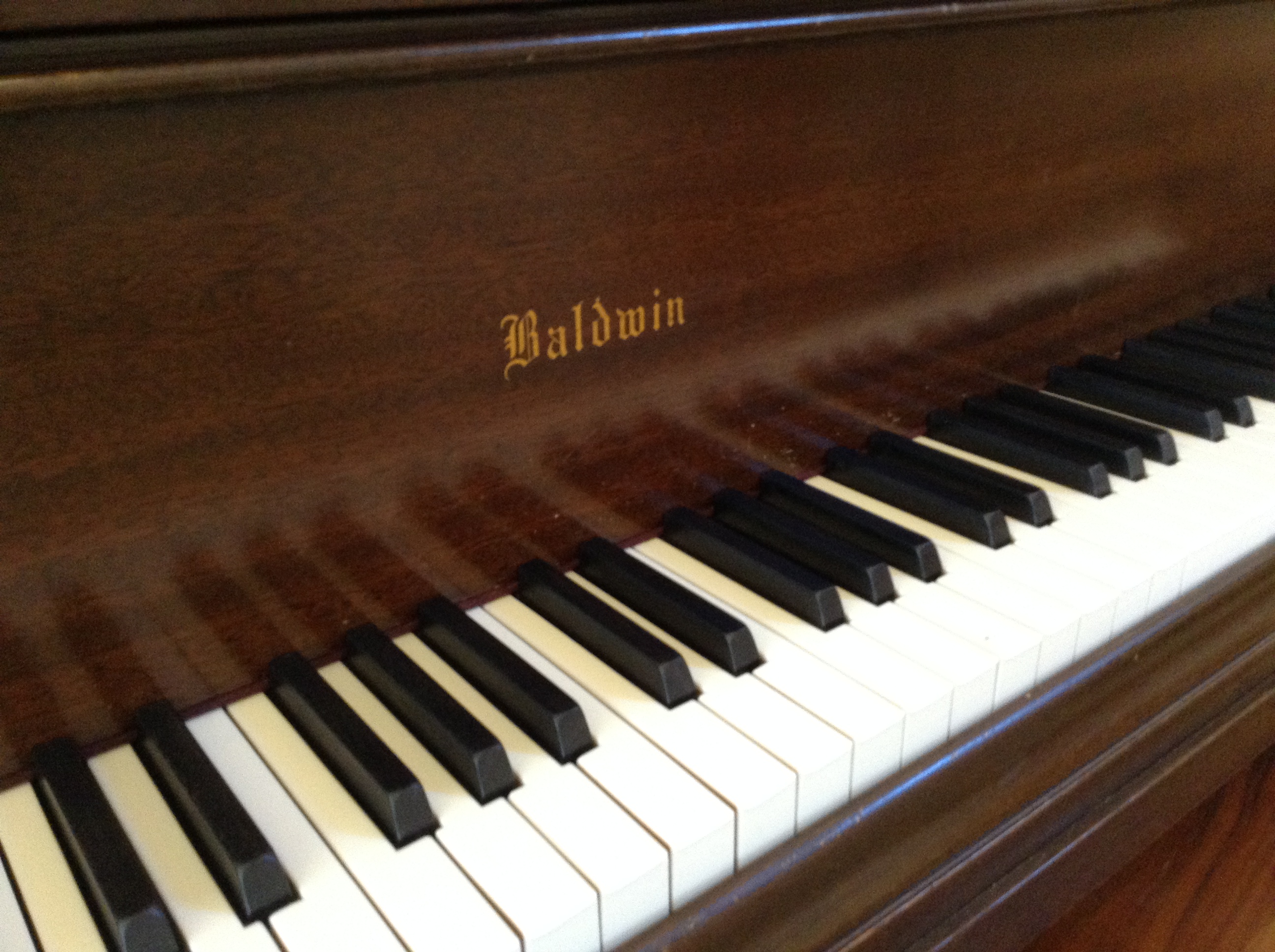
I love pianos. I spend uncounted hours working with pianos, playing them, tuning, fixing, and re-building them, and teaching others how to play. As an invention of humanity, a fine piano ranks somewhere in the top ten. In my mind, it is #1. The brand new Sundrop Sonata, my novel of suspense featuring pianos and a piano tuner in rural Kansas, is now available on Amazon, as digital or a print book.

I invite you to be one of the first to read Sundrop Sonata. Early readers rave about its plot and pace.

“I am hooked to your story! Read till 1AM last night, then came in really late to work today, not putting the story down. I rather gobbled it up.”

“I downloaded your book Sundrop Sonata this afternoon and just finished it. Excellent!”

“Loved your book! Lots of great plot twists.”

“Last night I finished reading Sundrop Sonata.  It’s wonderful and I was so sorry to have it end.”

“Hold onto your seat!”

You may order a digital or a print copy of Sundrop Sonata through Amazon.   If you think others would enjoy it, write a short review on Amazon.


Thanks and happy reading!

IMG_0015

First book event for Sundrop Sonata will be Friday, April 15 5:00 – 7:00 pm at Gallery 1001, 10th and Main, Winfield, Kansas.


Ten Reasons to Choose a Piano Over an Electronic Keyboard


IMG_0015A few years ago, after several inquiries about my recommendations, I came up with this  list about the advantages of a genuine piano over one of the newer electronic versions.

It’s a bit inaccurate to call electronic keyboards pianos. By definition, pianos have felt-covered hammers and steel strings. (Pi-a-no: a stringed percussion instrument having steel wires that sound when struck by felt-covered hammers operated from a keyboard.–Webster’s Collegiate Dictionary) Electronic keyboards (aka digital pianos) lack these definitive items. They are keyboard instruments similar in some ways to pianos, like organs, harpsichords, clavichords, and virginals, but they are different in nature from pianos.

IMG_0029

Why Choose a Genuine Piano?

  1. Musically: digital keyboards are limited musically to what the “programmer” put into its computer programs. Pianos can deliver a full range of musical expression depending on the pianist’s abilities. Keyboards have difficulty producing expression, color, and tone.
  2. Aesthetically: A properly maintained piano in a home adds sophistication. It is a work of art. Electronic keyboards have a less-sophisticated plastic look.
  3. Financially: With proper maintenance, pianos can last a few generations. Few products in today’s world can make such a claim. Digital keyboards are designed to need replacement every few years. Which is the better investment?
  4. Practically: Pianos will work even in a power outage. Their mechanisms are physical rather than electronic. They also need no amplification. Their sound waves are magnified by the built-in soundboard.
  5. Authentically: A piano’s action mechanism allows the pianist to control dynamics and tone color. Though some higher-priced keyboards may have touch sensitivity that attempts to imitate a piano, most do not. Lack of touch control on a keyboard is a big issue for skilled fingers and feet. Pedal usage on a digital keyboard, if available, differs greatly from genuine pianos.
  6. Skill Mastery: Pianos have capabilities and range necessary to play music of all kinds. Some skills can only be learned on a genuine piano. For example: Students who have practiced on a piano, who transfer fortissimo power to a keyboard can watch the digital version scoot across the floor under their practiced blows.
  7. Physically: The development of skills such as eye-hand coordination, fine motor skills, and full body involvement in musical expression is limited in a digital version to what was programmed into the computer by programmers who may or may not have been musicians.
  8. Personally: It is rare for a student who starts on a digital keyboard “to see if they like it” to progress very far in piano study. Serious students need the best piano they can afford in order to minimize frustration. Some piano teachers will not teach students beyond beginner levels who don’t use genuine pianos for home practice.
  9. Emotionally: Piano owners fall in love with their instruments in a way that is unseen with digital keyboard owners. Love your piano; it will love you back.
  10. Spiritually: Under the practiced hands of a skilled pianist, a piano can “come alive.”

I can now add another reason. Electronic keyboards lack the intrigue of an acoustic piano. I cannot imagine making a plastic, computerized keyboard instrument an integral part of a suspense novel, like I did the genuine pianos in Sundrop Sonata. If you are like  me and love the real thing, you  might enjoy reading the story of Isabel Woods as she discovers disturbing things in some of her neighbors’ pianos.

Sundrop Sonata Cover

Sundrop Sonata–A Novel of Suspense by Ann Christine Fell. Available now as an electronic book at Amazon.com.

IMG_0033

Sundrop Sonata

I’m excited that my long-awaited and much anticipated suspense novel Sundrop Sonata is now available on Amazon.com as a Kindle e-book. The print version will soon follow.

Sundrop Sonata Cover


What’s it about?

            With her passion for helping people, piano tuner Isabel Woods loves her job – but passion can be a dangerous thing. Reluctantly agreeing to harbor a client’s autistic daughter, Izzy’s good intentions unexpectedly expose her own family to a murderous fiend with a chilling agenda. Human trafficking and bio-terrorism are no longer just buzz words from the nightly news. For Izzy, they have become terrifying and real. As the deadly Sundrop Sonata begins to play, Izzy has one chance to save the people and the country she loves armed with nothing more than courage, intelligence, and her esoteric knowledge of pianos.

Early readers, men and women alike, rave about the plot and pace of Sundrop Sonata. From one reader: “I am hooked to your story! Read till 1 AM last night, then came in really late to work today, not putting the story down. I rather gobbled it up.”

Another: “I was caught up in this page-turner. The cliff-hanging chapter endings may well keep you reading long after the bedside lamp should have been extinguished.”

I can offer you good Entertainment, a refreshing Escape from gritty reality, and Encouragement to stick to your principles in everyday dealings, for it could matter very much. If you need a diversion, check it out. Then let me know what you think in a comment here, or a review on Amazon. Happy reading!

14


Words about words


OLYMPUS DIGITAL CAMERA

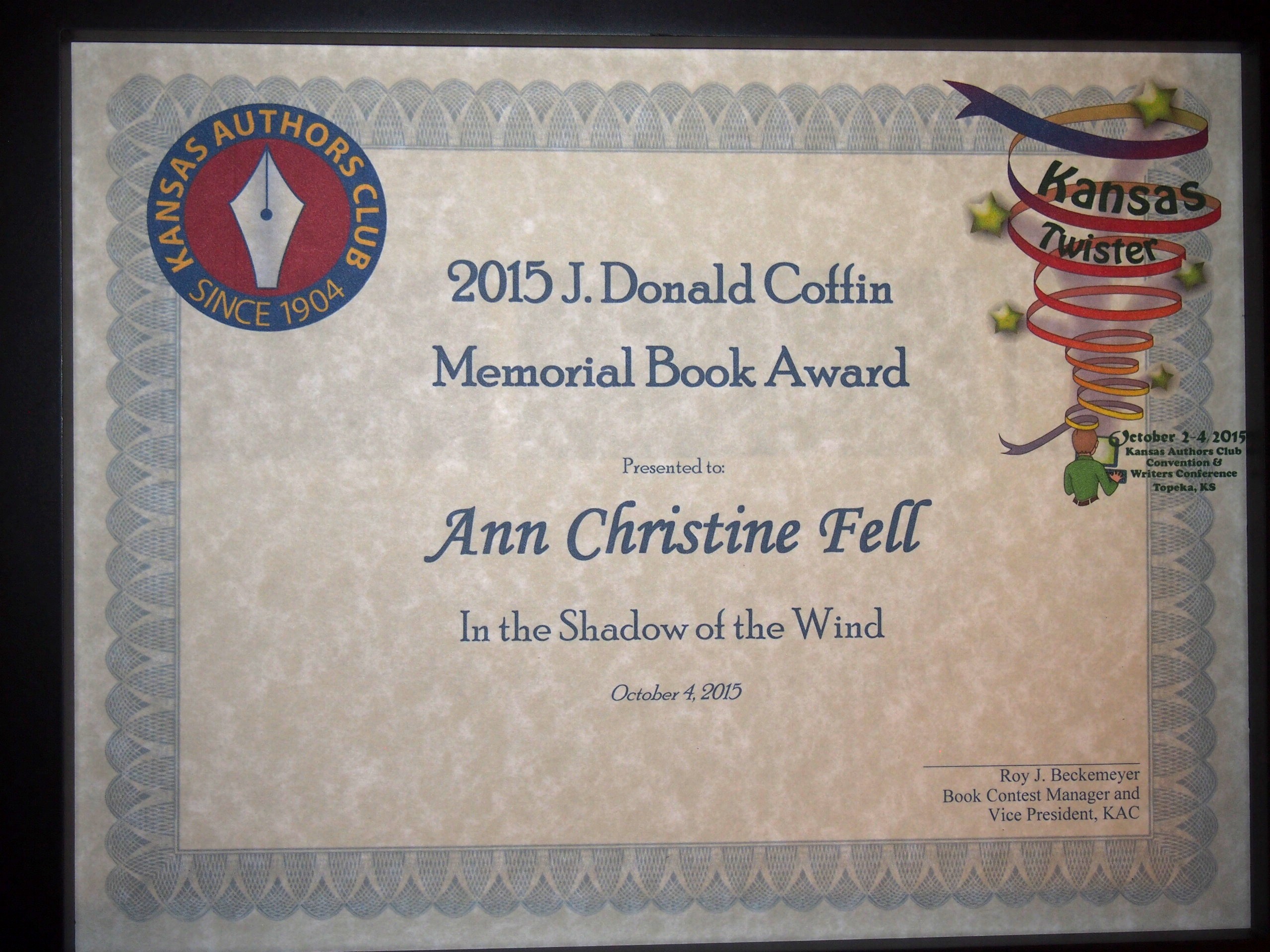
Wow. It is an honor to accept the J. Donald Coffin Memorial book award tonight. I am both humbled and thankful to join the growing list of recipients.

OLYMPUS DIGITAL CAMERA

Words are a remarkable thing, aren’t they? They are perhaps the single greatest achievement of humankind. With just 26 letters in our alphabet, we are able to write countless words and weave them into thoughts.

OLYMPUS DIGITAL CAMERA

Through words we share information. Words can also make us sing with joy or cry in anguish. Words make our hearts race with anxiety, or give us cause to sigh in contentment.

Words connect us to others. And they have no boundaries. Our words connect us to each other—in the same room, across the state, or around the world. They are not even stopped by the boundaries of time but can launch us into the future or transport us into history, connecting us to those from our past.wren.jpg

Writing has been called a unique blend of madness and measure. Those of us caught in the madness write because we must. It’s in our blood. And what we have to say matters. To my fellow writers, I say, “Write. We each are unique and we each have something to say. Follow your inner voice and write your heart out. In the great scheme of things, it matters very much.”

PICT0799

Life is an incredible journey. Thank you, Kansas Authors’ Club and the J. Donald Coffin family, for being part of mine.

sun covermoon cover

Of Turtles and Worms

OLYMPUS DIGITAL CAMERA

I met a few area writers today at Botanica in Wichita, Kansas, for a writing marathon. Some of them knew each other from previous marathon events. I knew a couple from area groups, and met a few new writing friends. The purpose of the marathon was to help each of us break through whatever blocked our creative muses and just start writing, a good experience for me in a lovely location. It’s not that I have no ideas. Indeed I might have too many. It’s just hard to focus and find direction. The ideas are, as my friend April described it, “like a sprinkler, spraying thoughts everywhere.” And so I was glad to meet Meg and the worm.

“Oh, little worm, you’ll never make it,” Meg said. Stooping for a twig, she allowed the earthworm to coil around it and lifted the creature to the mulched area beside the concrete walkway.

Instantly, I felt a bond with this woman. I’ve done that as well, urging my grandson to transport wigglers littering the church parking lot after a rain back to landscaped areas. His first inclination was to smash the worms. But he soon joined me in the rescue efforts, turning it into a game to see who could save the greatest number of worms.

Kids and nature. What behavior is innate? And what behavior is learned? Are we born with the inclination to assert power over those weaker than ourselves? Or do we have generous hearts until someone convinces us otherwise?

Not long ago, I drove between Douglass and Derby on a paved county road. A mile distant, a car had pulled to the side. Traffic wound around the parked car. I slowed as I approached and watched a young woman step onto the road from the car’s driver seat. She ran two steps toward the road’s center, then looked at my approaching car and stepped back to wait. I slowed even further, noting an object on the road in my lane. Something she lost? No. It was a turtle. As I carefully maneuvered around the turtle, we shared a smile, the girl and I.

In my mirror, I watched her dart to the turtle, carry it across the road, and return to her car.

There is hope in this chaotic world. Thirty-five years ago, I was this girl. God bless her. What happened to me? Too many issues. Too many problems. Emotional fatigue to the point where I sometimes have trouble feeling anything at all. There’s so much to care about, my heart is overloaded.

But I can cheer her on, and others like her. And I can pick something–just one thing–to care about, even if it’s an earthworm crossing a parking lot after a rainstorm. Tomorrow I can pick something else, a turtle perhaps. Or a butterfly, a child, or a friend in need.
PICT0531


Ripples Through the Generations

            It is now seventy-two years after the accident in the whale boat, three times the span of Lester’s short life. What happened to the folks during those ensuing decades?

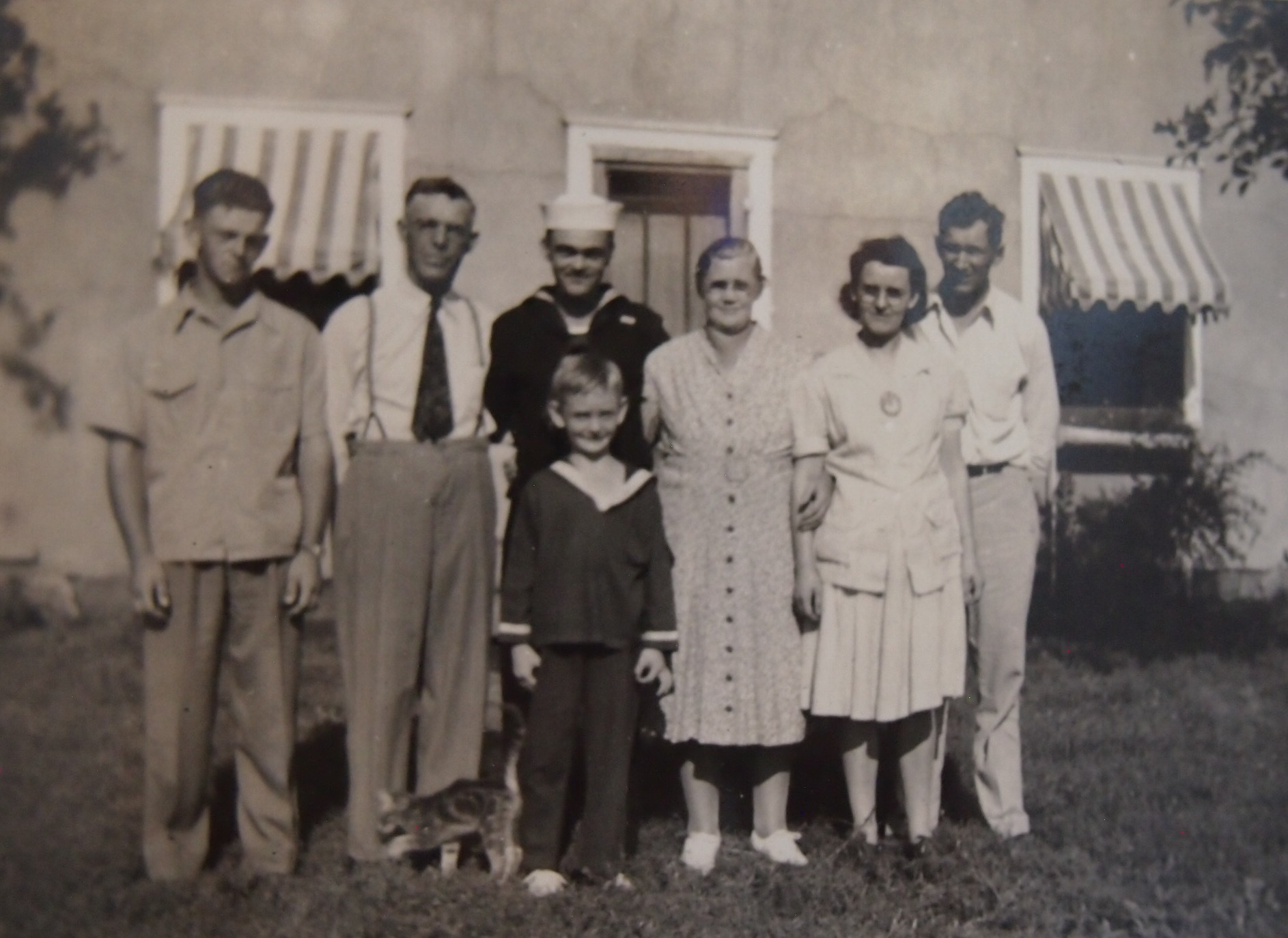
            Shortly after World War II had ended, the family received medals Lester had been awarded posthumously for his dedicated service. OLYMPUS DIGITAL CAMERABefore a decade had passed, Frances and Gloyd were blessed with a boy and a girl. the first children of the next generation. Born just three years after Lester’s death, Frances named her son David Lester in honor of her brother.

            OLYMPUS DIGITAL CAMERAIn that first decade, Lester’s father Charley died of heart disease. “He took Lester’s death hard,” Wallace told us, “and never got over it.” Wallace was convinced the accident in Narragansett Bay was a contributing factor in his father’s death.

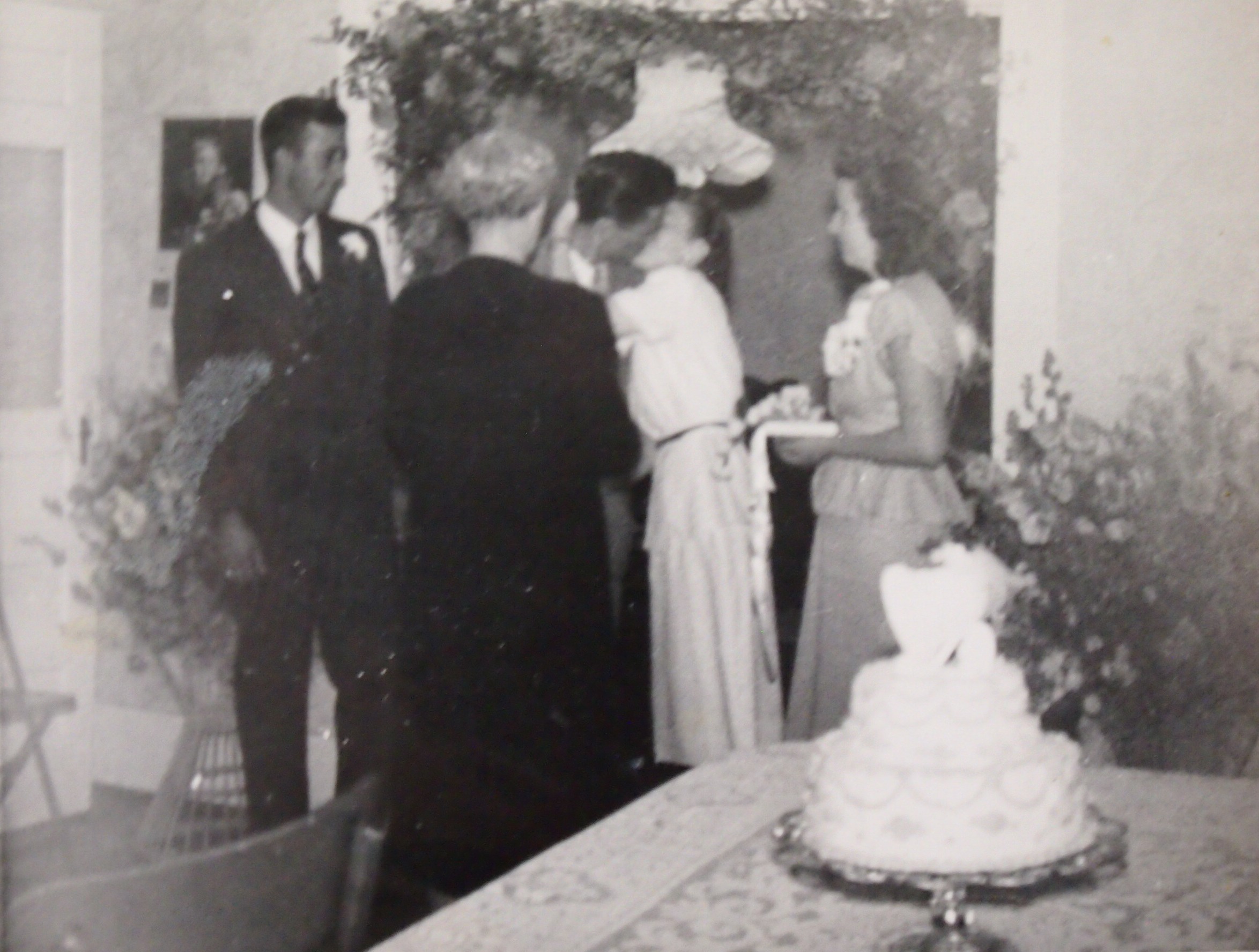
            Sometime in that first decade, Josephine met and eventually married another man. The home wedding was attended by well-wishing members of Lester’s family, and officiated by his aunt Mabel, the first woman in Kansas to be an ordained pastor of the Methodist Church. Though Lester’s mother kept in touch with Josephine for many years, they eventually lost contact.

Josephine's wedding. Lester's aunt Mabel officiated.
Josephine’s wedding. Lester’s aunt Mabel officiated.
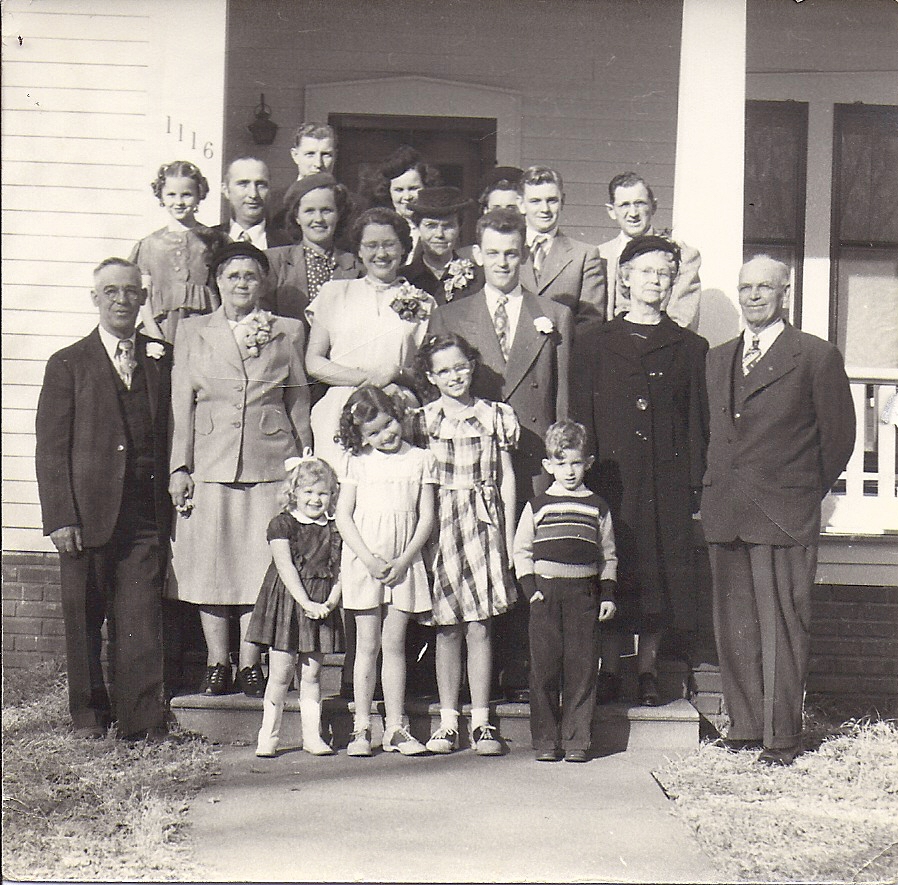
            Before ten years had passed, Wallace, a high school senior in 1942, had gone to college, met and married the woman who would be his faithful partner for fifty-three years, Helen Peterson.

The wedding of Wallace and Helen. The two youngest children belong to Frances and Gloyd.

            In the second decade beyond Lester’s death, Wallace and Helen welcomed three daughters to the family.

OLYMPUS DIGITAL CAMERA

            In that second decade, Lester’s sister Frances met him at the pearly gates, a victim of cancer. She left her school-age children in Gloyd’s care. Her son David, Lester’s only nephew, enlisted in the US Navy upon his graduation. He began an involvement with the navy that continued through the rest of his life, with active duty and the naval reserves.

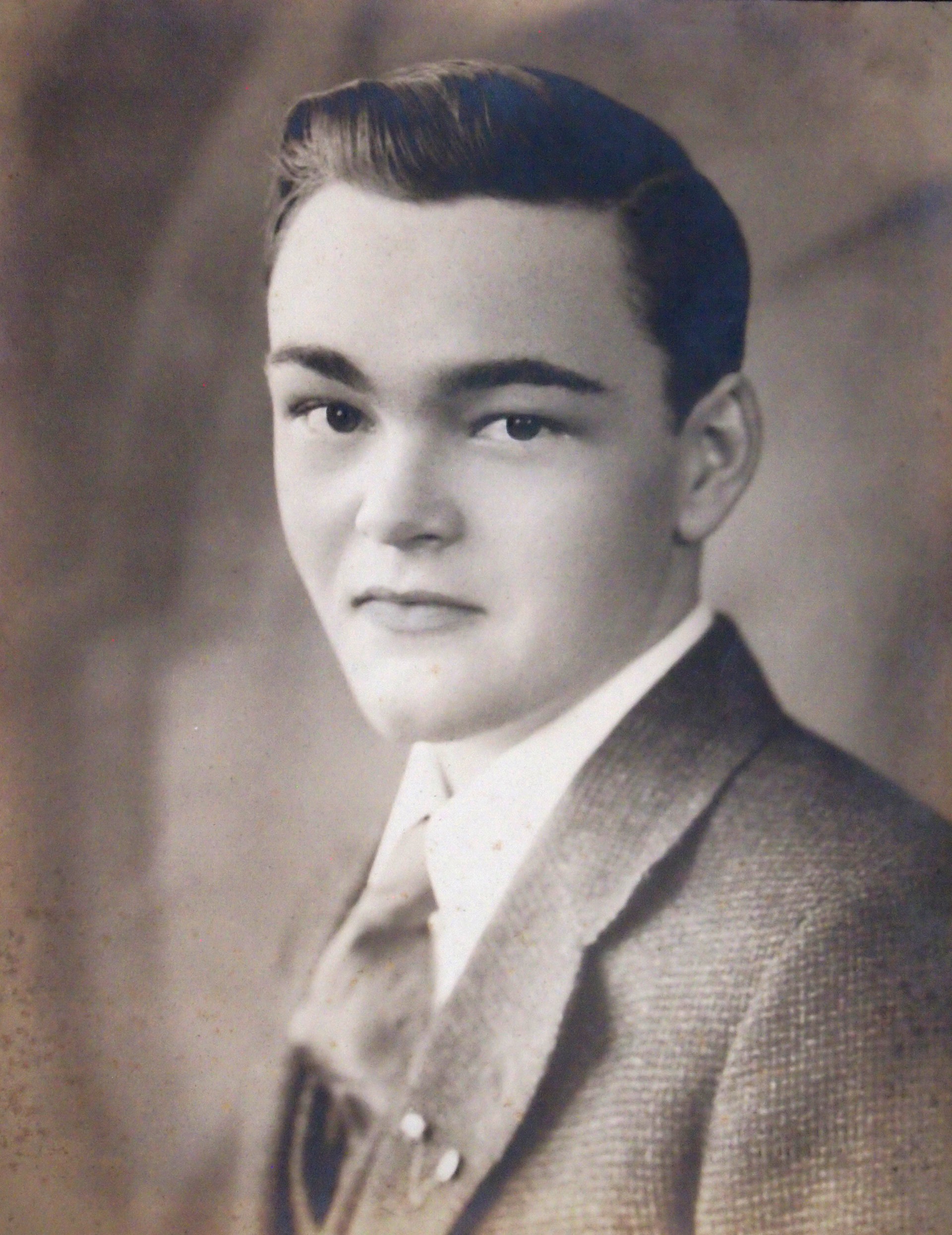
OLYMPUS DIGITAL CAMERA            Lester’s mother Georgia persevered with a broken heart. Though she had lost much in a few short years, she devoted herself to her remaining children, and then her grandchildren. She was a trusted and beloved friend to many people. After Charley’s death, she managed the farm with astute business sense. She rarely spoke of Lester, but he was never far from her thoughts. His portrait hung on her living room wall for decades after she moved the farm house to town. She guarded her memories, stored the photos and other memorabilia in the attic, and mourned privately.

            Still there were times when she mentioned her son, and alluded to his sunny personality, always with a tenderness in her voice, and a reverence that spoke volumes about the depth of her love and her loss. I recall waking in the middle of the night during a visit to her house to hear her sobbing alone in the darkness of her own bedroom. She died fifty years after Lester, in her 99th year, to finally join those who had preceded her.

            Perhaps young Paul suffered as much as anyone from his brother’s tragic death. Only seven years old at the time, Paul grew up in a house shadowed by grief. His father was never the same. His mother carried on the best she could. But her heart was wounded. Maybe Paul never even remembered, in the end, what life had been like before Lester’s death. He grew up, left home, attended college for a while, and spent most of his life alone, bouncing between jobs in the kitchens of various Kansas City restaurants. He died alone and nearly penniless at the age of seventy.

            Lester became a legend in the family. Life moved on. He was gone, but not forgotten.

            That brings me to the point of this whole project with the letters from 1942. Lester Franklin Harris was a good man. Through his twenty-four years of life, and his sudden, unexpected death, he impacted the world around him. Like pebbles tossed into a still pond, the ripples started during his life continue to spread outward, undulating through generations of people who weren’t even alive when Lester left this world.

            If he were still alive today, my uncle Lester would be 96. My cousins, sisters and I would have grown up to know the good-natured generous soul others loved, but we never had that opportunity. We knew him only through the occasional story, a fond remembrance or gifts shared once in a while.

            When I was establishing my piano repair shop, my father  (Lester’s brother Wallace) gave me a portable shop vise. In a voice filled with reverence and love, he explained, “This belonged to Lester. I want you to have it.” Lester’s vise has assisted me with numerous projects over the years.OLYMPUS DIGITAL CAMERA

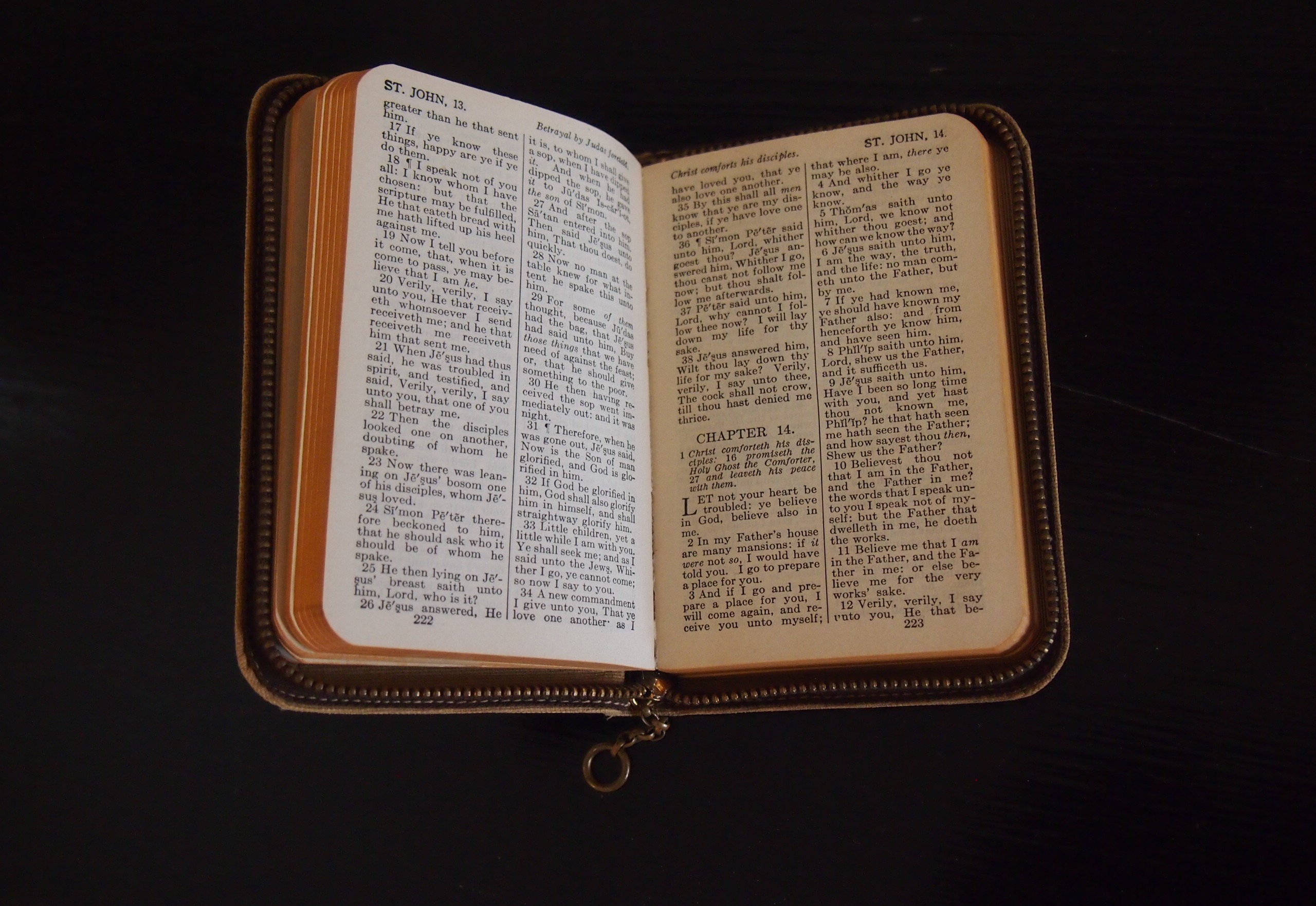
            In the late summer of 2013, my cousin David Lester Pickett passed away at the age of 68. At the family dinner following his service, his widow handed me a small new testament, covered in a zippered canvas case. OLYMPUS DIGITAL CAMERAIt had been a gift to Lester when he enlisted in the US Navy. In my imagination, I saw our grandmother passing this booklet to David when he entered the navy, with the same sense of reverence and honor that my father displayed with he passed the vise to me.

            Over the years, the fresh wounds that jolted the hearts of my family in 1942 had two effects. Either they contributed to a sad life and an early grave, or the wounds healed. Scars would never disappear, for Lester would never be forgotten. His mother and his siblings had to learn how to carry those scars like badges earned in the storms of life.

Lester's flag.
Lester’s flag.

My grandmother learned how to laugh again. My favorite memory of her is her belly-busting, whole-hearted laughter. But she never forgot Lester. She kept his letters, the flag which accompanied him home, a box full of cards and notes, two memory books from the funerals, the medals, a photo album and a few personal items. Upon her death, the memory box passed to Wallace. Upon his death, it passed to me. OLYMPUS DIGITAL CAMERAUntil 2010 I had no idea the letters existed. But when I read the words written in his own polished penmanship, Lester has come alive for me after seven decades.

            None of her grandchildren knew our beloved Grandma Georgia before her heart was scarred with grief. I wonder what we missed. What was she like before? Who would she have been if Lester had lived?

            The love my family felt for him and their grief at his loss crossed generations to impact those of us who never knew him. That experience in 1942 led them to support me with compassion and empathy when I struggled with a series of losses four decades later. That, in the end, is the greatest honor we can give to those whom we have loved and lost: to use the pain, and the healing, to assist others when they face their own storms in life. None are immune to grief. When you love somebody, you risk the pain of loss. If we can honor those memories with compassion to others, then the world will be better for it.

            Ripples from Lester’s life continue to spread towards the horizon in every direction. He was a good man, and the world is a better place because he lived.

Lester Franklin Harris

(Lester’s World War II memorabilia will be displayed in the Dunlap, Kansas historical museum housed in the former Dunlap Methodist Church.)

Western Union Telegrams, December 1942

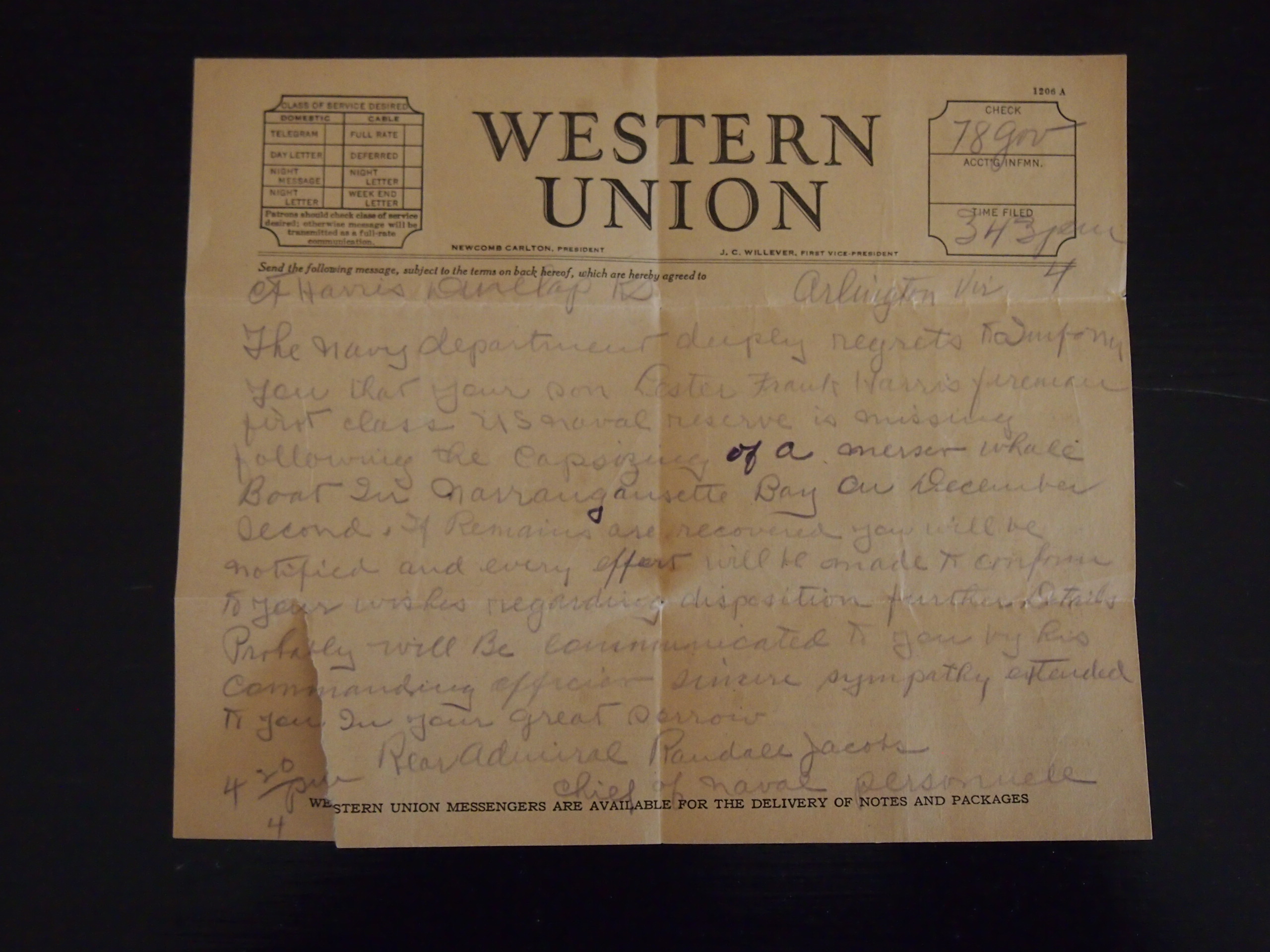
The day was drawing to a close on December 4. Chores were nearly done when a lone vehicle approached the farm home of Lester’s family. The driver bore a telegram for CF Harris from Arlington, Va.

OLYMPUS DIGITAL CAMERA420  pm 4

The Navy department deeply regrets to inform you that your son Lester Frank Harris fireman first class US Naval reserve is missing following the capsizing of a motor whale boat in Narragansett Bay on December second. If remains are recovered you will be notified and every effort will be made to conform to your wishes regarding disposition. Further details probably will be communicated to you by his commanding officer. Sincere sympathy extended to you in your great sorrow.             

     Rear Admiral Randall Jacobs, chief of naval personnel

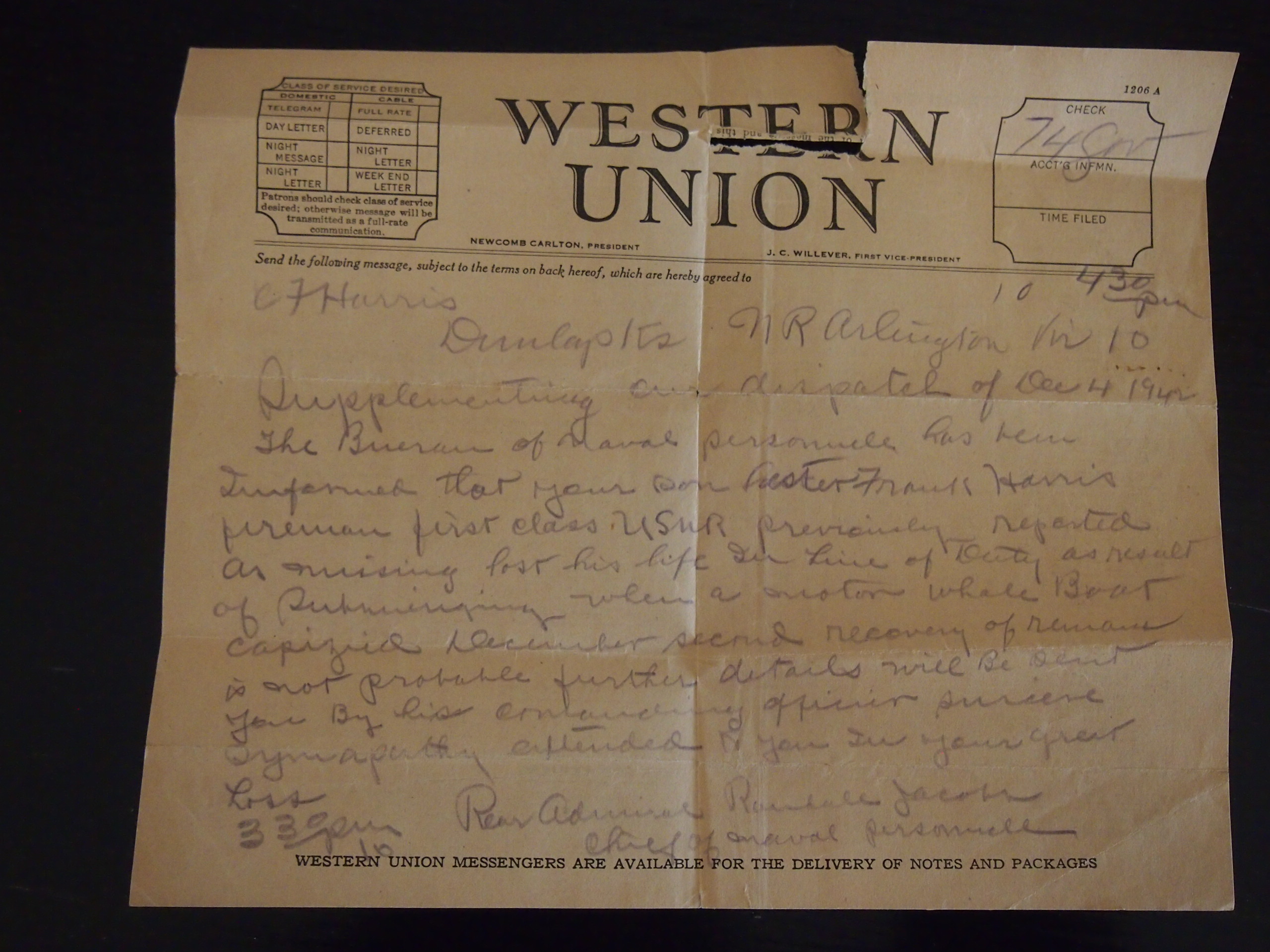
Even without today’s social media, news of the family’s unfolding sorrow spread like wildfire in the close-knit farming community. Hardly a soul remained who hadn’t heard the news when a second telegram arrived on December 10, the birthday of Lester’s sister Frances.

330 pm 10

Supplementing our dispatch of Dec 4 1942 The bureau of Naval personnel  has been informed that your son Lester Frank Harris fireman first class USNR previously reported as missing lost his life in line of duty as result of submersion when a motor whale boat capsized December second. OLYMPUS DIGITAL CAMERARecovery of remains is not probable. Further details will be sent you by his commanding officer. Sincere sympathy extended to you in your great loss

                 Rear Admiral Randall Jacobs, chief of naval personnel

Refusing to believe the news could possibly be true, the folks carried on, rising each day with the hope that Lester would contact them and all would be well. Lester’s brother Wallace, then seventeen years old, recalled decades later, “When we were notified of the accident and his probable death I could not believe that it had really happened. I kept thinking, ‘This is not real. I must be dreaming. When I awaken I’ll find it’s a dream and that Lester is really alive.’ Eventually, I came to accept the fact that it was no dream; that we had been separated, completely and irrevocably by death.”

OLYMPUS DIGITAL CAMERAIn an effort to learn what had actually happened, Lester’s mother carried on a furious correspondence with his buddies Harry Haring and Joseph Feingold. Haring dissuaded her from trekking to Newport, assuring her there was little she could do that wasn’t already being done. He wrote, “No, Mrs. Harris, I’m sure that there is nothing to be gained in coming to Newport. It’s cruel I know but it’s hopeless. A body will rise after the third day and then if not recovered it again sinks. I’m afraid the sea will not give up her bodies until the final day. For a man of the sea, Mrs. Harris, there is no finer resting place than the sea when the man sails.”

By the end of December, Lester’s personal effects had been shipped home. Included in the shipment were several sets of his navy uniforms both white and blue; bedding; towels; a sewing kit; a shaving kit; a shoe kit; two bundles of books; a slide rule; a gauge; miscellaneous letters and stationery; and “one unopened package addressed to Mr. Harris.” He had never opened the Christmas package sent by his sister.

That Christmas surely was a difficult time for the family. On January 3, 1943, one month after the ill-fated accident, Lester’s family and friends gathered for a memorial service. It was to be the first of two funerals for him. Over the weeks and months after the accident, several of the sailors’ bodies were discovered and identified. In July 1943, seven months later, a body was found and determined to be that of Lester. The presence of Lester’s personal billfold with a water-stained photo of Josephine aided the final identification of his remains.

Another set of telegrams brought the final news, this time to Mr. and Mrs. C F Harris.

OLYMPUS DIGITAL CAMERA959 am July 17 1943

Supplementing our dispatch of December tenth 1942 the bureau of personnel has been informed that the remains of your son Lester Franklin Harris fireman first class US Naval reserve have been recovered. Please telegram collect to the Bureau of Medicine and surgery Navy Department Washington DC whether or not you desire to have remains sent home or interred in any National or Naval Cemetery you may select without cost to you. If sent home all expenses of preparation encasement and transportation will be prepaid to destination and reasonable necessary expenses not to exceed fifty dollars will be allowed towards funeral expenses subject to reimbursement by the bureau of medicine and surgery navy department. If the body is sent home please advise whether or not you desire an escort to accompany the body. The department extends its sincerest sympathy to you in your great sorrow.

                     Rear Admiral Randall Jacobs Chief of Naval Personnel

His parents must have responded immediately, as requested. Of course they wanted him to come home. Another telegram arrived the following day.

1943 Jul 18 P M 4 39OLYMPUS DIGITAL CAMERA

=URTEL SEVENTEENTH NAVAL HOSPITAL NEWPORT RHODE ISLAND DIRECTED FORWARD REMAINS YOUR SON LESTER FRANKLIN HARRIS CONSIGNED TO YOU AT DUNLAP ACCOMPANIED BY NAVAL ESCORT WITH TELEGRAPHIC NOTIFICATION GIVING DATE ROUTE AND SCHEDULED TIME ARRIVAL HOSPITAL ALSO REQUESTED HAVE JOSEPH FEINGOLD ACT AS ESCORT IF PRACTICABLE LETTER FOLLOWS.

=BUREAU OF MEDICINE AND SURGERY NAVY DEPARTMENT.


Though no confirmation of Joseph Feingold’s attendance is among the existing memorabilia, it’s nice to think that Lester’s last journey was accompanied by his good friend. He had come home at last.

This photo is labeled "Lester's Navy Friend." He is not identified by name, but this is likely to be either Haring or Feingold.
This photo is labeled “Lester’s Navy Friend.” He is not identified by name, but perhaps this is Joseph Feingold who may have escorted Lester home in 1943.

The family and friends gathered again for a second funeral on July 24. OLYMPUS DIGITAL CAMERAThis one completed the solemnity, for there was no hope remaining that Lester might one day return to favor all with his friendly smile and warm hugs. He was gone.

I wonder if anyone read from his high school salutatorian address during the service. He spoke these words before his classmates at their graduation ceremony:

“When a ship starts on a voyage, it is loaded with fuel. If the ship is large or the voyage long, stops may be made at several fueling stations. . . .Ships are always in danger of being veered from their course by storms, of running onto hidden reefs or rocks. . . .However a ship does not by any means sail blindly. It has a pilot, lighthouses, and buoys to guide it and mark the dangerous spots.”

Nobody knew better than Lester how dangerous the sea could be.

Gherardi at sea

As time passed, Lester’s story was told to a new generation. Thus, his nephew and niece (Frances and Gloyd’s children) and three nieces (daughters of Wallace and his wife Helen) learned the story of their uncle’s World War II service. The pain still showed in the somber faces and the irony persisted. The most poignant detail ended the tale. “And he wasn’t even supposed to be on that boat.”

But he was.

Lester Franklin Harris, 1918 - 1942
Lester Franklin Harris, 1918 – 1942


Though evidently Lester was one of the last of those fifteen sailors to be found, there was one more body discovered in August 1943. It was damaged beyond recognition and unidentifiable. According to a Wikipedia article (referenced under USS Gherardi), the final body was identified conclusively through DNA analysis in 2006, more than sixty years after the accident. Those remains were determined to belong to Raymond Johnson, the coxswain of that whaleboat. Two other sailors have never been found.

The Wikipedia article described a 2006 plaque commemorating the ultimate sacrifice of the fifteen sailors, commissioned for the US Navy Memorial in Washington, DC. Names of all fifteen sailors are listed on the plaque. The USS Gherardi received five battle stars for World War II service. In 2004 the USS Gherardi Association dedicated a plaque to her service from 1942 through 1955, claiming “She safely returned all those who served in combat.”

Sadly, she didn’t have the same good fortune in protecting her sons from a storm off the coast of the homeland.

Storm in Narragansett Bay

OLYMPUS DIGITAL CAMERA

          On the afternoon of December 1, 1942, about three dozen sailors left the USS Gherardi for a few hours on liberty. The ship was moored to a pier at the Torpedo Station Annex, Coddington Cove. This is located about four miles north of the Government Landing, Newport, Rhode Island in Narragansett Bay. The sailors left the Gherardi in two motor whaleboats. OLYMPUS DIGITAL CAMERALester’s buddy Harry Haring was on duty as engineer in one boat. Off duty and taking advantage of his shore leave, Lester rode to shore in Haring’s boat. He welcomed the chance to stretch his legs on the streets of Newport and planned to shop for stationery and envelopes. Perhaps he also hoped to find a few gifts to send his family for Christmas.

        OLYMPUS DIGITAL CAMERA    The sailors were to report back to the pier for a return to the ship by midnight. Sometime during the evening hours, a storm brewed at sea, moving into the bay. By midnight the waves churned wildly off the pier. Raymond Johnson, age 18, the coxswain of the second boat, conferred with Haring for a few minutes. Concerned about the inexperienced fireman on his boat, the coxswain requested assistance. Haring, confident that his friend Lester had mastered the skills needed to operate the diesel motor through any weather, asked Lester if he would lend a hand.

            Haring knew his friend well. Lester, a cheerful, easy-going and competent fireman, agreed to help. The whaleboat carrying seventeen sailors, including Johnson as coxswain and Lester, as engineer, launched at 12:05 a.m. the morning of December 2. The sailors hunkered down against the driving wind as the boat headed into the bay, toward the Gherardi.

            Haring’s boat left ten minutes later. After an hour’s grueling trip, an easy forty minutes in fair weather, they arrived at the Gherardi to learn the first boat was still at sea. The officer of the deck was informed and search lights were played on the water in the hopes that the men would see the lights in case they had blown off their course. After a half hour of no success, the naval and civilian authorities were informed about the missing boat. Eventually, the crew of the destroyer had to abandon efforts to locate the missing sailors when the storm intensified. In the early hours of December 2 it even threatened the safety of the Gherardi herself.  After a steel mooring cable parted, the unusual procedure of securing the USS Gherardi to the dock with the anchor chain was initiated.

            The following morning, the wreckage of the whale boat was found washed ashore. Two bedraggled sailors clung to the boat. Fifteen others were missing. Lester was among the missing.

            Though details of the whaleboat’s fate remain unclear, some believed that the whaleboat collided with an object in the water, a rock or a buoy. “The collision likely stove in the bow and stopped the motor,” Joseph Feingold wrote to his friend’s family. Lester must have worked madly to restore power to the diesel engine, but a large wave swamped the boat, followed by another which capsized it.

The diesel engine (under showcase for display) which powered the motor whaleboat.

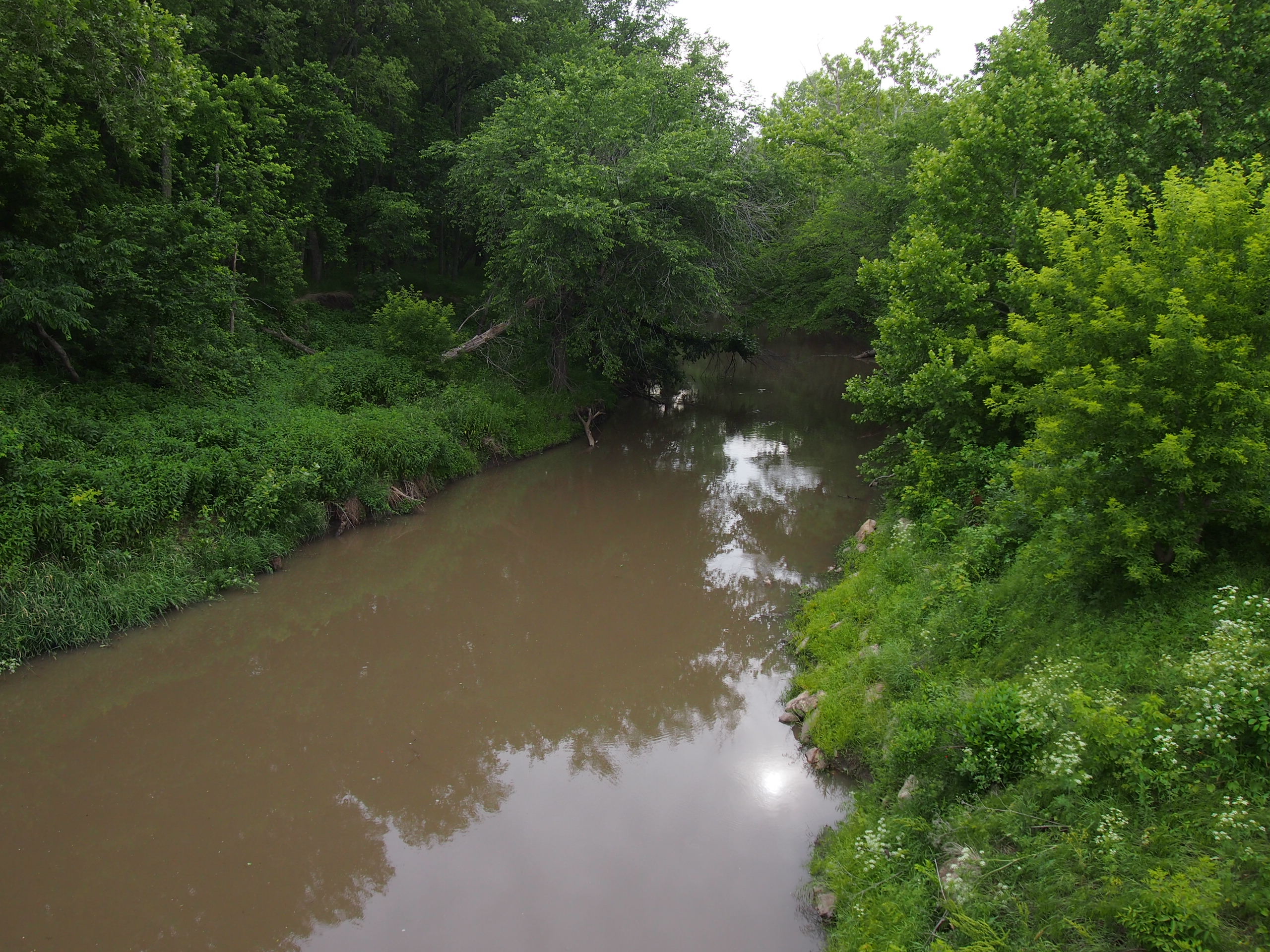
            The two sailors who survived the storm were identified as strong swimmers. Lester surely could swim, as he spent many summer hours in the river which ran through his family’s Kansas farm. But he was not lucky enough to cling to the boat, and he was hardly prepared for a dip in the December waters of an angry ocean.OLYMPUS DIGITAL CAMERA

            Lester lost his life with fourteen other young sailors that fateful night off the coast of Rhode Island. I wonder how long he fought in the water. Was there a moment when he realized he was not going to make it home again? Perhaps his last thoughts turned to his family, their recent Thanksgiving dinner followed by his father’s fifty-first birthday on that very day. He might have imagined them, smiling and laughing around the dining table, his mother carrying in a basket of steaming butterhorn rolls, or pulling his father’s favorite pie from her wood-burning oven to complete the dinner menu. With his characteristic gentility, he might have found himself overcome with sadness for them. He’d not even had a chance to say good-bye. Perhaps in that last split second, he bid them a silent farewell as the waves tossed him mercilessly in the churning sea. OLYMPUS DIGITAL CAMERAAs he thought of his mother, he surely sensed the devastation she would bear at his death. Perhaps he spoke to her silently. “Mom! I’m sorry.”

            And then at the very end, perhaps his thoughts drifted with a heavy longing to Josephine, his beloved fiancé. What would she do now?

            Josephine.

                                    Josephine.

                                                                                Josephine.

The Last Letter: November 25, 1942

OLYMPUS DIGITAL CAMERANovember 25, 1942

Dear Folks,

I expect that you will get this just about on Dad’s birthday so I’m sending my best wishes now. Have you had much snow yet? I can’t tell you anything about the weather here.

PICT0612

Have you heard any  more about Soltz Prichard? I can well imagine that military life would be quite hard for him. I have known one or two fellows about like him but so far as I know, they are still sticking it out in the navy.

PICT0862What would all of you like to have for Christmas? I don’t have much of an opportunity to buy anything but I want to send something to all of you.

It is time for me to go to work now so I’ll send this on its way.

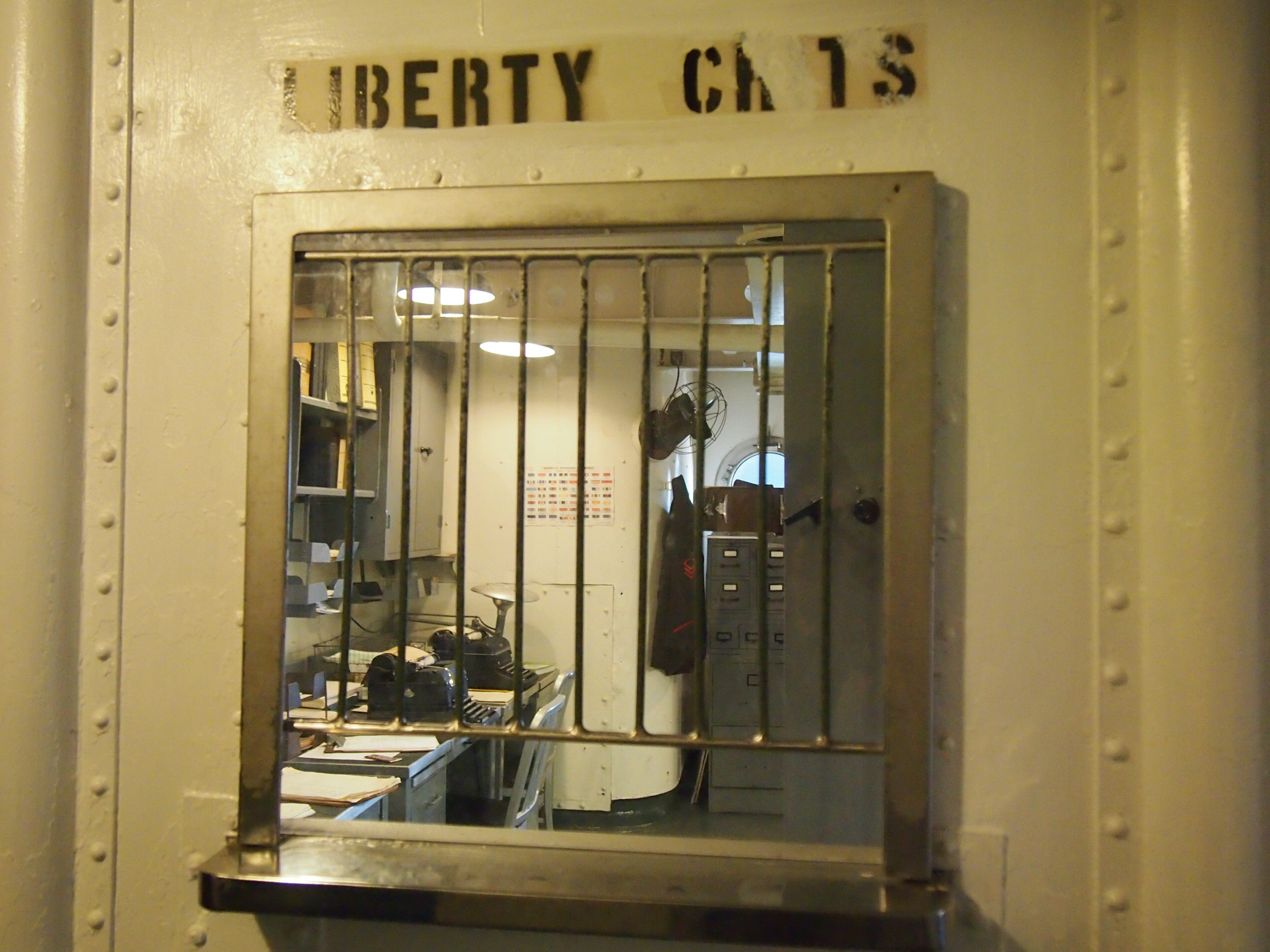
Lester, and probably most sailors, visited the ship's post office frequently.

Love to all

Lester


None of them knew it at the time, but this letter held the last words Lester would ever share with his family.

choose thankfulness

This is a beautiful piece that shows the depths of a mother’s love, even through unspeakable heartache. I admire this young mother very much, for daring to choose thankfulness even when her heart is breaking and for the courage to share these words with others. She is right when she says thankfulness is a choice. In the end, it is our choices which will define our character. I am thankful Lexi found my blog. My heart goes out to her, and I send wishes for a happy birthday. Blessing to you and your family, Lexi.