
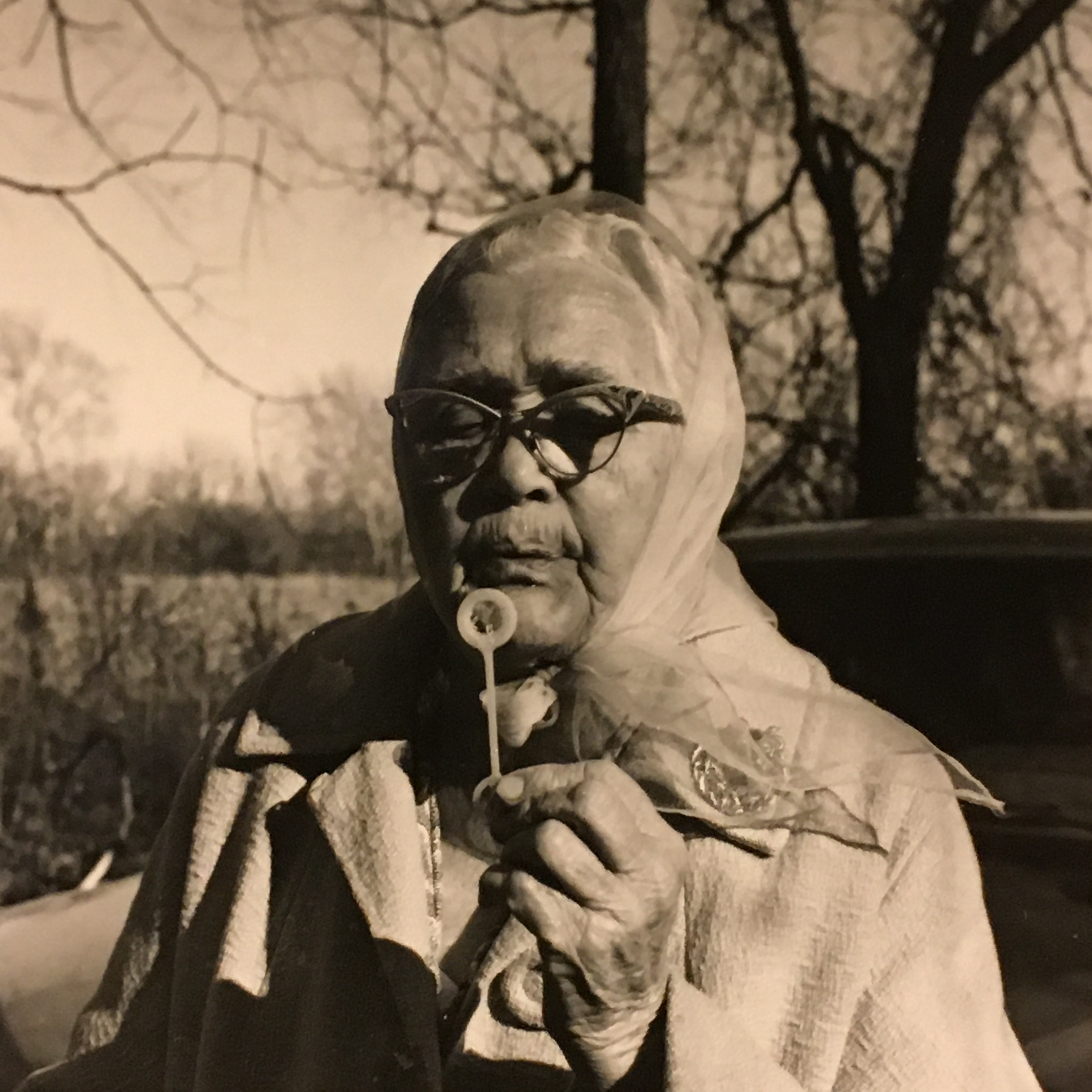
I was not lucky enough to meet either of my grandfathers, but my grandmothers were very important to me. Marvin belonged to the same generation as my parents, so when he wrote about his grandfather, that was the generation prior to my own grandparents. The late 1800s was a time far too early to fret about human enterprise actually changing the whole biosphere (if that was even a word then) and causing mass extinctions. Trying to visualize life in those days is a fascinating exercise of the imagination.
From Marvin:
“I found a letter my grandfather wrote to my grandmother from New York City in 1888. He was going to medical school. She and their children lived in Randolph, Kansas, a small town completely obliterated by Tuttle Creek Dam. I thought how real and concrete their world seemed to them—as though it would never change—horses and buggies, no nuclear age. Once my grandfather told me he had lived in a golden age. He filled his clay pot with service to others. . . and I played within the boundaries of his smile.
“Our world is a dream world too, as theirs, wisping away, changing, reforming with new descendants. How can we best fill our clay pots? We know our clay fragments can’t be destroyed as molecules but what of us? Is there anything more important than adding another link to dream worlds?”
-Marvin Swanson
 The Bridge