Yesterday, the arrival of my copies of In the Shadow of the Wind signaled a rite of passage for me. My book, a glossy paperback with my name on the front and my photo on the back, is finally done. But my journey is far from complete. Will anybody want to read it? And if they do, will they treat it with favor? Perhaps I’ll never know, but the story is there, offered for anyone who might be struggling, who has experienced the tragic loss of a loved one far too soon in life. I feel a little arrogant to think that anyone would want to read a memoir of my life. After all, who am I? I’m just Ann, plain and ordinary.
Perhaps this describes the vast majority of us. Within our small circles of life, each of us makes our mark. We live. We love. And we die. Some of us complete the circle sooner than others. Some of us travel parts of the circle more than once. Most of us, sooner or later, will feel the pain of a loved one’s death and question what purpose remains in our empty lives. And we must find a way forward. Anticipating questions from friends who read the story, I offer answers in advance.
Q: How long does it take to write a book?
A: This one? Thirty years. In the Shadow of the Wind was a project begun decades ago, in another place and another time in my life. When events of life intervened, and my new life started, I put this project away and literally forgot about it. Without the detailed journals I wrote at the time the events occurred, it would have been impossible to write this memoir.
Q: Why did you decide to write it now?
A: In 2010, my father died suddenly after a heart attack. He had supported me during my earlier losses with unconditional love and encouragement. At his memorial service, I mentioned how much it meant to me when he endorsed my forty day retreat into the wilderness. Afterward, people wanted to know more about the retreat. It was like somebody from beyond tapped me on the shoulder to say, “It’s time. Write.” Perhaps it was a last gift from my father. Perhaps Craig himself had something to do with it. But at that moment, I knew my life had just changed. I would write again.
Q: A lot of the chapters in your memoir are very personal. How can you put such personal, private details out there for strangers to read?
A: I think a story like this has to be personal, or it will be very dull. Readers need to feel the emotions, to laugh and cry with the writer, in order for the writing to ring true. Yes, it’s personal. Some of it is so personal that I didn’t tell a soul about it when it happened. But I did tell my journal. And the story is about a different me, the young woman of three decades ago. As I worked with these words, I could feel what she felt, and think her thoughts, but it was almost like they belonged to somebody else. Perhaps the insulation of time, the passage of these decades, was necessary. I couldn’t have written it when the emotions were fresh. It was too painful.
Q: How do you know you’ve been called to write?
A: Just a feeling, I think. How does a pastor know he or she has been called to preach? There is a notion from within, a driving force you can’t ignore. And then there are some signs along the way.
I like to think the Great Spirit still speaks to us. The timing of events at two places in my life led me to believe that someone somewhere was sending me a message. When Craig and I lived through repeated crises, the arrival of Phoebe Dawn was a miracle. Timing was critical. She was born on March 2, 1984. We met her and brought her home on March 5, three days later. Before the end of March, Craig was in the hospital. Had she been an April baby, we’d never have met the precious child who gave Craig the inspiration and drive to fight for his life and gave me purpose to carry on after he was gone. I thought, and still do, she was a gift from God.
Q: And the second place when you felt a supernatural nudge?
A: That has to do with my efforts to record the story over the last four years. During the year following my father’s death, the very same pastor who had been with us through the loss of our babies, who had preached at their graveside services, came back into my life. He was sent to my current church. I felt it was a sign.
Additionally the year 2012 was the year I was pulling the story from my journals. Much of the tale takes place in 1984, a leap year. The year 2012 also was a leap year, the seventh leap year since 1984, and the very first year since then when the calendar days exactly meshed with the days of the week all year long. As I wrote, it was almost as if I was reliving that time twenty-eight years ago. Every event became vivid in my mind. Coincidence? Perhaps. But if so, a strange one I could never have foreseen.
Q: Where do you go from here?
A: I’m not sure. The books are printed. Once again, my shy nature balks at putting them out for strangers to read. But if someone wants a copy, they are available. Someday, there may be an e-version. That will be another adventure for me, a new learning experience.
Q: You’d just let the books sit in your closet?
A: I still find it a little bit hard to believe anyone would actually want to read it. I have been operating for the last four years under the premise that I was supposed to write the book. I was directed—ordered—to do it. I couldn’t stop if I wanted to. Somebody somewhere needed my story or would need it. When it was ready, they would be led to it somehow.
As I get older, I find fewer and fewer things that I am certain of. There are so many differences among us, so many opinions, so many arguments. But one thing I still firmly believe is that we are here to help each other. Whether neighbors in our home towns need assistance, or people in Bangladesh and the Maldives who are watching their homes disappear under a rising sea, we are called to help.
Other creatures might need help too. Perhaps a wild kitten has fallen between bales in a haystack, Monarch butterflies can’t find the milkweed they need to feed new generations, the birds on Midway Island strangle in human trash, or the arctic ice of the polar bears recedes further every summer. These fellow passengers on spaceship Earth also beg for assistance.
Or maybe it’s a mother, grieving for a lost child, or a young widow facing an uncertain future. If we’re not here to help, what are we doing here anyway? The needs are there. The opportunities to get involved are endless.
Q: Do you have any parting words?
A: My wish for each of you is that you will be able to meet the winds of your life head-on, and learn how to soar through troubled times.
For myself, I feel most satisfied when my days include time spent writing. I’ve already started a novel about a piano tuner who solves a mystery by uncovering clues hidden in various pianos she tunes. It’s received hearty endorsements from instructors at two writing workshops I attended this summer, and I’m excited to continue writing. I’ll have to step up my time table, however. I may not be around for another three decades—and I have more ideas hatching all the time.
Q: What about your memoir? What’s it really about?
A: A short summary of In the Shadow of the Wind: A Story of Love, Loss and Finding Life Again:
Following a series of tragic losses, thirty-year old Ann Darr struggles alone in a strange and frightening world. The young widow and bereaved mother retreats to the wilderness for comfort and healing. Planning to stay forty days, she sets up a solitary camp on the river bank of her family’s abandoned farm homestead. Marooned by rising flood waters after only a few days, she faces her own mortality.
There is life after loss. Through a sequence of extraordinary events, In the Shadow of the Wind tells how one ordinary woman learns to dance on the threshold of fear, to cherish every moment of life, and to believe in her inner resources to conquer adversity.
Q: Where can I find a copy of this book?
A: Right now, they are in my closet. If you are interested in purchasing a copy, either reply to this post or send me a private message on Facebook (Ann Fell, FHSU) to let me know how to reach you.
It isn’t time for chow yet so I’ll write a few lines this evening. I had a special liberty over the weekend so didn’t go out last evening as I was tired and had some washing to do. I expected to have a guard tonight but didn’t get it so it will probably come tomorrow.
Greenfield Village has opened so we went thru it Sunday. We spent four hours there and didn’t see nearly everything so you can imagine how much is to be seen. A bus took us inside the grounds to the waiting room from where the tours start. Tickets for the museum and the village cost twenty-five cents apiece but are well worth it. We went thru the village first. It consisted largely of famous old buildings, most of which are the originals though a few are relipicas of the originals. Quite a number of the exhibits are connected with the life of Edison, who was a great friend of Mr. Ford. The depot in which Mr. Edison sold papers when a boy is there but we didn’t get to go thru it. We saw it from a distance and it looked just like any ordinary depot. The building in which Mr. Edison carried on most of his experiments is there, fixed just as he left it when he completed his experiments with the light bulb. Wallace, do you remember in the show “Edison, the Man,” where the boy came running up the stairs, fell and broke the light bulb? The stairs are just the same as in the picture. Edison visited the Village in ’28 or ’29 and lit a fire which has burned continuously ever since.
Upper Floor, Edison’s Menlo Park Laboratory. Re-erected in Greenfield Village, Dearborn, Michigan
In reconstructing one place, Mr. Ford brought seven carloads of dirt from Vermont to make it more realistic. One place called the “rose house” is from someplace in England where they used slate for the roofs. The barn was brought over too and since some sheep were needed, they were brought from England too. We went thru an old grist mill which uses stone wheels to grind the wheat and corn into flour. The flour is sold for souveneirs at the waiting room. We saw wool carded, spun and woven into goods, using the old-fashioned hand methods. In the museum we saw all kinds of chinaware, antiques, guns, farm implements, cars, trains, buggies, airplanes, in fact nearly anything you might mention. There were cars of all kinds, the first ones which Mr. Ford made and cars of a great many other makes. Steam cars, electric and gas models. A person could spend a day in the museum alone. We saw engines of all sizes up to 4,000 horsepower. Old and new locomotives, several airplanes. There were exhibits of nearly all of Edison’s inventions. Wallace would have enjoyed those.
We left about four o’clock as we were tired and Megdalls wanted to go out for the evening so Josephine had to stay with the little girl for the evening. I got three different rides coming back to the station. The second car to pick me up was a man and woman who were coming out toward the station. Before we had talked very long the lady asked “what part of the South are you from?” Lots of people ask me that question. I don’t notice their talk being any different from ours but they know that I am a “foreigner.” I got a letter from Frances yesterday. She said that Betty and Al had been there and gone again. It was sure nice that they could come.
We have had chow now and lots of the boys are here in the reading room writing letters as it is much quieter than in the barracks. We had spare ribs, potatoes, peas, lettuce with dressing and gingerbread. We had iced coffee too but it isn’t any better than hot coffee. I thought it was ice tea and took a swallow of it before I knew what it was.
Has it rained yet? It won’t be so very long before time to cut wheat, will it? How big is the corn? Not very big yet, I suppose.
In a long letter just in time for Father’s Day, Lester describes his busy life. He sees more of the nearby sites, now that Josephine is around to take places. Included is a special, reassuring note to his mother, who evidently has expressed her concerns about what Lester will do after he finishes his training.
June 12 , 1942
Dear Dad
Well finally I am getting started toward answering your letter of two weeks ago. That is very prompt isn’t it? Mrs. Wolfram was right when she said I wouldn’t have much time for writing letters. I have been going on all my liberties, even though there isn’t a great deal for us to do in the evenings.
We went out to Bob-Lo Island on a picnic last Saturday. We had quite a nice boat ride but the picnic wasn’t very much. I sent Paul a picture card of the boat which we took. I don’t know how many people were on the boat but it seemed to be filled. On the trip back from Bob-Lo there were quite a few small boats on the river. I got a big kick out of watching our waves hit them. None of them upset but they would nearly go out of sight when in the trough of the wave. The river channel is marked with bouys which must be lighted each evening. Men were lighting the lanterns for them as we returned. We saw James at the picnic but didn’t talk to him. I don’t see much of him on the station.
The Postal card Lester sent; SS Columbia of the Bob-Lo Excursion Co.
We don’t have anything to do tonight which is unusual. I was on guard last night and today so didn’t go to school today. This afternoon another of the boys and I washed the foundation of the barracks and watered the shrubs and trees. I washed all of my whites again this evening and I didn’t have anything to wear to chow so I missed it this evening. I had one of the boys get me an ice-cream sundae at the canteen so I think I will make out until morning. We had a real good meal at noon. Pork chops, mashed potatoes and gravy, pea soup, lemon pie, ice cream and cool tea.
Your new pen seems to work fine. Try it again sometime. No, I’m not lonesome or homesick. I don’t have time to be. It is easy to make friends and all the people are so nice to us. They are very nice about giving us rides.
Thursday evening: Didn’t get this finished so will continue it today. I wish you could be having some of the rain which we are getting. It rains every time I have liberty and sometimes oftener. We have had several showers last night and today. I had liberty last night so we went out to Greenfield Village but it hasn’t opened yet so we couldn’t go thru it. It is to open this Saturday so we will go see it on the first opportunity. We did walk around some of the grounds but not the main part. We ate supper in Dearborn then went to a show. When we got out of the show it was raining so we stayed in a doorway until the bus came. Megdall’s (where Josephine works) had company so I didn’t stay but started back to the station in the rain. The bus wasn’t due for half an hour so I started walking. A car stopped and picked me up. The fellow brought me right out to the station. That’s the way they treat us up here.
Guess I had as well answer mom’s letter also as I probably won’t have time tomorrow night.
Yes, Mom, $4.00 an hour seems pretty high wages, doesn’t it? Guess what the sweepers at Ford get an hour. They get a dollar and a nickel an hour just to sweep floors. Of course it costs more to live up here. It costs a dollar every time Josephine and I eat a meal and we don’t indulge very heavily for that. Yes, I know that help is scarce. It is scarce here too, especially skilled men. We need more instructors at school but can’t get them. The papers are full of ads for experienced men and women. Better earn and save the money while you can. I imagine Mrs. Rutledge was glad when Leslie was turned down. I admire him for being willing to go anyway. Someone had told me that Don had joined the Marines. I wouldn’t want that branch.
You asked about the Ford Trade School and the Service School. The Service school is for navy boys who work and study in the Ford schools and shops. The Ford trade school is made up of boys from ten years on up to around eighteen, I think. They work as apprentice helpers for several years and are paid two dollars per day while learning. Some of them study in the classrooms to learn mathematics. They operate a good many machines on production work. I think it is a fine chance for them to learn a trade. I believe I like Diesel work better than the machinists trade though I like both courses. If I get to continue in Diesel after I leave here, I should understand it pretty well.
We won’t know until after we get back to Great Lakes whether we go aboard ship or stay on shore. By far the most of the boys go on board ship and they like it much better than ashore. All of the other navy men prefer the sea unless they are married and want to stay settled. I think you are doing a lot of worrying about something which can’t be changed. I know you can’t help worrying but it doesn’t do any good and I am really looking forward to going to sea. Would you want to come to Chicago to see me when I go to the Lakes? You could come here but it costs so much to live here and I wouldn’t get any more liberty than at the Lakes. I don’t know how long Josephine is going to stay.
Glad you enjoyed the magazine. I am sending you a couple more of Our Navy.
I am going to call Josephine then press some clothes. Gale and I bought our electric iron the other day.
Lester said a lot in one short sentence. Now that Josephine was nearby, the liberties he previously had not even bothered to take no longer seemed frequent or long enough. What does a young couple do in wartime Dearborn? Take long walks, evidently.
Wednesday noon.
June 3 – 1942
Dear Folks
I’ll try to answer your letter which I received from you today. I didn’t write last week because Josephine said that she was going to write to you and I am sure her letter would be more interesting than mine. Besides there wasn’t any need for both of us to write about the same thing.
I had liberty last night so she met me down at Dearborn and we went out to the Ford Rotunda and walked around on the grounds there. The Rotunda is closed but there are some pretty walks on the grounds. We went back to town and ate supper then went to the park for the evening. Nearly everything closes at 5:30 except the shows and we didn’t care about going to a show.
We don’t have time to go very far because I have to be back on the station by midnight. Usually I am pretty lucky about getting rides but last night I had to take a bus. I left her at a quarter til eleven and was in the barracks at eleven – thirty. I get liberty every second week-end and one night each week. It doesn’t seem very often since I want to go out now. Until Josephine came I didn’t often go out during the week because there isn’t anything to do. The Ford trade school and the service school are holding a picnic at Bob-Lo Island this Saturday so I expect that we will go to it.
All of us on the station changed into our white clothes this evening. They are nice and cool after our woolen blues but they are going to be hard to keep clean. Another boy and I are going to buy an electric iron so we can press them ourselves. Probably have to wash them three or four times a week. I’ve been busy this evening. Washed my hammock this evening, got a haircut, called Josephine, went to the show and am writing this.
I would sure enjoy helping you eat that fried chicken and the fish. We have both of them here but they aren’t good. I never eat the chicken but usually manage to get rid of my fish. We had strawberry shortcake and ice cream last Saturday as a holiday dinner for the parade we had that morning. I didn’t go on it because I had been on guard duty. The boys marched seven miles and were simply drenched with sweat when they returned. It was hot that morning and they had to wear dress blues and leggings.
Josephine told me tonight that Leslie Rutledge was being inducted into the army soon. I was surprised at that. I supposed he would be deferred.
I just have time to get ready for bed so will close for this time. Glad to get the letters from all of you.


 Will anybody want to read it? And if they do, will they treat it with favor? Perhaps I’ll never know, but the story is there, offered for anyone who might be struggling, who has experienced the tragic loss of a loved one far too soon in life. I feel a little arrogant to think that anyone would want to read a memoir of my life. After all, who am I? I’m just Ann, plain and ordinary.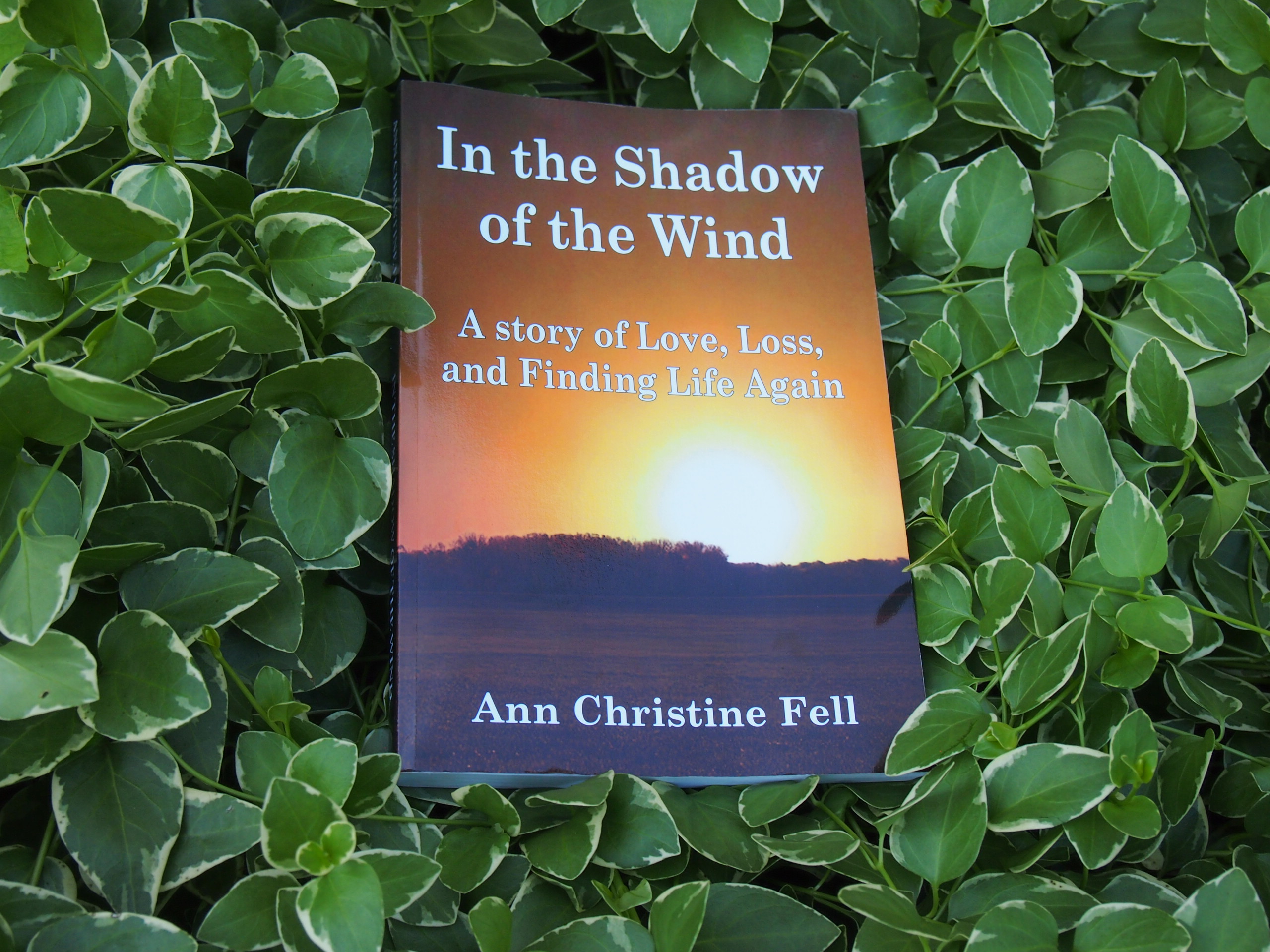
 Anticipating questions from friends who read the story, I offer answers in advance.





 The Bridge